




The Trump administration is not merely asking the country to move on from Jan. 6. It is asking taxpayers to help finance the revision.
The Trump administration is not merely asking the country to move on from Jan. 6. It is asking taxpayers to help finance the revision.
By KOLUMN Magazine
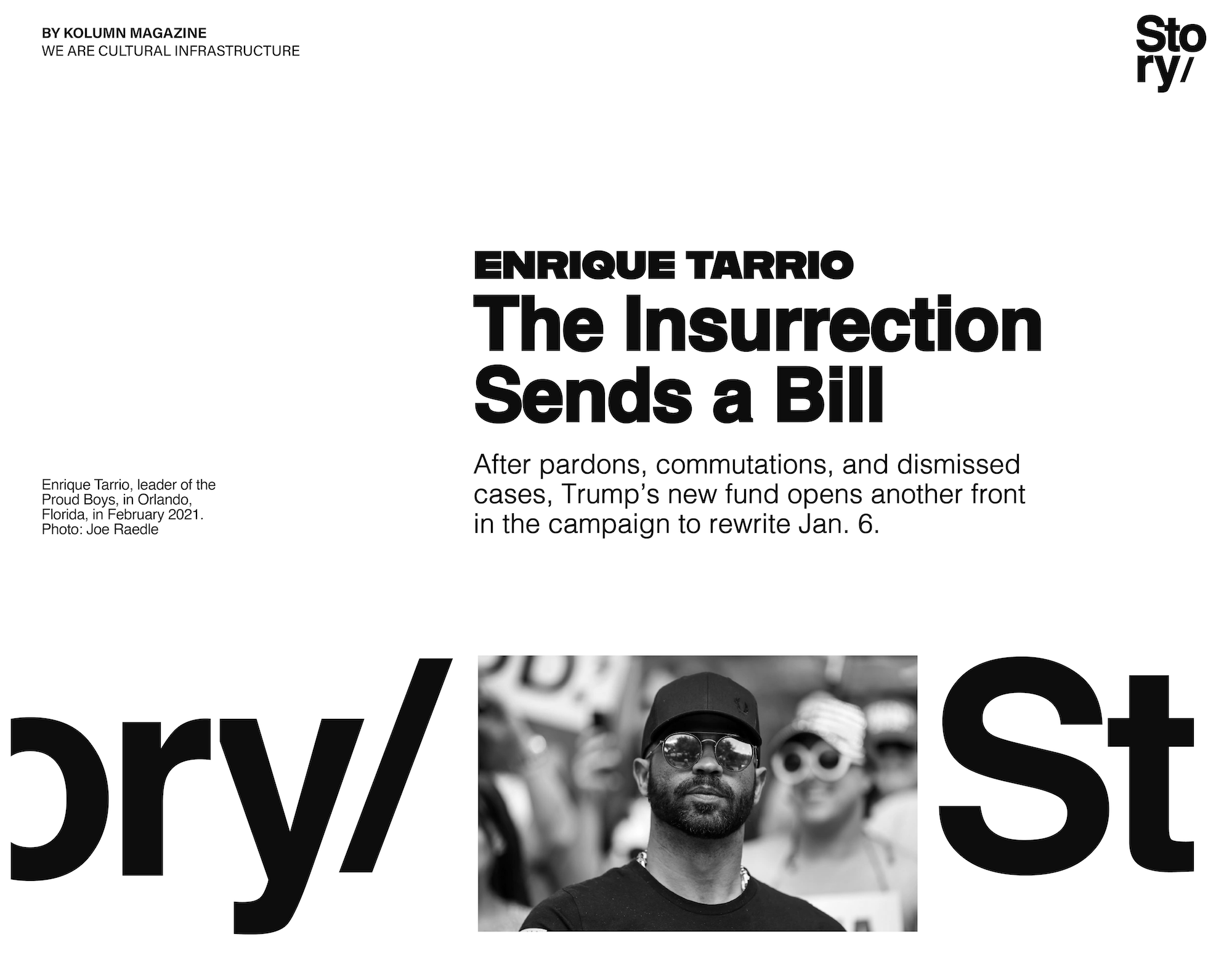
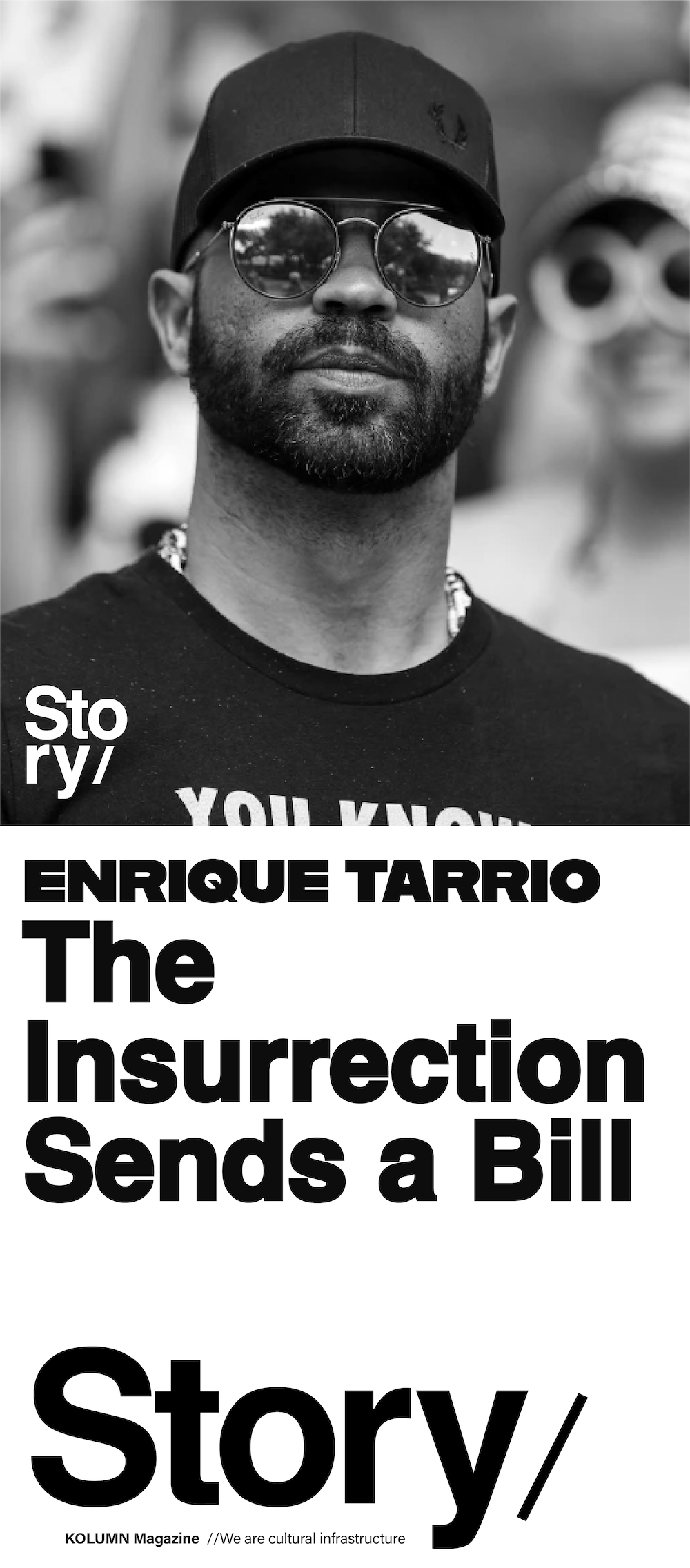
Enrique Tarrio did not enter the Capitol on January 6, 2021. That fact has often been used by his defenders as a shield, as though physical absence from the building erased command, conspiracy, mobilization, or intent. But a federal jury heard months of evidence and found something more consequential: Tarrio, then the national chairman of the Proud Boys, helped lead a plot to oppose by force the lawful transfer of presidential power. In 2023, the Justice Department announced that Tarrio and three other Proud Boys leaders had been convicted of seditious conspiracy for their actions before and during the Capitol breach, with prosecutors saying the men plotted to prevent Congress and law enforcement from carrying out their duties during certification of the 2020 election according to the Department of Justice.
Now, after Donald Trump returned to office, after he pardoned or commuted the sentences of Jan. 6 defendants, and after his Justice Department created a $1.776 billion “Anti-Weaponization Fund,” Tarrio has reportedly said he plans to apply for compensation. Reuters reported that Tarrio, who had been sentenced to 22 years for seditious conspiracy, assumed he could seek between $2 million and $5 million from the fund, saying, “I’m not greedy,” while arguing that his life had been damaged by prosecution Reuters reported. CBS Miami also reported that Tarrio said he would seek a payout from Trump’s newly announced fund CBS News reported.
That is the turn. Not simply pardon. Not merely release. Not only the erasure of punishment. The new proposition is reimbursement.
The Fund That Rewrites the Crime
The Anti-Weaponization Fund did not emerge in a political vacuum. It arrived after years of rhetorical conditioning from Donald Trump and his allies, who repeatedly described Jan. 6 defendants not as participants in an anti-democratic assault, but as political prisoners. During campaign rallies, Trump referred to incarcerated rioters as “hostages,” a linguistic choice that deliberately repositioned people convicted in federal court as casualties of illegitimate state power rather than defendants who had received constitutional due process. CNN documented how Trump and his allies steadily mainstreamed the “J6 hostages” framing throughout the 2024 campaign cycle, often featuring defendants’ families and Jan. 6 choir recordings at political events CNN reported.
The fund institutionalizes that language. It converts campaign rhetoric into administrative policy.
The Justice Department’s own announcement employed terminology deeply associated with Trump’s long-running claims that federal law enforcement, prosecutors, and intelligence agencies had been “weaponized” against conservatives the DOJ announcement stated. That phrase—weaponization—has become one of the central organizing myths of Trump-era grievance politics. It collapses distinctions between criminal investigation and political persecution. Under this framework, investigations into election interference, obstruction, or violent extremism are not viewed as ordinary exercises of federal authority. They are reframed as partisan warfare.
That reframing matters because it changes not simply how defendants are perceived, but how democracy itself is interpreted. In democratic societies, courts adjudicate conduct. In authoritarian political cultures, courts become symbolic battlegrounds in which loyalty supersedes legality. The Anti-Weaponization Fund blurs those boundaries by suggesting that convictions themselves may constitute evidence of victimhood.
The implications extend beyond Jan. 6. Legal scholars interviewed by major publications have warned that the fund risks establishing a precedent in which politically aligned administrations compensate allies prosecuted under prior governments. Former federal prosecutor Barbara McQuade argued in interviews discussing the proposal that such efforts threaten public faith in prosecutorial independence by suggesting criminal accountability depends on partisan alignment rather than evidence and law NBC News reported.
The historical resonance is difficult to ignore. Throughout American history, governments and political movements have repeatedly attempted to revise the meaning of extremist violence after the fact. Reconstruction-era white supremacist organizations like the Ku Klux Klan were often defended by sympathetic politicians as misunderstood patriots resisting federal “overreach.” Historians such as David Blight and Eric Foner have documented how Lost Cause mythology transformed insurrectionary violence into a romanticized defense of “heritage” and “states’ rights,” minimizing or erasing the centrality of racial terror and anti-democratic force. Jan. 6 revisionism increasingly mirrors those historical patterns.
The fund’s symbolic power lies in its ability to transfer legitimacy. A pardon can be framed as mercy. A compensation system implies innocence.
That distinction is crucial.
A pardon historically acknowledges conviction while forgiving punishment. Compensation suggests wrongful injury. It asks the public not simply to tolerate the conduct, but to financially validate the claim that prosecution itself was improper. In Tarrio’s case, the inversion becomes especially stark because his conviction involved seditious conspiracy—a charge historically reserved for organized attempts to oppose government authority through force.
Federal prosecutors argued during Tarrio’s trial that Proud Boys leadership coordinated tactical planning, encrypted communications, and mobilization efforts in advance of Jan. 6 The New York Times reported. Jurors ultimately agreed. Yet under the logic of the Anti-Weaponization Fund, the issue is no longer whether the conspiracy occurred. The issue becomes whether prosecution itself constituted political harm.
That is the deeper rewrite underway.
The administration is not merely contesting legal outcomes. It is contesting historical memory.
The structure of the fund also raises profound constitutional and ethical questions about the use of public money. The federal judgment fund traditionally exists to satisfy legal obligations arising from judgments against the government, not to create politically curated restitution programs for ideological allies. Critics argue that the administration’s settlement framework effectively bypasses congressional scrutiny while directing enormous public resources toward a politically charged narrative project.
Citizens for Responsibility and Ethics in Washington warned that the fund risks transforming the Justice Department into an instrument for rewarding partisan loyalty rather than enforcing law impartially CREW stated. Democracy Forward similarly argued that the program undermines the constitutional principle that no person is above the law by implying that political allegiance can retroactively convert criminal liability into compensable grievance Democracy Forward stated.
The result is a profound destabilization of civic meaning. If Jan. 6 defendants are victims, then what exactly was the attack on the Capitol? If prosecution was oppression, then what becomes of the officers who defended Congress? If seditious conspiracy defendants deserve restitution, what message does that send about the legitimacy of democratic elections themselves?
These are not abstract academic questions anymore. They are now embedded in federal policy.
The Taxpayer as Underwriter
Every political movement eventually reveals what it believes the public owes it.
The Anti-Weaponization Fund suggests that Trumpism believes the American taxpayer owes restitution to the people who attempted to overturn the 2020 election.
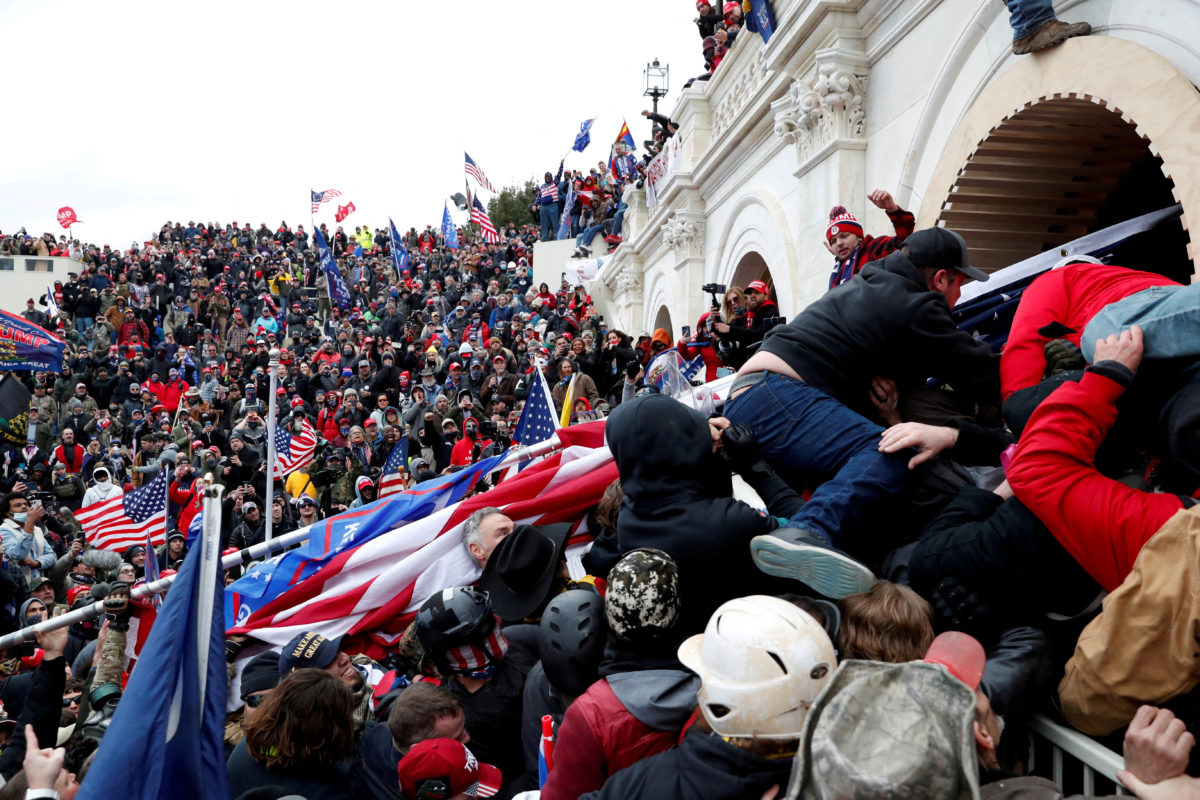
That proposition would have sounded politically radioactive in the immediate aftermath of Jan. 6, when images of shattered windows, Confederate flags inside the Capitol, and bloodied police officers dominated international news coverage. In the days following the attack, even many Republican lawmakers condemned the violence. Senate Republican leader Mitch McConnell said the mob had been “fed lies” and “provoked” by Trump The Washington Post reported. Corporate donors suspended contributions. Social media companies banned Trump’s accounts. Public outrage was broad and immediate.
But political memory is malleable.
Over time, conservative media ecosystems increasingly reframed Jan. 6 as either an exaggerated event or a justified eruption of patriotic anger. Tucker Carlson’s controversial Fox News broadcasts selectively edited Capitol footage to minimize violence and portray defendants sympathetically, despite criticism from fact-checkers, Capitol Police officials, and even Republican senators NPR reported. The rhetorical evolution was deliberate: first denial, then minimization, then sanctification.
The Anti-Weaponization Fund represents the next phase—material compensation.
The financial dimensions of that compensation are staggering. At $1.776 billion, the fund rivals the budgets of major federal grant initiatives while arriving during ongoing national debates over healthcare access, public education funding, housing instability, and social welfare spending. The symbolic juxtaposition is difficult to miss. Millions of Americans routinely encounter bureaucratic obstacles when seeking disability benefits, housing assistance, or student debt relief. Yet individuals convicted in connection with an attack on democratic certification proceedings may now seek multimillion-dollar payouts.
That disparity is helping fuel public outrage.
Civil rights advocates and ethics watchdogs argue that the fund effectively socializes the costs of political extremism. The public assumes financial liability not for repairing democratic damage, but for compensating the people accused and convicted of causing it.
Experts in democratic backsliding warn that this kind of inversion can normalize political violence by reducing its long-term consequences. Political scientist Ruth Ben-Ghiat, who studies authoritarian movements and democratic erosion, has argued that authoritarian leaders often reward loyalists accused of violence as a means of signaling future protection The Atlantic reported. Such protection serves two functions simultaneously: it reinforces loyalty within extremist networks while communicating institutional weakness to opponents.
The message is unmistakable: if political violence serves the movement, the movement may later protect you from accountability.
That perception matters enormously in extremist organizing spaces. Research from the Program on Extremism at George Washington University has consistently shown that organized far-right movements rely heavily on narratives of martyrdom, betrayal, and state persecution to recruit and radicalize supporters George Washington University’s Program on Extremism reported. The Anti-Weaponization Fund provides official government reinforcement for those narratives.
The taxpayer, in effect, becomes the underwriter of political mythmaking.
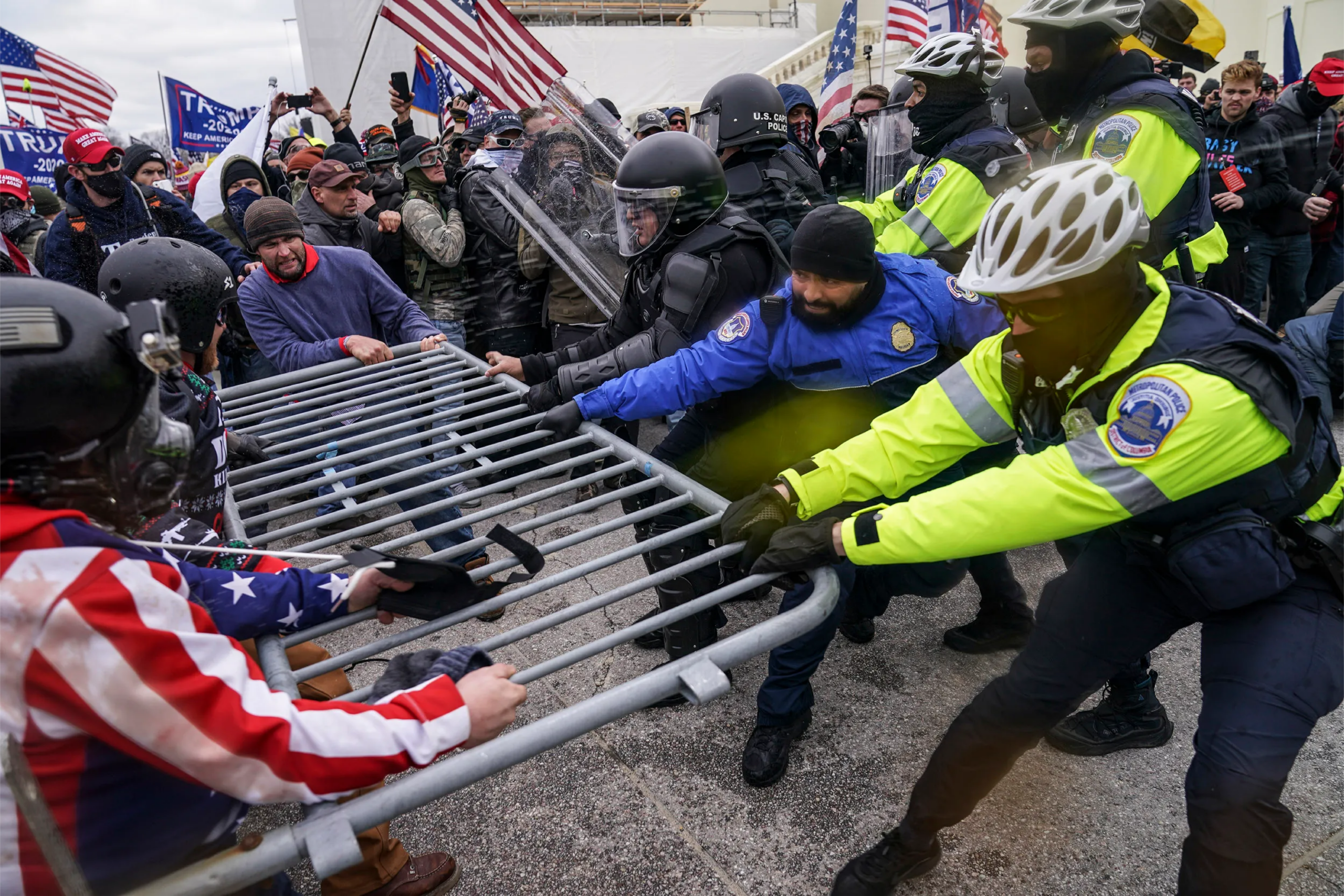
And that mythmaking requires selective erasure. Missing from fund rhetoric are the injuries suffered by officers who defended the Capitol, the trauma experienced by lawmakers and staff, or the broader democratic damage inflicted by the attack. More than 140 law enforcement officers were assaulted during the riot, according to federal prosecutors the DOJ reported. Officers described being crushed in doors, sprayed with chemicals, beaten with poles, and threatened with death.
Those costs rarely appear in discussions surrounding restitution for Jan. 6 defendants.
Nor does the broader institutional cost. Election officials across the country faced escalating threats following Trump’s false claims about voter fraud. The Brennan Center for Justice documented how election workers experienced harassment, intimidation, and burnout in the years after Jan. 6, contributing to a growing crisis in election administration Brennan Center reported. The democratic damage extended far beyond one afternoon at the Capitol.
Yet the Anti-Weaponization Fund narrows the lens until only defendants remain visible.
The irony is extraordinary. A movement built on claims of stolen elections is now positioned to receive public compensation from the very government whose legitimacy it once rejected.
The Officers Push Back
For the officers who defended the Capitol, the Anti-Weaponization Fund is not an abstract constitutional debate. It is personal.
Harry Dunn and Daniel Hodges spent January 6 confronting mobs that overwhelmed police lines, hurled racial slurs, crushed bodies against doors, and attempted to breach congressional chambers. Dunn later testified publicly about being called the n-word repeatedly while defending the Capitol, describing the experience as both physically violent and psychologically scarring PBS NewsHour reported. Hodges became one of the defining visual symbols of the attack after footage showed him pinned in a doorway while rioters crushed him against the frame The New York Times reported.
Now both officers are among those fighting the administration in court.
Their lawsuit argues that the Anti-Weaponization Fund not only exceeds lawful executive authority but actively endangers law enforcement officers by glorifying and rewarding individuals connected to political violence The Guardian reported. The suit frames the program as a direct assault on the principle that violent attacks against democratic institutions should carry consequences rather than rewards.
For officers, the emotional impact is difficult to separate from the broader political climate that followed Jan. 6. Capitol Police officers have repeatedly described feeling abandoned by segments of the political establishment that initially praised them but later minimized the attack. Former Capitol Police officer Michael Fanone, who suffered a heart attack and traumatic brain injury after being assaulted during the riot, became one of the most outspoken critics of Jan. 6 revisionism, accusing Trump allies of betraying officers for political expediency Rolling Stone reported.
The officers’ pushback is fundamentally a fight over civic truth.
If the people convicted of attacking police are compensated by the federal government, what does that communicate to future extremist movements? What does it say to officers asked to defend democratic institutions during moments of political unrest? What happens when state authority signals that allegiance to a political movement may outweigh allegiance to constitutional order?
Those concerns are not theoretical. Extremism researchers warn that symbolic rehabilitation of political violence can lower social inhibitions against future attacks. The Anti-Defamation League has documented how extremist communities celebrate Jan. 6 defendants as heroes and martyrs, using their prosecutions as recruitment narratives the ADL reported. Government compensation risks amplifying that mythology.
The officers’ lawsuits also expose a deeper contradiction within Trump-era politics. Conservative movements have traditionally framed themselves as defenders of law enforcement, invoking “Back the Blue” rhetoric during protests against police brutality. But Jan. 6 fractured that alliance. Many of the same political figures who championed aggressive policing during Black Lives Matter demonstrations later defended or minimized violence against Capitol officers.
That contradiction remains unresolved.
For officers like Dunn and Hodges, the issue is not partisan identity. It is whether democratic institutions will defend the people tasked with protecting them. Their legal challenge represents an effort to preserve a basic civic principle: that attacks on constitutional governance should not become publicly financed grievance claims.
Because once a democracy begins compensating participants in its own attempted disruption, the line between accountability and endorsement begins to disappear.
Historiography of a Reversal
American history is crowded with state violence followed by official amnesia. Reconstruction was overthrown not only through massacres and intimidation, but through a later mythology that recast white supremacist “Redeemers” as restorers of order. The Lost Cause did not merely mourn the Confederacy. It reorganized memory until treason could pose as patriotism.
Jan. 6 has entered that same historiographical struggle. One archive contains indictments, trial records, officer testimony, video evidence, and jury verdicts. Another archive—built through rallies, pardons, congressional theater, and now a compensation fund—casts defendants as martyrs of a corrupt state. The Anti-Weaponization Fund belongs to the second archive. It is memory policy with a payment schedule.
KOLUMN has already examined this pattern of historical inversion in its recent coverage of Clarence Thomas and progressivism, where the central question was how public figures benefit from reform while attacking the traditions that made their power possible KOLUMN Magazine wrote. The Tarrio story sits in the same moral terrain. It asks whether the machinery of government can be turned against the public record itself.
The Final Ledger
The Anti-Weaponization Fund is not merely about money. It is about authorship. Who gets to write the meaning of Jan. 6? The courts that tried the cases? The officers who were crushed, beaten, sprayed, and hunted? The voters whose election was targeted? Or the administration now recasting defendants as victims?
Tarrio’s reported interest in the fund makes the stakes plain. A man convicted of seditious conspiracy after one of the most consequential domestic extremism trials in modern American history may now seek taxpayer-funded compensation from an administration politically invested in transforming Jan. 6 from an attack into a grievance.
That is not reconciliation. It is restitution for the riot.
And if the fund pays, the country will not merely have pardoned an assault on democracy. It will have subsidized its rewrite.
More great stories
Afro Sheen, Wall Street, and the Architecture of Black Possibility
July 6, 2026
No Comments
The Fire Inside the Fourth
July 5, 2026
No Comments