


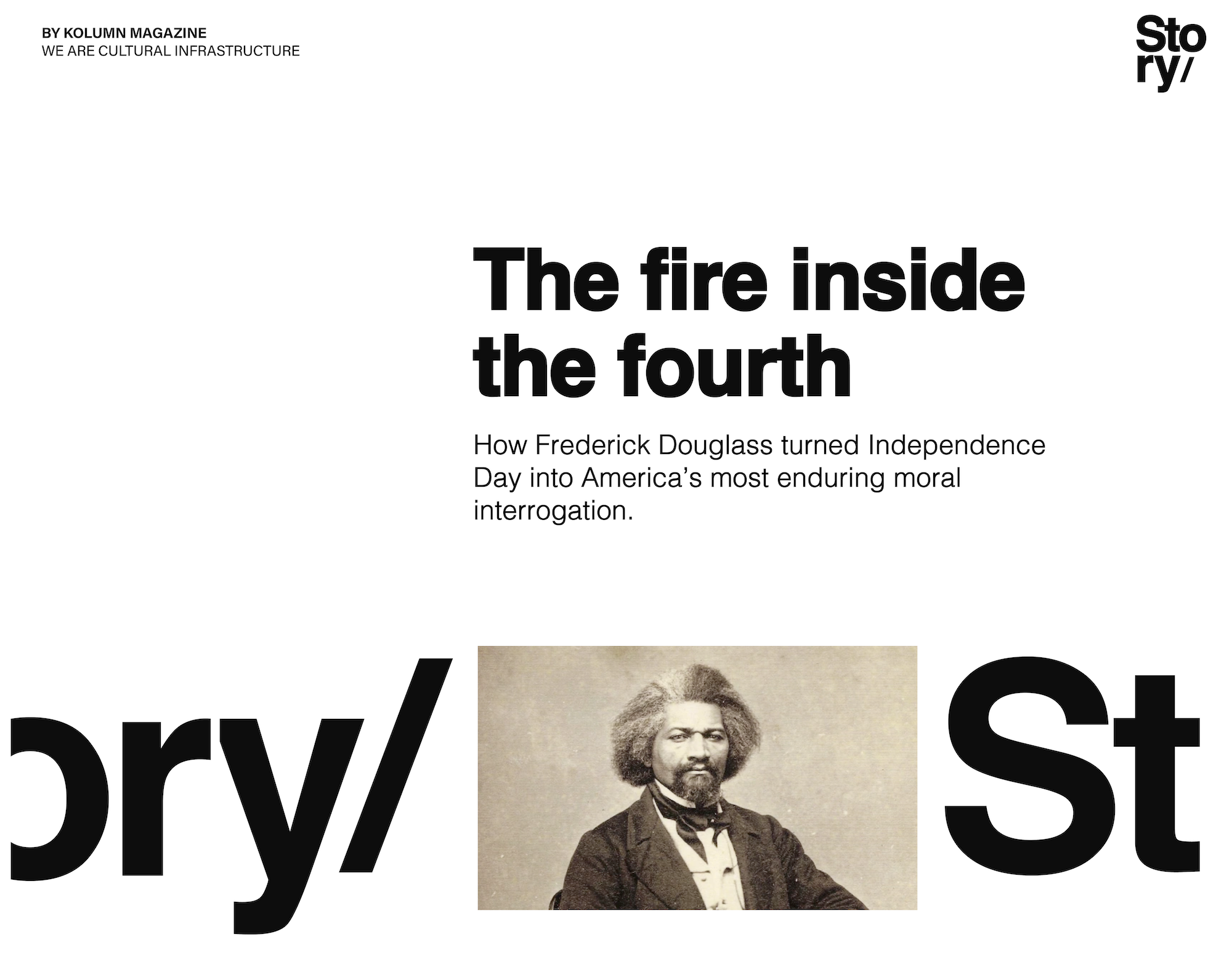
This Fourth of July is yours, not mine.” — Frederick Douglass, Rochester, July 5, 1852
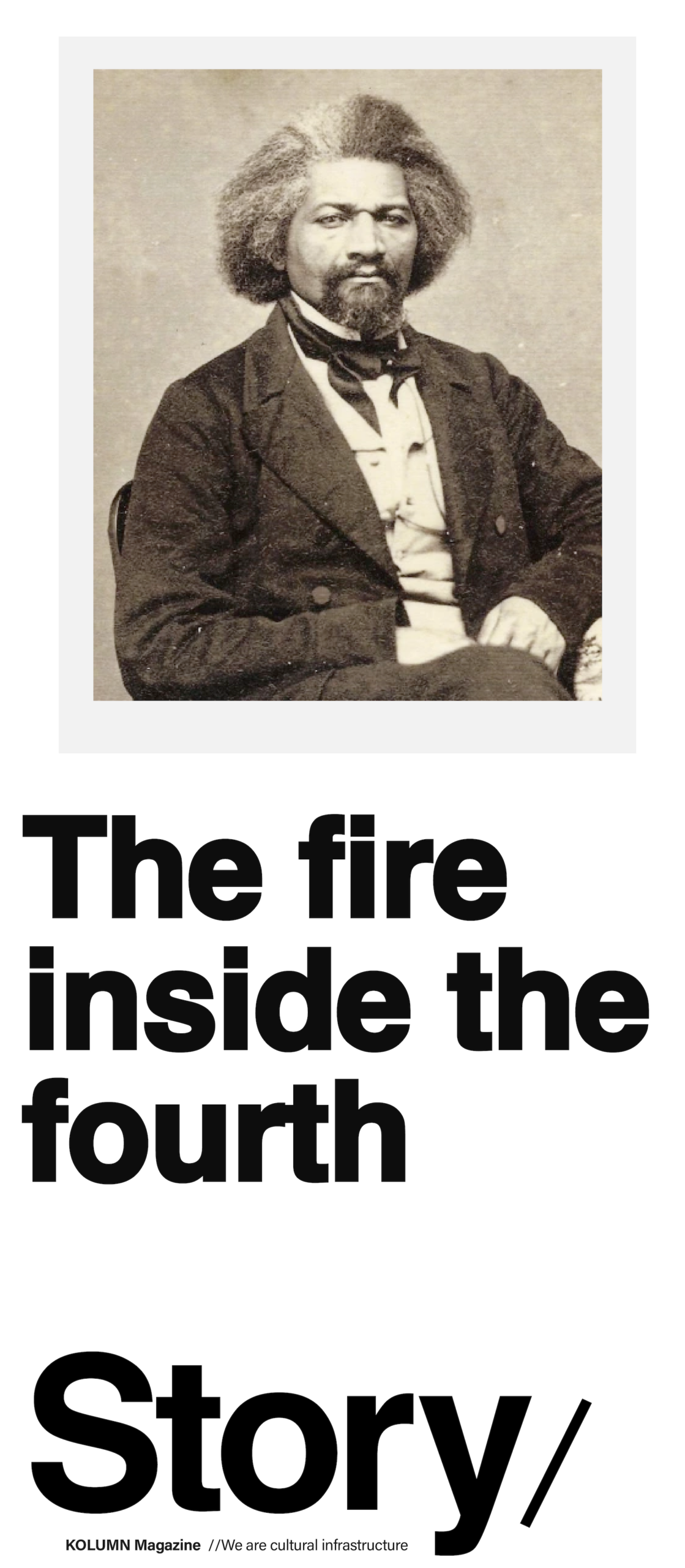
This Fourth of July is yours, not mine.” — Frederick Douglass, Rochester, July 5, 1852
By KOLUMN Magazine
On July 5, 1852, Frederick Douglass rose inside Corinthian Hall in Rochester, New York, before an audience that had invited him to commemorate American independence. The date mattered. The speech was not delivered on the Fourth itself, but the day after, close enough to smell the spent powder of celebration, distant enough to expose the moral hangover. The nation had praised liberty in parades, sermons, bells, flags, and civic ritual. Douglass arrived to ask who had been permitted to belong to that word. The Smithsonian’s National Museum of African American History and Culture notes that Douglass delivered the address at an Independence Day event in Rochester, where he posed the question now carved into the American conscience: “What to the Slave is the Fourth of July?”
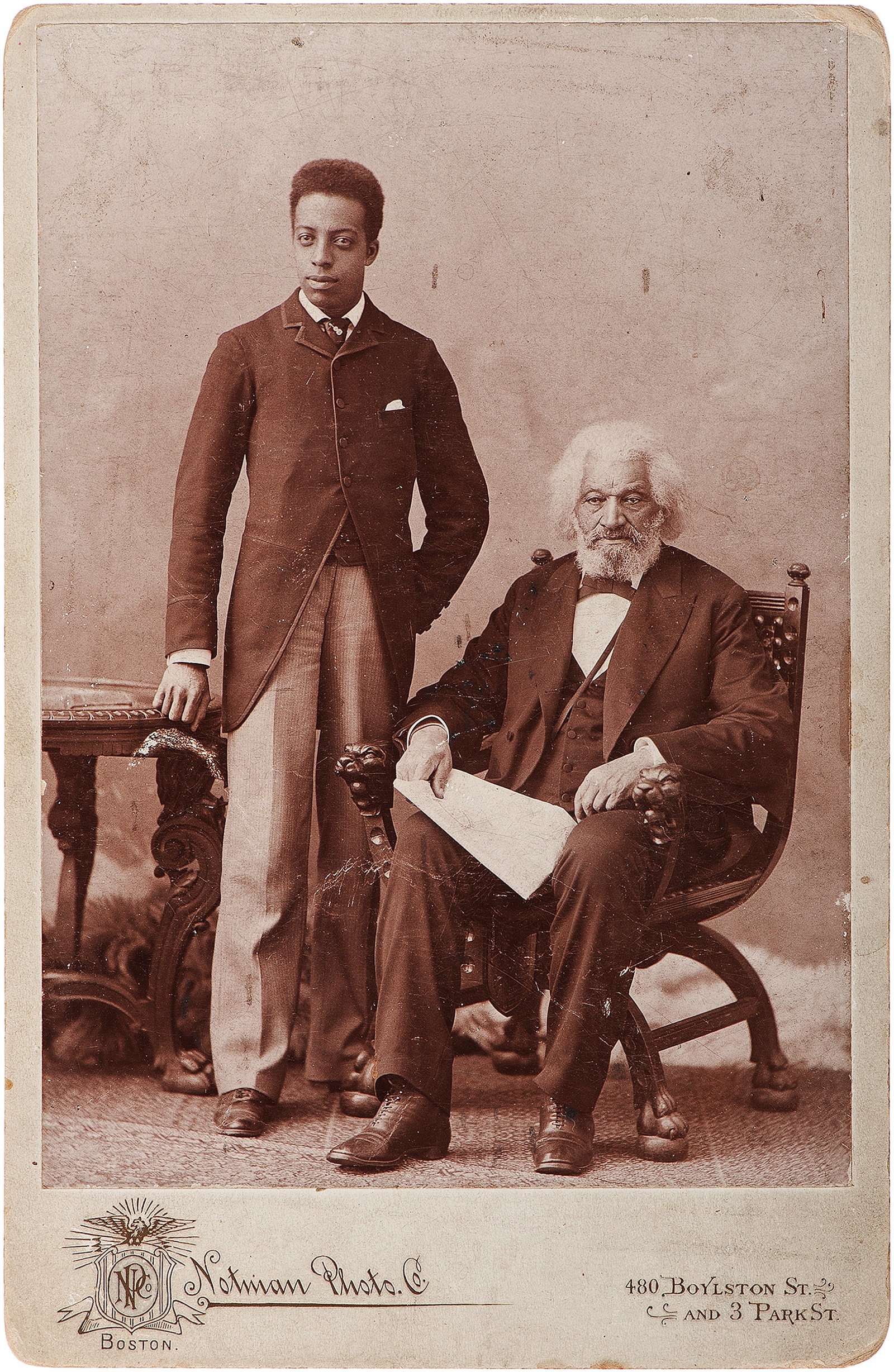
Douglass did not begin by shouting. He began by conceding the achievement of the Revolution. He praised the courage of the founders, called the Declaration’s signers brave, and acknowledged that the Fourth belonged to a people who had once stood against tyranny. Then he turned the room. “This Fourth of July is yours, not mine,” he declared in the address preserved by the National Constitution Center, sharpening the possessive pronoun until it became a weapon. The holiday, he argued, did not reveal national greatness so much as national contradiction. For the enslaved, Independence Day was not a festival of freedom. It was an annual performance of exclusion.
The speech’s power lies in its refusal to let America separate rhetoric from condition. Douglass understood that the country was fluent in liberty but evasive about bondage. In 1852, nearly four million people were enslaved in the United States. The Fugitive Slave Act of 1850 had turned even free states into hunting grounds, compelling citizens and officials to assist in the capture of people escaping slavery. The Compromise of 1850 had not settled the slavery question; it had nationalized its violence. Douglass stood before a largely white abolitionist audience and forced them to hear the Fourth as the enslaved might hear it: not as promise fulfilled, but as hypocrisy staged in public.
The KOLUMN archive has returned often to this distinction between declared freedom and protected freedom. In “The Last State of Slavery”, KOLUMN examined how slavery persisted in Texas even after the Emancipation Proclamation and the Confederacy’s collapse made bondage morally and legally indefensible. In “The days after Juneteenth”, the publication traced the violence, displacement, and economic coercion that followed the announcement of emancipation. Douglass’s 1852 speech belongs to that same throughline: the Black freedom struggle has always known that proclamation is not the same as power, and anniversary is not the same as justice.
The Man Before the Question
Frederick Douglass had lived the contradiction before he named it. Born Frederick Augustus Washington Bailey on Maryland’s Eastern Shore around 1818, he was separated from his mother, denied legal personhood, and treated as property before he became the nation’s most formidable witness against slavery. The National Park Service describes Douglass as a man who moved “from captive slave to internationally renowned activist,” whose words continue to shape how Americans think about race, democracy, and freedom through the Frederick Douglass National Historic Site His authority did not come from abstraction. It came from survival, literacy, memory, and the disciplined conversion of pain into political language.
By 1852, Douglass was no longer simply the formerly enslaved man whose 1845 autobiography had astonished readers. He was an editor, organizer, lecturer, and intellectual combatant. The Library of Congress records that he founded The North Star in Rochester in 1847, naming the paper after the celestial guide used by people escaping slavery. Its motto—“Right is of no Sex—Truth is of no Color—God is the Father of us all, and all we are Brethren”—compressed Douglass’s politics into a single editorial theology. He believed in universal rights, but he also understood that universal rights required institutional force.
That mattered because Douglass’s 1852 speech was not merely an emotional performance. It was a constitutional argument, a theological indictment, a media event, and a tactical intervention in abolitionist strategy. The University of Rochester’s Frederick Douglass Papers Project notes that Douglass spoke at the invitation of the Rochester Ladies’ Anti-Slavery Society and spent significant time preparing the address, later published as “What to the Slave is the Fourth of July?”. The speech was crafted, not spontaneous. Its fury had architecture.
A Speech Built Like a Trapdoor
The address begins with humility, but it is the humility of a strategist. Douglass tells the audience he is not practiced in formal celebration, then demonstrates mastery of civic rhetoric. He praises the founders as men who preferred revolution to submission. He calls the Declaration’s principles saving principles. He does not dismiss the Fourth as meaningless. Instead, he grants the holiday its highest claim so that its betrayal becomes impossible to excuse.
This is the speech’s trapdoor. Douglass allows his listeners to stand comfortably inside the national myth, then removes the floor beneath them. If the founders were right to resist British oppression, then enslaved people were right to resist American slavery. If liberty was sacred in 1776, it was sacred in 1852. If taxation without representation justified revolution, then hereditary bondage justified moral revolt. Douglass’s genius was to make the nation’s own founding vocabulary testify against it.
Historian David W. Blight, whose Pulitzer Prize-winning biography Frederick Douglass: Prophet of Freedom helped renew public attention to Douglass as a thinker of democracy, has repeatedly described the Fourth of July speech as one of the great abolitionist performances of the nineteenth century. In a New-York Historical Society conversation on Douglass and the Fourth of July, Blight emphasizes the power of Douglass’s oratory and the speech’s enduring role in American civic memory. The address survives not because it flatters the country, but because it understands the country too well.
Douglass knew that patriotic language could become anesthesia. Nations tell stories about themselves so often that the stories can replace reality. The Fourth of July, in his telling, had become such a story: a ritual of self-congratulation performed beside the auction block. He described the holiday’s “shouts of liberty and equality” as hollow beside the cries of the enslaved. The point was not that America lacked words. The point was that its words had been severed from its conduct.
The Fourth as Evidence
“What, to the American slave, is your Fourth of July?” Douglass asked. His answer remains among the most devastating passages in American letters. The day, he said, revealed “more than all other days in the year” the gross injustice and cruelty to which the enslaved were constant victims. The speech, available in full through the National Constitution Center, insists that celebration itself can become evidence. Fireworks do not hide the wound. They illuminate it.
This was not anti-Americanism in the shallow sense often deployed against Black critique. Douglass’s argument was more demanding. He treated the Declaration as morally serious and therefore held the nation to it. His critique required belief that America’s public principles mattered enough to be prosecuted. The speech is radical not because it rejects the founding, but because it refuses to let the founding become decorative.
That is why modern readings of Douglass often collide with civic comfort. He is easy to quote when reduced to self-making, literacy, or perseverance. He is harder to domesticate when he calls the nation false to the past, false to the present, and bound to be false to the future. He is welcomed as an icon, then resisted as an accuser. Yet the accuser is the icon. Remove the indictment and Douglass becomes a monument without a voice.
KOLUMN’s recent feature “Frederick Douglass Was Born Here. The House Is Gone.” observed that Douglass’s birthplace is a site of memory without the original structure, a landscape where absence itself has become part of the archive. The same could be said of the Fourth of July speech. It is a document built around an absence: the absence of Black citizenship, Black safety, Black legal protection, Black inclusion in the rituals of national belonging.
The Constitution Question
One reason the speech remains historically rich is that Douglass was in motion intellectually. Earlier in his abolitionist life, under the influence of William Lloyd Garrison, he had viewed the Constitution as a pro-slavery compact. By the early 1850s, he had shifted toward an antislavery constitutional interpretation. The National Constitution Center notes that even while condemning the nation’s hypocrisy, Douglass urged listeners to read the Constitution as a “glorious liberty document”, not as a document that naturally sanctified slavery.
That shift matters. Douglass was not simply denouncing America from outside its political tradition. He was fighting inside the meaning of its texts. He argued that the Constitution should be interpreted by its language, its purposes, and its principles, not by the secret intentions or compromises of slaveholders. This position separated him from Garrisonian disunionism and moved him toward political abolitionism: the belief that antislavery struggle had to use parties, elections, courts, newspapers, and constitutional argument.
Recent scholarship continues to examine this transformation. Diana Schaub’s essay “Frederick Douglass: The Constitution Militant” argues that Douglass’s adoption of an antislavery constitutional position was nearly as momentous as his escape from slavery because it moved him toward a combative fidelity to the written text. Other legal historians have explored Douglass’s idea of “two Constitutions,” one interpreted through slavery’s political power and another through liberty’s textual promise, as reflected in the California Law Review’s discussion of Douglass and constitutional interpretation.
This was not naïveté. Douglass knew the courts, Congress, churches, and parties had been corrupted by slavery. He knew law could be made into a cage. But he also knew that surrendering the Constitution to enslavers would give them both plantation power and national legitimacy. His answer was militant interpretation. The text must be read against bondage. The nation must be compelled to mean what it said.
The Churches in the Dock
Some of the speech’s fiercest passages are aimed not at politicians but at churches. Douglass condemned American Christianity for blessing slavery, sheltering slaveholders, and confusing piety with moral cowardice. He distinguished between the Christianity of Christ and the Christianity of America. The first, in his telling, aligned with the oppressed. The second had made peace with whips, chains, and sale.
This religious critique was central to abolitionism. Enslavers defended bondage with scripture, sermons, denominational power, and missionary paternalism. Douglass answered in kind, refusing to concede God to the slaveholding republic. His attack on the churches was not incidental; it exposed how moral institutions become engines of violence when they protect order over justice.
The point still unsettles because Douglass did not merely accuse the obvious villain. He accused the respectable bystander. He accused the institutions that knew better, spoke gently, and acted slowly. He accused the people who preferred moderation to emancipation because moderation preserved their comfort. The speech’s target was slavery, but its secondary target was complicity.
From Orator to Political Theorist
For much of the twentieth century, Douglass was remembered primarily as the escaped slave who became an eloquent abolitionist. That description is true but insufficient. Recent historiography has restored him as a political thinker, editor, constitutional interpreter, feminist ally, diplomat, and theorist of democracy. Blight’s Prophet of Freedom emphasized Douglass’s public life as a long struggle over memory, citizenship, and the meaning of the Civil War. Manisha Sinha’s work on abolition has placed figures like Douglass within a broader, interracial, transnational movement that treated abolition not as a narrow humanitarian reform but as a democratic revolution.
This historiographical turn changes how the Fourth of July speech is read. It is not only a moral outcry. It is statecraft from below. Douglass was instructing the nation in democratic accountability. He understood that public memory is political infrastructure. Whoever controls the meaning of the Fourth controls the moral grammar of citizenship.
The Yale Beinecke Library, which holds copies of the first printing, calls Douglass’s 1852 oration “an essential speech for the nation”. That phrase is useful because the speech has become more than an abolitionist document. It is a recurring civic test. Each generation hears it differently because each generation brings its own evasions. During Reconstruction, it spoke to citizenship and federal protection. During Jim Crow, it spoke to segregation’s betrayal of emancipation. During the civil rights era, it spoke to the gap between constitutional promise and local terror. In the twenty-first century, it speaks to voting rights, historical memory, racial backlash, mass incarceration, and the politics of who is permitted to define patriotism.
The Speech and the Black Freedom Calendar
Douglass’s address also belongs within a broader Black tradition of counter-calendar politics. Enslaved and free Black communities did not simply inherit national holidays; they reinterpreted them. They gathered on Emancipation Days, celebrated August First to mark British abolition in the Caribbean, honored Juneteenth, and built rituals around dates that named Black freedom directly. These commemorations challenged the idea that the Fourth of July exhausted the meaning of liberty.
The Fourth was the state’s birthday. Black freedom days were the people’s testimony. Douglass’s speech stands between them. He did not abandon the national calendar. He invaded it. He turned the Fourth into a courtroom and called the republic to the stand.
That practice remains visible in contemporary public readings of the speech. The National Park Service has hosted community readings through the National Underground Railroad Network to Freedom, including a program introduced by David Blight that treated the address as a living democratic text rather than a museum relic through its community reading series. Democracy Now! has also returned to the speech through performances such as James Earl Jones’s reading, reminding audiences that Douglass’s cadence still carries when spoken aloud in modern broadcast form.
The speech survives because it was written for the ear. Douglass was an orator before microphones, a publisher before television, a political communicator before mass media. His sentences build pressure through repetition, contrast, escalation, and reversal. He knew how to let an audience agree before forcing it to answer for what agreement required.
Patriotism Without Amnesia
Modern America often tries to divide patriotism and criticism into opposing camps. Douglass refused that division. His speech is among the strongest arguments ever made for a patriotism without amnesia. He honored the Revolution by radicalizing its meaning. He honored the Declaration by refusing to let slaveholders monopolize it. He honored liberty by insisting that it could not coexist with human ownership.
This is why Douglass remains dangerous to sentimental nationalism. Sentimental nationalism wants gratitude without grievance, unity without repair, history without victims, founders without contradictions, and holidays without accountability. Douglass offered something more rigorous. He asked whether love of country could survive truth. More importantly, he asked whether a country could survive without it.
Recent debates over the 250th anniversary of American independence have returned to these questions. Le Monde’s 2026 series on American independence described the founding as a story of democratic aspiration shadowed by slavery’s “original sin,” noting that Douglass’s critique remains central to understanding the republic’s unresolved contradictions in its anniversary coverage. The question is not whether the founding matters. The question is who gets to interpret it, and whether interpretation becomes a shield or a summons.
Douglass chose summons. He did not ask America to hate itself. He asked America to stop excusing itself.
The Afterlife of an Indictment
The speech did not end in despair. This is often overlooked. After pages of indictment, Douglass declared that he did not despair of the country. He believed forces were in operation that would bring slavery down. That hope was not soft. It was historical, political, and theological. He saw abolitionist organizing, international pressure, moral agitation, and the contradictions of modern commerce pressing against slavery’s future.
That ending matters because Douglass’s hope was not optimism. Optimism expects improvement. Hope works for it. Douglass saw no contradiction between condemnation and faith. In fact, his faith required condemnation. To believe the nation could be better was to name precisely how it was failing.
Three years after the speech, the Kansas-Nebraska Act would deepen the sectional crisis. Five years later, Dred Scott would announce that Black people had no rights white men were bound to respect. Nine years later, the Civil War would begin. Thirteen years later, the Thirteenth Amendment would abolish slavery except as punishment for crime. Fifteen years later, the Fourteenth Amendment would redefine citizenship. Eighteen years later, the Fifteenth Amendment would prohibit racial discrimination in voting. Then came the counterrevolution: terror, redemption, disenfranchisement, segregation, convict leasing, and the long war against Black citizenship.
Douglass lived long enough to see slavery fall and white supremacy reorganize. That is why his 1852 speech cannot be confined to slavery alone. It is about the American habit of declaring victory before justice is secured. It is about the distance between legal text and lived protection. It is about the violence that grows in the gap.
KOLUMN’s “The Lie That Put Nine Boys on Trial” described the Scottsboro Boys as trapped in a system where the courthouse refined the logic of the mob. That line from slavery to Jim Crow is not accidental. Douglass warned that a nation able to celebrate liberty beside bondage had trained itself in moral compartmentalization. Once learned, that habit does not disappear easily. It mutates.
Why the Speech Still Burns
The enduring significance of “What to the Slave is the Fourth of July?” is not simply that Douglass exposed hypocrisy. Many people can expose hypocrisy. Douglass did something harder: he turned hypocrisy into obligation. If the nation’s words were false, then the nation had to change either its words or its world. He would not allow both to stand.
That is the speech’s lasting civic violence. It strips away the comfort of symbolic inclusion. It asks whether the flag protects, whether the Constitution reaches, whether citizenship defends, whether churches tell the truth, whether courts recognize humanity, whether memory has been made honest enough to guide action.
For Black Americans, the speech has often functioned as both mirror and inheritance. It names a pain older than the Civil War but not trapped in the past. It also models a tradition of intellectual refusal: refusing false gratitude, false unity, false innocence, false history. Douglass teaches that critique can be an act of democratic authorship. To challenge the nation’s story is to claim authority over it.
For the broader country, the speech remains an invitation more severe than celebration. It invites Americans to distinguish between reverence and idolatry. Reverence can tell the truth about what it loves. Idolatry cannot. Douglass offered reverence sharpened into judgment.
The Unfinished Fourth
Every Fourth of July asks what kind of memory the nation will practice. It can remember independence as a completed inheritance, safely owned and annually displayed. Or it can remember independence as an unfinished demand, one that grows more honest as more people are allowed to define freedom.
Douglass chose the second meaning. He stood in Rochester and made the Fourth larger by making it less comfortable. He forced the holiday to include the enslaved, not by pretending they shared in its blessings, but by making their exclusion the central fact of the day. He transformed Independence Day from a patriotic ceremony into a democratic interrogation.
That is why the speech still belongs on July 4, July 5, Juneteenth, Constitution Day, Election Day, and every day the republic congratulates itself too quickly. Douglass did not leave America with a slogan. He left it with a question. The question has outlived slavery because the conditions that make it necessary—exclusion, denial, racial hierarchy, historical evasion—have never vanished on schedule.
“What to the Slave is the Fourth of July?” remains one of the most important speeches in American history because it refuses to let freedom become merely national property. Freedom, Douglass insisted, must be measured from the bottom up, from the captive, the fugitive, the disenfranchised, the hunted, the excluded, the unprotected. Any nation can praise liberty from a balcony. Douglass asked what liberty meant from the auction block.
The answer still determines the meaning of the Fourth.
More great stories
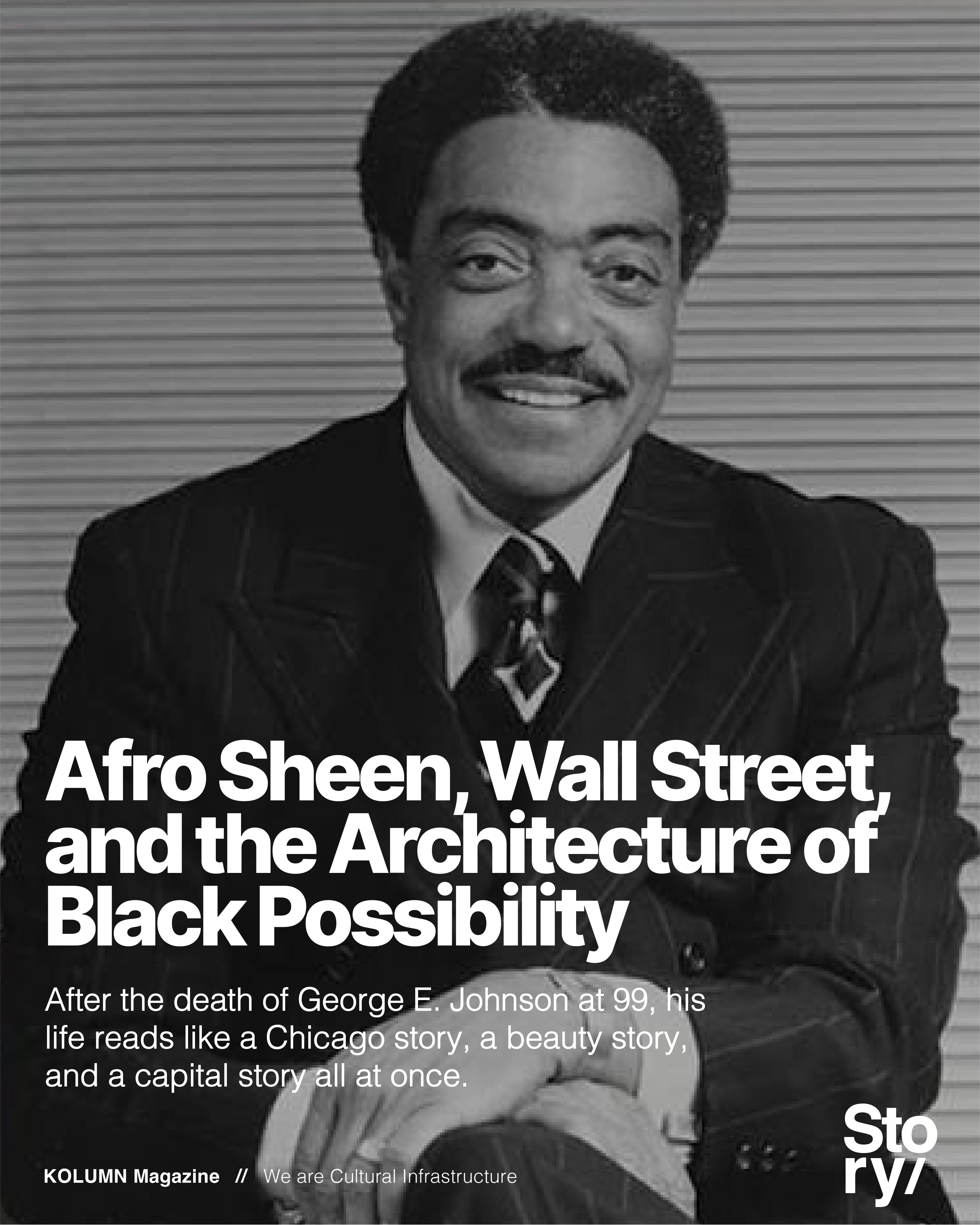
Afro Sheen, Wall Street, and the Architecture of Black Possibility
July 6, 2026
No Comments
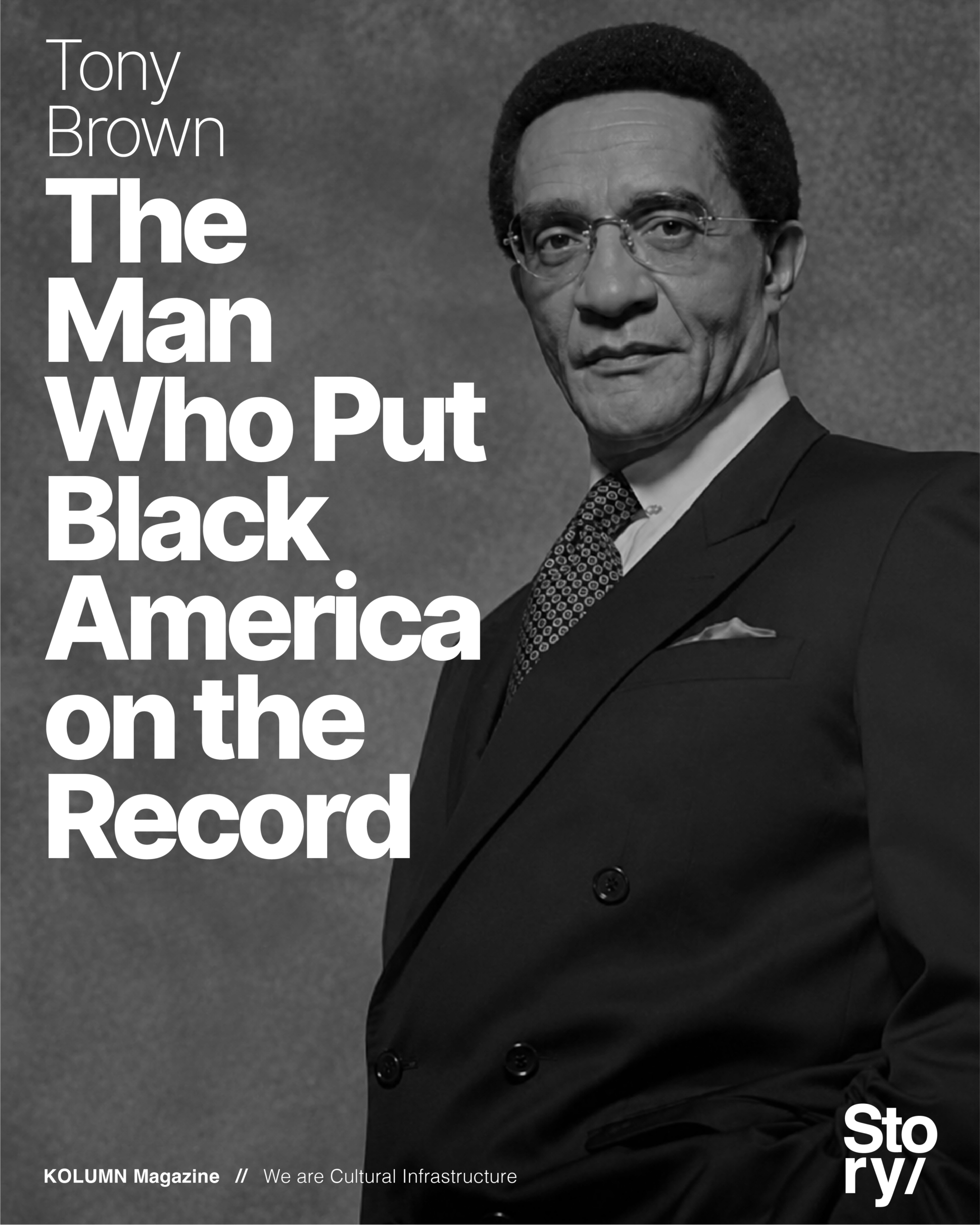
The Man Who Put Black America on the Record
June 28, 2026
No Comments