





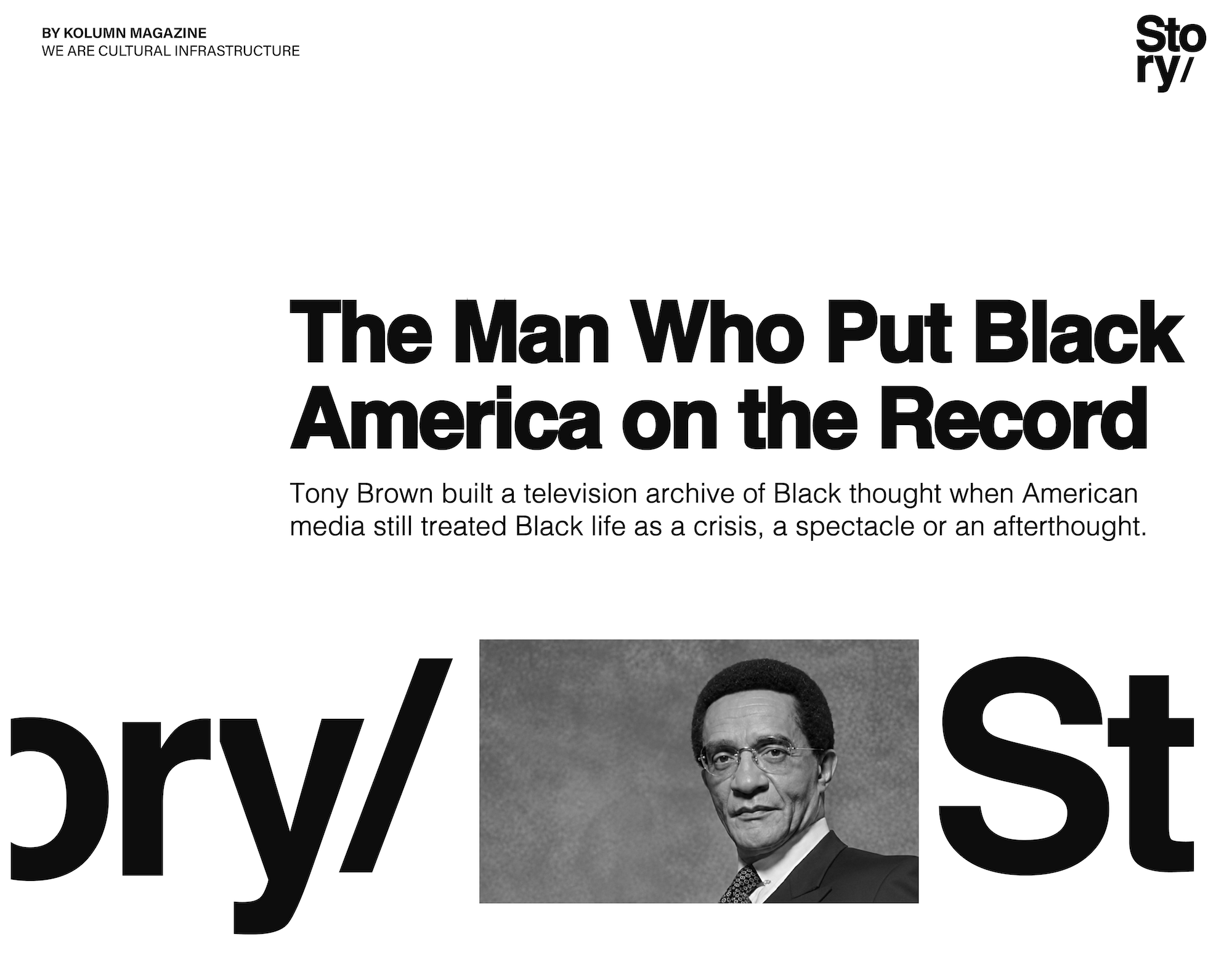
Tony Brown’s genius was not that he made Black America respectable to television. It was that he made television answerable to Black America.
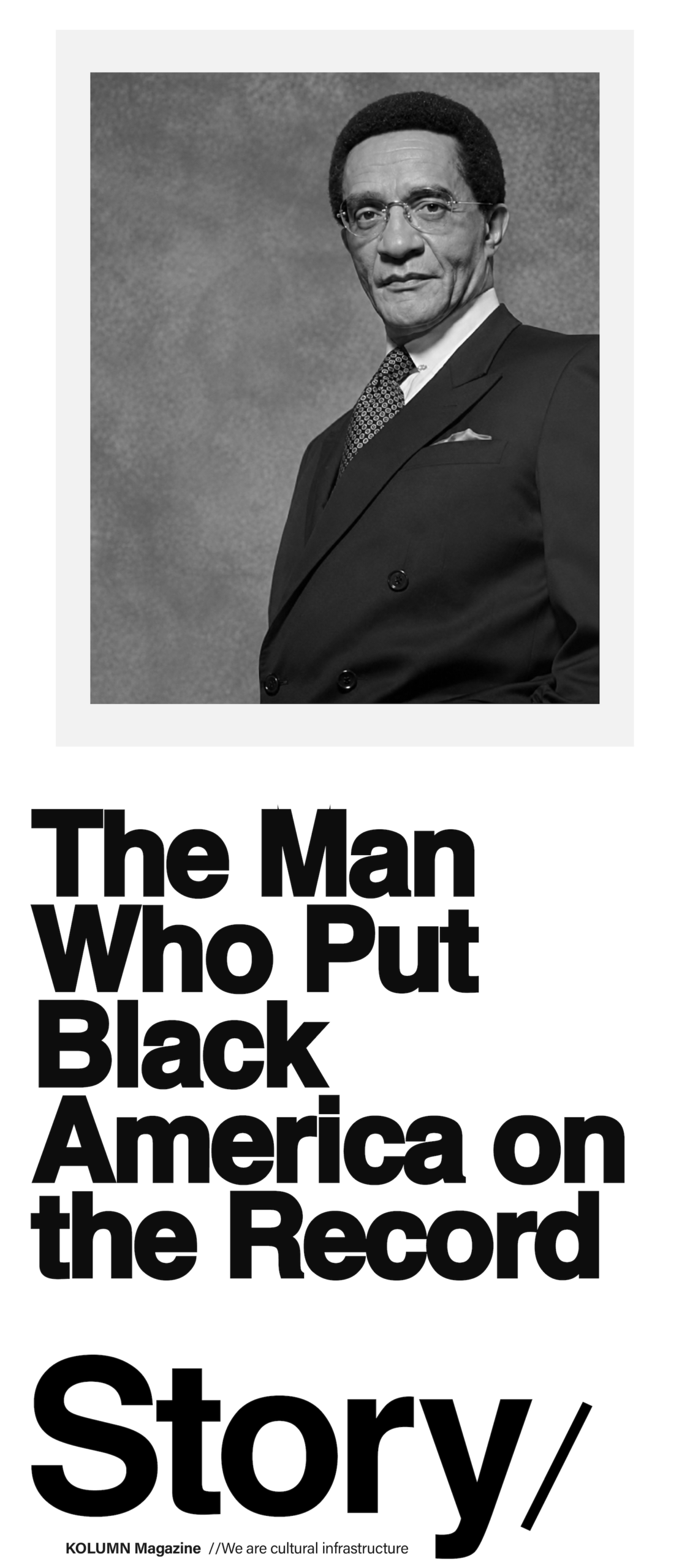
Tony Brown’s genius was not that he made Black America respectable to television. It was that he made television answerable to Black America.
By KOLUMN Magazine
Tony Brown understood television as a battlefield long before media executives learned to describe representation as strategy. He came of age in a country where Black life was often shown to white America only after catastrophe: riot footage, police lines, burning neighborhoods, grieving mothers, courtroom steps, the curated agony of a people made visible mostly in moments of crisis. Brown’s answer was not simply to appear on television. His answer was to build a record.
That record became Black Journal, and later Tony Brown’s Journal, a program that began in the moral wreckage and political possibility of the late 1960s and stretched across four decades of American life. The American Archive of Public Broadcasting describes Black Journal as the first nationally televised public affairs program produced for, about and eventually by African Americans, a distinction that matters because the word “eventually” contains a struggle. The show did not simply arrive as a gift from public television. It was forced into fuller Black authorship after Black staff members challenged the original production structure, a rupture that helped turn a program about Black people into a program with Black people controlling its frame.
Brown, who died June 17, 2026, at 93, according to Journal-isms, inherited that tradition and expanded it. He was a broadcaster, academic dean, author, entrepreneur, self-help evangelist, political dissenter and cultural archivist. He was also difficult to categorize, which is part of his significance. He was not merely a liberal civil-rights broadcaster, not merely a Black conservative commentator, not merely an HBCU institution-builder and not merely a television host with an unusually long run. He was a figure formed by segregation and poverty who spent his career arguing that Black America needed access to capital, education, media ownership, technological literacy and historical self-definition.
To understand Brown’s life is to understand the period in which his voice became necessary. In 1968, the Kerner Commission warned that the United States was “moving toward two societies, one black, one white—separate and unequal”. In its chapter on media, the report condemned a press that wrote from the vantage point of white America and too often reproduced its biases, paternalism and indifference. Brown’s career can be read as one long answer to that indictment. If mainstream journalism had failed to see Black communities whole, Brown helped create a place where Black thought could appear in public as argument, complexity, culture and power.
From Charleston to Detroit, From Survival to Speech
William Anthony Brown was born in Charleston, West Virginia, in 1933, into a world that treated Black aspiration as a threat and Black poverty as destiny. His early life, shaped by segregation and economic deprivation, became part of the intellectual architecture of his later work. The American Psychiatric Association Foundation’s profile of Brown notes that he drew from his childhood experiences of segregation and poverty to inform his activism and his view of American institutions.
Brown served in the U.S. Army from 1953 to 1955 and later studied at Wayne State University, where he earned degrees in sociology and psychiatric social work. Those disciplines mattered. Sociology gave him a structural vocabulary; psychiatric social work gave him a language for injury, adaptation and behavior. His journalism often fused both instincts. He was drawn not only to events but to systems, not only to prominent figures but to the psychic cost of racial hierarchy.
Detroit was essential to his formation. There, Brown moved through media, activism and Black civic life at a moment when the city was one of the great capitals of Black political imagination. He worked as a drama critic for the Detroit Courier and became involved in civil-rights organizing. His official biography says he coordinated the 1963 Walk to Freedom with Martin Luther King Jr. in Detroit, a march that drew hundreds of thousands before the March on Washington. Whether remembered primarily as a broadcaster or educator, Brown’s career began from the premise that media and movement were not separate domains. The march, the microphone, the classroom and the television studio were all platforms from which Black people could contest the terms of American democracy.
That sense of mission placed him in the lineage of the Black press. From Freedom’s Journal in the nineteenth century to Ida B. Wells’s anti-lynching journalism, from the Chicago Defender to Black radio and television, Black media has often been less an industry than an infrastructure of survival. KOLUMN’s own recent historical work on Juneteenth, Freedom House and Black civic memory rests on the same premise: that archives are never neutral when a people’s history has been deliberately suppressed. Brown’s career belongs inside that continuum. He did not simply report Black history. He helped preserve the arguments Black people were having about their own future.
The Program Born from a Media Reckoning
Black Journal emerged during a national crisis in credibility. The uprisings of the 1960s had exposed not only police violence, housing discrimination and economic abandonment but also the limits of the American press. White-owned newsrooms often treated Black communities as sites of disorder rather than as communities with histories, institutions, grievances and internal debates. The Kerner Commission’s media critique was blunt, and later scholars have argued that journalism’s anti-Black harm cannot be repaired without acknowledging how media systems helped construct racial inequality. In The ANNALS of the American Academy of Political and Social Science, Joseph Torres and Collette Watson write that any attempt to save local journalism or democracy must reckon with the harm media institutions inflicted on Black communities.
This is the historiographical frame through which Brown should be understood. He was not an isolated television personality who happened to host a long-running show. He was part of a Black public-affairs television movement that included programs such as Soul! and local Black journals in cities like Detroit. These programs challenged the assumption that Black audiences were niche audiences and that Black political thought was too radical, too local or too controversial for national public broadcasting.
The American Archive of Public Broadcasting notes that Black Journal covered the Black Power movement, Black nationalism, Pan-Africanism, the Black Panthers, the Black student movement, the “Black is beautiful” movement, the assassinations of Martin Luther King Jr. and Malcolm X, the African diaspora and media representation itself. That range was the point. Brown’s television was not designed to reassure America that Black people were harmless. It was designed to show that Black America was thinking.
When Brown took leadership of Black Journal in 1971, the program had already been shaped by struggle. Its early Black staff strike had produced a change in leadership, with William Greaves becoming producer and director; under Greaves, the show won an Emmy. Brown inherited that insurgent foundation and turned it into a durable institution. In 1977, after some PBS affiliates resisted the program’s politics and preferred less controversial public-affairs fare, the series transitioned into commercial television under the name Tony Brown’s Journal, before returning to public television in 1982.
That trajectory says much about Brown’s politics of media. He did not wait for institutional permission. He moved across public television, syndication and independent production with a producer’s pragmatism and a nationalist’s suspicion of dependency. The camera was a tool, but the platform had to be controlled.
The Archive as Counter-History
The importance of Tony Brown’s Journal cannot be measured only by its longevity, though its longevity was extraordinary. PBS’s Pioneers of Thirteen notes that Brown joined THIRTEEN in the 1970s as host of Black Journal, later renamed Tony Brown’s Journal, and remained on the air for 40 years. Brown’s own site describes the collection as nearly 1,000 programs produced from 1968 to 2008. That means the archive spans the aftermath of King’s assassination, the rise and repression of Black Power, the busing wars, affirmative action battles, the Reagan era, the crack epidemic, the emergence of Black conservatism, the HIV/AIDS crisis, the culture wars, the rise of hip-hop, welfare reform, the digital divide, post-civil-rights electoral politics and the early Obama era.
The archive matters because television is often a poor guardian of Black complexity. Commercial news compresses. It reduces. It turns communities into segments and debates into shouting matches. Brown’s format, at its best, allowed for depth and contradiction. Guests could be activists, scholars, artists, doctors, politicians, veterans, business leaders or controversial thinkers. Episodes addressed subjects ranging from the Tuskegee experiments to Tulsa’s 1921 massacre, from Black colleges to apartheid, from media stereotyping to economic development.
Brown’s journalism was sometimes combative, sometimes didactic, sometimes ideologically rigid, but it was rarely passive. He believed that television should teach, provoke and equip. In his own description, he wanted to “Educate, Inspire and help Equip Black people” toward self-empowerment and economic development, according to his official biography. That language places him near the self-help tradition associated with Booker T. Washington, Marcus Garvey, Elijah Muhammad, Malcolm X’s later economic nationalism and post-1960s Black enterprise movements. Yet Brown also belonged to the broadcasting tradition of public argument, where the point was not simply uplift but confrontation.
This is where historians and media scholars may differ in their assessments. One school might place Brown in the tradition of Black institutional autonomy, emphasizing his work in Black-controlled media, HBCU journalism education and economic self-reliance. Another might read him through the politics of Black conservatism, especially after his formal break with Democratic orthodoxy and his criticism of integrationist liberalism. A third might situate him inside the post-Kerner media-reform tradition, where the central question was who had the authority to define Black reality.
All three interpretations are useful, but none is sufficient alone. Brown’s significance lies in the friction among them. He was a Black nationalist in media practice, a conservative in parts of his policy critique, a public educator in tone and a civil-rights broadcaster by historical function. He made television that could host both grievance and instruction, both suspicion and aspiration.
The HBCU Builder
Brown’s impact was not confined to the screen. He helped build institutions that would train the people behind future screens. In 1971, he founded Howard University’s School of Communications and served as its dean until 1974, according to Journal-isms. Decades later, he became the first dean and dean emeritus of Hampton University’s Scripps Howard School of Journalism and Communications, a role highlighted in his official biography.
This part of Brown’s life deserves more attention because it reveals his deeper theory of power. Representation in front of the camera was never enough. Black people needed to own production skills, editorial authority, institutional pipelines and professional standards. Brown’s HBCU work placed him within a broader Black educational tradition that understood schools not merely as credentialing machines but as freedom institutions.
At Howard and Hampton, Brown’s symbolic value was significant. He represented the possibility that Black journalism education could be rooted in excellence without begging for validation from white media institutions. He also represented the burden of preparing students to enter newsrooms that might hire them but not fully hear them. The Kerner Commission had identified newsroom exclusion as a central failure; Brown’s answer was to train Black communicators who could enter, challenge, build or bypass those institutions.
His founding of Black College Day in 1980 further reflected this institutional commitment. Journal-isms reports that Brown launched the effort to encourage students to consider HBCUs and preserve those institutions for future generations. In that sense, Brown saw media and education as mutually reinforcing. Television could shape public consciousness, but universities could shape the people who would build the next public square.
The Provocateur and the Problem of Independence
Any honest account of Tony Brown must include the controversies and ideological turns that made him both influential and polarizing. Brown’s later work often attacked what he saw as dependency politics, liberal paternalism and the failures of civil-rights leadership. His 1995 book Black Lies, White Lies argued for Black self-reliance and criticized integrationist assumptions. In a Washington Post review, Richard D. Kahlenberg wrote that Brown argued the civil-rights movement had erred fundamentally by seeking progress through racial integration, a position that put Brown at odds with much of the mainstream civil-rights establishment.
Brown’s critics saw excess in his sweeping claims, especially when his critique of liberalism moved toward broad denunciations or conspiratorial arguments. His supporters saw courage, especially in his willingness to challenge Black political orthodoxies on national television. The truth is that Brown’s independence was both his strength and his vulnerability. It allowed him to create a platform not easily captured by party politics, but it also led him into arguments that sometimes flattened the very Black complexity his television archive otherwise preserved.
This tension is central to his legacy. Brown insisted that Black people should not outsource their destiny to white liberals, government programs or symbolic inclusion. That critique resonated with long-standing traditions of Black economic nationalism. But it also risked underestimating the structural nature of racial inequality — the policies, markets, laws and institutional exclusions that made “self-help” necessary but insufficient.
Still, to reduce Brown to his most controversial positions would be a mistake. His career was bigger than any single ideological label. He made room for debates that Black communities were already having in barbershops, churches, campuses, union halls and kitchen tables. He did not invent Black disagreement; he televised it.
Technology, Ownership and the Coming Digital Divide
One of Brown’s most prescient concerns was technology. In a 1996 Los Angeles Times interview, Brown argued that computers could help Black communities break cycles of poverty and even “leap over” other groups if every Black household had access to one, as reported in the paper’s archive. In retrospect, that claim sounds both optimistic and prophetic. Brown saw digital access not as a luxury but as a civil-rights issue before the phrase “digital divide” became common policy language.
His technological vision was tied to ownership. He understood that each new medium could either reproduce old racial hierarchies or open new routes around them. The history of radio and television had taught him that Black exclusion was never accidental. As Torres and Watson note in their study of journalism’s anti-Black harm, early federal broadcasting policy contributed to ownership patterns in which people of color were effectively shut out of commercial broadcast licenses for decades, while media systems profited from racial narratives that harmed Black communities. Brown’s push toward computer literacy should be understood against that history. He did not want Black America to arrive late to another communications revolution.
In this respect, Brown anticipated many of today’s debates about algorithmic bias, platform ownership, creator economies and digital archives. He knew that content without infrastructure could be erased. He knew that memory stored in someone else’s vault remained vulnerable. His effort to digitize and stream the Tony Brown’s Journal archive was therefore not nostalgia. It was a claim on the future.
Why Tony Brown Matters Now
Brown’s death arrives in a media environment both transformed and haunted by the failures he spent his career confronting. There are more Black journalists in national media than there were when Black Journal began. There are Black anchors, Black showrunners, Black podcasters, Black newsletter writers, Black documentary producers, Black-owned digital platforms and a generation of younger journalists fluent in both archival recovery and social-media speed. Yet the old problems remain: distorted crime coverage, underinvestment in Black local media, extractive storytelling, algorithmic amplification of racial panic, newsroom cuts that disproportionately weaken community reporting and political attacks on Black history itself.
That is why Brown’s archive feels newly urgent. He modeled a form of journalism that treated Black public thought as worthy of preservation. He also exposed the limits of mere access. A Black face on a white-controlled platform could matter, but Brown wanted more than access. He wanted a Black-controlled record.
For KOLUMN, whose own editorial project centers Black history, memory, culture and civic meaning, Brown’s life offers both inspiration and warning. The inspiration is obvious: build the archive, publish the counternarrative, preserve the voices, refuse the flattening. The warning is just as important: independence requires rigor. A platform built to resist dominant narratives must still discipline itself with evidence, fairness and intellectual humility. Brown’s best work did that. His most debatable work reminds us how difficult that balance can be.
The Long Journal
Tony Brown’s life was a long journal in the truest sense: a record of observation, argument, discipline, conviction and revision. He saw America through the eyes of a child of segregation, a veteran, a social worker, a critic, a broadcaster, a dean and an entrepreneur. He believed Black people needed not only civil rights but economic power; not only representation but ownership; not only education but institutional memory; not only visibility but voice.
His television work answered a question American journalism still has not fully resolved: What would the news look like if Black people were not treated as subjects to be interpreted, but as citizens, thinkers and narrators of their own condition?
For 40 years, Tony Brown gave one answer. He put Black America on the record. He let it argue with itself. He let it remember. He let it warn. He let it imagine. And in doing so, he left behind one of the most important media archives of the post-civil-rights era — not because it was perfect, but because it was ours, because it was deliberate, and because it understood that a people denied the power to tell their story must build the machinery to tell it anyway.
More great stories
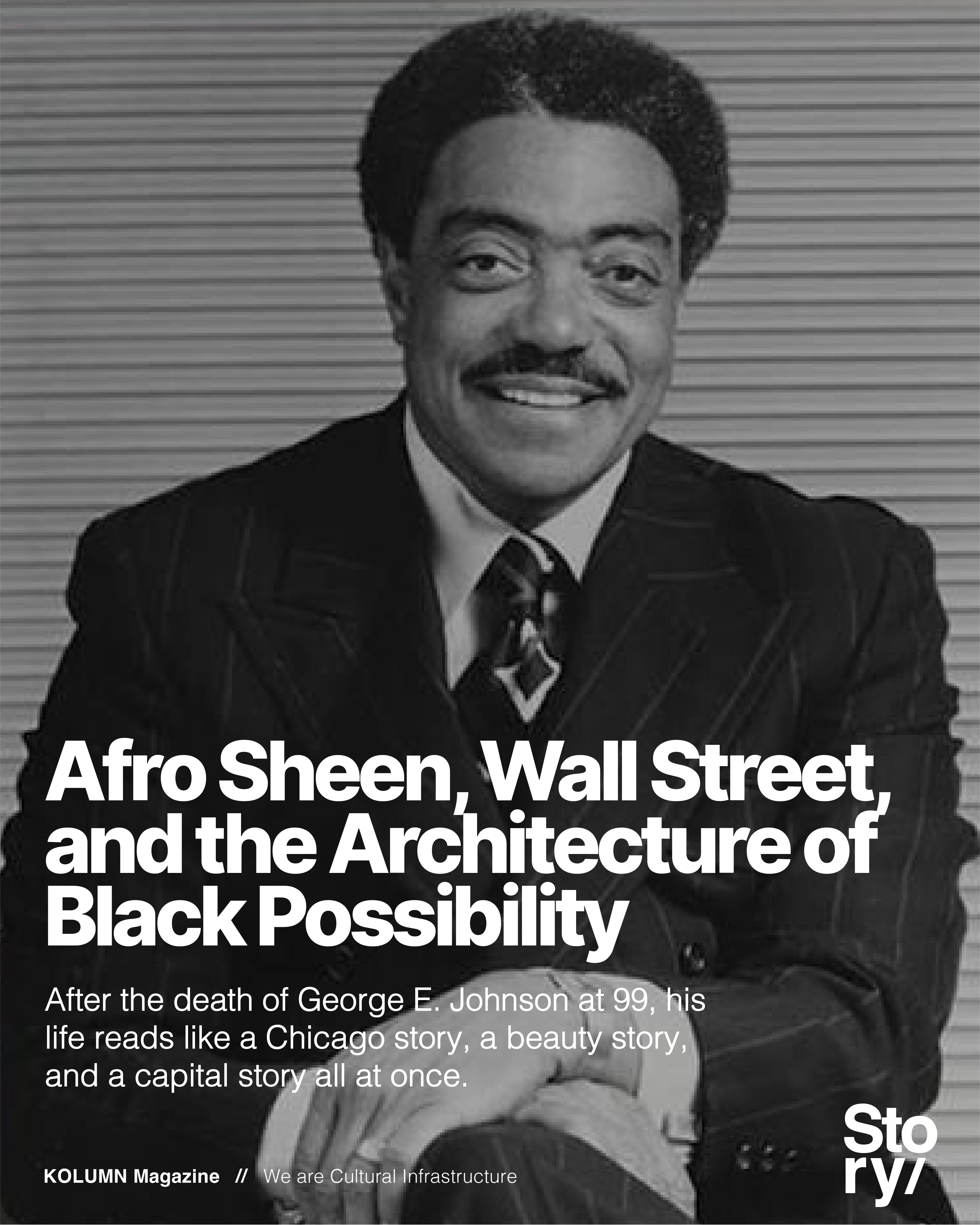
Afro Sheen, Wall Street, and the Architecture of Black Possibility
July 6, 2026
No Comments
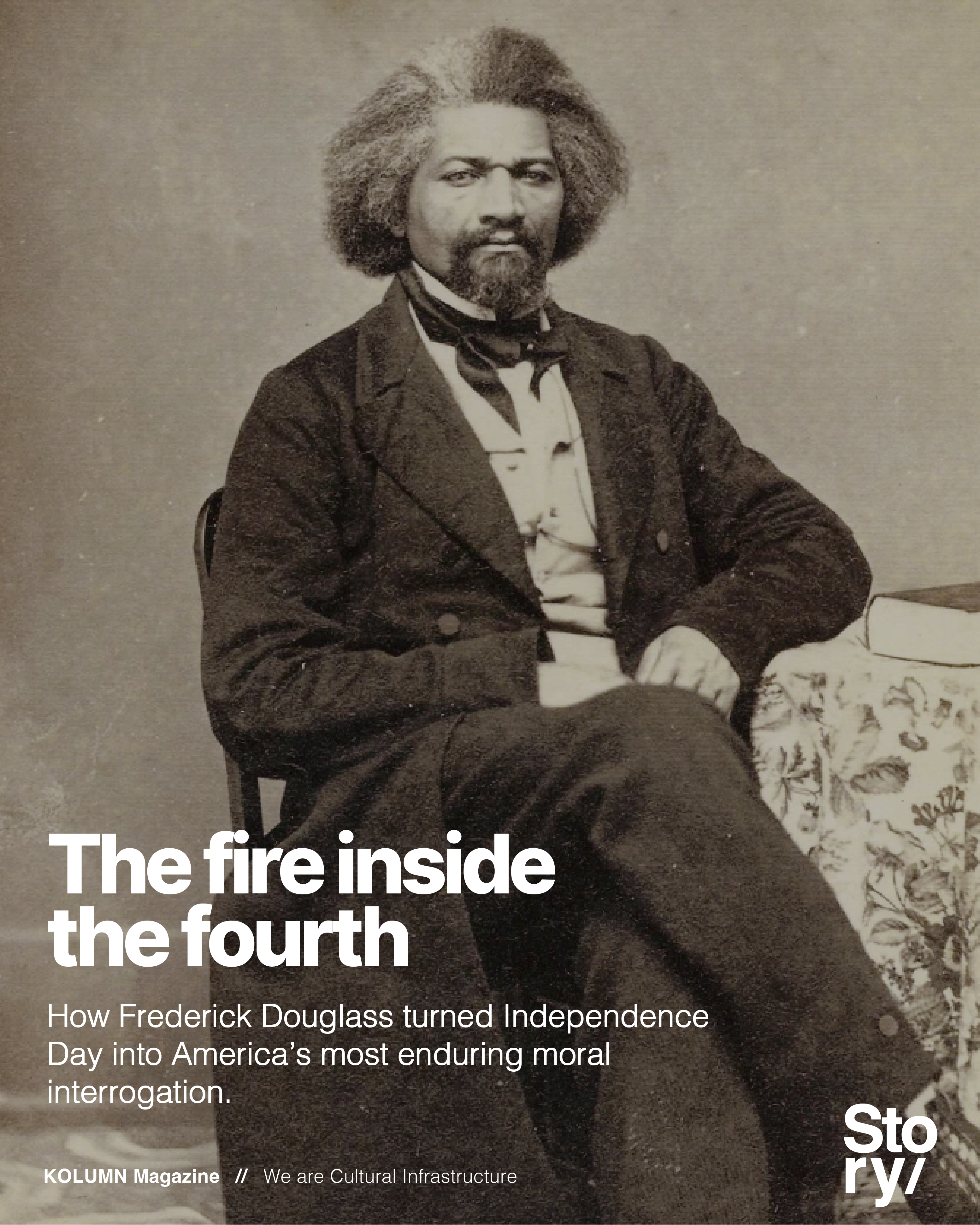
The Fire Inside the Fourth
July 5, 2026
No Comments