




A congressional map may decide who speaks in Washington. A school-board map can decide whether a child’s school has a library, a nurse, a translator or a future.
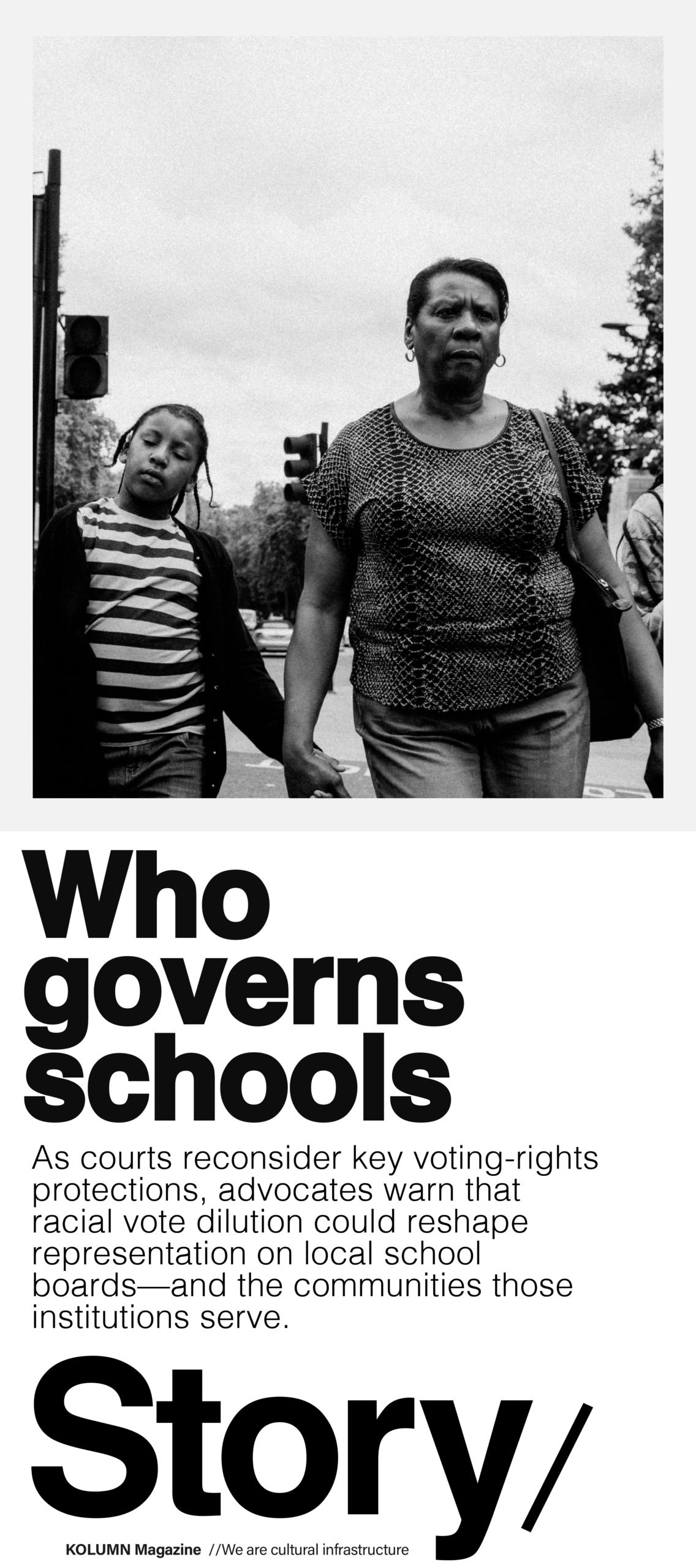
A congressional map may decide who speaks in Washington. A school-board map can decide whether a child’s school has a library, a nurse, a translator or a future.
By KOLUMN Magazine
A school board meeting can look, from the outside, like the most ordinary form of democracy. Folding chairs. Fluorescent light. A superintendent’s report. Parents waiting through budget language they do not speak fluently in order to address a bus route, a suspension policy, a leaking roof, a missing translator, a curriculum dispute, a school closure, a principal who does not listen, a gifted program their children never seem to enter, a discipline code that seems to find Black boys first and mercy later.
But before any parent reaches the microphone, before any child’s name is spoken into the public record, another decision has already shaped the room: the map.
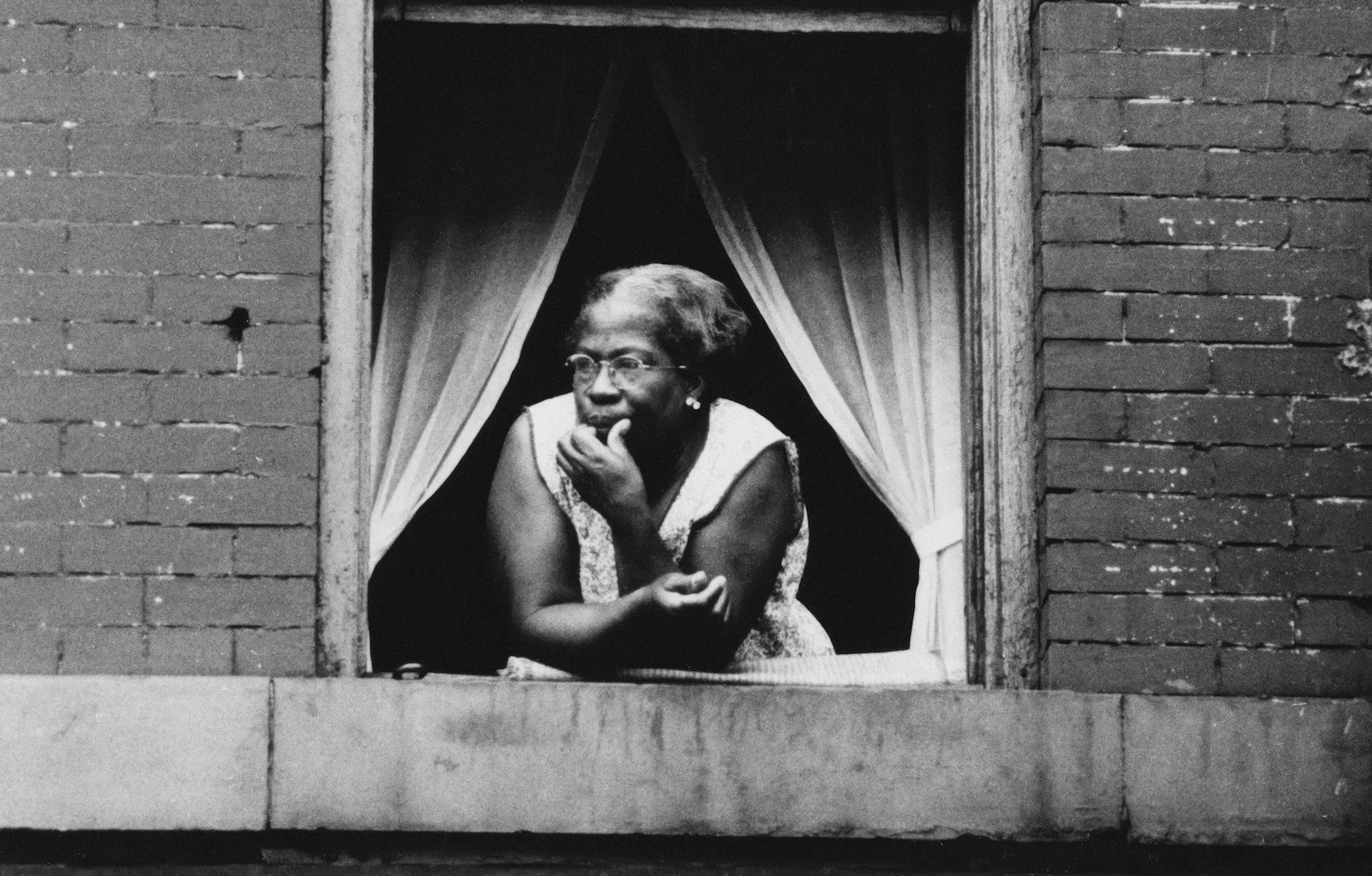
School-board district lines decide which neighborhoods are grouped together, which voters can build a majority, which communities are divided into political fragments and which concerns are treated as “district-wide” priorities rather than local grievances. When those lines are drawn in ways that weaken Black, Latino, Native or Asian American voting power, the injury is not abstract. It can travel directly into classrooms, discipline hearings, building plans, gifted admissions, special education services, school safety policy, language access, teacher recruitment and the everyday dignity of children whose families already understand what it means to be governed from a distance.
The public often hears the phrase “racial gerrymandering” in the context of Congress or state legislatures, where the stakes are presented as national power, party control and constitutional doctrine. Yet the same logic can be even more intimate at the school-board level. A congressional map may decide who speaks in Washington. A school-board map can decide whether a Black mother in a rapidly changing county has a representative who understands why her child’s school has no working library. It can decide whether immigrant parents receive translated notices before a disciplinary hearing. It can decide whether a district treats school closures in Black neighborhoods as a budget solution or as a civic wound.
The Voting Rights Act has long recognized this problem. Section 2, strengthened in 1982, prohibits voting practices that deny minority voters an equal opportunity to participate in the political process and elect representatives of their choice. The law has been used not only against congressional maps, but against city councils, county commissions and school boards. As Chalkbeat reported in May 2026, more than 320 Voting Rights Act complaints between 1982 and 2024 involved school-board elections—a reminder that public education has always been one of the main theaters of American racial democracy.
The Local Office That Governs Childhood
School boards are not ceremonial bodies. They approve budgets, hire and evaluate superintendents, set attendance zones, determine school closures, adopt disciplinary policies, negotiate transportation plans, oversee facilities, approve curriculum, respond to federal civil-rights complaints and decide how public dollars move through a district. In many communities, they are the first layer of government a family experiences directly.
That is why representation matters. Political scientists have shown that the racial and ethnic composition of school boards can affect policy outcomes. In a 2021 study, Vladimir Kogan examined close school-board elections and found evidence that minority representation can influence school district policy and student outcomes, including changes in spending priorities and administrative behavior. His research, summarized by Cambridge University Press, cuts against the lazy assumption that school boards are merely symbolic offices where representation matters only as a gesture.
Representation also shapes agenda-setting. A board member rooted in a historically excluded community may raise questions others do not see: why discipline disparities remain untouched, why a school boundary change burdens one neighborhood more than another, why magnet programs are inaccessible without private transportation, why bilingual parents are called “hard to reach” when the district has failed to reach them in their own language.
The inverse is also true. When maps dilute minority voting strength, the absence of representation can become a policy engine of its own. Silence hardens into procedure. Procedure becomes precedent. Precedent becomes the district’s explanation for why nothing can change.
The Thomas B. Fordham Institute and the Wallace Foundation’s national survey of school board members, “Who’s on Board?”, found that school-board members often differ from the communities they serve across race, age, education and political outlook. The survey did not argue that demographic identity alone guarantees good governance. But it did show that the people making decisions about schools are often not socially representative of the families most affected by those decisions. In a country where housing segregation, school segregation and political geography are braided together, that mismatch is rarely accidental.
A Long History Hiding in Plain Sight
The modern school-board map belongs to a deeper history of American racial control. After Reconstruction, white officials across the South learned that suppressing Black political power did not always require banning Black people from voting outright. Once federal law made the most violent forms of exclusion more visible, local governments turned to methods that looked neutral: at-large elections, numbered posts, staggered terms, annexations, district lines that split Black neighborhoods, and rules that submerged minority voters within larger white electorates.
These mechanisms did not need to announce themselves as segregation. Their genius was administrative. They made racial hierarchy look like election design.
That history is central to understanding the present. The Voting Rights Act of 1965 was not simply a response to poll taxes and literacy tests. It was a response to a full architecture of exclusion. Section 2 became one of the law’s most important tools because it addressed vote dilution, the practice of structuring elections so minority voters could cast ballots but could not convert votes into representation. The Equal Justice Initiative has described vote dilution as one of the tactics used after the formal end of explicit disfranchisement, when governments could no longer openly deny Black citizens the ballot and instead adopted systems that gave their votes “no or minimal weight,” as EJI explained in its 2026 analysis of the Supreme Court’s voting-rights.
The distinction matters. Democracy is not only the right to vote. It is the right to cast a vote that can matter.
KOLUMN Magazine has returned to this terrain repeatedly, particularly in its May 2026 article “Black Vote Dilution at an Industrial Scale”, which traced how modern redistricting fights have transformed the Voting Rights Act from a shield against racial exclusion into a contested legal battleground. The school-board version of that story is less visible, but in many ways more revealing. It shows how national doctrine descends into local governance, how a Supreme Court opinion can eventually appear as a closed elementary school, an ignored parent coalition or a board majority that never has to ask why one side of town keeps losing.

At-Large Elections and the Mathematics of Erasure
Not all racial gerrymandering looks like a strangely shaped district. Sometimes the map disappears altogether.
At-large school-board elections allow all voters in a district to vote for every seat, rather than electing representatives from smaller geographic districts. In theory, this can sound inclusive: everyone votes for everyone. In practice, when voting is racially polarized and one racial group constitutes a durable majority, at-large systems can prevent minority communities from electing any candidate of choice, even when those communities are large, organized and deeply affected by district policy.
This was the allegation in East Ramapo, New York, where Black and Latino residents challenged the at-large method used to elect the school board. The New York Civil Liberties Union argued that the system unlawfully denied Black and Latino voters an equal opportunity to elect candidates who represented their interests, as the organization explained in its lawsuit announcement. The case became nationally significant because East Ramapo’s politics were not only racial but educationally existential: the district served a large public-school population while board elections were shaped by communities with sharply different relationships to the public system.
In Fayette County, Georgia, the NAACP Legal Defense Fund challenged at-large elections for both the Board of Commissioners and the Board of Education. A federal court found in 2013 that the county’s at-large system violated Section 2 of the Voting Rights Act, and LDF’s summary of the case noted that the system “submerged” Black voters within a white-majority electorate, preventing them from electing candidates of choice despite their significant presence in the county. The remedy—single-member districts—was not a racial preference. It was an attempt to make political geography correspond more honestly to community voice.
Hazleton, Pennsylvania, offers a contemporary variation. The city’s Latino population grew dramatically, and Latino students became a large majority of the school district, yet Latino political power lagged behind. The Associated Press reported that two mothers sued the Hazleton Area School District over its at-large election system, arguing that it diluted Latino voting strength and contributed to a school board unresponsive to concerns such as translation access and student discipline disparities.
The point is not that every at-large system is illegal or that every district-based system is fair. The point is that election structure is never innocent merely because it is technical. A system can be formally open and functionally closed. It can invite everyone to vote while ensuring that certain communities almost never win.
Packing, Cracking and the School-Board Agenda
Classic racial gerrymandering often operates through two related strategies: packing and cracking. Packing concentrates minority voters into a small number of districts, limiting their influence elsewhere. Cracking splits minority communities across multiple districts, preventing them from forming an effective majority anywhere.
At the school-board level, the damage can be especially complex because school communities are not only residential blocs. They are attendance zones, feeder patterns, bus routes, parent networks, neighborhood histories and shared institutional memories. A Black neighborhood split across several board districts may lose the ability to organize around a neglected middle school. A Latino community divided among districts may struggle to elect a representative who prioritizes bilingual staff, translation services or culturally competent family engagement. A Native community dispersed across a rural district may find that transportation, broadband access and culturally responsive curriculum remain peripheral concerns.
The NAACP Legal Defense Fund has warned that electoral maps can “hide mechanisms” that silence Black voters and diminish their ability to elect candidates who understand their experiences and policy priorities, a point LDF makes in its redistricting overview. That warning applies with particular force to school governance because the harms of diluted representation are often misread as ordinary bureaucratic failure. A board that fails to respond to racial discipline disparities may say it needs more data. A board that underfunds schools in Black neighborhoods may cite enrollment formulas. A board that closes a neighborhood school may call it efficiency. Without fair representation, affected communities often have to prove the same injury again and again to officials insulated from political consequence.
Historians of education have long understood this dynamic. Vanessa Siddle Walker’s work on Black education before and after desegregation, James Anderson’s scholarship on Black schooling in the South, and legal historians of Brown v. Board of Education have shown that public education has never been only about classroom access. It has been about governance: who sets the terms of knowledge, who controls school resources, who interprets Black parental aspiration and who gets to define “quality” education.
Brown attacked legally segregated schooling, but it did not automatically democratize school governance. In many places, white resistance moved from the schoolhouse door to the boardroom, from explicit exclusion to procedural control. KOLUMN’s earlier coverage of Prince Edward County’s school closures after Brown, referenced in “The Editor in the Crosshairs”, captured the brutal logic of Massive Resistance: when forced to choose between public education and racial hierarchy, segregationist leadership often chose hierarchy. Modern vote dilution is less theatrical, but it belongs to the same lineage of power protecting itself through institutions.

The Supreme Court’s Shadow Over Local Democracy
The legal terrain has grown more dangerous. In recent years, the Supreme Court has narrowed voting-rights protections and made racial-gerrymandering claims harder to prove. The Court’s 2024 decision in Alexander v. South Carolina State Conference of the NAACP made it more difficult to challenge maps where race and party overlap, a recurring issue because Black voters often support Democratic candidates at high rates. The League of Women Voters described the ruling as one that made racial gerrymandering easier by allowing legislatures to defend harmful maps as partisan rather than racial.
Then came Louisiana v. Callais. The Brennan Center warned that the decision substantially weakened Section 2 and would encourage racial discrimination and partisan gerrymandering, particularly by making it harder for voters of color to challenge discriminatory maps. Though the case concerned congressional redistricting, the implications reach downward. Section 2 has been one of the main tools available to minority voters challenging discriminatory local election systems, including school boards.
Stateline reported that the Court’s decision could reshape local power from statehouses to school boards, noting that the ruling clears the way for officials to revisit electoral systems once constrained by Voting Rights Act litigation. Votebeat similarly reported that the Voting Rights Act helped Latino and Black voters gain representation on city councils and school boards across Texas, including places such as Carrollton-Farmers Branch, and that those gains may now be vulnerable.
This is where national legal doctrine becomes local anxiety. If Section 2 becomes harder to enforce, communities challenging racially discriminatory school-board systems may face steeper evidentiary burdens, longer litigation, higher costs and less predictable remedies. Districts that previously moved from at-large elections to single-member districts under legal pressure may test whether they can reverse course. Legislatures may become more aggressive in redrawing local maps. And communities that rely on school-board representation to contest educational inequality may find that the law recognizes their injury only after political damage has already occurred.
Representation of Interests, Not Just Identity
A serious account of racial gerrymandering and school boards must avoid a simplistic claim: that only Black officials can represent Black students, only Latino officials can represent Latino families or only Native officials can represent Native communities. Democratic representation is more complicated than biography. There are white board members who fight seriously for racial equity, and there are minority officials who do not. There are multiracial coalitions that produce better governance than any single identity bloc could achieve alone.
But this complexity should not be used to erase the central fact: communities historically excluded from power have a right to a fair opportunity to elect candidates of their choice. The phrase “candidates of choice” is important because Voting Rights Act doctrine is not merely about descriptive representation. It is about political agency. Minority voters may choose candidates who share their race, or they may choose candidates who do not. The core question is whether the electoral system allows that choice to matter.
The “representation of interests” on school boards is especially consequential because public schools distribute life chances. A board that understands Black parents’ concerns about over-policing may approach school safety differently. A board accountable to immigrant families may invest in translation and family liaisons rather than blaming parents for not attending meetings conducted only in English. A board shaped by low-income neighborhoods may scrutinize transportation burdens, lunch debt, school fees and digital access with more urgency. A board responsive to historically segregated communities may ask whether “choice” programs reproduce exclusion by requiring time, information and mobility that some families do not possess.
These are not symbolic differences. They are policy differences.
The Classroom Consequences of a Diluted Vote
The harms of racial gerrymandering are often described in political language: dilution, polarization, representational injury, equal protection. But families experience them as school conditions.
A diluted vote can mean a board majority that does not prioritize replacing HVAC systems in aging schools serving Black neighborhoods. It can mean attendance-zone changes that protect property values in affluent areas while destabilizing working-class communities. It can mean discipline policies that suspend Black and Latino students at disproportionate rates without sustained board intervention. It can mean fewer counselors, fewer culturally competent teachers, fewer advanced courses and less responsiveness when families report discrimination.
It can also shape the politics of curriculum. In the backlash against honest teaching about race, school boards have become battlegrounds over which histories can be named. KOLUMN’s earlier essay “Derrick Bell: The Prophet of Racial Realism” noted that Bell died before “critical race theory” became a fixture of school-board conflict, yet his work anticipated the resistance that emerges when institutions are asked to make racial power legible. If communities of color are underrepresented on school boards, debates about history, racial inequality and civic memory can be dominated by those least affected by erasure.
The result is a civic double bind. Black and brown families are told to participate locally, attend meetings, vote in school-board elections and advocate for their children. Yet if the electoral system has been engineered to weaken their influence, participation becomes a ritual of exhaustion. Families speak. Officials listen politely. The vote has already been diluted.
What Fair Maps Cannot Do—and What They Can
Fair school-board maps will not solve school inequality by themselves. They will not eliminate racial wealth gaps, housing segregation, unequal school funding, teacher shortages, partisan disinformation or the long afterlife of segregation. A fair district line is not a fully funded classroom. It is not a reading specialist. It is not a safe bus stop.
But fair maps can change who must be answered.
That is not small. Democratic accountability begins with the possibility that officeholders can be replaced by voters whose interests they neglect. When racial gerrymandering prevents that possibility, local governance becomes insulated from the communities most burdened by its decisions. When maps are fair, communities gain leverage. They can build coalitions, elect representatives, contest budgets, demand data, challenge closures and insist that equity be treated as governance rather than charity.
The remedies are known. Single-member districts can give geographically concentrated minority communities a fairer opportunity to elect candidates of choice. Cumulative voting and ranked-choice systems may help in some contexts. Independent redistricting commissions can reduce conflicts of interest, though only if they are designed with real transparency and community participation. Strong notice requirements, accessible mapping data, multilingual hearings and enforceable criteria can make local redistricting less opaque. Courts still matter. So do state voting-rights acts, especially as federal protections weaken.
Yet the most important remedy may be narrative clarity. Communities need language for what is happening. A school-board map is not just a map. It is a theory of whose children belong to whom. It tells a district whether Black neighborhoods are communities or fragments, whether Latino parents are a constituency or an afterthought, whether Native families are sovereign partners or distant addresses, whether Asian American students are visible beyond stereotype, whether poor communities are represented as places with needs or as numbers in a budget model.
The danger of racial gerrymandering is not simply that it produces unfair elections. It teaches public institutions how to ignore people efficiently.
The Boardroom as a Measure of Democracy
The old civil-rights photograph often gives us the schoolhouse door: children walking past mobs, federal troops escorting students, a brave child carrying books through hatred. But the quieter image of democracy may be the school-board district map pinned to a wall, its lines bending around neighborhoods, its colors determining whether a community will govern or plead.
Racial gerrymandering survives because it hides inside the ordinary. It appears as a boundary adjustment, a governance reform, a countywide election, a technical consultant’s recommendation, a board resolution, a legal defense. Its violence is procedural, but its consequences are intimate. It can decide who has to cross town for a hearing, who receives a translated notice, who gets a new school and who is told to wait.
The question, then, is not whether school-board maps are too local to matter. They matter because they are local. They matter because children live under their consequences before they ever learn the language to describe them. They matter because a democracy that cannot represent families at the level of the classroom will not redeem itself at the level of Congress.
A fair map will not teach a child to read. But it may help elect someone who cares whether that child learns in a school worthy of her. And in the long history of American education, that has never been a small thing.
More great stories
Afro Sheen, Wall Street, and the Architecture of Black Possibility
July 6, 2026
No Comments
The Fire Inside the Fourth
July 5, 2026
No Comments