


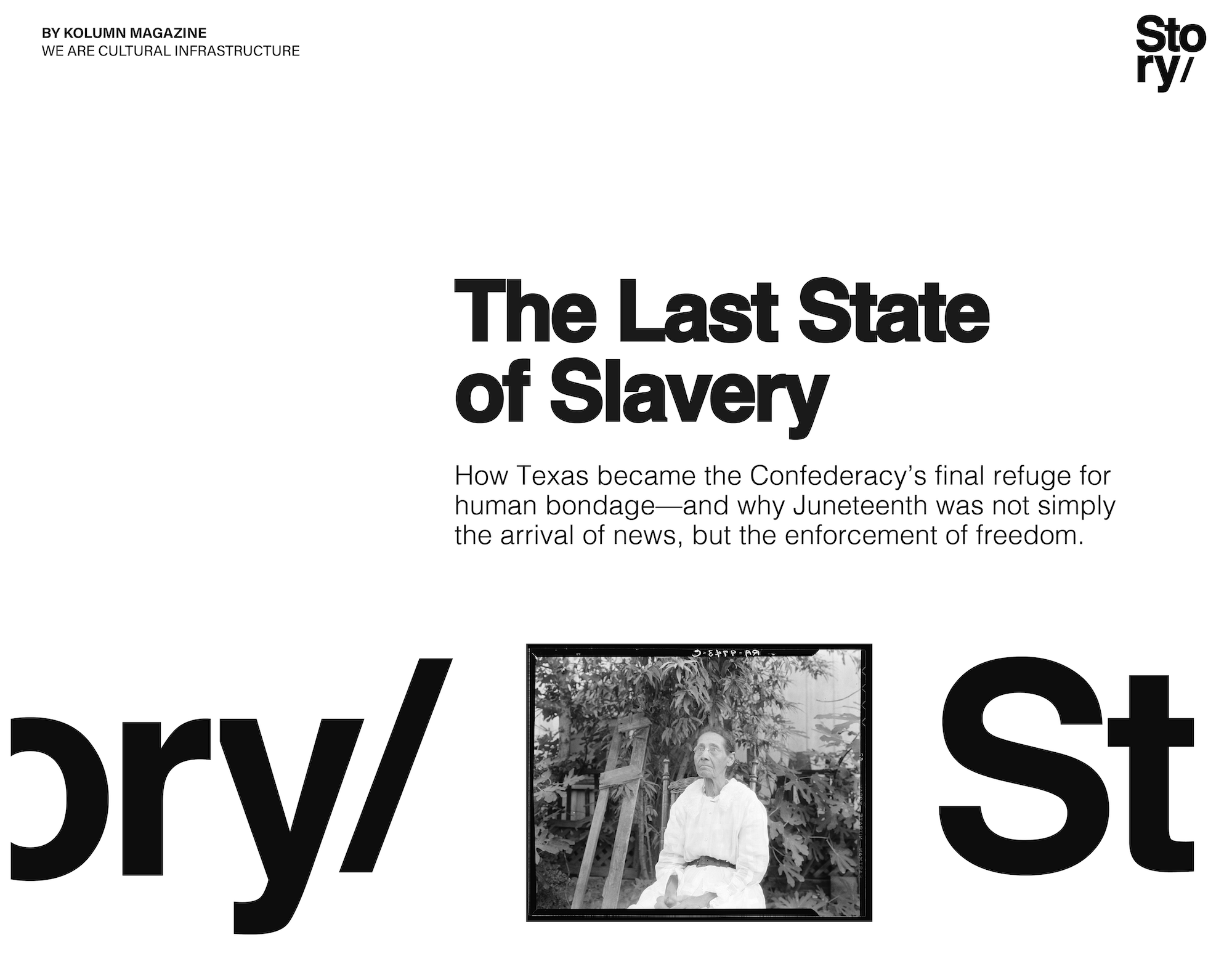
Juneteenth was not the day freedom became true. It was the day federal power finally arrived to make slaveholders stop lying.
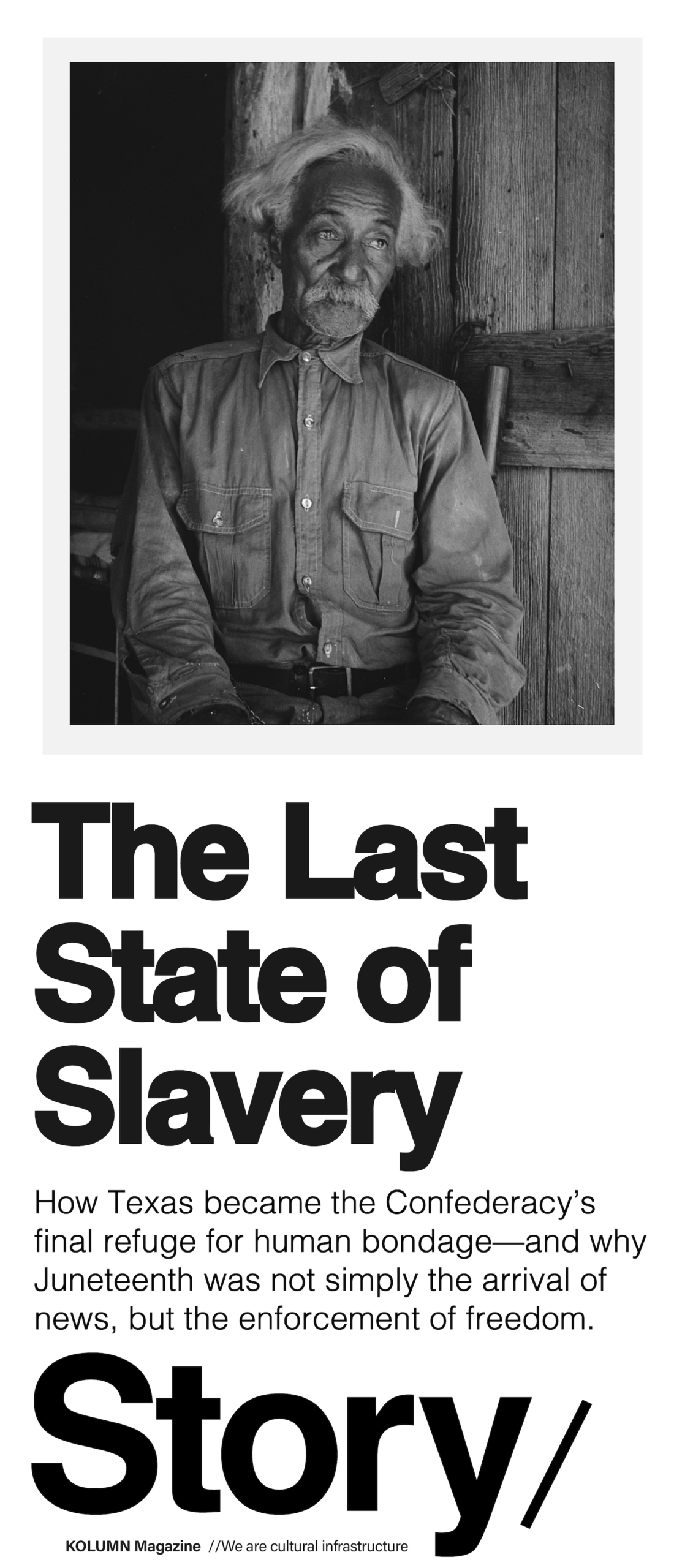
Juneteenth was not the day freedom became true. It was the day federal power finally arrived to make slaveholders stop lying.
By KOLUMN Magazine
On June 19, 1865, freedom did not drift into Galveston as rumor, charity, or delayed administrative housekeeping. It arrived under military command, carried by Union soldiers into a Confederate state where slaveholders had spent more than two years treating emancipation as something that could be postponed by distance, deception, and force. When Major General Gordon Granger issued General Order No. 3, the people of Texas were informed that “all slaves are free,” a declaration preserved by the National Archives as one of the defining records of emancipation’s final enforcement in the former Confederacy. The sentence was brief, but the world it confronted was not. Texas had become slavery’s last redoubt, the place where enslavers carried people westward, reassembled plantations beyond the reach of Union lines, and gambled that federal law could be made meaningless if federal power did not arrive to back it.
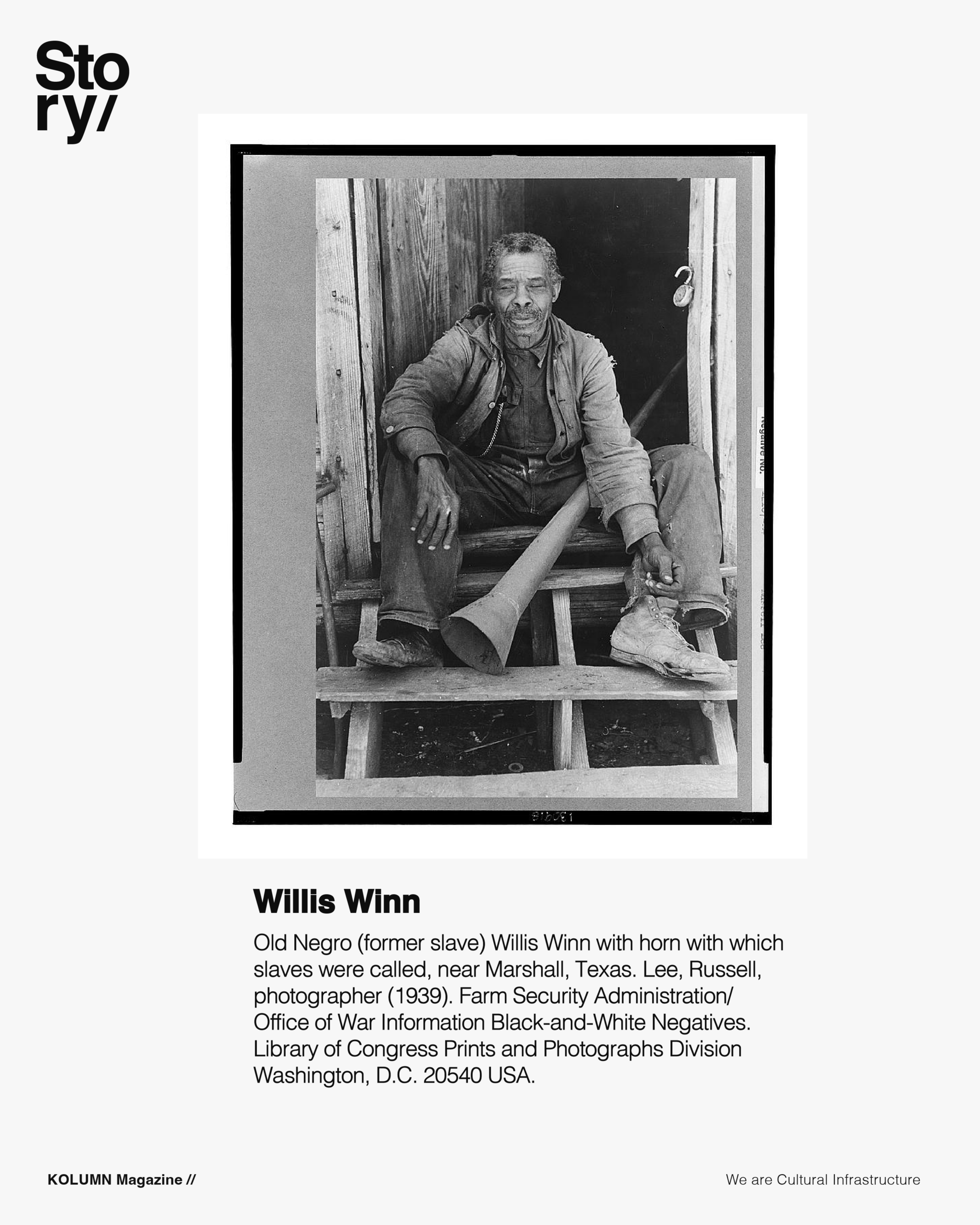
The popular shorthand says enslaved people in Texas “learned” they were free two and a half years late. That phrasing is too soft for the history. It makes Juneteenth sound like a communication failure, as if freedom had been misplaced in the mail. The harder truth is that slaveholders in Texas and those who fled there from other Confederate states already understood enough to resist emancipation, which is why historians and public-history institutions increasingly frame Juneteenth as a story of enforcement rather than mere announcement. The Smithsonian National Museum of African American History and Culture notes that freedom for enslaved people in Texas was officially announced only when Union troops reached Galveston Bay, while the Library of Congress preserves the order’s insistence on “absolute equality of personal rights and rights of property” between former enslavers and the people they had claimed as property.
The final two years before Juneteenth were not an empty waiting period between Lincoln’s pen and Black celebration. They were an active counteroffensive by enslavers who saw Texas as a sanctuary for human property. After the Emancipation Proclamation took effect on January 1, 1863, slavery did not disappear in places still controlled by the Confederacy, and Texas remained largely insulated from major Union occupation. The Texas State Historical Association explains that the progress of the Civil War did not drastically affect slavery in Texas because no major slaveholding area of the state was invaded, which meant enslaved people generally continued to labor under Confederate authority while emancipation advanced elsewhere with the Union Army. In that vacuum between law and enforcement, Texas became both destination and defense line, a vast western holdout where enslavers attempted to preserve what the war was beginning to destroy.
The Westward Flight of Human Property
The road to Juneteenth runs through forced migration. As Union armies moved deeper into the Mississippi Valley and across the South, slaveholders from Louisiana, Arkansas, Mississippi, and other Confederate regions drove enslaved people into Texas to keep them away from Union lines, Black self-emancipation, and federal protection. Prairie View A&M University’s Texas Institute for the Preservation of History and Culture describes Texas as a wartime “safe haven” for slaveholders, noting that because slavery there was relatively unaffected by the war, enslavers moved enslaved people into Texas and reestablished plantations. The movement was not incidental refugee traffic. It was a calculated relocation of captive labor.
This matters because the story of Juneteenth is often told as if Texas were merely remote. Geography mattered, but remoteness was weaponized by people who knew exactly what they were doing. Enslavers moved people west because emancipation was no longer theoretical. They had watched Union armies liberate enslaved people elsewhere. They had seen plantation districts destabilized. They had heard of enslaved men, women, and children fleeing to federal lines, working for wages, joining the Union cause, and refusing the old order. In response, they turned Texas into a storehouse for stolen labor, a place where plantation slavery could be hidden behind distance and defended by Confederate authority.
The exact number of enslaved people forced into Texas during the war remains debated. Historian W. Caleb McDaniel, in a careful examination of estimates, warns that frequently repeated figures of wartime “refugeed slaves” can be difficult to verify, but his analysis of the question underscores the broader historical consensus that large numbers of enslaved people were carried into Texas by slaveholders fleeing Union advances. The uncertainty of the number should not obscure the moral clarity of the act. Every person forced west represented a family endangered, a body kept under guard, and an enslaver’s wager that Texas could preserve slavery long enough for politics or military fortune to reverse emancipation.
The people forced into Texas were not migrants in any ordinary sense. They were captives moved by enslavers who treated them as portable capital, moving them alongside cotton, livestock, wagons, account books, and family silver. Some came by road through Louisiana and Arkansas; others were pushed deeper into Texas plantation districts where cotton, sugar, and cattle economies still demanded labor. Their movement exposed the Confederate imagination of slavery in its final years: not as a local custom doomed by war, but as a mobile regime that could be carried, replanted, and defended wherever federal power was absent.
That absence is crucial. The Emancipation Proclamation was a revolutionary war measure, but it relied on Union victory to become real in Confederate territory. The National Archives’ account of the Emancipation Proclamation makes clear that Lincoln’s order applied to areas in rebellion and transformed the war into a struggle against slavery, yet enslaved people in regions still held by Confederates could not safely claim freedom unless Union power reached them or they reached Union power. Texas was the far edge of that contradiction. Freedom had been declared, but the men with whips, guns, deeds, and local authority still ruled the ground.
1863: Freedom Announced, Bondage Preserved
The year 1863 opened with Watch Night services across Black communities, as free and enslaved African Americans waited for Lincoln’s proclamation to take effect. The Smithsonian describes those gatherings as “Freedom’s Eve,” a moment of prayer, vigilance, and collective anticipation. In Union-occupied territory, emancipation could immediately alter lives. In Texas, it exposed the brutal difference between a federal promise and a local reality.
Texas slaveholders did not behave like people unaware of the proclamation. They behaved like people determined to evade it. They continued to demand labor, discipline movement, punish resistance, and extract crops from people whose freedom had been declared as a matter of Union war policy. In this sense, the final years before Juneteenth should be understood not as delayed liberation but as illegalized slavery’s last Confederate administration. The institution still had guards, plantations, patrols, markets, and courts. It still had men willing to inflict violence to make Black people work.
The year also brought another layer of contradiction. Enslaved Texans were not sealed off from information. News traveled through overheard conversations, newspapers, soldiers, refugees, sailors, and kin networks. George Washington University historian Denver Brunsman, discussing the long road from emancipation to Juneteenth, has emphasized that slaveholders almost certainly knew the meaning of emancipation and had every incentive to conceal or distort it from enslaved people, because “news travels” even when power tries to suppress it. Enslaved people listened, interpreted, tested boundaries, and weighed danger. The myth of total ignorance diminishes their political intelligence.
This is where historiography sharpens the story. Older public accounts often treated Juneteenth as an episode of delayed notification. More recent scholarship and public history emphasize that emancipation unfolded unevenly because it had to be enforced against people committed to slavery’s survival. Annette Gordon-Reed, the Pulitzer Prize-winning historian and Texas native, has argued in interviews about “On Juneteenth” that Texas history cannot be honestly told through cowboy myth, oil myth, or frontier romance while minimizing slavery’s central role in the state’s racial order. Juneteenth, in her telling, is not an isolated holiday but a way into the deep structure of Texas and American history.
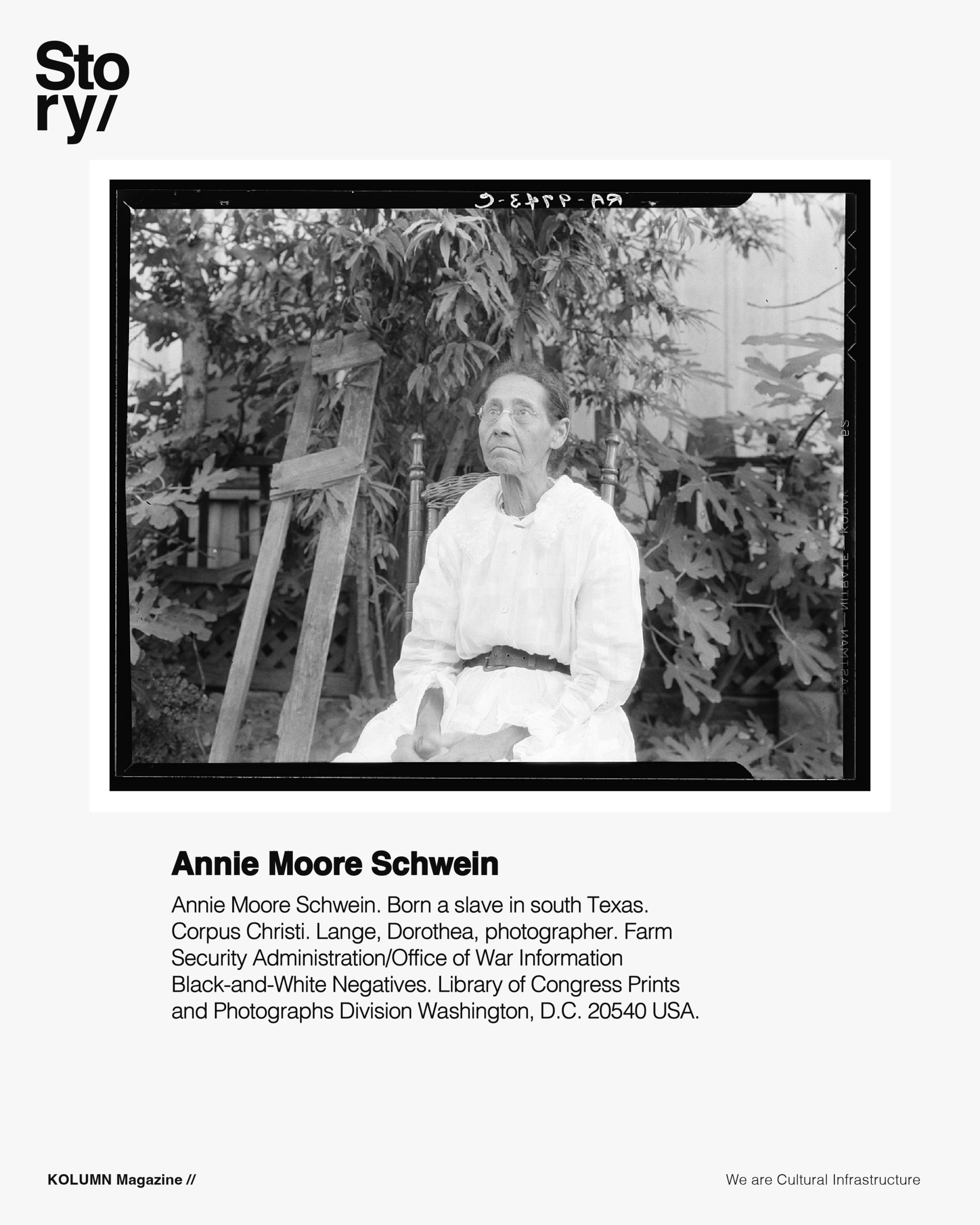
1864: The Bunker State
By 1864, the Confederacy was weakening, but Texas still functioned as a bunker for slavery. Union military power had reshaped the Mississippi River, devastated Confederate supply lines, and made plantation districts unstable across large portions of the South. Texas remained different. Its distance from the main eastern theaters of war and its limited Union occupation allowed enslavers to sustain a labor regime that elsewhere was being fractured by military defeat and Black resistance.
The state’s wartime position made it attractive to slaveholders desperate to preserve human property. The Civil War did not make Texas untouched, but it did make the state less accessible to the kind of federal enforcement that transformed emancipation from proclamation into practice. As the Texas State Historical Association notes, the lack of invasion into major slaveholding regions meant slavery continued with less disruption than in places where Union armies arrived earlier. That fact helps explain why Juneteenth emerged from Texas rather than from a state closer to the war’s main battle lines.
The people held in bondage during this period lived inside the violence of a system that was both dying and desperate. The closer slavery came to formal destruction, the more ferociously enslavers tried to maintain control. Some forced people to keep working under threat. Some lied about the war. Some promised future wages while extracting present labor. Some moved enslaved people again when danger approached. The plantation became not only a workplace of captivity but a site of information warfare, where the enslaver’s authority depended on isolating people from the practical means of freedom.
In this light, Juneteenth belongs to the same moral geography KOLUMN has explored in its coverage of the Freedom House Museum in Alexandria, where the domestic slave trade made clear that slavery was not only Southern agriculture but a national infrastructure of forced movement, confinement, finance, and family destruction. The Texas story extends that line westward. It shows enslavers treating people as assets to be relocated when the market, the battlefield, or the law threatened their claims. It also anticipates KOLUMN’s work on the A. Philip Randolph Pullman Porter Museum and Black labor history, where the central question is not simply who worked, but who controlled the terms of work, movement, wages, dignity, and refusal.
1865: The Law Moves Faster Than Power
The first half of 1865 was a constitutional and military avalanche. On January 31, Congress passed the Thirteenth Amendment, whose text is preserved by the National Archives and the Library of Congress Constitution Annotated: “Neither slavery nor involuntary servitude, except as a punishment for crime whereof the party shall have been duly convicted, shall exist within the United States.” The amendment was not yet ratified, but its passage announced that slavery’s destruction was becoming constitutional law.
Texas slaveholders continued anyway. This distinction matters. It is not accurate to say Texas continued slavery after final ratification of the Thirteenth Amendment, because ratification came on December 6, 1865. It is accurate to say Texas continued slavery after the Emancipation Proclamation had been in force for more than two years, after Congress had passed the Thirteenth Amendment, after the Confederacy’s defeat was all but certain, and after the moral and legal future of slavery had been publicly condemned by the federal government. In Texas, the old order persisted because the people who controlled plantations could still compel labor.
Then came collapse. Richmond fell in April. Robert E. Lee surrendered at Appomattox on April 9. Lincoln was assassinated days later. Confederate General Edmund Kirby Smith surrendered the Trans-Mississippi Department in late May. Texas, which had functioned as the far western preserve of Confederate slavery, could no longer pretend that the war might save the institution. Still, between Confederate surrender and federal occupation, enslavers tried to manage the end on their own terms.
When Granger reached Galveston, he did not bring new moral information to Texas. He brought enforcement. The National Archives records that Granger’s troops arrived in Galveston on June 18, 1865, and that he issued General Order No. 3 the next day from the Headquarters District of Texas. The order’s language did more than announce freedom. It described “absolute equality of personal rights and rights of property” and redefined the relationship between former masters and formerly enslaved people as one between “employer and hired labor,” a phrase that signaled the legal death of ownership even as it underestimated the violence that would accompany Black freedom.
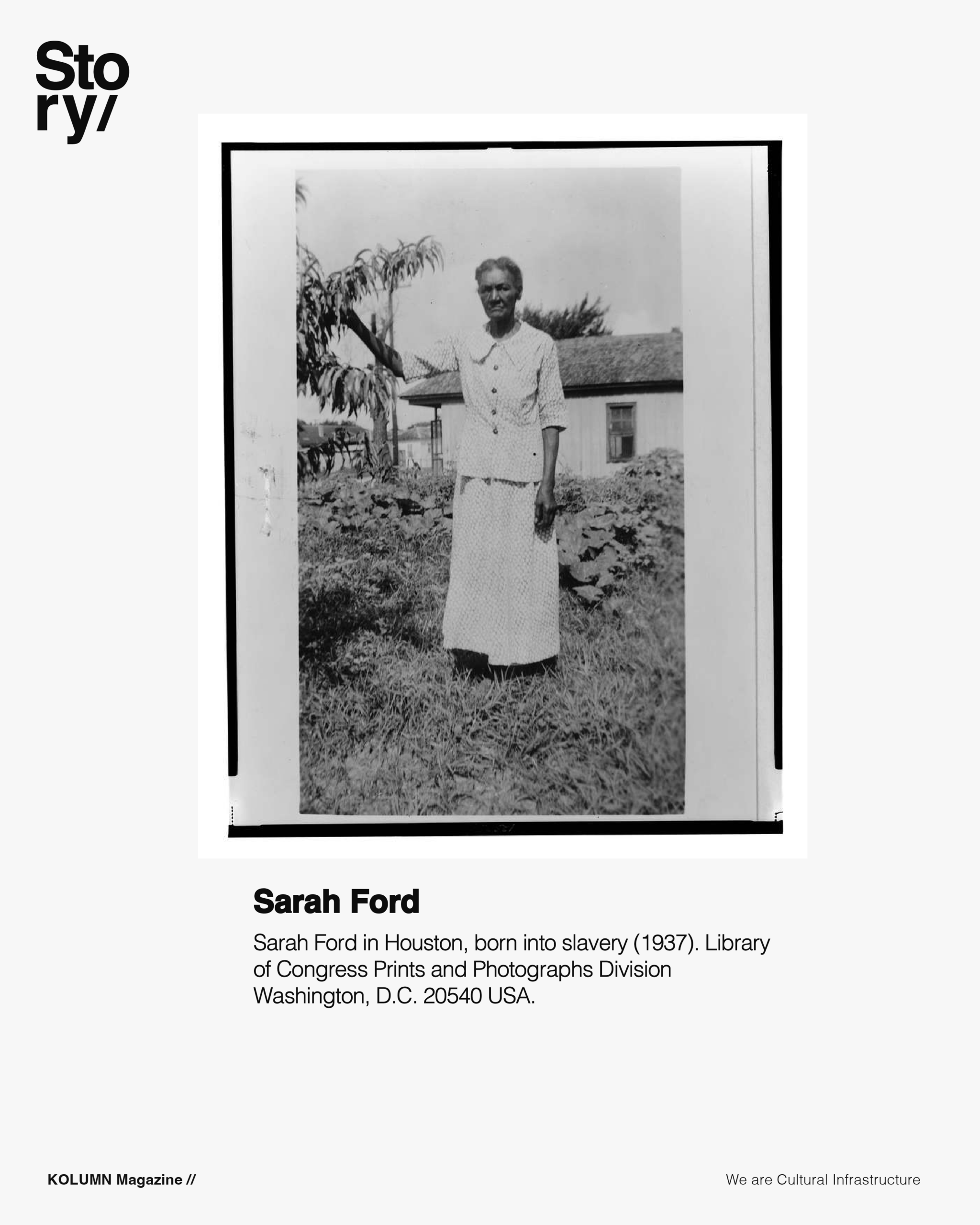
Galveston as Threshold
Galveston became the threshold because it was a port, a military landing point, and a symbolic doorway into Texas. The Galveston Historical Foundation preserves the language of General Order No. 3 and situates it within the city’s public memory, while the Texas State Library and Archives Commission identifies Juneteenth as the name African Americans in Texas gave to Emancipation Day. The place matters because ports carry news, troops, goods, captives, refugees, and memory. On June 19, Galveston carried enforcement inland.
The first readings and circulations of the order did not instantly make freedom safe. The Associated Press has reported on the surviving handbill tradition of General Order No. 3, noting that the order circulated through handbills and newspapers and that Texans have celebrated Juneteenth since 1866, but public announcement did not mean local compliance. The AP’s account makes clear that emancipation was a gradual and localized process, shaped by former enslaved people who had to claim freedom under threat. The order created a legal opening. Black people had to walk through it in a hostile world.
Some left plantations immediately. Some searched for family. Some negotiated wages. Some stayed temporarily because Granger’s own order advised freedpeople to remain at their present homes and work for wages, advice that reflected federal anxieties about labor stability even as it proclaimed equality. Some faced former enslavers who wanted to convert slavery into contract dependency with as little change as possible. The plantation did not vanish because a general spoke. It had to be dismantled in the field, in the home, in the courthouse, in the wage bargain, and in the imagination of people who had never intended to treat Black freedom as legitimate.
This is why Juneteenth must be read as both jubilee and warning. It is a day of Black celebration because enslaved people survived the long theft of their bodies and time, and because Black Texans transformed a military order into a civic tradition. It is also a day of national indictment because it shows that law without enforcement can be treated as suggestion by those with local power. The Washington Post has framed this problem directly, reporting that enslavers resisted emancipation, hid news, and forced many Black people to continue labor even after the order.
The Historians’ Juneteenth
The strongest recent Juneteenth scholarship moves the holiday away from sentimental delay and toward contested emancipation. Gordon-Reed’s work insists that Texas cannot be understood without slavery at its center, and her public conversations about “On Juneteenth” connect the Galveston order to the racial hierarchy that shaped Texas from slavery through Jim Crow. Henry Louis Gates Jr., in his widely read account of the origins of Juneteenth, has emphasized that the holiday arose from a specific Texas history but speaks to the national process by which emancipation had to be made real unevenly, place by place.
McDaniel’s scholarship deepens the point by questioning easy numbers and easy endings. His work on “refugeed slaves” in Texas warns against repeating estimates without evidence, but it also underscores that the movement of enslaved people into Texas was real and historically significant. His Pulitzer Prize-winning book, “Sweet Taste of Liberty,” centered on Henrietta Wood, a woman kidnapped back into slavery after having been legally free, shows how emancipation did not erase the need for restitution, testimony, and legal struggle. The Pulitzer Prize citation describes the book as a meditation on reparations through one woman’s long fight, and that frame helps explain Juneteenth as part of a broader history of freedom delayed, stolen, enforced, and contested.
Public historians have followed the same arc. The Smithsonian calls Juneteenth a significant date in American history and the African American experience, while also emphasizing that the holiday’s meaning comes from Black community memory. The Guardian has described Juneteenth as a celebration carried by parades, festivals, performances, and cookouts, but the joy of the holiday becomes more powerful when set against the reality of the struggle that preceded it. Celebration is not the opposite of historical rigor. In Black memory, it is often the form rigor takes when archives were built by the same society that tried to deny Black humanity.
This historiographical shift matters because it changes what the holiday asks of the public. If Juneteenth is only delayed news, the moral lesson is patience. If Juneteenth is enforced freedom after organized resistance by enslavers, the moral lesson is vigilance. It asks who benefits when rights are declared but not protected. It asks what happens when local authorities oppose federal guarantees. It asks why the nation prefers liberation stories that end before labor contracts, Black Codes, prison camps, and racial terror enter the frame.
The Amendment and Its Exception
The Thirteenth Amendment abolished slavery and involuntary servitude, but its exception clause created one of the most consequential loopholes in American law. The National Archives gives the language plainly: slavery and involuntary servitude are prohibited “except as a punishment for crime whereof the party shall have been duly convicted.” The clause did not cause Texas slaveholders to resist Juneteenth before ratification, but it shaped the world that followed. It offered legal room for forced labor to be reconstructed through criminal punishment.
This was not an abstraction. In the postwar South, Black Codes criminalized unemployment, mobility, breach of labor contract, and ordinary acts of Black autonomy. The same white society that had claimed Black people as property now turned to courts, sheriffs, jails, fines, and labor contracts to discipline freedpeople. The plantation order did not survive unchanged, but its demands migrated into law. The whip did not disappear; it found new institutional hands.
The Equal Justice Initiative describes convict leasing as a system that arose after emancipation and exploited the Thirteenth Amendment’s punishment exception, allowing Southern states to lease incarcerated people to private industries, plantations, mines, and railroads. The result was a regime that generated state revenue, enriched private employers, and subjected overwhelmingly Black prisoners to brutal and often deadly labor. In this system, criminal conviction became the legal mechanism by which involuntary servitude reentered American life.
The phrase “punishment loophole” is not rhetorical excess. It names a constitutional aperture through which the racial economy of slavery found a post-emancipation form. Legal scholar James Gray Pope, in a major article on mass incarceration, convict leasing, and the Thirteenth Amendment, argues that the meaning of the punishment clause was contested after the Civil War and became entangled with political struggles over race, labor, and punishment. Contemporary movements to remove exception language from state constitutions show that the debate is not sealed in the nineteenth century. It remains a live constitutional argument about whether any form of slavery should survive behind prison walls.
Texas Builds the Afterlife
Texas entered convict leasing quickly. The Texas State Historical Association records that the first convict leases in Texas came in 1867, when two railroad companies hired prison inmates to build roadbeds. That was only two years after Juneteenth. The timeline is devastating. In 1865, Union troops forced Texas to abandon legalized chattel slavery. By 1867, the state was already leasing prisoners into coerced labor arrangements that would become central to its postwar economy.
Sugar Land makes the continuity visible. The City of Sugar Land’s public-history account states that Texas began leasing convicts in 1867, and that former plantations across the state were transformed into prison farms where the vast majority of forced laborers were African Americans, including former enslaved people and the children of enslaved people. In other words, the landscape of slavery did not simply become free soil. It became carceral soil. Plantations became prison farms. Former enslavers and industrialists became contractors. Black labor remained extractable.
The discovery of the Sugar Land 95 in 2018 forced that history into public view. The remains of 95 people, most believed to have been Black forced laborers under Texas’s convict leasing system, were uncovered during school construction in Fort Bend County. Monument Lab’s account of the Convict Leasing and Labor Project identifies the Sugar Land 95 as African Americans believed to have labored under convict leasing and died at a labor camp connected to the Cunningham and Ellis plantations between the late nineteenth and early twentieth centuries. The Houston Chronicle later reported that Fort Bend County committed funding to preserve and interpret the cemetery, recognizing the site as part of Texas’s brutal convict-leasing history.
Convict leasing was not slavery in identical legal form, but it was slavery’s afterlife in labor practice. Under chattel slavery, enslavers had a financial interest in preserving the long-term market value of the people they owned, though that interest never prevented horrific violence. Under leasing, private contractors often had no such incentive. They could work prisoners to death and lease more. The system made Black life disposable in a new way, under color of law.
Texas’s role in that system should be central to how Juneteenth is remembered. The same state where federal troops announced the end of slavery became a state where forced Black labor was reconstituted through criminalization. The sequence is not accidental. It is the story of a society that accepted emancipation only under military pressure, then used law to narrow freedom’s meaning.
Freedom, Wages, and the Problem of Control
General Order No. 3 promised “absolute equality,” but its labor language also revealed the federal government’s immediate concern with order. Freedpeople were advised to remain quietly and work for wages, a clause that reflected both an extraordinary recognition of legal freedom and a conservative desire to stabilize plantation labor. The Library of Congress reproduces this language in full, and its contradictions are still worth reading closely. Freedom was proclaimed, but movement was discouraged. Equality was announced, but the economic relationship between former enslaver and formerly enslaved was presumed to continue as wage labor.
For formerly enslaved people, wages were not a minor matter. They were proof that time belonged to the worker. They were a claim to personhood, bargaining power, family support, and bodily autonomy. Enslavers understood that, which is why wage disputes became immediate battlegrounds. The old plantation class wanted labor without equality, contracts without negotiation, and Black presence without Black independence. The freedpeople wanted land, schools, churches, family reunification, political rights, and the ability to leave.
Juneteenth opened that struggle in Texas. It did not settle it. Former enslavers resisted by withholding pay, manipulating contracts, threatening violence, and appealing to local authorities who often shared their assumptions. White terrorism rose as Reconstruction advanced. The same public order that had protected slavery now sought to police Black freedom. If emancipation was a door, Reconstruction was the fight over who controlled the hinges.
This is why the holiday’s contemporary federal recognition, signed into law in 2021, should be understood as a late national acknowledgment of a Black commemorative tradition rather than the creation of one. Black Texans had already made Juneteenth meaningful. The Texas State Historical Association records that early celebrations developed across Texas, including public events, family gatherings, and community observances that grew in scope over time. These celebrations were not decorative. They were acts of historical custody.
The Memory Black Texans Kept
Black Texans carried Juneteenth because the nation did not. They gathered in churches, parks, homes, and public grounds. When denied access to white-controlled spaces, they created their own. Houston’s Emancipation Park, purchased in 1872 by formerly enslaved community leaders for Juneteenth celebrations, stands as one of the great civic monuments of Black memory, a history preserved by the Emancipation Park Conservancy. Land mattered because freedom needed a place to assemble. Celebration required territory.
The rituals of Juneteenth carried grief and joy together. Red foods, music, prayer, speeches, parades, pageants, and family reunions became forms of historical literacy. Elders told children what happened in Galveston and what happened afterward. Communities honored emancipation while remembering those who did not live to see it, those who were sold away, those who were marched into Texas, and those who were pulled back into forced labor through courts and prison camps. The holiday’s joy was never ignorance of suffering. It was refusal to let suffering own the last word.
Annette Gordon-Reed has written and spoken about Juneteenth as a Texas-born holiday with national implications, and her reflections in The New Yorker describe the holiday as something lived in community before it became widely recognized by the country. That distinction matters. Federal recognition did not make Juneteenth important. It merely admitted, very late, that Black memory had been right all along.
KOLUMN’s previous features on sites such as the Freedom House Museum and the A. Philip Randolph Pullman Porter Museum help situate Juneteenth within a larger editorial map of Black movement and Black labor. Freedom House forces readers to confront the domestic slave trade as a machinery of family separation and forced migration. The Pullman Porter story forces readers to confront labor dignity, union power, and the long struggle to convert Black work into political leverage. Juneteenth sits between them. It begins with enslaved people moved west as property and continues into the question of who would control Black labor after slavery’s legal death.
What Juneteenth Refuses to Let America Forget
The cleanest version of American emancipation is also the least honest. In that version, Lincoln signs, enslaved people wait, Granger reads, everyone celebrates, and the nation moves forward. The real history is harder. Lincoln’s proclamation required war. Texas required occupation. The Thirteenth Amendment required ratification. Freedpeople required protection. The punishment clause enabled new coercions. Convict leasing turned criminal law into a labor market. The plantation’s logic survived by changing uniforms.
The final two years to Juneteenth reveal the anatomy of that struggle. In 1863, emancipation became federal war policy, but Texas slaveholders continued to hold people in bondage and received enslaved people moved westward from more vulnerable Confederate regions. In 1864, Texas functioned as a bunker state where slavery remained comparatively protected from Union enforcement. In January 1865, Congress passed the Thirteenth Amendment, but constitutional transformation still had to become lived reality. In April and May, the Confederacy collapsed. In June, Union troops arrived in Galveston. Only then did freedom acquire the force necessary to confront Texas slavery directly.
The story does not end there because slavery’s defenders did not disappear. They became employers, sheriffs, judges, legislators, landlords, prison contractors, and historians of their own innocence. They built systems to narrow Black freedom while claiming slavery was over. They replaced ownership with debt, vagrancy laws, labor contracts, terror, and incarceration. They turned the Thirteenth Amendment’s exception clause into a working instrument of racial control.
Juneteenth therefore asks more of the nation than celebration. It asks for historical precision. It asks Americans to stop saying enslaved Texans simply “found out” they were free and start saying that enslavers kept them in bondage until federal troops arrived. It asks Americans to recognize that Texas was not merely the last place to receive news, but one of the last places where slaveholders could enforce denial. It asks Americans to connect the end of chattel slavery to the rise of convict leasing, because freedom’s enemies did.
This is why Juneteenth remains one of the most important dates in the American calendar. It commemorates Black endurance, Black interpretation, Black community, and Black joy. It also exposes the republic’s most dangerous habit: declaring rights before defending them. The people who celebrated the first Juneteenth were not naïve about America. They had seen the nation tolerate their bondage, watched enslavers flee west with human beings, heard freedom proclaimed from far away, and waited until soldiers came to make the words matter.
Juneteenth is not a soft holiday. It is a hard-earned archive. It remembers that freedom was delayed because slavery was defended. It remembers that law without enforcement leaves the vulnerable at the mercy of the powerful. It remembers that after the jubilee came contracts, Black Codes, prison leases, and unmarked graves. It remembers Galveston, but it also remembers Sugar Land. It remembers the proclamation, but it also remembers the loophole.
Above all, Juneteenth refuses the country’s preferred ending. Slavery did not die because enslavers accepted justice. It died in Texas because enslaved people endured and resisted, because Union victory made Confederate defiance impossible, and because federal troops finally arrived to enforce what had already been declared. The holiday survives because Black Texans and their descendants understood something the nation still struggles to admit: freedom is not real when it is merely announced. Freedom is real when it can be lived, defended, remembered, and passed on.
Juneteenth is that inheritance.
More great stories
Afro Sheen, Wall Street, and the Architecture of Black Possibility
July 6, 2026
No Comments
The Fire Inside the Fourth
July 5, 2026
No Comments