
Freedom House Museum does not ask visitors to imagine slavery as a distant system. It asks them to stand inside one of its offices.
Freedom House Museum does not ask visitors to imagine slavery as a distant system. It asks them to stand inside one of its offices.
By KOLUMN Magazine
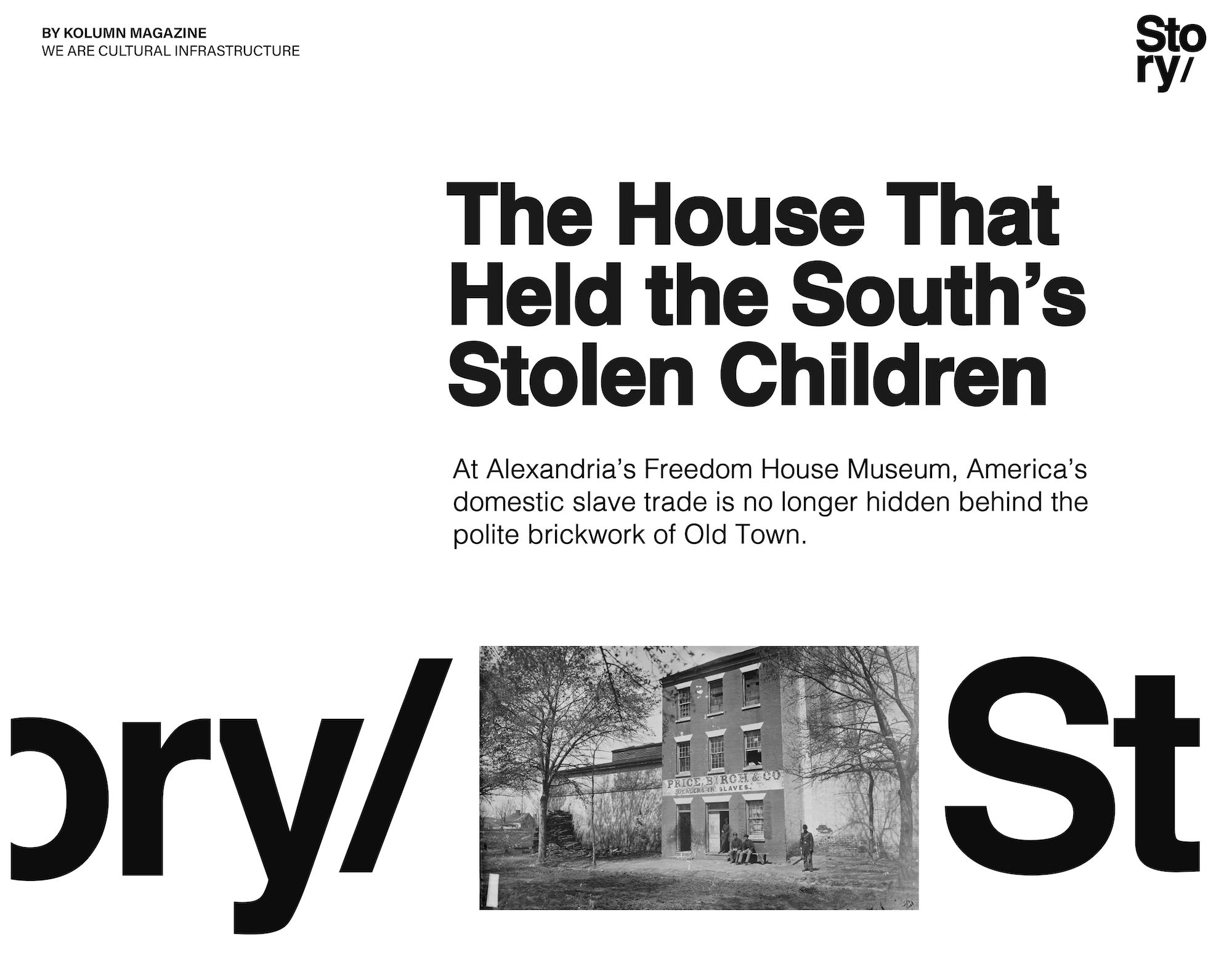
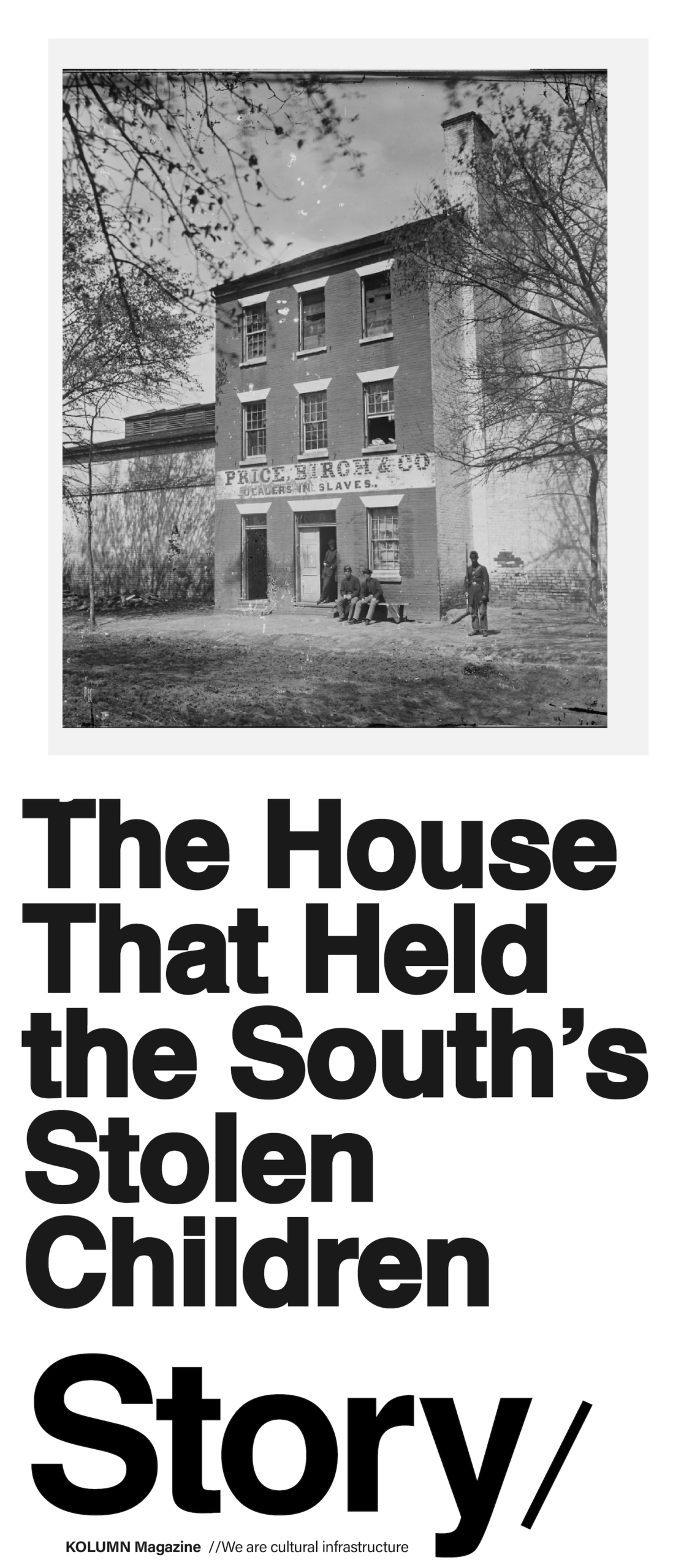
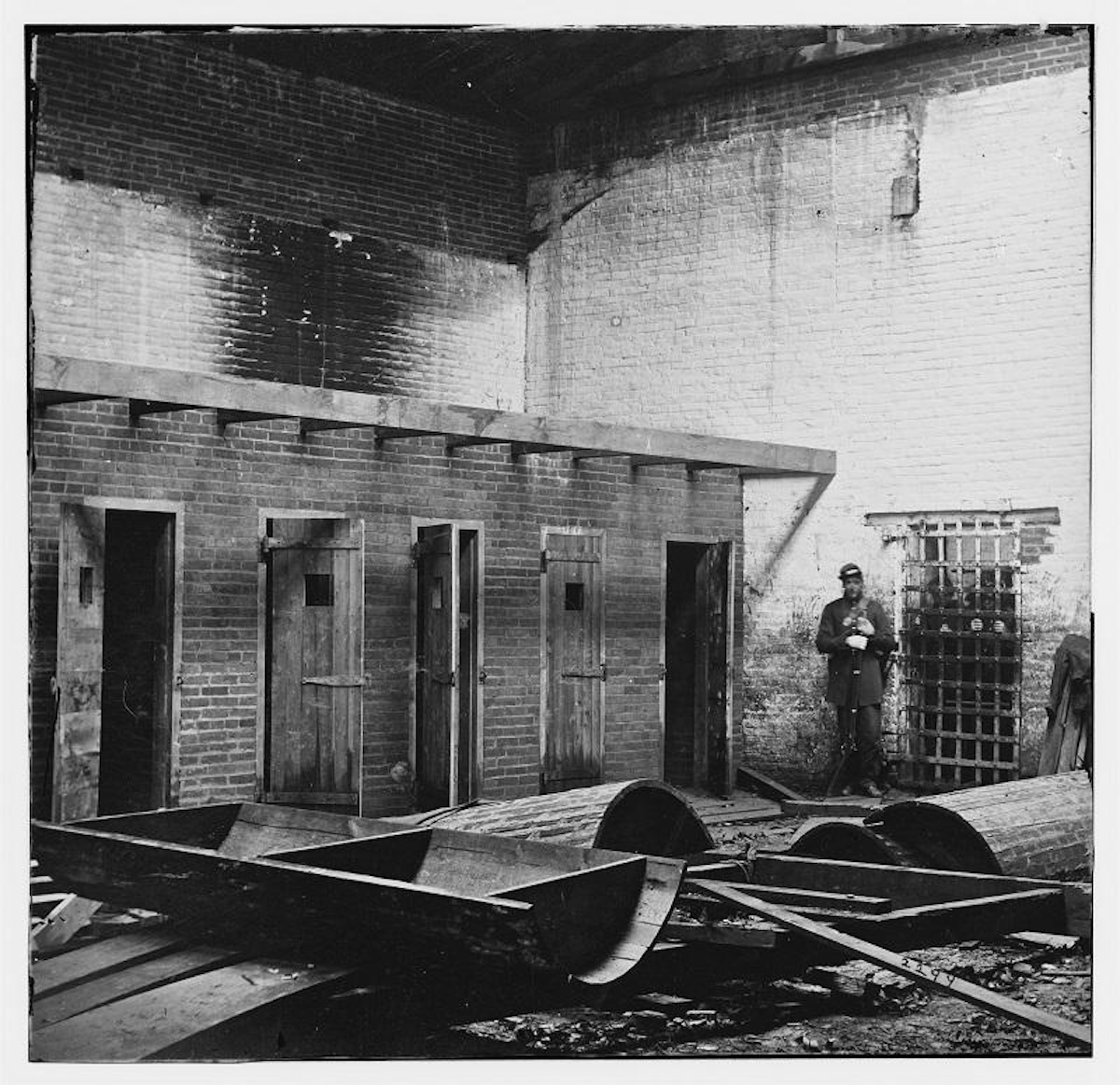
On Duke Street in Alexandria, Virginia, the brick façade of Freedom House Museum carries the burden of a national confession. The building at 1315 Duke Street is not a ruin, not a reconstructed symbol, not a distant plantation cabin moved into a controlled museum landscape; it is the surviving remnant of one of the most consequential human-trafficking sites in the antebellum United States, a place the City of Alexandria describes as “what remains of a large complex dedicated to trafficking thousands of Black men, women, and children from 1828–1861” through the domestic slave trade on its official museum page. Its quiet presence in Old Town is precisely what makes it devastating: the ordinary street, the tidy historic district, the polished tourism economy, and then this address, where Black lives were inventoried, confined, separated, marched, shipped and sold into the cotton and sugar economies of the Deep South.
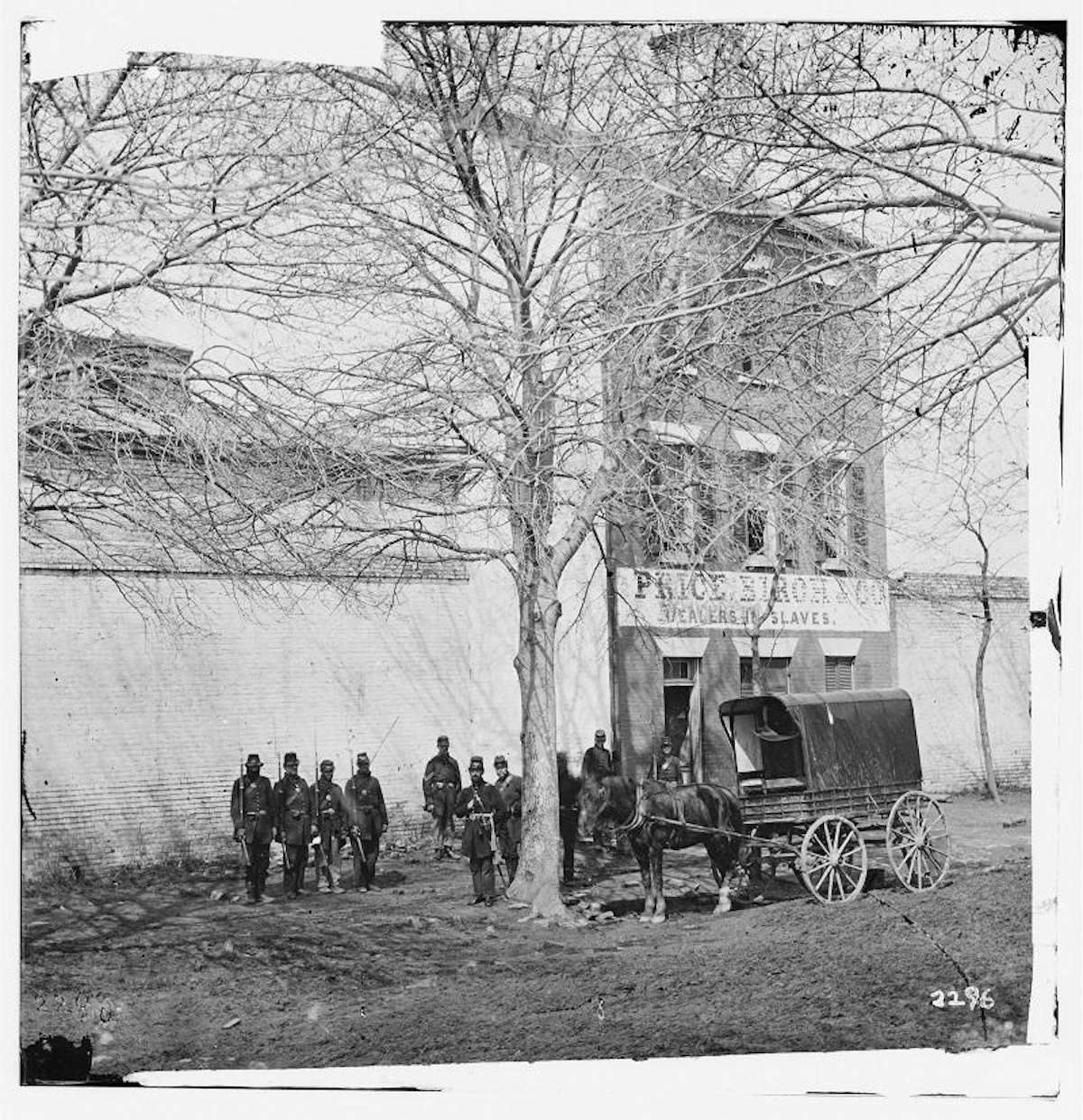
Freedom House Museum matters because it interrupts the mythology of slavery as a regional abstraction or a plantation tableau. It restores the market, the ledger, the broker, the jail, the ship manifest, the forced march and the municipal economy to the center of the story. Between 1828 and 1836, Isaac Franklin and John Armfield operated from this site as what the National Park Service identifies as the largest traders of enslaved African Americans in the nation, buying people in the Upper South and selling them at higher prices in the Lower South through a system centered in Alexandria, New Orleans and Natchez. The building’s significance is not limited to what happened inside its walls; it is the way those walls connect Alexandria to the Mississippi Valley, family separation to American expansion, and local preservation to the moral architecture of public memory.
The museum’s current interpretation is also a story of civic recovery. The site was long associated with the Northern Virginia Urban League, which preserved the building and operated an earlier museum in a space where the violence of the past had nearly been consumed by the silence of ordinary real estate. The City of Alexandria purchased the building in March 2020 and reopened it in June 2022 with expanded exhibitions that center the people trafficked through the site, the larger Black experience in Alexandria, and the long struggle to turn suppressed history into public truth through three floors of exhibitions. That reopening placed Freedom House within a broader reckoning over Confederate memory, racial terror, and the need for Black historical institutions to do more than commemorate suffering; they must explain power.
Alexandria Was Not Peripheral
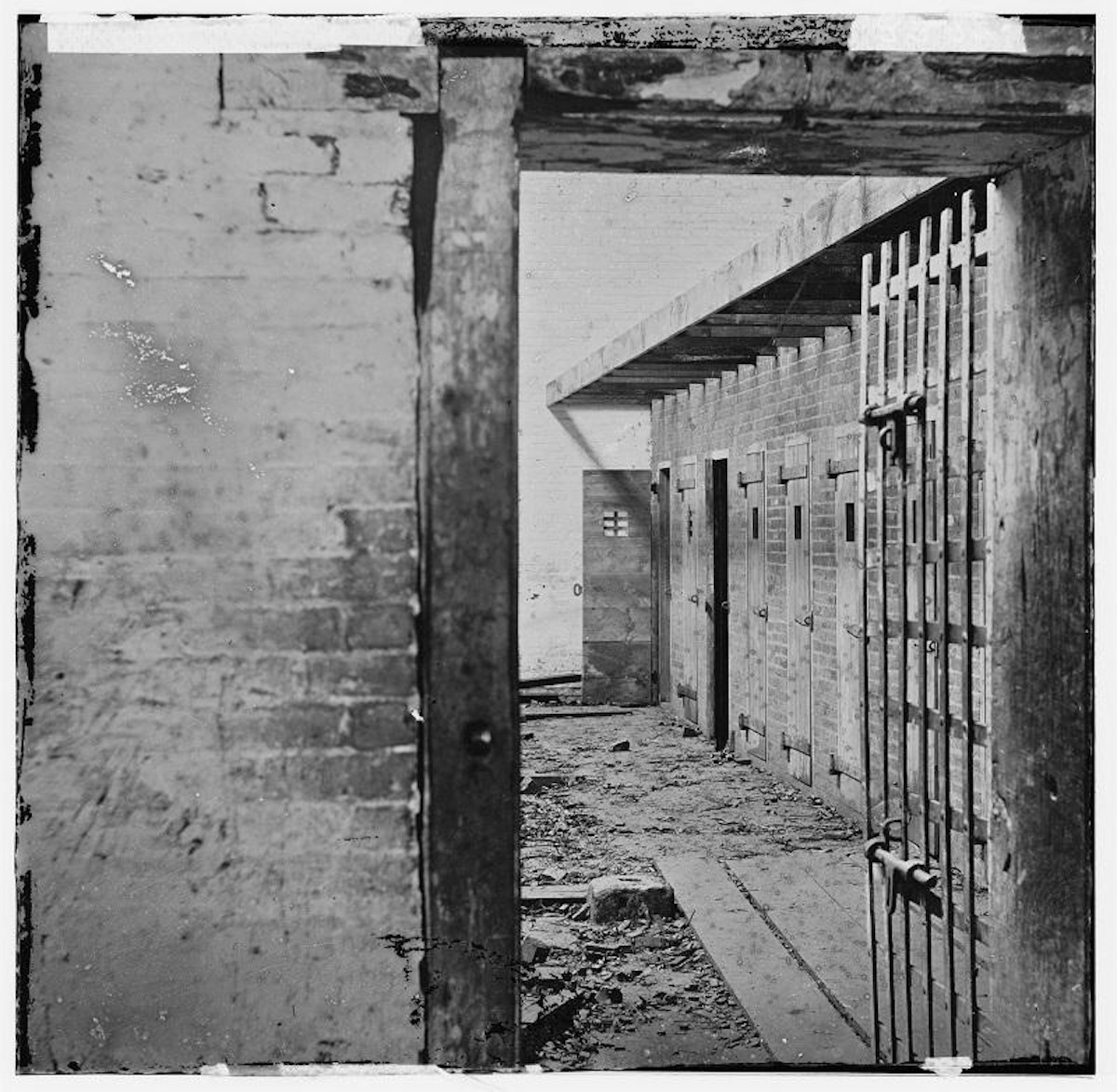
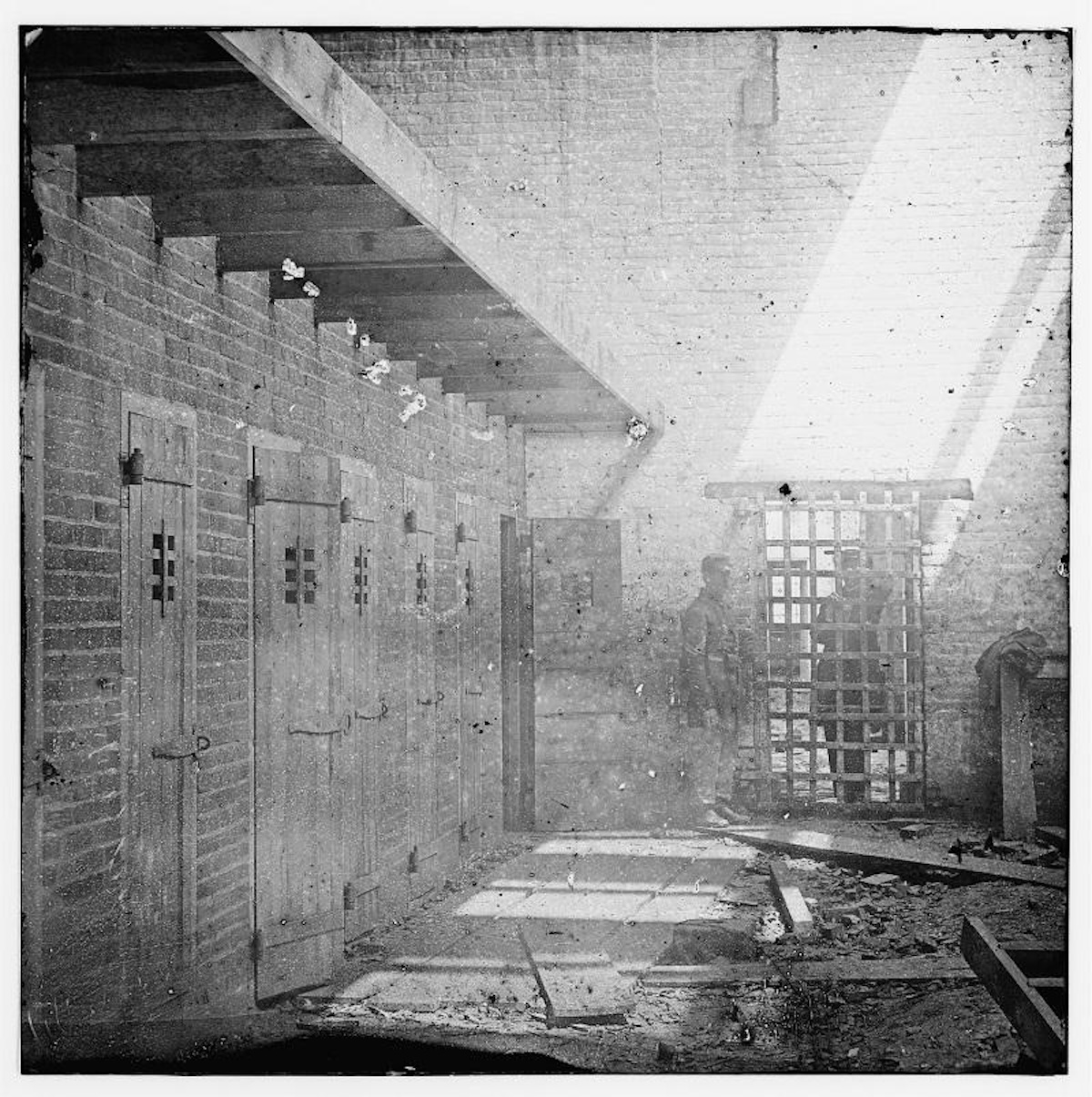
Alexandria’s role in slavery is often obscured by geography. Its proximity to Washington, D.C., can mislead the casual visitor into imagining the city mainly as a colonial port, a Civil War crossroads or a preserved urban village of boutiques and townhouses. But in the first half of the nineteenth century, Alexandria was part of the machinery that transferred enslaved people from the Chesapeake to the expanding plantation frontier. The City’s history of 1315 Duke Street notes that the building was originally constructed as the residence of Robert Young, a brigadier general in the District of Columbia militia, before Franklin and Armfield leased it by 1828 and converted it into a “Negro Jail” or slave pen for people being shipped from Northern Virginia to Louisiana as part of a forced commercial migration.
That word—jail—should not be softened. The site was a place of confinement for people whose only “crime” was their market value. Franklin and Armfield’s operation exported more than 3,750 enslaved people to cotton and sugar plantations in the Deep South during the firm’s active years, according to Alexandria’s official history of the building documenting the site’s use between 1828 and 1836. Later traders continued operating from the property until the Civil War, making 1315 Duke Street not an isolated atrocity but a node in an enduring business network.
The domestic slave trade grew as the transatlantic slave trade was legally closed and the cotton kingdom expanded. Historians have emphasized that this internal trade was not a secondary feature of slavery but one of its engines. Joshua D. Rothman’s The Ledger and the Chain argues that traders such as Franklin, Armfield and Rice Ballard were central to the making of American capitalism, trafficking more than half a million enslaved people from the Upper South to the Deep South and helping transform human bondage into a system of finance, speculation and territorial growth as described by Basic Books. Edward Ball, writing in Smithsonian Magazine, called Franklin and Armfield “the undisputed tycoons of the domestic slave trade,” explaining that their Alexandria-centered operation helped drive what he described as a “Slavery Trail of Tears” from Virginia and the Chesapeake toward Louisiana, Mississippi and other plantation states in his account of the forced migration.
Historiographically, Freedom House sits at the intersection of several shifts in slavery studies. Earlier public history often emphasized plantations, abolitionists, Civil War battles and emancipation while underplaying slave traders as businessmen and urban slavery as infrastructure. More recent scholarship insists that slavery was not simply agricultural labor extracted on plantations; it was a national economic order maintained by banks, courts, ships, newspapers, insurance, brokers, jails and city governments. Freedom House Museum makes that scholarship spatial. It turns the archive into architecture.
The Business of Breaking Families
The cruelty of Franklin and Armfield was not incidental to their business model; it was the business model. Enslaved people were bought in places where tobacco agriculture had declined or where enslavers sought liquidity, then sold where the cotton and sugar economies demanded labor. Armfield remained in Alexandria to acquire people, while Franklin managed sales in New Orleans and Natchez, creating a pipeline that moved Black bodies across the country as the National Park Service summarizes. Some people were shipped south by water. Others were marched in coffles over hundreds of miles, chained together through towns, forests and river crossings, forced to walk toward a future of sale and separation.
The term “domestic slave trade” can sound bureaucratic until one considers its human meaning. It meant a child sold away from a mother. It meant spouses separated by calculation. It meant people who had built relationships, skills, spiritual communities and kin networks in Maryland, Virginia or Delaware being transformed into movable assets for the cotton frontier. It meant Alexandria was not merely a place people passed through; it was a place where the violence of conversion occurred, where a person became an entry in a ledger before becoming a body on a road or a ship.
The museum’s exhibitions now work against the old erasure by centering individual lives and experiences. The first-floor exhibition, “1315 Duke Street,” highlights people brought from the Chesapeake Bay region, moved through the building, and forced to slave markets in the Deep South, while also presenting archaeological artifacts and a model of the complex according to the museum’s visitor information. This interpretive choice matters. It refuses to let Franklin and Armfield dominate the story as antiheroes of commerce. The museum identifies the traders, but its moral center is the trafficked.
That approach reflects a broader correction in public history. For generations, many slavery sites framed Black people as anonymous victims and white actors as named protagonists. Freedom House reverses that imbalance. The most important historical question is not how Franklin and Armfield became rich, although they did; it is how their wealth depended on destroying Black family integrity and how American institutions permitted, normalized and profited from that destruction.
From Slave Pen to Museum
The building’s survival is itself a complicated story. After the Civil War, the site’s meaning did not automatically become public memory. Like many places connected to slavery, it moved through other uses and other narratives, its past visible only to those who knew how to read the address. The National Historic Landmark designation recognized the Franklin and Armfield Office’s national significance, but designation alone does not guarantee interpretation, funding or public engagement. A building can be landmarked and still be underread.
The Northern Virginia Urban League’s role was crucial. When the organization acquired the building, it created a powerful act of historical reversal: a Black civil rights institution taking control of a place where Black people had been commodified. Audrey P. Davis, now director of Alexandria’s African American History Division, has described that transfer as “poetic justice” in a National Trust for Historic Preservation interview, while also emphasizing that the building is “ground zero for the story of the domestic slave trade in the United States” in a discussion of the museum’s past and future. Her framing is important because it locates Freedom House not as a local curiosity but as a national interpretive site.
The museum also nearly became a cautionary tale about the fragility of Black historical preservation. The Washington Post reported in 2018 that the Northern Virginia Urban League was struggling with the mortgage and that Freedom House was at risk of closing as descendants of Isaac Franklin began confronting their family’s slave-trading past. Alexandria’s eventual purchase of the site was therefore more than a property transaction. It was a decision that the city could not outsource the stewardship of this memory indefinitely.
The reopening in 2022, timed around Juneteenth, gave the site a new public life. The Washington Post described the renovated space as one where city historians had filled the Duke Street rowhouse with exhibits examining Alexandria’s “ugliest chapter” while also celebrating local African American achievements since emancipation in its coverage of the reopening. The museum’s post-2022 identity is therefore not only about enslavement but about continuity: survival, civic participation, Black institution-building, and the insistence that descendants and communities have a claim on the story.
The Architecture of Accountability
Museum work at Freedom House has required more than installing panels. It has required the restoration and reinterpretation of a building whose physical form changed over time. SmithGroup, which worked on the project, describes the effort as historical research and structural analysis guiding the transformation of a nineteenth-century slave-trading center into a museum chronicling the legacy of enslavement through preservation and design. That kind of restoration is not neutral. Decisions about paint, façade, room configuration, circulation and interpretive emphasis shape how visitors understand violence.
The exterior restoration has been particularly significant because Freedom House sits in a neighborhood where historic charm can easily aestheticize the past. A preserved building can become a pleasing object unless its history is made legible. Recent restoration efforts sought to return the building closer to its appearance during the period associated with the slave-trading complex, and local reporting has described the work as part of an effort to stabilize and reinterpret the site as Alexandria marked the restoration. The moral challenge is to preserve without beautifying atrocity.
This is where Freedom House joins a national conversation about difficult heritage. Sites of racial violence and enslavement must resist two temptations: spectacle and sanitization. Spectacle risks turning suffering into consumable trauma. Sanitization risks making slavery seem abstract, inevitable or bloodless. Freedom House’s strongest interpretive possibility lies in a third path: precise historical accountability, rooted in names, systems, documents, geography and the lived experiences of Black people.
Historiography: From Plantation Memory to Market Memory
The historiography surrounding Freedom House reflects a major transformation in how scholars and public historians understand slavery. For much of the twentieth century, popular memory often located slavery on plantations and framed the Civil War as the central turning point, while the domestic slave trade remained less visible in public interpretation. That imbalance allowed cities like Alexandria, Richmond, Washington and New Orleans to understate their roles as commercial hubs in the buying and selling of people.
Scholarship over the last several decades has pulled the slave market back into the center of the story. Historians of capitalism, migration and slavery have shown that the domestic slave trade was essential to the geographic expansion of slavery after the closing of the transatlantic trade. Rothman’s work is part of this movement, presenting slave traders not as marginal villains but as businessmen who helped shape the American economy through networks of credit, speculation and forced migration. Ball’s Smithsonian essay likewise reframes the movement of enslaved people from the Upper South to the Lower South as a vast forced migration, one that should be remembered alongside other defining movements in American history rather than hidden behind plantation nostalgia.
Freedom House Museum gives public form to that historiographical shift. It says the domestic slave trade is not a footnote to slavery. It is one of slavery’s central mechanisms. The museum’s emphasis on trafficking also aligns with newer public-history language that avoids euphemism. “Sale,” “migration,” “labor” and “property” are historically accurate terms in certain contexts, but without “trafficking,” “coercion,” “family separation” and “racial terror,” they can flatten the truth. Alexandria’s own museum language now directly names the site as a complex dedicated to trafficking thousands of Black people in its institutional description.
This interpretive clarity matters for KOLUMN’s ongoing editorial work on Black cultural infrastructure, from features on Green Book restaurants as havens of mobility to the A. Philip Randolph Pullman Porter Museum as a site of labor memory. Freedom House belongs in that same archive of places where Black history is not merely preserved but contested. Green Book sites tell us how Black travelers navigated exclusion. Pullman Porter history tells us how Black workers organized dignity within exploitative systems. Freedom House tells us what those systems were built upon: the legal and commercial power to turn Black life into revenue.
Expert Voices and the Ethics of Interpretation
Audrey Davis’s work is especially important because it connects institutional preservation to community accountability. The City of Alexandria announced in 2023 that Davis would lead its African American History Division, noting her decades of work with the Alexandria Black History Museum and her role in expanding Black-history interpretation across city museums and public programming through the Office of Historic Alexandria. Her leadership signals that Freedom House is not an isolated museum but part of a wider civic infrastructure for telling Black Alexandria’s story.
Public historians often stress that difficult sites require relationships, not just exhibits. They require descendants, local residents, scholars, educators, preservationists and civic officials to negotiate how truth is told. The National Trust interview with Davis makes clear that Freedom House’s importance is both local and national, because the Duke Street block can help visitors understand the domestic slave trade as a system that reshaped the United States from a site in Alexandria. That is an expert voice grounded not only in scholarship but in institutional stewardship.
The museum’s ethical task is also to resist the false comfort of closure. A visitor should not leave Freedom House believing the violence ended neatly in 1865 or that museum admission is itself a form of repair. The site demands a longer view: slavery to Black Codes, racial terror to segregation, urban renewal to displacement, school fights to voting rights, and preservation battles to contemporary disputes over what public history is allowed to say. Freedom House is a museum about the domestic slave trade, but it is also a test of whether a city can tell the truth when that truth disrupts its preferred self-image.
Why Freedom House Matters Now
Freedom House Museum has renewed urgency in an era of contested memory. Across the country, schools, museums and public agencies face pressure over how directly they can teach slavery, racism and structural inequality. In that climate, a site like Freedom House does not merely preserve the past; it defends historical method. It says evidence matters. Buildings matter. Ledgers matter. Names matter. The route from Alexandria to New Orleans matters. The distinction between memory and myth matters.
The museum also challenges the geography of innocence. Alexandria was not a passive neighbor to slavery. It was an active commercial participant. The United States was not divided between a sinful South and an untouched North; the domestic slave trade connected regions through law, money, politics and appetite. Freedom House stands near the nation’s capital as a rebuke to any national story that treats slavery as distant from federal power or urban life.
The site’s significance also lies in its scale. It is small enough to make the visitor feel the pressure of confinement and large enough, historically, to open onto the forced movement of hundreds of thousands of people. That dual scale—intimate and continental—is what makes the museum so powerful. It begins with a room and ends with a map of American expansion.
The Museum as Civic Responsibility
The best museums do not simply display history; they change the obligations of those who encounter it. Freedom House Museum asks Alexandria to preserve more than brick. It asks the city to preserve discomfort, specificity and moral seriousness. It asks visitors to understand that the domestic slave trade was not chaos but order: a system of purchasing, confinement, transport, sale and profit supported by white supremacy and protected by law.
That is why the museum’s future matters. Its exhibitions, research, conservation and public programming must continue to grow, especially as new scholarship, descendant research and archaeological work deepen the record. The museum should be understood not as a completed memorial but as an evolving public archive. Every generation will bring new questions to 1315 Duke Street: Who was trafficked here? What records survive? Which families can trace ancestors through Alexandria? Which institutions profited? How did the city remember, forget, monetize or suppress this history over time?
Freedom House Museum is significant because it refuses the visitor the luxury of abstraction. It tells the story of American slavery through a surviving place where the trade was managed as business. It reveals Alexandria not only as a historic city but as a slave-trading city. It places Franklin and Armfield within the broader historiography of domestic trafficking and American capitalism. Most importantly, it honors the Black men, women and children whose lives passed through Duke Street under conditions they did not choose, toward markets that treated their humanity as an obstacle to profit.
The building remains because people fought for it to remain. The museum exists because preservation, scholarship and Black civic memory converged against forgetting. In the end, Freedom House is not named for what happened there in the nineteenth century. It is named for the unfinished work of telling the truth in the twenty-first.
More great stories
Afro Sheen, Wall Street, and the Architecture of Black Possibility
July 6, 2026
No Comments
The Fire Inside the Fourth
July 5, 2026
No Comments