



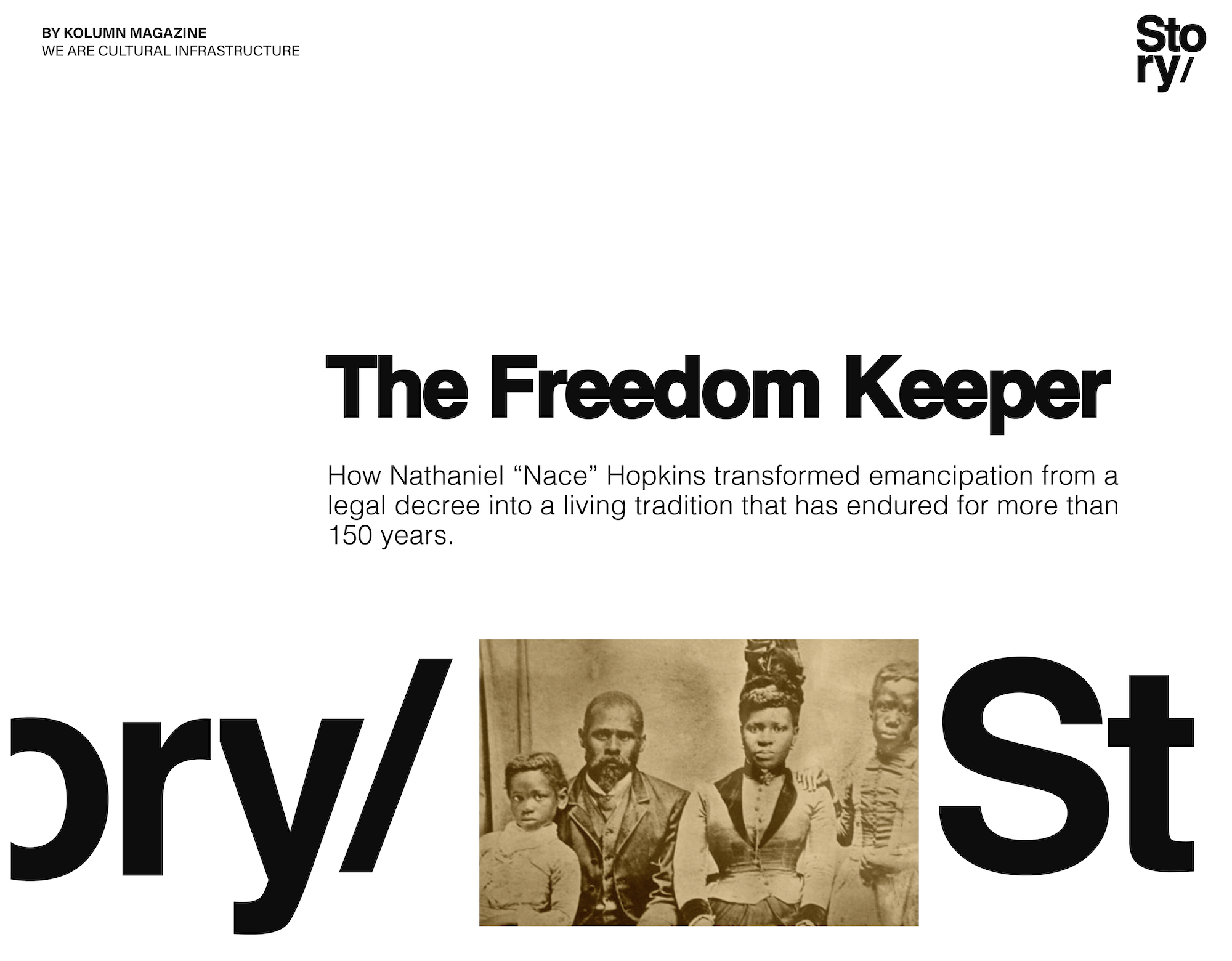
For Hopkins and thousands like him, freedom was not an abstract concept. It was a possibility visible on the horizon.
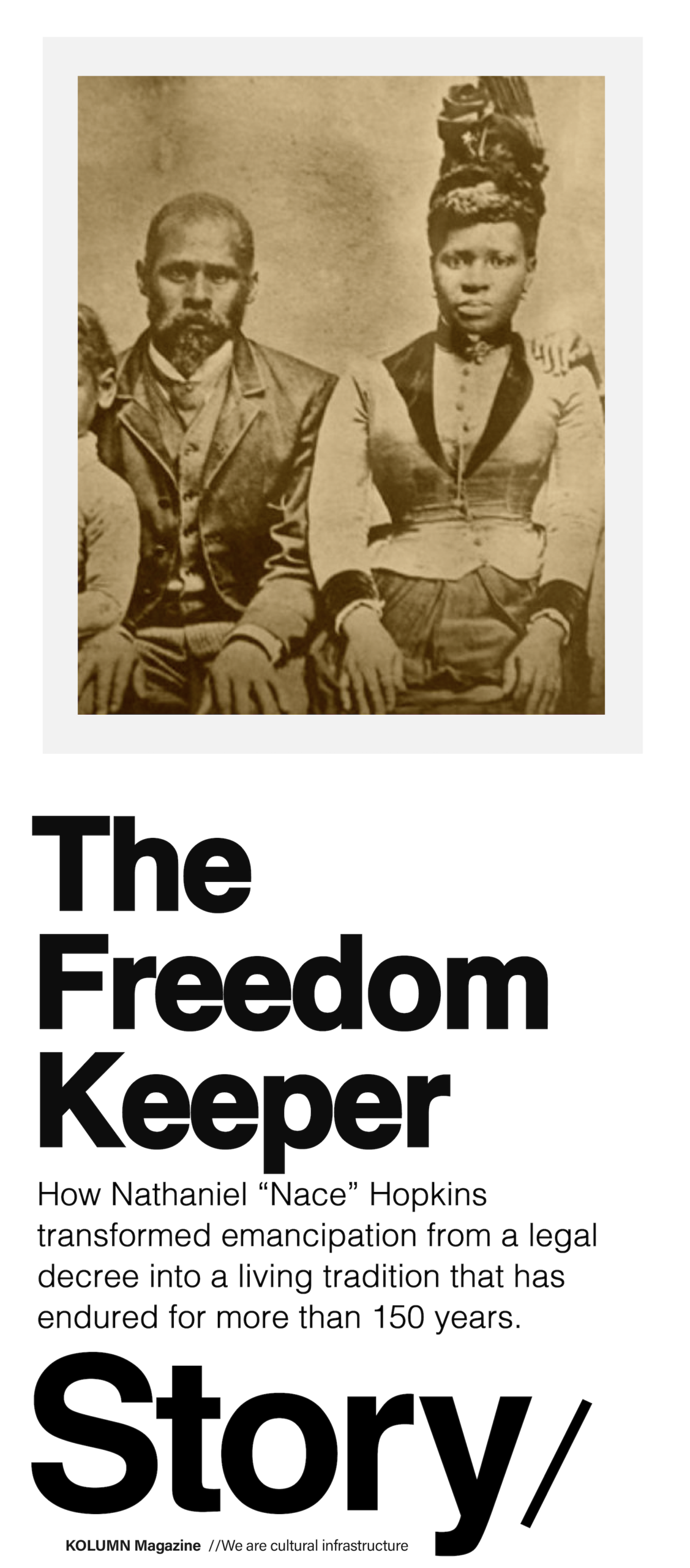
For Hopkins and thousands like him, freedom was not an abstract concept. It was a possibility visible on the horizon.
By KOLUMN Magazine
American history often prefers heroes whose stories fit neatly into monuments. It remembers generals who won wars, presidents who signed legislation, and activists whose speeches altered the course of public opinion. Yet beneath those celebrated figures exists another class of historical actors whose contributions are no less significant. These were the community builders, institution makers, organizers, church leaders, teachers, and memory keepers who transformed sweeping political victories into lived realities. Without them, emancipation might have remained little more than a constitutional amendment. Without them, freedom itself might have become vulnerable to erasure.
Nathaniel “Nace” Hopkins belongs firmly within that category.
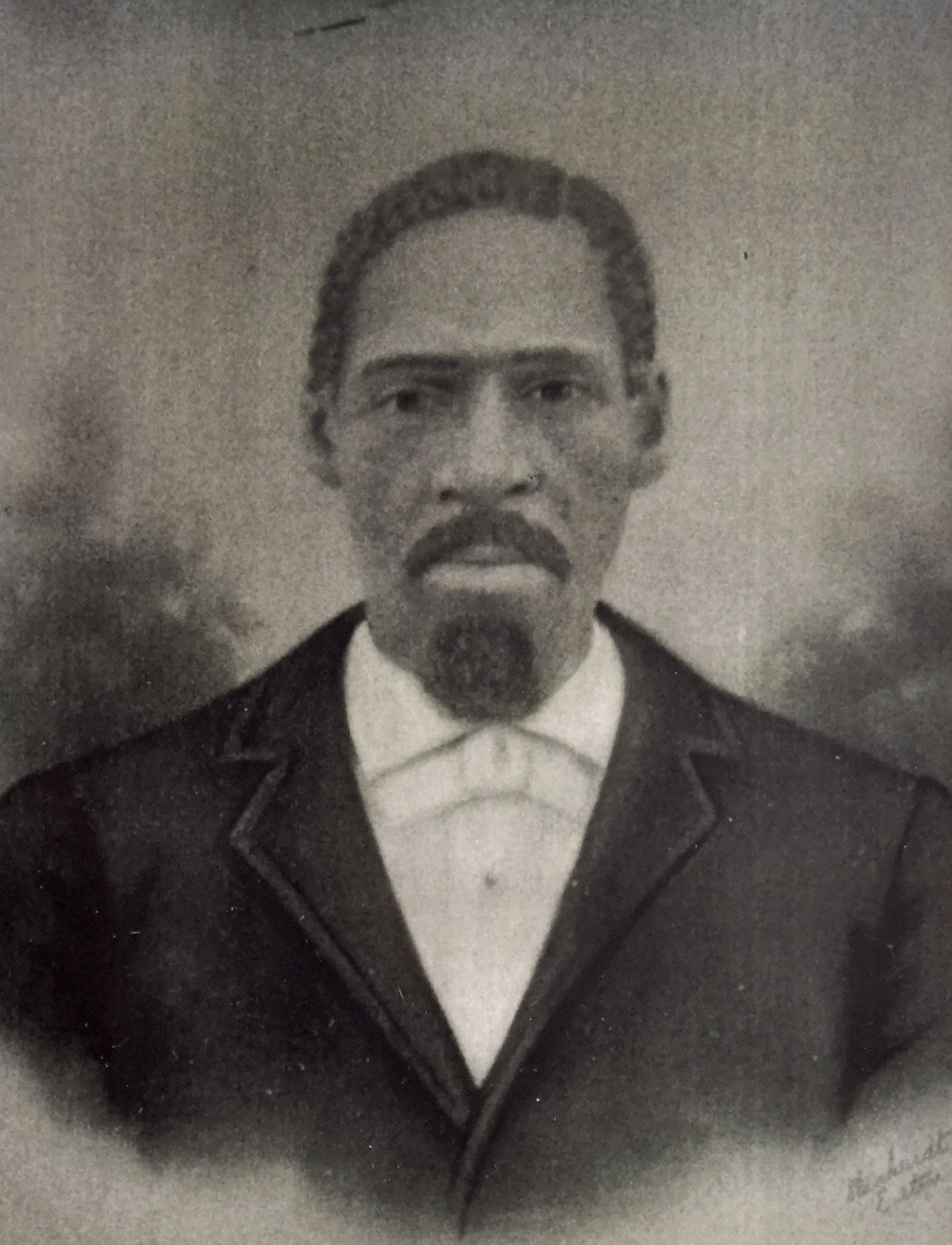
Although his name remains unfamiliar to many Americans, Hopkins occupies a remarkable position in the history of Black freedom. Born into slavery on Maryland’s Eastern Shore around 1831, he lived through one of the most consequential transformations in American history and devoted the remainder of his life to ensuring that emancipation became more than a legal event. Through civic leadership, institution building, church work, military service, and the creation of one of the nation’s oldest continuously observed emancipation celebrations, Hopkins helped establish a culture of remembrance that survived Reconstruction, Jim Crow, the Great Migration, and the shifting priorities of American public memory.
The fact that Hopkins remains relatively unknown says as much about the way Americans tell history as it does about the man himself. Historians have increasingly argued that traditional narratives of Reconstruction focused excessively on national political leaders while overlooking the local Black organizers who actually carried freedom into everyday life. In works such as Reconstruction: America’s Unfinished Revolution, historian Eric Foner demonstrated that emancipation was not a single event but an ongoing struggle that required formerly enslaved people to create schools, churches, civic organizations, political networks, and economic institutions capable of sustaining freedom in hostile environments. Hopkins stands as a compelling embodiment of that broader historical argument.
His story begins in Talbot County, Maryland, a landscape already deeply embedded in the national history of Black liberation.
The Eastern Shore occupies a unique place within African American historical memory. The region gave the nation Frederick Douglass, whose autobiographical writings transformed public understanding of slavery, and Harriet Tubman, whose extraordinary work along the Underground Railroad helped redefine resistance itself. The land where Hopkins was born existed at the intersection of bondage and freedom, rebellion and accommodation, hope and oppression. As scholars associated with the National Park Service’s Frederick Douglass initiatives and the Harriet Tubman Underground Railroad National Historical Park have noted, Maryland’s Eastern Shore represented one of the most important theaters in the long struggle between slavery and emancipation.
Hopkins entered that world as an enslaved child
The documentary record surrounding his early years remains incomplete, a common challenge when researching the lives of enslaved individuals whose experiences were often poorly recorded by those who controlled their labor. Much of what historians know comes from census records, military records, local histories, church documents, and materials preserved by descendants. According to biographical information maintained by the Maryland State Archives, Hopkins spent the first three decades of his life enslaved in Talbot County, experiencing firsthand the contradictions that characterized Maryland’s status as a border state.
Unlike states that joined the Confederacy, Maryland remained within the Union during the Civil War. Yet slavery continued to exist there throughout much of the conflict. This peculiar circumstance created a social landscape in which enslaved people could see freedom approaching without yet being able to claim it. Historian Steven Hahn has argued that such border regions often became incubators for political consciousness because enslaved communities were uniquely positioned to observe national events while remaining trapped within systems of local oppression.
For Hopkins and thousands like him, freedom was not an abstract concept. It was a possibility visible on the horizon.
That possibility would eventually lead him into military service.
The Civil War transformed the meaning of citizenship for Black Americans. Following the issuance of the Emancipation Proclamation and the authorization of Black military enlistment, nearly 180,000 African American men served in the United States Colored Troops. Their participation fundamentally altered the purpose of the war itself. What began as a struggle to preserve the Union increasingly became a battle over the future of slavery and Black citizenship.
According to records preserved by the Maryland State Archives, Hopkins enlisted in the United States Colored Troops in 1863 while slavery still existed in Maryland. The symbolism embedded within that decision remains extraordinary. Hopkins joined an army fighting for a nation that had not yet fully recognized his humanity. He entered military service before he possessed the rights that citizenship supposedly guaranteed.
Military historians have frequently noted that Black service members viewed enlistment as both patriotic duty and political strategy. Scholars such as Joseph Glatthaar, whose research on the United States Colored Troops remains foundational, have documented how Black soldiers understood military service as a pathway toward claiming equal citizenship. By wearing Union uniforms and risking their lives for the nation, they forced Americans to confront the contradiction between democratic ideals and racial oppression.
Hopkins appears to have served until illness forced his return home. While his military career may not have been lengthy, the experience likely had profound consequences. Military service exposed formerly enslaved men to organizational structures, political ideas, leadership models, and broader networks of Black activism. Throughout the South and border states, veterans frequently emerged as civic leaders during Reconstruction because they returned with heightened expectations regarding freedom and citizenship.
When Hopkins came home, he entered a world undergoing rapid transformation.
Maryland formally abolished slavery in November 1864 through a new state constitution, several months before ratification of the Thirteenth Amendment ended slavery nationwide. Yet legal freedom solved only part of the problem. Formerly enslaved communities immediately confronted questions that lawmakers had largely ignored. How would people obtain education after generations of enforced illiteracy? How would Black communities build wealth after centuries of uncompensated labor? How would they exercise political rights amid violent resistance? And perhaps most importantly, how would they preserve the memory of emancipation itself?
The answers required leadership.
Hopkins would spend the remainder of his life helping provide it.
Modern discussions of activism often focus on confrontation. The imagery most familiar to Americans involves marches, protests, speeches, court cases, and legislative battles. Those forms of activism are unquestionably important, but they represent only part of the historical record. Historians increasingly emphasize that some of the most consequential work occurred through institution building. Communities emerging from slavery required churches, schools, civic organizations, mutual aid networks, commemorative traditions, and mechanisms for preserving collective memory.
Hopkins became one of those builders.
Descendant accounts, local histories, and archival materials consistently describe him as a central figure in post-emancipation Black community life throughout the Trappe area. Rather than limiting his efforts to personal advancement, he focused on strengthening the collective capacity of newly freed Black residents. Such work reflected a broader pattern observed across Reconstruction-era America. As historian Tera Hunter has argued, formerly enslaved communities frequently viewed freedom as a communal achievement rather than an individual accomplishment. Their efforts focused on creating durable institutions capable of protecting future generations.
For Hopkins, memory itself became one of those institutions.
The significance of that realization cannot be overstated.
Long before Juneteenth became a federal holiday and decades before professional historians began systematically studying Black commemorative traditions, Hopkins recognized that freedom could not survive through law alone. It required ritual. It required storytelling. It required annual acts of remembrance capable of connecting one generation to the next.
That insight would produce his most enduring legacy.
In 1867, only three years after Maryland abolished slavery, Hopkins helped organize what became the first of the annual emancipation celebrations in Trappe. According to documentation maintained by the Maryland State Archives and local historical organizations, Hopkins emerged as the event’s principal organizer and public leader. Each year, he led processions, coordinated community activities, and ensured that the meaning of emancipation remained central to the gathering.
The event would eventually become known throughout the region as “Uncle Nace’s Day.”
That evolution reflected more than affection. It signaled recognition. Community members understood that Hopkins was not merely participating in the celebration. He was safeguarding it.
The timing of these commemorations deserves closer examination. Reconstruction represented one of the most contested periods in American history. Political gains achieved by Black communities were increasingly challenged through voter suppression, racial violence, economic coercion, and the gradual rise of Jim Crow segregation. Under such conditions, public celebrations of emancipation became acts of civic resistance.
To march publicly through town streets. To gather in churches. To share meals. To commemorate freedom. To tell stories about slavery and liberation. These were not neutral activities. They were declarations of belonging.
Historians studying emancipation celebrations have noted that such gatherings often functioned as alternative civic spaces where Black Americans could articulate visions of citizenship excluded from mainstream political institutions. In many communities, Emancipation Day events became opportunities to discuss education, voting rights, economic development, and community progress. They preserved historical memory while simultaneously shaping political consciousness.
Hopkins understood this intuitively.
Freedom had arrived.
Now it had to be remembered.
Building Freedom in the Shadow of Reconstruction
The historical significance of Nathaniel “Nace” Hopkins becomes clearer when viewed against the collapse of Reconstruction itself. Much of the popular narrative surrounding emancipation still implies a linear progression from slavery to citizenship, as though the legal abolition of human bondage naturally produced equality. Yet scholars have spent decades dismantling that assumption. The years following the Civil War were marked by fierce contests over labor, political participation, education, land ownership, public accommodations, and the very meaning of citizenship. Freedom was never simply bestowed. It had to be negotiated, defended, and repeatedly reaffirmed.
It was within that uncertain environment that Hopkins emerged as a community leader.
The communities of Maryland’s Eastern Shore occupied a unique position within the broader Reconstruction story. Unlike much of the former Confederacy, Maryland had not formally seceded from the Union. Nevertheless, racial hierarchies remained deeply entrenched, and formerly enslaved residents encountered many of the same barriers confronting Black communities throughout the South. The legal status of freedom had changed, but social, economic, and political inequalities remained firmly embedded in daily life. As historians associated with the Maryland Center for History and Culture have observed, Black Marylanders spent decades after emancipation building institutions capable of protecting communities from both formal and informal systems of exclusion.
Hopkins devoted much of his life to that work.
Although surviving documentation does not provide a comprehensive record of every initiative he supported, local histories consistently describe him as a civic leader whose influence extended well beyond annual emancipation celebrations. According to descendant accounts cited by Maryland historians and local reporting from WMDT, Hopkins became deeply involved in helping newly freed residents navigate the transition from slavery to freedom, encouraging educational advancement, civic participation, and communal self-sufficiency.
The emphasis on education was especially significant.
Like countless African Americans born into slavery, Hopkins himself had been denied access to formal schooling. Enslavement depended upon restricting knowledge. Throughout the antebellum South, laws and customs often prohibited teaching enslaved individuals to read and write because literacy threatened the intellectual foundations of the institution itself. Yet one of the first priorities of newly emancipated communities across the nation involved creating schools for future generations.
The historian Heather Andrea Williams, in her influential work on Black education after emancipation, has documented how formerly enslaved people frequently viewed literacy not simply as a practical skill but as a profound symbol of freedom itself. Education represented access to citizenship, economic opportunity, political participation, and personal autonomy. Schools became among the earliest and most important institutions established by Black communities during Reconstruction.
Hopkins appears to have embraced that vision wholeheartedly.
Descendant testimony repeatedly emphasizes that he understood the transformative power of education despite having been denied many of those opportunities himself. Such perspectives reflected a broader pattern visible throughout African American history. Parents and grandparents who endured slavery often became some of the most passionate advocates for schooling because they recognized what illiteracy had cost them.
His work extended beyond education into religious and civic life.
Black churches occupied a central role in post-emancipation America. Historians including Albert Raboteau and Evelyn Brooks Higginbotham have demonstrated that churches functioned as far more than religious institutions. They served as community centers, political meeting spaces, mutual aid organizations, educational facilities, and repositories of collective memory. In many communities, churches represented the first institutions fully controlled by African Americans themselves.
According to local historical records and preservation efforts associated with the Talbot County Free Library’s historical collections, Hopkins helped support the growth and development of Black church life within the Trappe area. Such efforts reinforced the interconnected nature of post-emancipation institution building. Schools strengthened communities. Churches strengthened schools. Civic organizations strengthened churches. Together they created networks capable of sustaining freedom despite persistent opposition.
This interconnected vision of liberation distinguishes Hopkins from many contemporary understandings of activism.
Modern observers sometimes separate cultural work from political work. Historians of Reconstruction increasingly reject that distinction. Celebrations, schools, churches, and commemorations were political precisely because they shaped public understandings of citizenship and belonging. Every parade, church service, and educational initiative represented an assertion that Black Americans possessed the same rights and dignity as any other citizens.
Hopkins appears to have understood that reality instinctively.
His annual emancipation celebrations therefore served multiple purposes simultaneously. They honored the past while preparing communities for the future. They preserved memory while fostering civic engagement. They commemorated freedom while reminding participants that freedom remained unfinished.
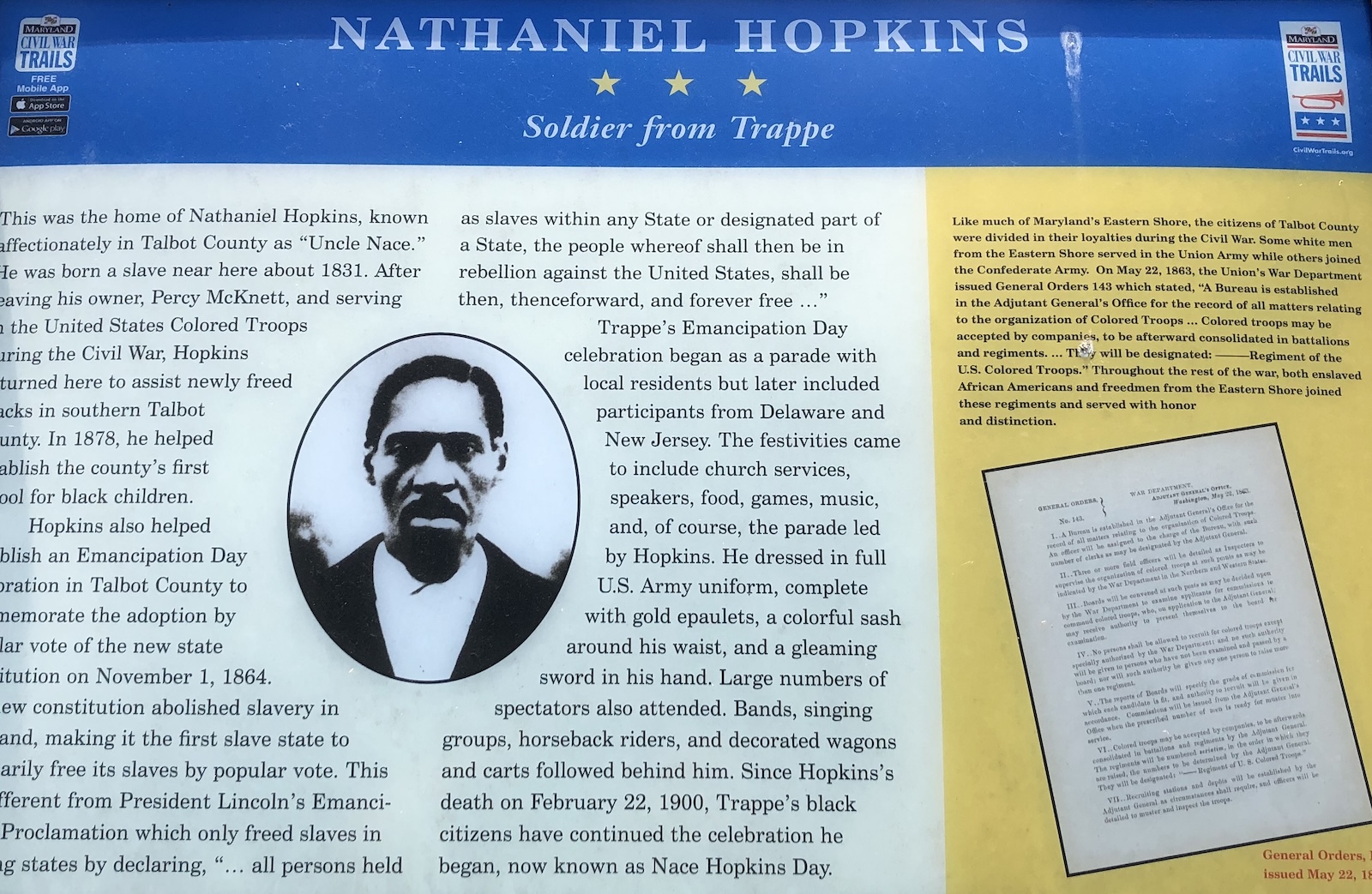
Why Emancipation Celebrations Mattered
To understand Hopkins’ greatest achievement, one must understand the historical importance of emancipation commemorations themselves.
Long before Juneteenth became nationally recognized, Black communities throughout the United States developed traditions for celebrating freedom. These observances emerged in different forms depending on local history. Some commemorated the Emancipation Proclamation. Others marked state-level abolition dates. Still others celebrated the arrival of Union troops or local moments of liberation.
Historian Mitch Kachun, whose scholarship on African American commemorative traditions remains foundational, has argued that emancipation celebrations functioned as powerful vehicles for preserving historical memory. They created opportunities for communities to transmit stories across generations while reinforcing shared understandings of freedom, citizenship, and collective responsibility.
In many respects, these celebrations served as informal historical institutions.
Participants heard speeches recounting slavery and emancipation. Children learned community histories. Families gathered for meals that reinforced social bonds. Religious services connected liberation narratives to spiritual traditions. Parades publicly asserted Black presence within civic spaces that often remained contested.
The annual event organized by Hopkins embodied each of these functions.
Historical accounts describe processions, music, worship services, speeches, communal dining, and public gatherings that drew participants from throughout the region. Such celebrations offered moments of joy, but they also performed important educational and political work. Every year, attendees were reminded why freedom mattered and how difficult it had been to achieve.
This becomes especially important when considering the broader political climate of the late nineteenth century.
The decades following Reconstruction witnessed systematic efforts to reshape public memory of the Civil War. Historians such as David Blight have documented how Lost Cause narratives increasingly dominated mainstream interpretations of the conflict. These narratives minimized slavery, romanticized the Confederacy, and marginalized Black contributions to emancipation.
Against that backdrop, Black commemorative traditions performed a critical corrective function.
Communities like Trappe refused to allow slavery’s realities to disappear from public consciousness. Through annual observances, they preserved historical interpretations grounded in lived experience rather than political convenience. They maintained narratives centered on emancipation, Black military service, and the unfinished struggle for equality.
Hopkins helped ensure that those stories survived.
The remarkable longevity of “Uncle Nace’s Day” demonstrates the effectiveness of his approach. While many emancipation celebrations disappeared during the twentieth century due to migration, economic changes, segregation, and shifting demographics, the tradition associated with Hopkins endured. Historical markers documented by the Historical Marker Database identify the event as one of the oldest continuous emancipation celebrations in the nation.
Such continuity is historically significant.
Many activists influence their own generation. Far fewer shape the behavior of communities a century later.
Historians Rediscover Community Builders
One reason Hopkins remained relatively obscure for so long involves the evolution of historical scholarship itself.
For much of the twentieth century, mainstream histories of Reconstruction focused primarily on presidents, legislators, military leaders, and major political controversies. Local organizers often appeared only briefly, if at all. The result was a historical narrative that emphasized national developments while obscuring the community-level work necessary to make those developments meaningful.
Beginning in the latter decades of the twentieth century, however, historians increasingly shifted their attention toward grassroots actors.
Scholars such as Eric Foner, Steven Hahn, Elsa Barkley Brown, Tera Hunter, Kidada Williams, and Leon Litwack helped redefine how historians understood Reconstruction and its aftermath. Rather than treating formerly enslaved people as passive recipients of freedom, they emphasized Black agency, institution building, political organizing, cultural production, and community leadership.
Within this revised framework, figures like Hopkins assume much greater significance.
His life illustrates many of the themes contemporary historians now regard as central to understanding emancipation. He was a veteran who connected military service to citizenship. He was a community organizer who recognized the importance of local institutions. He was a memory keeper who understood the political significance of historical narratives. He was a civic leader whose influence extended beyond formal office holding.
Most importantly, Hopkins demonstrates how freedom was sustained through collective effort.
The historiography surrounding Black memory studies further reinforces his importance. Scholars including David Blight, Kachun, and others have argued that commemorative traditions played a crucial role in preserving African American historical consciousness during periods when mainstream institutions ignored or distorted Black experiences.
Hopkins was engaged in that work decades before academic scholars developed language to describe it.
His annual celebrations effectively created a community archive. Through ritual, storytelling, and repeated public remembrance, participants transmitted historical knowledge across generations. Such practices allowed communities to maintain continuity even when formal educational institutions often excluded Black perspectives.
Seen from this perspective, Hopkins emerges not merely as an organizer but as a curator of freedom itself.
He recognized that memory required maintenance.
He recognized that history required guardians.
And he dedicated his life to becoming one.
The Historian's Problem and the Community's Memory
One of the central challenges in documenting the life of Nathaniel “Nace” Hopkins is that his greatest accomplishments were not designed to leave behind a large documentary trail. Unlike governors, legislators, newspaper publishers, or nationally known activists, Hopkins did not generate extensive correspondence collections, publish memoirs, or occupy offices that produced thousands of pages of official records. Much of his influence was exercised through relationships, institutions, traditions, and community leadership. For historians, that reality presents a familiar dilemma. Some of the most important figures in African American history are often the most difficult to reconstruct because the communities they served lacked the resources or political power necessary to preserve extensive archives.
Yet Hopkins presents an important lesson about the relationship between historical evidence and historical significance.
Professional historians increasingly recognize that archives are not neutral. The records that survive often reflect existing power structures. Wealthy individuals, government officials, and institutional leaders generally leave behind more documentation than laborers, farmers, domestic workers, formerly enslaved people, and grassroots organizers. As scholars associated with the Smithsonian National Museum of African American History and Culture have repeatedly emphasized, African American historical preservation often depends upon oral histories, community traditions, church records, family collections, and local memory.
Hopkins’ legacy survives precisely because communities refused to forget him.
The annual celebration that eventually became known as “Uncle Nace’s Day” functioned as more than a commemorative gathering. It became a living historical record. Every procession, church service, speech, family reunion, and public gathering carried forward fragments of collective memory. Long before public historians discussed concepts such as community archiving or grassroots preservation, the descendants and neighbors of Hopkins were actively practicing both.
This reality helps explain why Hopkins has reemerged in recent years as a subject of renewed scholarly and public interest. Historical organizations throughout Maryland have increasingly recognized that local Black history contains critical insights into the broader American experience. The Talbot Historical Society, local preservation initiatives, and regional educational programs have contributed to efforts aimed at documenting figures whose contributions were long overlooked within traditional narratives of Reconstruction and post-emancipation life.
The resurgence of interest is not merely an exercise in historical recovery.
It reflects a growing understanding that the story of American democracy cannot be told accurately without people like Hopkins.
The Freedom Tradition That Survived Jim Crow
Perhaps the most remarkable aspect of Hopkins’ legacy is not that he founded an emancipation celebration in 1867. Numerous Black communities organized similar events during Reconstruction. The truly extraordinary achievement is that the tradition survived.
To appreciate that accomplishment, it is necessary to understand what African American communities endured during the decades following Hopkins’ death in 1900.
The late nineteenth and early twentieth centuries witnessed the systematic expansion of segregation throughout much of the United States. Voting rights were curtailed. Educational inequalities deepened. Economic opportunities narrowed. Lynching and racial violence became tools of social control. Historical narratives increasingly marginalized Black experiences while elevating interpretations of the Civil War that minimized slavery’s central role.
Under such conditions, maintaining a public celebration dedicated to emancipation required determination.
Many commemorative traditions disappeared during these decades. Some communities lacked resources. Others experienced population loss due to migration. Some celebrations became politically controversial. Others gradually faded as younger generations moved elsewhere.
The tradition associated with Hopkins endured.
That endurance suggests that the event fulfilled needs extending beyond historical remembrance. It functioned as a mechanism for maintaining community cohesion. It reinforced intergenerational relationships. It connected descendants to ancestors. It reminded participants that freedom possessed a history worth preserving.
Historians who study African American public memory often emphasize that commemorative traditions serve dual purposes. They preserve the past while simultaneously shaping the future. By remembering emancipation, communities communicate values to younger generations. They teach resilience, citizenship, collective responsibility, and historical awareness.
Hopkins appears to have understood these dynamics long before scholars developed terminology to describe them.
The annual observance he helped establish became an educational institution in its own right.
Children learned stories that rarely appeared in textbooks.
Families preserved memories that might otherwise have disappeared.
Communities reaffirmed commitments to freedom that extended beyond law and politics.
In this sense, Hopkins’ work transcended local significance. He contributed to the broader project of preserving African American historical consciousness during periods when mainstream institutions often failed to do so.
The Frederick Douglass Comparison
Any discussion of Hopkins inevitably invites comparison with Frederick Douglass.
The comparison is understandable. Both men emerged from Talbot County. Both experienced slavery. Both devoted significant portions of their lives to advancing Black freedom. Yet examining their differences proves just as illuminating as recognizing their similarities.
Douglass became one of the nineteenth century’s most influential public intellectuals. Through speeches, journalism, political advocacy, and autobiographical writing, he challenged national audiences to confront the moral contradictions of slavery and racial inequality. His influence extended across continents and generations.
Hopkins operated on a different scale.
His audience was not the nation.
It was his community.
The distinction is important because it highlights the multiple forms leadership can take within movements for social change. Successful movements require public intellectuals and local organizers. They require visionary speakers and institution builders. They require individuals capable of changing national conversations and others capable of sustaining local communities.
American history tends to celebrate the first category more enthusiastically than the second.
Yet communities often depend more heavily on the latter.
Hopkins exemplifies this reality. He did not publish famous speeches. He did not advise presidents. He did not become an international figure. Instead, he performed the less glamorous but equally essential work of ensuring that freedom became woven into the daily life of ordinary people.
The comparison also underscores an important historiographical shift. Scholars increasingly reject the notion that historical significance should be measured solely by national visibility. Local influence can be transformative. Community leadership can shape generations. Cultural traditions can preserve values long after political movements have faded.
Viewed through that lens, Hopkins emerges as a figure whose importance extends far beyond Talbot County.
Expert Perspectives on Memory and Liberation
Modern scholarship offers powerful frameworks for understanding why Hopkins matters.
Historian David Blight’s research on Civil War memory demonstrates how public commemorations influence collective understandings of history. According to Blight, societies continually negotiate which stories deserve remembrance and which stories become marginalized. Commemorative traditions therefore serve as battlegrounds where competing interpretations of the past contend for legitimacy.
Hopkins’ annual emancipation celebration participated directly in that process.
At a time when national narratives increasingly downplayed slavery and Black contributions to emancipation, communities associated with Uncle Nace’s Day preserved alternative interpretations grounded in lived experience. Participants remembered freedom not as an abstract constitutional development but as a transformative social reality purchased through sacrifice, struggle, and perseverance.
Historian Mitch Kachun has similarly argued that African American commemorative traditions functioned as forms of cultural and political resistance. By maintaining celebrations centered on emancipation, Black communities asserted ownership over historical narratives that dominant institutions often ignored or distorted.
Hopkins’ work aligns remarkably well with these scholarly interpretations.
Without using academic terminology, he recognized that memory possessed political power.
He understood that freedom required historical consciousness.
He appreciated that communities forgetting their past risked surrendering part of their future.
Such insights place him within a broader tradition of African American memory keepers whose contributions extended beyond formal politics.
Why Nathaniel Hopkins Matters Now
The twenty-first century has witnessed renewed debates about public history, historical memory, monuments, curricula, and civic identity. Questions concerning whose stories deserve preservation have become increasingly prominent across the United States. Museums, universities, historical societies, and community organizations are reevaluating longstanding assumptions about historical significance.
Within that context, Hopkins’ life acquires renewed relevance.
His story reminds Americans that democracy depends upon more than laws and institutions. It depends upon culture. It depends upon memory. It depends upon communities capable of transmitting values across generations.
The annual celebration he founded demonstrates how ordinary citizens can shape historical consciousness. No federal mandate preserved Uncle Nace’s Day. No national institution guaranteed its survival. The tradition endured because generations of community members chose to maintain it.
That choice represents a form of civic participation.
Every gathering constituted an act of remembrance.
Every retelling of Hopkins’ story became an act of preservation.
Every parade reaffirmed a commitment to freedom.
At a moment when public conversations frequently focus on division, Hopkins offers a different perspective on citizenship. His life’s work suggests that democracy flourishes when communities actively engage with their history rather than passively inherit it.
The lessons extend beyond Maryland.
Across the country, local Black histories remain underdocumented and underrecognized. Thousands of community leaders helped build schools, churches, businesses, civic organizations, and commemorative traditions whose influence continues today. Recovering those stories enriches national understanding by revealing the countless ways ordinary people contributed to extraordinary historical transformations.
Hopkins serves as an example of that broader phenomenon.
The Legacy of the Freedom Keeper
Nathaniel “Nace” Hopkins died on March 23, 1900, but the most meaningful measure of his legacy cannot be found in obituaries, official records, or historical markers.
It can be found in continuity.
The celebration he helped establish continues to be remembered. Descendants continue to tell his story. Historians continue to uncover new dimensions of his influence. Communities continue to recognize the value of preserving emancipation’s meaning.
Few leaders achieve such longevity.
Most political victories prove temporary. Most organizations evolve or disappear. Most public figures eventually fade from collective memory. Hopkins accomplished something different. He created a tradition capable of renewing itself across generations.
That achievement deserves recognition not simply because it reflects personal dedication but because it illuminates a broader truth about American history.
Freedom is never self-sustaining.
Every generation inherits responsibilities alongside rights. Communities must decide whether they will preserve historical memory or allow it to disappear. They must choose whether emancipation remains a living legacy or becomes a distant abstraction.
Hopkins understood that challenge with remarkable clarity.
His response was not a speech, a book, or a political campaign.
His response was a community.
His response was a tradition.
His response was a yearly reminder that freedom deserved celebration, reflection, and protection.
More than a century after his death, that reminder still resonates.
In the end, Nathaniel “Nace” Hopkins occupies a place within American history that extends far beyond the boundaries of Maryland’s Eastern Shore. He represents the thousands of local leaders whose names rarely appear in national textbooks but whose efforts shaped the lived experience of freedom for generations of African Americans. He stands as evidence that history is not made solely by famous individuals operating on national stages. It is also made by people who organize gatherings, strengthen institutions, preserve stories, and teach communities how to remember.
The nation remembers Frederick Douglass because he challenged America to become better than it was.
The nation should remember Nathaniel “Nace” Hopkins because he helped communities learn how to live within the freedom that struggle made possible.
That may be a quieter legacy.
It is no less important.
More great stories
Afro Sheen, Wall Street, and the Architecture of Black Possibility
July 6, 2026
No Comments
The Fire Inside the Fourth
July 5, 2026
No Comments