

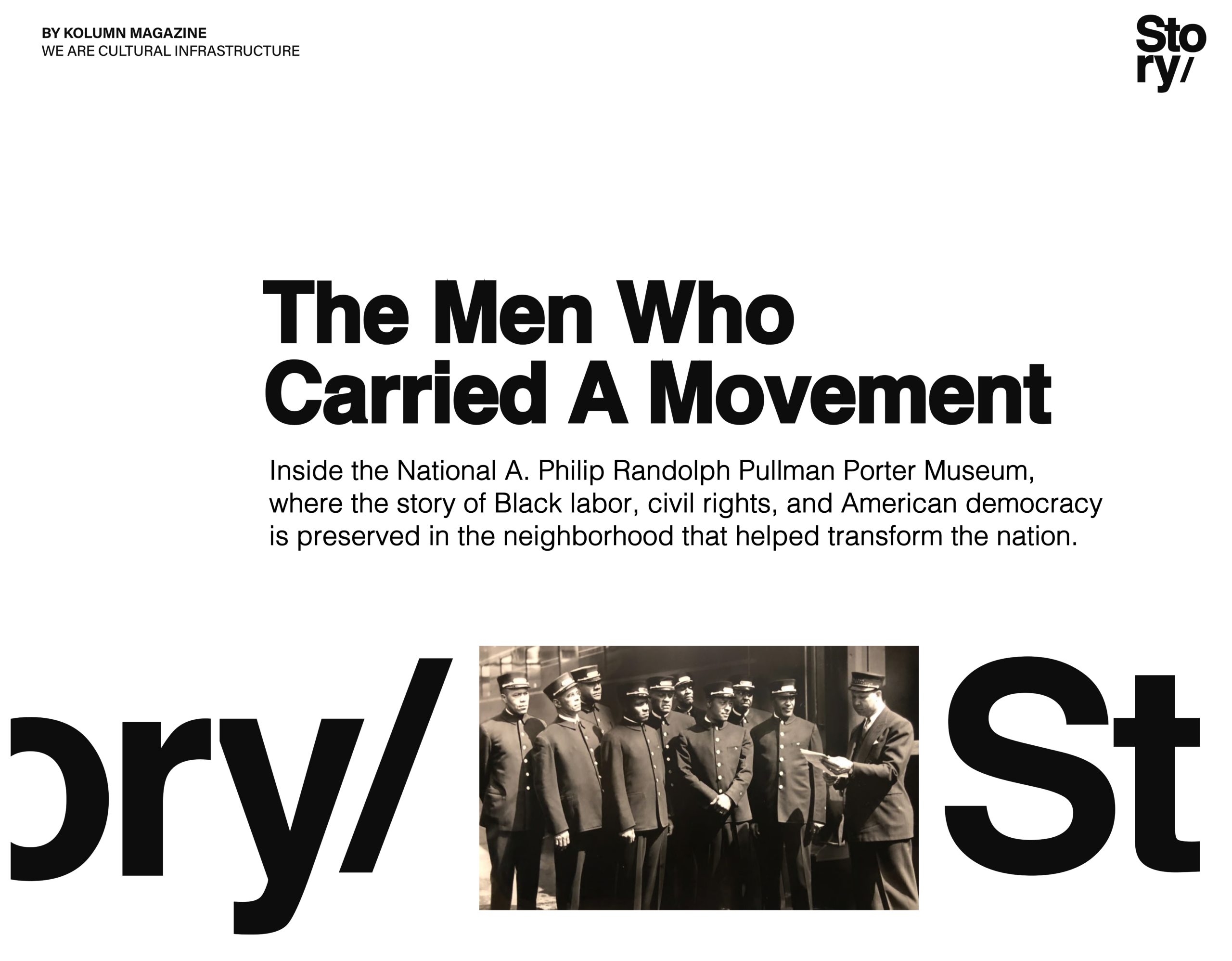
Before there was a March on Washington, there was a union. Before there was a movement, there were workers.
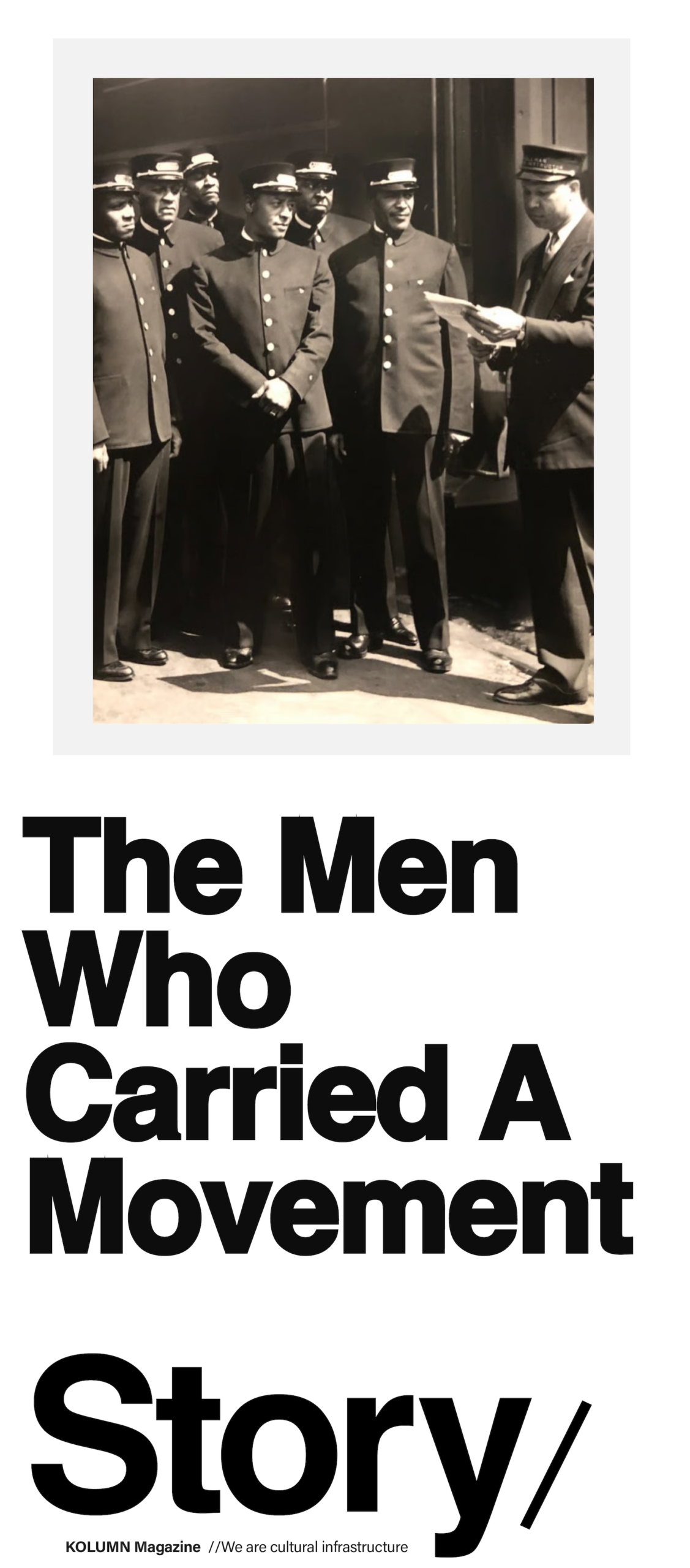
Before there was a March on Washington, there was a union. Before there was a movement, there were workers.
By KOLUMN Magazine
By the time visitors arrive in Chicago’s historic Pullman neighborhood, they often believe they know the story they are about to encounter. They expect a lesson about railroads, industrialization, and perhaps the famous company town built by railroad magnate George Pullman during the nineteenth century. What many discover instead is something far more profound: a story about how ordinary Black workers helped reshape American democracy.
Nestled within the Pullman Historic District, the National A. Philip Randolph Pullman Porter Museum occupies a unique position in the landscape of American public history. Founded in 1995 by Dr. Lyn Hughes, the institution was established to preserve and interpret the history of the Pullman porters, the Brotherhood of Sleeping Car Porters, and the broader contributions of African Americans to labor organizing and civil rights activism. According to the museum’s official history, the institution was conceived as a corrective to generations of historical neglect that had minimized or overlooked the central role Black workers played in shaping twentieth-century America.
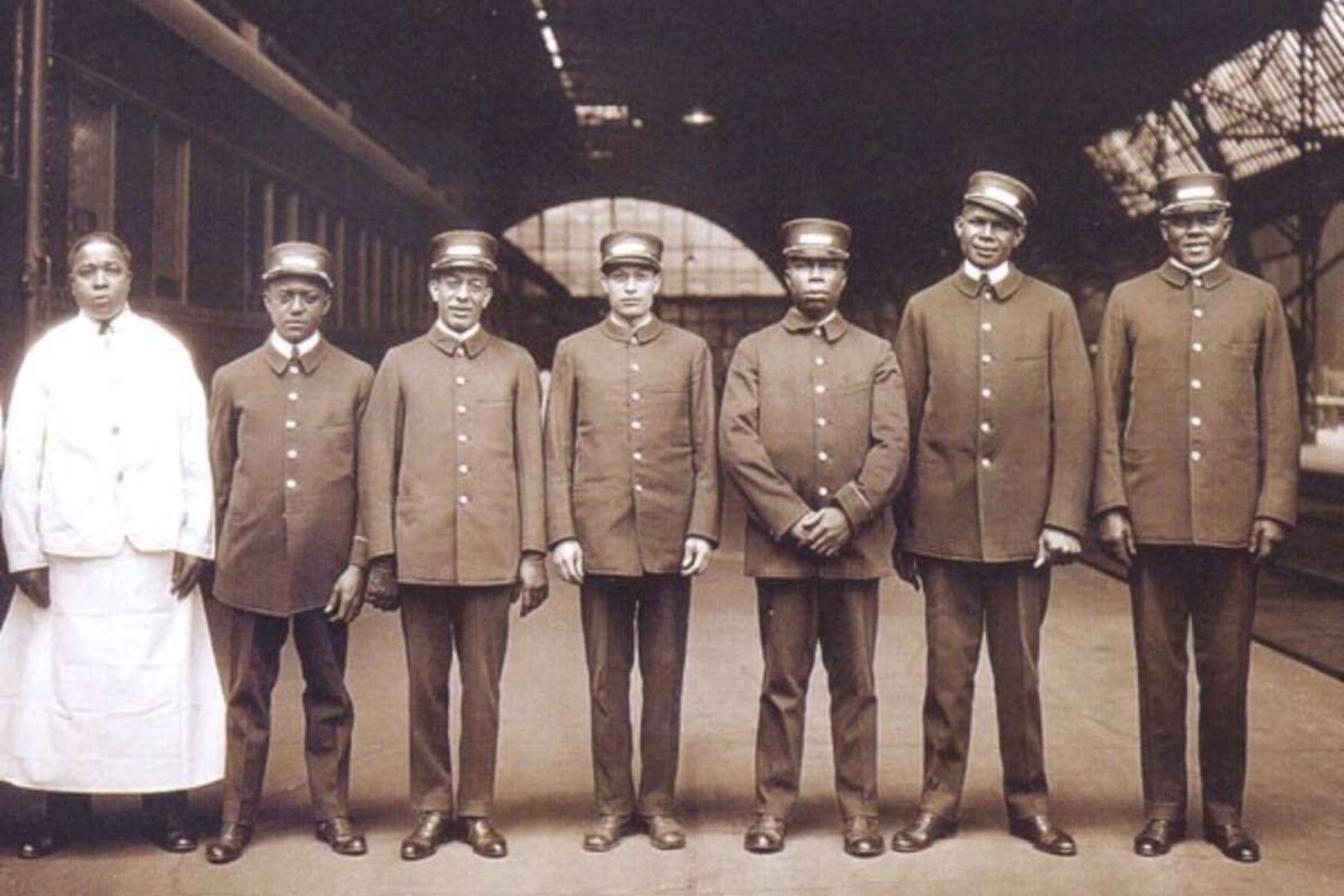
The timing of the museum’s creation proved significant. During the late twentieth century, historians increasingly began revisiting long-standing assumptions about the Civil Rights Movement, labor organizing, and Black political development. Scholars who once treated these histories as separate fields of inquiry began demonstrating that they were deeply interconnected. The museum emerged amid this intellectual shift, positioning itself not merely as a repository of artifacts but as an institution dedicated to reinterpreting how Americans understand freedom, citizenship, and worker power.
Today, that mission carries renewed relevance. The museum, which has announced plans for expansion and redevelopment with an anticipated reopening in 2027, stands as one of the nation’s foremost institutions dedicated to Black labor history. While larger museums often focus on famous leaders, landmark legislation, or cultural achievements, the Pullman Porter Museum focuses on a different question: What happens when workers organize?
For readers familiar with KOLUMN Magazine’s previous examinations of institutions such as the Wright Museum of African American History and the August Wilson African American Cultural Center, the Pullman Porter Museum represents another vital site of cultural memory. Yet it differs in one critical respect. Here, labor is not treated as a backdrop to history. Labor is the story.
That distinction matters because the history preserved within these walls challenges some of the most enduring myths about American progress. It reveals that many of the freedoms celebrated today emerged not solely from courtrooms, legislative chambers, or presidential speeches, but from union meetings, community organizations, and the determined efforts of workers whose names rarely appear in textbooks.
The museum tells the story of those workers. It tells the story of the Pullman porters.
More importantly, it tells the story of the movement they carried.
The Birth of an American Institution
To understand why the Pullman porters became so important, one must first understand the world that produced them.
During the late nineteenth century, railroads stood at the center of American economic life. They connected cities, facilitated commerce, and transformed travel. Among the most influential figures within this rapidly expanding industry was George Pullman, whose luxury sleeping cars revolutionized long-distance transportation. Pullman’s sleeping cars offered passengers unprecedented comfort, creating a new standard for rail travel and helping establish the Pullman Palace Car Company as one of the most recognizable brands in the nation.
The company’s success depended heavily upon a workforce that remained largely invisible to the traveling public. To staff its sleeping cars, Pullman hired thousands of African American men, many of whom were formerly enslaved individuals or descendants of enslaved families seeking economic opportunity in a society still defined by racial discrimination. Historians note that Pullman believed Black men would be perceived as naturally deferential by white passengers, a racist assumption that helped shape the company’s hiring practices for decades.
The work performed by Pullman porters was demanding and often exhausting. Porters carried luggage, made beds, polished shoes, cleaned compartments, provided customer service, and remained on call for extended periods during long journeys. They frequently worked far beyond standard hours and relied heavily on tips to supplement wages that many considered inadequate. Adding insult to injury, passengers often referred to all porters simply as “George,” a practice that denied individual identity while reinforcing the notion that the workers existed primarily as extensions of the company founder.
Yet the position occupied a paradoxical place within Black America.
Despite the indignities associated with the work, employment as a Pullman porter represented one of the most stable and financially viable occupations available to African American men during the late nineteenth and early twentieth centuries. Historian Larry Tye, author of the acclaimed study Rising from the Rails: Pullman Porters and the Making of the Black Middle Class, argues that the porters became central figures in the creation of Black economic mobility, using their earnings to purchase homes, educate children, and support community institutions that would become pillars of African American civic life.
The significance of the porters extended beyond economics. Their mobility gave them access to information, experiences, and networks unavailable to many other Black workers. Traveling across regions and state lines, they became conduits for ideas, newspapers, political discussions, and opportunities. Long before the internet, radio broadcasts, or modern communications networks, Pullman porters served as informal carriers of information throughout Black America.
This role would prove transformative.
The Great Migration and the Information Network of Black America
One of the most important developments in modern American history was the Great Migration, the movement of millions of African Americans from the rural South to urban centers throughout the North, Midwest, and West during the twentieth century. Historians estimate that approximately six million Black Americans participated in this migration, fundamentally altering the demographic, cultural, economic, and political landscape of the nation.
While economic opportunity often served as the primary motivation, migration required information. Families considering relocation needed to know where jobs existed, which neighborhoods were welcoming, how much housing cost, and what social conditions awaited them. Reliable information was difficult to obtain, particularly within communities subjected to segregation and systemic discrimination.
The Pullman porters helped fill that gap.
According to scholarship highlighted by historians and public historians at the Smithsonian’s National Museum of African American History and Culture, porters frequently transported copies of the Chicago Defender, one of the most influential Black newspapers in American history. The newspaper encouraged Southern African Americans to pursue opportunities in Northern cities while reporting on racial violence, employment prospects, and political developments throughout the country.
Because porters traveled extensively, they became trusted sources of information. They shared firsthand observations about life in Chicago, Detroit, Cleveland, Pittsburgh, and New York. They offered practical advice to migrants. They connected individuals with opportunities. In doing so, they helped create what historians increasingly describe as a national Black public sphere.
This interpretation represents a significant shift within historical scholarship. Earlier generations of historians often viewed the porters primarily through the lens of transportation history or labor relations. More recent scholarship emphasizes their broader social and political influence.
Few scholars have contributed more to this reinterpretation than historian Beth Tompkins Bates. In her influential book Pullman Porters and the Rise of Protest Politics in Black America, 1925–1945, Bates argues that the Brotherhood of Sleeping Car Porters became a crucial incubator for Black political activism and organizational leadership. Her research demonstrates that the porters did not merely participate in existing movements; they helped create the networks and institutions that made those movements possible.
The museum’s interpretation closely aligns with this scholarship. Visitors are encouraged to see the Pullman porter not simply as a service worker but as a participant in a broader struggle for dignity, citizenship, and political power. Through exhibits, educational programming, and public-history initiatives, the institution demonstrates how seemingly ordinary occupations can become vehicles for extraordinary social change.
This approach reflects one of the museum’s greatest strengths. Rather than treating history as a collection of isolated events, it reveals the relationships connecting labor, migration, politics, and community development.
Within the Pullman story, each of these elements reinforces the others.
The result is a narrative that feels simultaneously intimate and expansive, grounded in individual experience while illuminating national transformation.
Enter A. Philip Randolph
If the Pullman porters supplied the foundation, A. Philip Randolph supplied the vision.
Born in Crescent City, Florida, in 1889, Asa Philip Randolph emerged as one of the most influential labor leaders in American history. His significance extends well beyond labor organizing. Historians increasingly describe Randolph as a bridge figure connecting early twentieth-century labor activism to the Civil Rights Movement that would later transform the nation.
The Library of Congress identifies Randolph as one of the most consequential advocates for economic and racial justice during the twentieth century, noting his role in organizing Black workers and pressuring federal officials to confront discrimination (Library of Congress – Today in History: A. Philip Randolph). The AFL-CIO similarly regards Randolph as a pioneering labor leader whose work expanded the possibilities of union organizing while helping redefine the relationship between labor rights and civil rights.
Randolph’s involvement with the Pullman porters began during the 1920s, when workers sought representation capable of challenging the power of the Pullman Company. The effort required extraordinary courage. Management opposed unionization aggressively, employing surveillance, intimidation, and retaliation against workers suspected of organizing activity. Many porters feared losing their jobs. Others doubted that meaningful change was possible.
Randolph remained undeterred.
In 1925, he helped establish the Brotherhood of Sleeping Car Porters, launching a campaign that would ultimately become one of the most important labor struggles in American history. According to research maintained by the Chicago History Museum, the Brotherhood eventually became the first major African American labor union to receive a charter from the American Federation of Labor, a milestone that challenged assumptions about race, labor, and political power throughout the United States.
The struggle would continue for more than a decade.
The victory, when it finally arrived, would change far more than wages and working conditions.
It would help reshape American democracy itself.
The Union That Refused to Disappear
The campaign to organize Pullman porters lasted far longer than many observers believed possible. When A. Philip Randolph and the Brotherhood of Sleeping Car Porters formally launched their organizing effort in 1925, they confronted not only one of the most powerful corporations in the nation but also a deeply entrenched social order that viewed Black workers as expendable labor rather than political actors. The Pullman Company understood the stakes. If Black workers successfully organized on a national scale, they would challenge assumptions about race, power, and labor that had shaped American industry for generations.
For years, company officials resisted the union through a combination of intimidation, surveillance, economic pressure, and legal maneuvering. Porters who supported union activity risked termination, blacklisting, and retaliation. Many workers remained understandably cautious. Pullman employment, despite its frustrations, represented a relatively stable source of income during an era when economic opportunities for African Americans remained sharply constrained. Yet Randolph and his allies persisted, building a national organization capable of sustaining a prolonged struggle.
The breakthrough arrived during the New Deal era. Passage of the Railway Labor Act strengthened workers’ rights and altered the legal environment surrounding union recognition. After years of organizing, the Brotherhood secured official recognition and eventually negotiated its first collective bargaining agreement with the Pullman Company in 1937. Historians widely regard the contract as a watershed moment in American labor history because it demonstrated that African American workers could successfully organize, negotiate, and exercise collective economic power on a national scale. The Chicago History Museum’s history of the Brotherhood of Sleeping Car Porters identifies the agreement as one of the most significant labor victories achieved by Black workers during the twentieth century.
The importance of that achievement extended beyond railroad employment. The Brotherhood created a model of organizational discipline, leadership development, and political engagement that would influence subsequent generations of activists. Through union meetings, educational programs, conventions, and community outreach efforts, the Brotherhood trained individuals who would later participate in broader struggles for racial justice. In this sense, the union functioned as both a labor organization and a civic institution.
This dual role has become central to contemporary scholarship. Historians increasingly argue that the Brotherhood should not be understood solely as a labor union. Rather, it served as a political infrastructure through which African Americans developed the skills, relationships, and organizational capacities necessary to challenge systemic inequality. Beth Tompkins Bates makes precisely this argument in Pullman Porters and the Rise of Protest Politics in Black America, 1925–1945, demonstrating how the union helped create networks that supported emerging civil-rights activism throughout the country.
The Pullman Porter Museum embraces this interpretation. Rather than presenting the Brotherhood merely as a successful union, the museum presents it as an institution that helped redefine the possibilities of Black political participation. Visitors encounter a story in which workplace organizing becomes a catalyst for broader democratic engagement.
Rewriting the History of the Civil Rights Movement
One of the most fascinating developments in modern scholarship involves the reinterpretation of the Civil Rights Movement itself. For much of the twentieth century, historians often framed civil-rights history primarily through legal victories, protest campaigns, and charismatic leaders. While these elements remain important, scholars increasingly argue that such narratives can obscure the organizational foundations upon which movements depend.
The Pullman porters occupy a central place within this historiographical transformation.
Researchers such as Robert Korstad, William P. Jones, and Beth Tompkins Bates have demonstrated that labor institutions frequently served as incubators for civil-rights activism. Union organizing taught participants how to build coalitions, raise funds, communicate strategically, negotiate with powerful institutions, and mobilize communities. These skills later proved essential to campaigns challenging segregation and discrimination. Rather than treating labor history and civil-rights history as separate subjects, contemporary scholars increasingly view them as deeply intertwined.
This perspective has influenced public historians as well. Scholars associated with the National Museum of African American History and Culture have emphasized the role Pullman porters played in connecting Black communities and fostering political consciousness across regional boundaries. Their work reinforces the argument that labor activism helped create the infrastructure necessary for later civil-rights victories.
The museum’s exhibitions reflect this intellectual shift. Visitors learn that movements do not emerge spontaneously. They require institutions, relationships, leadership development, and strategic planning. The Brotherhood provided all four.
This interpretation challenges popular narratives that focus exclusively on a handful of famous figures. While leaders matter, institutions matter too. The Pullman Porter Museum reminds visitors that social change often emerges from collective effort rather than individual heroism alone.
The result is a richer understanding of how democratic reform actually occurs.
The Road to Washington
No individual better embodied the connection between labor rights and civil rights than A. Philip Randolph.
Throughout his career, Randolph insisted that economic justice was inseparable from racial equality. He rejected the notion that political freedom alone could secure meaningful citizenship. Instead, he argued that access to employment, fair wages, and economic opportunity represented essential components of democracy itself.
This philosophy reached national prominence during World War II. In 1941, Randolph threatened to organize a massive March on Washington to protest discrimination within defense industries and federal employment. The proposal alarmed the Roosevelt administration, which feared the political consequences of a large-scale demonstration in the nation’s capital. Facing mounting pressure, President Franklin D. Roosevelt issued Executive Order 8802, prohibiting racial discrimination in defense industries and establishing the Fair Employment Practice Committee. Historians widely regard the order as one of the most significant civil-rights achievements prior to the postwar movement. The Library of Congress identifies Randolph’s campaign as a pivotal moment in the history of federal civil-rights policy.
More than two decades later, Randolph helped organize another march—one that would become one of the most iconic events in American history. The 1963 March on Washington for Jobs and Freedom is often remembered primarily through Martin Luther King Jr.’s “I Have a Dream” speech. Yet historians increasingly emphasize Randolph’s foundational role in conceiving and organizing the demonstration. The event’s title itself reflected Randolph’s worldview. It was not simply a march for freedom. It was a march for jobs and freedom.
That distinction remains important because it highlights an aspect of civil-rights history that is sometimes overlooked. Economic justice stood at the center of many movement demands. Activists sought voting rights, equal protection, and desegregation, but they also sought employment opportunities, fair wages, housing access, and economic security.
The Pullman Porter Museum places this economic dimension at the forefront of its interpretation. By doing so, it helps visitors understand why labor history remains essential to understanding the broader struggle for equality.
Dr. Lyn Hughes and the Preservation of Black Labor Memory
The existence of the museum itself reflects another important historical development: the emergence of Black public-history institutions dedicated to preserving stories often overlooked by mainstream narratives.
When Dr. Lyn Hughes founded the National A. Philip Randolph Pullman Porter Museum in 1995, she did so in response to a persistent absence. Despite the importance of Pullman porters and the Brotherhood of Sleeping Car Porters, their contributions received comparatively little attention within museums, classrooms, and public commemorations. Hughes recognized that valuable historical knowledge risked being lost unless dedicated efforts were undertaken to preserve it.
The museum emerged from that recognition.
According to the institution’s official history, Hughes envisioned a museum that would celebrate the contributions of African American workers while educating future generations about the intersections of labor, civil rights, and community development (National A. Philip Randolph Pullman Porter Museum). Her vision extended beyond artifact collection. She sought to create a living institution capable of fostering dialogue, supporting research, and engaging communities.
That approach aligns closely with contemporary trends within public history. Increasingly, museums function not merely as repositories of objects but as centers for education, community engagement, and cultural preservation. Scholars within museum studies frequently argue that historical interpretation becomes most effective when institutions connect past experiences to contemporary concerns. The Pullman Porter Museum exemplifies this philosophy.
Through educational programming, oral-history projects, exhibitions, and community partnerships, the museum encourages visitors to consider how historical struggles continue to shape modern debates about labor, race, and democracy.
Its work is especially significant because labor history often remains underrepresented within public memory. Political leaders and cultural icons frequently receive substantial attention, while workers who helped build social movements are less likely to be commemorated. The museum helps correct that imbalance.
In doing so, it preserves not only historical facts but also historical perspective.
Place Matters
The museum’s location within Pullman is not incidental. It is integral to the institution’s interpretive power.
The Pullman neighborhood itself occupies a unique place in American history. Constructed during the 1880s as a planned industrial community, Pullman represented George Pullman’s ambitious attempt to create a model company town. Workers lived in company-owned housing, shopped in company-operated facilities, and existed within an environment designed to reflect industrial order and efficiency. While some observers praised the development, others criticized its paternalistic structure and limited worker autonomy.
The tensions embedded within that system eventually contributed to the famous Pullman Strike of 1894, a landmark event in American labor history. Today, those histories are interpreted through Pullman National Historical Park, which preserves and contextualizes the neighborhood’s significance within broader narratives of industrialization, labor conflict, and social change.
The Pullman Porter Museum adds another layer to that story. Whereas the National Park Service often focuses on industrial development and labor conflict within the company town, the museum centers the experiences of Black workers whose contributions reshaped the political landscape of the twentieth century.
Together, the park and museum create a powerful interpretive partnership. Visitors encounter both the structures of industrial capitalism and the individuals who challenged and transformed them.
The physical landscape reinforces the historical narrative. History is not simply described. It is experienced.
Why the Museum Matters Now
As the museum prepares for its anticipated reopening following expansion efforts announced on its official website, its relevance appears greater than ever. Contemporary debates about worker rights, economic inequality, voting access, and democratic participation echo many of the issues that animated the Brotherhood of Sleeping Car Porters nearly a century ago.
The museum offers valuable historical perspective on these discussions. It reminds audiences that rights often emerge through collective action. It demonstrates that social movements require institutions capable of sustaining long-term organizing efforts. It reveals how economic and political questions frequently intersect.
Perhaps most importantly, it challenges visitors to reconsider whose stories deserve preservation.
For decades, the contributions of Pullman porters existed largely at the margins of public memory. Today, thanks to the work of Dr. Lyn Hughes, historians, public historians, community advocates, and countless families who preserved documents and memories, those stories occupy a more prominent place within the national narrative.
The National A. Philip Randolph Pullman Porter Museum stands as evidence that history is not merely inherited. It is curated, interpreted, protected, and shared. Museums help determine which stories endure. They influence how future generations understand the past and how they imagine the future.
In preserving the history of the Pullman porters, the museum preserves something larger than the story of a profession. It preserves the story of workers who became organizers, organizers who became activists, and activists who helped reshape American democracy. Their journey transformed labor history, civil-rights history, and the history of the United States itself.
For that reason, the National A. Philip Randolph Pullman Porter Museum is not simply a museum about trains. It is a museum about power, citizenship, and the enduring capacity of ordinary people to change the course of history.
And that may be the most important story of all.
Memory, Museums, and the Politics of Preservation
The significance of the National A. Philip Randolph Pullman Porter Museum extends beyond the history it preserves. It also raises a larger question that has increasingly occupied historians, museum professionals, and cultural critics during the twenty-first century: Who decides which stories become part of the national memory?
For generations, the dominant narrative of American progress often emphasized presidents, industrialists, military leaders, and elected officials. Such figures undoubtedly shaped history, yet this approach frequently obscured the experiences of workers, women, grassroots organizers, and communities whose collective efforts transformed the nation from the ground up. Public historians have increasingly challenged these omissions, arguing that the stories preserved within museums often reveal as much about contemporary values as they do about the past itself.
The Pullman Porter Museum exists within this broader movement to democratize historical memory. Its mission reflects a growing recognition that labor history is not a specialized niche but an essential component of understanding American society. The museum’s exhibitions and educational initiatives suggest that the struggle for civil rights cannot be fully understood without understanding the workers who built institutions capable of sustaining long-term activism. This interpretation aligns with scholarship emerging from institutions such as the Smithsonian’s National Museum of African American History and Culture, where historians have emphasized the importance of examining the networks, organizations, and communities that made social change possible.
Public-history scholars frequently note that museums perform two functions simultaneously. They preserve historical artifacts, and they shape public understanding. The stories museums choose to elevate influence how audiences interpret the past and, by extension, how they understand the present. In this regard, the Pullman Porter Museum performs an especially important civic function. By centering Black labor history, it expands the framework through which Americans understand democracy itself.
Visitors encounter a narrative in which worker organizing, community leadership, and collective action become central themes rather than supporting details. This approach challenges simplistic accounts of social progress and encourages audiences to recognize that transformative change often emerges through sustained organizing rather than singular moments of inspiration.
Such lessons feel particularly relevant in an era marked by renewed debates about labor rights, economic inequality, voting access, and civic participation.
The Women Behind the Brotherhood
Although the Brotherhood of Sleeping Car Porters occupies the center of the museum’s narrative, contemporary scholarship has increasingly drawn attention to another group whose contributions were long underappreciated: the women who supported and expanded the movement.
For many years, historical accounts of labor organizing focused primarily on male workers and formal union leadership. More recent scholarship has broadened this perspective, highlighting the indispensable role played by wives, daughters, community leaders, and members of the Brotherhood’s Ladies Auxiliary. These women organized fundraisers, coordinated community events, provided logistical support, and helped sustain organizing campaigns during periods of intense opposition.
Historians examining the Ladies Auxiliary have argued that their efforts expanded the Brotherhood’s influence beyond the workplace and into neighborhoods, churches, schools, and civic organizations. In many communities, the auxiliary became an important force for political engagement and social advocacy, helping translate labor activism into broader forms of community empowerment.
The museum’s evolving interpretation reflects this historiographical shift. By incorporating the experiences of women into its exhibitions and educational programming, the institution presents a more comprehensive account of how movements operate. Social change rarely emerges through the actions of a single leader or organization. Instead, it depends upon networks of support that often remain invisible in traditional narratives.
This broader perspective aligns with developments throughout the field of African American history, where scholars increasingly emphasize collective action, family networks, and community institutions as essential components of political movements. The Pullman story becomes richer when viewed through this lens because it reveals the many forms of labor—both paid and unpaid—that contributed to the struggle for equality.
The Pullman Porter as Cultural Icon
The influence of Pullman porters extended far beyond labor organizing and political activism. Over time, the porter became a recognizable figure within American culture, appearing in literature, journalism, photography, film, and oral history. Yet these representations often reflected competing interpretations of Black life and labor.
Some portrayals emphasized service and professionalism, highlighting the dignity with which porters performed demanding work despite difficult circumstances. Others focused on the contradictions embedded within the occupation, noting the ways economic opportunity coexisted with racial subordination. Still others celebrated the porters as symbols of mobility, resilience, and aspiration.
Historians have explored these cultural representations to better understand how Americans perceived race, work, and citizenship throughout the twentieth century. The Pullman porter became a symbol through which broader questions about respectability, masculinity, class, and social mobility were debated.
The museum contributes to these conversations by grounding cultural representations in historical reality. Visitors encounter uniforms, photographs, personal documents, oral histories, and artifacts that reveal the complexity of everyday life. These materials remind audiences that the individuals who became symbols were also fathers, husbands, neighbors, church members, activists, and community leaders.
Such interpretive work is especially valuable because it resists the tendency to flatten historical figures into stereotypes. The museum restores nuance to a story often reduced to simplistic narratives.
In doing so, it humanizes history.
The Museum and the Future of Labor History
The continued relevance of the National A. Philip Randolph Pullman Porter Museum becomes particularly evident when viewed against the backdrop of contemporary labor activism. Across the United States, workers in industries ranging from education and healthcare to logistics and technology have engaged in organizing campaigns aimed at improving wages, working conditions, and workplace protections.
Although the economic landscape differs significantly from that of the 1920s and 1930s, many underlying questions remain remarkably familiar. How do workers build collective power? How do marginalized communities secure representation within economic institutions? What role do unions play in strengthening democratic participation?
The history preserved by the museum offers important insights into these questions. The Brotherhood of Sleeping Car Porters demonstrated that organizing efforts can produce effects extending far beyond the workplace. Through collective action, workers developed leadership skills, established networks of mutual support, and cultivated political influence capable of shaping public policy.
Contemporary scholars of labor history increasingly emphasize these broader dimensions of organizing. Unions do more than negotiate contracts. They create civic infrastructure. They provide spaces for leadership development, political education, and community engagement. The Brotherhood exemplified this function, and the museum ensures that future generations understand its significance.
The institution’s educational mission is therefore not merely historical. It is civic. By preserving examples of democratic participation in action, the museum helps audiences recognize the many forms citizenship can take.
Expansion and a New Chapter
As the museum moves toward its anticipated reopening following expansion efforts described on the institution’s official website, its future appears closely connected to growing public interest in African American history and labor history. The planned expansion represents an opportunity not only to increase exhibition space but also to deepen public engagement with stories that remain insufficiently represented within mainstream historical narratives (National A. Philip Randolph Pullman Porter Museum).
The timing is notable. In recent years, institutions across the country have experienced heightened demand for programming related to race, labor, social movements, and public memory. Audiences increasingly seek historical context for contemporary debates about inequality, worker rights, and democratic participation. The Pullman Porter Museum is uniquely positioned to provide that context because its collections illuminate the intersections among all of these subjects.
Expansion also reflects a broader trend within public history. As scholars continue uncovering new perspectives on labor organizing, migration, community formation, and civil-rights activism, museums are adapting to incorporate these findings into their interpretive frameworks. The Pullman Porter Museum’s commitment to evolving scholarship ensures that it remains not only a place of preservation but also a site of ongoing intellectual engagement.
This willingness to grow and adapt is one of the institution’s greatest strengths.
History is not static. Neither are the institutions entrusted with preserving it.
Why the Pullman Porter Story Endures
Every generation inherits certain historical narratives. Some become deeply embedded within public consciousness, while others remain largely unknown outside academic circles. The story of the Pullman porters falls into the latter category despite its profound significance.
That relative obscurity is precisely why the museum matters.
The Pullman porters helped build a Black middle class. They contributed to the success of the Great Migration. They organized the nation’s first major Black labor union. They nurtured leadership networks that influenced the Civil Rights Movement. They supported campaigns that challenged discrimination in employment, transportation, housing, and public life. Their efforts helped expand the boundaries of American democracy.
Yet for many years, these achievements received far less attention than they deserved.
The museum corrects that imbalance.
By preserving documents, artifacts, photographs, oral histories, and community memories, it ensures that the contributions of Pullman porters remain visible within the broader story of the United States. More importantly, it encourages visitors to consider how history actually unfolds. Progress rarely arrives fully formed. It emerges through countless acts of organizing, coalition-building, and perseverance.
The Pullman porters understood this reality. So did A. Philip Randolph. So does the museum that bears witness to their legacy.
For KOLUMN Magazine, which has frequently explored institutions dedicated to preserving Black memory—from the Wright Museum in Detroit to the August Wilson African American Cultural Center in Pittsburgh—the National A. Philip Randolph Pullman Porter Museum represents another indispensable site of cultural stewardship. Each institution protects a different chapter of the African American experience. Together, they form a constellation of memory that helps illuminate the nation’s past.
Among them, the Pullman Porter Museum occupies a distinctive place because it centers workers. It reminds audiences that democracy is not shaped solely by elected officials or famous speeches. It is also shaped by people who organize, negotiate, educate, and persist. It is shaped by communities that transform limited opportunities into collective power.
In preserving the history of the Pullman porters, the museum preserves one of the most consequential lessons in American history: ordinary people possess the capacity to alter the course of a nation.
That lesson resonates far beyond Chicago.
It resonates wherever individuals believe that collective action can create a more just society.
And that is why the National A. Philip Randolph Pullman Porter Museum remains one of the most important historical institutions in America.
More great stories
Afro Sheen, Wall Street, and the Architecture of Black Possibility
July 6, 2026
No Comments
The Fire Inside the Fourth
July 5, 2026
No Comments