

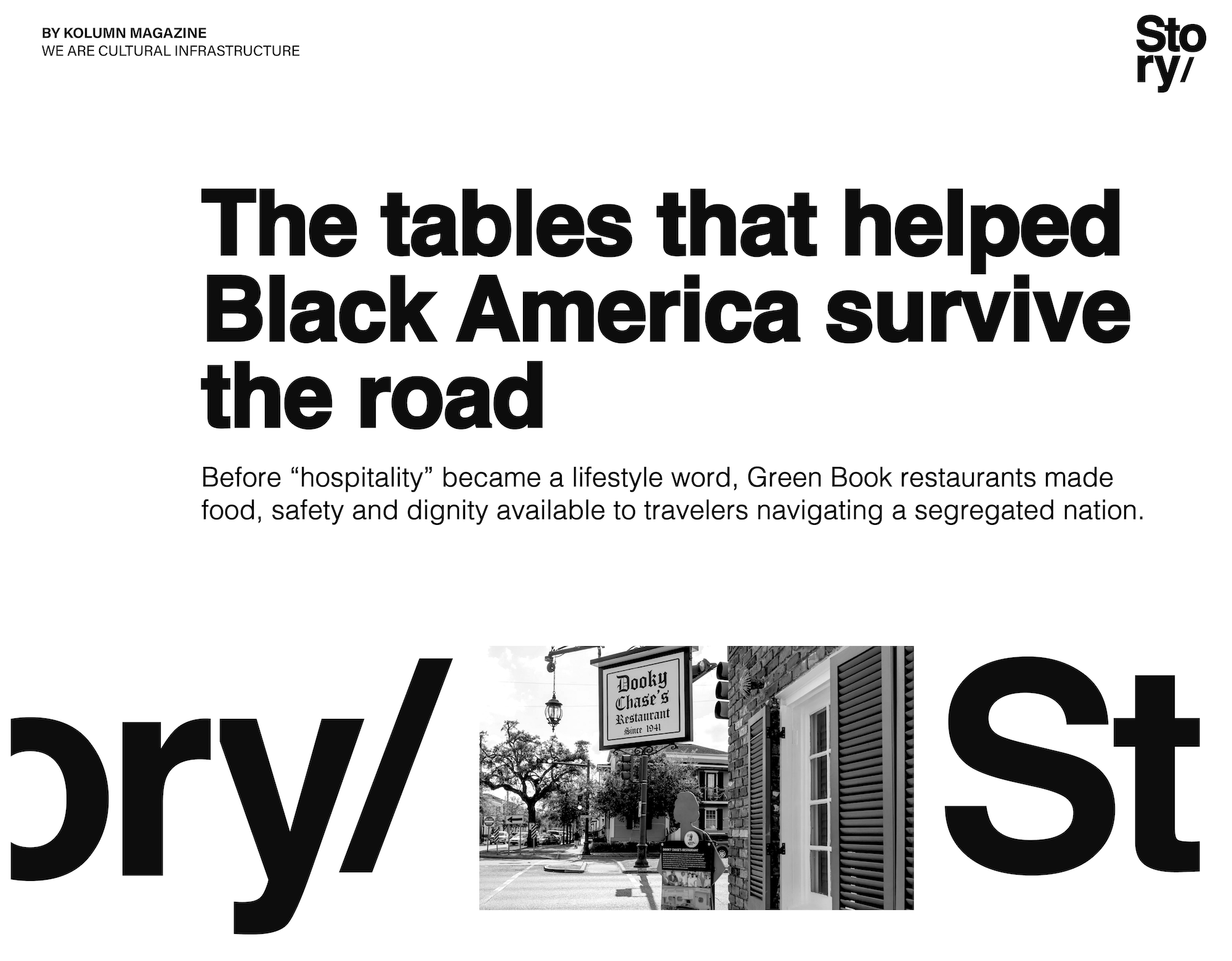
A Green Book restaurant did not simply feed the traveler. It told the traveler: you are expected here, and you may continue.
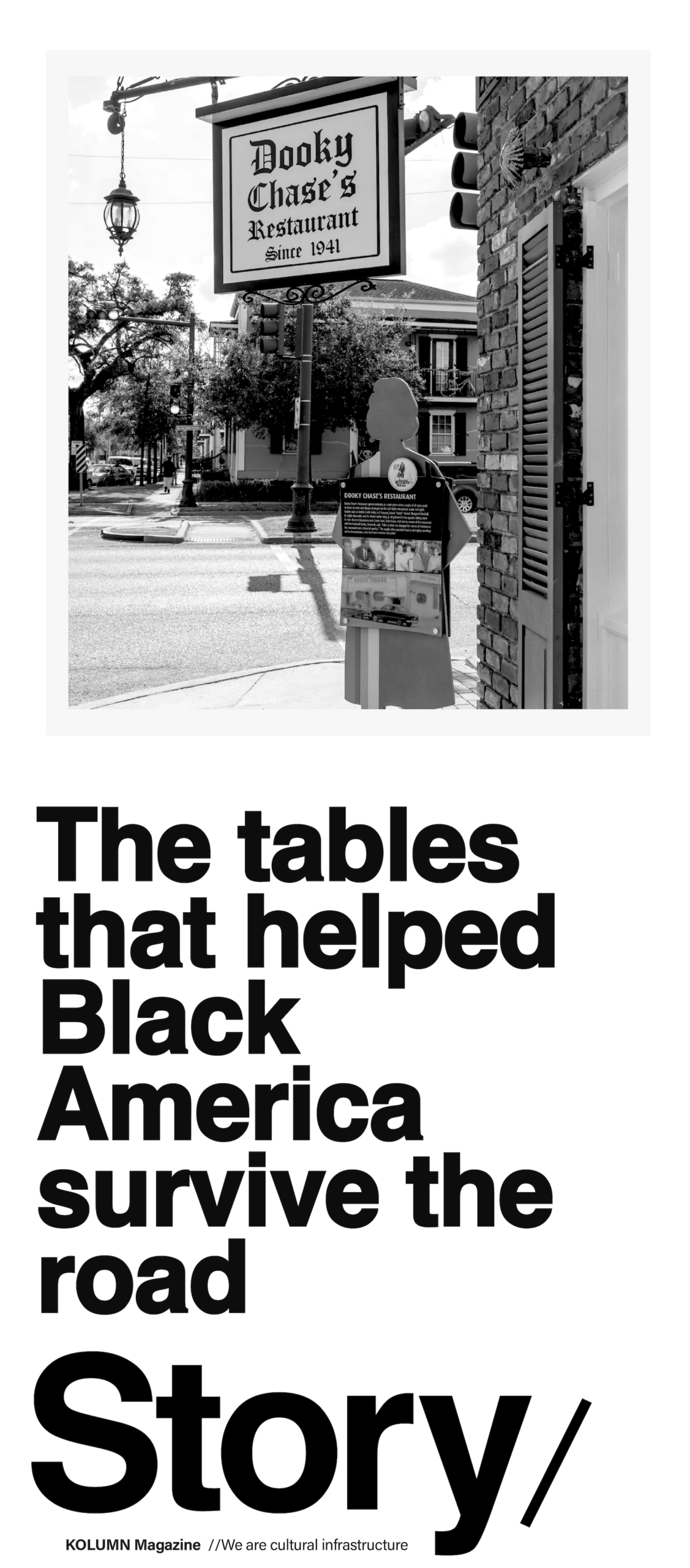
A Green Book restaurant did not simply feed the traveler. It told the traveler: you are expected here, and you may continue.
By KOLUMN Magazine
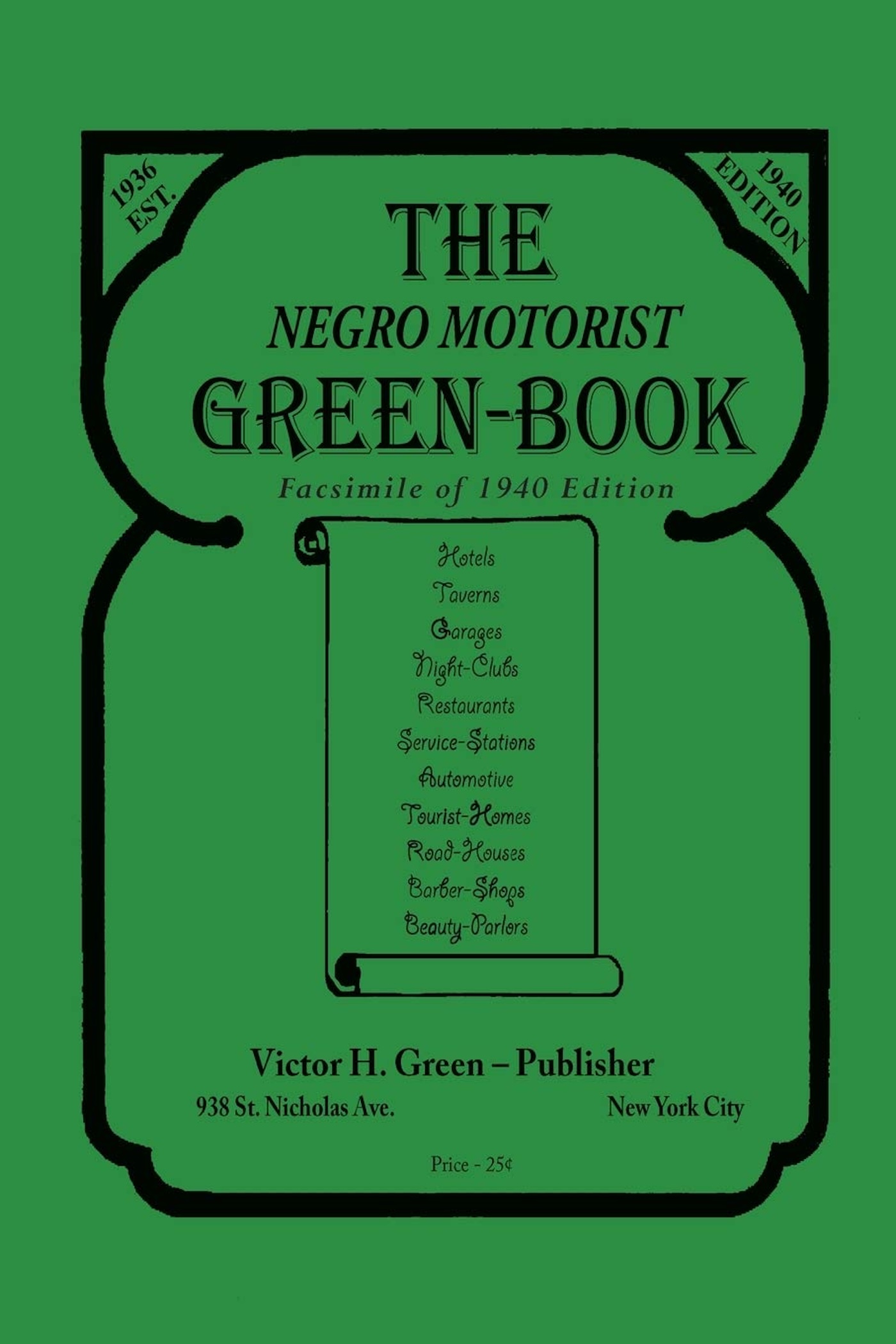
Before the interstate exit sign promised a standardized America of gas, coffee and fluorescent convenience, Black motorists carried a more intimate map of the country: names whispered by relatives, addresses clipped from newspapers, church recommendations, and, beginning in 1936, Victor Hugo Green’s annual guide to survival. The Negro Motorist Green Book did not romanticize the road. It recognized it as contested terrain, a place where a family trip could become a confrontation, where hunger could be sharpened by humiliation, and where the simple act of asking for a table could expose the traveler to insult, danger or arrest.
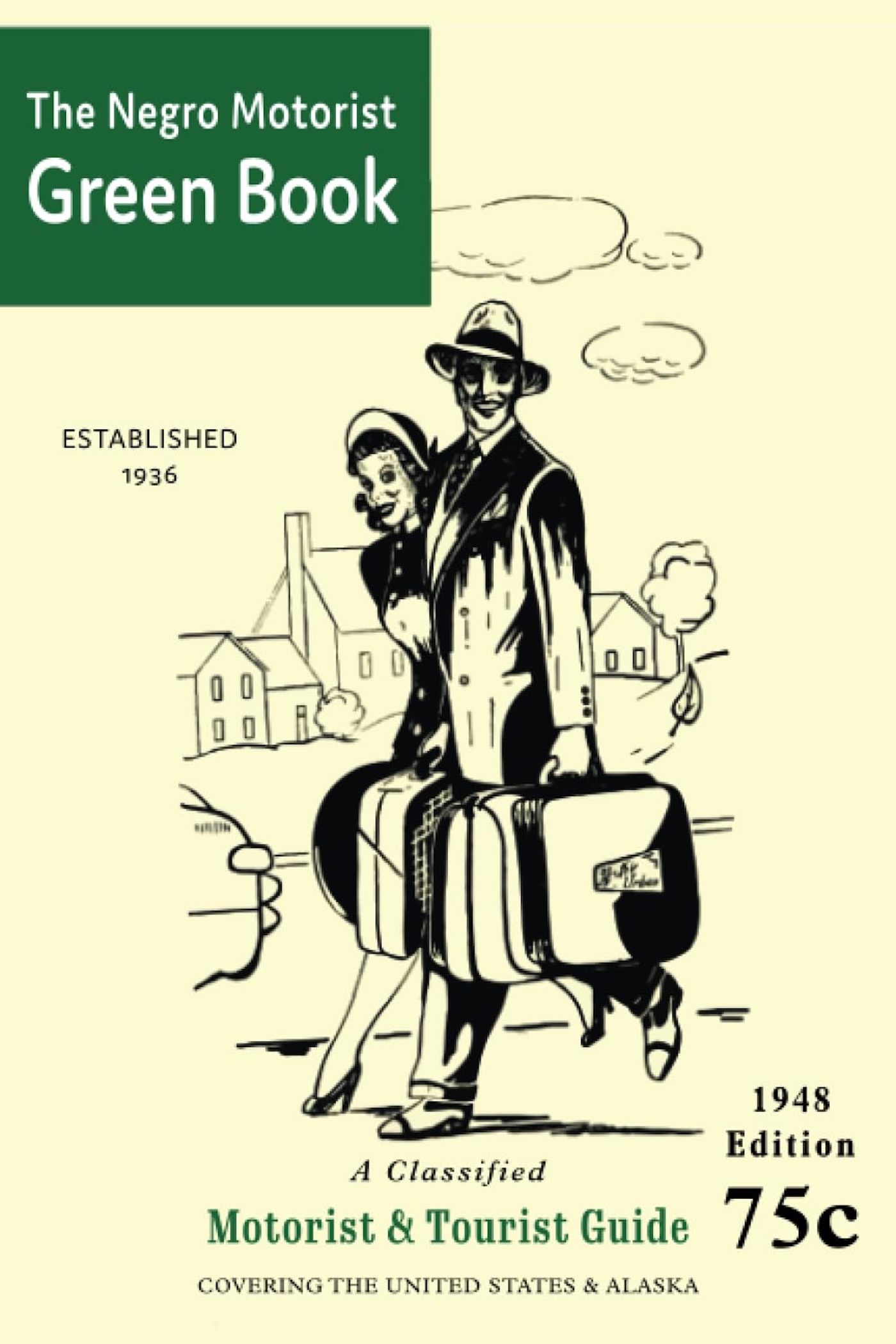
The restaurants listed in the Green Book were not merely dining rooms. They were logistical anchors in a segregated republic, part of a Black-built infrastructure that made mobility possible when law, custom and violence made mobility conditional. At their best, they offered more than food. They offered reliable information, bathrooms, directions, a phone, a chair, a meal that did not require begging for service, and the temporary relief of being treated as a customer rather than a problem.
The guide’s title has become familiar in American memory, but the restaurants inside it remain under-discussed. Hotels and tourist homes often dominate the Green Book story because sleeping safely was a matter of survival. Yet eating safely was also survival, especially on routes where Black travelers could not assume access to lunch counters, roadside cafés, soda fountains, diners, taverns or restrooms. As the Smithsonian National Museum of African American History and Culture notes, Green’s guide identified hotels, restaurants, bars, gas stations, beauty salons and nightclubs that accepted Black patrons, creating a practical geography of places where dignity might be found.
This was the genius and grief of the Green Book: it documented Black hospitality while indicting American hostility. A restaurant listing could read like ordinary commercial information, but beneath the address was a story about exclusion. To be listed was to stand in the breach between a traveler and a nation that had made public accommodation a racial privilege.
Victor Green’s Directory of Refusal and Welcome
Victor Hugo Green was a Harlem postal worker, not a restaurateur, but he understood networks. Postal workers knew routes, neighborhoods and informal systems of information, and Green used that knowledge to create a guide that began in the New York area and expanded into a national and international directory. The National Park Service describes the Green Book as a response to the systematic and casual racism that shaped American travel, while the Smithsonian Institution Traveling Exhibition Service frames the guide as evidence of both the reality of Black travel and the vibrancy of a Black business class.
The Green Book’s restaurants appeared within a larger ecology of Black mobility: hotels, tourist homes, beauty parlors, nightclubs, garages, service stations, tailors, drugstores and funeral homes. Some places were Black-owned. Others were white-owned or immigrant-owned establishments willing to serve Black customers. The common denominator was not ideology but access. If a traveler could eat there without being turned away, endangered or demeaned, the place mattered.
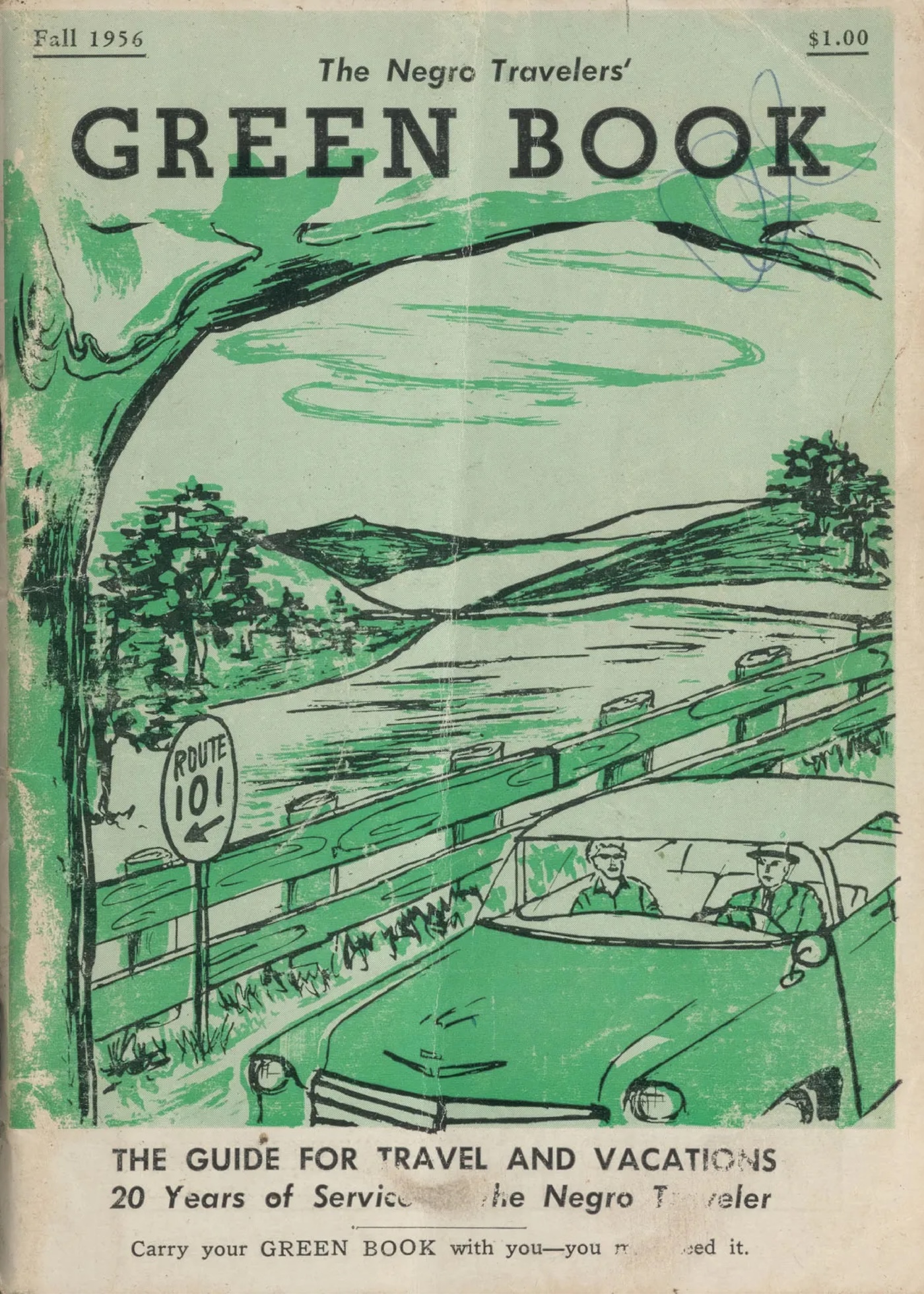
The early editions were modest, but the ambition was expansive. The New York Public Library’s digital Green Book collection preserves editions that show how the guide evolved from a localized travel aid into a national archive of Black-friendly commerce. Restaurants appeared as small entries, often no more than name and address, but those spare listings carried enormous social weight. Each one represented a point on the road where Black travelers could convert uncertainty into planning.
Green understood the paradox of his own project. The guide existed because America was unequal; its dream was to make itself unnecessary. In the 1949 edition, preserved and interpreted by the National Museum of African American History and Culture, Green famously wrote that there would be a day when the guide would not have to be published, when Black Americans would have equal opportunities and privileges in the United States. That sentence is often quoted as optimism, but it should also be read as an indictment. A country that required a separate guide for safe meals and beds had already confessed its failure.
Food as Route Planning
To understand Green Book restaurants, one must understand what happened when no restaurant was available. Black families packed food because they could not count on being served. The shoebox lunch, carried on trains and in automobiles, became a culinary technology of protection: fried chicken, boiled eggs, pound cake, biscuits, fruit, cornbread, sandwiches, anything durable enough to travel and familiar enough to comfort. Condé Nast Traveler has described shoebox lunches as reminders of resilience in the Green Book era, emphasizing how food prepared at home helped Black travelers avoid the indignities and dangers of segregated dining.
The existence of the shoebox lunch clarifies the significance of the Green Book restaurant. A listed restaurant meant the traveler might not need to eat in the car, on the shoulder of a road, or behind a gas station that refused restroom access. It meant children could sit down. It meant elders could rest. It meant money could circulate through a business that recognized Black customers as worthy of service.
This is where the history of Green Book restaurants intersects with the broader history of Black foodways. African American food culture has always carried the layered burden of nourishment, memory, labor, adaptation and resistance. Under Jim Crow, a restaurant could become a public-private institution: public enough to serve strangers, private enough to protect a community’s codes. The dining room became a place where travelers exchanged intelligence about roads, police, towns, hotels, mechanics and hazards. A plate of food could come with a warning about a county line.
Historians of Black mobility have emphasized that the automobile gave African Americans a measure of autonomy denied by segregated trains and buses. Gretchen Sorin, author of Driving While Black, has argued in a New York Public Library conversation and related public scholarship that cars allowed Black families to exercise more control over movement, even as the road remained dangerous. Restaurants were central to that autonomy because mobility without rest, food or sanitation is not freedom; it is endurance.
The Restaurant as Civil Rights Room
Some Green Book restaurants became nationally known because they were not only safe stops but political rooms. Dooky Chase’s Restaurant in New Orleans is the clearest example, a place where food, art, strategy and civil rights converged. The restaurant’s own history notes that Dooky Chase’s opened its doors in 1941 and became a meeting place for music, entertainment, civil rights and culture in New Orleans. The National Trust for Historic Preservation records that “Dooky, Cor. Orleans & Miro” was listed in the Negro Motorist Green Book, and that its dining room functioned as an oasis for Black travelers moving through an inhospitable country.
Dooky Chase’s also demonstrates why Green Book restaurants resist narrow categorization. It was a restaurant, yes, but also a salon, gallery, meeting space, political shelter and civic institution. Leah Chase, who became one of the most important culinary figures in the country, fed civil rights leaders and local organizers in a city where interracial organizing could invite surveillance and violence. The restaurant’s gumbo and fried chicken belonged to a larger vocabulary of care. In that room, hospitality became movement work.
The same pattern appeared elsewhere, though often with less national recognition. In Columbia, South Carolina, Historic Columbia’s Green Book research identifies restaurants such as Cozy Inn Restaurant, Green Leaf Restaurant, Magnolia and Savoy Restaurant as part of the city’s Green Book landscape, while also documenting how many of those sites were demolished. In Boston, Axios reported on Charlie’s Sandwich Shoppe, founded by Greek immigrants in 1927 and believed to be among the first Boston restaurants to serve Black customers, as a surviving Green Book-associated site whose inclusive legacy remains part of its public meaning.
Such examples complicate simplistic nostalgia. Green Book restaurants were places of joy, style and flavor, but their necessity came from exclusion. Their warmth existed against the cold fact of American apartheid. To celebrate them without naming the system that required them is to mistake adaptation for consent.
A Black Business Class in Motion
The Green Book was also a business document. It made visible a class of Black entrepreneurs who built institutions despite restricted access to capital, insurance, prime real estate, advertising and municipal support. The Smithsonian’s Green Book exhibition describes the guide as evidence of a vibrant business class, a crucial framing because Green Book establishments were not charity sites. They were businesses serving customers in a market distorted by racism but not defined solely by victimhood.
Restaurants held a special place in that economy. They required supply chains, labor, recipes, reputation, cleanliness, location and trust. A successful restaurant could support a family, employ neighbors, sponsor civic events, feed musicians, host activists and anchor a commercial corridor. In many Black neighborhoods, restaurants helped create the rhythm of public life. They were where travelers met locals, where newspapers were read, where churchgoers gathered after services, where entertainers ate after late sets, and where politics moved from rumor to plan.
Candacy Taylor, whose book Overground Railroad and related public work have done much to restore Green Book sites to national attention, has emphasized that the Green Book reveals a deeper history of African American activism and entrepreneurship. Her Taylor Made Culture project frames the Green Book not as a quaint artifact but as a record of business, resistance and movement across the United States. That interpretive shift matters: the guide was not only a survival manual for travelers but also a directory of people who made survival possible.
The economics were not uncomplicated. Some Green Book-listed restaurants were Black-owned; others were not. Some businesses paid for advertising or enhanced listings. Some establishments served Black travelers because of conviction, others because of commerce. The guide did not purify the marketplace; it navigated it. Yet that navigation itself was a form of collective power. Black consumers used information to decide where to spend money, and Black-friendly businesses benefited from being named.
This is where Green Book restaurants belong in the history of Black capitalism and mutual aid. They were enterprises, but they were also nodes in a protective network. Their value cannot be measured only by sales. It must be measured by the miles they made possible.
Historiography: From Curiosity to Infrastructure
For decades, the Green Book was treated in popular culture as a curious relic, a strange little guide from a segregated past. More recent scholarship has changed that. Historians, preservationists and cultural documentarians now read the Green Book as infrastructure: a record of racial geography, Black entrepreneurship, travel behavior, consumer networks and spatial exclusion.
The historiography has moved through several phases. Early public memory often centered the guide’s novelty, emphasizing the shock that such a book had to exist. Later work placed it within transportation history, civil rights history and the growth of the Black middle class. Contemporary scholars and preservationists increasingly read Green Book sites as endangered cultural assets, especially because so many have disappeared through demolition, urban renewal, highway construction, disinvestment and gentrification.
The National Park Service’s Route 66 Green Book study places the guide within the practical world of lodging, dining and safe travel before the Civil Rights Act of 1964. The National Trust for Historic Preservation emphasizes that Green Book places ranged from hotels and restaurants to nightclubs, grocery stores, gas stations and tourist homes. The National Park Service’s inventory of Green Book properties listed in the National Register of Historic Places cites preservation expert Jennifer Reut’s estimate that less than 20 percent of Green Book sites remain extant, a statistic that should unsettle anyone who assumes memory can survive without buildings.
Restaurants are especially vulnerable in this preservation landscape because they are often modest structures, leased spaces or altered storefronts. A hotel may leave a large architectural footprint; a restaurant may leave only a changed façade, an address in a city directory, a menu in a family drawer, or a memory carried by grandchildren. This makes the work of local archives essential. Projects in cities such as Columbia, Charlotte, Austin, Seattle and San Antonio have begun reconstructing Green Book geographies street by street, often discovering that the physical traces of Black hospitality have been erased by the very urban policies that claimed to modernize American cities.
KOLUMN Magazine has already entered this preservation conversation through stories such as “Where History Checked In”, which examined Miami’s Historic Hampton House as a rare surviving Green Book site, and “Rooms of Our Own”, which situated Black travel lodging within a longer tradition of self-protection and enterprise. Green Book restaurants extend that inquiry from the room where one slept to the table where one gathered strength for the next stretch of road.
The Northern Myth
One of the most persistent misunderstandings about Green Book history is the belief that its geography belonged mainly to the South. The guide itself refutes that. New York, Chicago, Detroit, Boston, Pittsburgh, Seattle, Los Angeles and other Northern and Western cities appear throughout its pages. Segregation was not simply a Mason-Dixon arrangement. It was a national system of formal law, informal custom, real estate exclusion, police discretion, employment discrimination and commercial refusal.
Seattle’s recent Green Book walking-tour work, covered by Axios, underscores this point by showing how Black travelers and residents navigated exclusion in a city not typically placed at the center of Jim Crow memory. In Austin, Axios found that few Green Book sites remain from the city’s once-visible network of Black-friendly establishments. In San Antonio, student researchers working with local preservation partners have helped recover addresses that had been forgotten or demolished.
This national geography matters because restaurants were often the first public test of belonging. A hotel refusal might come at night, after hours of driving. A restaurant refusal could come at midday, in front of children, with hunger making the insult sharper. The Green Book helped Black travelers avoid some of those encounters, but it also mapped their prevalence. Every listing implied a larger field of places where service could not be assumed.
The Northern myth also obscures the role of immigrant-owned and white-owned businesses that served Black customers when other establishments would not. Charlie’s Sandwich Shoppe in Boston is one example. The meaning of such places is complex. They should not be overstated as heroic exceptions, but neither should they be ignored. In a segregated marketplace, the decision to serve Black customers could make a restaurant part of a survival network, even when its ownership did not share the racial identity of its clientele.
The Lost Addresses
The tragedy of Green Book restaurants is that many no longer stand. Some were demolished by highway construction. Some were cleared in urban renewal programs that destroyed Black commercial districts in the name of progress. Some closed after integration changed customer patterns and drained revenue from businesses that had survived precisely because segregation forced Black customers to build parallel institutions. Some disappeared through ordinary succession problems familiar to family-owned restaurants everywhere. Others were erased by land speculation, neglect or the failure of preservation systems to recognize Black sites before it was too late.
Charlotte’s Green Book geography offers one stark example. Axios Charlotte reported that most of the city’s Green Book sites were destroyed, even as surviving places such as The Original Chicken ’n Ribs continue to carry fragments of the history. Columbia’s local inventory similarly shows a landscape of demolished restaurants alongside a few extant properties. The pattern repeats across the country: the archive remembers what the street no longer shows.
Preservationists face a difficult question. How does one preserve a restaurant that no longer exists? The answer cannot be only plaques. It must include oral histories, family photographs, menus, city directories, tax records, newspaper advertisements, recipes, maps, school curricula, walking tours, public art, business grants and, where possible, adaptive reuse of surviving buildings. A Green Book restaurant may be gone physically, but its story can still reshape how a city understands its own development.
This work is urgent because the Green Book’s built environment is aging out of visibility. Addresses become parking lots. Families disperse. Elders die. Buildings are renovated beyond recognition. The last person who remembers a particular dining room’s smell, owner, jukebox or house special may be in their eighties or nineties. Once that testimony is gone, the archive grows colder.
Dooky Chase’s and the Problem of Survival
The survival of Dooky Chase’s can make it seem exceptional because it is famous, but its fame is precisely why it helps interpret the less famous. It shows what might have been preserved elsewhere had more Green Book restaurants received recognition, capital and institutional support. It also shows that survival is not passive. Dooky Chase’s endured because of family stewardship, cultural relevance, community loyalty and the extraordinary public memory attached to Leah Chase.
The restaurant’s recognition has continued into the present. In 2025, Dooky Chase’s was named a James Beard America’s Classics winner, an honor reported by Eater New Orleans as recognition of a restaurant whose Creole cuisine, civil rights history and art-filled dining room remain central to New Orleans culture. That award matters not because national validation creates the restaurant’s significance, but because it confirms what Black New Orleans already knew: this was never only a place to eat.
Dooky Chase’s also helps correct a sentimental reading of Green Book restaurants. These establishments were not frozen in the past. They adapted, expanded, hosted, rebuilt and negotiated changing markets. Their owners were not museum pieces; they were businesspeople making daily decisions about payroll, supply costs, customers, safety and legacy. To honor them requires more than nostalgia. It requires understanding the economic pressures that shaped their choices.
The Post-Civil Rights Paradox
The Civil Rights Act of 1964 outlawed discrimination in public accommodations, helping make the Green Book obsolete. That was a victory. Yet victory produced a paradox. As more white-owned and mainstream establishments opened to Black customers, some Black-owned and Black-serving businesses lost captive markets that segregation had created. Integration expanded rights but also redirected spending. The same legal change that made it possible for Black travelers to eat more freely also weakened some of the institutions built to serve them when no one else would.
The 1966–67 edition of the guide, preserved in the NYPL Green Book collection, appeared under a changed title and in a changed nation. But the disappearance of the guide did not mean the disappearance of racial risk. Travel discrimination persisted in new forms, and the memory of earlier exclusion continued to shape Black travel behavior. Contemporary Black travelers may not carry a printed Green Book, but many still rely on informal networks, reviews, social media groups and community recommendations to assess where they will be safe, respected and welcomed.
That continuity explains why Green Book restaurants feel newly relevant. They belong to history, but the questions they raise remain current: Who gets served without suspicion? Which neighborhoods receive investment? Which cultural businesses survive rising rents? Which Black-owned restaurants are celebrated only after they become endangered? Who controls the archive of Black hospitality?
What the Restaurants Still Teach
Green Book restaurants teach that hospitality is political when welcome is unevenly distributed. They teach that a meal can be infrastructure. They teach that Black enterprise often carried responsibilities far beyond the balance sheet. They teach that preservation must look beyond mansions, monuments and courthouses to include storefronts, counters, kitchens and tables.
They also teach humility. The Green Book was not comprehensive. It missed places. It changed over time. Some listings may have been outdated by the time a traveler arrived. Some businesses may have served Black customers inconsistently. Some restaurants important to Black communities never appeared in the guide at all. A rigorous history must treat the Green Book as a powerful source, not a complete one. It must be read alongside oral histories, local newspapers, Black press advertisements, city directories, family records and the memories of people who used the road under pressure.
This is where expert voices matter. Scholars such as Gretchen Sorin have situated Black automobile travel within the long struggle for autonomy. Cultural documentarians such as Candacy Taylor have reintroduced Green Book sites as an “overground railroad” of businesses and people who made movement possible. Preservationists such as Jennifer Reut have warned that the physical record is disappearing. Food historians such as Jessica B. Harris, writing about Dooky Chase’s Green Book-era legacy, have shown how restaurants carried cultural meaning beyond cuisine. Together, these voices move the Green Book restaurant from the margins of travel history to the center of American history.
A Table Worth Saving
To write about Green Book restaurants is to write about the architecture of care under duress. A traveler entered hungry, but hunger was not the only problem. The traveler needed assurance. The traveler needed information. The traveler needed a place where children could relax their shoulders. The traveler needed a room in which money could be exchanged without racial theater. The traveler needed, for a little while, the ordinary dignity that white America claimed as a birthright.
That is why these restaurants matter. They were not simply alternatives to segregated counters. They were statements of presence. They said that Black travelers were not intruders on the American road, that Black customers deserved service, that Black entrepreneurs could build institutions despite systemic exclusion, and that community could be mapped against danger.
The Green Book restaurant is one of the great American civic forms: modest, practical, often undercapitalized, frequently erased, but morally enormous. Its legacy survives in famous rooms like Dooky Chase’s, in still-standing storefronts fighting for recognition, in demolished addresses recovered by local historians, in shoebox lunches remembered by families, and in every contemporary Black-owned restaurant that understands food as culture, commerce and gathering.
The question now is whether America will preserve these places with the seriousness they deserve. Not every site can be rebuilt. Not every dining room can be restored. But every city that once appeared in the Green Book can ask what remains, what was destroyed, who remembers, and what public obligation follows from that knowledge.
A Green Book restaurant was a promise made in a country of refusals. It promised that somewhere ahead, there would be a table.
More great stories
Afro Sheen, Wall Street, and the Architecture of Black Possibility
July 6, 2026
No Comments
The Fire Inside the Fourth
July 5, 2026
No Comments