




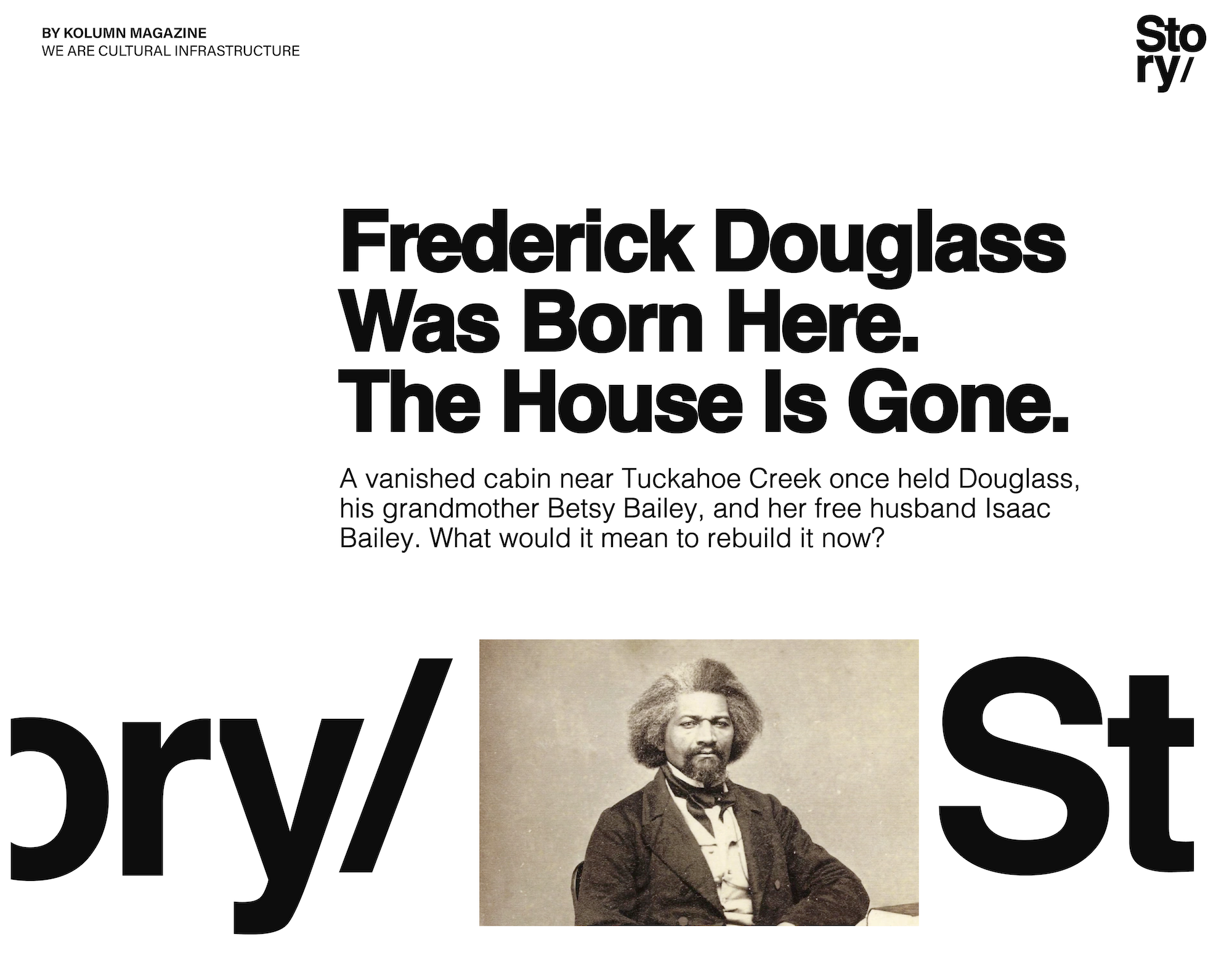
Before Douglass became a monument, he was a child in a cabin that slavery made unstable by design.
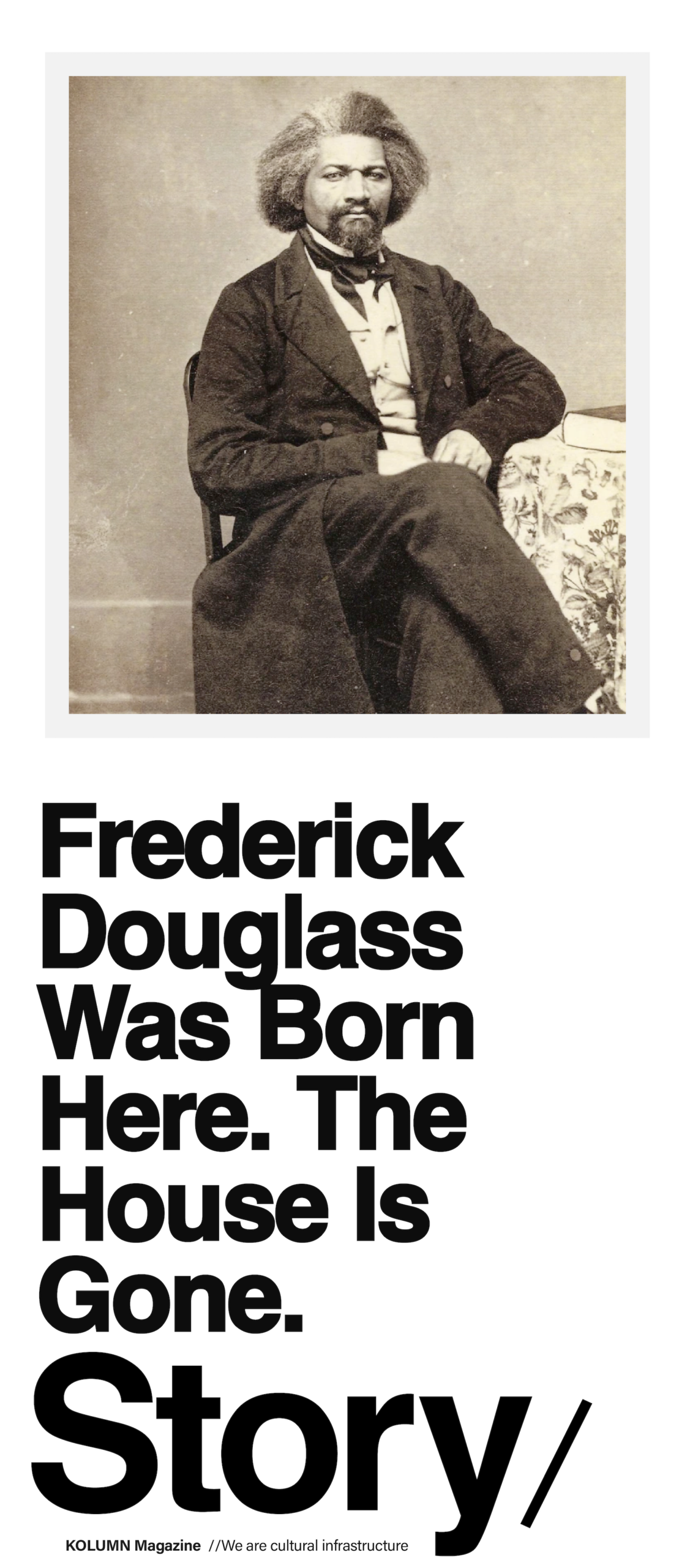
Before Douglass became a monument, he was a child in a cabin that slavery made unstable by design.
By KOLUMN Magazine
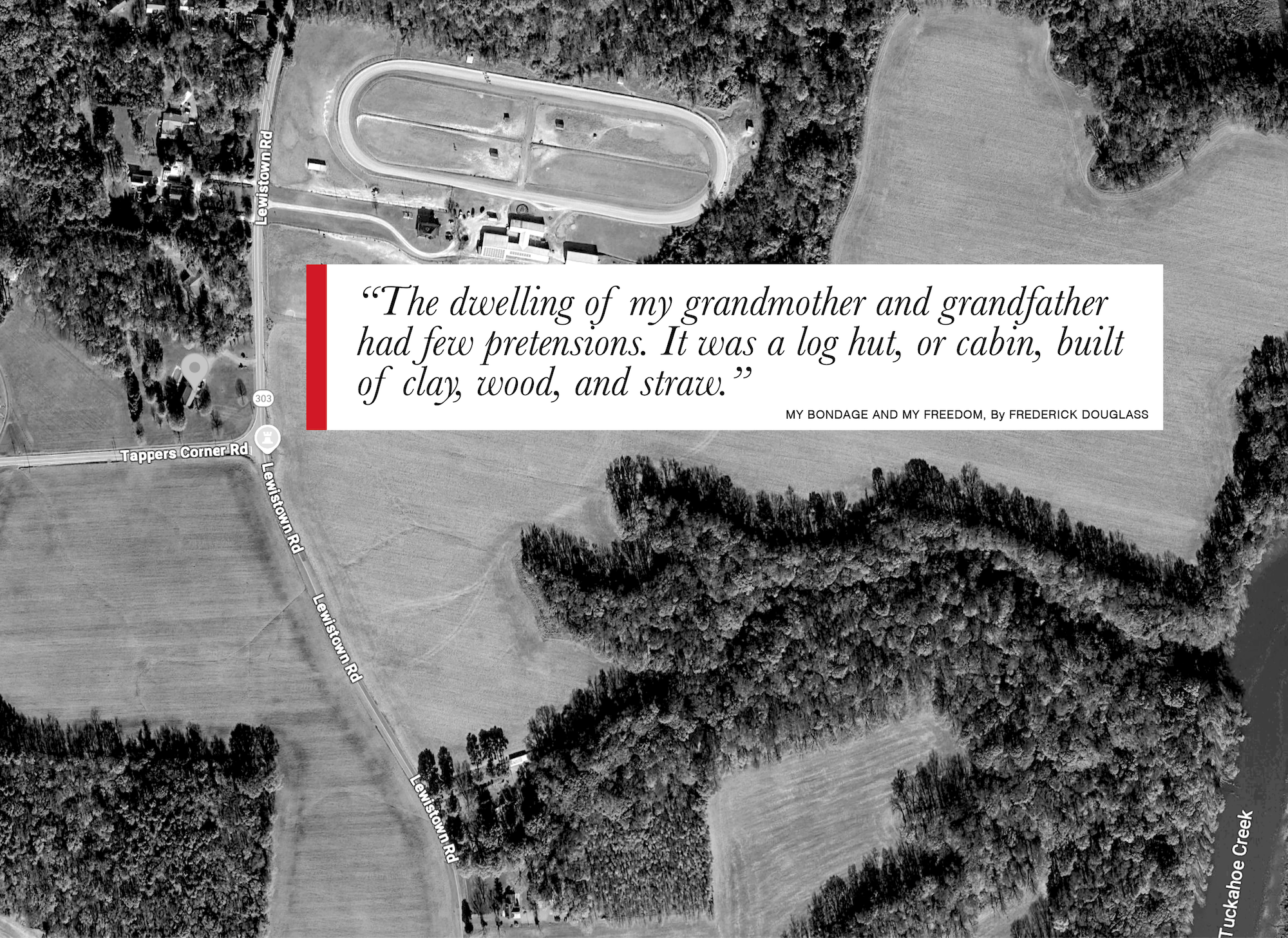
The road into Frederick Douglass’s birthplace country does not announce itself with grandeur. It moves through the soft, low Eastern Shore landscape near Tuckahoe Creek, where fields, woods, ravines, and old property lines still carry more history than the casual traveler can see. Somewhere near here, in February 1818, Frederick Augustus Washington Bailey was born in a cabin occupied by his grandmother, Betsey Bailey, and her free husband, Isaac Bailey, on land owned by Aaron Anthony, as the Frederick Douglass Birthplace driving tour explains. The site is not a preserved house museum. It is a place of memory without the original structure, a birthplace whose most important building has vanished.
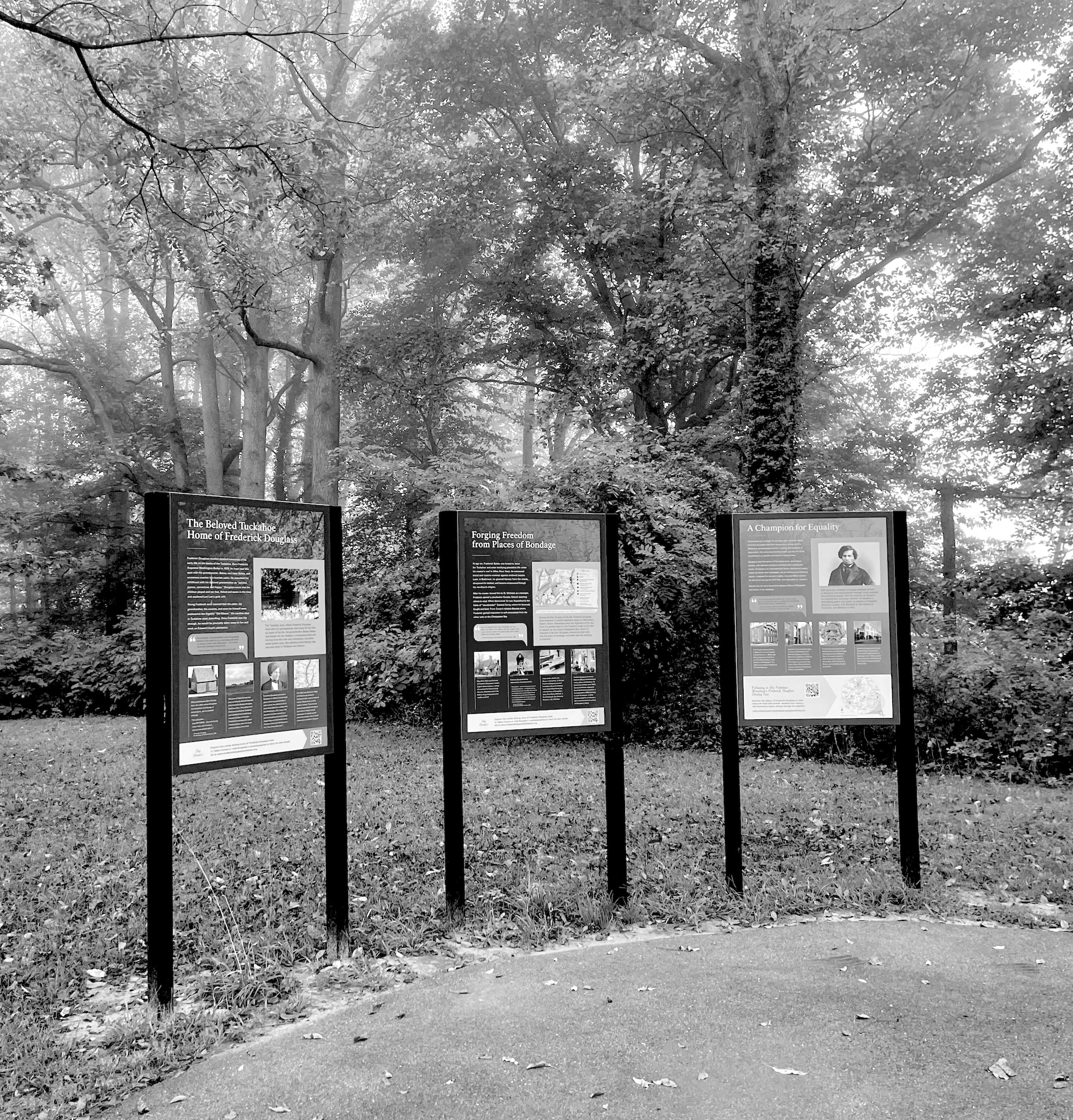
That absence matters because Douglass himself made it matter. In My Bondage and My Freedom, he located his earliest remembered life in the household of “my grandmother and grandfather, Betsey and Isaac Baily,” describing them as old settlers who had “long lived on the spot where they then resided,” a recollection preserved in the University of North Carolina’s Documenting the American South edition. The cabin was more than a rural dwelling. It was the first emotional geography of a child born into slavery, a place where kinship existed inside a system designed to fracture it.
When Douglass returned to the Eastern Shore in 1878, the cabin was already gone. The local birthplace interpretation notes that by the time he came back, “the cabin was long gone,” and that he searched by memory for signs of the place, including a large cedar tree near the ravine and the muddy shore where he had played and fished, as described by the Frederick Douglass Birthplace project. In that gesture—an elder statesman gathering soil from the ground of his beginning—there is something more powerful than nostalgia. Douglass was performing an act of historical recovery before the country had developed the moral vocabulary to call such places sacred.
Betsey Bailey’s House, Isaac Bailey’s Shadow
The search for the cabin is also a search for Betsey Bailey, whose life is too often treated as a preface to Douglass rather than as a subject in her own right. Douglass remembered her with unusual tenderness. She raised him during his earliest years, while his mother, Harriet Bailey, was hired out elsewhere, a family arrangement shaped by the violence and economics of slavery. The Maryland State Archives’ Frederick Douglass exhibit places young Frederick under the ownership of Aaron Anthony, while the Douglass Papers timeline situates his birth at Holme Hill Farm at Tuckahoe, near Easton.
Isaac Bailey is harder to recover. He appears in Douglass’s memory as the free husband of an enslaved woman, a sawyer, and the man whose name Douglass first carried. That fact alone exposes one of the Eastern Shore’s deeper contradictions: freedom and slavery could live under the same roof without canceling each other. Isaac’s free status did not free Betsey. It did not free Harriet. It did not free Frederick. The child born in that cabin inherited the condition of his mother, not the status of his grandfather, because slavery’s law made the mother’s body the instrument of ownership.
Historians have long had to work through fragments here: Douglass’s autobiographies, Anthony family records, local land histories, oral memory, and archaeological possibility. The Frederick Douglass Honor Society identifies the cabin as located near a small ravine on the Tuckahoe, on Holme Hill Farm, while the Talbot County StoryMap describes the birthplace as a “site only” where no buildings remain. This is precisely where historiography becomes public work. The record does not give us a restored cabin. It gives us a charge.
The Return of 1878
Douglass’s 1878 return should be understood as one of the great symbolic journeys of his later life. By then, he was not the fugitive who had fled Maryland in 1838. He was an internationally known abolitionist, editor, author, diplomat, and federal official. The National Park Service notes that he had purchased Cedar Hill in Washington, D.C., in 1877, the home that would become his final residence and later a national historic site. When he went back to Talbot County, he was not returning as property. He was returning as witness.
The cabin’s disappearance gave the visit its sharpest meaning. Douglass could not enter the room of his birth. He could not touch the walls that had held Betsey’s labor, Isaac’s tools, Harriet’s fleeting presence, and the childhood before separation. Instead, he had to read the landscape. He searched for trees, ravines, shorelines, memory. The land had survived what the structure had not.
That distinction matters now. A plaque can name a place. A statue can honor a person. But a rebuilt cabin—if carefully researched, ethically interpreted, and publicly supported—could return scale to the story. It could show visitors that the first home of one of the nineteenth century’s greatest Americans was not a marble hall, but a fragile dwelling inside a slaveholding landscape. It could teach that Douglass’s genius did not emerge from comfort, but from contradiction: intimacy inside violence, family inside possession, memory inside erasure.
Easton Already Remembers Him, But Not Fully
Talbot County is not without memorials to Douglass. The Frederick Douglass statue at the Talbot County Courthouse in Easton, created by sculptor Jay Hall Carpenter and erected in 2011, depicts Douglass as the orator who returned to the courthouse in 1878 to deliver his “Self-Made Men” speech, according to Visit Maryland. The Frederick Douglass Honor Society’s statue page frames the memorial as a recognition of the man who was born into slavery on the Tuckahoe and became one of the most famous figures ever produced by Maryland’s Eastern Shore.
That statue is necessary. So is the Frederick Douglass Memorial in Easton, which Slavery Monuments describes as presenting Douglass as an elder statesman beside a lectern. But the courthouse statue tells the story of public return and rhetorical triumph. The birthplace tells the story of origin, family, and dispossession. One does not replace the other. Together, they could form a fuller civic narrative: the child at Tuckahoe, the enslaved boy at Wye House, the fugitive in Baltimore, the orator in Easton, the statesman at Cedar Hill.
The courthouse context is especially charged because Talbot County’s public memory has been shaped by conflict over monuments. The long presence of the Confederate “Talbot Boys” monument on the courthouse lawn, criticized by the ACLU of Maryland as a Jim Crow-era glorification of men who fought for the Confederacy, made the Douglass statue more than an honorific gesture. It placed Douglass in visible argument with the old civic order. Yet the birthplace cabin remains absent from that public argument, as if the childhood ground of Douglass’s formation is still waiting to be granted full interpretive weight.
Why Rebuilding Is Not Nostalgia
A proposal to rebuild Douglass’s birthplace cabin would need to avoid sentimentality. The point would not be to create a theme-park replica or a comforting symbol of humble beginnings. It would need to be a rigorous public-history project rooted in archival research, land history, descendant consultation, material culture, and archaeological restraint. The question is not whether a reconstruction can perfectly reproduce the original cabin. It cannot. The question is whether a historically responsible reconstruction can help the public understand what the original cabin meant.
There is a strong case that it can. Douglass’s early autobiographical descriptions give texture to the dwelling and its emotional significance. The broader landscape interpretation identifies the birthplace near Kentucky Ravine and Tuckahoe Creek. Local projects have already mapped Douglass’s childhood and boyhood routes, including the Frederick Douglass Birthplace driving tours and their account of his spring 1824 removal from his grandmother’s cabin to begin life at the Great House Farm, described in the Boyhood tour section. A reconstructed cabin could serve as the missing hinge between family memory and the machinery of slavery.
Such a project should also center Betsey and Isaac Bailey. A rebuilt cabin that merely points toward Douglass would repeat the old error of using Black women’s lives as background scenery for male greatness. Betsey’s labor, authority, and grief belong at the center of the story. Isaac’s anomalous status as a free Black husband living with an enslaved wife should be interpreted as a window into the uneven legal landscape of Maryland slavery. Harriet Bailey’s absence should also be made visible, not as neglect, but as forced separation.
Public Support and the Ethics of Repair
Public support for rebuilding Douglass’s birthplace should begin with humility. The first constituency is not tourism. It is truth. Local officials, historians, preservationists, Douglass descendants, Bailey descendants where identifiable, nearby residents, Black heritage organizations, and Maryland educators should be invited into a process that asks what the site should teach and how it should be governed. The project would require money, but its legitimacy would depend on method.
A serious campaign could include a feasibility study, archaeological assessment, interpretive plan, land-access negotiations, educational partnerships, and a public fundraising structure. Maryland has already invested in Douglass memory through trails, statues, and historic interpretation. A birthplace reconstruction would build on that infrastructure rather than compete with it. It could connect Easton’s courthouse memorial, the Tuckahoe birthplace landscape, Wye House interpretation, Cedar Hill in Washington, and the national Douglass educational network associated with projects such as Douglass Day.
The strongest argument for public support is not that Douglass needs another monument. It is that the public needs a better encounter with the conditions that made Douglass’s life extraordinary. Americans often prefer the later Douglass: the commanding orator, the stern portrait, the architect of his own freedom. But Douglass insisted that his story began in deprivation, kinship, and stolen childhood. Rebuilding the cabin would force visitors to enter the story at its most vulnerable point.
KOLUMN Magazine has returned often to the idea that Black memory is not passive inheritance but active construction. In its Douglass birthday reflection, “Frederick Douglass: The Day He Gave Himself,” the magazine framed Douglass as a figure who converted deprivation into language and power. The birthplace cabin offers a physical extension of that idea. It is the place where deprivation first had walls, where the child who would one day name himself did not yet possess his own body under law.
What the Cabin Could Teach
A rebuilt cabin should not be treated as a shrine of uplift. It should be a classroom of contradiction. Visitors should learn that Douglass was born into a world where family existed under constant threat, where the law could claim a child, where free and enslaved Black life could be bound together in one household, and where a grandmother’s care could become the first defense against a system designed to make care impossible.
The interpretive language must be precise. Douglass was not “born poor” in the ordinary American sense. He was born enslaved. Betsey Bailey was not simply a grandmother in a rustic cabin. She was an enslaved woman raising children whose futures could be sold, hired out, or separated. Isaac Bailey was not merely a grandfather; he was a free Black man whose freedom could not protect his family from slavery’s reach. Aaron Anthony was not just a landowner; he was the man whose ownership of Harriet Bailey made Frederick legally enslaved.
The site could also teach the limits of memory. Douglass himself did not know his exact birthday and chose February 14 as the date he would claim. The Douglass Papers timeline places his birth in February 1818, while later commemorations have made February 14 a civic ritual of remembrance. That uncertainty is not a weakness in the story. It is part of the story. Slavery’s violence included the denial of records, dates, kinship, and self-knowledge.
The Landscape as Archive
Even if the cabin is rebuilt, the landscape should remain the primary archive. Tuckahoe Creek, Kentucky Ravine, the fields near Tappers Corner, and the vanished line of the Anthony farm carry evidence that no reconstruction can replace. The Caroline History project points to Aaron Anthony’s ledgers and the Kentucky tract as part of the documentary geography of Douglass’s birth. The land, in other words, is not an empty stage waiting for a replica. It is the evidence.
That is why a reconstructed cabin should be modest, interpretive, and transparent about what is known and what is not. It should distinguish between documented fact, informed reconstruction, and historical imagination. It should not pretend to possess what the archive cannot provide. Instead, it should invite the public into the historian’s work: reading Douglass, reading land records, reading silences, and understanding why some Black places disappeared while white houses, courthouses, and plantations were preserved.
A Better Memorial Grammar
America has often honored Douglass from the end backward. It loves the accomplished man, the polished sentence, the bronze figure, the apostle of self-making. But Douglass’s own life rebukes any easy mythology of self-making detached from structural violence. His “Self-Made Men” speech, delivered in Easton in 1878 and commemorated by the courthouse statue, was not an invitation to forget slavery’s injuries. It was a claim about human agency under conditions designed to crush it.
A rebuilt birthplace cabin could help correct that imbalance. It would insist that before Douglass became a monument, he was a child in Betsey Bailey’s care. Before he became a national conscience, he belonged in law to another man. Before he became Frederick Douglass, he was Frederick Bailey, born into a household where love and bondage occupied the same ground.
The cabin would not be the whole answer. Talbot County must continue to interpret Wye House, the courthouse, the Eastern Shore slave economy, Black resistance, and the politics of memory. But a reconstructed birthplace could become the intimate threshold through which visitors enter the larger story. It would offer scale, silence, and moral clarity.
The Case for Rebuilding
The public case for rebuilding Douglass’s birthplace rests on three claims. First, the site is nationally significant because Douglass is nationally significant. Second, the cabin’s disappearance is itself historically meaningful because it reflects the broader erasure of Black domestic spaces associated with slavery. Third, reconstruction, if ethically done, can deepen public understanding rather than flatten it.
There will be objections. Some preservationists will argue that reconstruction risks false authenticity. Some residents may resist investment in a painful past. Some will say existing memorials are enough. Those objections deserve engagement, but they are not decisive. The better question is whether the current memorial landscape adequately teaches the beginning of Douglass’s life. It does not.
Easton has the statue. Talbot County has the tours. Cedar Hill preserves the elder Douglass. But the birthplace remains a landscape of absence. The vanished cabin asks for a different kind of public imagination, one capable of honoring not only the man Douglass became but the family world that slavery tried to erase.
What Honor Requires
To honor Frederick Douglass is not simply to quote him. It is not enough to place him in bronze, name a school, or celebrate a birthday he had to choose for himself because slavery denied him certainty. To honor him fully is to return to the conditions of his beginning and tell the truth there.
The search for Douglass’s birthplace ends, in one sense, with loss. The cabin is gone. It was gone when he returned in 1878. No act of public will can recover the original walls. But the search also opens onto responsibility. A reconstructed cabin, built with scholarly care and public consent, could make visible the first home of Frederick Douglass, the labor of Betsey Bailey, the complicated presence of Isaac Bailey, and the violence of a system that made even family provisional.
The question before Maryland is not whether Douglass is already honored. He is. The question is whether he is honored where the story hurts most. At Tuckahoe, near the ravine and the muddy shore, the ground still waits for a fuller reckoning. The cabin no longer exists, but the obligation does.
More great stories
Afro Sheen, Wall Street, and the Architecture of Black Possibility
July 6, 2026
No Comments
The Fire Inside the Fourth
July 5, 2026
No Comments