




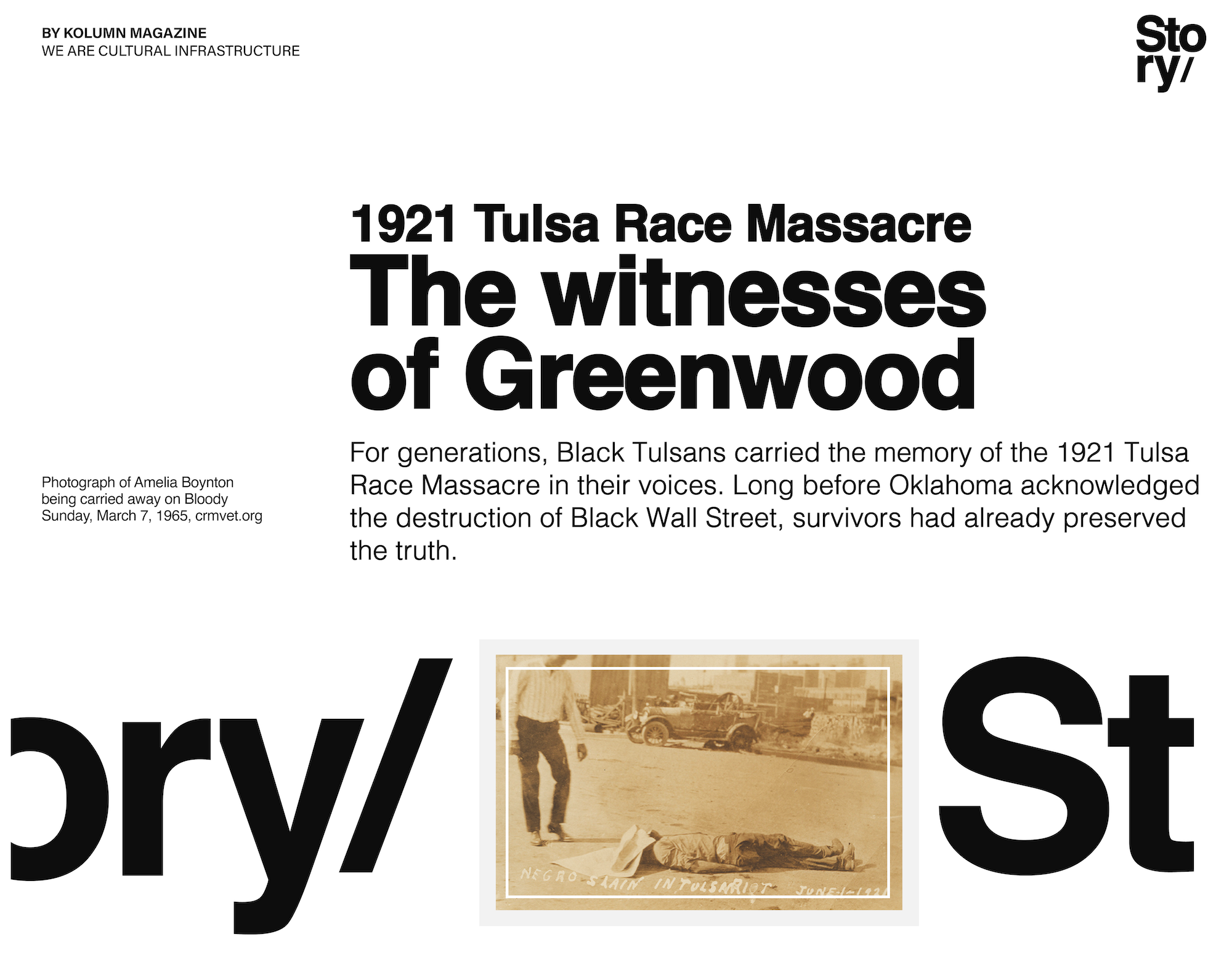
The aeroplanes continued to watch over the fleeing people like great birds of prey watching for a victim.
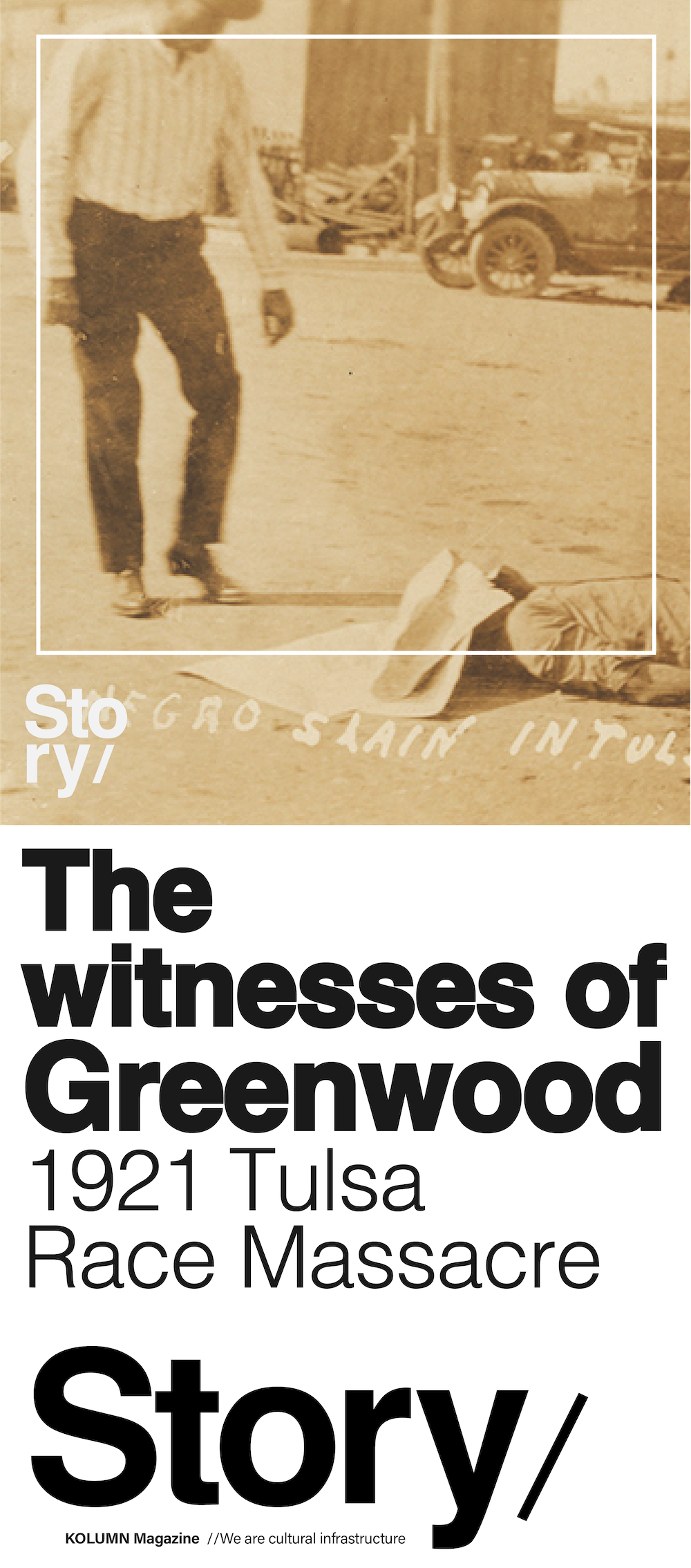
The aeroplanes continued to watch over the fleeing people like great birds of prey watching for a victim.
By KOLUMN Magazine
On a spring day decades after Greenwood burned, a teenager named Don Ross sat in a classroom at Booker T. Washington High School listening to what sounded like an impossible story.
The man telling it was William Danforth “W.D.” Williams, a respected teacher and survivor of the Tulsa Race Massacre. Williams spoke of airplanes circling above a Black neighborhood. He spoke of armed white men moving through Greenwood. He spoke of fires consuming homes and businesses. He spoke of bodies in the streets and Black residents being marched away under armed guard.
To Ross, who had grown up in Tulsa and never encountered this history in a textbook, the account sounded unbelievable.
“Greenwood was never burned,” Ross protested.
“Ain’t no 300 people dead.”
“We’re too old for fairy tales.”
Williams did not argue.
The following day, he returned with photographs.
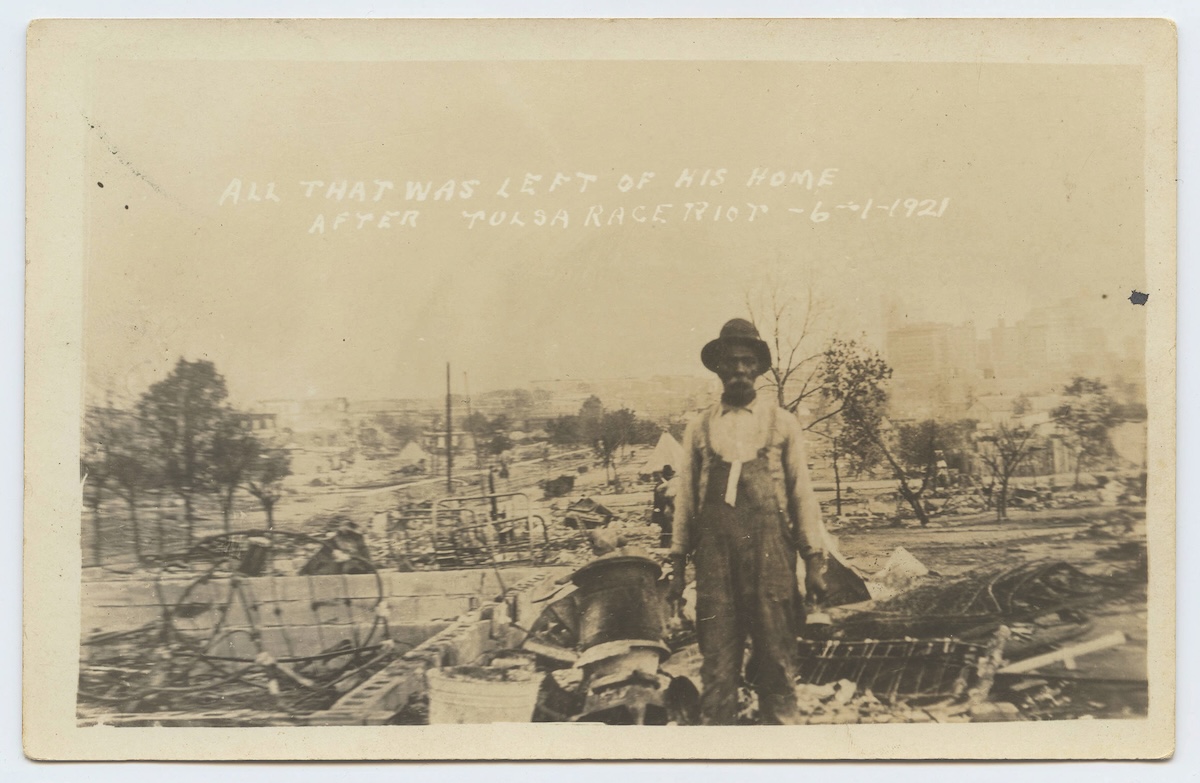
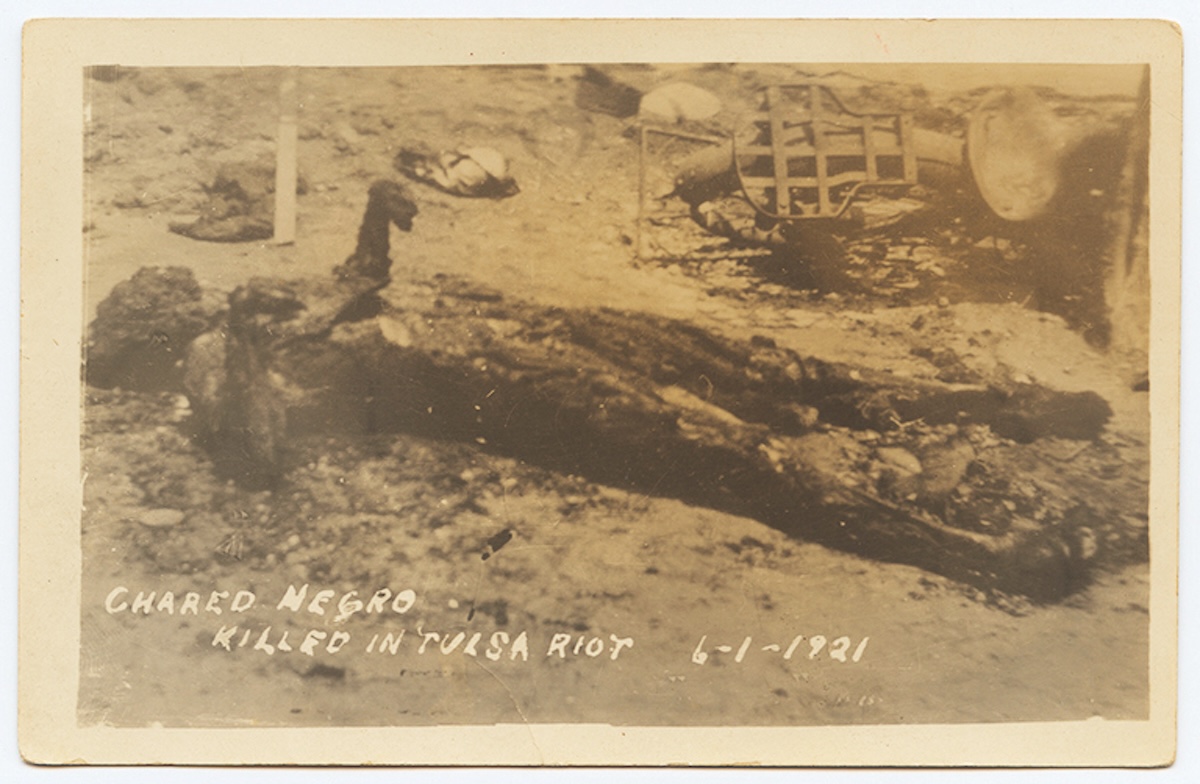
Ross later recalled seeing images of Mount Zion Baptist Church engulfed in flames, the Dreamland Theatre reduced to ruins, Black residents being marched away by armed men, trucks carrying coffins, and block after block of devastation. The photographs showed exactly what Williams had described.
“Everything was just as he had described it,” Ross remembered.
Then Williams posed a question.
“What you think?”
That question sits at the center of Tulsa’s history.
It is also the question that frames the story of Greenwood’s witnesses.
Because the most remarkable aspect of the Tulsa Race Massacre is not simply that it occurred. The most remarkable aspect is that generations of Black Tulsans preserved the truth of what happened despite decades of denial, omission, silence, and neglect.
The survivors never forgot.
The city often did.
The first archive of the Tulsa Race Massacre was not assembled by a government commission.
It was carried in memory.
The Community Before the Flames
The destruction of Greenwood has become so central to public understanding of Tulsa that it can be difficult to remember what Greenwood was before the smoke.
The witnesses remembered.
That is one reason their testimony remains so valuable.
Long before historians reconstructed the district through maps, city directories, census records, insurance documents, and newspaper archives, survivors described Greenwood as a living community rather than a historical symbol.
The phrase “Black Wall Street” is now widely used to describe the neighborhood. While accurate in many respects, the term can sometimes obscure the ordinary humanity of the people who lived there.
Greenwood was not simply an economic phenomenon.
It was a place.
Children attended school there.
Families worshipped there.
Doctors treated patients there.
Lawyers represented clients there.
Newspapers chronicled community life there.
Entrepreneurs built businesses there.
Teachers educated generations of students there.
By 1921, Tulsa’s Black population had helped create one of the most prosperous African American communities in the United States. Segregation restricted where Black residents could live, shop, work, and conduct business. Yet those same restrictions also concentrated Black economic activity within Greenwood, producing a remarkably dense ecosystem of Black-owned enterprises.
The district stretched north of the Frisco railroad tracks and included hotels, restaurants, barbershops, theaters, grocery stores, pharmacies, churches, schools, law offices, medical practices, and newspapers. Greenwood Avenue bustled with activity. Visitors arriving from other cities frequently remarked upon the district’s prosperity and energy.
Historians such as John Hope Franklin, Hannibal B. Johnson, Scott Ellsworth, and D.F.G. Williams have all emphasized that Greenwood represented far more than commercial success. It was a community built through migration, entrepreneurship, mutual aid, and resilience.
Many residents had come to Oklahoma seeking opportunity after Reconstruction. Others arrived from all-Black towns throughout Indian Territory and the newly formed state. Together they built institutions capable of sustaining community life under the constraints of Jim Crow.
The witnesses remembered not merely the buildings.
They remembered the people.
They remembered neighbors.
They remembered customers.
They remembered church members.
They remembered teachers.
They remembered children playing in the streets.
Those memories matter because they remind us that what burned in 1921 was not simply property.
It was a social world.
Mary E. Jones Parrish and the Work of Remembering
Among the most important figures in the preservation of Greenwood’s history was Mary E. Jones Parrish.
Parrish occupied a unique position within the community. She was simultaneously a resident, a teacher, a journalist, and eventually one of the first historians of the massacre.
Long before state commissions and academic investigations, Parrish recognized that what had happened in Greenwood needed to be documented immediately.
That realization makes her one of the most significant figures in the historiography of the massacre.
Many survivors carried memories.
Parrish transformed memory into evidence.
In 1922, only months after the attack, she published Events of the Tulsa Disaster, one of the earliest and most important eyewitness accounts of the massacre. The book combined personal recollections, witness testimony, photographs, and descriptions of destruction. It remains indispensable to historians today precisely because it preserved voices before decades of silence could distort or erase them.
Reading Parrish’s work now reveals a woman who understood that history was already being contested.
Even as Greenwood smoldered, competing narratives emerged regarding responsibility, casualties, and the scale of destruction. Parrish recognized that official accounts might not preserve the experiences of Black residents. Her work therefore became an act of historical preservation.
She was documenting the community while the community still existed in living memory.
That distinction is important.
Parrish was not writing from historical distance.
She was writing from proximity.
The wounds were fresh.
The losses were immediate.
The danger was recent.
Her testimony therefore carries an urgency that later accounts cannot replicate.
Among her most enduring observations concerns the aircraft that appeared above Greenwood during the violence.
Recalling the terror of flight, she described how aircraft seemed to stalk residents escaping the district.
“The aeroplanes continued to watch over the fleeing people like great birds of prey watching for a victim.”
The sentence has survived for more than a century because it captures something larger than a factual observation.
It captures a feeling.
The feeling of vulnerability.
The feeling of being hunted.
The feeling of realizing that there might be no safe direction in which to flee.
Historians continue to debate the precise role aircraft played during the massacre. The Oklahoma Commission reviewed extensive evidence concerning airplanes and concluded that while claims of organized aerial bombing remain difficult to verify conclusively, aircraft unquestionably operated over Greenwood and may have been used for hostile purposes in some instances.
Yet the enduring significance of Parrish’s account lies not merely in the question of what happened in the sky.
It lies in what her words reveal about conditions on the ground.
The Witnesses Describe Fear
One of the challenges confronting historians is understanding what violence felt like to those who experienced it.
Official records can describe arrests, casualties, property losses, and troop deployments. Newspapers can provide timelines. Government reports can reconstruct events.
But witnesses preserve something different.
They preserve atmosphere.
They preserve emotion.
They preserve fear.
This is one reason testimony occupies such an important place within the historical record of the Tulsa Race Massacre.
Teacher James T. West recalled airplanes moving low above the community.
“They flew over very low, what they were doing I cannot say.”
Dr. R.T. Bridgewater remembered a similar scene.
“Aeroplanes began to fly over us, in some instances very low to the ground.”
Bridgewater also recalled hearing frightened residents shouting warnings.
“Look out for the aeroplanes, they are shooting upon us.”
Taken individually, these statements offer fragments of experience.
Taken collectively, they reveal a community confronting extraordinary danger.
The value of testimony lies precisely in these accumulations.
No single witness saw everything.
No single witness could.
Yet together they create a mosaic of memory that allows later generations to understand what Greenwood’s residents endured.
This process forms the foundation of modern Tulsa historiography.
John Hope Franklin understood this reality perhaps better than anyone.
The son of attorney Buck Colbert Franklin, who survived the massacre, Franklin occupied a rare position within American historical scholarship. He was simultaneously one of the nation’s most distinguished historians and the descendant of someone who had experienced Greenwood’s destruction firsthand.
Throughout his career, Franklin repeatedly emphasized the importance of testimony in reconstructing events that institutions failed to document adequately.
The Tulsa Race Massacre represents one of the clearest examples of that principle.
Many official records disappeared.
Many newspapers minimized the violence.
Many civic institutions preferred silence.
The witnesses remained.
The Historians Follow the Witnesses
One of the most persistent misconceptions surrounding the Tulsa Race Massacre is the belief that historians discovered the story after decades of obscurity.
The reality is considerably more complicated.
Historians did not discover Greenwood.
They followed Greenwood’s witnesses.
Mary Parrish documented the massacre in 1922.
Buck Colbert Franklin preserved his recollections.
Black newspapers reported extensively on the destruction.
Families maintained photographs and stories.
Churches carried memory across generations.
Survivors continued speaking even when broader society refused to listen.
When scholars such as John Hope Franklin and Scott Ellsworth later reconstructed the historical record, they relied heavily upon evidence preserved by the community itself.
This fact fundamentally changes how one understands Tulsa’s historiography.
The survivors were not passive sources waiting to be discovered.
They were active custodians of memory.
They protected evidence.
They challenged omissions.
They preserved names.
They preserved stories.
They preserved truth.
The role of historians was essential.
Without scholarship, much of Greenwood’s history might never have entered broader public consciousness.
Yet the scholarship rested upon foundations built by witnesses.
That relationship forms one of the central themes of Tulsa’s historical record.
The witnesses remembered.
The historians listened.
Eventually, the state did too.
But that would take decades.
And for much of that time, Greenwood’s survivors carried the burden of remembrance largely alone.
The Night Greenwood Burned
By the evening of May 31, 1921, Greenwood stood at the edge of a catastrophe that few residents could fully see, though many sensed its approach.
For much of that day, rumors had moved through Tulsa with the speed and volatility that often accompany racial crises. Dick Rowland, a nineteen-year-old Black shoeshiner, had been arrested following allegations involving Sarah Page, a white elevator operator. By afternoon, local newspapers had amplified the story. Crowds began gathering near the courthouse where Rowland was being held.
To understand the fear spreading through Greenwood that evening, it is necessary to understand the world in which its residents lived. Across the South and much of the nation, accusations against Black men frequently triggered mob violence. Lynchings were not distant historical memories. They were contemporary realities. The previous year’s lynching of Roy Belton in Tulsa had demonstrated that even prisoners held inside the courthouse could be seized by mobs.
Black Tulsans understood this history because they had lived within it.
The witnesses who later recounted those hours consistently emphasized that Greenwood’s residents feared a lynching long before violence erupted. Their understanding of the danger did not emerge from speculation. It emerged from experience.
The courthouse confrontation has often occupied a central place in narratives about the massacre. Historians continue to debate the precise sequence of events, but the broad contours are clear. Groups of Black men, including veterans of the First World War, traveled to the courthouse to help prevent a lynching. White crowds were already gathering. Tensions escalated. At some point, a shot was fired.
Within hours, Greenwood would become a battlefield.
What happened next survives largely because witnesses preserved it.
The Witnesses Describe a Community Under Siege
When survivors later described the attack on Greenwood, they rarely spoke in the language of historians.
They did not discuss historiography.
They did not discuss public memory.
They did not discuss competing scholarly interpretations.
They described what they saw.
Many recalled confusion.
Many recalled noise.
Many recalled fire.
Most remembered fear.
One of the most striking characteristics of survivor testimony is how frequently witnesses describe movement. Families running. Neighbors fleeing. Crowds scattering. People searching desperately for loved ones.
The attack unfolded quickly enough that many residents had little opportunity to process what was happening. Gunfire echoed through the district. Fires spread from structure to structure. Armed white men entered Greenwood in growing numbers.
The community that survivors remembered as vibrant and self-sustaining transformed within hours into a landscape of chaos.
Mary E. Jones Parrish’s account remains particularly valuable because it combines observation with interpretation. She was not merely documenting events. She was attempting to understand them.
Her descriptions reveal how rapidly familiar surroundings became unrecognizable.
The streets she knew became evacuation routes.
The buildings she knew became landmarks of destruction.
The neighborhood she knew became a place from which people desperately sought escape.
Historians have often emphasized the economic significance of Greenwood. The witnesses remind us of something equally important.
People were not fleeing an abstract symbol called Black Wall Street.
They were fleeing homes.
They were fleeing churches.
They were fleeing schools.
They were fleeing places where they had built lives.
Looking Skyward
Few aspects of the massacre have occupied historians more than the testimony concerning aircraft.
The subject remains controversial, not because witnesses failed to describe what they saw, but because scholars have wrestled with questions of evidence, corroboration, and interpretation.
Yet before the debate became historiographical, it was experiential.
Witnesses repeatedly recalled looking upward.
Mary E. Jones Parrish remembered seeing aircraft prepared for flight and men carrying rifles. She later wrote that the planes “continued to watch over the fleeing people like great birds of prey watching for a victim.”
James T. West remembered aircraft flying low above the community. Dr. R.T. Bridgewater recalled airplanes passing overhead and hearing frightened residents warn one another that people were being shot from the air.
Other accounts collected over subsequent decades echoed similar themes.
The Oklahoma Commission devoted substantial attention to evaluating these claims. Its investigators reviewed newspaper accounts, oral histories, aviation records, and witness testimony. The Commission ultimately concluded that aircraft unquestionably operated above Greenwood and that some hostile activity may have occurred, though evidence for widespread organized aerial bombardment remained inconclusive.
For historians, this remains an important distinction.
For the witnesses, however, the significance of the airplanes often lay elsewhere.
The aircraft represented the feeling that danger existed everywhere.
Not only in the streets.
Not only in the crowds.
But above them as well.
The persistence of airplane testimony across decades reveals something important about trauma and memory. People often remember what frightened them most vividly. Whether viewed as reconnaissance platforms, weapons, or symbols of vulnerability, the aircraft became embedded within survivor recollections because they represented a profound loss of safety.
Greenwood residents could run.
They could hide.
They could seek shelter.
Yet many witnesses remembered feeling observed from above.
That memory endured.
The Destruction of Black Wall Street
As the morning of June 1 unfolded, Greenwood began to disappear.
Fire became the dominant force shaping witness memory.
Survivors described buildings engulfed in flames, businesses collapsing, and entire blocks consumed by smoke. The destruction extended beyond commercial properties. Homes, churches, schools, and community institutions burned alongside the businesses that later came to symbolize Black Wall Street.
The witnesses consistently understood the destruction as both physical and communal.
Buildings mattered because people mattered.
The Dreamland Theatre mattered because it brought people together.
The churches mattered because they anchored community life.
The schools mattered because they educated Greenwood’s children.
The businesses mattered because they represented years of sacrifice, investment, and aspiration.
Modern discussions of Black Wall Street sometimes focus primarily on wealth. Survivors often focused on community.
Their testimonies remind us that Greenwood’s significance cannot be measured solely through property valuations or economic statistics.
It was a social ecosystem.
When the district burned, relationships burned with it.
Daily routines disappeared.
Networks of support were disrupted.
The destruction affected not only what people owned but how people lived.
Historians such as Scott Ellsworth and Hannibal B. Johnson have repeatedly emphasized this broader dimension of loss. The massacre did not simply eliminate buildings. It dismantled a functioning Black community that had developed over decades.
The witnesses understood this immediately.
Many spent the rest of their lives describing not only what they lost, but what Greenwood had been.
"They Were the Chief Fellows Setting Fires"
Among the most consequential testimony preserved in the Commission Report is that of Judge Oliphant.
His account occupies a distinctive place within the historical record because it concerns the role of public authority during the destruction.
For decades, one of the central questions surrounding the massacre involved the behavior of police, deputies, and local officials. Were authorities overwhelmed by events? Did they fail to intervene? Or did some actively participate?
Witness testimony repeatedly raised troubling possibilities.
Judge Oliphant’s recollections remain particularly significant.
Concerned about property he owned near Greenwood, he contacted authorities seeking assistance. What he later observed profoundly shaped his understanding of the violence.
Instead of seeing officers extinguish fires or protect property, he reported witnessing the opposite.
“They were the chief fellows setting fires.”
The statement remains one of the most damning quotations preserved within the Commission’s documentary record.
Historiographically, testimony such as Oliphant’s helped reshape scholarly understanding of the massacre. Earlier narratives often portrayed the violence primarily as spontaneous mob action. Later scholarship increasingly examined the role of institutions and public officials.
The Commission’s findings reflected this shift. Investigators concluded that local authorities failed to protect Greenwood residents and that official actions, including the deputization of white civilians, contributed to the destruction.
Importantly, those findings did not emerge in isolation.
They emerged because witnesses had preserved evidence.
The Commission followed trails established by testimony.
The witnesses once again proved foundational.
The Detention of Survivors
One of the least understood aspects of the massacre involves what happened after the fires.
Many surviving Black residents were detained.
This reality occupies an important place within witness testimony because it challenged conventional assumptions about victimhood and protection.
Greenwood residents had lost homes.
They had lost businesses.
They had lost possessions.
Many had lost family members.
Yet numerous survivors found themselves treated not as victims but as suspects.
The Commission documented how thousands of Black residents were gathered and taken to detention centers. Release often depended upon white employers or sponsors vouching for them.
Witnesses remembered the humiliation.
They remembered uncertainty.
They remembered waiting.
Historians have increasingly interpreted these detentions as part of a broader pattern of racial control that extended beyond the immediate violence.
The fires may have ended.
The restrictions continued.
The witnesses recognized this connection long before scholars articulated it.
Their testimonies reveal that the massacre did not conclude when Greenwood stopped burning.
Its consequences persisted in the days, weeks, months, and years that followed.
The Community Begins Again
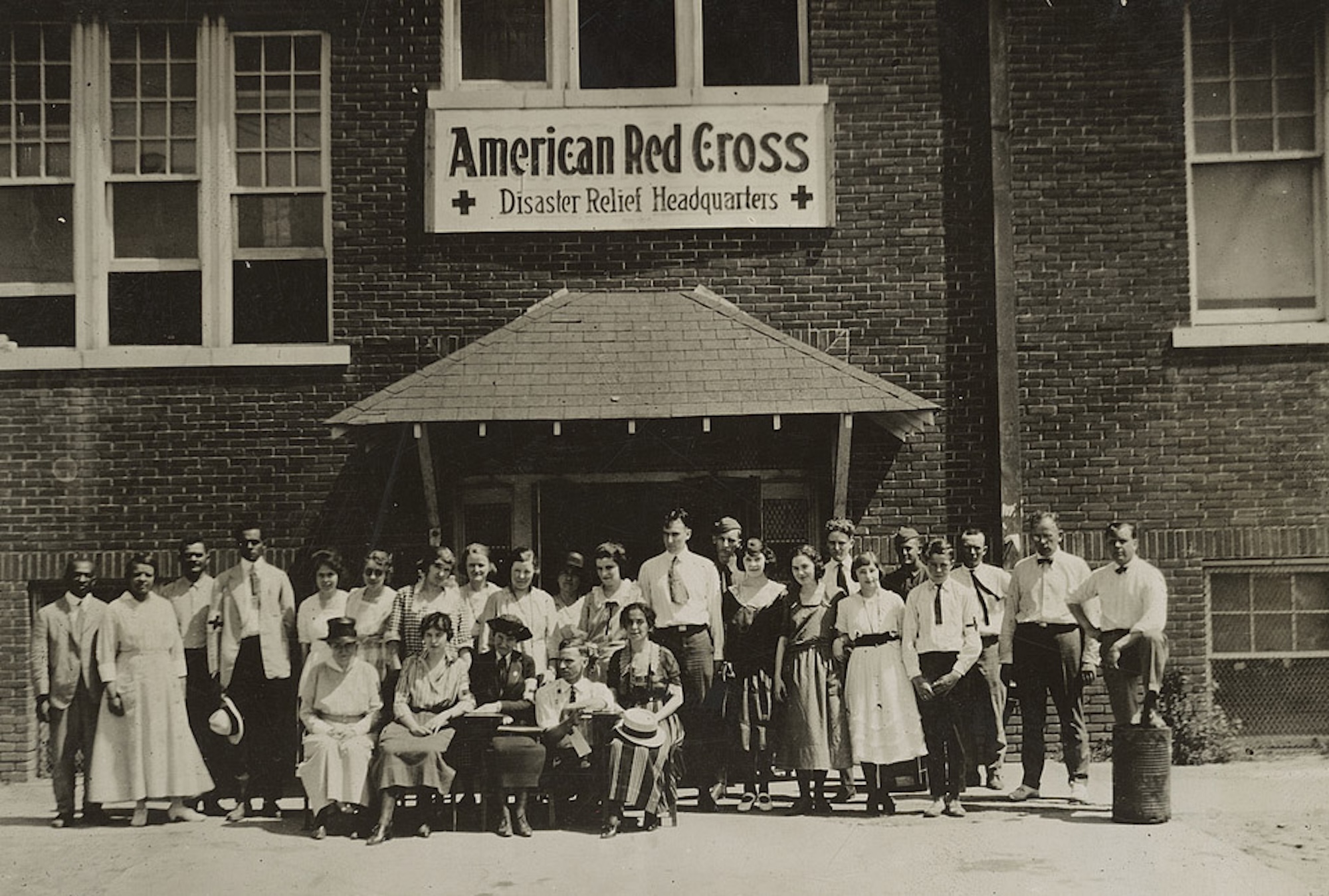
By the time the smoke cleared, Greenwood had been transformed.
More than a thousand homes lay destroyed. Businesses had vanished. Churches and schools had been damaged or eliminated. The physical landscape of the district had changed dramatically.
Yet one of the most remarkable themes running through witness testimony is resilience.
The survivors did not simply remember destruction.
They remembered rebuilding.
This aspect of Greenwood’s history sometimes receives less attention than the violence itself, yet it occupies an important place in both testimony and scholarship.
Many residents returned almost immediately.
Some lived in tents.
Others constructed temporary shelters.
Families pooled resources.
Churches reorganized.
Businesses reopened wherever possible.
The determination to rebuild became one of Greenwood’s defining characteristics.
Witnesses repeatedly described a community unwilling to surrender.
Historians have often interpreted this resilience as evidence of Greenwood’s extraordinary social cohesion. The same networks that helped build the district before 1921 helped sustain it afterward.
The rebuilding did not erase loss.
Nothing could.
But it demonstrated that Greenwood’s strength extended beyond its buildings.
The community survived because its people survived.
And the people survived because they carried something that fire could not consume.
Memory.
That memory would become Greenwood’s most important inheritance.
It would eventually become history.
The Second Destruction
If the first destruction of Greenwood came through fire, the second arrived through silence.
The flames that consumed Black Wall Street burned for less than two days.
The silence endured for generations.
For many survivors, this became one of the most bewildering aspects of the massacre’s aftermath. The destruction had occurred in plain sight. Thousands of people had witnessed it. Entire city blocks had vanished. Businesses, churches, schools, and homes had been reduced to ashes. Yet in the decades that followed, many Black Tulsans watched as the event receded from public conversation, disappeared from classrooms, and became increasingly absent from official narratives about the city.
The witnesses did not forget.
The institutions often did.
This distinction forms one of the central themes of Tulsa historiography.
For decades, Greenwood’s survivors occupied an unusual position. They possessed firsthand knowledge of one of the most significant episodes of racial violence in American history, yet they lived in a society that frequently behaved as though the event had never occurred.
The result was a profound divide between public memory and private memory.
Inside Black Tulsa, stories continued to circulate.
Outside it, silence often prevailed.
The Custodians of Memory
One reason the Tulsa Race Massacre survived in historical consciousness is that survivors understood, often instinctively, that remembering was itself a form of resistance.
The witnesses preserved names.
They preserved photographs.
They preserved stories.
They preserved places.
Most importantly, they preserved context.
This is one of the great strengths of survivor testimony. Witnesses rarely remembered Greenwood solely as a site of destruction. They remembered it as a place that had lived before it burned.
When survivors described businesses, they often remembered owners.
When they described churches, they remembered congregations.
When they described homes, they remembered families.
The massacre therefore remained connected to community rather than becoming detached as a historical abstraction.
In many respects, survivors functioned as unofficial archivists.
They preserved information that official institutions neglected.
They carried memories that public authorities failed to record.
They transmitted stories across generations.
The historian Michael Frisch once described oral history as a “shared authority” between witness and scholar. The history of Greenwood demonstrates a more profound reality. Before scholars arrived, survivors often bore nearly the entire burden of preservation themselves.
This responsibility became especially important during periods when Tulsa’s educational institutions largely omitted the massacre from curricula and public discussion.
Children learned family histories around dinner tables.
Churches became repositories of community memory.
Black newspapers remained crucial custodians of historical knowledge.
The archive survived because people carried it.
The Black Press Refused to Forget
One of the most important themes in the historiography of Greenwood is the role played by Black journalism.
Long before national newspapers revisited the massacre, Black newspapers documented it.
Long before universities studied it, Black journalists reported it.
Long before commissions investigated it, Black editors preserved it.
This distinction cannot be overstated.
Public memory of the massacre often followed racial lines.
Many white institutions either minimized the violence or treated it as an uncomfortable episode best left unexamined.
The Black press adopted a different approach.
Publications such as the Tulsa Star, the Chicago Defender, and the Oklahoma City Black Dispatch preserved information that later became essential to historians attempting to reconstruct events.
Their reporting documented loss.
Their reporting documented survival.
Their reporting documented injustice.
Most importantly, their reporting preserved testimony.
This pattern fits within a much broader tradition of African American journalism.
From Ida B. Wells’s anti-lynching investigations to coverage of civil rights struggles decades later, Black newspapers frequently served as institutions of historical preservation when mainstream outlets either ignored or distorted events affecting Black communities.
Greenwood belongs within that tradition.
When historians later assembled documentary records, they repeatedly returned to sources preserved by Black journalists.
The reporters who chronicled Greenwood were not simply covering history.
They were preserving it.
John Hope Franklin and the Scholar Who Inherited Memory
Few individuals occupy a more significant place in Tulsa historiography than John Hope Franklin.
The celebrated historian’s connection to Greenwood was both scholarly and personal.
His father, attorney Buck Colbert Franklin, survived the massacre.
That fact shaped the younger Franklin’s understanding of Tulsa’s history and the broader relationship between memory and scholarship.
Throughout his distinguished career, Franklin became one of America’s foremost historians. His scholarship transformed understanding of African American history and challenged generations of exclusionary narratives.
Yet Greenwood remained personal.
He was not simply studying an event.
He was studying part of his family’s history.
This dual role made Franklin uniquely positioned to understand the significance of witness testimony.
He recognized that many of the most important sources concerning the massacre originated not in official archives but in community memory.
The witnesses were not ancillary to the historical record.
They were central to it.
Franklin’s involvement in later efforts to document the massacre helped bridge the gap between community memory and academic scholarship. His presence also lent enormous credibility to a subject that some institutions had previously treated with indifference.
By the late twentieth century, historians increasingly recognized what survivors had been demonstrating for decades.
The story of Greenwood could not be told without its witnesses.
Scott Ellsworth and the Recovery of History
If John Hope Franklin helped legitimize the study of the massacre, Scott Ellsworth helped recover its documentary record.
Ellsworth’s groundbreaking research represented one of the earliest comprehensive scholarly examinations of the massacre. His work demonstrated that the event had not disappeared because evidence was unavailable.
It had disappeared because many people chose not to examine that evidence.
Ellsworth uncovered documents, newspaper accounts, photographs, and witness testimony that collectively challenged decades of neglect.
Importantly, his scholarship reinforced rather than replaced survivor memory.
Again and again, archival evidence confirmed what witnesses had long maintained.
This pattern appears throughout Tulsa historiography.
Witnesses remembered.
Researchers investigated.
Evidence corroborated.
Public understanding shifted.
The relationship between memory and scholarship was not adversarial.
It was collaborative.
The historians followed paths that witnesses had already marked.
Eddie Faye Gates and the Race Against Time
By the time Oklahoma created its commission in the late 1990s, a new challenge had emerged.
The witnesses were aging.
Every year reduced the number of living survivors.
Every funeral represented the loss of irreplaceable knowledge.
No individual understood this reality more clearly than Eddie Faye Gates.
A teacher, community advocate, and Commission member, Gates became one of the most important figures in the effort to locate survivors and preserve their stories.
Her work transformed the Commission.
Without Gates and others who dedicated themselves to finding witnesses, the report would have been profoundly diminished.
The task carried extraordinary urgency.
Unlike archival documents, living testimony disappears when witnesses die.
Every interview mattered.
Every conversation mattered.
Every recollection mattered.
Gates spent years locating survivors, recording their experiences, and ensuring their voices became part of the historical record.
In doing so, she helped preserve one of the largest collections of firsthand testimony associated with racial violence in American history.
The significance of this achievement extends beyond Tulsa.
It demonstrates the importance of oral history as a method of historical recovery.
Documents matter.
Official records matter.
Newspapers matter.
But witnesses matter too.
The Commission’s work ultimately affirmed that principle.
What the Commission Confirmed
By the time the Oklahoma Commission released its report in February 2001, many of its most significant conclusions would have sounded familiar to Greenwood’s survivors.
The report documented extensive destruction throughout the district.
It concluded that local authorities failed to protect Black residents.
It examined evidence regarding deputization, detention, and official conduct.
It documented staggering economic losses.
It acknowledged the likelihood that the death toll substantially exceeded early official estimates.
The Commission also recommended a series of reparative measures, including direct payments to living survivors, compensation for descendants, educational initiatives, economic development efforts, and continued investigation into massacre-related burial sites.
Historically, these findings represented a major milestone.
Yet their significance rested upon something deeper.
The report validated testimony.
Again and again, Commission investigators encountered evidence supporting what witnesses had long described.
The survivors had spoken of destruction.
The Commission documented destruction.
The survivors had spoken of official failures.
The Commission documented official failures.
The survivors had spoken of loss.
The Commission documented loss.
The report’s greatest achievement was therefore not discovery.
It was acknowledgment.
The state had finally begun listening to voices that had spent decades speaking.
The Last Witnesses
As the twenty-first century progressed, the number of living survivors continued to decline.
The responsibility of remembrance increasingly shifted from witnesses to descendants, scholars, journalists, educators, and institutions.
Yet several survivors continued speaking publicly, reminding the nation that the massacre remained living history.
Among the most prominent were Lessie Benningfield Randle, Viola Fletcher, and Hughes Van Ellis.
Their testimony carried extraordinary weight because it connected contemporary audiences directly to 1921.
When they spoke, history became personal.
When they testified, memory became evidence.
When they recalled Greenwood, the distance between past and present narrowed.
Their voices underscored a reality long understood by earlier witnesses.
The struggle over memory never truly ends.
Every generation must decide what it will preserve.
Every generation must decide what it will teach.
Every generation must decide what it will acknowledge.
What You Think?
The story of Greenwood’s witnesses ultimately returns us to a classroom in Tulsa.
A teacher stood before his students.
A survivor described what he had seen.
A teenager refused to believe him.
The story sounded impossible.
The destruction sounded impossible.
The silence sounded impossible.
Then came the photographs.
Then came the evidence.
Then came the question.
“What you think?”
More than a century after the Tulsa Race Massacre, that question remains.
It remains because Greenwood’s witnesses accomplished something extraordinary.
They preserved a historical record when institutions failed to do so.
They carried memory through decades of neglect.
They protected evidence from disappearance.
They transformed testimony into history.
Fire consumed homes.
It consumed churches.
It consumed businesses.
It consumed wealth accumulated across generations.
But it failed to consume memory.
That failure may be Greenwood’s greatest victory.
The survivors were witnesses to one of the darkest episodes in American history.
They were also its custodians.
Because they refused to surrender the truth, Greenwood survived.
Not as a neighborhood.
Not merely as a symbol.
But as a history that could not be erased.
The historians helped document it.
The Commission helped validate it.
The nation is still learning from it.
Yet none of that would have been possible without the people who carried Greenwood’s story through the long decades when so many others preferred not to hear it.
The witnesses remembered.
And because they remembered, history survived.
More great stories
Afro Sheen, Wall Street, and the Architecture of Black Possibility
July 6, 2026
No Comments
The Fire Inside the Fourth
July 5, 2026
No Comments