
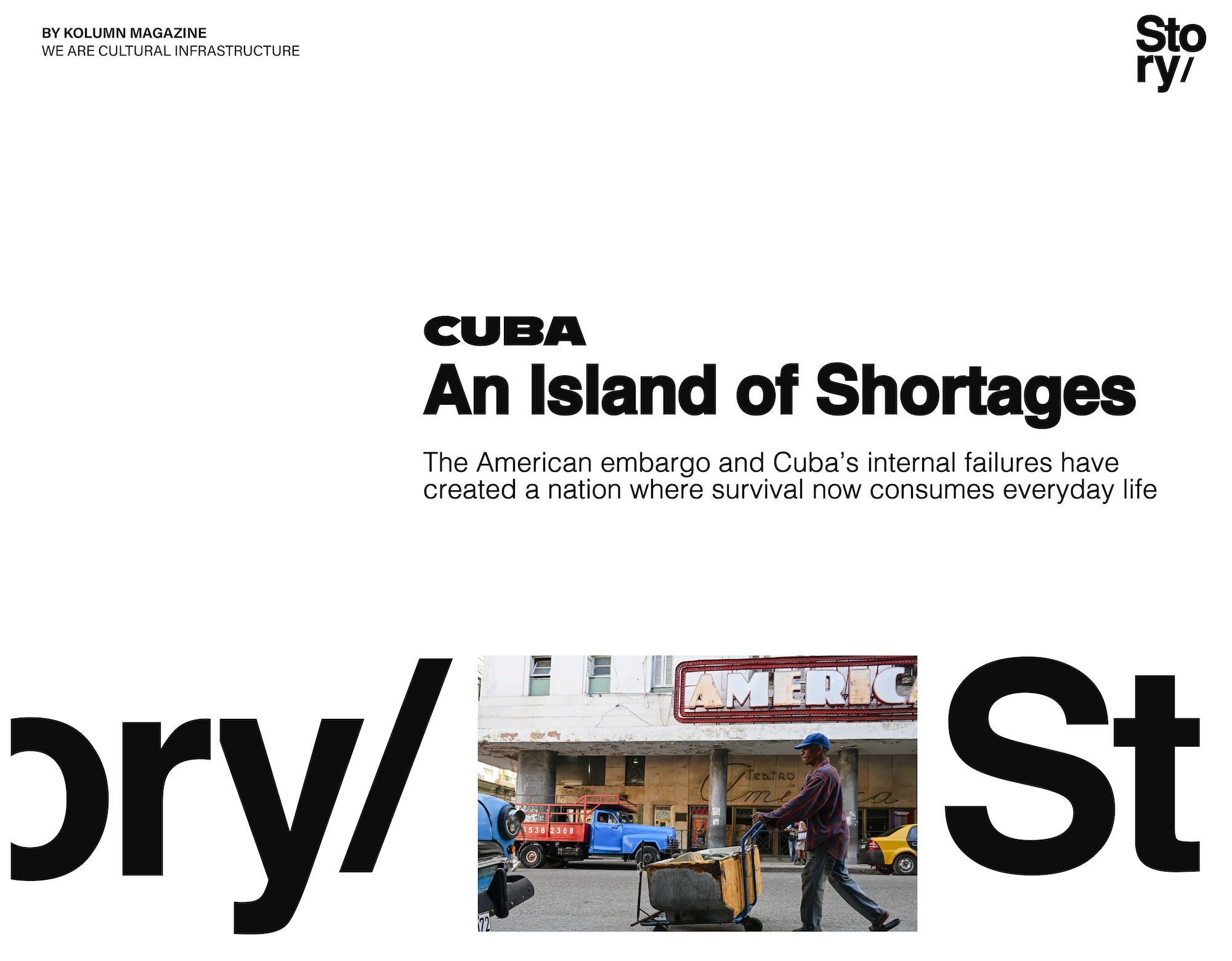
The embargo was built to pressure a government. Its most intimate consequences are borne by people waiting for food, fuel, medicine, and light.
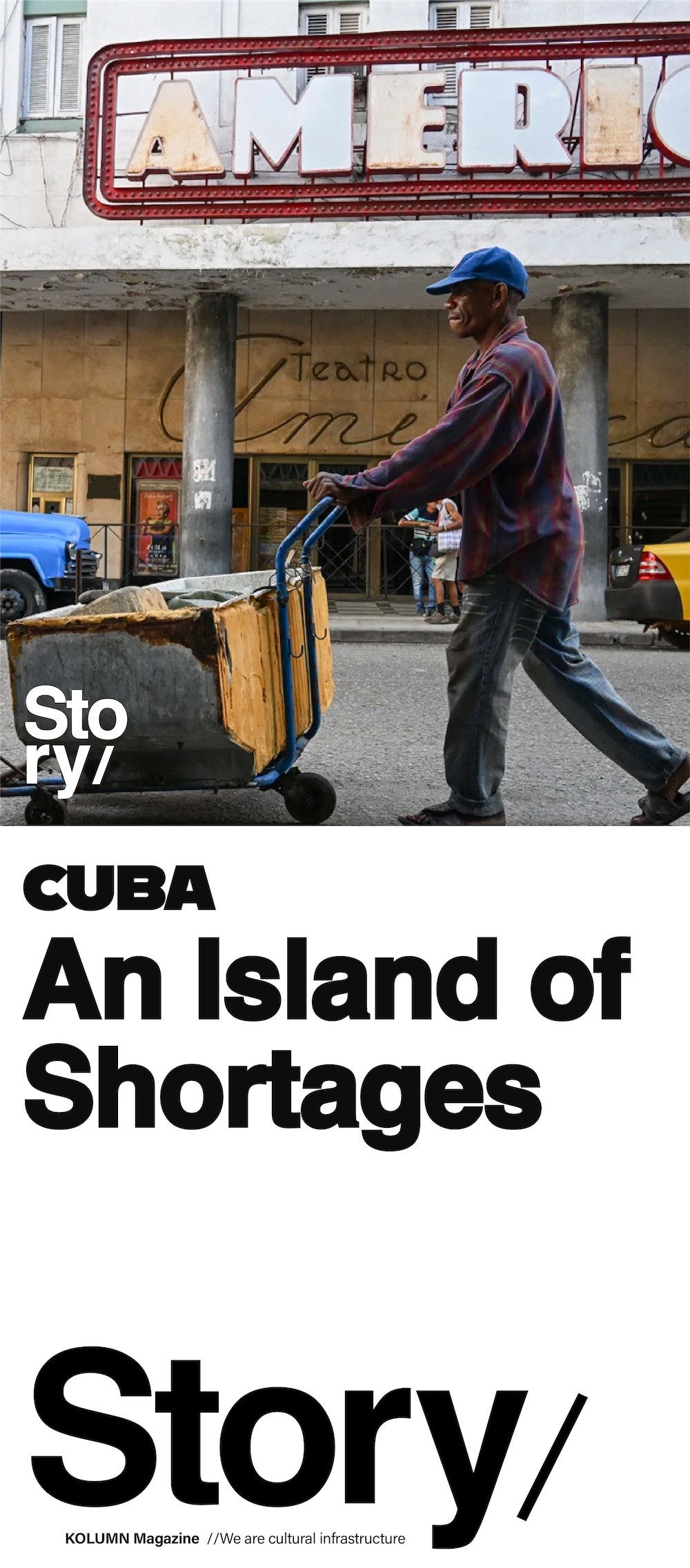
The embargo was built to pressure a government. Its most intimate consequences are borne by people waiting for food, fuel, medicine, and light.
By KOLUMN Magazine
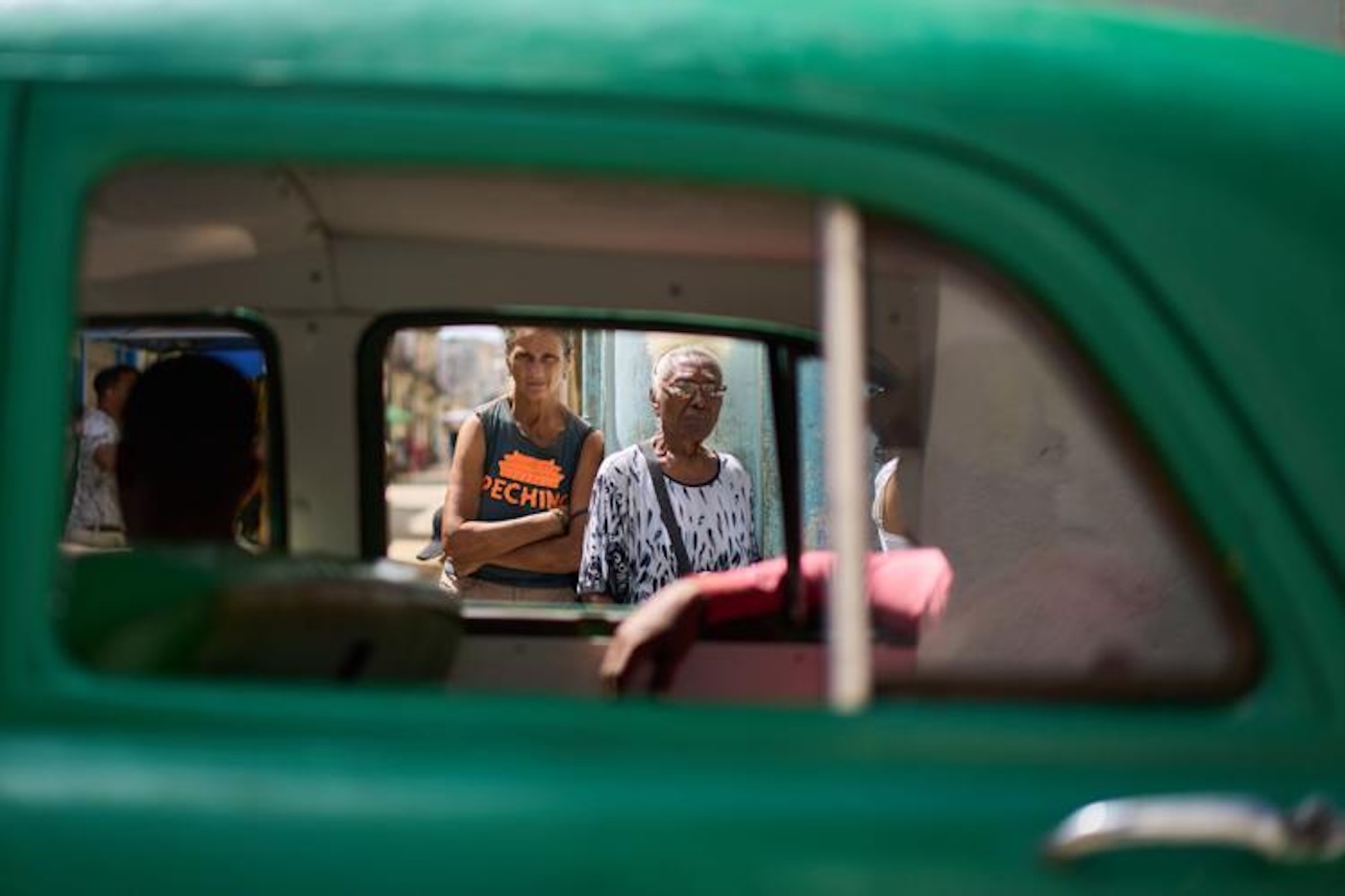
In Cuba, scarcity does not arrive as a headline. It arrives before sunrise, in the shape of a line.
A taxi driver sleeps behind the wheel because the gas station may open, or may not. A grandmother calculates whether rice, beans, cooking oil, and bread from the ration book will stretch long enough to avoid buying food at dollar prices she cannot afford. A mother checks whether powdered milk has arrived for her child. A shopkeeper raises prices because transportation costs have climbed again. A bus route disappears, not officially, but practically—because there is no diesel.
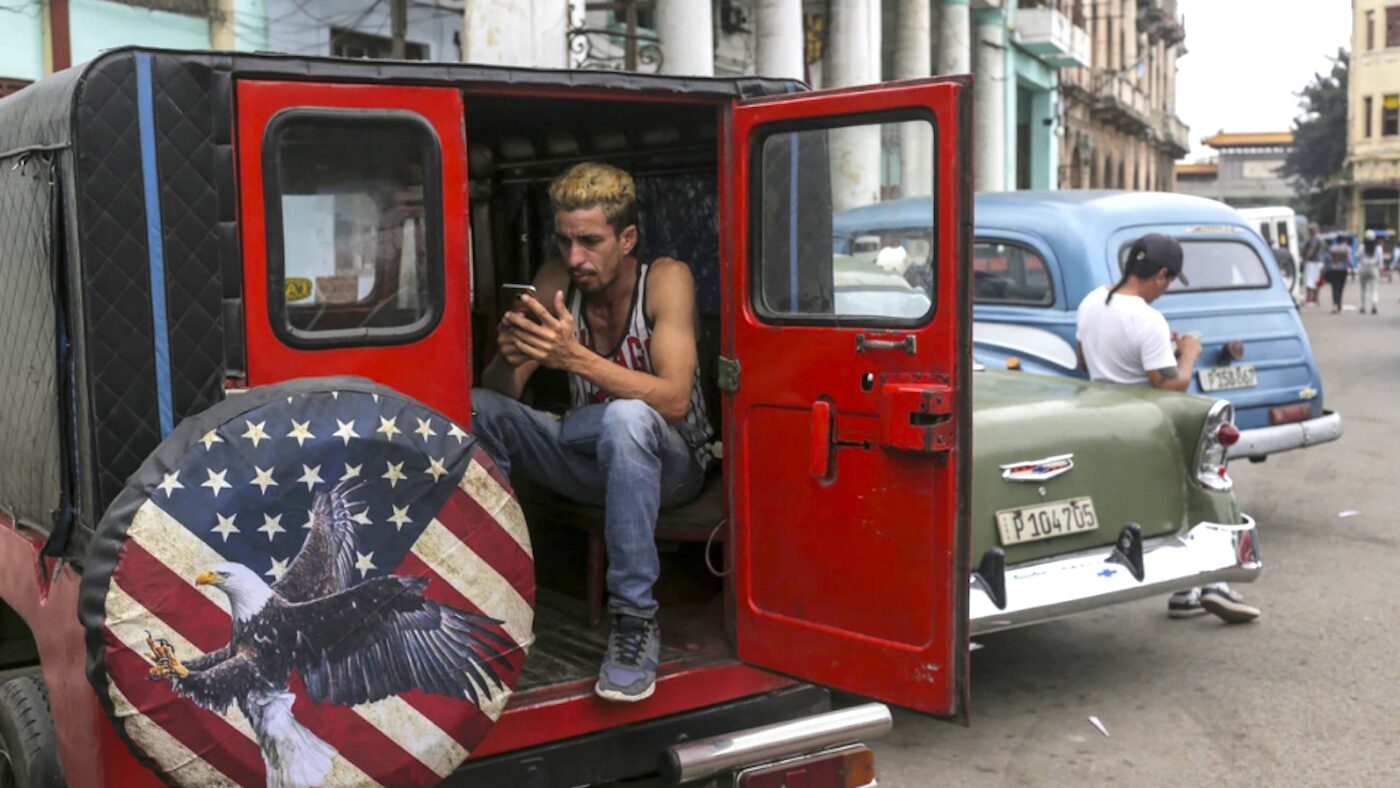
This is the embargo as lived reality. Not as diplomatic language. Not as Cold War residue. Not as a talking point in Washington or Havana. It is the daily conversion of geopolitics into hunger, immobility, and inflation.
The American embargo against Cuba, first imposed in the early 1960s and hardened through later laws including the Cuban Democracy Act of 1992 and the Helms-Burton Act of 1996, was designed to isolate the Cuban state economically. More than six decades later, the Cuban government remains in power. Ordinary Cubans, however, remain trapped inside the pressure system.
To be fair, Cuba’s crisis cannot be reduced to Washington alone. The Cuban state’s centralized economic model, suppression of private initiative, currency distortions, bureaucracy, corruption, and failure to modernize infrastructure have all deepened the emergency. But fairness also requires acknowledging that U.S. sanctions restrict Cuba’s access to financing, energy markets, shipping, investment, technology, and basic commercial flexibility. The result is not one clean cause. It is a collision.
That collision is now visible in gas lines and food prices.
A Country Running on Rumor
Fuel shortages have become one of the most punishing features of Cuban life. Reuters reported in May 2026 that Cuba moved toward new variable fuel prices after fuel “all but disappeared” from many state-run Havana stations, with the government saying prices needed to reflect the actual cost of importing gasoline and diesel amid severe supply constraints reported by Reuters. Days later, Reuters reported that regular gasoline rose from $0.95 to $1.80 per liter, diesel from $1.10 to $2.00, and premium gasoline to $2.00 per liter, even as many stations remained closed according to Reuters.
That kind of price movement is devastating in a country where salaries are low, food costs have surged, and many basic goods are increasingly sold in hard currency. Fuel is not simply fuel. It is transportation. It is food distribution. It is electricity generation. It is ambulance service. It is school attendance. It is whether a farmer can move crops before they spoil.
When fuel vanishes, the whole society slows.
Associated Press reporting from Havana described Cubans facing a worsening oil crisis as U.S. efforts to block oil supplies took effect, with residents worrying that missing buses, transportation paralysis, and longer blackouts could become the new normal AP reported. Reuters also reported that Cuban officials announced rationing measures to protect fuel for agriculture, education, water supply, health care, and defense as Washington increased pressure on oil shipments Reuters noted.
Scarcity breeds rumor because official information is rarely enough. Drivers rely on WhatsApp groups, station gossip, and neighborhood intelligence. A tanker may have arrived. A shipment may have been delayed. A pump may open for state vehicles only. Gasoline may be available in the black market, but at a price that turns mobility into privilege.
In this sense, Cuba’s gas shortage is also a class system.
Those with dollars, remittances, state connections, or tourist-sector income move more easily. Those without wait. Afro-Cubans and poorer families, already more exposed to housing insecurity and informal work, often absorb the heaviest burden. Scarcity does not fall evenly. It follows the old architecture of inequality.
Food, Inflation, and the Shrinking Ration Book
Food shortages are now inseparable from fuel shortages. When diesel runs short, crops do not move efficiently. Trucks sit idle. Refrigeration fails during blackouts. State distribution slows. Farmers struggle to transport goods. Retailers raise prices to cover risk.
The Cuban ration book, or libreta, was once one of the revolution’s most symbolic promises: the state would guarantee basic food access. Today, it is more often a symbol of decline. Associated Press reported in May 2026 that many Cubans can no longer survive on ration-book goods alone, as basic products have become scarce and many necessities are sold in U.S. dollars or at prices far beyond ordinary wages AP reported.
The World Food Programme describes Cuba as facing growing food-security and nutrition difficulties, citing persistent inflation, declining fiscal resources, fuel shortages, and economic contraction according to the World Food Programme. In 2024, Cuba took the extraordinary step of seeking help from the World Food Programme to secure powdered milk for children, a request Reuters described as a sign of deepening economic distress Reuters reported. El País reported that the WFP had already transported 144 tons of skimmed milk powder in response to the shortage El País reported.
Milk is not merely a commodity in this story. It is a measure of state capacity. A government that once made subsidized milk for children part of its revolutionary social contract now struggles to guarantee it.
Food inflation changes how people think. Meals become arithmetic. Chicken becomes occasional. Eggs become luxury. Cooking oil becomes strategy. Bread becomes thinner. Families with relatives abroad depend on remittances. Families without them depend on improvisation.
This is where the embargo’s indirect force matters. U.S. law allows some food and humanitarian trade, but the system is complicated, tightly conditioned, and frequently chilled by banking and shipping risk. The U.S. Treasury’s Cuba sanctions framework includes restrictions around transactions, vessels, and services connected to Cuba as OFAC explains, while U.S. export rules note that agricultural commodities, medicines, and medical devices face specific licensing and statutory limitations under sanctions law according to the Bureau of Industry and Security. In practice, many banks and firms avoid Cuba altogether rather than risk penalties or compliance complications.
That is how sanctions extend beyond the letter of the law. They create a perimeter of fear.
The Long History of Economic Pressure
The historiography of the embargo is essential because Washington’s policy was never simply about trade. It was about pressure.
A now-famous 1960 memorandum by State Department official Lester Mallory argued that the United States should use economic hardship to weaken support for Fidel Castro by creating conditions of deprivation, language preserved by the National Security Archive. That document has become central to how historians, legal scholars, and Cuban officials interpret the embargo’s moral architecture.
Cold War historians once framed the embargo primarily as containment: a response to Soviet influence ninety miles from Florida. Later scholars widened the lens, treating the embargo as part of a longer history of U.S. intervention in the Caribbean and Latin America. Contemporary policy analysts often focus on effectiveness: after more than sixty years, the Cuban government remains authoritarian, the Communist Party remains dominant, and ordinary citizens remain economically constrained.
The Council on Foreign Relations notes that the United States has sanctioned Cuba longer than any other country and that Obama-era normalization was partially reversed by later administrations CFR explains. The United Nations General Assembly has repeatedly voted to condemn the embargo, including a 2025 vote calling for its end for the thirty-third consecutive year according to UN Geneva.
Yet in U.S. politics, the embargo survives. It survives because of Cold War memory, Florida electoral politics, anti-communist exile networks, property claims, human-rights concerns, and congressional law. It survives because sanctions often become easier to maintain than to unwind.
For Cuban officials, the embargo is the master explanation. For Cuban dissidents, that explanation often functions as an excuse for repression and failure. For ordinary Cubans, both arguments can be true at once.
The embargo is real. So is state failure.
Expert Voices and the Failure of a Strategy
Experts on Cuba rarely agree on everything, but many agree on one point: the embargo has not achieved its stated democratic aims.
The Brookings Institution has long argued that U.S.-Cuba policy needs rethinking because isolation has not produced political transformation Brookings has argued. Human-rights organizations continue to criticize Cuba’s repression of dissent, but many also recognize that broad sanctions harm civilians. Amnesty International has documented Cuba’s restrictions on expression and protest in its Cuba reporting, while Human Rights Watch has reported on arbitrary detention and political repression in its country analysis.
That is the hard balance. Cuba’s government violates civil liberties. The U.S. embargo worsens civilian hardship. Serious journalism has to hold both facts together.
Scholars such as Ada Ferrer, whose book Cuba: An American History situates Cuba within centuries of U.S. ambition, race, empire, and revolution, have helped move the conversation beyond slogans. The island’s modern crisis is not merely communist mismanagement or American cruelty. It is the latest chapter in a long, asymmetrical relationship in which Cuban sovereignty and U.S. power have collided again and again.
Energy is now the pressure point.
Cuba depended for years on subsidized Venezuelan oil. As Venezuela’s own crisis deepened, those flows became less reliable. Tourism revenue collapsed during the pandemic and has struggled to recover amid blackouts and shortages. AP reported in 2026 that tourism was plummeting just as Cuba desperately needed hard currency, with U.S. tensions and declining Venezuelan oil shipments worsening the outlook AP reported.
A country short on hard currency cannot easily buy fuel. A country short on fuel cannot easily produce food or power its grid. A country short on food and electricity cannot stabilize tourism. The cycle feeds itself.
The Price of a Meal
In Havana, food prices tell the story with cruel efficiency. When transportation costs rise, market prices rise. When imports slow, prices rise. When state stores run out, black-market prices rise. When inflation eats salaries, even available food becomes inaccessible.
This is why “shortage” is an incomplete word. Cuba does not only suffer from absence. It suffers from unaffordability.
A product can exist and still be unreachable.
For families dependent on state salaries, food shopping has become a sequence of humiliating tradeoffs. Buy cooking oil or soap. Buy eggs or medicine. Pay transport or buy rice outside the ration system. Parents skip meals quietly. Elderly residents depend on relatives. Children experience scarcity as normal life.
The Associated Press reported that Cuba’s crisis is pushing families into hunger and forcing reliance on donations and the black market, with one family forced to spend savings on medicine after state pharmacies lacked supplies AP reported. The same economic logic applies to food: what the state cannot provide, the black market sells at punishing prices.
The embargo intensifies that logic by constraining Cuba’s ability to access credit, process payments, attract investment, and import efficiently. But internal policy failures turn constraint into catastrophe. Cuba’s agricultural sector remains underproductive. State procurement systems discourage farmers. Price controls distort supply. Infrastructure is aging. Migration has drained labor. The state’s slow and inconsistent reforms have not produced enough food, enough foreign exchange, or enough confidence.
This is the anatomy of a compounded crisis.
Blackouts, Gasoline, and the Politics of Exhaustion
Blackouts are the soundtrack of scarcity. Cuba’s grid depends heavily on imported fuel and aging thermoelectric plants. When fuel is scarce, electricity fails. When electricity fails, food spoils, water pumps struggle, businesses close, and hospitals ration power.
Reuters reported in 2026 that Cuba had run short of diesel and fuel oil as officials sought new imports during a deepening energy crisis Reuters reported. Humanitarian and religious organizations have warned that fuel shortages affect electricity generation, hospitals, water systems, transportation, and food distribution the World Council of Churches stated.
The politics of exhaustion are dangerous. People can endure ideology. They can endure sacrifice when sacrifice feels shared and temporary. But endless crisis corrodes legitimacy. It turns patience into resentment.
Cuba saw major protests in July 2021, driven by shortages, blackouts, pandemic stress, and demands for freedom. Since then, public frustration has remained. The government has responded with repression, surveillance, and prosecution. But the deeper problem remains material. A state cannot indefinitely ask citizens to endure hunger and darkness while offering little evidence that tomorrow will improve.
Washington’s hard-liners see this pressure as the point. They argue that economic pain may force political change. But history suggests the strategy is more likely to punish civilians than dislodge the state. Sanctions often give authoritarian governments an external enemy, allowing them to blame hardship on foreign aggression while tightening domestic control.
That is the embargo’s central paradox.
It weakens Cuban society without necessarily weakening Cuban power.
The Racial Geography of Scarcity
KOLUMN Magazine’s earlier work has often examined how state policy, racial hierarchy, and economic pressure converge on vulnerable communities. Cuba belongs in that frame. Although the revolution officially repudiated racism, Afro-Cubans have often had less access to remittances, private capital, tourism-sector opportunities, and family networks abroad. In a shortage economy, those differences become decisive.
A white Cuban family with relatives in Miami may receive dollars. A Black Cuban family without diaspora support may rely almost entirely on pesos and ration stores. A private restaurant owner with generator access may survive blackouts. A pensioner in a poorer neighborhood may lose refrigerated food repeatedly.
This is not simply about ideology. It is about who has buffers.
Scarcity reveals the real distribution of power.
In Cuba, those buffers increasingly come from outside the state: remittances, informal markets, private enterprise, foreign aid, church networks, and transnational family support. The revolutionary promise of universal provision has eroded into a tiered survival system.
Aid, Sovereignty, and Suspicion
Humanitarian aid has become politically charged. AP reported in May 2026 that a humanitarian aid ship from Mexico and Uruguay arrived in Havana carrying 1,700 tons of essential supplies, including grains, powdered milk, and hygiene products, amid worsening economic and energy crises AP reported. Around the same time, U.S. officials offered food and medical aid, while blaming Cuban leaders for the crisis and insisting that distribution occur through trusted non-state channels Reuters reported.
Aid, in this context, is never neutral. Havana fears aid can be used as political leverage. Washington fears aid can strengthen the Cuban state. Cubans need food.
That is the brutal simplicity beneath the diplomatic complexity.
The question is not whether Cuban leaders bear responsibility. They do. The question is whether a sanctions regime that worsens civilian deprivation can be defended as humane policy simply because it targets an authoritarian government.
For many Cubans, that distinction is meaningless. Hunger does not ask who drafted the policy memo.
The Embargo You Can Taste
The American embargo is often discussed as if it were a relic. But relics do not raise food prices. Relics do not strand buses. Relics do not complicate fuel shipments. Relics do not shape whether milk reaches children.
The embargo is alive because its consequences are alive.
Still, the article must end where it began: with complexity. Cuba’s leaders have failed their people in profound ways. They have restricted speech, punished dissent, mismanaged the economy, delayed reform, and preserved a political system that demands sacrifice while offering limited accountability. But the United States has also maintained a sweeping sanctions architecture that constricts an already fragile economy and turns ordinary Cubans into instruments of geopolitical pressure.
The policy has outlived its rationale. It has not delivered democracy. It has not produced prosperity. It has not toppled the Communist Party. It has, however, helped make daily life harder for millions of people.
In Cuba, the embargo is not abstract. It is edible. It is combustible. It is priced into the liter of gasoline, the pound of rice, the missing carton of milk, the bus that never arrives, the refrigerator gone warm in another blackout.
It is the line before dawn.
And the question that follows every rumor of supply: will there be enough today?
More great stories
Afro Sheen, Wall Street, and the Architecture of Black Possibility
July 6, 2026
No Comments
The Fire Inside the Fourth
July 5, 2026
No Comments