


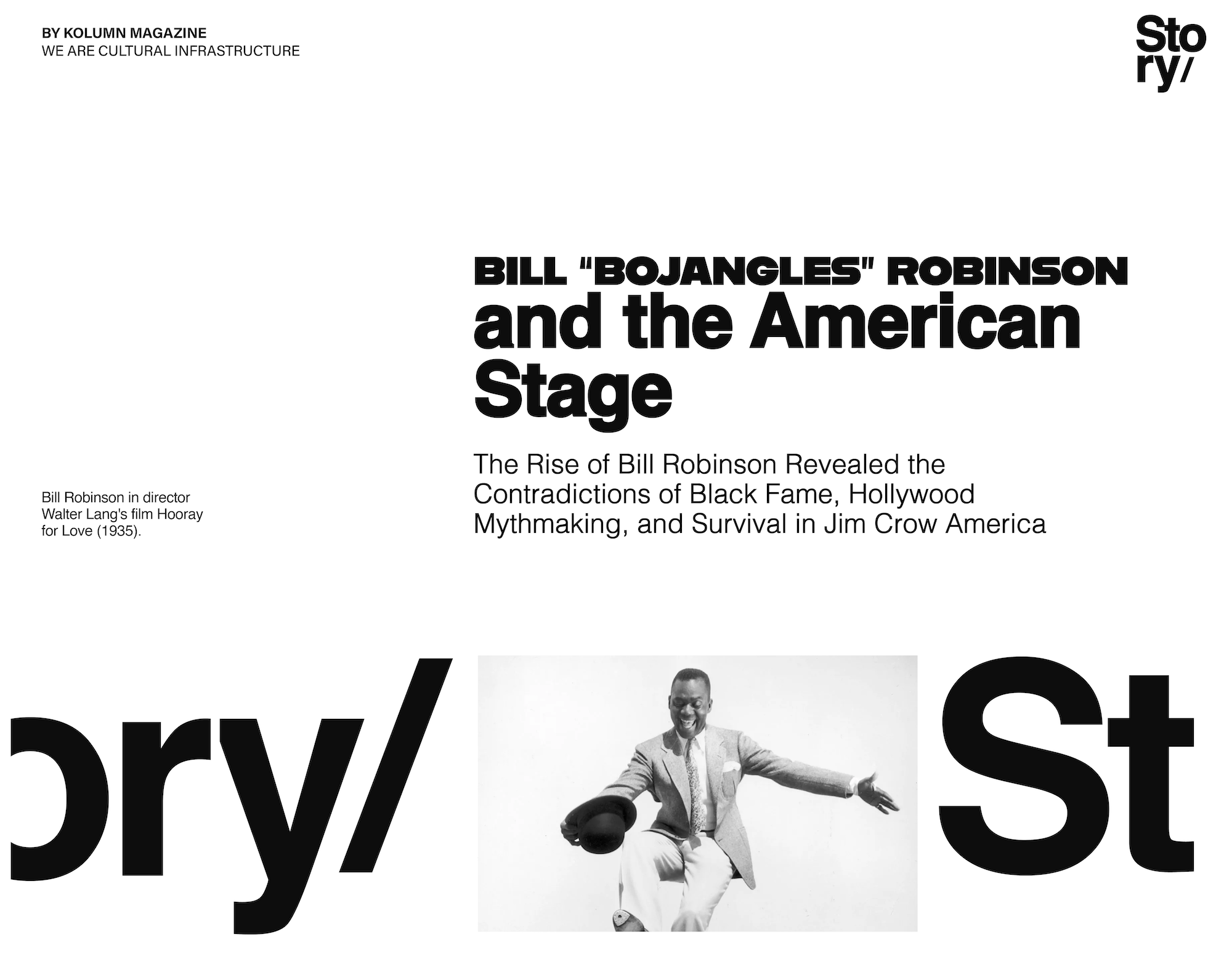
Bill Robinson made tap dance vertical. He took it out of the chorus line and turned it into individual expression.
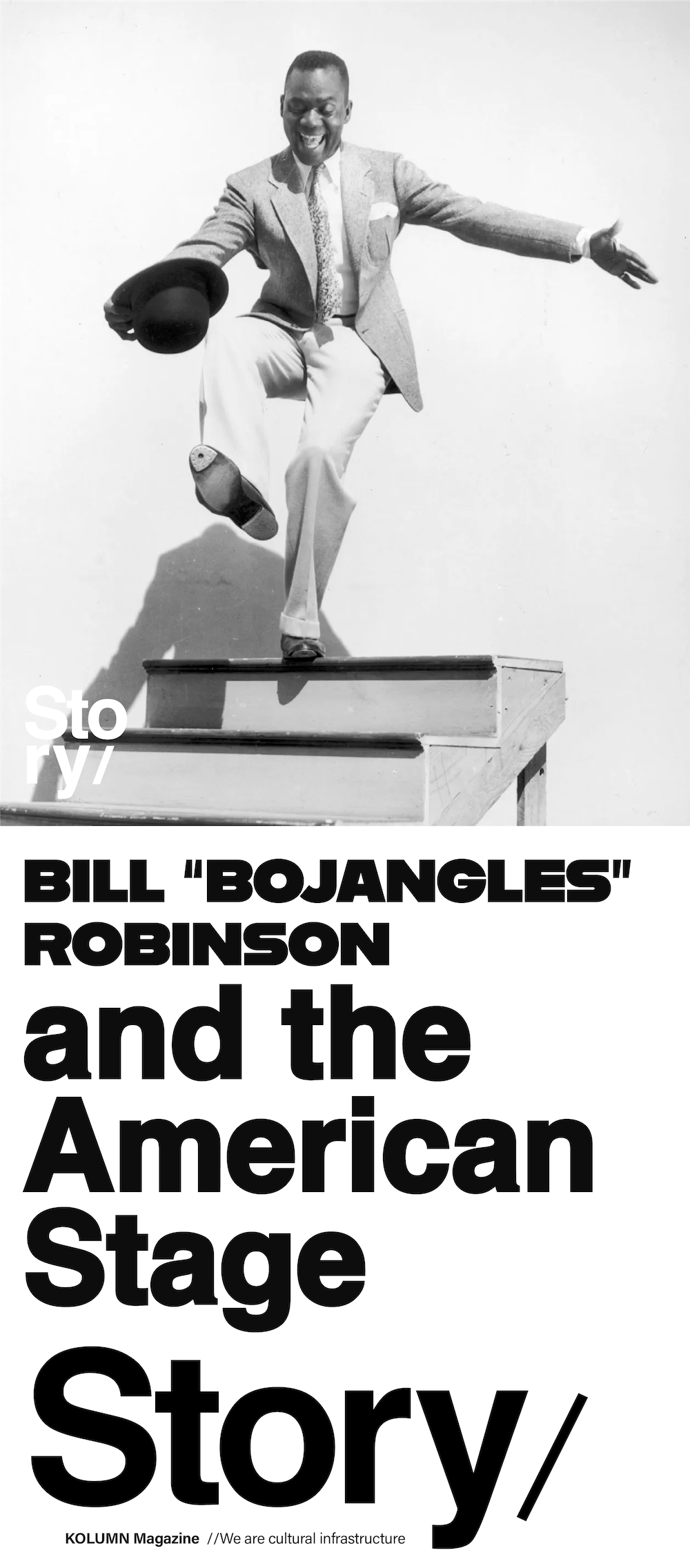
Bill Robinson made tap dance vertical. He took it out of the chorus line and turned it into individual expression.
By KOLUMN Magazine
Long before Black entertainers could command Hollywood contracts, negotiate creative control, or walk through the front doors of elite hotels without humiliation, there was Bill Robinson — the impossibly elegant tap dancer the world came to know as “Bojangles.” He moved with an effortless glide that seemed to suspend gravity itself. Audiences watched him float up staircases, balance rhythm against silence, and transform tap dance into something more than vaudeville novelty. Robinson made rhythm look aristocratic.
But beneath the polished tuxedos, broad smile, and dazzling footwork was a Black artist navigating the brutal architecture of Jim Crow America. His genius made him beloved by white audiences. His race made him vulnerable to exploitation by the very industries that profited from his brilliance.
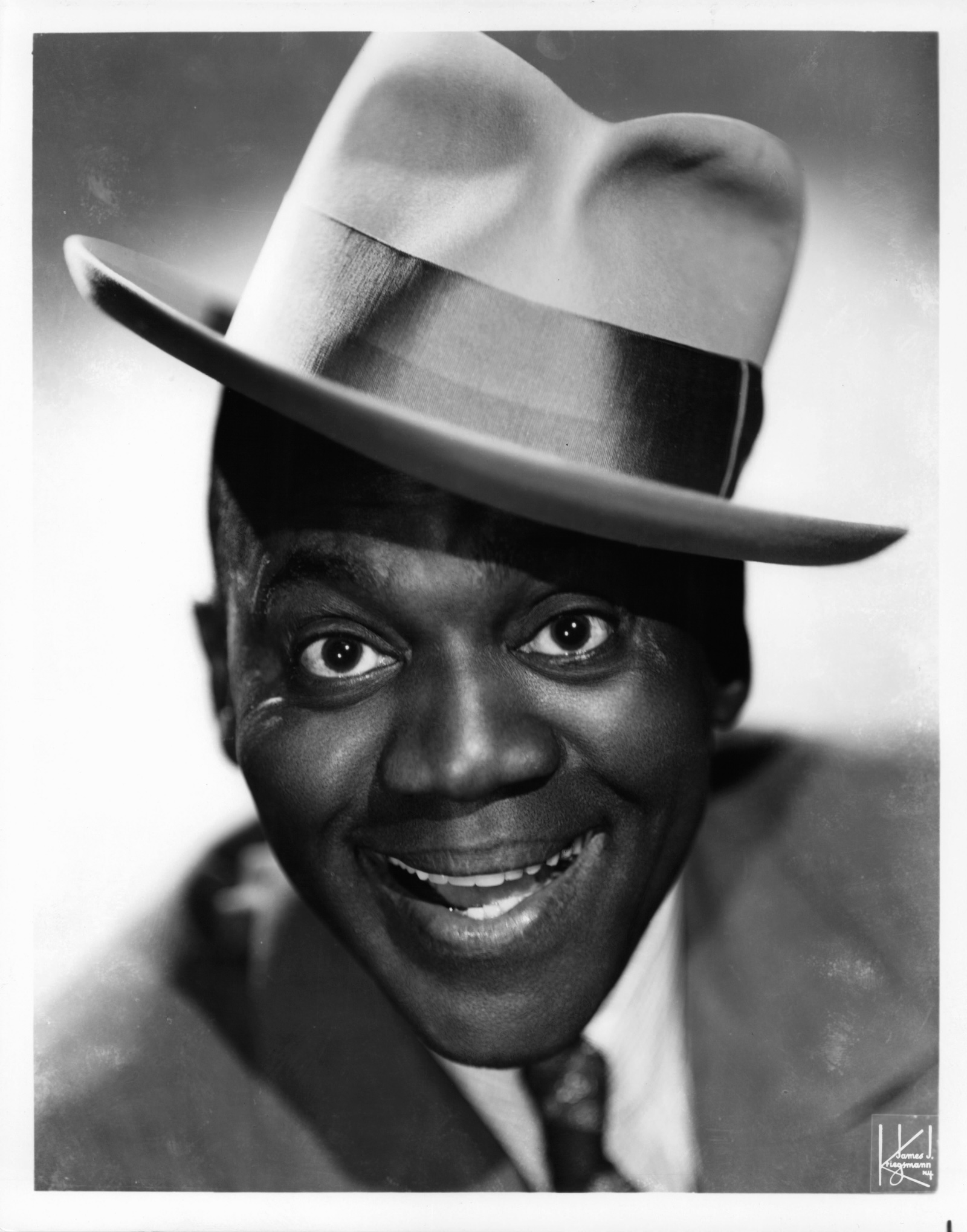
Few performers occupy such a complicated place in American cultural memory. Robinson is remembered simultaneously as a groundbreaking genius and as a figure trapped inside Hollywood’s racial caricatures. He was a pioneer who shattered barriers on Broadway and in film, yet many of his most famous performances unfolded within narratives designed to reassure white audiences about Black subservience. To study Robinson is to study the contradictions of Black performance in America itself.
As dance historian Constance Valis Hill noted in interviews and scholarship surrounding her acclaimed work Brotherhood in Rhythm, Robinson fundamentally transformed tap from an ensemble-driven style into a soloist’s art form, helping establish the technical vocabulary that later artists—from Fred Astaire to Gregory Hines—would inherit. Astaire himself reportedly said Robinson was “the greatest dancer ever.” Yet American cultural institutions often celebrated white interpreters of tap while marginalizing the Black innovators who created the form in the first place.
Robinson’s story is not merely about entertainment. It is about labor, race, capitalism, migration, performance politics, and the uneasy bargain Black entertainers were often forced to make with white America: visibility in exchange for containment.
And still, he danced.
Born Into the Violence of Reconstruction America
Bill Robinson was born Luther Robinson in Richmond, Virginia, on May 25, 1878, according to archival records preserved by the Encyclopaedia Britannica and the Library of Congress. America was barely emerging from Reconstruction. The promises of Black freedom were already collapsing under white backlash, racial terror, and economic disenfranchisement.
Richmond remained haunted by the Confederacy and defined by rigid racial hierarchy. Black workers occupied the lowest rungs of labor. Segregation shaped every institution. Lynchings spread across the South with horrifying frequency. Yet Black communities simultaneously cultivated vibrant cultural ecosystems rooted in church traditions, music, mutual aid organizations, and performance.
Robinson’s childhood was marked by instability. Both of his parents died when he was young, leaving him to be raised by his grandmother. According to reporting and historical analysis published by The New York Times, Robinson began dancing professionally as a child in Richmond beer gardens and local theaters before eventually joining traveling minstrel circuits.
The minstrel stage was among the few available avenues for Black performers in the late nineteenth century. Yet it came with devastating costs. Minstrelsy relied on racist caricatures, exaggerated dialects, and dehumanizing stereotypes that reassured white audiences of Black inferiority. Even Black performers themselves were often forced to perform in blackface—a grotesque irony reflecting the power structure of American entertainment.
Scholars such as Eric Lott and Henry Louis Gates Jr. have extensively documented how minstrelsy simultaneously exploited Black culture while profiting from racist fantasy. Robinson emerged from this contradictory environment: a Black artist forced to master a racist entertainment system in order to survive.
By age five, Robinson was dancing for money. By adolescence, he was performing professionally. Survival required performance.
The Invention of a New Kind of Tap Dancer
Tap dancing itself emerged from a fusion of African rhythmic traditions and Irish step dancing traditions during the nineteenth century. Black dancers transformed percussive footwork into a distinctly American art form rooted in syncopation, improvisation, and musical conversation.
Robinson revolutionized that tradition.
Prior to Robinson, tap was frequently performed flat-footed and collectively in groups. Robinson introduced a lighter, upright style emphasizing clarity, precision, speed, and elegance. He danced on the balls of his feet rather than the full foot, producing cleaner and more intricate rhythms. Historians widely credit him with helping establish the modern aesthetic vocabulary of tap dance itself.
The staircase routine became his signature. Robinson would ascend and descend a staircase while maintaining impossibly precise rhythms, transforming ordinary architecture into percussion.
The act became legendary.
The Smithsonian Institution notes that Robinson’s stair dance became one of the most recognizable dance routines in American entertainment history, influencing generations of performers.
His rise coincided with major transformations in American entertainment. Vaudeville circuits expanded nationally. Broadway became increasingly commercialized. Motion pictures began reshaping celebrity culture.
Black performers remained systematically excluded from equal participation in these industries, but Robinson’s undeniable talent created opportunities difficult for white producers to ignore.
By the early twentieth century, Robinson was becoming one of the highest-paid Black entertainers in America.
That fact alone was revolutionary.
Vaudeville, Respectability, and the Politics of Elegance
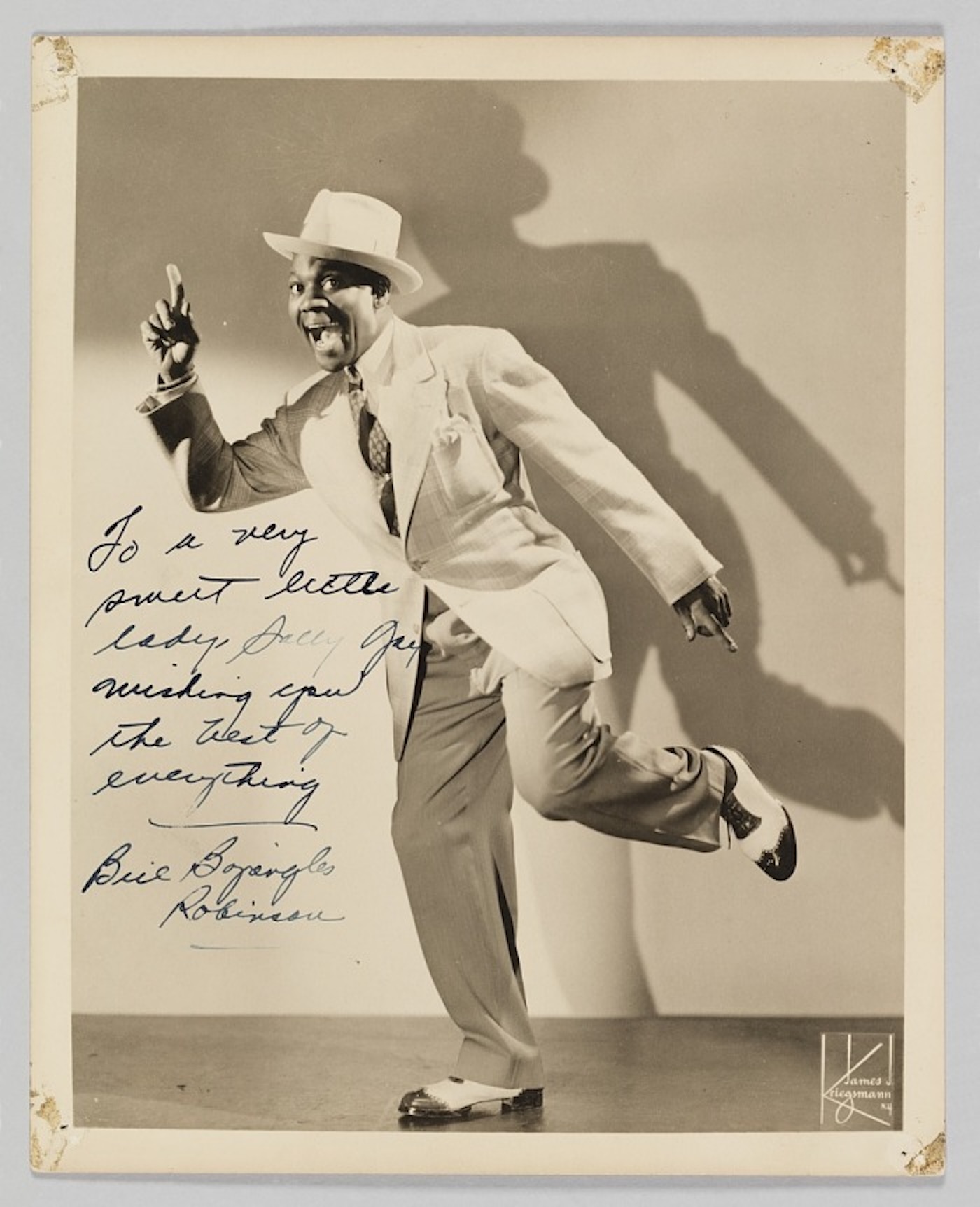
Robinson cultivated an image of extraordinary refinement. He wore immaculate suits. He spoke carefully. He carried himself with visible dignity.
This was not accidental.
Black performers during Jim Crow often faced pressure to embody “respectability” in order to counter racist assumptions. Robinson understood that elegance itself could function as political strategy.
Yet respectability politics also carried limitations. White audiences often rewarded Black entertainers who appeared non-threatening. Robinson’s polished demeanor helped him cross into mainstream popularity, but it also meant navigating constant expectations about behavior, speech, and image.
Historian Kareem Abdul-Jabbar, writing for The Hollywood Reporter, argued that Robinson’s career reflected the impossible calculations Black entertainers faced: succeed within racist systems or risk professional erasure altogether.
Robinson became especially popular among white audiences because he projected warmth and optimism. But historians continue debating the extent to which this public persona reflected genuine personality versus strategic adaptation to segregation-era entertainment economics.
The debate surrounding Robinson’s legacy often reveals modern tensions about Black representation itself. Some critics argue his film roles reinforced racial stereotypes. Others contend he strategically used constrained opportunities to open doors for future Black performers.
Both realities can exist simultaneously.
Broadway Stardom and the Breaking of Color Barriers
Robinson’s transition into Broadway helped cement his status as a cultural phenomenon.
In 1928, he starred in Blackbirds of 1928, a major revue that showcased Black talent during the Harlem Renaissance. The production became a sensation. Robinson’s staircase dance reportedly stopped shows cold with applause.
The Harlem Renaissance itself represented an explosion of Black intellectual and artistic production. Writers such as Langston Hughes, Zora Neale Hurston, and Claude McKay were redefining Black artistic expression. Jazz transformed American music. Black theater flourished in New York.
Robinson occupied a unique position within this ecosystem because he achieved crossover popularity with white audiences while remaining deeply rooted in Black performance traditions.
The National Museum of African American History and Culture has documented Robinson’s role in challenging segregation barriers in live performance venues. He reportedly refused to perform in certain theaters unless Black audience members were allowed admission.
Such actions mattered enormously during an era when segregation structured public life.
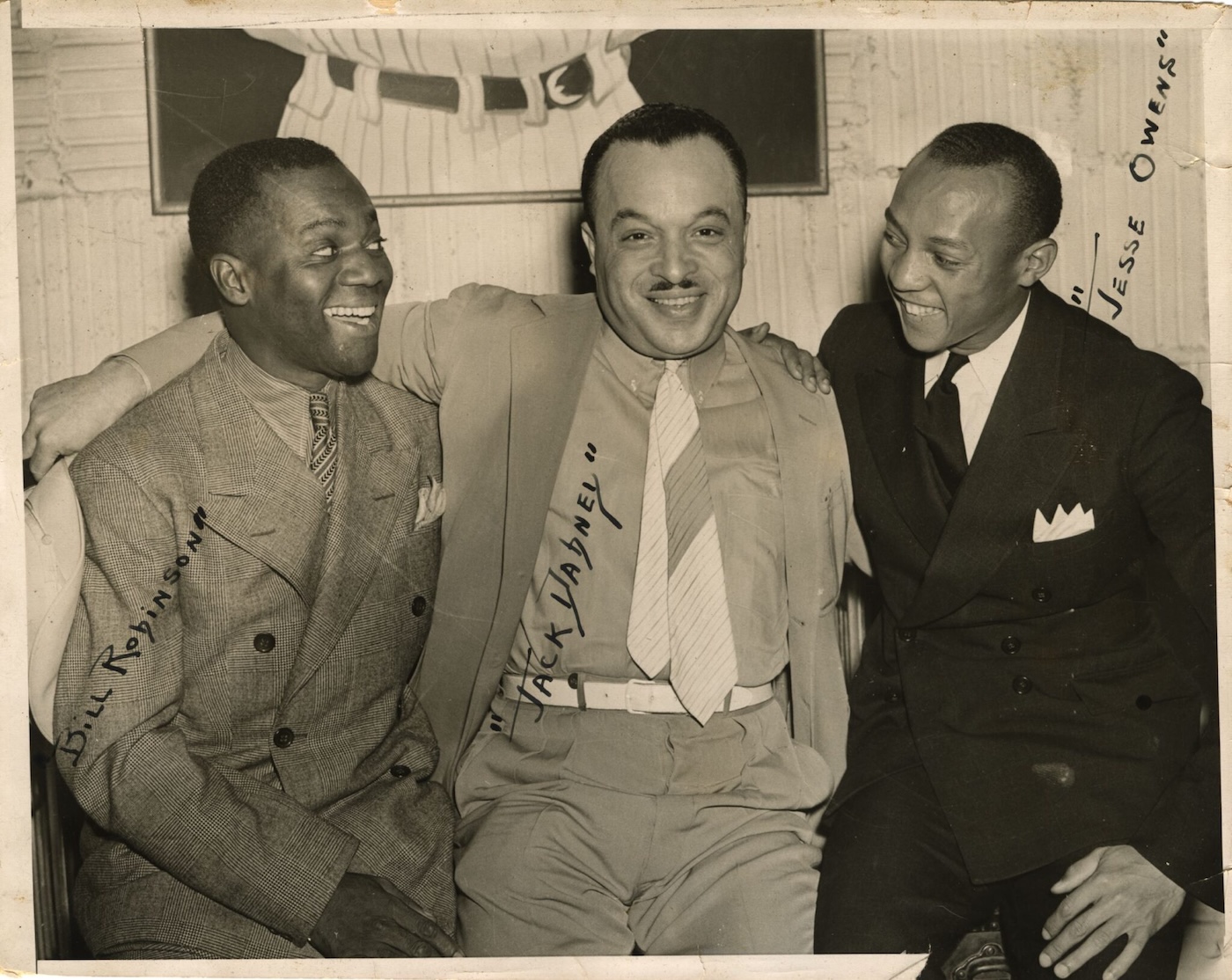
Robinson’s financial success also enabled philanthropic work. He donated extensively to charities, supported struggling performers, and funded community initiatives within Black neighborhoods. Yet despite enormous earnings during his career, Robinson died with significant debt—a common story for Black entertainers systematically denied equitable financial protections.
Hollywood and the Shirley Temple Partnership
For many Americans, Robinson remains most associated with his film partnership alongside Shirley Temple.
Their collaborations in films such as The Little Colonel (1935) and The Littlest Rebel (1935) became cultural landmarks. Robinson and Temple performed one of the first interracial dance sequences in Hollywood history during an era when segregation remained national policy.
The staircase dance in The Little Colonel became iconic.
Yet these films also exposed the racial contradictions of Hollywood itself.
Robinson’s characters were frequently written as loyal servants or caretakers whose emotional lives revolved around white protagonists. Hollywood studios limited the range of roles available to Black actors, regardless of talent. Robinson’s extraordinary charisma existed within deeply racist cinematic structures.
Film scholar Donald Bogle, author of Toms, Coons, Mulattoes, Mammies, and Bucks, argued that Robinson’s screen image reflected Hollywood’s preference for “safe” Black characters who would not challenge white racial comfort.
At the same time, Robinson’s visibility mattered profoundly to Black audiences hungry to see Black excellence represented onscreen at all.
This tension continues shaping discussions of his legacy.
The NAACP itself criticized aspects of Hollywood stereotyping during Robinson’s era while simultaneously recognizing the importance of Black performers achieving mainstream visibility.
Modern viewers often struggle to reconcile Robinson’s undeniable artistry with the racial frameworks surrounding his films. But historians increasingly argue that understanding Black performers within historical context requires examining both constraint and agency simultaneously.
Robinson did not control Hollywood.
He survived it.
The Economics of Black Entertainment
Despite earning millions throughout his career, Robinson experienced chronic financial instability.
According to reporting from The Washington Post, Robinson’s generosity contributed significantly to his financial decline. He loaned money freely, paid for funerals, supported friends and relatives, and donated heavily to charitable causes.
But generosity alone does not explain the economic precarity many Black entertainers faced.
The entertainment industry systematically exploited Black talent through unfair contracts, limited ownership rights, discriminatory banking practices, and exclusion from institutional wealth-building mechanisms available to white stars.
Robinson also struggled with gambling, a factor historians frequently acknowledge. Yet broader structural inequities remain central to understanding why so many pioneering Black entertainers died without lasting wealth despite generating enormous profits for white-owned studios and theater chains.
This pattern extended far beyond Robinson. Artists from jazz musicians to blues singers frequently saw their innovations monetized by industries that denied them long-term economic security.
The story is deeply American: Black creativity generating national culture while Black creators remain economically vulnerable.
Historians Reconsider “Bojangles”
For decades, Robinson’s legacy was simplified into nostalgic mythology. He was often remembered merely as a smiling tap dancer from old movies.
Contemporary scholarship has challenged that flattening.
Modern historians increasingly frame Robinson as a foundational architect of American entertainment whose career illuminates broader dynamics surrounding race, labor, and performance. Scholars of Black studies, dance history, film studies, and African American cultural history have reevaluated Robinson not simply as an entertainer but as a key figure in understanding twentieth-century America itself.
Constance Valis Hill’s scholarship helped reposition tap dance as a serious intellectual and artistic tradition rather than lightweight commercial entertainment. Her work situates Robinson within a lineage of Black rhythmic innovation stretching from slavery-era traditions to contemporary dance.
Meanwhile, Black cultural critics continue interrogating the politics of representation surrounding Robinson’s Hollywood career.
The conversation remains unresolved because Robinson himself embodied unresolved contradictions.
He challenged barriers. He also operated within them.
He elevated Black artistry. He also appeared in films structured by racist assumptions.
He was adored publicly while navigating systemic discrimination privately.
The complexity matters.
The Influence That Echoed Across Generations
Robinson’s artistic fingerprints remain everywhere in American popular culture.
Tap legends like Savion Glover and Gregory Hines openly acknowledged Robinson’s influence. So did generations of performers beyond tap itself.
Michael Jackson’s rhythmic footwork, musical timing, and gliding movement reflected tap traditions Robinson helped popularize. Broadway choreography absorbed his elegance. Hollywood dance cinema borrowed heavily from his precision.
Fred Astaire reportedly paid tribute directly to Robinson’s style, while performers across racial lines incorporated innovations Robinson introduced decades earlier.
Yet Black innovators have often watched white performers receive broader institutional celebration for forms rooted in Black creativity.
Rock and roll, jazz, hip-hop, blues, and tap all reflect this pattern.
Robinson’s career therefore exists inside a much larger story about American cultural appropriation and racial hierarchy.
The dance form he helped perfect became central to American identity itself. But the nation remained hesitant to fully acknowledge Black ownership of that cultural inheritance.
Death, Mourning, and Memory
Robinson died on November 25, 1949, in New York City.
Thousands attended his funeral in Harlem. According to historical accounts preserved by the New York Public Library, the funeral became a major public event reflecting Robinson’s enormous cultural stature within Black America.
Harlem mourned him not simply as an entertainer but as a symbol of Black achievement during one of the nation’s harshest racial eras.
Yet Robinson’s financial troubles persisted even in death. Friends reportedly helped cover funeral costs.
The image feels painfully symbolic.
America loved watching Bill Robinson dance.
America proved far less interested in ensuring his security once the music stopped.
The Problem of American Nostalgia
Contemporary nostalgia often softens the violence surrounding figures like Robinson. Old Hollywood retrospectives sometimes celebrate the charm of classic musicals while ignoring the segregation embedded within the industry.
But Robinson’s story cannot be separated from the realities of Jim Crow America.
His fame unfolded in a nation where Black citizens faced lynching, voter suppression, employment discrimination, housing segregation, and routine racial terror. Robinson became globally recognizable while many Black Americans remained denied basic democratic rights.
That contradiction is central to understanding American entertainment history.
Black performance has frequently served as a site where America celebrates Black creativity while resisting Black equality.
This dynamic continues today in debates surrounding sports, music, film, and celebrity culture.
Robinson’s career anticipated those tensions generations earlier.
Why Bill Robinson Still Matters
Bill Robinson matters because he helped invent modern American entertainment.
He matters because tap dance itself represents one of the nation’s most important artistic contributions to world culture.
He matters because his life reveals the sophistication, resilience, and strategic brilliance Black performers required simply to exist professionally inside segregated America.
And he matters because his story forces difficult questions about memory itself.
Who gets remembered as an innovator? Who receives institutional recognition? Whose labor becomes national culture while their humanity remains contested?
KOLUMN Magazine has previously explored similar tensions in features examining figures such as Hoyt W. Fuller, Sammy Younge Jr., and Stephanie Pogue—individuals whose contributions challenged America’s racial imagination while exposing the fragility of Black recognition within mainstream institutions. Robinson belongs firmly within that lineage.
He was not merely a dancer.
He was a cultural architect.
A survivalist.
A businessman navigating racial capitalism.
A performer balancing dignity against stereotype.
A Black man carrying extraordinary elegance through a nation built to deny him equal standing.
And even now, decades after his death, America is still trying to decide how honestly it wishes to remember him.
More great stories
Afro Sheen, Wall Street, and the Architecture of Black Possibility
July 6, 2026
No Comments
The Fire Inside the Fourth
July 5, 2026
No Comments