



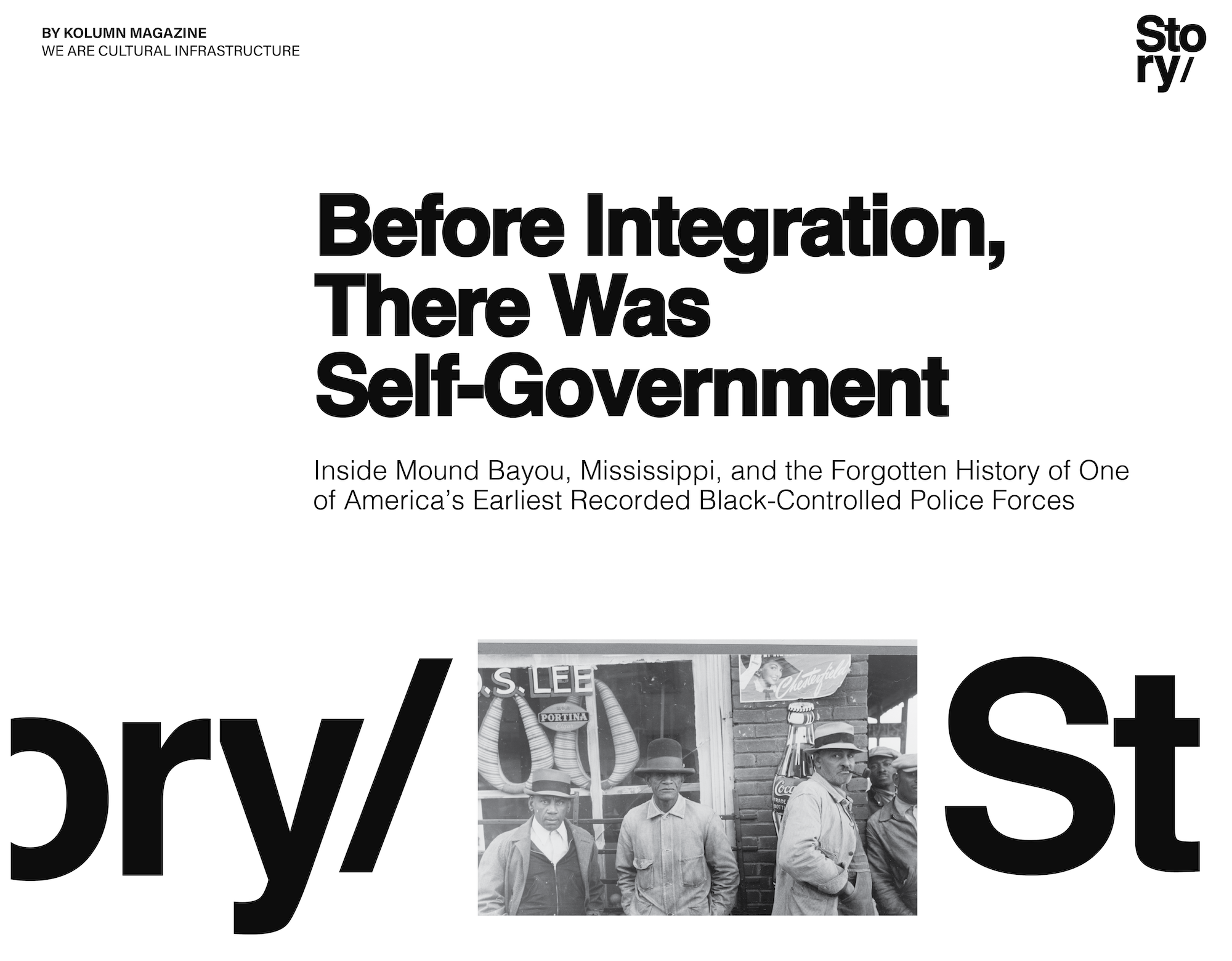
The historical significance of Mound Bayou lies not in the fact that Black people lived there, but in the fact that Black people governed there.
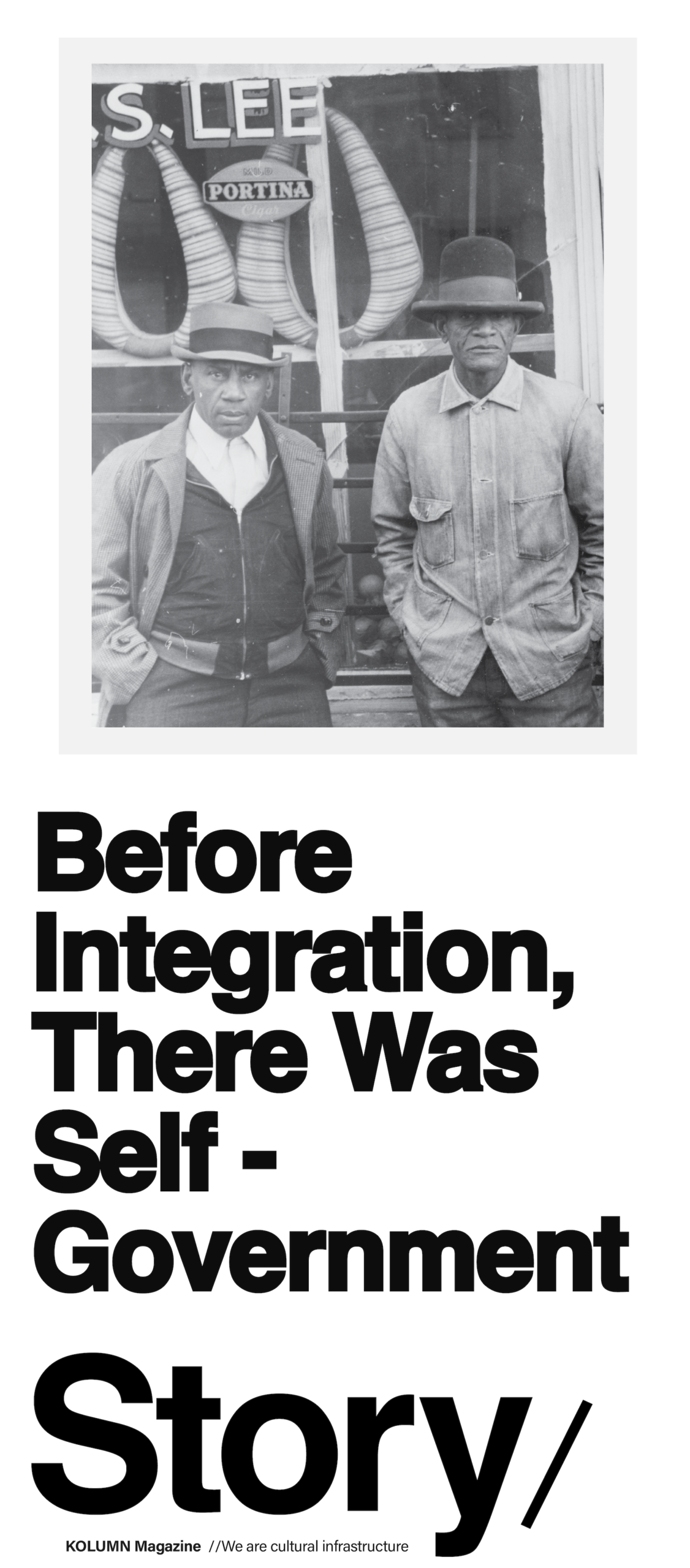
The historical significance of Mound Bayou lies not in the fact that Black people lived there, but in the fact that Black people governed there.
By KOLUMN Magazine
In much of the American historical imagination, Black people appear in the story of policing primarily as subjects of law enforcement rather than architects of it. The dominant narrative traces a long arc from slave patrols to Jim Crow policing, from civil-rights confrontations to contemporary debates over accountability and reform. It is a narrative grounded in undeniable historical realities, yet it often leaves little room for a parallel history that unfolded in scattered communities across the United States after Reconstruction—a history in which African Americans sought not merely protection under the law, but authority over the institutions responsible for enforcing it.
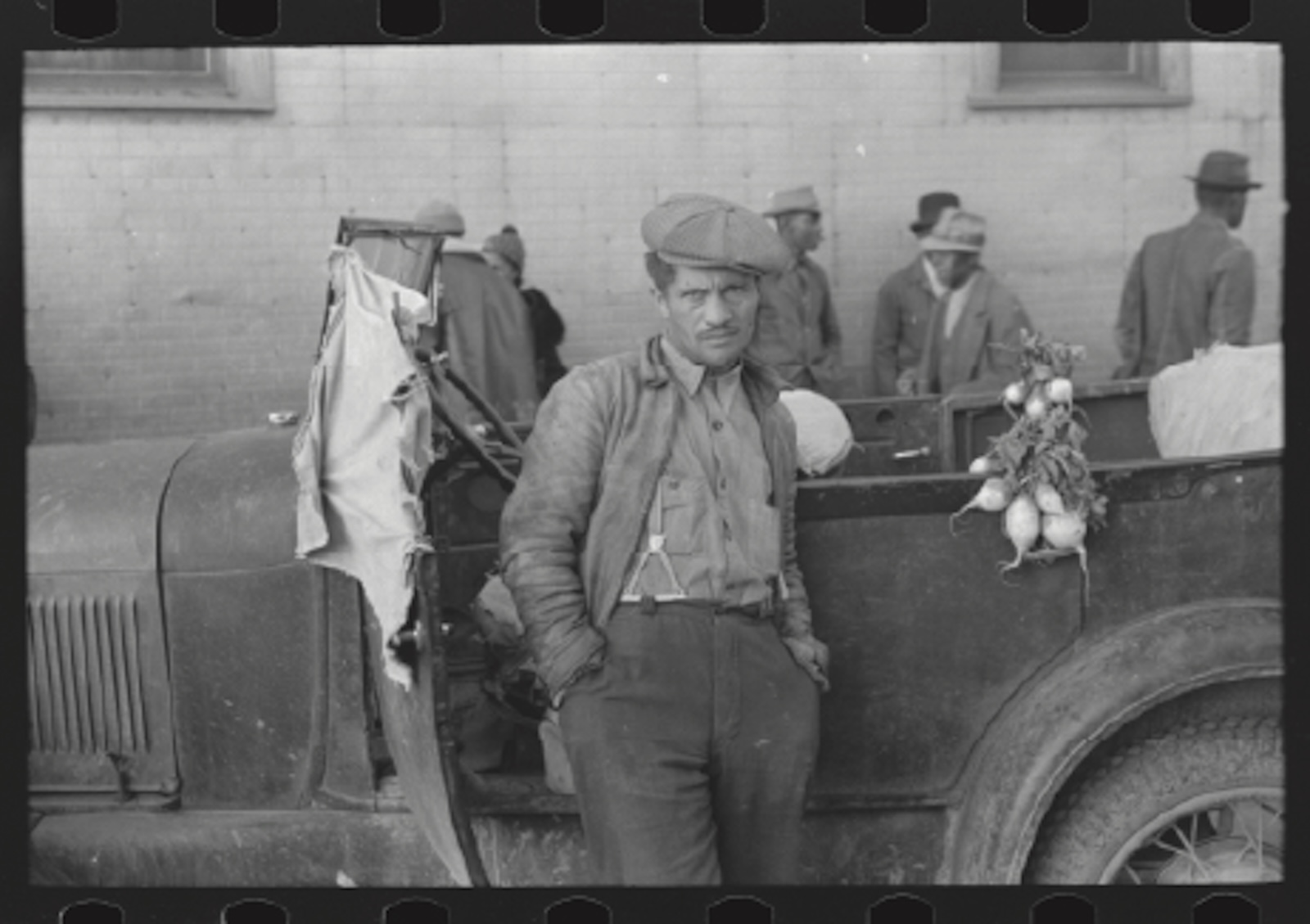
Among the most remarkable examples of that alternative tradition stood a small town in the Mississippi Delta. Founded in 1887 by formerly enslaved men, Mound Bayou emerged as one of the most successful Black municipalities in American history, a place where African Americans governed nearly every aspect of civic life during an era when most Southern states were systematically stripping Black citizens of political power. Historians have long celebrated the town’s banks, businesses, schools, newspapers, churches, and political institutions, yet a less examined aspect of its legacy involves public safety and municipal authority. Because Mound Bayou was governed entirely by Black elected officials and staffed by Black municipal officers, its law-enforcement apparatus stands among the earliest documented examples of a Black-controlled police structure operating within a self-governing Black municipality in the United States. The distinction is historically significant because it moves beyond integration and into the realm of sovereignty itself. Mound Bayou was founded in 1887 by Isaiah T. Montgomery and Benjamin T. Green as a self-governing Black community and became widely recognized for Black political control and self-government throughout the Jim Crow era.
The story of Mound Bayou is not simply a story about policing. It is a story about citizenship, democratic participation, economic self-determination, and the exercise of public authority by a people whom much of the nation considered unfit for all of those responsibilities. Examining the town’s law-enforcement history therefore requires a broader understanding of why Mound Bayou existed in the first place and why it became one of the most studied Black communities in America.
Building a Town Beyond White Rule
The founding of Mound Bayou occurred during one of the most consequential periods in African American history. Reconstruction had raised hopes that the Civil War would produce not only emancipation but also political equality. Those hopes were increasingly threatened during the 1870s and 1880s as white supremacist violence spread throughout the South and state governments erected barriers designed to curtail Black political participation.
Against that backdrop, Isaiah T. Montgomery and Benjamin T. Green pursued a different vision. Both men were connected to Davis Bend, Mississippi, a plantation community associated with Joseph Davis, brother of Confederate President Jefferson Davis. Following emancipation, members of the Montgomery family acquired unusual experience in business, agriculture, and community administration. Rather than attempting to negotiate permanent security within hostile white-controlled institutions, they envisioned creating a municipality governed by African Americans themselves. Historical accounts describe the founders negotiating land purchases and establishing a settlement intended to provide economic opportunity, political autonomy, and relative safety from the racial violence common throughout the region. The town’s founders deliberately established Mound Bayou as a place where African Americans could pursue independence and self-government.
The town expanded steadily during the late nineteenth and early twentieth centuries. Businesses emerged. Schools opened. Churches multiplied. Newspapers circulated. Black professionals established practices and commercial enterprises. The Bank of Mound Bayou became one of the earliest Black-owned financial institutions in Mississippi, helping finance economic growth and demonstrating the entrepreneurial ambitions of the community. The Bank of Mound Bayou was founded in 1904 and became one of Mississippi’s first Black-owned banks.
What distinguished Mound Bayou from many other Black communities was not merely its demographic composition. African Americans did not simply reside there. They governed it. The mayor was Black. The council members were Black. Election officials were Black. Civic administrators were Black. The institutions of municipal authority reflected the community itself. Modern historians continue to describe Mound Bayou as a haven for Black voting, entrepreneurship, and self-government during a period when those rights were under relentless assault elsewhere in Mississippi. Scholar David Beito characterizes Mound Bayou as a haven for Black self-government, voting rights, and equal citizenship during the Jim Crow era.
The Difference Between Integration and Control
When historians discuss Black policing in America, they often focus on milestones involving the first African American officers hired by white-controlled departments. Cities such as Memphis, Chicago, and New Orleans employed Black officers during the nineteenth century, and those appointments represented important breakthroughs against exclusionary practices. Yet those officers served within systems ultimately controlled by white political leadership.
Mound Bayou represented something fundamentally different.
The town’s law-enforcement officers were not symbolic representatives integrated into an existing white institution. They operated within a municipal government controlled by Black voters and Black elected officials. The distinction may appear subtle, but it changes the historical meaning entirely. One model centers on access to power; the other centers on the possession of power.
Evidence from municipal records, historical accounts, and scholarly research indicates that Mound Bayou maintained Black law-enforcement officials throughout much of its history. Contemporary descriptions of the town routinely referenced Black marshals, Black deputies, and Black municipal authorities. In discussing the community’s political structure, historians note that African Americans occupied every office within local government. Research on Mound Bayou’s civic institutions consistently emphasizes that African Americans held all municipal offices and controlled local governance.
This reality complicates modern assumptions about policing and race. In much of the Jim Crow South, law enforcement functioned as an instrument of racial hierarchy. Sheriffs enforced segregation. Deputies often protected systems of disenfranchisement. Black citizens frequently experienced law enforcement as an extension of white political power. In Mound Bayou, however, municipal authority operated through Black institutions accountable to Black residents.
That accountability did not eliminate conflict or disagreement. Every community confronts disputes involving crime, governance, and public order. Yet the existence of those disputes within a Black-controlled political framework represented a remarkable departure from prevailing Southern norms.
What Historians Actually Know
One reason the story of Mound Bayou’s law-enforcement legacy remains relatively obscure is that historians approach claims of historical “firsts” with caution. The phrase “America’s first all-Black police department” appears periodically in popular discussions, but the available evidence does not permit a definitive conclusion.
The problem is not that the claim is necessarily false. The problem is that records from many nineteenth-century Black communities are incomplete. Numerous Black municipalities emerged throughout the South and West during the late nineteenth century. Some employed marshals, constables, or other law-enforcement officers. In many cases, documentation simply did not survive.
The historical record surrounding Mound Bayou is stronger than most. Because the town attracted national attention, scholars, journalists, politicians, and civic leaders documented its development extensively. President Theodore Roosevelt famously visited the town in 1908 and described it as “an object lesson” demonstrating Black achievement and civic responsibility. Roosevelt publicly praised Mound Bayou after visiting the community in 1908.
Consequently, historians can say with confidence that Mound Bayou possessed Black-controlled municipal institutions, including law enforcement. What remains more difficult to prove is whether another Black municipality established a comparable law-enforcement structure earlier.
This distinction matters because good history requires precision. The strongest evidence supports describing Mound Bayou as one of the earliest—and certainly one of the most thoroughly documented—examples of a Black-controlled municipal law-enforcement system operating within a self-governing Black town.
That formulation may lack the simplicity of a “first” claim, but it possesses something more important: historical credibility.
How Scholars Have Interpreted Mound Bayou
The scholarly understanding of Mound Bayou has evolved significantly over time. Early observers often viewed the town through the lens of racial uplift, emphasizing economic development, entrepreneurship, and educational achievement. Booker T. Washington frequently cited Mound Bayou as evidence of Black progress and self-help, presenting it as proof that African Americans could build prosperous communities despite segregation. Washington publicly celebrated Mound Bayou as a place where African Americans could learn the responsibilities of civic life and witness Black achievement firsthand.
Later historians adopted more nuanced approaches. Scholars examining Jim Crow Mississippi increasingly viewed Mound Bayou not merely as a success story but as an experiment in Black political autonomy. Researchers explored how residents navigated external threats, internal conflicts, economic pressures, and changing political realities while maintaining a degree of self-government largely unavailable elsewhere in the South.
Among the most influential recent scholars is David Beito, whose work emphasizes Mound Bayou’s role as an outpost of free expression, political participation, and civil rights activism. Beito argues that the community functioned as a rare sanctuary for Black civic engagement during decades when Mississippi systematically restricted African American political rights. Beito’s recent scholarship describes Mound Bayou as a haven for Black self-government and democratic participation during Jim Crow.
This historiographical shift is important because it reframes law enforcement within a broader discussion about governance. The question is no longer simply whether Black officers served in Mound Bayou. The more significant question is what it meant for an African American community to exercise authority over policing itself.
Public Safety in a Self-Governing Community
The practical challenges facing Mound Bayou were substantial. Economic growth required stability. Property rights required enforcement. Political institutions required legitimacy. Residents expected protection from crime as well as from external threats.
Historical accounts indicate that local law enforcement operated with limited resources but substantial community legitimacy. During the tenure of Mayor Benjamin A. Green, researchers noted remarkably low crime rates and an informal approach to policing that reflected the town’s size and social structure. One account describes a town marshal and a Black deputy working within a community that relied heavily upon local relationships and civic participation. Historical accounts of Mayor Benjamin A. Green’s administration note low crime rates and Black law-enforcement personnel serving the town.
What emerges from these accounts is not an image of a heavily militarized police force but rather a municipal law-enforcement system embedded within community life. Officers were known to residents. Civic leaders interacted directly with constituents. Public authority remained visible and local.
This arrangement reflected a broader philosophy of governance. Mound Bayou’s founders believed political freedom required institutions capable of sustaining civic order. Economic independence alone would not secure the community’s future. Durable self-government required courts, elections, taxation, education, and public safety.
Law enforcement therefore formed part of a larger ecosystem of democratic participation.
From Freedom Town to Civil Rights Center
Mound Bayou’s importance did not end with its founding generation. During the twentieth century, the town became a critical center of Black political organizing. The community served as a base for the Regional Council of Negro Leadership, led by Dr. T.R.M. Howard, one of the most influential civil-rights figures of the era. Medgar Evers worked in Mound Bayou before becoming the NAACP’s Mississippi field secretary, and the town played a significant role in broader struggles for voting rights and racial justice. Mound Bayou served as an important center for the Regional Council of Negro Leadership and the early civil-rights activism of Medgar Evers.
The continuity between the town’s founding and its civil-rights activism is not accidental. Communities that had spent decades practicing self-government possessed organizational capacity, political networks, and civic traditions that proved invaluable during later struggles.
In this sense, the story of Mound Bayou’s law enforcement cannot be separated from its larger political legacy. The same community that elected Black officials, managed Black-owned institutions, and maintained Black law-enforcement officers also helped nurture some of the most important civil-rights leadership in American history.
Why This History Matters Today
KOLUMN has frequently explored the institutions Black Americans built when access to mainstream institutions was denied, whether examining historically Black colleges and universities, Black-owned hospitals, Black banking networks, or independent Black municipalities. Mound Bayou belongs within that same tradition because it demonstrates that African Americans did not simply endure exclusion; they responded by creating alternative systems capable of sustaining economic, social, and political life.
The town’s law-enforcement history offers a particularly revealing example. Modern conversations about policing often frame Black communities solely as recipients of law-enforcement policies designed elsewhere. Mound Bayou reminds us that African Americans have also imagined, administered, and supervised public-safety institutions themselves.
That history does not resolve contemporary debates over policing. It does, however, enrich them. By examining Mound Bayou, we encounter a community that linked public safety to democratic participation, political representation, and civic accountability. The town’s leaders understood that authority derived not merely from uniforms and badges but from legitimacy granted by the people being governed.
More than a century after its founding, Mound Bayou remains one of the most compelling examples of Black self-determination in American history. Whether historians ultimately determine that its law-enforcement structure was the very first all-Black municipal police department in the nation or simply the earliest extensively documented example, the broader significance remains unchanged. At a time when African Americans were systematically denied political power across much of the South, the residents of this Mississippi Delta town built institutions that allowed them to govern themselves, protect themselves, and define citizenship on their own terms.
The enduring importance of Mound Bayou therefore lies not in a disputed superlative but in a demonstrable achievement. Long before integration opened the doors of many police departments, Black citizens in Mound Bayou had already established something more ambitious: a government of their own, complete with the authority—and responsibility—to enforce the law. That achievement remains one of the most consequential and underappreciated chapters in the history of Black America.
More great stories
Afro Sheen, Wall Street, and the Architecture of Black Possibility
July 6, 2026
No Comments
The Fire Inside the Fourth
July 5, 2026
No Comments