





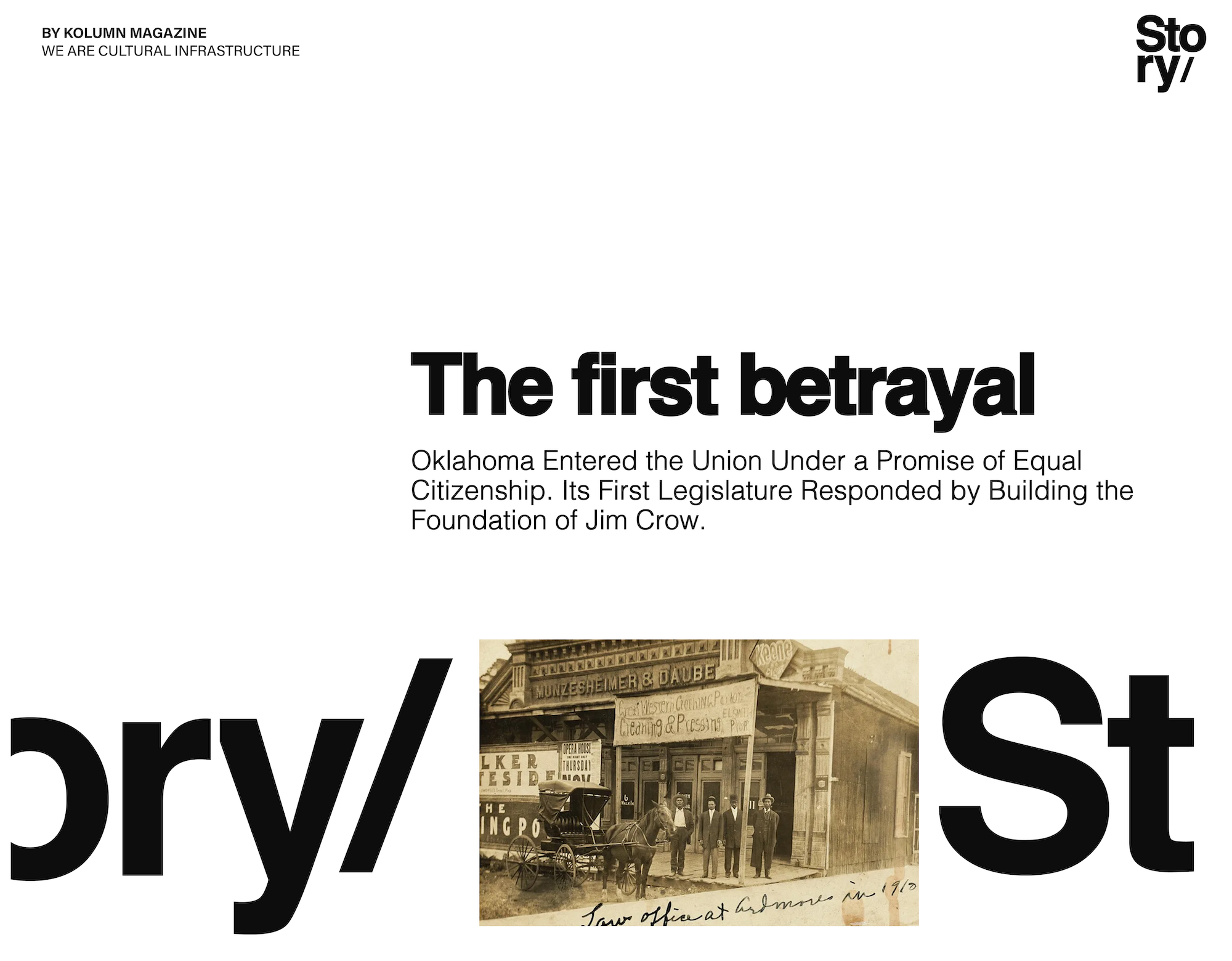
The absence of segregation language from the Oklahoma Constitution did not represent a rejection of Jim Crow. It reflected a decision to pursue Jim Crow through legislation instead.
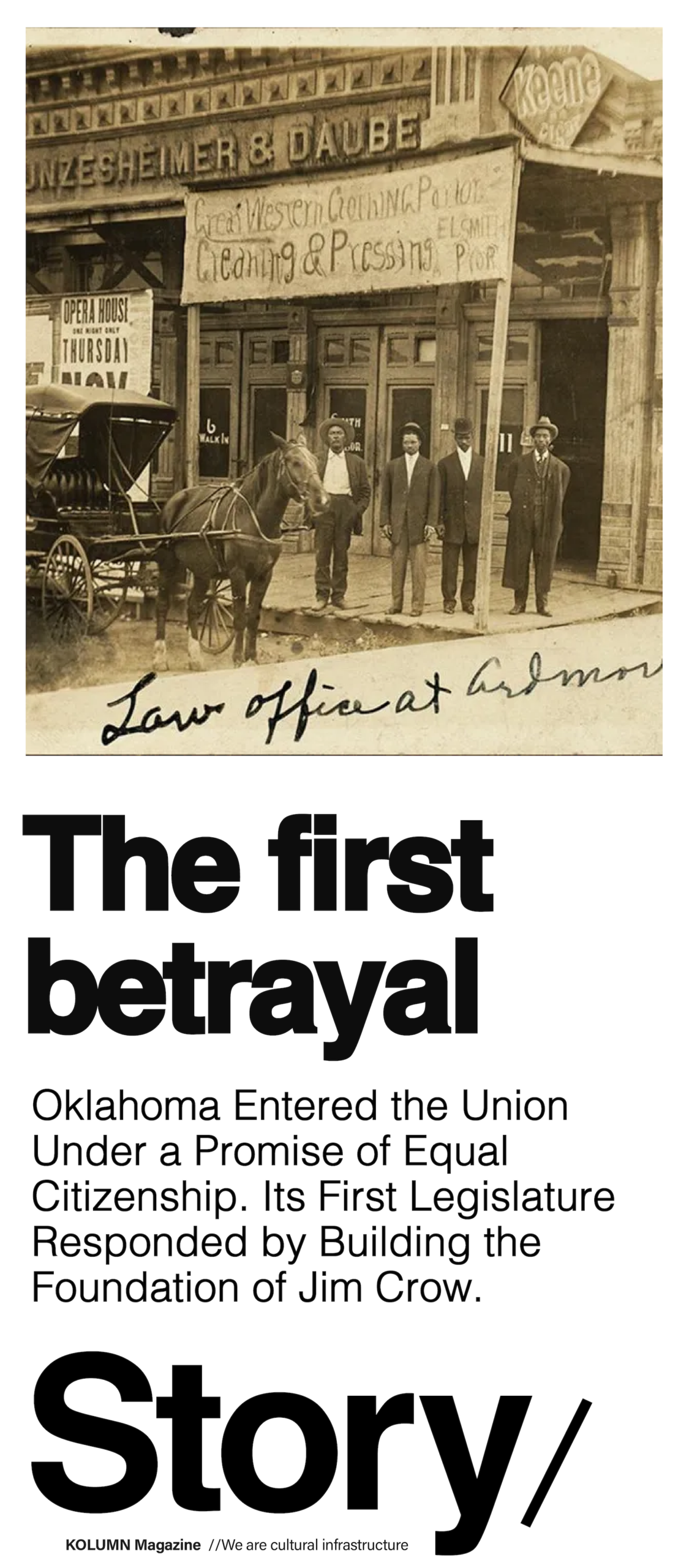
The absence of segregation language from the Oklahoma Constitution did not represent a rejection of Jim Crow. It reflected a decision to pursue Jim Crow through legislation instead.
By KOLUMN Magazine
When Oklahoma became the forty-sixth state on November 16, 1907, many Americans viewed the occasion as a symbol of national progress. The frontier era appeared to be drawing to a close, new communities were emerging across the Southwest, and the federal government celebrated the admission of another state into the Union. For thousands of African Americans living in Oklahoma Territory and Indian Territory, statehood represented something even more profound. It offered the possibility that a new state, created decades after the Civil War and Reconstruction, might avoid some of the racial injustices that had become entrenched elsewhere in the South. Yet the story that unfolded in Oklahoma after statehood reveals how fragile constitutional promises could be when political leaders were determined to preserve racial hierarchy. Within weeks of admission to the Union, Oklahoma lawmakers began constructing a legal system that complied with the letter of federal law while violating its spirit. Their first major step was Senate Bill One, legislation that established racial segregation in public transportation and announced the arrival of Jim Crow in a state that had entered the Union under explicit guarantees of political equality.
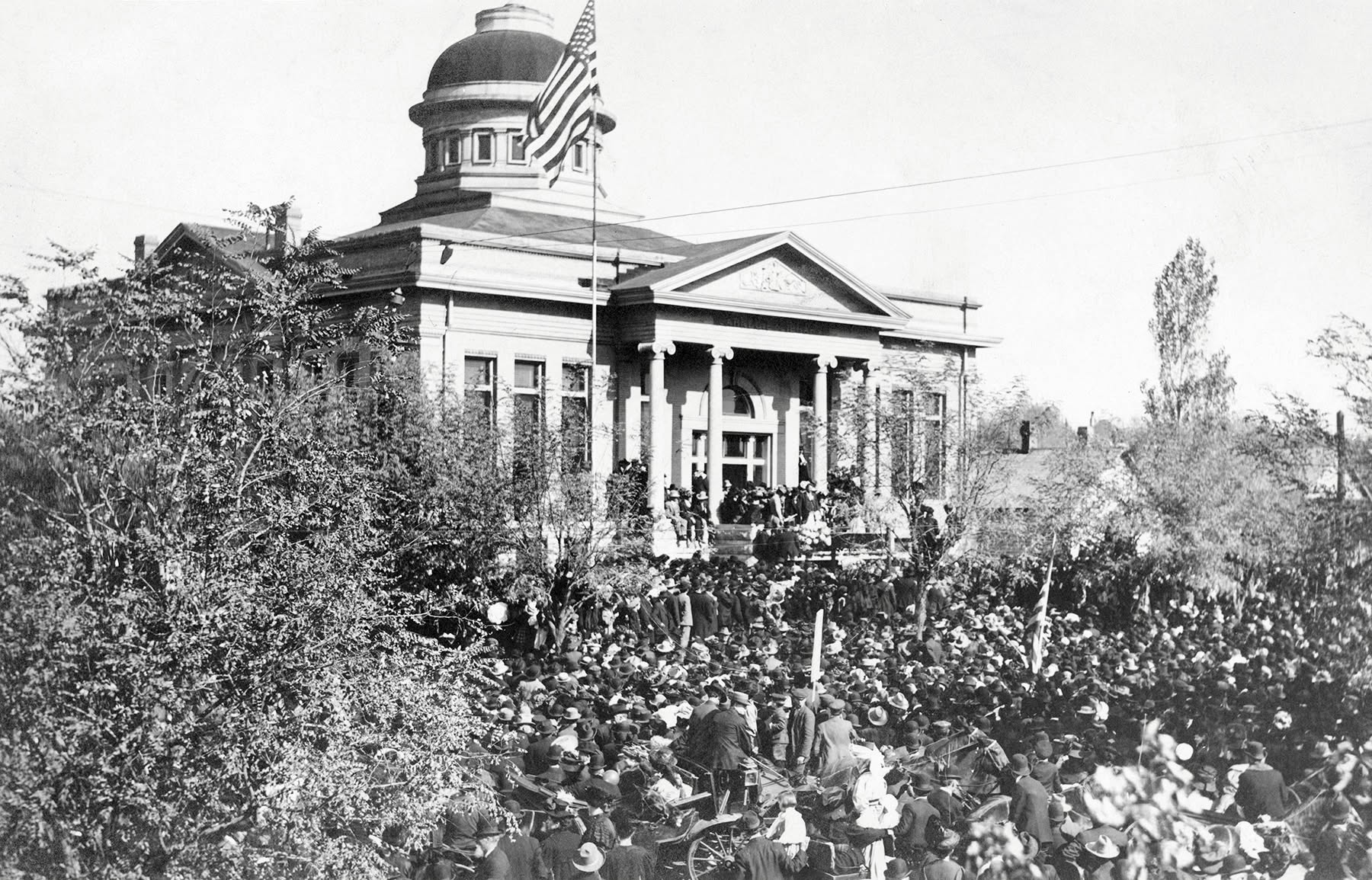
The contradiction at the center of Oklahoma’s statehood story remains one of the most revealing episodes in American history. Congress had attempted to prevent the new state from denying political rights on the basis of race. The architects of Oklahoma’s government understood those restrictions and publicly accepted them. At the same time, many of those same leaders were committed to maintaining white political dominance. The result was a strategy that would become familiar throughout the twentieth century: rather than openly violating constitutional protections, lawmakers developed legal mechanisms designed to achieve many of the same outcomes through indirect means. Oklahoma could not restore slavery. It could, however, construct a system that limited Black political participation, enforced racial separation, and preserved economic and social inequalities that slavery had helped create.
The historical significance of that decision extends far beyond Oklahoma. As KOLUMN Magazine has previously explored in reporting on Reconstruction, voting rights litigation, racial gerrymandering, and the long aftermath of the Tulsa Race Massacre, American democracy has repeatedly been shaped by efforts to circumvent constitutional protections while maintaining existing power structures. Oklahoma’s statehood experience provides one of the clearest examples of how those efforts operated. The state’s first generation of lawmakers understood that overt racial exclusion would attract federal scrutiny. Their solution was not to abandon white supremacy but to redesign it.
The Promise of Oklahoma
Before statehood, Oklahoma occupied a unique position in African American history. During the late nineteenth century, Black migrants arrived in the territory seeking opportunities that had become increasingly scarce elsewhere. Many came from former Confederate states where violence, disenfranchisement, and economic exploitation were becoming defining features of post-Reconstruction life. Others were drawn by land opportunities and the possibility of building communities free from many of the restrictions that characterized the Deep South. According to the Encyclopedia of Oklahoma History and Culture’s examination of African American migration, Black settlers viewed Oklahoma as a place where land ownership, entrepreneurship, and political participation could coexist in ways rarely possible elsewhere.
The territory became home to dozens of all-Black communities. Towns such as Boley, Langston, Taft, Clearview, Rentiesville, and Red Bird emerged as powerful symbols of Black self-determination. Historian Quintard Taylor, whose scholarship on Black western settlement remains foundational, has argued that these communities represented one of the most significant experiments in African American political and economic autonomy during the late nineteenth and early twentieth centuries. They were not merely towns. They were statements of possibility. Residents established schools, churches, newspapers, businesses, and civic institutions that reflected a belief that Black citizenship could be exercised fully if given the opportunity.
Some Black leaders imagined even broader possibilities. Edward P. McCabe, one of the most influential African American political figures in territorial Oklahoma, promoted the idea that the territory could become a center of Black political power. His vision never materialized, but it reflected a reality that worried many white political leaders. African Americans constituted a substantial and growing segment of the territorial population. In an era when white Democrats across the South were systematically eliminating Black political influence, Oklahoma presented a different possibility. That possibility would become a central concern during the statehood process.
Statehood and Political Calculation
Congress did not approach Oklahoma statehood casually. By 1906, federal lawmakers understood how Southern states had undermined Reconstruction through literacy tests, poll taxes, grandfather clauses, and segregation laws. The resulting concerns shaped the Oklahoma Enabling Act, which established the framework for admission to the Union. The legislation required that Oklahoma’s constitution never deny or abridge voting rights because of race, color, or previous condition of servitude. These provisions reflected a recognition that formal emancipation meant little if states could simply replace slavery with other forms of exclusion.
The constitutional convention that followed became a battleground over the future identity of the state. Delegates gathered in Guthrie in 1906 and 1907 to draft the governing document that would define Oklahoma’s legal and political structure. Historical records preserved through the Oklahoma Historical Society’s account of the Constitutional Convention demonstrate that many delegates favored segregation and racial restrictions. Yet they also understood that openly embedding those provisions into the constitution could threaten federal approval.
President Theodore Roosevelt played an important role in shaping those calculations. Roosevelt’s racial views remain deeply debated among historians, but evidence suggests he opposed including explicit segregation language in the Oklahoma Constitution because it threatened the viability of statehood. As a result, convention delegates adopted a pragmatic approach. They largely removed segregation provisions from the constitutional document while preserving their intention to enact such measures after admission to the Union. Historians increasingly view this decision as evidence that segregation was not an accidental development but a carefully planned political project.
The distinction is important because it challenges older interpretations of Oklahoma history. Earlier generations of historians often portrayed segregation as an inevitable consequence of migration from the South. Contemporary scholars have largely rejected that explanation. Modern historiography emphasizes agency rather than inevitability. White political leaders did not simply inherit segregation. They built it. The omission of segregation provisions from the constitution followed by the rapid enactment of segregation laws strongly suggests strategic planning rather than historical accident.
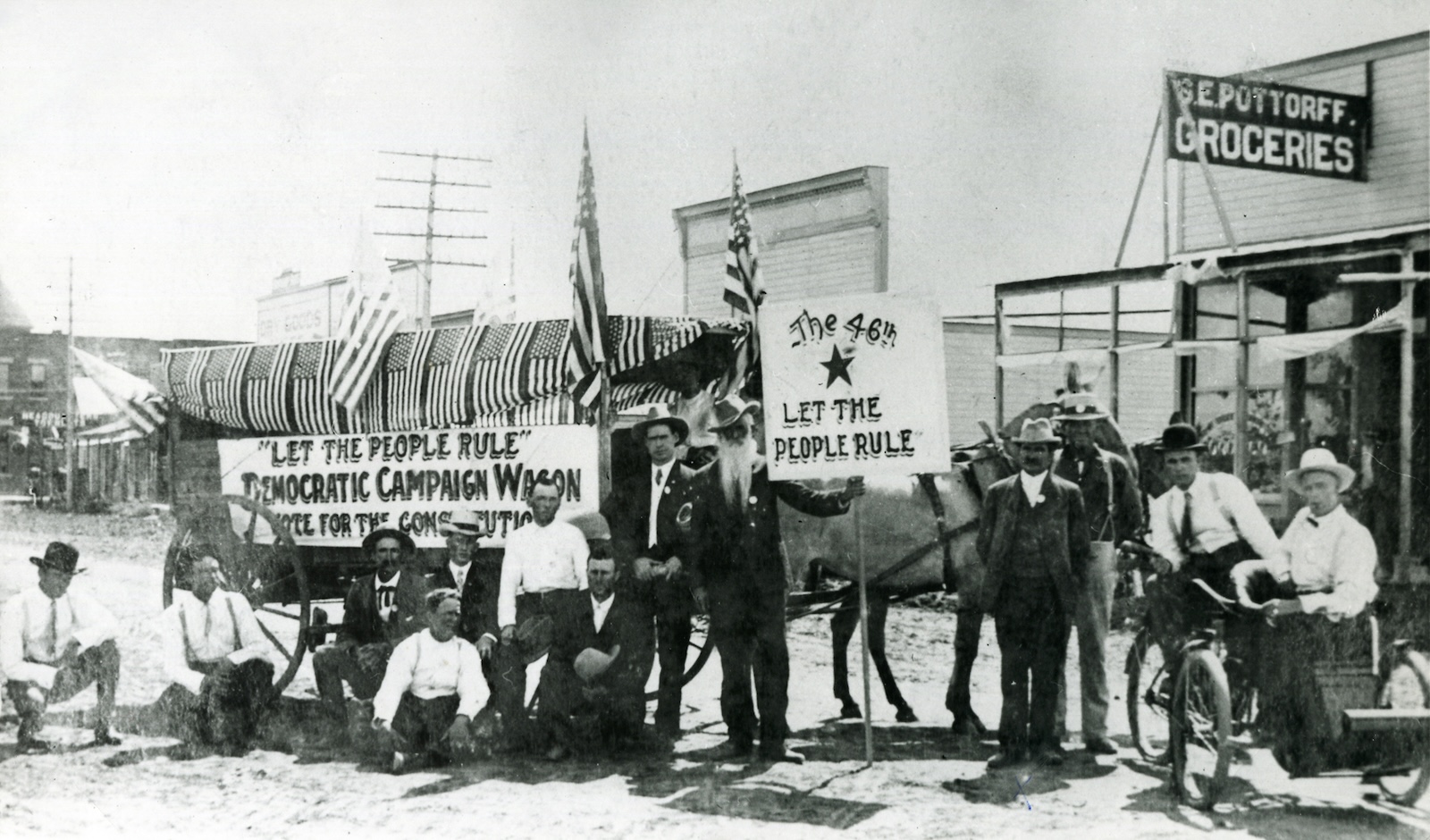
Senate Bill One and the Birth of Jim Crow Oklahoma
The sequence of events following statehood revealed how quickly those plans would unfold. Oklahoma officially entered the Union on November 16, 1907. Within days, lawmakers assembled for the first legislative session in Guthrie. Rather than prioritizing economic development, infrastructure, education, or public administration, legislators turned their attention to racial segregation. Senate Bill One became one of the earliest and most significant measures introduced during the session.
According to the Encyclopedia of Oklahoma History’s entry on Senate Bill One, the legislation required separate accommodations for Black and white passengers on railroads and public transportation. Lawmakers treated the bill as emergency legislation and advanced it rapidly. Governor Charles N. Haskell signed the measure into law on December 18, 1907. The symbolism was unmistakable. The first major legislative act of Oklahoma’s state government focused on racial separation.
Contemporary supporters framed the law as a measure designed to preserve public order. Similar arguments had been used throughout the South to justify segregation. Advocates claimed racial separation prevented conflict while ignoring the coercive legal system required to enforce it. Historians now recognize such arguments as efforts to legitimize white supremacy through the language of governance. Senate Bill One was not simply a transportation law. It was a declaration of intent. It announced that racial segregation would become a defining feature of Oklahoma’s public institutions.
The legislation also established a precedent that extended far beyond railroads. Once lawmakers accepted the principle that Black and white citizens could be separated by law, the same logic could be applied elsewhere. Schools became segregated. Hospitals became segregated. Parks, neighborhoods, public facilities, and cemeteries became segregated. As documented by the Oklahoma Historical Society’s broader history of segregation in Oklahoma, the state steadily expanded racial restrictions throughout the early twentieth century. Senate Bill One functioned as both a law and a blueprint.
Circumventing Equality
The challenge facing Oklahoma’s leaders was not whether they supported racial hierarchy. The challenge was how to preserve that hierarchy without violating federal requirements. The answer involved the development of legal mechanisms that appeared race-neutral while producing racially discriminatory outcomes. This strategy allowed lawmakers to claim compliance with constitutional protections while undermining them in practice.
The most notorious example emerged in 1910 with the adoption of Oklahoma’s grandfather clause. The law imposed literacy requirements for voting while exempting individuals whose ancestors had possessed voting rights before January 1, 1866. Because formerly enslaved people and their descendants had been denied voting rights before the Civil War, the exemption overwhelmingly favored white voters. The law never explicitly mentioned race. Nevertheless, its purpose was obvious.
Legal scholars examining the measure through the Oklahoma Bar Journal’s analysis of Guinn v. United States have described it as one of the clearest examples of constitutional evasion in American history. Oklahoma attempted to accomplish indirectly what it could not legally accomplish directly. When the United States Supreme Court struck down the law in 1915, the Court recognized that constitutional guarantees could not be nullified through linguistic manipulation.
The significance of the grandfather clause extends beyond voting rights. It illustrates a broader pattern in Oklahoma’s political development. State leaders repeatedly sought methods of preserving racial inequality while avoiding direct confrontation with federal law. The result was a system that formally acknowledged Black citizenship while systematically restricting its exercise.
Resistance and Determination
African Americans did not accept these developments passively. Resistance emerged almost immediately after Senate Bill One became law. Black newspapers condemned segregation. Civic organizations mobilized opposition. Community leaders challenged discriminatory laws through political activism and litigation. Historical accounts preserved by the Oklahoma Historical Society’s African American history project document efforts by organizations such as the Negro Protective League to challenge segregation statutes and defend Black civil rights.
These responses reflected a profound sense of betrayal. Many Black settlers had arrived in Oklahoma believing they were participating in the creation of a more equitable society. Instead, they encountered legal structures that increasingly resembled those they had hoped to escape. Yet disappointment did not produce surrender. Black communities continued building institutions, establishing businesses, supporting schools, and participating in civic life despite mounting obstacles.
Their resilience became one of the defining features of Oklahoma history. The growth of communities such as Greenwood in Tulsa demonstrated that Black prosperity remained possible even within a segregated system. At the same time, the success of those communities generated resentment among white residents who viewed Black advancement as a threat to existing power structures.
From Senate Bill One to Greenwood
The relationship between Oklahoma’s early segregation laws and the Tulsa Race Massacre remains a critical area of historical analysis. Historians generally reject simplistic explanations that attribute the massacre to a single cause. Nevertheless, scholars increasingly emphasize the importance of understanding Greenwood within the broader context of Oklahoma’s racial development.
Organizations including the Tulsa Race Massacre Centennial Commission and the Justice for Greenwood Foundation have highlighted the ways segregation shaped the social and political environment in which the massacre occurred. Senate Bill One did not cause the destruction of Greenwood. However, it helped establish a legal culture that normalized racial separation and reinforced white supremacy. The massacre emerged from a society that had spent more than a decade institutionalizing racial hierarchy through law and public policy.
This interpretation reflects a broader shift in historical scholarship. Earlier accounts often treated the massacre as an isolated eruption of violence. Contemporary historians increasingly situate it within a continuum that includes segregation, disenfranchisement, economic exclusion, and state-sanctioned discrimination. Seen through that lens, Senate Bill One appears not as a minor transportation law but as an early chapter in a much larger story.
The Legacy of the First Law
In 2008, the Oklahoma Senate formally denounced the Jim Crow laws that had shaped much of the state’s early history. The official Senate resolution acknowledged the injustice of segregation and recognized the damage inflicted upon generations of Oklahomans. The resolution represented an important symbolic gesture, but it could not erase the consequences of policies enacted during the state’s formative years.
The legacy of Senate Bill One remains visible in contemporary debates about voting rights, educational equity, housing, public memory, and historical accountability. The law serves as a reminder that democratic institutions can be used both to expand freedom and to restrict it. Constitutional guarantees matter, but their effectiveness depends upon the willingness of political leaders to honor them.
Oklahoma entered the Union with formal commitments to equality and citizenship. Its first generation of lawmakers demonstrated how easily those commitments could be undermined when leaders prioritized racial hierarchy over democratic principles. Senate Bill One became the opening act in a broader effort to circumvent the promise of statehood while preserving the power structures that emancipation had challenged.
The history of that effort deserves attention not because it is unique, but because it is representative. Oklahoma’s experience reveals how fragile progress can be and how quickly legal systems can be redesigned to limit rights without explicitly denying them. More than a century later, the story remains relevant because it forces Americans to confront a difficult reality: the end of slavery did not end the struggle over freedom. In Oklahoma, that struggle began anew almost immediately after statehood, when the promise of equal citizenship collided with the determination of political leaders to preserve an unequal order.
More great stories
Afro Sheen, Wall Street, and the Architecture of Black Possibility
July 6, 2026
No Comments
The Fire Inside the Fourth
July 5, 2026
No Comments