



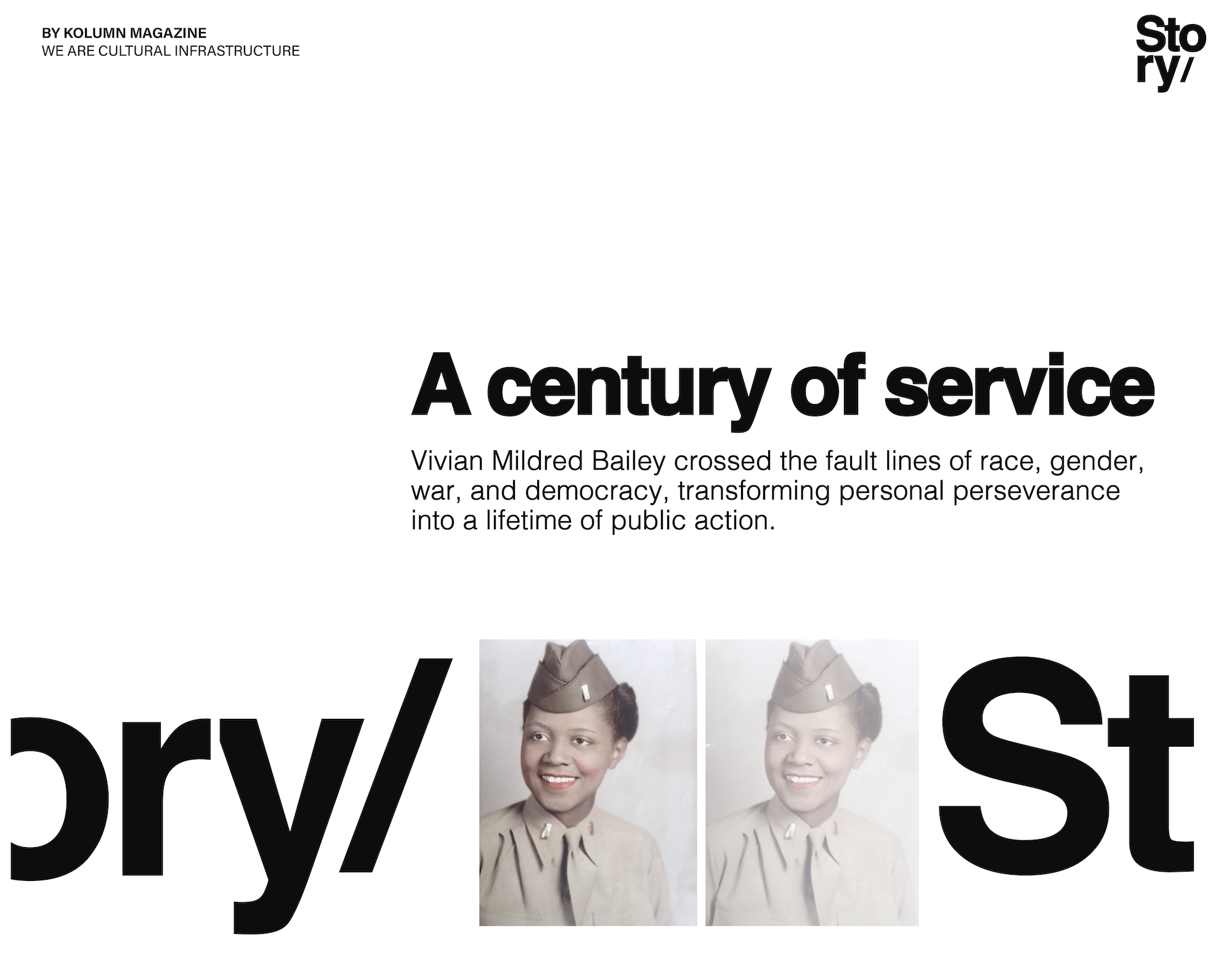
Bailey’s life was not a footnote to military history. It was an argument about citizenship.
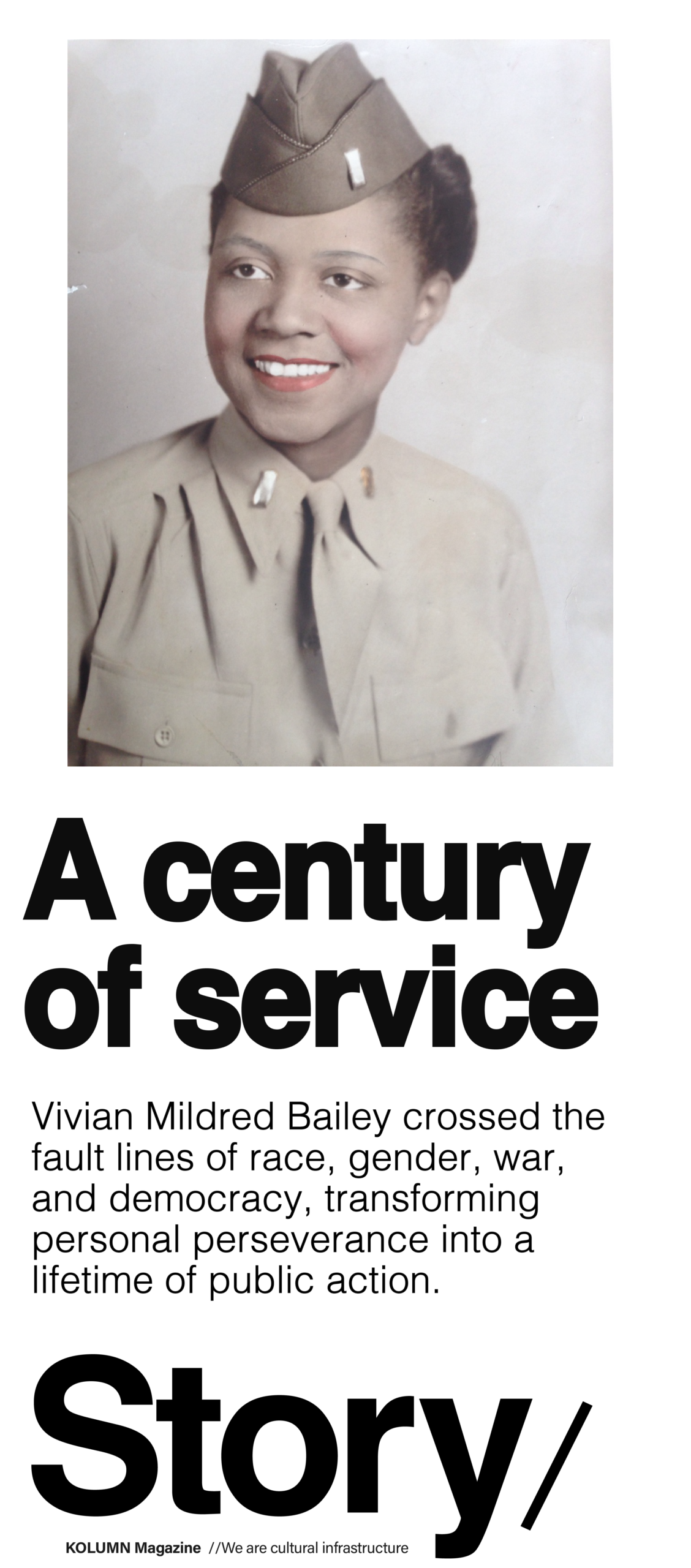
Bailey’s life was not a footnote to military history. It was an argument about citizenship.
By KOLUMN Magazine
The story of Vivian Mildred “Millie” Bailey is, in many ways, the story of twentieth-century Black America. Her life stretched from the final years of Woodrow Wilson’s presidency to the third decade of the twenty-first century. She witnessed segregation and integration, world war and social revolution, exclusion and representation. Yet to reduce her significance to longevity alone would miss the point. Bailey’s life was remarkable not because she lived for more than a century, but because she spent virtually every chapter of that century serving others.
The arc of her life intersected with some of the most consequential developments in American history. She grew up in Tulsa, Oklahoma, in the aftermath of one of the nation’s most devastating racial atrocities. She became one of the earliest African American women officers in the Women’s Army Corps during World War II. She rose through the ranks of the federal government during an era when Black women rarely occupied positions of authority. In retirement, she transformed herself into a civic institution, dedicating decades to volunteerism, philanthropy, veterans’ advocacy, education, and community service.
Bailey’s life offers a compelling case study in how citizenship functions beyond voting booths, courtrooms, and elected office. Her story reveals how ordinary people sustain democratic institutions through daily acts of commitment and care. In that respect, her legacy echoes themes KOLUMN Magazine has explored in previous examinations of figures such as Septima Clark, A. Philip Randolph, and Mary McLeod Bethune—individuals who understood that social change often emerges not from singular acts of heroism but from decades of persistent engagement.
Tulsa, Resilience, and the Education of a Generation
Vivian Mildred Corbett was born on February 3, 1918, in Washington, D.C., before her family eventually returned to Tulsa, Oklahoma. The city would become one of the defining influences on her worldview.
Tulsa occupied a unique position in Black American history. It was home to Greenwood, the prosperous district later known worldwide as Black Wall Street. It was also the site of the 1921 Tulsa Race Massacre, during which white mobs destroyed homes, businesses, churches, and institutions while killing an untold number of Black residents. Historians continue to study the massacre’s long-term consequences, but what is often overlooked is how the generation that followed absorbed lessons about resilience, collective responsibility, and community self-determination.
Bailey belonged to that generation.
Growing up in segregated Oklahoma required navigating a world that consistently communicated limitations to Black children. Yet Black communities developed institutions designed to challenge those limitations. Churches, schools, civic organizations, and families cultivated ambitious expectations for young people despite the realities of Jim Crow.
Education became central to Bailey’s development. She attended Tulsa’s segregated public schools and graduated as valedictorian of her class at Booker T. Washington High School, according to her official obituary. Academic excellence was not simply a personal achievement. Within Black communities of the era, educational accomplishment often carried collective significance. Success represented both individual advancement and communal aspiration.
Bailey later recalled knowing future historian John Hope Franklin, another product of Tulsa’s Black educational ecosystem. Franklin would become one of the nation’s foremost scholars of African American history, documenting many of the forces that shaped the environment in which Bailey matured.
After graduation, Bailey spent several years working as a stenographer and medical records clerk. These occupations reflected the constrained opportunities available to Black women during the Depression era. Yet they also provided administrative and organizational skills that would later prove invaluable in military and government service.
The future activist, officer, and civic leader was already developing the discipline that would define her career.
The Double Victory Generation
The attack on Pearl Harbor transformed millions of American lives, including Bailey’s.
In December 1942 she joined the Women’s Army Auxiliary Corps, later known as the Women’s Army Corps. The decision placed her among a pioneering generation of women who challenged assumptions about gender and military service. For African American women, however, enlistment involved additional complexities.
The United States military remained segregated.
Black Americans were expected to defend democracy abroad while experiencing discrimination at home. Historians frequently describe this contradiction through the lens of the “Double V Campaign,” which called for victory against fascism overseas and victory against racism within the United States.
Bailey’s military service embodied that struggle.
She attended officer training at Fort Des Moines, Iowa, one of the few institutions where African American women could pursue military leadership opportunities. Historical accounts documented by the National Women’s History Museum note that she distinguished herself academically and graduated with honors.
The achievement carried considerable significance. Black women officers remained extraordinarily rare during World War II. Every promotion challenged prevailing assumptions regarding race, gender, competence, and authority.
Bailey’s assignments eventually took her to Fort McClellan, Alabama, and Fort Benning, Georgia, where she served in leadership positions within segregated units. Her responsibilities expanded rapidly. She became second-in-command and later commander of a Women’s Colored Detachment.
The title itself reflects the realities of the period.
The military permitted service but maintained segregation. African American women could lead, but typically only within racially separate structures. Yet Bailey excelled despite those restrictions. She earned promotion to First Lieutenant and completed advanced administrative training at Fort Sam Houston, Texas, an opportunity rarely afforded to Black women officers.
Military historians increasingly recognize the importance of women such as Bailey. Scholars including Brenda L. Moore, whose research on African American women in World War II remains foundational, argue that Black servicewomen fundamentally altered public perceptions of race and gender through their competence and professionalism.
Bailey did not simply occupy space within military institutions.
She expanded what those institutions believed was possible.
Returning Home to an Unfinished Democracy
World War II ended in 1945, but Bailey’s commitment to public service did not.
Like many African American veterans, she returned home with a broadened understanding of citizenship and a heightened awareness of America’s democratic contradictions. Military service had demonstrated both the possibilities and limitations of institutional change.
The war had exposed racial inequities while simultaneously creating opportunities for leadership and advancement.
Historians have long argued that Black veterans played an essential role in the modern Civil Rights Movement. Military service cultivated expectations of dignity and equal treatment that many veterans refused to abandon after returning home.
Bailey’s postwar career reflected those dynamics.
Rather than withdrawing from public life, she entered federal service. She worked for the Veterans Administration before joining the Social Security Administration, where she would spend the majority of her professional career.
The timing was significant.
The federal government was expanding dramatically. New programs, administrative systems, and public services required skilled personnel. While discrimination persisted throughout government agencies, federal employment often offered greater opportunities for advancement than many private-sector workplaces.
Bailey took full advantage of those opportunities.
Through discipline, expertise, and leadership, she rose steadily through the ranks. By the time she retired in 1975, she had become a division director overseeing more than 1,100 employees, a remarkable achievement documented by the Friends of the National World War II Memorial.
For a Black woman who began her professional life in segregated America, such a position represented a profound transformation in both personal circumstance and institutional possibility.
Yet Bailey never viewed success solely through an individual lens.
Her career reflected a broader belief that public institutions mattered and that competent administration could improve lives.
Building Community in Columbia
Retirement marked the beginning of another chapter rather than the conclusion of her public life.
Bailey and her husband settled in Columbia, Maryland, a planned community envisioned by developer James Rouse as an integrated city capable of transcending traditional racial and economic divisions.
The move proved consequential.
Columbia’s ideals aligned closely with Bailey’s lifelong values. She embraced the community not simply as a place to live but as a place to serve. Over the following decades, she became one of Howard County’s most recognized civic leaders.
Volunteerism became a defining feature of her life.
She mentored students, supported veterans, participated in educational initiatives, assembled care packages for deployed service members, and contributed thousands of hours to charitable organizations. Community service was not a hobby. It was a continuation of the same ethic that had guided her military and government careers.
Observers frequently noted her extraordinary energy. Even well into her nineties and beyond, Bailey remained deeply engaged in community affairs.
Her example challenged assumptions about aging, retirement, and civic participation.
Where others saw an opportunity to slow down, Bailey saw additional opportunities to contribute.
Confronting Hunger Through Action
Among Bailey’s most enduring contributions was her advocacy for students experiencing food insecurity.
After learning that many students attending Howard Community College struggled to access adequate food, she became a major supporter of initiatives addressing hunger on campus. According to the college’s donor profile, Bailey was deeply moved by the realization that students in one of the nation’s wealthiest counties still faced basic economic challenges.
The discovery reinforced a lesson she had learned decades earlier.
Need often exists where people least expect it.
Bailey responded not only with generosity but with strategic thinking. Rather than focusing exclusively on temporary assistance, she helped establish sustainable support structures. Her philanthropy contributed to long-term efforts ensuring students had access to food and essential resources.
The distinction matters.
Many charitable efforts address immediate crises. Bailey sought to strengthen institutions capable of responding to future needs as well.
Her approach reflected an understanding that community well-being depends on infrastructure as much as goodwill.
Recognition and Public Memory
Over time, Bailey accumulated numerous awards and honors. Local governments, veterans’ organizations, educational institutions, and civic groups recognized her contributions.
Yet the diversity of those recognitions may be more revealing than the awards themselves.
Military organizations celebrated her service. Educational institutions honored her mentorship. Community groups recognized her volunteerism. Philanthropic organizations praised her generosity.
Each honor reflected a different dimension of her life.
Collectively, they reveal the breadth of her influence.
Public memory often favors singular accomplishments. Historical narratives frequently reduce individuals to a single role or defining achievement. Bailey resists such simplification.
She was simultaneously a veteran, administrator, volunteer, philanthropist, educator, advocate, and mentor.
No single title adequately captures her impact.
Historians, Memory, and the Importance of Black Women Veterans
For much of the twentieth century, Black women veterans occupied the margins of historical scholarship.
Traditional military histories often centered men. Histories of women’s service frequently focused on white women. African American women found themselves doubly obscured.
That has begun to change.
Scholars including Darlene Clark Hine, Brenda L. Moore, and numerous contemporary historians have expanded understanding of Black women’s contributions during World War II. Their work reveals how servicewomen navigated the intersecting barriers of race and gender while helping transform American institutions.
Bailey’s life offers an ideal case study within this historiographical shift.
Her experiences illuminate broader themes concerning military integration, federal employment, civic engagement, and democratic participation. She demonstrates how historical change often emerges through thousands of seemingly ordinary acts performed consistently over decades.
Her story also complicates popular narratives about activism.
Modern discussions frequently emphasize public demonstrations, electoral politics, and high-profile leadership. Bailey’s activism often took quieter forms. She organized, volunteered, mentored, donated, and participated.
Those actions may appear modest when viewed individually.
Across eighty years, however, they produced extraordinary cumulative impact.
A Meeting Across Generations
One of Bailey’s most publicized moments occurred late in life when she met President Barack Obama. The encounter attracted widespread attention because it symbolized the distance America had traveled during her lifetime.
Bailey belonged to a generation that confronted legalized segregation.
Obama became the nation’s first Black president.
The meeting represented more than a photo opportunity. It connected two chapters in a much longer narrative about citizenship, representation, and democratic inclusion.
The progress reflected in that moment did not occur automatically.
It emerged through the efforts of countless individuals whose names rarely appear in textbooks.
Millie Bailey was one of them.
The Legacy of Service
Vivian Mildred Bailey died on May 1, 2022, at the age of 104.
By then she had witnessed transformations that would have seemed unimaginable when she was born. She saw Black women enter military leadership positions. She watched segregation fall. She observed the expansion of voting rights and educational opportunity. She witnessed African Americans attain levels of political representation once considered impossible.
Yet her greatest contribution may have been demonstrating how citizens can participate in those transformations.
Bailey never viewed democracy as a spectator activity.
She understood it as a responsibility.
Her life reminds us that democratic institutions depend upon people willing to contribute time, expertise, compassion, and effort. Elections matter. Legislation matters. Court decisions matter. But communities are sustained by individuals who show up repeatedly, often without recognition, to help others.
That was Bailey’s gift.
She served in uniform when her country remained segregated.
She administered public programs that affected millions.
She strengthened schools, supported veterans, fed students, mentored young people, and invested in communities.
She transformed service from an obligation into a way of life.
More than a century after her birth, that lesson remains urgently relevant.
The measure of a life is not simply how long it lasts.
It is how many lives it touches along the way.
By that standard, Vivian Mildred “Millie” Bailey leaves behind one of the most enduring legacies of her generation.
More great stories
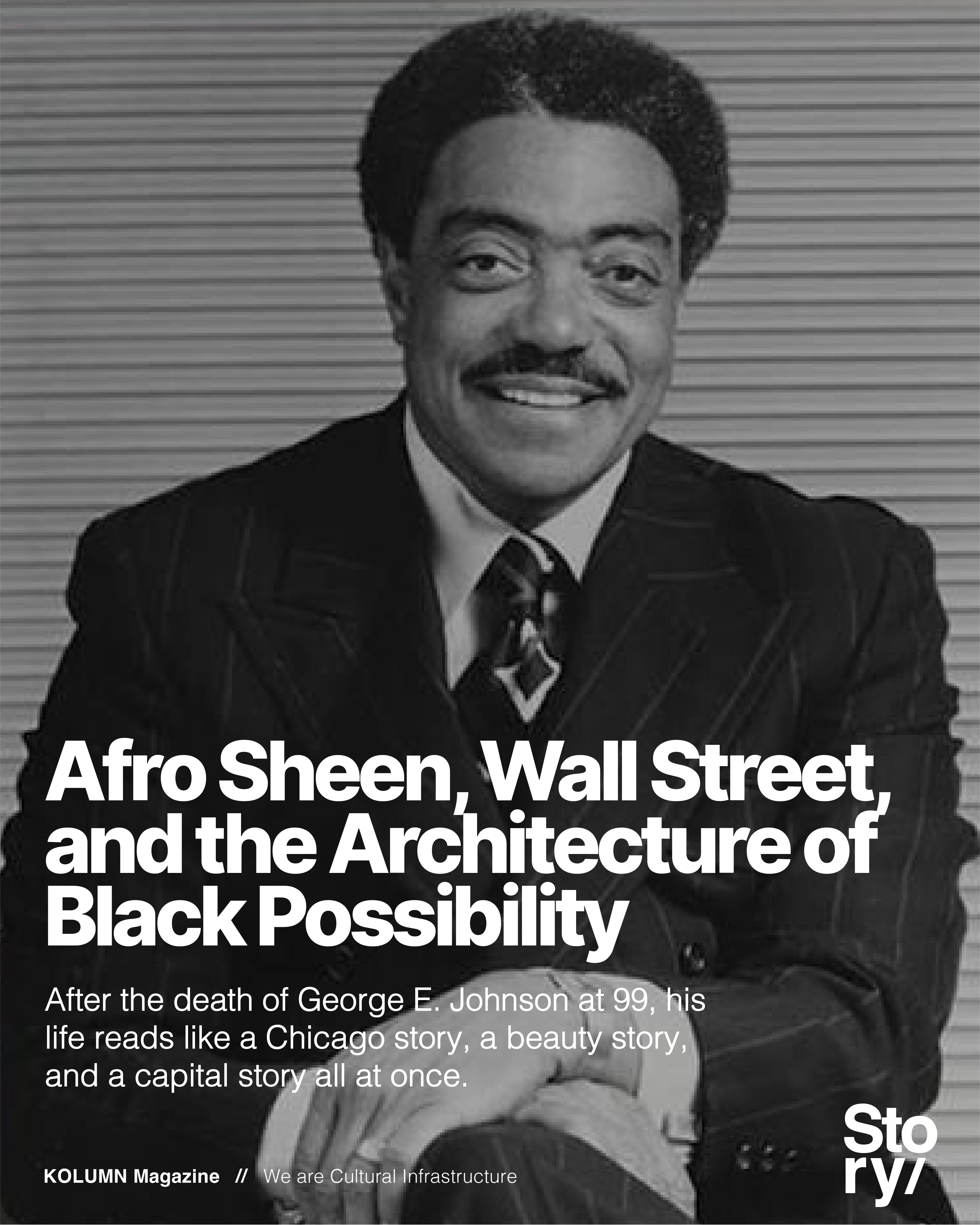
Afro Sheen, Wall Street, and the Architecture of Black Possibility
July 6, 2026
No Comments
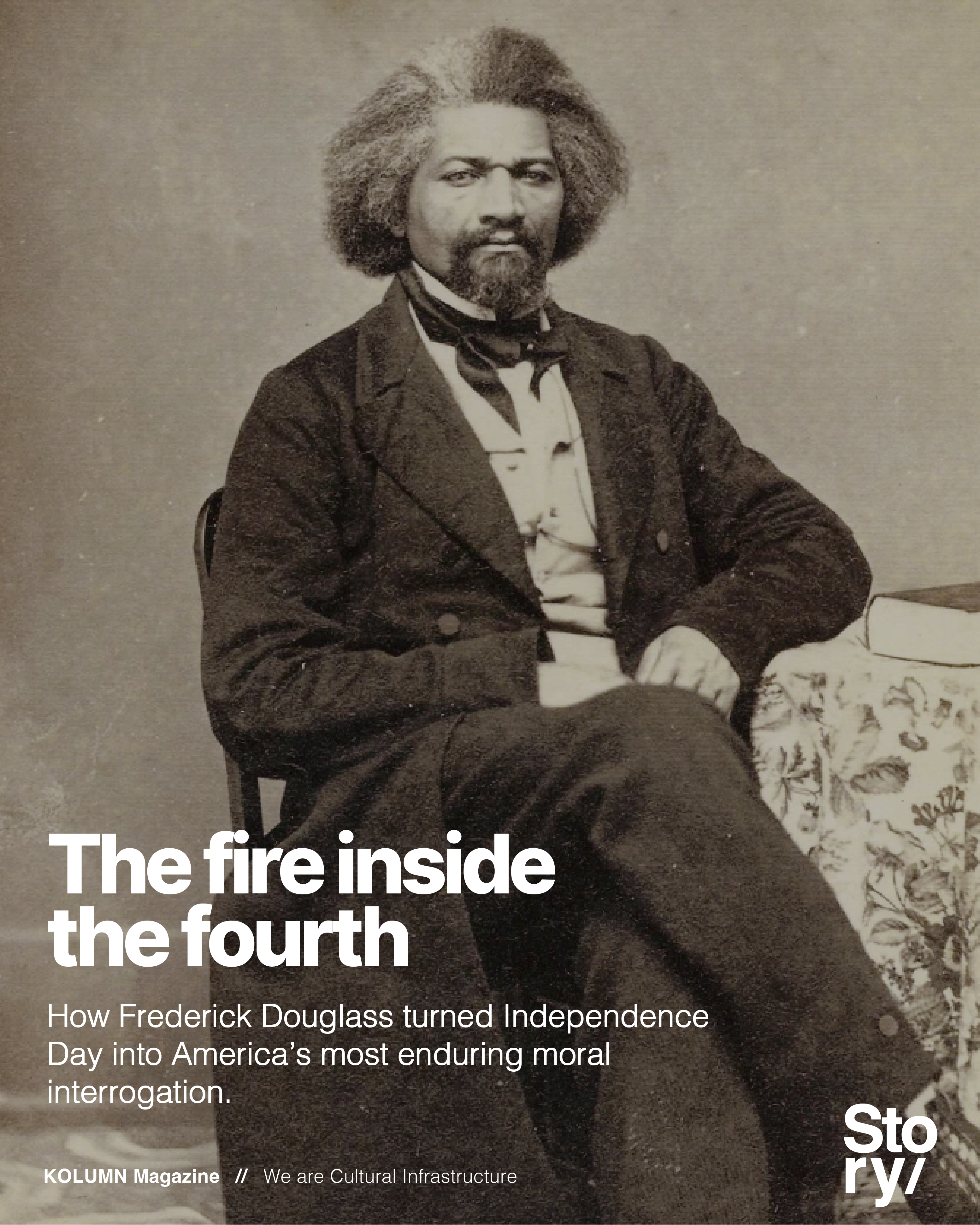
The Fire Inside the Fourth
July 5, 2026
No Comments