

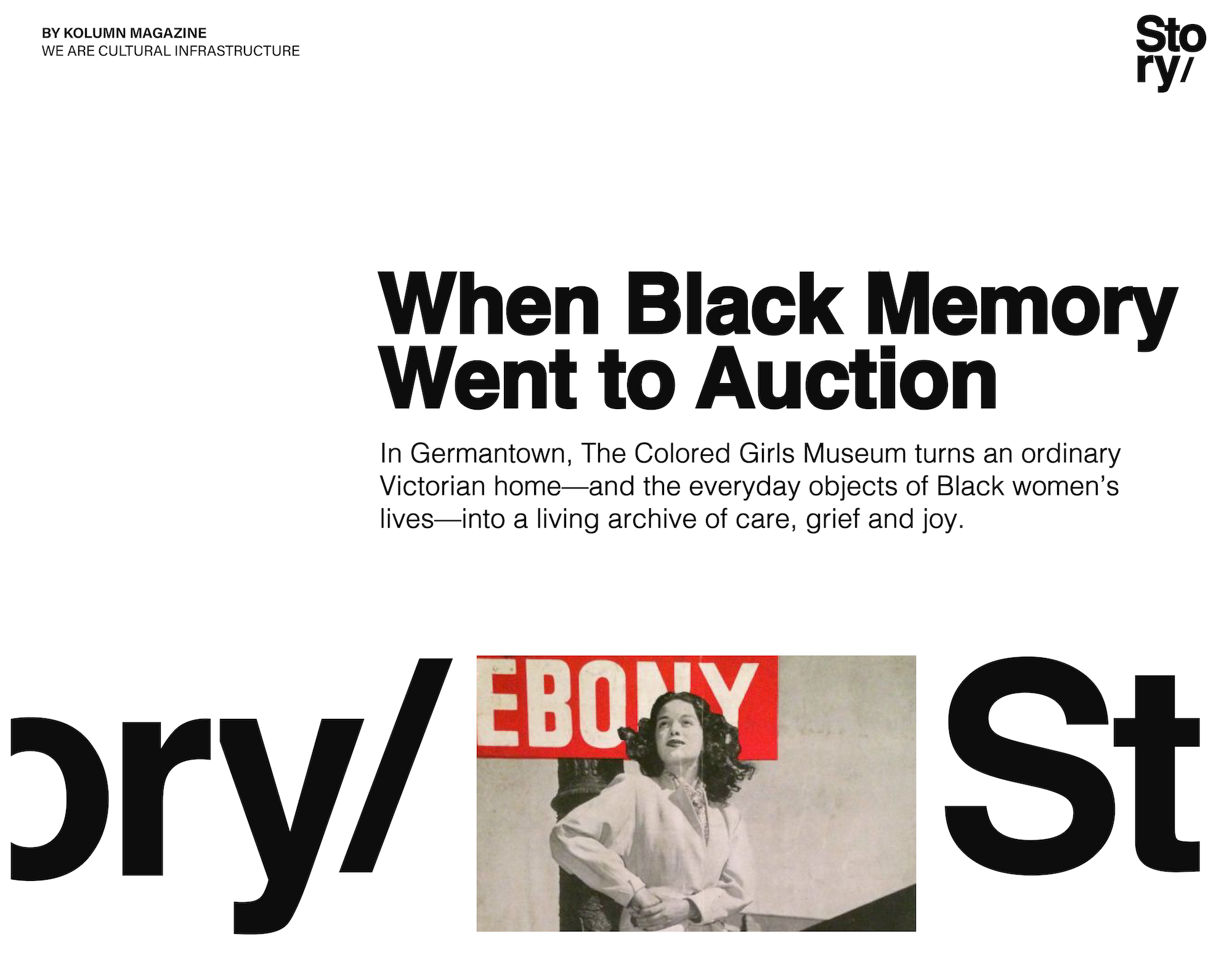
The archive’s deeper importance lies in accumulation: the contact sheet, the alternate frame, the unpublished photograph, the backstage moment before the public pose.
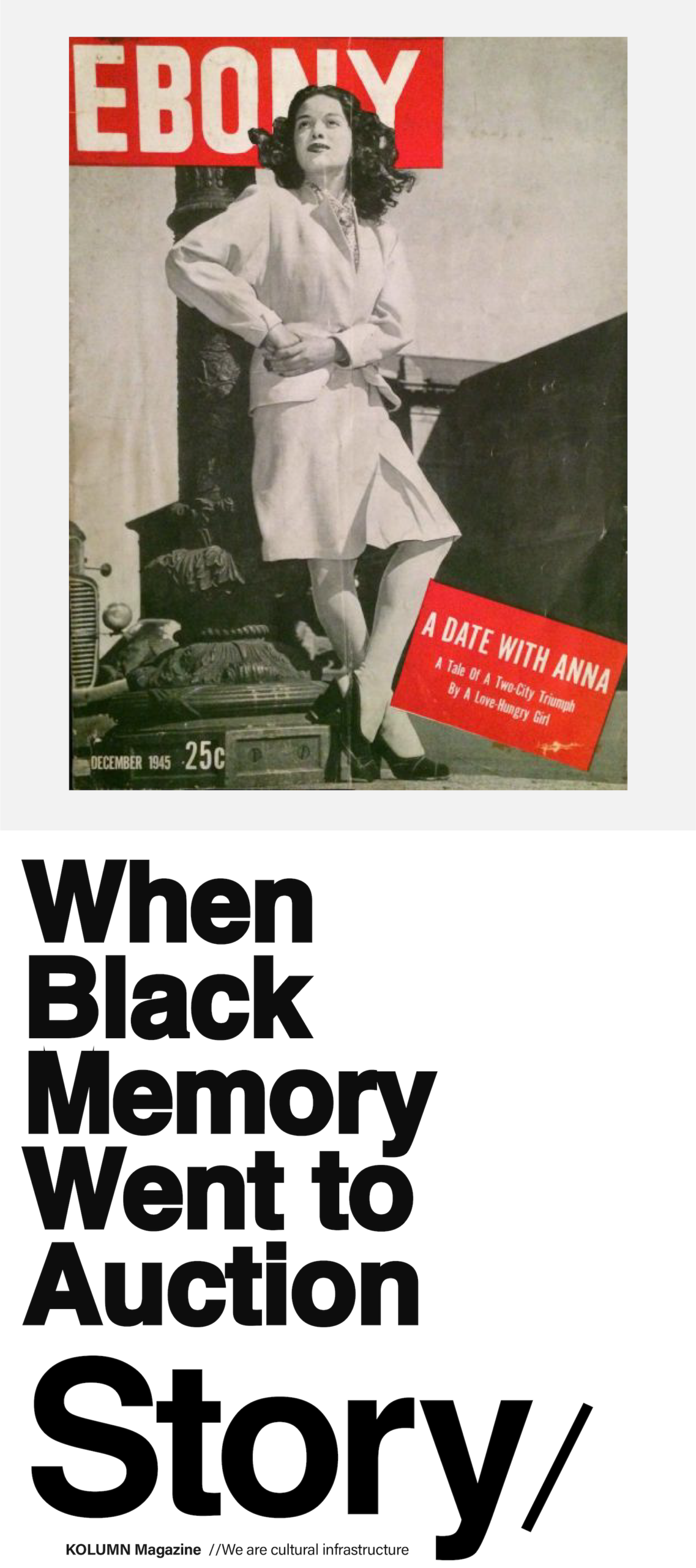
The archive’s deeper importance lies in accumulation: the contact sheet, the alternate frame, the unpublished photograph, the backstage moment before the public pose.
By KOLUMN Magazine
There was a moment in 2019 when one of the most important visual records of Black life in America was treated, officially and legally, as an asset to be liquidated.
Not a shrine. Not a public trust. Not a family album of a people who had too often been denied the right to narrate themselves. An asset.
The photographs, negatives, slides, contact sheets, audio recordings and moving-image materials once belonging to Johnson Publishing Company — the empire behind Ebony and Jet — had entered the machinery of Chapter 7 bankruptcy. The company founded by John H. Johnson in 1942, the company that taught advertisers that Black consumers mattered, the company that put Black beauty, grief, glamour, politics, celebrity, protest and domestic life into national circulation, had run out of road. Its magazines had already been sold in 2016. Its Chicago headquarters had been emptied of its old power. Its Fashion Fair cosmetics line would become part of the liquidation story. And its archive — roughly more than four million photographs and negatives, according to the Mellon Foundation’s 2019 announcement — was headed to auction.
For Black America, the danger was not only that the archive might be sold. The danger was that it might disappear into private ownership, sealed away from the public, stripped of context, licensed image by image, or scattered in ways that would make its larger meaning harder to recover. The archive was not merely a collection of famous pictures. It was the visual infrastructure of twentieth-century Black public life.
Johnson Publishing’s photographers did what mainstream American media often refused to do. They photographed Black people as whole human beings. They entered kitchens, churches, dressing rooms, hotels, union halls, funeral homes, campuses, nightclubs, living rooms, courtrooms and campaign stops. They made pictures of the famous and the unknown, the exalted and the ordinary. They chronicled the civil rights movement, Black business, fashion, sports, music, theater, literature, family rituals, political campaigns and the daily gestures by which a people insisted on presence.
That is why the bankruptcy sale carried such moral weight. A company had failed. A market had assembled. Creditors had claims. But the photographs held something larger than corporate residue. They held the look of a century.
A Black Publishing Empire Built on Seeing
To understand why the archive mattered, it is necessary to return to the audacity of Johnson Publishing itself.
John H. Johnson was born in Arkansas in 1918 and moved to Chicago during the Great Depression. In 1942, with a $500 loan secured against his mother’s furniture, he launched Negro Digest, a compact magazine modeled partly on Reader’s Digest but aimed squarely at Black readers. The Smithsonian’s digital exhibition on Johnson Publishing Company notes that Johnson later launched Ebony in 1945 and Jet in 1951, building what became the world’s largest Black-owned publishing company.
Ebony was glossy, ambitious and visually lush. It understood that Black aspiration was not a contradiction of Black struggle but one of its engines. Jet, smaller and faster, became the publication many readers encountered at barbershops, beauty salons, church foyers, kitchen tables and newsstands. Its compact size made it portable; its editorial instincts made it urgent. Together, Ebony and Jet created a visual counter-public — a place where Black life did not appear as a social problem but as a civilization.
The magazines carried beauty queens, ministers, athletes, students, entertainers, factory workers, soldiers, writers, activists and elected officials. They published images of Black middle-class achievement without surrendering the politics of racial violence. They offered glamour and testimony in the same media ecosystem. A reader might encounter Lena Horne, Muhammad Ali, Aretha Franklin, James Baldwin, Shirley Chisholm, Martin Luther King Jr., Malcolm X, Coretta Scott King, Diana Ross, Miles Davis, Nina Simone and an unknown family in Sunday clothes within the same visual universe.
This mattered because representation was not cosmetic. In an America where Black life had been caricatured, criminalized, ignored or flattened, Ebony and Jet offered a correction that was also a strategy. They showed Black readers themselves. They showed white America what it had refused to see. And they showed future historians a Black archive built from within the community rather than extracted from outside it.
KOLUMN has recently explored this politics of memory in pieces such as “The Witnesses of Greenwood”, where testimony, photographs and family memory form the architecture of historical truth, and “Ralph Ellison’s ‘Invisible Man,’ and the American Art of Looking Away”, where visibility itself becomes a contested civic condition. The Johnson Publishing archive belongs to that same terrain. It is not only about images. It is about the right to be seen without distortion.
The Photographs That Changed the Country
The archive’s moral force rests partly on images that entered American history with the force of evidence.
In 1955, Jet published the open-casket photograph of Emmett Till, the 14-year-old Chicago boy lynched in Mississippi after being accused of offending a white woman. His mother, Mamie Till-Mobley, insisted that the world see what had been done to her child. The image was devastating because it refused abstraction. It made racial terror visible in the body of a child. As Hyperallergic noted in its account of the archive’s sale, Jet’s publication of Till’s mutilated body is widely understood as one of the catalytic visual moments of the modern civil rights movement.
More than a decade later, Ebony photographer Moneta Sleet Jr. made another defining image: Coretta Scott King, veiled in black, holding her young daughter Bernice at the funeral of Martin Luther King Jr. The photograph won the 1969 Pulitzer Prize for feature photography, making Sleet the first Black man to win a Pulitzer in journalism. The Atlantic, in a 2019 essay on why the archive was saved, described the haunting power of Bernice King’s gaze in the image, a gaze that turned private grief into national indictment.
These photographs are often remembered as singular icons, but the archive’s deeper importance lies in accumulation. It is the breadth that matters. The contact sheets before the selected frame. The alternate image. The unpublished photograph. The backstage moment before the public pose. The domestic scene that complicated celebrity. The small-town event that never became national news. The office file that reveals editorial practice. The visual record that lets historians ask not only what happened, but how Black editors, photographers and publishers chose to frame what happened.
That is why archives are not neutral containers. They are arguments waiting to be reopened.
Bankruptcy and the Price of Memory
Johnson Publishing’s decline was slow, structural and painful. The company faced the same pressures that battered much of print media: collapsing advertising revenue, changing reader habits, digital disruption and the erosion of legacy business models. But its fall also reflected a more particular tragedy: Black institutions often carry cultural responsibilities far larger than their balance sheets, while operating with fewer cushions against market collapse.
In 2016, Johnson Publishing sold Ebony and Jet to the Texas-based private equity firm Clear View Group. The company retained the photo archive, which had already been appraised at $46 million, according to Culture Type’s reporting. The archive had also been used as collateral for a loan as the company tried to stay afloat. By April 2019, Johnson Publishing filed for Chapter 7 bankruptcy protection. Axios reported at the time that the company still held an extensive archive of approximately four million images and 10,000 video assets, even after selling its flagship magazines.
Chapter 7 is not a reorganization strategy. It is liquidation. The business is wound down, assets are sold and proceeds are distributed to creditors according to bankruptcy law. That legal framework is rational in one register and brutal in another. It can price desks, trademarks, accounts receivable and real estate. But what is the liquidation value of Black memory?
The archive was scheduled for auction in Chicago. The anxiety was immediate. Historians, journalists, archivists, former staffers and cultural workers understood that if the collection went to a private buyer, public access could become uncertain. The material might be preserved but inaccessible. It might be monetized but not contextualized. It might survive physically but lose its communal function.
The concern was not theoretical. Across the country, newspaper photo morgues and institutional archives have been lost, discarded, fragmented or locked away as media companies shrink or collapse. The Washington Post’s later essay on the crisis of disappearing photo archives described how local journalism’s decline has endangered vast stores of visual memory and cited the Johnson Publishing archive as one of the rare cases in which a powerful institutional alliance intervened before the record vanished from public reach.
The Johnson Publishing auction therefore became a test case. Could philanthropy, museums and public institutions move quickly enough to keep a Black archive from becoming another casualty of market logic?
The Rescue
In July 2019, a consortium of major philanthropic and cultural institutions acquired the archive for $30 million. The group included the Ford Foundation, the J. Paul Getty Trust, the John D. and Catherine T. MacArthur Foundation and the Andrew W. Mellon Foundation. The acquisition was tied to the bankruptcy process and was designed to ensure that the archive would eventually be donated for public benefit.
The Mellon Foundation’s announcement stated plainly that the archive was acquired as part of an auction of Johnson Publishing Company assets connected to its Chapter 7 bankruptcy filing. It also described the collection as one of the most significant photographic archives cataloguing African American life in the twentieth century.
The relief was real. Ford Foundation president Darren Walker called the archive “a national treasure” and said preserving the images and making them available to the public was imperative. Getty president James Cuno described the archive as perhaps the greatest repository of the modern African American experience. Mellon president Elizabeth Alexander framed preservation and accessibility as central to the archive’s public value. MacArthur leaders emphasized both Chicago’s connection to Johnson Publishing and the obligation to preserve the breadth of African American narrative.
These statements were institutional, but they carried a recognition long voiced by Black communities themselves: the archive did not belong only to creditors, collectors or corporations. It belonged, in a deeper civic sense, to the people whose lives it had pictured.
The Washington Post reported in 2019 that the foundations and Getty Trust paid $30 million to acquire the archive and that the purchase was pending court approval because it was part of the bankruptcy proceeding. The Los Angeles Times similarly described the sale as a rescue of Ebony’s legendary photo archive, noting that the collection included images of Muhammad Ali, Jimi Hendrix, Billie Holiday, Nat King Cole and James Brown.
But the rescue did not end the story. It opened a more complicated chapter: stewardship.
Who Owns the Family Album?
Archives always raise questions of ownership. Legal ownership is one matter. Moral ownership is another.
The Johnson Publishing archive was created by a Black-owned company, shaped by Black editors and photographers, and consumed by Black readers. It documented a community that had often been exploited by outside observers. Its migration into the care of large institutions — even respected ones — inevitably raised questions. Who would describe the images? Who would decide access? Who would interpret the unpublished frames? Who would protect the dignity of people pictured in vulnerable circumstances? Who would benefit from licensing and scholarship? How would community knowledge be incorporated into metadata?
These are not peripheral concerns. They are the substance of archival ethics.
A photograph of a celebrity may be easy to caption. A photograph of a child at a funeral, a family at a protest, a patient in a hospital room, a worker on strike, or a local organizer in a neighborhood office may require more care. Names may be missing. Context may be thin. The original editorial caption may carry the assumptions of its time. The community may know what the file does not. Digitization can widen access, but it can also detach images from local memory if institutions treat metadata as a purely technical problem.
This is where historiography matters. For much of the twentieth century, Black historians, journalists and community archivists fought against a national record that either omitted Black life or recorded it through hostile eyes. Ebony and Jet created a counter-archive. Their photographs did not simply supplement mainstream history. They challenged its frame.
The archive’s preservation therefore has to do more than save objects. It must preserve relationships: between image and caption, photographer and subject, publication and reader, community memory and institutional access.
Transfer to Getty and the Smithsonian
In 2022, the stewardship plan became clearer. A consortium including Ford, Getty, MacArthur, Mellon and the Smithsonian announced the formal transfer of ownership of the Johnson Publishing Company archive to the Smithsonian National Museum of African American History and Culture and the Getty Research Institute. Getty announced that it had committed $30 million to support processing and digitization, according to its 2022 release.
The scale is staggering. Getty reported that the archive includes more than three million photo negatives and slides, 983,000 photographs, 166,000 contact sheets and 9,000 audio and visual recordings. The collection is to be physically housed primarily at the National Museum of African American History and Culture in Washington, D.C., while Getty and the Smithsonian share responsibility for care, processing and access. Getty’s announcement also noted that a portion of the archive connected to Chicago history is expected to remain permanently in Chicago.
That Chicago provision matters. Johnson Publishing was not an abstract national institution. It was a Chicago institution. Its headquarters on South Michigan Avenue was a symbol of Black corporate power, aesthetic modernism and editorial command. The archive’s future in Washington and Los Angeles must still remember its Chicago roots.
The 2022 transfer also named an advisory process. Getty noted that an advisory board led by Dr. Carla Hayden, the Librarian of Congress, helped guide recommendations about the archive’s permanent home, curatorial planning, partnership, community collaboration and public engagement. Hayden described the archive as capturing both iconic and everyday Black life in twentieth-century America and emphasized that conservation and digitization would benefit scholars, professionals and everyday Americans.
Kevin Young, director of the National Museum of African American History and Culture, described Ebony and Jet as publications that gave African Americans authentic public representation while offering the world a fuller view of the African American experience. That formulation is useful because it resists the idea that the archive is only for Black audiences or only about Black subjects. The archive is American history — but it is American history seen from a Black vantage point.
The Archive as Historiography
Historiography is often discussed as the study of how history is written. But the Johnson Publishing archive reminds us that history is also edited, cropped, lit, sequenced, captioned, printed, circulated, saved and rediscovered.
Ebony and Jet were not neutral observers. They were Black editorial institutions with a point of view. That point of view was not monolithic. At different moments, Johnson Publishing balanced uplift politics, celebrity culture, civil rights militancy, middle-class respectability, consumer aspiration, Cold War patriotism, Pan-African curiosity, gender conventions and the politics of beauty. The archive contains all of those tensions.
This is precisely why it is so valuable. It does not give us a simple heroic record. It gives us a usable complexity.
Photographs of Black glamour sit beside photographs of racial terror. Images of entertainers share space with images of ministers, mayors, students and grieving families. Fashion spreads coexist with protest coverage. Advertisements and editorial images together reveal how Black consumer identity was constructed, sold and celebrated. Contact sheets may show how a public figure performed for the camera before settling into the image that readers eventually saw.
The archive can help scholars ask new questions about the civil rights movement, not only through marches and speeches but through visual rhetoric. It can help historians of gender study the ways Ebony presented Black womanhood, beauty, labor and leadership. It can help historians of capitalism understand how Johnson Publishing negotiated with advertisers and shaped national markets. It can help scholars of photography recover the work of Black photographers whose names have too often been overshadowed by the publications they served.
The archive also complicates the boundary between journalism and art. Moneta Sleet Jr., Isaac Sutton, Ted Williams and other Johnson Publishing photographers were working photojournalists, but their images now circulate in museums, exhibitions and scholarly contexts. Their work forces institutions to reckon with Black magazine photography as both documentary record and aesthetic achievement.
The Hidden Labor Behind the Iconic Image
One danger in writing about the Johnson Publishing archive is that the famous images can swallow the labor that produced them.
Archives are built by systems. Photographers traveled, negotiated access, framed shots and processed assignments. Editors chose images, wrote captions, killed frames and built layouts. Librarians, file clerks and archivists maintained order. Assistants handled envelopes, negatives, contact sheets and permissions. Drivers, secretaries, stylists, writers and correspondents contributed to the flow of material. Readers clipped pages, saved issues and taught younger relatives why the magazines mattered.
The archive’s survival is therefore also a story about labor. Black media labor. Black editorial labor. Black archival labor.
When Getty announced in 2022 that a Chicago-based team of archivists, funded by Getty and led by Steven D. Booth, had assessed, catalogued and begun digitizing the holdings, it gestured toward the painstaking work required to turn a rescued collection into an accessible archive. Processing millions of images is not glamorous. It requires conservation protocols, rights assessment, description, scanning, storage, database design, community consultation and interpretive judgment.
Digitization is often described as if it were a magic door. In reality, it is a set of decisions. What gets scanned first? At what resolution? With what caption? Under what rights regime? With what warnings for disturbing images? How are unidentified people described? How are outdated or offensive original captions preserved, corrected or contextualized? How will scholars search the material? How will descendants find relatives? How will the public encounter the archive without mistaking access for understanding?
These questions will shape the archive’s second life.
Black Memory and the Market
The Johnson Publishing archive survived because powerful institutions intervened. That outcome deserves recognition. But the circumstances that made rescue necessary deserve scrutiny.
Why did one of the central archives of Black modernity have to be saved at auction? Why was a people’s visual record dependent on the benevolence and speed of philanthropy? Why do Black cultural institutions so often become vulnerable to liquidation after serving public purposes for generations?
These questions extend beyond Johnson Publishing. Black newspapers, bookstores, theaters, schools, churches, museums, record labels, beauty companies and civic organizations have long functioned as memory institutions, even when they were not funded as such. They preserved photographs, programs, minutes, letters, recordings and oral histories because no one else would. Yet many operated without endowments, preservation budgets or formal archival infrastructure. When markets turned, their cultural holdings became precarious.
Johnson Publishing’s case is especially painful because the company was itself a monument to Black capitalist ingenuity. John H. Johnson proved that Black readers were not marginal. He built a business around their centrality. He forced advertisers to confront Black purchasing power. He made Black visibility profitable. But profitability could not permanently shield the archive from structural change.
There is a hard lesson here: representation built inside the market can still be endangered by the market.
That does not diminish Johnson’s achievement. It clarifies the stakes. If Black memory is treated only as private property, it can be sold when private entities fail. If it is treated as public inheritance, then preservation becomes a civic obligation.
What Public Access Should Mean
The promised future of the Johnson Publishing archive is public access. That phrase sounds simple, but it must be defined.
Public access should mean that scholars, journalists, students, artists, families and community historians can search and study the collection without prohibitive barriers. It should mean that the archive is not reduced to a handful of iconic images endlessly reproduced while millions of lesser-known photographs remain invisible. It should mean that descendants and communities can contribute knowledge. It should mean that sensitive images are handled with dignity, not hidden from history but not exploited for spectacle. It should mean that the archive’s Black editorial origins remain central to interpretation.
It should also mean that access reaches beyond elite research institutions. The people who grew up with Ebony on the coffee table and Jet in the barbershop should not feel that their family album has moved beyond them. The archive’s future must include exhibitions, digital portals, school resources, oral-history projects, community annotation efforts, local partnerships and interpretive programming that returns the material to public life.
Getty’s Johnson Publishing Company Archive resource guide and archive information pages indicate that public interest remains high and that processing is ongoing. That is understandable. A collection of this size cannot be responsibly opened overnight. But as access expands, the measure of success will not be digitization alone. The measure will be whether the archive remains connected to the communities that made it meaningful.
The Unfinished Frame
The Johnson Publishing archive is sometimes described as a rescue story, and in one sense it is. A consortium bought the collection. Museums and research institutions stepped in. The archive avoided disappearance into private hands. Millions of images are being preserved for future generations.
But the better frame is not rescue. It is return.
Not return in the narrow sense of going back to Johnson Publishing, which no longer exists in its old form. Return in the deeper sense of restoring Black visual memory to public circulation with care, context and accountability. Return as a commitment to the people pictured, the photographers who made the images, the readers who gave the magazines meaning and the historians still to come.
The archive’s power lies in its refusal to let America pretend it did not see. It saw Emmett Till. It saw Coretta Scott King. It saw Muhammad Ali before and after the pose. It saw Black children, Black soldiers, Black models, Black workers, Black writers, Black voters, Black mourners, Black newlyweds, Black students, Black elders, Black organizers and Black dreamers. It saw what the mainstream press missed, ignored or misunderstood.
The archive also saw Black America seeing itself.
That may be its most radical inheritance. Ebony and Jet did not simply document Black life for the nation. They helped create a visual commons in which Black readers could recognize themselves as beautiful, wounded, powerful, ordinary, stylish, political, grieving, ambitious and free. They made Black life legible without asking permission from the dominant gaze.
When the archive entered bankruptcy court, that inheritance was placed under the cold fluorescent light of liquidation. When the consortium purchased it, the images were spared from an uncertain fate. When Getty and the Smithsonian accepted stewardship, the work of preservation entered a new phase. But the moral question remains open, as all archival questions do.
What does a nation owe the images that told the truth about it?
The answer cannot be $30 million, though that money mattered. It cannot be digitization alone, though digitization is essential. It cannot be institutional prestige, though institutional care is necessary.
The answer must be access with memory. Preservation with accountability. Scholarship with community. Visibility without extraction.
The Johnson Publishing archive survived bankruptcy. Now it must survive admiration. It must not be frozen into nostalgia or reduced to a gallery of icons. It must remain what it always was at its best: a living record of Black people insisting, frame by frame, that history look back.
More great stories
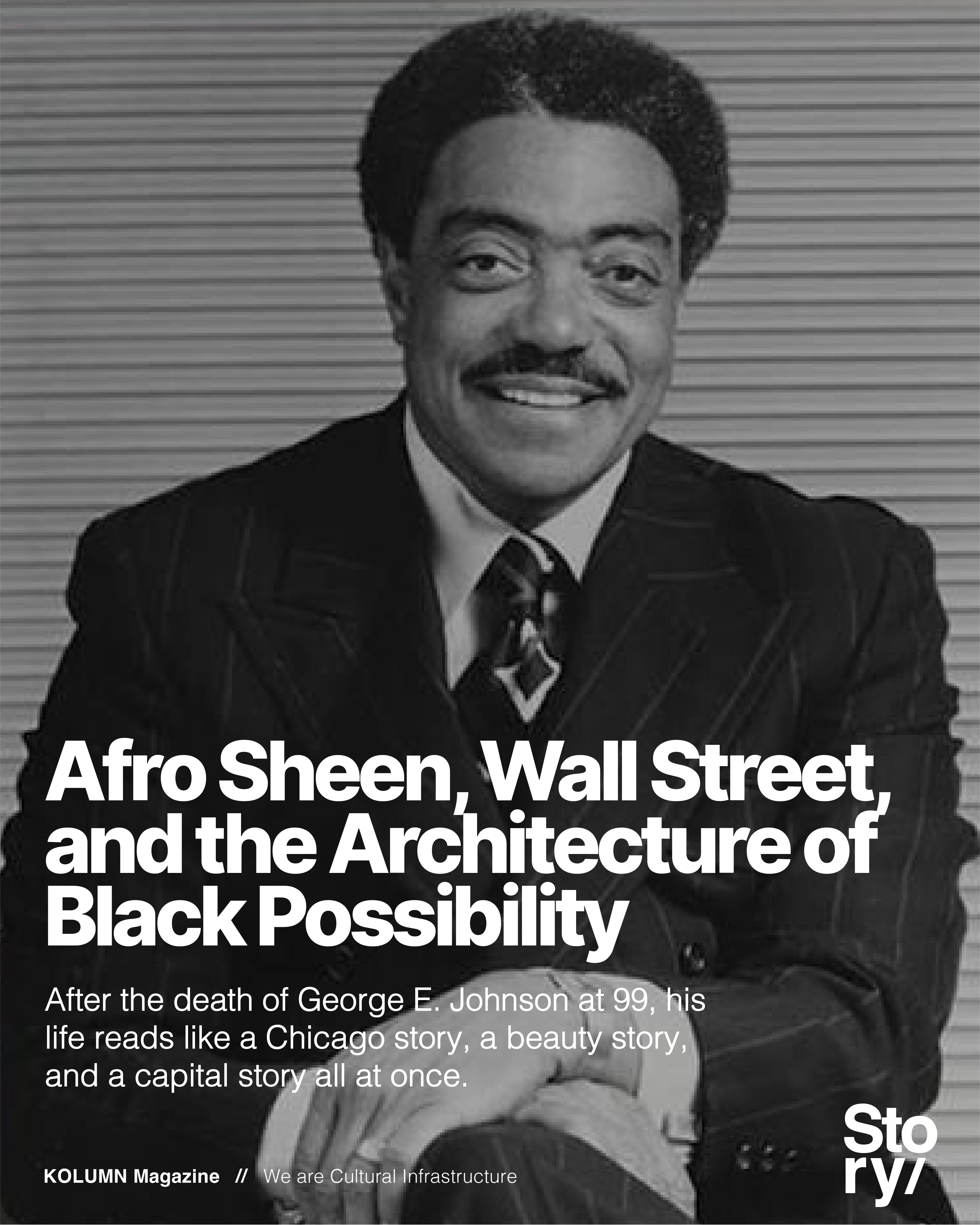
Afro Sheen, Wall Street, and the Architecture of Black Possibility
July 6, 2026
No Comments
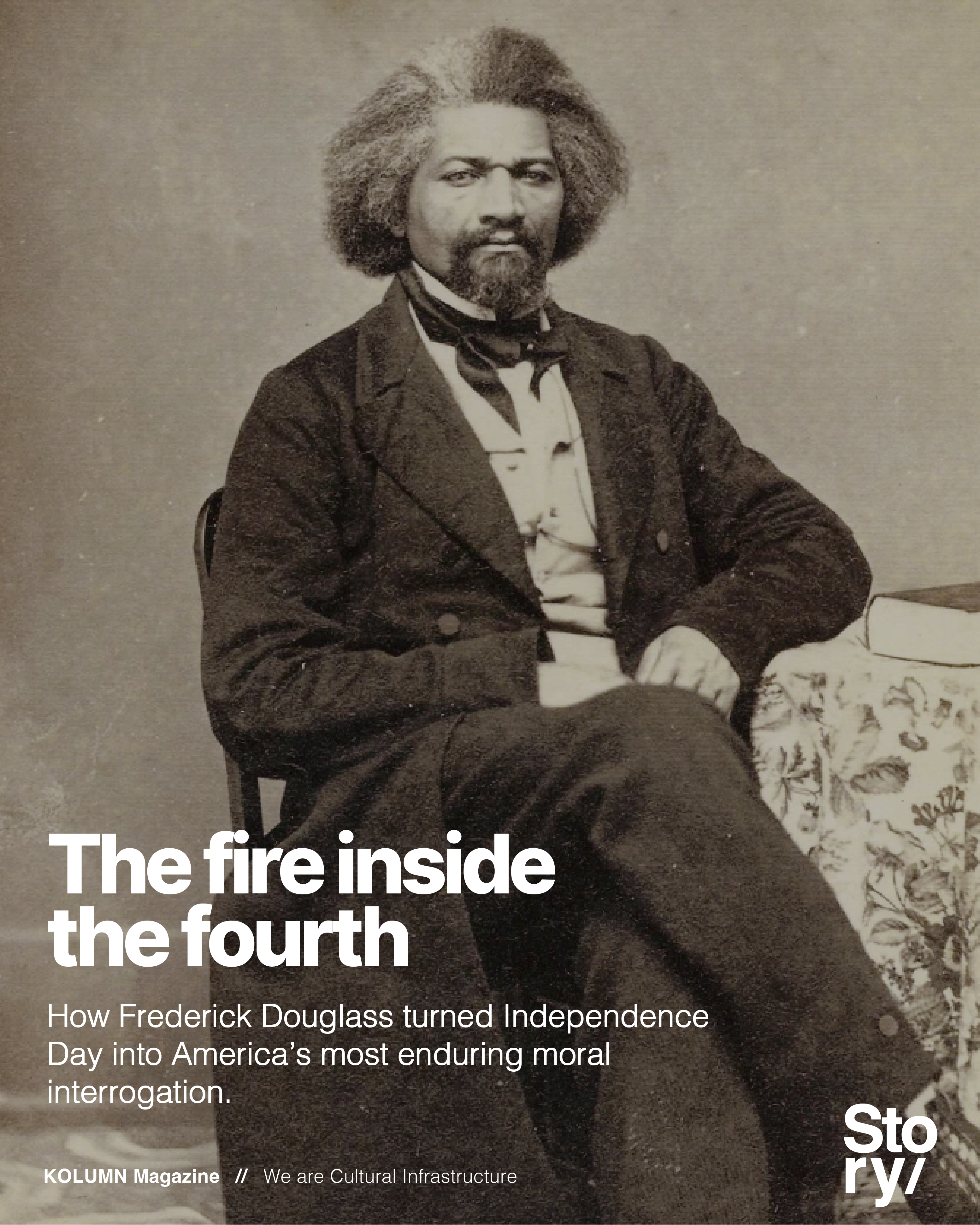
The Fire Inside the Fourth
July 5, 2026
No Comments