

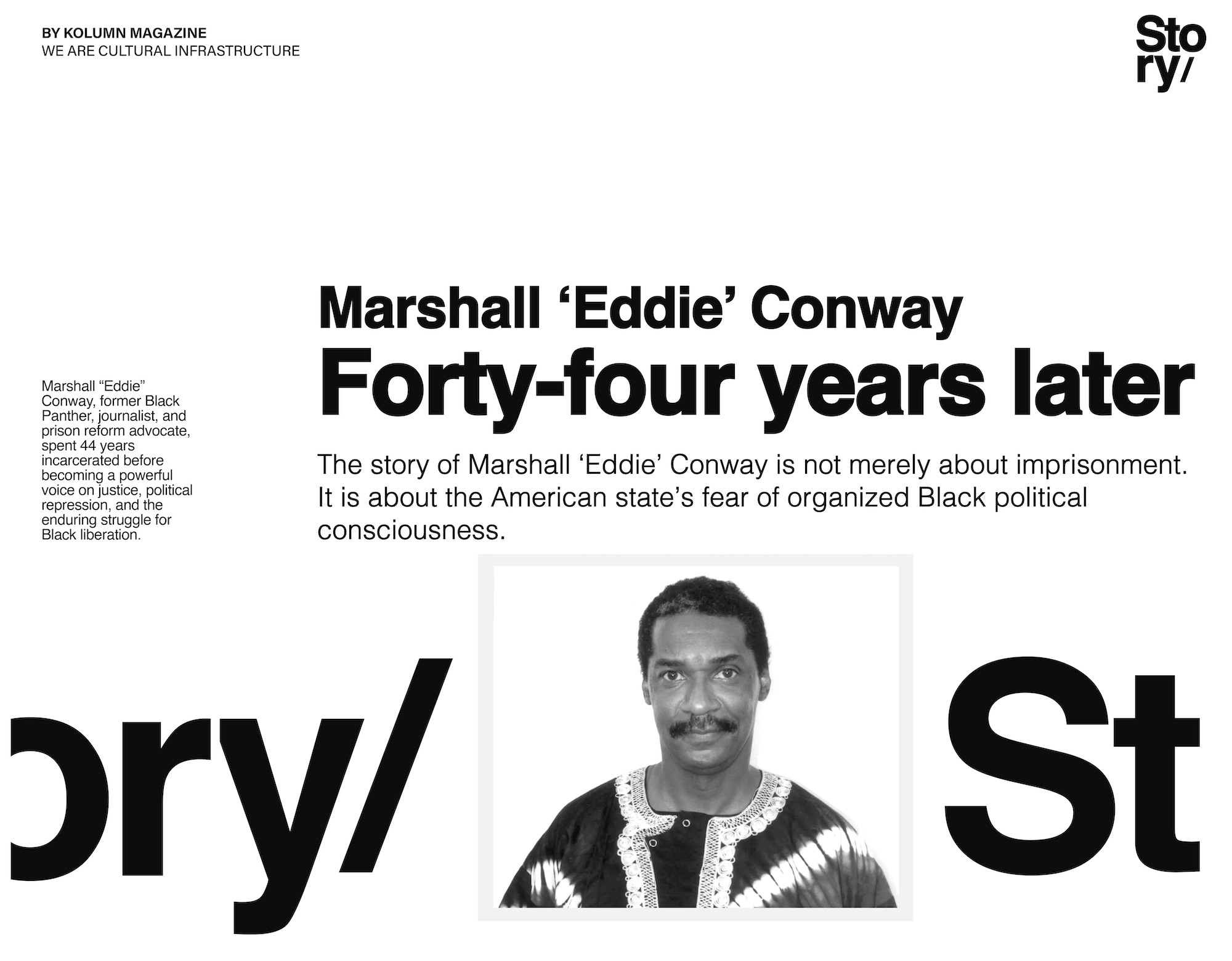
The story of Marshall ‘Eddie’ Conway is not merely about imprisonment. It is about the American state’s fear of organized Black political consciousness.
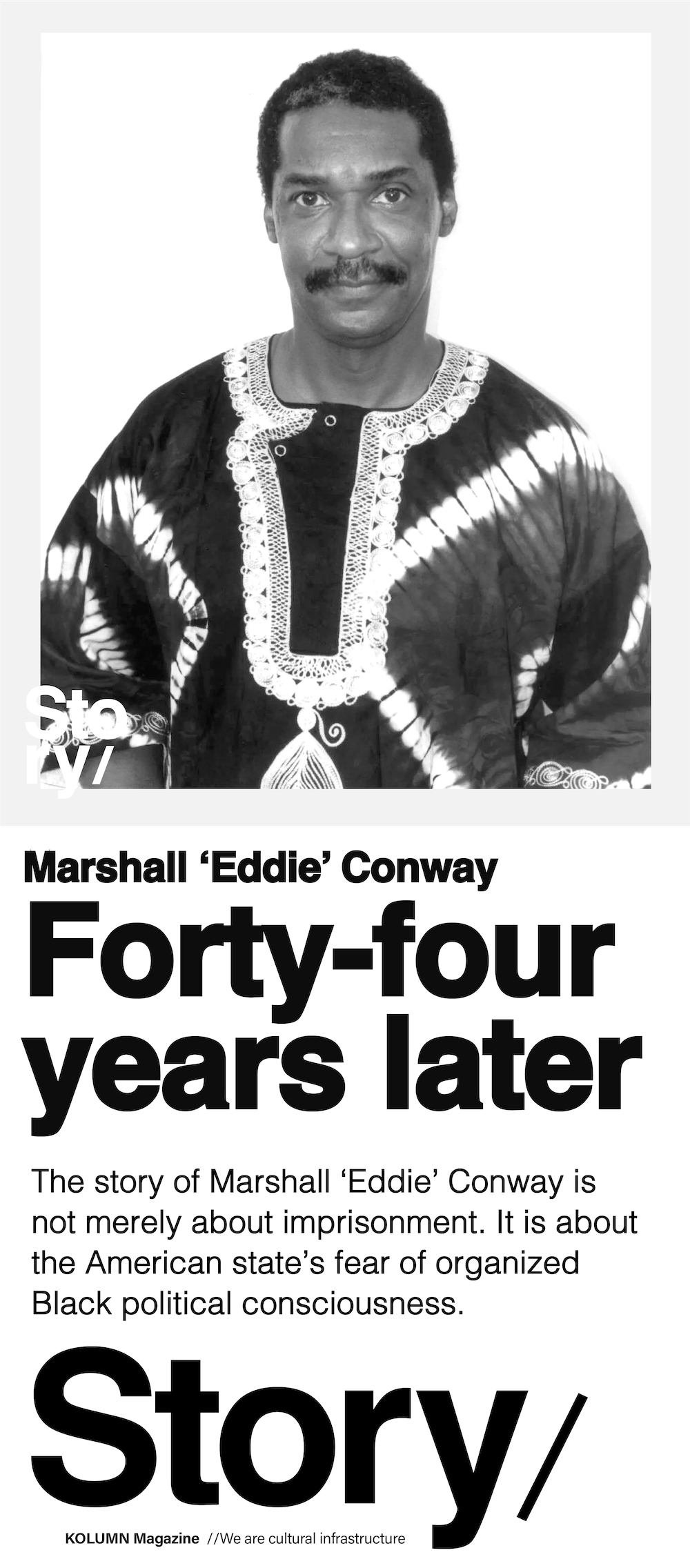
The story of Marshall ‘Eddie’ Conway is not merely about imprisonment. It is about the American state’s fear of organized Black political consciousness.
By KOLUMN Magazine
For much of mainstream America, Marshall “Eddie” Conway existed as a headline, a cautionary tale, or a criminal file buried beneath decades of political rhetoric about law and order. But within Baltimore’s Black political memory — and among generations of organizers, political prisoners, journalists, and historians — Conway occupied a very different space. He was viewed as a political thinker, a survivor of the FBI’s war against the Black Panther Party, a journalist, educator, organizer, and one of the country’s longest-held political prisoners.
Conway’s life represented a throughline between multiple eras of Black resistance in America: the post-civil-rights radicalism of the late 1960s, the state repression campaigns of COINTELPRO, the rise of mass incarceration, the prison abolition movement, and modern debates surrounding policing, surveillance, and political dissent. His story forced uncomfortable questions into the public square. What happens when a democracy fears Black liberation movements more than inequality itself? What happens when political organizing becomes criminalized? And how does a man survive 44 years behind bars without surrendering his ideological core?
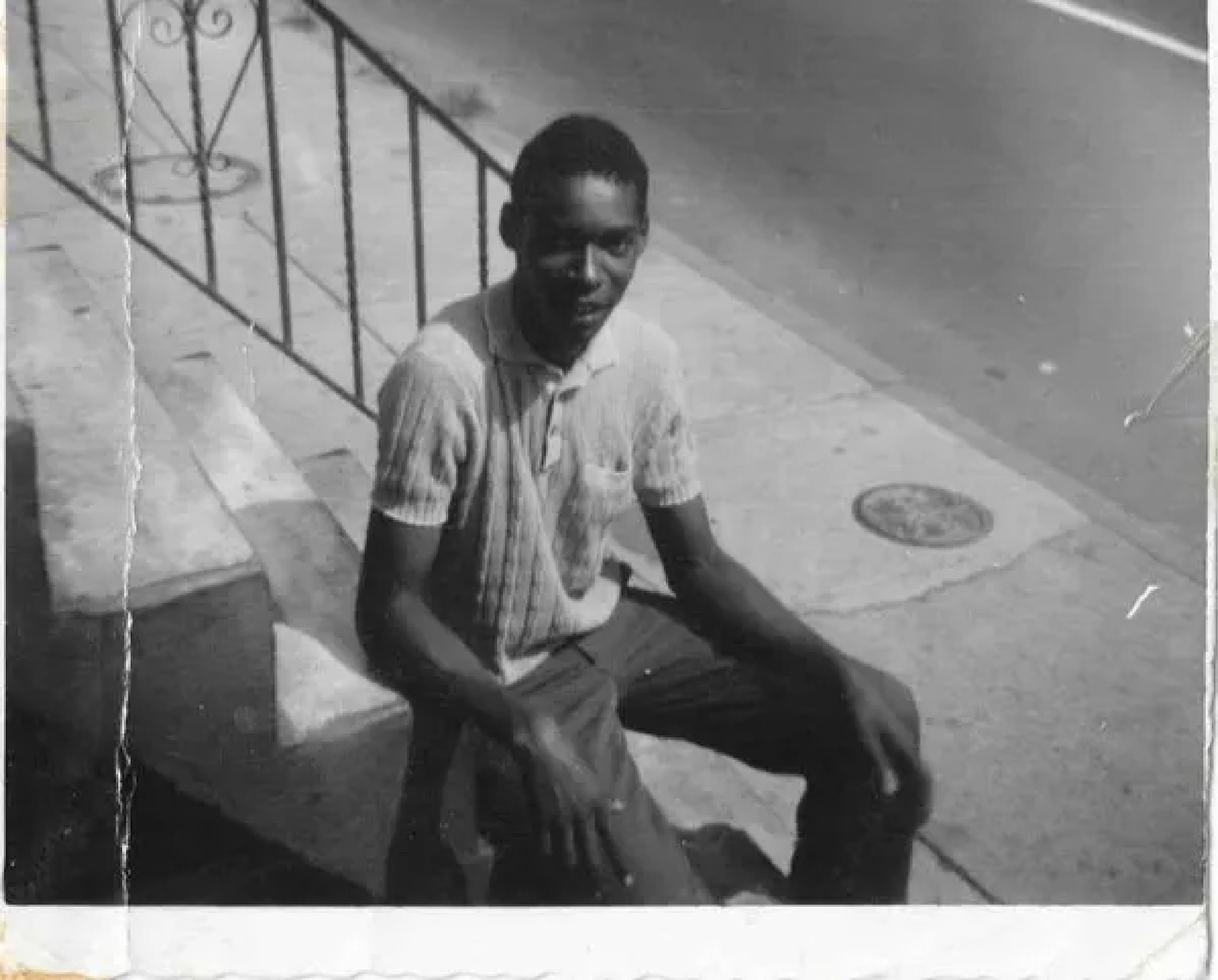
Conway died in February 2023 at age 76, but his life remains deeply intertwined with contemporary conversations about incarceration and state power. His death sparked tributes from activists, journalists, artists, and former political prisoners who saw him not simply as a former Black Panther, but as a living archive of American political repression. The Real News Network described him as “a fearless fighter for working people everywhere,” while community organizers in Baltimore held exhibitions, performances, and teach-ins honoring his legacy and the broader history of the Black Panther Party in Maryland.
Yet Conway’s significance reaches beyond commemoration. His life story exposes the collision between Black political organizing and the machinery of the American criminal justice system during one of the nation’s most volatile periods.
Growing Up in Segregated Baltimore
Marshall Edward Conway was born on April 23, 1946, in Baltimore, Maryland, a city whose racial geography was carved through segregation, disinvestment, and state-sanctioned inequality. West Baltimore — the community that shaped Conway’s political consciousness — was marked by overcrowded housing, aggressive policing, and limited economic mobility for Black residents. Historians of Baltimore politics often describe the city as a prototype for modern urban inequality: deeply segregated neighborhoods existing beside immense institutional wealth.
Conway came of age during a period when Black Americans were confronting contradictions embedded within postwar America. Black veterans returned from military service demanding democratic rights they had defended abroad. Urban uprisings erupted nationwide. Schools remained unequal. Police violence remained routine.
Like many young Black men of his generation, Conway joined the U.S. Army as a teenager. Military service, however, did not dilute his awareness of racial injustice. If anything, it sharpened it. Across the country, Black veterans increasingly returned home politically transformed, unwilling to accept second-class citizenship.
The assassination of Malcolm X in 1965 and later the assassination of Dr. Martin Luther King Jr. in 1968 accelerated radicalization among many young Black activists. Organizations such as the Student Nonviolent Coordinating Committee (SNCC) and the Black Panther Party increasingly drew support from urban Black communities frustrated with the slow pace of reform.
Baltimore itself became fertile ground for Black radical organizing.
According to interviews later published by Truthout, Conway met future publisher and activist Paul Coates during the formation of the Baltimore chapter of the Black Panther Party in the late 1960s. Their friendship and political partnership would endure for decades.
The Panthers and the American State
The Black Panther Party is frequently flattened in mainstream memory into simplistic imagery: leather jackets, firearms, and confrontations with police. But historians have repeatedly emphasized that the Party’s most enduring work involved political education and survival programs.
The Panthers organized free breakfast initiatives for children, health clinics, political education classes, tenant advocacy campaigns, and community patrols monitoring police behavior. These programs were not symbolic. They directly challenged the state’s failure to provide resources to Black communities.
This is precisely why the federal government viewed the organization as dangerous.
Under FBI Director J. Edgar Hoover, the Bureau launched the infamous COINTELPRO initiative, designed to “disrupt, misdirect, discredit, and otherwise neutralize” Black political organizations. The FBI identified the Black Panther Party as “the greatest threat to the internal security of the country.” Historians now widely recognize COINTELPRO as one of the most aggressive domestic surveillance and destabilization campaigns in modern American history.
The Baltimore chapter was heavily infiltrated.
Conway later learned that undercover Baltimore police officers were embedded inside the organization itself. According to records summarized by Wikipedia’s overview of Conway’s case, both local police and federal agents tracked his activities extensively.
That context matters enormously.
Too often, public discussions of Black Panther prosecutions isolate individual criminal cases from the broader political environment in which they occurred. But scholars including Donna Murch, Joshua Bloom, Waldo Martin, and Keeanga-Yamahtta Taylor have argued that prosecutions against Panthers cannot be separated from coordinated efforts to dismantle Black radical organizing.
This historiographical debate remains central to understanding Conway’s case.
Some law enforcement officials maintained that Conway was lawfully convicted in connection with the 1970 killing of Baltimore police officer Donald Sager. Conway, his supporters, and numerous activists insisted he was framed amid a politically charged crackdown against the Panthers.
The historical dispute never disappeared.
The Arrest That Defined a Lifetime
On April 21, 1970, Baltimore police officers Donald Sager and Stanley Sierakowski responded to a domestic disturbance call when they were shot. Sager died. Sierakowski survived.
Hours later, Conway was arrested while working at the U.S. Postal Service.
The prosecution’s case largely depended upon eyewitness identifications and circumstantial evidence. Conway maintained his innocence from the beginning. Supporters argued the investigation reflected the broader climate of anti-Panther repression sweeping the country.
Conway was convicted in 1971.
He would spend nearly 44 years incarcerated.
The enormity of that sentence is difficult to fully comprehend. Conway entered prison during the Nixon era, before the rise of mass incarceration had fully transformed the American penal system. He would not walk free until 2014, after the emergence of the internet age, the election of the nation’s first Black president, and decades of transformation in American politics.
During those years, the country changed dramatically.
Conway remained behind bars.
Surviving the Machinery of Prison
Conway’s imprisonment became one of the defining dimensions of his public identity. Yet reducing his life to incarceration alone misses the complexity of what occurred during those decades.
Rather than retreat inward, Conway became an organizer inside prison walls.
He earned multiple college degrees. He developed literacy programs. He organized political education efforts among incarcerated people. He reportedly helped establish prison libraries and advocated for prisoner rights.
Former prisoners and organizers often described Conway as disciplined, intellectually rigorous, and deeply committed to collective political consciousness.
In interviews conducted after his release, Conway described prison not merely as punishment, but as a political structure designed to dehumanize.
“The state targeted Panthers as socialists, not armed,” Conway explained during one of his extensive conversations with journalist Paul Jay for The Real News Network.
Those interviews became an important archival resource. Conway discussed solitary confinement, political repression, surveillance, and prison labor with striking clarity.
Historians examining the rise of modern incarceration increasingly point to figures like Conway as witnesses to the expansion of the prison-industrial complex.
Scholar Michelle Alexander’s landmark book The New Jim Crow reframed mass incarceration as a continuation of racial control mechanisms embedded within American history. Ruth Wilson Gilmore’s scholarship connected prisons to economic restructuring and political abandonment. Angela Davis long argued that prisons functioned as tools of racialized social management.
Conway’s life embodied those analyses.
He entered prison at a time when incarceration rates were dramatically lower than today. He exited into an America that had become the world’s leading jailer.
The Political Prisoner or Convicted Killer?
No serious examination of Conway’s life can avoid the central controversy surrounding his case.
To supporters, Conway was unquestionably a political prisoner.
To many law enforcement officials and police advocates, he remained a convicted cop killer.
This tension followed him for the remainder of his life.
The phrase “political prisoner” itself remains fiercely contested in American discourse. The United States government has historically resisted applying the term domestically, often reserving it for dissidents imprisoned abroad. Yet activists argued that Black radicals targeted under COINTELPRO met precisely that definition.
Conway’s supporters pointed to prosecutorial misconduct, flawed jury instructions, FBI infiltration, and the political climate surrounding Panther prosecutions.
In 2014, after a Maryland appellate court ruling regarding improper jury instructions, prosecutors agreed to Conway’s release after nearly 44 years imprisoned.
His conviction was not formally overturned on grounds of innocence. But the court ruling significantly undermined the integrity of the original proceedings.
That distinction became central to public debate.
For activists, Conway’s release validated longstanding claims that his prosecution had been politically contaminated.
For critics, the release reflected procedural technicalities rather than exoneration.
The disagreement reveals a broader national divide regarding how America remembers the Black radical tradition.
Mainstream historical narratives often sanitize civil rights history into a story of inevitable democratic progress. But historians increasingly emphasize that Black liberation movements faced extraordinary repression from local police departments, federal agencies, and political leaders.
Conway’s case exists directly within that contested terrain.
Returning to a Different America
When Conway walked free in March 2014, he entered a radically transformed society.
Cell phones dominated communication. Social media shaped politics. The Black Lives Matter movement was emerging following the killing of Trayvon Martin and later the police killings of Michael Brown, Eric Garner, Freddie Gray, Sandra Bland, and countless others.
In many ways, Conway stepped into an America confronting the very issues he had spent decades discussing behind prison walls.
He quickly became a visible public voice.
Conway joined The Real News Network as a producer and host, leading the program Rattling the Bars, which focused on incarceration, prison conditions, labor exploitation, and social justice movements.
The title itself carried symbolic power.
Conway’s journalism was not detached in the traditional sense. It emerged from lived experience. He interviewed incarcerated people, labor organizers, activists, and political thinkers with the perspective of someone who had survived decades inside the system being analyzed.
His reporting frequently centered voices ignored by mainstream media institutions.
That work helped establish Conway as more than a former political prisoner. He became an elder statesman within abolitionist and prison reform movements.
His journalism also reflected a larger transformation within Black media ecosystems.
Independent Black-led journalism increasingly challenged dominant narratives surrounding policing and incarceration, particularly after the Ferguson uprising in 2014. Conway’s work existed within that broader ecosystem of radical Black media production.
Baltimore, Freddie Gray, and the Echo of History
No city better illustrated Conway’s enduring relevance than Baltimore itself.
In 2015, one year after Conway’s release, Baltimore erupted following the death of Freddie Gray, a 25-year-old Black man who suffered fatal spinal injuries while in police custody.
The protests exposed longstanding grievances surrounding police violence, economic inequality, and political neglect.
For many observers, the uprising felt eerily connected to the Baltimore Conway had known decades earlier.
The city’s “Black Butterfly” neighborhoods — predominantly Black communities marked by disinvestment and concentrated poverty — remained heavily overpoliced and economically marginalized.
Conway repeatedly linked modern policing practices to historical systems of social control.
His analyses resonated because they connected generations.
Young organizers confronting police brutality encountered a man who had spent decades studying state repression from inside prison cells.
The continuity was impossible to ignore.
The Historians Reevaluate the Panthers
For decades, mainstream portrayals of the Black Panther Party focused overwhelmingly on violence and confrontation.
But scholarship beginning in the 1990s significantly complicated that narrative.
Historians increasingly examined the Panthers’ community survival programs, political education initiatives, and internationalist ideology.
Books such as Joshua Bloom and Waldo Martin’s Black Against Empire reframed the Party as one of the most consequential political organizations in modern American history. Donna Murch’s work on Oakland emphasized the Panthers’ roots in urban inequality and anti-police activism.
These historiographical shifts matter deeply when discussing Conway.
Earlier generations of reporting frequently treated Panther defendants through the lens of criminality first and political context second. More recent scholarship situates prosecutions like Conway’s within broader state suppression campaigns.
That does not erase debate surrounding specific cases.
But it fundamentally changes the interpretive framework.
Conway’s life becomes not simply the story of one man accused of violence, but part of a larger national conflict over Black political power.
Friendship, Solidarity, and Paul Coates
One of the most remarkable dimensions of Conway’s life involved the decades-long solidarity maintained by friends and comrades who refused to abandon him.
Among the most important was publisher and activist Paul Coates.
Coates — founder of Black Classic Press and father of writer Ta-Nehisi Coates — spent decades advocating for Conway’s release. Their friendship became emblematic of enduring Black political solidarity across generations.
In a 2014 interview with Truthout, the two men reflected on organizing together in Baltimore and surviving the devastating effects of COINTELPRO.
The interview carried emotional weight precisely because it documented continuity.
Many political movements fracture under repression.
The Panthers experienced assassinations, imprisonment, exile, infiltration, and internal conflict. Yet Conway and Coates maintained their connection across more than four decades.
That endurance itself became political testimony.
Black Media, Memory, and Historical Erasure
Conway’s life also illuminates the role Black media institutions play in preserving histories often neglected by mainstream outlets.
For years, independent Black publications, grassroots archives, prison abolition groups, and community organizers preserved Conway’s story while much of corporate media ignored it.
That pattern is not accidental.
Black radical histories are frequently marginalized within dominant American narratives because they challenge foundational myths about democracy, policing, and state legitimacy.
The preservation of Conway’s story depended heavily upon alternative media ecosystems.
This is one reason his legacy matters so deeply to publications such as KOLUMN Magazine.
KOLUMN’s broader editorial work documenting overlooked Black histories — from Black Memorial Day origins in Charleston to longform examinations of activists, organizers, and institutional racism — exists within the same archival tradition that kept Conway’s story alive.
Historical memory is political.
Which figures become national heroes and which become forgotten radicals often depends upon who controls cultural storytelling.
Art, Music, and the Politics of Remembrance
Following Conway’s death in 2023, Baltimore artists and organizers hosted exhibitions and cultural events honoring his legacy.
According to reporting from Baltimore Beat, the gatherings included performances, poetry, visual art, and political education workshops examining COINTELPRO and Black Panther history.
Musicians such as Lafayette Gilchrist participated.
The events were notable because they framed Conway not solely as a victim of injustice, but as part of a continuing Black radical cultural tradition.
Art became a mechanism of political memory.
This relationship between Black activism and artistic expression has deep historical roots. From jazz and blues to spoken word and hip-hop, Black cultural production has often functioned as historical preservation.
The memorialization of Conway through music and art reflected that lineage.
The Prison-Industrial Complex and Conway’s Legacy
In contemporary America, discussions about incarceration increasingly intersect with broader critiques of capitalism, labor exploitation, and racial inequality.
Conway spent years articulating those connections.
He argued that prisons functioned not simply as punishment facilities, but as economic and political institutions benefiting from social abandonment.
Those arguments align closely with contemporary abolitionist frameworks advanced by scholars and organizers.
Critics of prison abolition frequently dismiss such perspectives as radical or unrealistic. Yet the explosive growth of incarceration rates over the past half-century has pushed prison policy into mainstream political debate.
America imprisons more people than any other wealthy democracy.
Black Americans remain disproportionately incarcerated.
And growing numbers of scholars argue the system cannot be separated from longer histories of racialized control.
Conway’s life became evidentiary.
His survival across nearly 44 years inside prison walls exposed the human consequences of the American penal system.
A Complicated American Legacy
Marshall “Eddie” Conway remains a polarizing figure.
For some Americans, he will always remain tied to the death of a police officer.
For others, he represents state repression against Black political dissent.
Both realities coexist within the historical record.
Serious journalism requires acknowledging that complexity rather than flattening it.
But what cannot be denied is Conway’s historical significance.
He became part of an entire generation of Black activists shaped by urban segregation, Vietnam-era radicalization, FBI surveillance, and the rise of punitive policing.
His imprisonment spanned the birth of mass incarceration.
His release coincided with renewed national protest movements.
And his post-prison journalism transformed him into an interpreter of systems he had survived.
In many respects, Conway’s life traced the evolution of modern America itself.
The Meaning of Eddie Conway Now
In contemporary political discourse, there is intense pressure to simplify historical figures into heroes or villains.
Conway resists simplification.
His life forces Americans to grapple with difficult questions about political repression, racial justice, and the boundaries of dissent.
Was the Black Panther Party a criminal organization or a liberation movement? Could courts fairly adjudicate Panther cases amid the hysteria of COINTELPRO? What does justice look like after four decades of imprisonment? And how should societies remember people whose lives exist at the intersection of political violence and state power?
These questions remain unresolved.
Perhaps that is why Conway continues to matter.
He disrupts comforting narratives.
He reminds Americans that democracy has often expanded only after fierce confrontation with state authority. He reminds the public that Black political organizing has historically been surveilled, criminalized, and violently suppressed. And he reminds younger generations that the history of incarceration in America is inseparable from race and political power.
The struggle over Conway’s legacy is ultimately a struggle over historical memory itself.
Who gets remembered as a patriot?
Who gets remembered as a threat?
And who gets erased entirely?
Marshall “Eddie” Conway survived long enough to ensure that erasure would not come easily.
More great stories
Afro Sheen, Wall Street, and the Architecture of Black Possibility
July 6, 2026
No Comments
The Fire Inside the Fourth
July 5, 2026
No Comments