




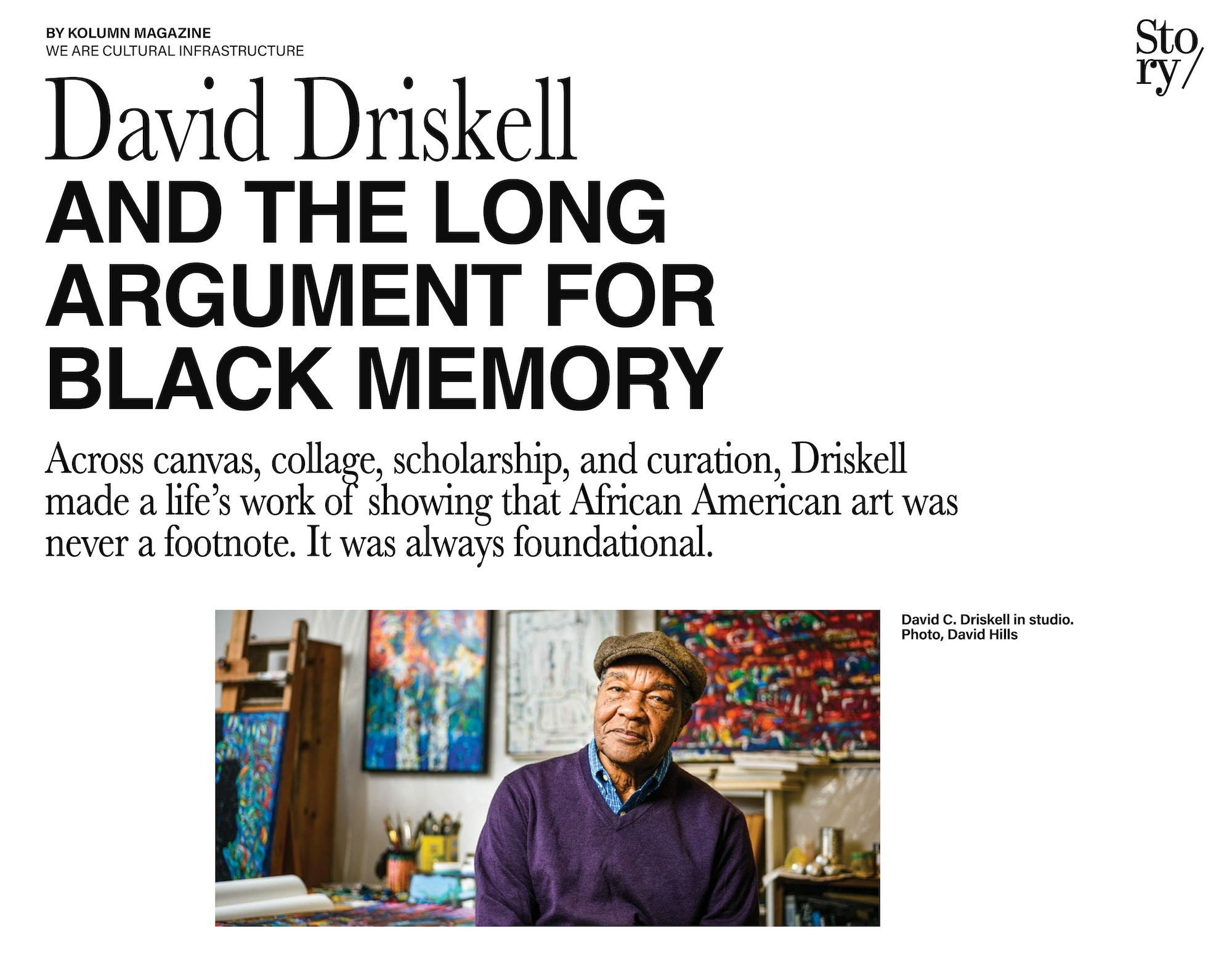
David Driskell did not simply argue that Black art mattered. He helped build the field that made the argument impossible to ignore.
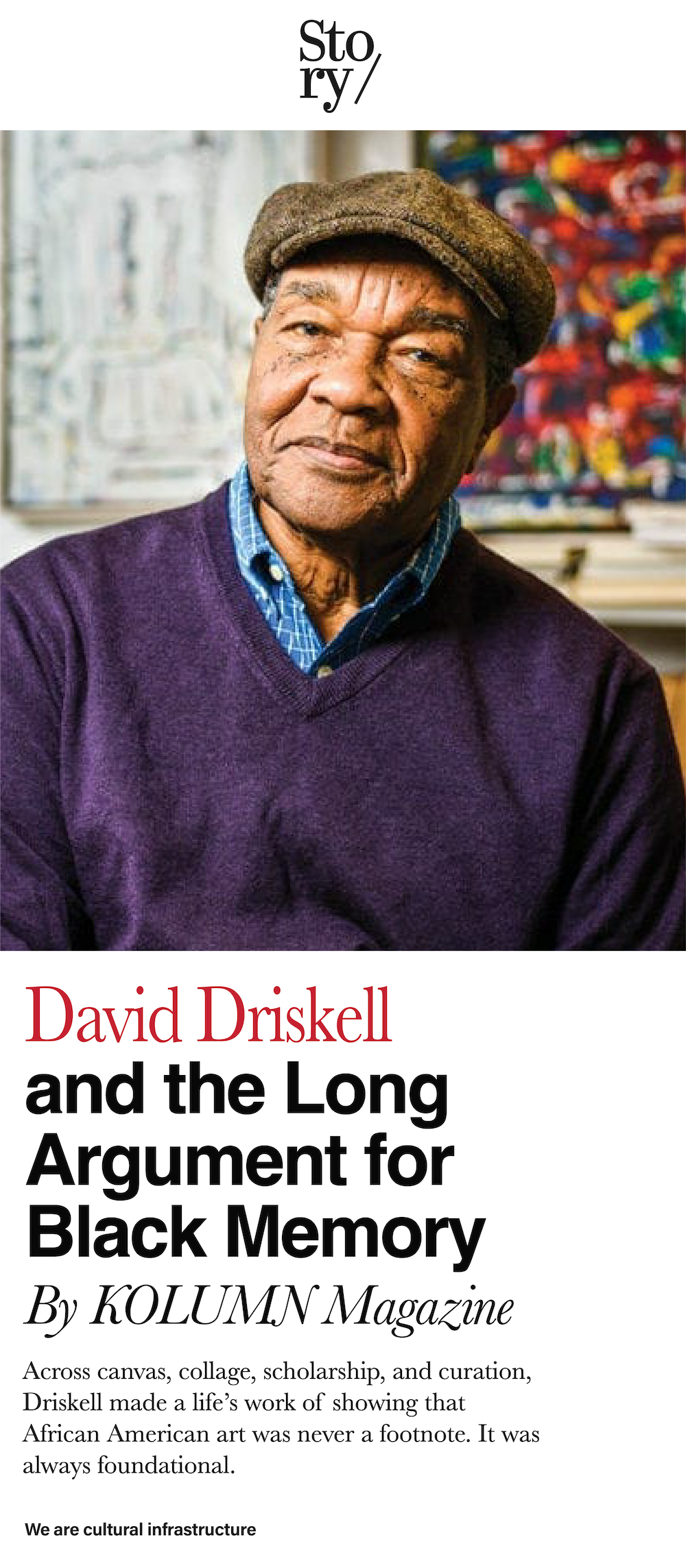
David Driskell did not simply argue that Black art mattered. He helped build the field that made the argument impossible to ignore.
By KOLUMN Magazine
David Driskell is often described in a sequence so familiar it risks going flat: artist, scholar, curator, collector, teacher. Every word is accurate. None is sufficient on its own. What made Driskell singular was not that he excelled in several lanes at once, but that he understood those lanes were never really separate. He painted with the eye of a historian. He curated with the urgency of someone fighting for memory. He taught as if art could rescue not only neglected artists, but the historical record itself. By the time he died in 2020 at 88, after decades of making, writing, mentoring, and institution-building, Driskell had helped alter the way American art is taught, exhibited, collected, and understood.
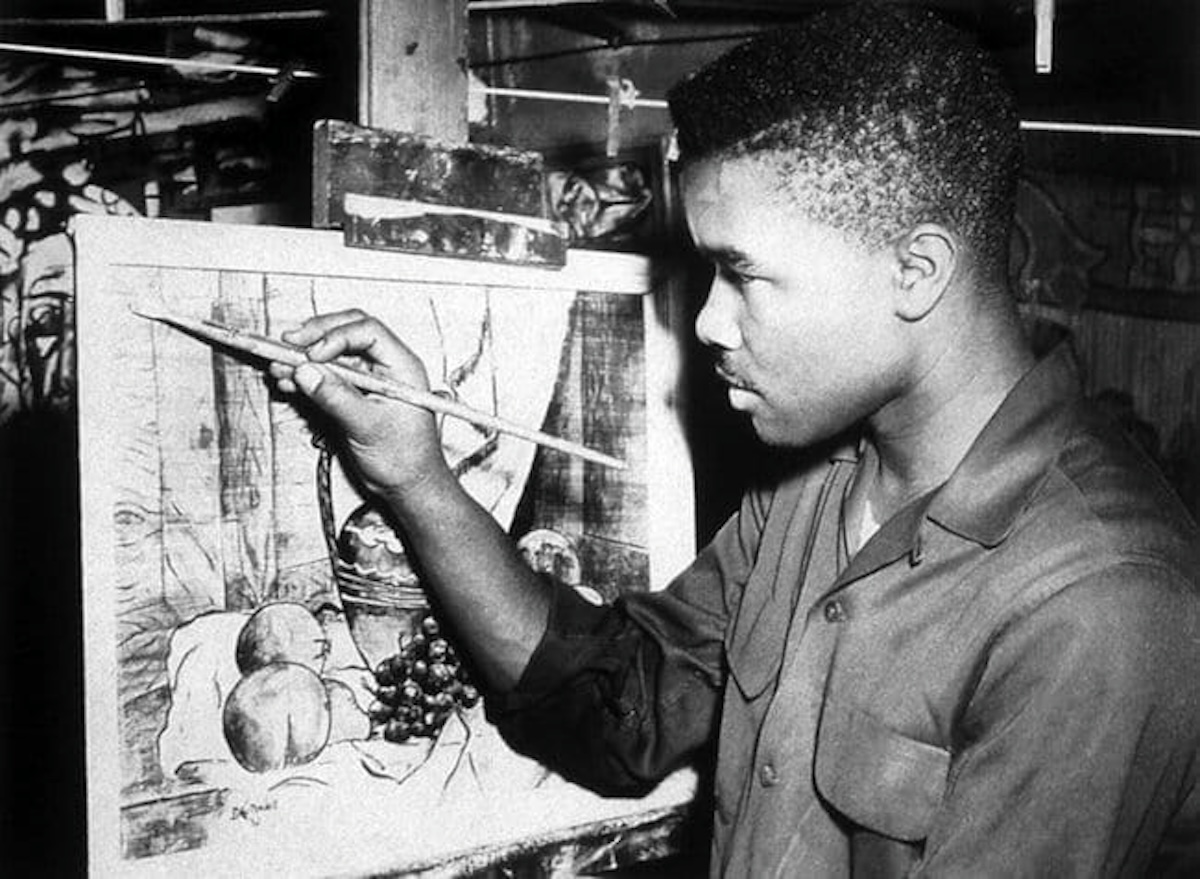
That scale of influence can make him sound abstract, like a figure mounted in bronze. But David Clyde Driskell was never a monument. He was a working artist who stayed close to material, to landscape, to faith, to Black life, and to the long, often bruising argument over who gets seen in America. Born on June 7, 1931, in Eatonton, Georgia, and raised largely in North Carolina, Driskell came of age in Jim Crow conditions that were designed not only to constrict Black ambition, but to erase Black inheritance. He studied at Howard University, trained at Skowhegan, earned an MFA from The Catholic University of America, and later pursued art-historical study in the Netherlands. Those facts matter. But even more important is what he did with them: he fashioned a career that refused the artificial choice between making art and making knowledge.
In that sense, Driskell belongs in a lineage KOLUMN has already been tracing in its recent feature on Ernest Crichlow, which treated Black artistic practice not as isolated genius but as civic labor, historical witness, and institutional struggle. Driskell fits that frame, though he stretches it further. Crichlow chronicled Black life with moral clarity. Driskell helped secure the intellectual architecture that made such lives legible inside American museums and art history departments. If Crichlow’s work asked viewers to look again, Driskell spent decades forcing the culture to reconsider what it thought it was looking at in the first place.
A childhood shaped by making
Driskell’s early life is central to understanding both the tenderness and the force in his work. He was born to George Washington Driskell, a minister, and Mary Cloud Driskell, and he grew up in a family where making was not some remote, professionalized activity. In oral histories and biographical accounts, Driskell spoke about watching his parents make things and about the formative role of craft, memory, and vernacular creativity in his development. That beginning matters because it complicates the later image of Driskell as a polished elder statesman of Black art. Before the honorary doctorates and museum retrospectives, there was a child absorbing texture, ritual, handmade form, and the visual intelligence of ordinary Black life.
There is also the question of place. North Carolina and, later, Maine recur in the Driskell story not merely as biographical stops but as visual environments. His art would return again and again to trees, woods, landscape, and spiritual atmosphere. In later years, the pine trees of Maine became among his most recognizable motifs, but they were never just scenic subjects. In Driskell’s hands, nature became an archive: of movement, of memory, of diaspora, of private contemplation, of Black presence in spaces that art history had often coded as white, pastoral, and untroubled. Exhibitions such as Icons of Nature and History made plain how fully landscape in his work could hold biography, formal experiment, and historical charge at once.
At Howard University, Driskell encountered two kinds of formation that would define his life. One was artistic training. The other was intellectual responsibility. Howard was not only where he sharpened his studio practice; it was where mentors such as James A. Porter and James Wells pushed him toward a broader idea of what a Black artist-scholar could be. Porter, especially, seems to have recognized that Driskell’s gift would have to do double duty: create work, yes, but also document and interpret Black contribution so it could not be so easily dismissed or forgotten. Howard did not merely produce Driskell. It equipped him for a cultural fight.
That tension between the studio and the archive would become a permanent feature of his career. Too often, art history has treated those modes as opposites: the maker as intuitive and the scholar as analytic, the artist as personal and the historian as institutional. Driskell refused the split. His own life suggested something more demanding and more fertile. Black artists, especially in the mid-20th century, frequently had to become their own advocates, historians, teachers, and preservers because the mainstream infrastructure did not reliably do that work for them. Driskell’s greatness was not just that he managed this multitasking. It was that he transformed necessity into method.
The artist beneath the legend
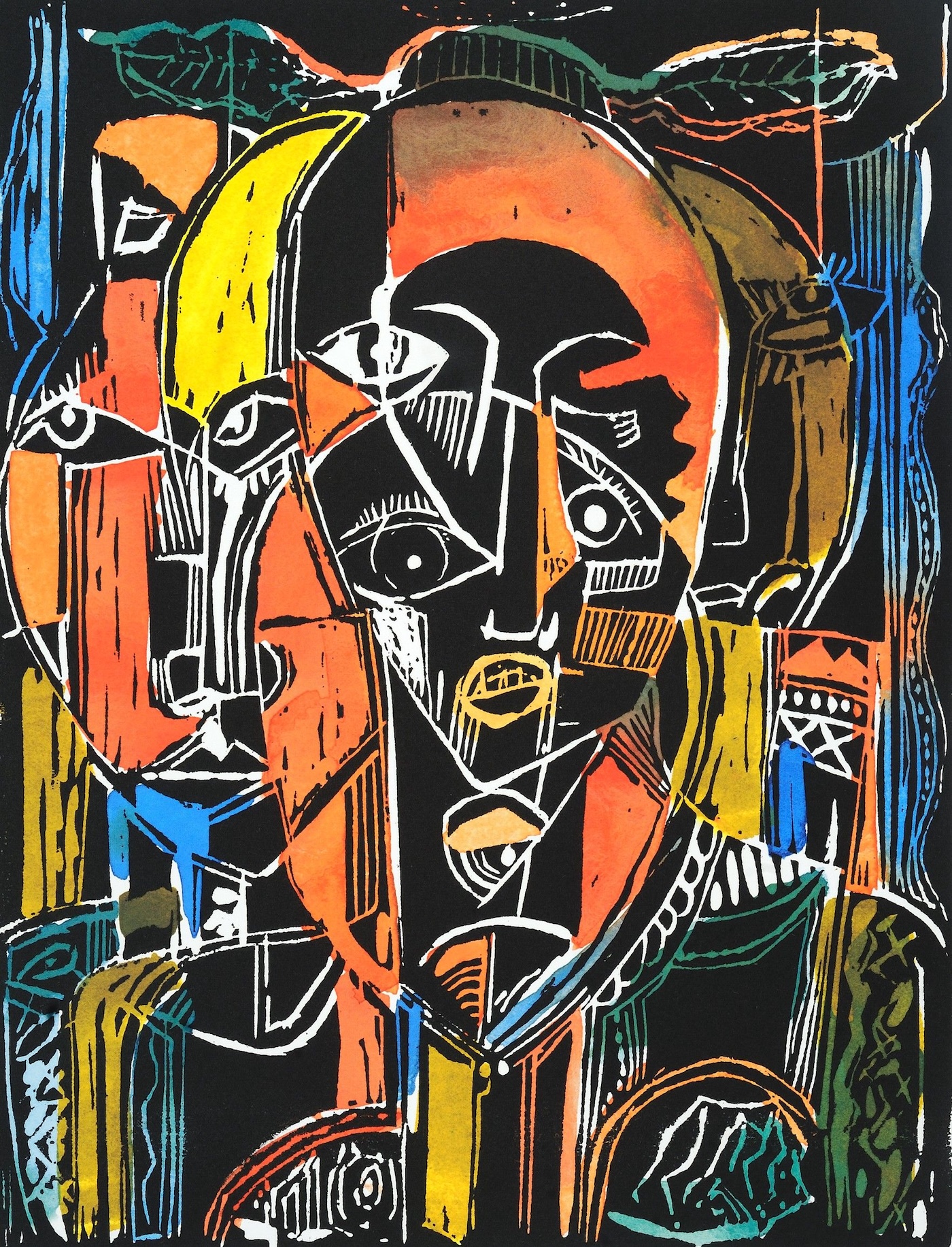
One of the subtler distortions in the public memory of David Driskell is that his fame as a scholar and curator can overshadow the power of his own art. He is so often credited with legitimizing Black art history that casual readers can come away thinking of him as an administrator of other people’s genius rather than a major artist in his own right. The surveys and retrospectives mounted after his death have pushed back hard against that flattening. They show a practice spanning decades and mediums, including painting, printmaking, drawing, and collage, and one marked by vibrant color, rhythmic composition, spiritual inquiry, and a supple relation to modernism.
His paintings and collages do not read like illustrations of a thesis. They are too alive for that. The High Museum, the Portland Museum of Art, and DC Moore Gallery all emphasize the same core truth: Driskell fused close observation of American landscape with imagery and formal innovations drawn from the African diaspora, creating work that was modernist without surrendering ancestry, experimental without abandoning legibility, and often devotional without becoming sentimental. His art moved between figuration and abstraction, between memory and symbol, between earthly texture and spiritual ascent.
That last point matters. Driskell’s work can be sensual, but it is also theological in a broad sense. Not doctrinal, not narrow, but attentive to sacred resonance. Spirituality, culture, and memory are recurring terms in discussions of his work for good reason. His images often carry the feeling of transmission, as if forms are not merely arranged but summoned. Masks, birds, trees, saints, musicians, maternal figures, and ancestral echoes move through his oeuvre not as decorative citations but as living presences. He was deeply interested in African art, Christian iconography, and the visual life of the Black diaspora, and he brought those influences together without collapsing them into a single explanatory formula.
His collage practice is especially revealing. Collage, in Driskell’s hands, becomes both aesthetic procedure and historical argument. Fragments can coexist. Lineages can be layered. What looks broken can become compositional strength. For a Black artist and historian working in a culture that had long scattered, marginalized, or misfiled Black artistic achievement, collage was more than a formal tool. It was a way of thinking. It allowed Driskell to hold multiple geographies, traditions, and temporalities in a single visual field. This is one reason his work still feels contemporary: it anticipates the now-familiar language of hybridity and diasporic circulation without sacrificing the tactile pleasures of paint, paper, print, and mark.
The exhibition that changed the terms
If there is one event that seals Driskell’s place in American cultural history, it is the 1976 exhibition Two Centuries of Black American Art: 1750–1950 at the Los Angeles County Museum of Art. To describe it as groundbreaking is true but incomplete. The show was an intervention in what counted as national culture. Bringing together more than 200 works by 63 artists, it offered a scholarly and public-facing argument that Black artists were not peripheral curiosities or sociological footnotes. They were central makers in the American tradition. Later critics and curators would call the exhibition watershed, paradigm-shifting, and foundational. They were not overstating it.
The timing sharpened its force. Mounted during the bicentennial, the exhibition stepped into a moment when the country was busy narrating itself. Driskell’s answer was effectively: tell the truth, or stop pretending this is history. By surveying Black artistic production from the 18th century forward, he challenged the structures through which museums and textbooks had naturalized exclusion. The show did not ask for charitable inclusion. It demonstrated historical fact. It placed artists such as Robert S. Duncanson, Henry Ossawa Tanner, Elizabeth Catlett, Jacob Lawrence, Romare Bearden, and many others within a longue durée that made Black artistic continuity impossible to deny.
What made Two Centuries so potent was not only its content but its scholarly rigor. Driskell was not staging a symbolic gesture. He was building evidence. The exhibition and its catalog helped codify a field that had been insufficiently supported by major institutions, despite the pioneering work of earlier figures such as James A. Porter. In the decades since, scholars and curators have repeatedly pointed back to Two Centuries as an origin point for the contemporary study and exhibition of African American art. Even documentary filmmakers revisiting Black art in the 21st century have treated the show as a key hinge in the story
And yet Driskell did not make the mistake of confusing institutional recognition with liberation. He understood too well how museums worked, how gatekeeping reproduced itself, how white critical frameworks could absorb Black art only by misreading it. The Guardian’s account of Sam Pollard’s documentary Black Art: In the Absence of Light underscores this point: Driskell’s exhibition opened a door, but it also exposed how flimsy the prevailing critical language had been when confronted with Black aesthetic achievement. The very need for Two Centuries revealed the depth of the omission.
That is part of Driskell’s continuing relevance. He was not merely the curator of a landmark show in 1976. He was one of the chief architects of a broader corrective that is still unfolding. When museums today race to fill gaps in their collections, when universities expand Black art curricula, when younger artists speak openly about lineage and visibility, they are operating in a terrain Driskell helped clear.
Teaching the field into existence
To say Driskell “taught” is, again, too small. He taught at Talladega College, Howard University, Fisk University, and, for more than two decades, the University of Maryland. But formal teaching was only one part of the story. He lectured widely, wrote extensively, advised collectors and institutions, mentored scholars, and helped shape museum practices at a structural level. By the time the University of Maryland established the David C. Driskell Center in 2001, it was acknowledging not just a distinguished faculty member, but a generative force who had already transformed the study of African American visual culture.
The Driskell Center’s remit is telling: the study of the visual arts and culture of African Americans and the African diaspora. That scale reflects Driskell’s own vision. He was never provincial in his understanding of Black art. African American production mattered intensely to him, but he read it in relation to Africa, the Caribbean, Europe, and the wider diaspora. He resisted the notion that Black art should be boxed into a narrow national or stylistic category. This breadth helps explain why so many artists with very different aesthetics felt seen by him. As later tributes noted, Driskell did not impose a single orthodox style on Black creativity. He defended multiplicity.
His collecting practice also mattered. Driskell did not simply study Black art from a distance; he preserved it materially. The exhibition Narratives of African American Art and Identity: The David C. Driskell Collection reveals a collector attentive not only to individual masterpieces but to the intertwined histories of resistance, academic training, radical politics, diasporic exchange, and self-fashioning in Black art. A collection, in this sense, became another form of scholarship. It was a way of keeping works together long enough for larger meanings to emerge.
It is worth pausing here on mentorship. The memorial responses gathered after his death make clear that Driskell’s influence was not coldly institutional. Artists, curators, and scholars remembered him as generous, catalytic, and deeply invested in other people’s growth. Curlee Raven Holton, Lowery Stokes Sims, Bridget Cooks, and others described him as a builder of the field and a sustaining presence within it. That pattern matters because it helps explain how his impact could exceed any single exhibition or publication. He created networks of confidence, knowledge, and permission. He made it easier for others to claim the work.
The politics of visibility
No serious account of Driskell can avoid the politics that ran beneath his work, even when he was not making overtly protest-driven images. His career unfolded across segregation, civil rights, Black Power, the culture wars around multiculturalism, and the uneven institutional recognition of Black artists in the late 20th and early 21st centuries. He understood that visibility was political, but he was too sophisticated to confuse visibility with justice. What he pursued was something more durable: historical placement, interpretive seriousness, and continuity.
That is why his legacy cannot be reduced to the language of “firsts,” though there were many of them around him. First Black artist in a White House collection? Not exactly his own accolade, but his advice helped secure Henry Ossawa Tanner’s entry into the White House collection in 1996, an act symbolically rich in itself. Prize names, retrospective honors, presidential medals, institutional dedications: all important. But Driskell’s deeper intervention was epistemic. He changed what institutions knew, and what they could no longer pretend not to know.
He also moved through difficult terrain that deserves plain naming. Driskell advised major collectors, including Bill and Camille Cosby, and helped select works associated with The Cosby Show. That relationship is part of the public record and part of the complicated history of Black art patronage in late-20th-century America. It demonstrates Driskell’s willingness to leverage available platforms for Black art’s visibility, even as later history has transformed how some of those affiliations are viewed. The point is not to sensationalize the connection, but to keep the record honest. Driskell worked in the real world of patrons, power, and imperfect institutions.
What remains most striking is how little doctrinaire his own aesthetic arguments seem in retrospect. He championed artists across forms and ideologies. He did not force Black art into a single visual script of uplift, militancy, abstraction, figuration, or respectability. That capaciousness is perhaps one reason he continues to feel indispensable now, when debates over representation can become rigid and reductive. Driskell believed Black art deserved rigorous criticism and expansive interpretation, not narrow ideological policing. His career offers a reminder that cultural advocacy is strongest when it expands the field rather than shrinking it.
Why his work still feels urgent now
The contemporary rediscovery of Driskell’s studio practice has been one of the more satisfying corrections in recent museum culture. Posthumous surveys, critical essays, and media coverage have emphasized that the man who helped canonize Black art was himself producing richly inventive work across seven decades. PBS, Smithsonian, Hyperallergic, and museum retrospectives have all, in different ways, made the same case: America is still catching up to David Driskell the artist, even after long depending on David Driskell the scholar.
This delayed recognition says something unsettling about American taste. The culture had room to honor him as a guide, a validator, a wise interpreter of other people’s brilliance. It took longer to fully foreground him as a central creative force in his own right. There is an old habit in American institutions of asking Black intellectuals to explain the house while hesitating to hang enough of their own work on its walls. Driskell’s late-career and posthumous surveys do not erase that lag, but they do make it visible.
His relevance also extends beyond the art world. Driskell’s life offers a model for cultural stewardship at a moment when archives are contested, educational curricula are politicized, and institutions are once again under pressure over how they narrate race, nation, and belonging. He understood that scholarship was not neutral bookkeeping. It shaped public memory. Curation was not mere arrangement. It determined what a society was willing to recognize as part of itself. Art was not ornament. It was a method of survival, testimony, and imagination.
In that respect, Driskell’s life also helps clarify what a KOLUMN sensibility can be at its best. Not simply celebratory. Not hagiographic. But attuned to the way Black cultural figures are often required to do several jobs at once: create, defend, teach, preserve, explain, and build. KOLUMN’s recent Ernest Crichlow essay worked in that register, treating art as part of a wider civic struggle over whose lives become legible. Driskell belongs squarely in that conversation, though his battlefield included not only the image but the archive, the syllabus, the museum wall, and the acquisition file.
The last measure of the man
David Driskell received major honors, including the National Humanities Medal, numerous honorary doctorates, and the creation of the David C. Driskell Prize at the High Museum of Art, which has gone on to recognize artists and scholars contributing to African American art and art history. Institutions now bear his name. Younger artists cite his exhibitions as revelation. Curators and scholars still work inside frameworks he helped define. These are substantial achievements, and they deserve to be said plainly. (NEH)
But the final measure of Driskell may lie elsewhere. It may lie in the simple fact that it is now harder to tell the story of American art dishonestly. Harder, though not impossible. Harder because he left behind books, exhibitions, collections, students, arguments, and artworks that keep refusing erasure. Harder because he made the absence of Black artists from mainstream narratives look less like oversight and more like choice. Harder because he trained generations of viewers to ask better questions.
What kind of nation hides this much beauty from itself? What kind of museum mistakes exclusion for rigor? What kind of art history calls itself comprehensive while discarding the work of an entire people? Driskell spent his life answering those questions, not only in prose but in practice. He answered them by painting the pines, by studying Tanner and Bearden, by honoring African forms, by teaching in classrooms and museums, by gathering Black art into public sight, by insisting that the archive could be enlarged and the eye educated.
There is something almost pastoral in some of his imagery, and something insurgent in his career. That combination may be the best clue to his stature. Driskell was not a bomb-thrower in style. He did not need to be. His insurgency was more durable than spectacle. He worked patiently, structurally, and with immense formal intelligence. He expanded the category. He changed the room. He made it possible for later generations to inherit a wider, truer field of vision.
And that, finally, is why David Driskell matters so much now. Not because he can be safely enshrined as a pioneer and set aside, but because his life remains an instruction. Make the work. Study the lineage. Build the institution. Protect the archive. Teach the next person. Refuse the lie. Then leave behind enough evidence that the culture has less room to pretend it never knew.
More great stories
Afro Sheen, Wall Street, and the Architecture of Black Possibility
July 6, 2026
No Comments
The Fire Inside the Fourth
July 5, 2026
No Comments