



Wells did not simply refuse a seat assignment. She refused the country’s attempt to assign Black citizenship to the smoking car.
Wells did not simply refuse a seat assignment. She refused the country’s attempt to assign Black citizenship to the smoking car.
By KOLUMN Magazine
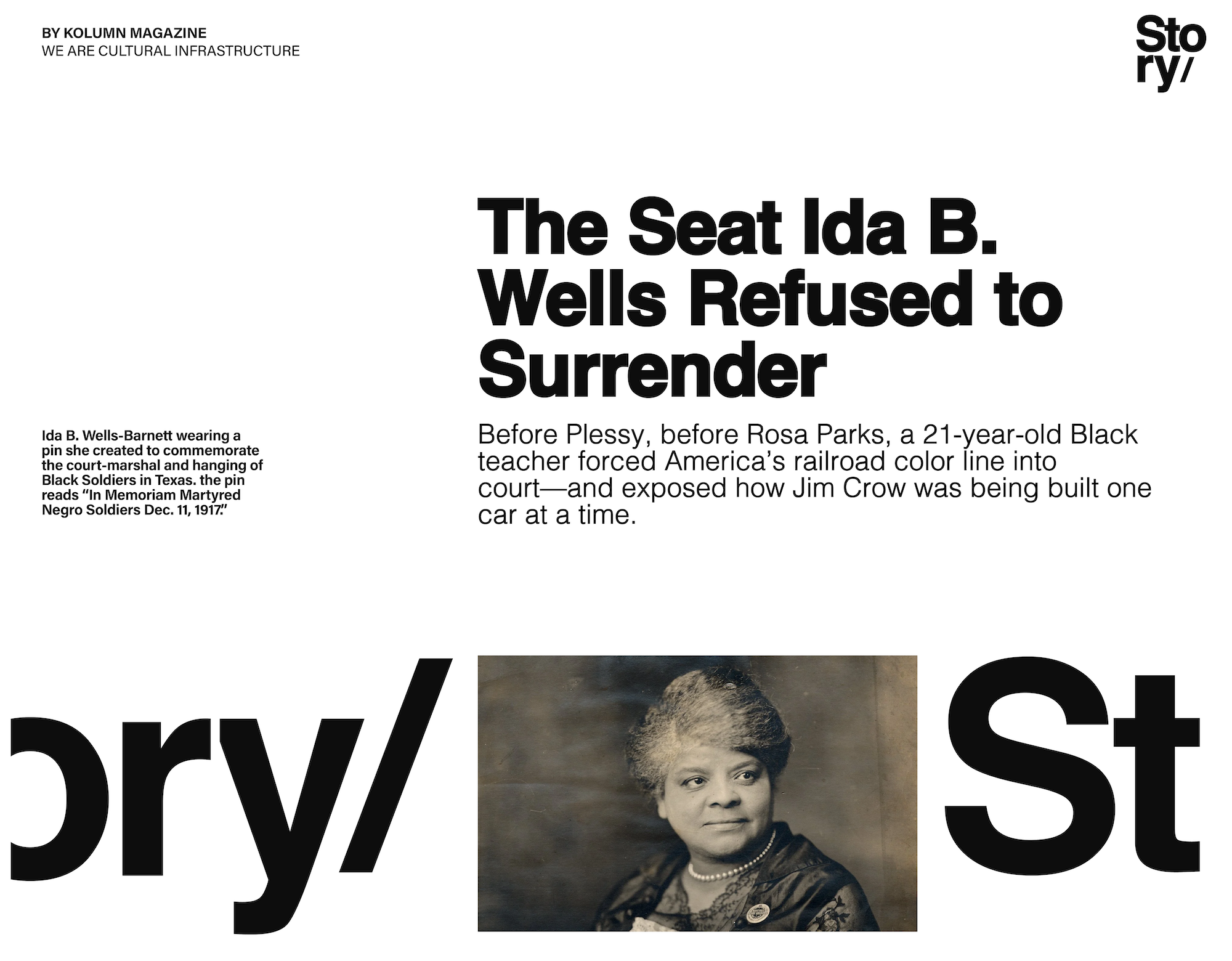
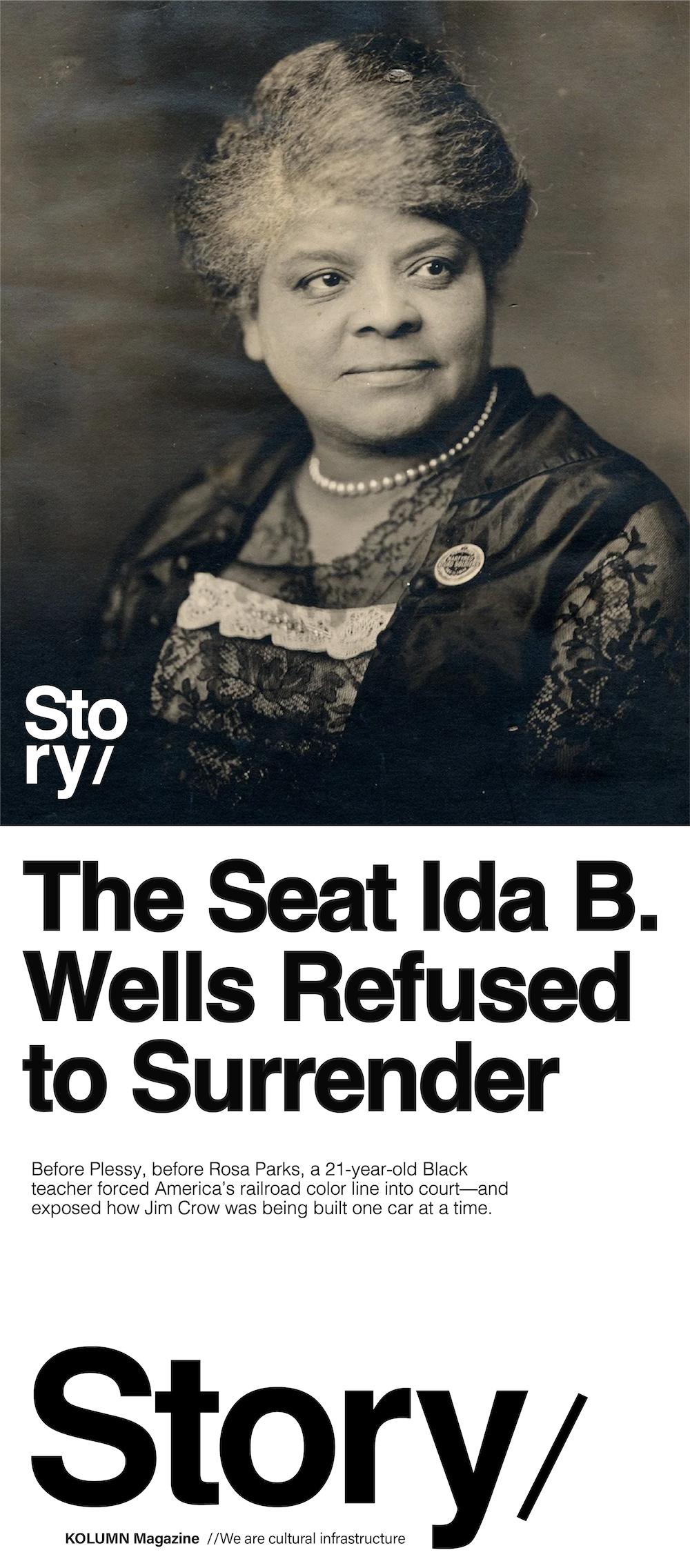
The story often begins with the image of a woman refusing to move. America knows that image best through Rosa Parks in Montgomery in 1955, through a bus seat transformed into civic scripture. But more than seventy years earlier, on a railroad line outside Memphis, another Black woman turned a paid fare into a constitutional demand. Ida B. Wells, then a young teacher traveling between Memphis and Woodstock, Tennessee, boarded a Chesapeake, Ohio & Southwestern Railroad train and took her seat in the ladies’ car. She had purchased a first-class ticket. The conductor told her to leave that car and move to the smoking car, a space set aside for Black passengers. Wells refused. According to the Smithsonian National Portrait Gallery, she filed suit after being forcibly removed from the ladies’ car because she was Black; she won in Shelby County before the Tennessee Supreme Court reversed the ruling.
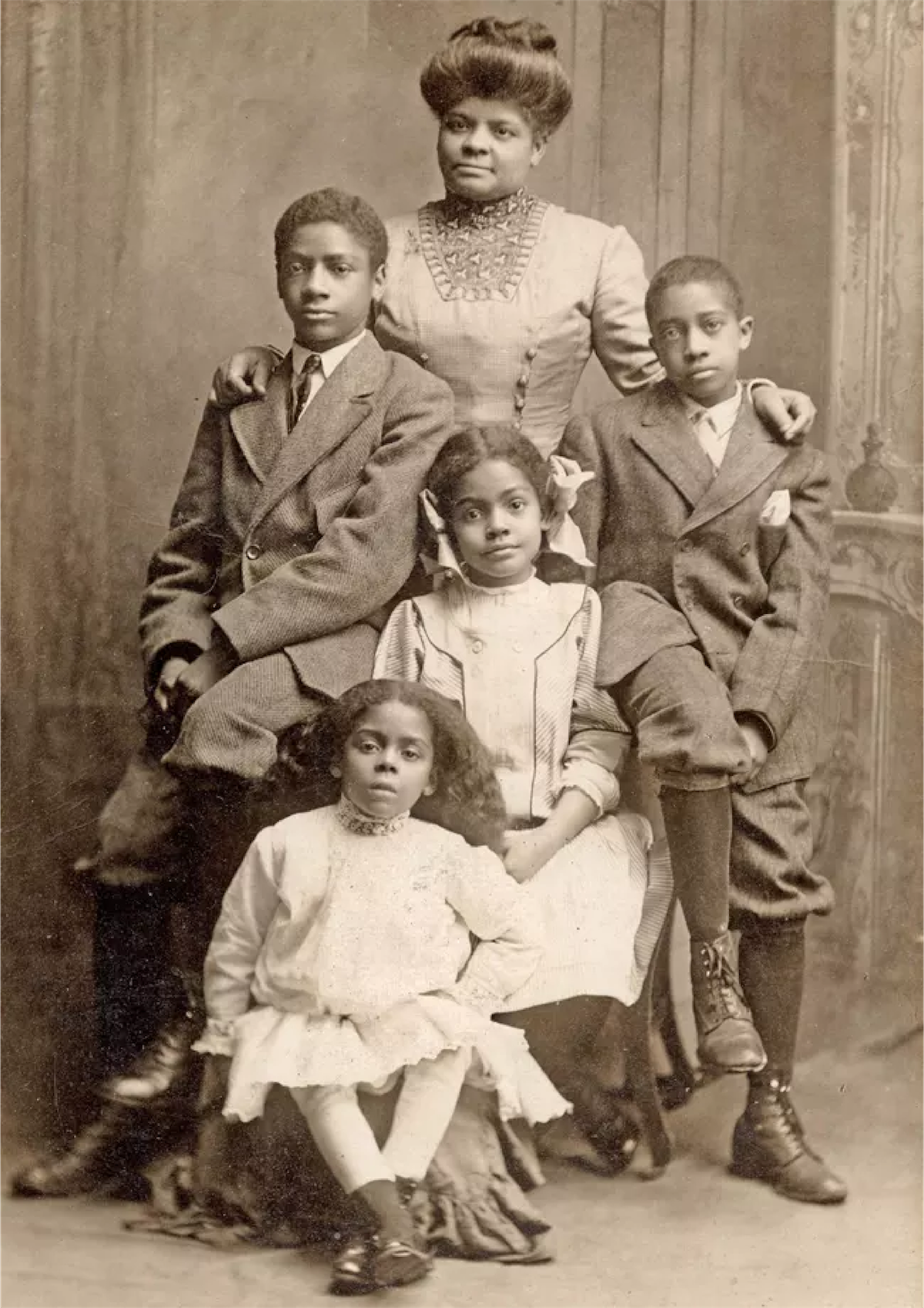
The incident was not merely a personal humiliation. It was a preview of the legal architecture that would harden into Jim Crow. The train car became a courtroom; the courtroom became a warning; the warning became a methodology. Wells learned that public injustice depended not only on force, but on narrative—on who was believed, who was described as respectable, who was cast as disorderly, and whose rights could be reduced to a railroad company’s convenience.
The details still cut. Wells was young, Black, female, educated, and alone in a white-controlled public space. She was not asking for special treatment. She was demanding the treatment her ticket had already purchased. In her own later account, quoted by WTTW Chicago Stories, the conductor tried to remove her by force, and Wells resisted physically before railroad employees dragged her from the car while white passengers applauded. That applause matters. It was the sound of spectators endorsing violence as etiquette.
A Teacher on the Memphis Line
Ida Bell Wells was born enslaved in Holly Springs, Mississippi, in 1862, during the Civil War. After emancipation, her parents became active in Reconstruction-era civic life, and Wells grew up amid the promise and betrayal of Black freedom. The National Women’s History Museum identifies her as a pioneering journalist, suffragist and anti-lynching activist whose early life was shaped by loss: after a yellow fever epidemic killed both parents and a younger sibling, Wells helped support her surviving brothers and sisters by teaching.
That labor matters to the railroad story. Wells was not a symbolic passenger placed there for later myth. She was commuting for work. She was a Black woman earning wages in the narrow space Reconstruction had left open, moving through a transportation network that linked labor, education and public life. Railroads promised mobility, but in the post-Reconstruction South they also became laboratories for racial control. The question was not simply where Black passengers could sit. It was whether Black freedom could travel.
The Chesapeake, Ohio & Southwestern Railroad had no right to sell dignity in one transaction and confiscate it in another. Wells understood the fraud immediately. As the Digital Public Library of America summarizes from the legal record, Wells traveled from Memphis to Woodstock, was asked to move because of her race, refused, was removed, and sued the railroad in 1884. Her case moved through the courts before reaching the Tennessee Supreme Court.
The Lawsuit as Counterattack
Wells did not retreat into private injury. She turned the assault into a claim. That move was radical because segregation’s daily power depended on making Black humiliation seem ordinary. A lawsuit interrupted that ordinariness. It forced the railroad to answer, forced the state to record the confrontation, and forced white institutions to confront a Black woman not as a supplicant but as a plaintiff.
The early result was extraordinary. Wells won damages in the lower court. The Smithsonian National Portrait Gallery notes that she prevailed at trial in Shelby County but lost when the railroad appealed. DPLA identifies the Supreme Court brief as part of the case record and places the appeal before the state’s highest court in the mid-1880s. The legal database Calculators Law lists the case as Chesapeake, Ohio & Southwestern Railroad v. Wells, decided by the Tennessee Supreme Court on April 5, 1887.
The reversal was devastating, but it was also clarifying. The court did more than deny Wells compensation. It affirmed the emerging premise that separation could be made to look lawful if white institutions controlled the meaning of equality. Nearly a decade before the U.S. Supreme Court’s 1896 decision in Plessy v. Ferguson, Wells had already encountered the fiction that “separate” spaces could be treated as equivalent. Learning for Justice describes the episode as preceding Plessy and notes that Wells won before the Tennessee Supreme Court overturned the result.
That sequence—victory, appeal, reversal—became part of Wells’s political education. Courts could be used, but they could not be trusted to complete the work of freedom. Law could expose injustice even when it refused to remedy it. The record itself could become ammunition.
The Gendered Violence of the “Ladies’ Car”
The insult to Wells was not only racial. It was also gendered. The conductor’s order presumed that white women’s comfort defined the ladies’ car and that Black womanhood could be exiled to the smoker without contradiction. Wells’s presence challenged the grammar of Southern respectability. She was a woman, but not the kind white railroad custom wished to protect. She was a paying first-class passenger, but not the kind the railroad wanted to imagine as first-class.
This is why the ladies’ car was such a charged battlefield. It was not just a seating category. It was a public declaration of who could be seen as refined, respectable and worthy of protection. By refusing to leave, Wells forced the railroad to reveal that its category of “ladies” was racial, not moral.
That fact would echo throughout her career. Wells later became one of the fiercest critics of the racist myth that lynching protected white womanhood. Her anti-lynching journalism attacked the lie that mobs were defending women from Black criminality. In Southern Horrors: Lynch Law in All Its Phases, available through Encyclopedia Virginia, Wells documented how sexual accusations were used to justify racial terror. The railroad incident had already taught her that white womanhood could be used as a civic weapon—and that Black womanhood could be denied protection even in spaces supposedly organized around female respectability.
From Railroad Plaintiff to Investigative Journalist
The train incident did not create Ida B. Wells whole. But it sharpened the instrument. Wells began writing more forcefully about racial injustice, education and public policy. She became associated with Black newspapers, eventually emerging as one of the most important journalists in the United States. PBS traces her work to the Memphis Free Speech, where she became part-owner and used the paper to challenge white violence and racial lies.
The railroad case also taught Wells a durable lesson about evidence. She had been present. She had paid. She had resisted. Still, the legal system could reframe the facts to protect the powerful. That experience anticipated the method she would bring to lynching: gather details, test claims, name victims, compare public accusations with actual motives, and refuse the official story when it served white supremacy.
KOLUMN has previously framed Wells as a journalist who “documented lynching as a system of governance,” and that earlier KOLUMN treatment, “Ida B. Wells: The Case Against American Innocence”, is essential context for understanding the railroad incident. The train car was an early scene in the same larger drama: the battle over whether Black life would be narrated by those who harmed it or by those who survived and investigated the harm.
Memphis, Violence and the Making of a Crusade
In 1892, Wells’s life and work changed after the lynching of three Black men in Memphis: Thomas Moss, Calvin McDowell and Henry Stewart. Moss was Wells’s friend. The men were associated with the People’s Grocery, a Black-owned business whose success threatened white economic power. Wells rejected the standard white explanation for lynching and wrote instead about power, competition and terror. Library of Congress describes Wells’s journalism as courageous truth-telling in an era of yellow journalism and extreme racism, noting that she investigated lynching after a friend was killed in Memphis.
The retaliation was swift. While Wells was away from Memphis, a white mob destroyed the offices of her newspaper and threatened her life if she returned. Equal Justice Initiative records that on May 27, 1892, a white mob attacked and destroyed the Free Speech office while Wells was out of town. Exile did not silence her. It nationalized her.
The connection between the railroad case and the anti-lynching crusade is not incidental. In both, Wells confronted systems that depended on official lies. The railroad claimed order while practicing discrimination. Lynch mobs claimed justice while practicing terror. Courts, newspapers and civic leaders often laundered violence into respectability. Wells’s genius was to strip that respectability away.
Why the Train Still Matters
The removal of Ida B. Wells from the Chesapeake, Ohio & Southwestern train near Memphis belongs in the center of American civil-rights history, not at its margins. It predates the Montgomery bus boycott, predates Plessy, predates the common textbook timeline that often begins Black transportation protest in the twentieth century. Wells’s case shows that Black resistance to segregated mobility began as soon as segregationists tried to define public movement as white property.
It also complicates the national memory of civil disobedience. Wells did not merely sit still. She resisted. She sued. She wrote. She lost in court and continued fighting. Her defiance was not symbolic theater; it was a full-spectrum campaign—bodily resistance, legal action, public argument and historical recordkeeping.
In that sense, the train car near Memphis was not the beginning of Ida B. Wells’s courage. It was the place where courage found a template. The template would define her life: refuse the lie, force a record, name the system, and keep moving even when the law refuses justice.
The Afterlife of a Refusal
In 2020, the Pulitzer Prize Board awarded Wells a posthumous Special Citation for her “outstanding and courageous reporting” on lynching, a recognition noted by The Pulitzer Prizes. The honor arrived nearly ninety years after her death and more than a century after she began forcing America to read the evidence it preferred to bury.
But the railroad incident asks for more than commemoration. It asks for correction. Wells’s removal was not an isolated indignity; it was a legal and social rehearsal for the regime that would dominate Southern life for generations. It showed how segregation advanced through ordinary transactions: a ticket window, a train aisle, a conductor’s command, a court’s opinion. It also showed how resistance could begin in equally ordinary form: a woman taking the seat she paid for and saying, in effect, no.
KOLUMN’s archive of Black historical figures often returns to this tension between public memory and public record. Wells stands at the center of that mission because she understood that memory without evidence can be softened into nostalgia, and evidence without courage can remain unread. Her life joined the two.
The train left the station. The case was reversed. The court sided with the railroad. The white passengers applauded. Yet history did not end where the conductor wanted it to. Ida B. Wells made sure of that.
More great stories
Afro Sheen, Wall Street, and the Architecture of Black Possibility
July 6, 2026
No Comments
The Fire Inside the Fourth
July 5, 2026
No Comments