




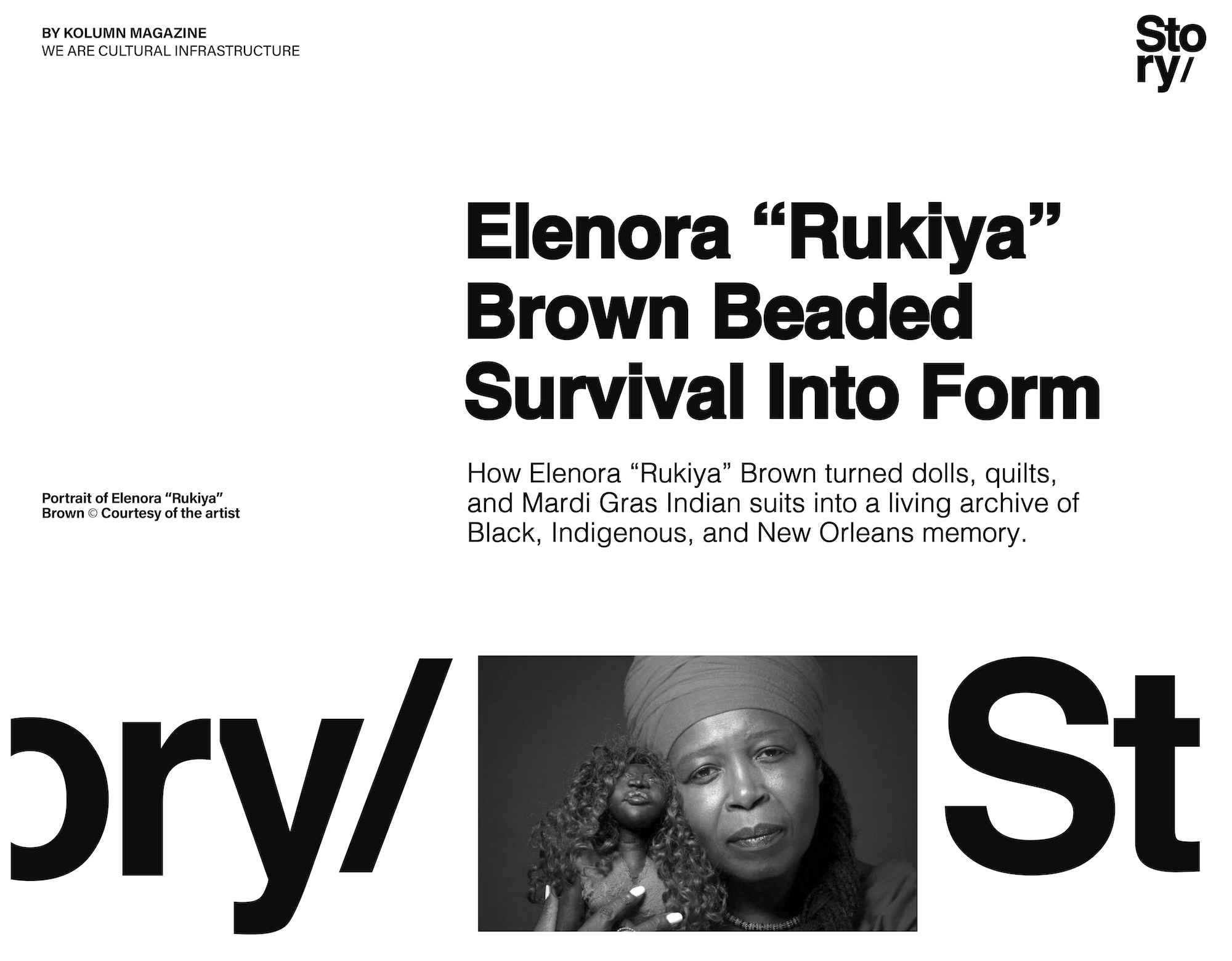
In Brown’s practice, craft is never secondary. It is where memory lives when official history has failed it.
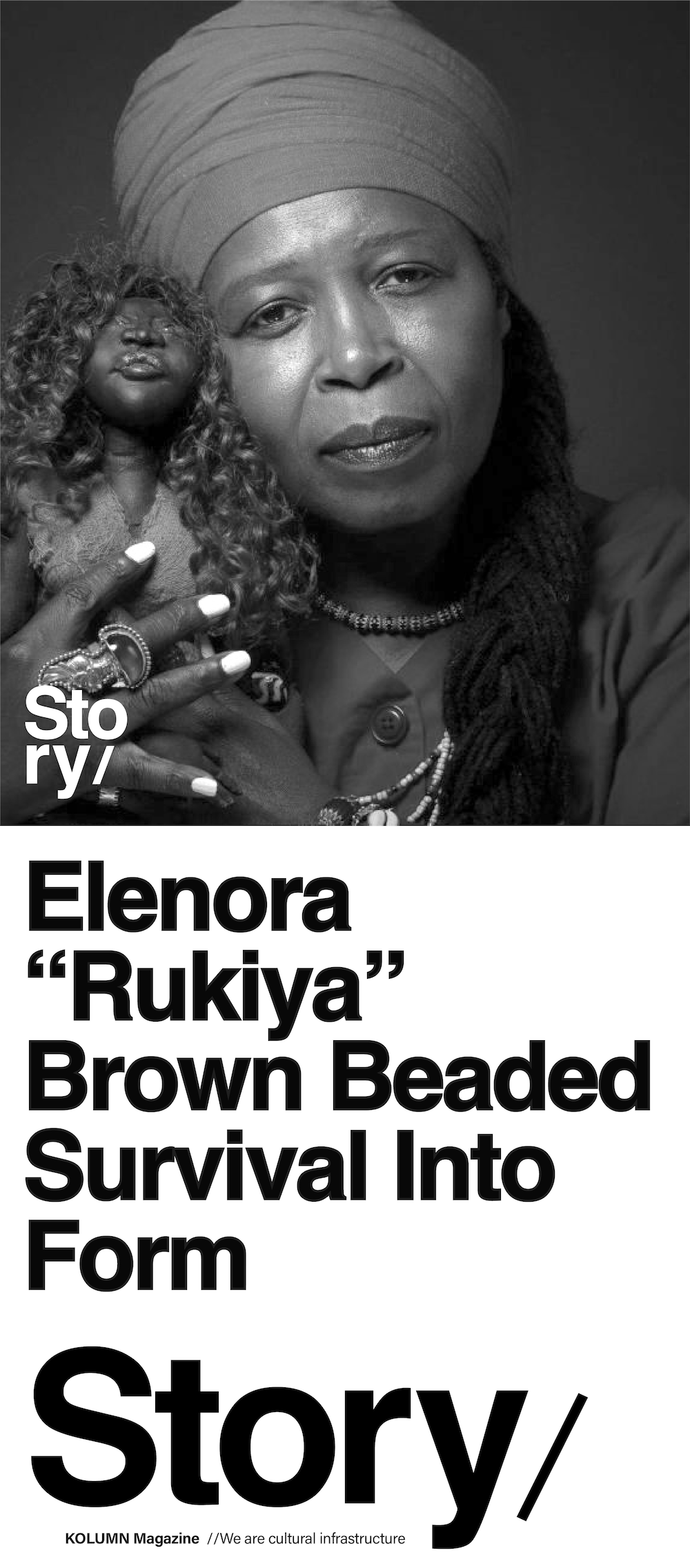
In Brown’s practice, craft is never secondary. It is where memory lives when official history has failed it.
By KOLUMN Magazine
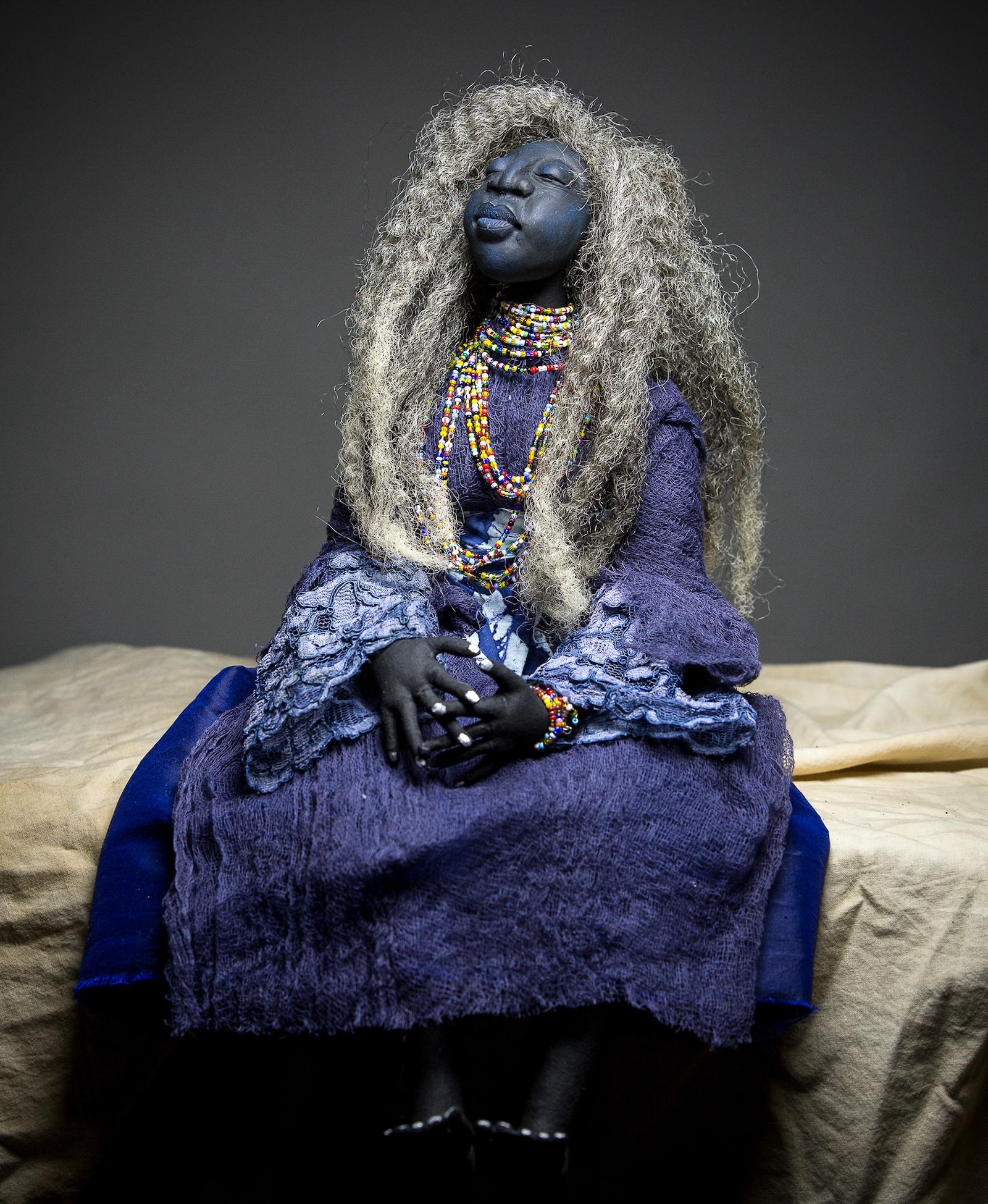
There are artists whose work can be understood from a wall label, and then there are artists whose work refuses that kind of distance. Elenora “Rukiya” Brown belongs firmly to the second category. To encounter her practice is to move through more than one tradition at once: doll making, quilting, textile art, sculpture, fashion, ritual design, performance, and the public pageantry of Black Masking Indian culture in New Orleans. Brown, a Chicago-born artist based in New Orleans, describes herself through making rather than through category. Institutional profiles from the Joan Mitchell Foundation, AWARE: Archives of Women Artists, Research and Exhibitions, and her own Rukiya Brown Gallery all point to the same essential fact: this is an artist whose materials carry biography, ancestry, grief, and ceremony all at once.
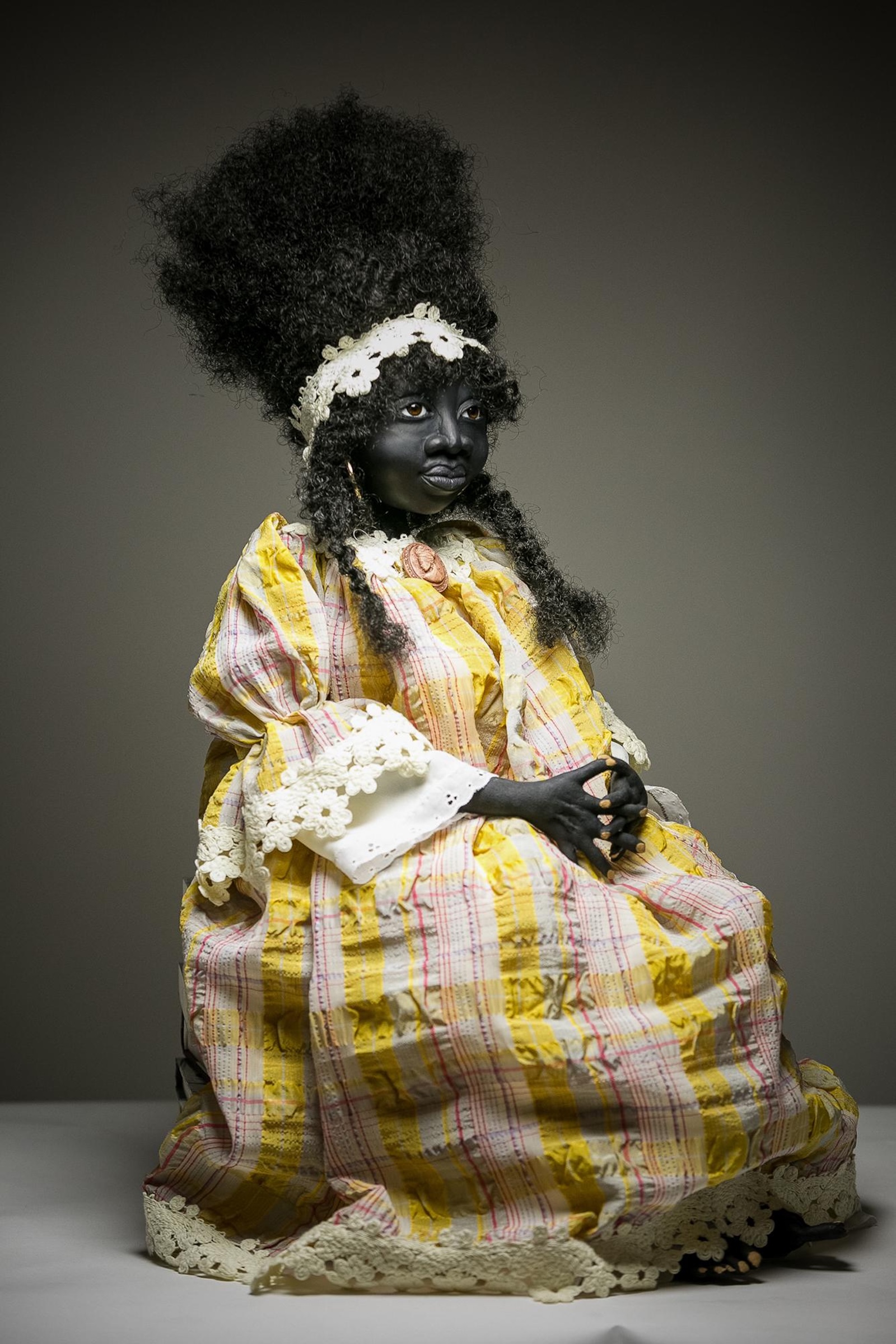
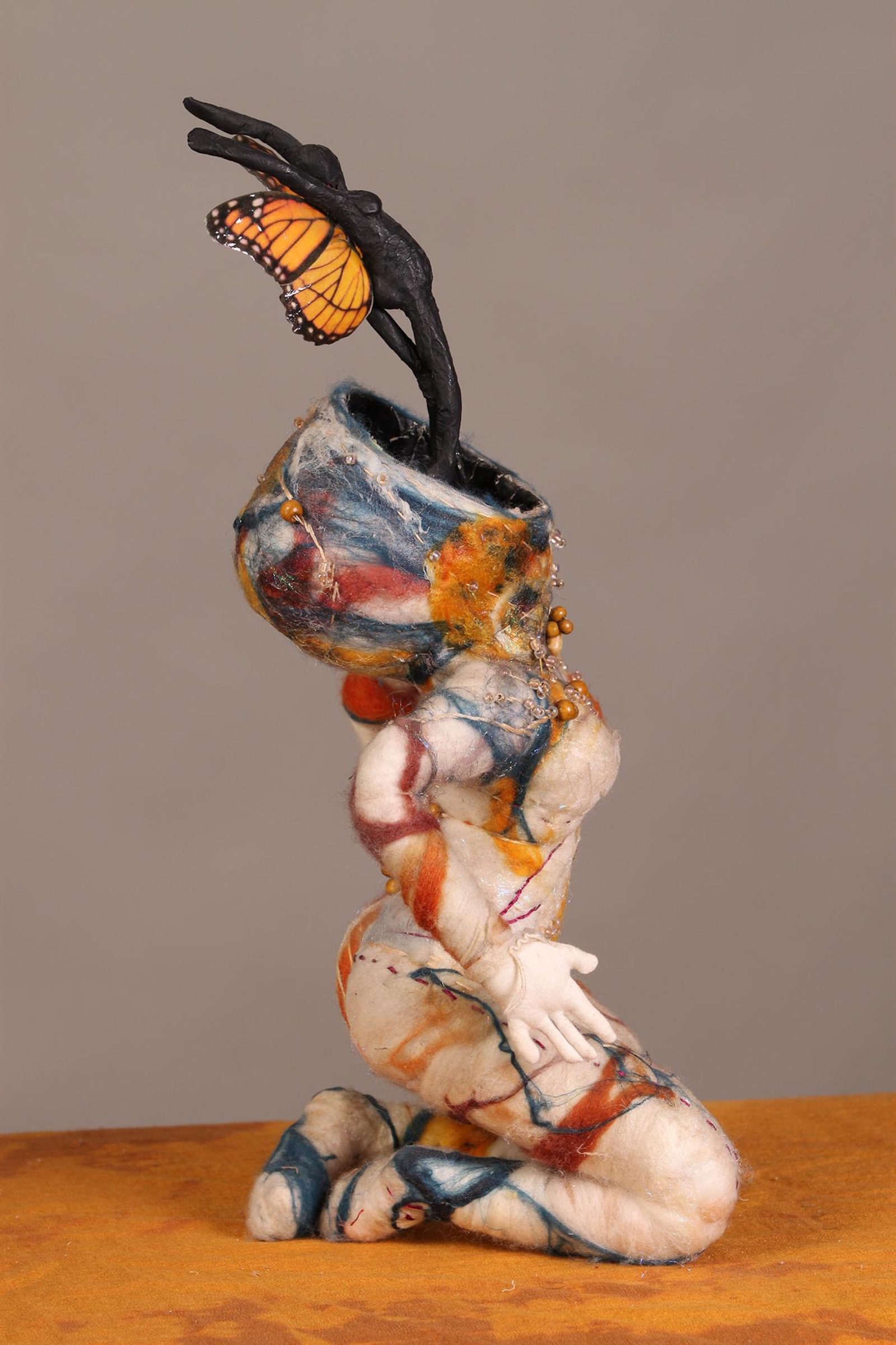
That matters because Brown’s work does not merely depict Black life in the Gulf South. It performs an older and harder task. It gathers what disaster, migration, racial hierarchy, and cultural amnesia try to scatter. Her dolls, which she long ago began calling “soft sculptures,” are not quaint collectibles and not simply figures of folk charm. They are memory devices. They are elegies. They are survivors. The same is true of her quilts and her Mardi Gras Indian suits, which she has made as Big Queen Rukiya within New Orleans masking culture. Across all of it runs a consistent proposition: making is a way to heal the self, and healing the self can become an offering to a community. Brown says as much in institutional material from the New Orleans Museum of Art, which describes her art as a form of therapy that begins with herself and extends outward.
That proposition feels especially resonant now, in a period when American cultural institutions are increasingly willing to celebrate Black makers while still struggling to fully understand the labor systems, spiritual inheritances, and civic conditions that shape their work. Brown’s life cuts straight through those questions. She comes from a line of women homemakers and domestic workers, according to AWARE, learned sewing on her older sister’s machine, and absorbed beading and handwork from her grandmother in Louisiana. The foundational craft disciplines of her life were not bestowed by elite academies. They were transmitted in domestic spaces, family lineages, girls’ clubs, workrooms, and survival economies.
Soft Sculpture as Cultural Assertion
That is part of what makes Brown so important. She stands in a long Black tradition in which the so-called minor arts are never minor. Needlework, beadwork, doll making, costume making, and quilting have often functioned inside Black communities as repositories for history, cosmology, mourning, and self-definition. Brown did not simply inherit those forms; she expanded them until they could hold the scale of her experience. Her art reaches from childhood in Chicago to family roots in Louisiana, from the intimate register of hand-sized dolls to the monumental visibility of masking suits, from private pain to public celebration. In Brown’s hands, craft becomes theory. Ornament becomes archive. Performance becomes a claim on history.
A useful way to understand Brown is to begin with the refusal embedded in the phrase “soft sculpture.” The Joan Mitchell Foundation notes that Brown began making dolls as a young girl for self-expression and stress relief, but as her practice matured she deliberately renamed those works. That shift was more than branding. It signaled scale, seriousness, and an insistence that these figures be read as fully artistic objects, anchored in Chahta identity, African cultural significance, and storytelling traditions. The renaming pushed back against the historical diminishment of Black women’s making, especially work that emerges from domestic craft vocabularies and is therefore too often sidelined as hobby, vernacular production, or sentimental decoration.
Rupture, Migration, and Return
Brown’s biography also carries rupture. AWARE reports that in 1969 a traumatic event brought her back to New Orleans, after which she stopped doll making and spent nearly a decade living in the United Kingdom. That interruption matters. It reminds us that artistic careers are not always linear and rarely protected from the violence of ordinary life. Brown’s later return to making was therefore not just a continuation of talent but a reclamation of self. Other accounts note that after returning to the United States she worked in fashion and retail before re-centering her artistic practice.
There is something distinctly New Orleans about that re-centering. This is a city where forms leak into one another: costume into sculpture, procession into theater, mourning into music, and everyday labor into ceremonial brilliance. Brown’s practice belongs to that ecology, but it also clarifies it. She demonstrates that the exuberance associated with New Orleans culture is often inseparable from disciplined labor and historical pain. The suits shine, but they shine because someone sewed for months. The dolls soothe, but they soothe because they have passed through grief. The pageant exists, but it exists because Black communities built their own ceremonial worlds when mainstream carnival systems excluded them. On that point, Brown’s life intersects with the broader history of the Mardi Gras Indians, or Black Masking Indians, whose traditions grew in part out of Black New Orleans’ exclusion from dominant Carnival structures, as Smithsonian Magazine explains.
Masking Traditions and the Politics of Visibility
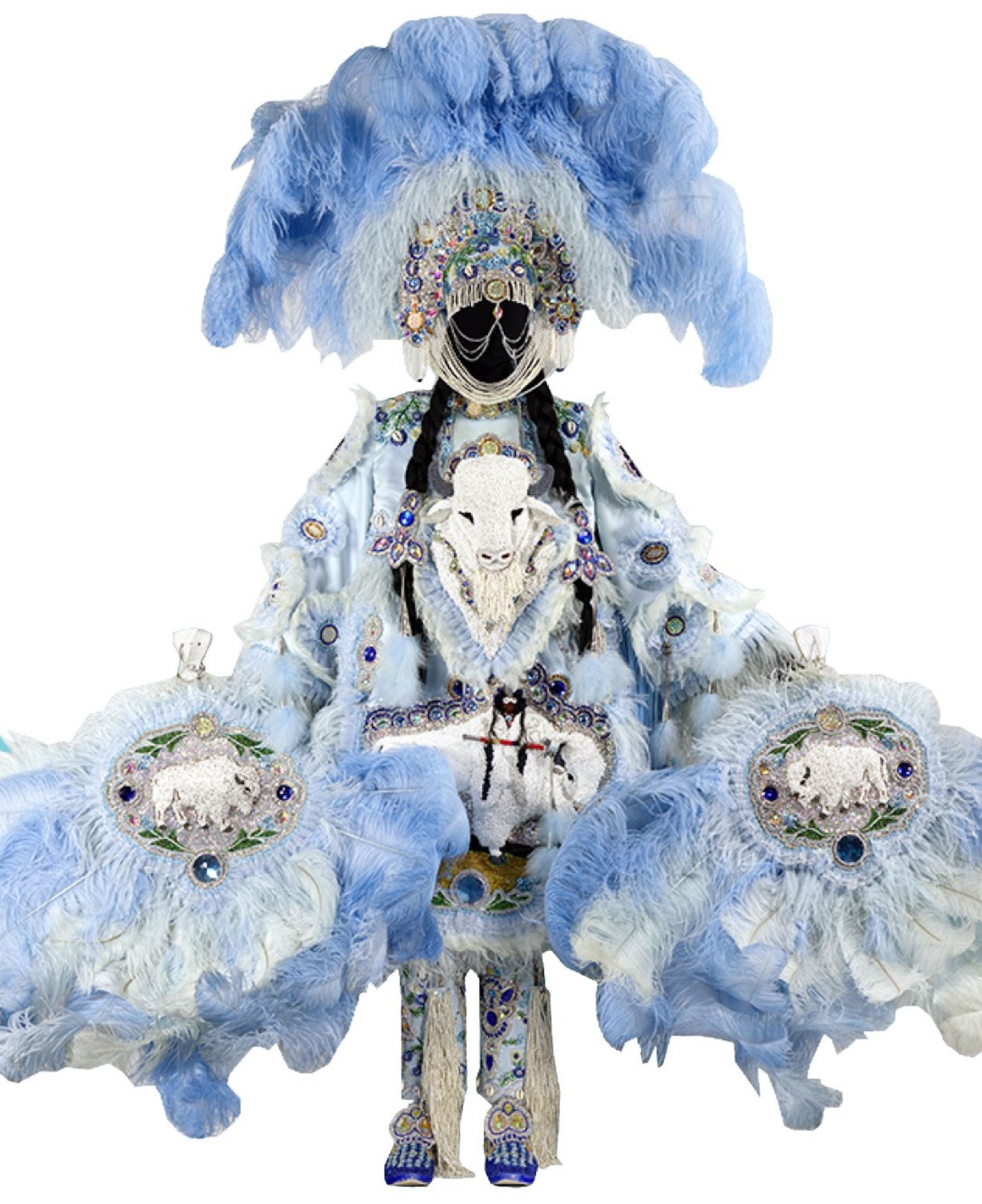
That context is essential. The romantic tourist version of New Orleans often flattens Black Masking Indian culture into spectacle. But the tradition has a deeper historical logic. As Smithsonian Magazine notes, archival evidence traces organized Mardi Gras Indian practice to the 1880s, when Black New Orleanians cultivated their own Carnival traditions after exclusion from mainstream celebrations. Over time the culture developed distinctive structures of tribes, roles, songs, visual competition, and hand-crafted suits that can take six months to a year to complete. Brown enters that lineage not as a peripheral admirer but as an active maker and masking queen.
The Joan Mitchell Foundation identifies Brown as a masking Indian Queen who participates directly in New Orleans parading traditions. The New Orleans Museum of Art goes further, situating her as an internationally recognized maker of “soft sculptures” and Mardi Gras InJun suits and identifying one of her Hurricane Katrina dolls as part of the story told around her public presence there. To describe Brown simply as a visual artist, then, is accurate but insufficient. She is also a bearer of cultural practice, a public historian working in beads and cloth, and a participant in one of the most symbolically layered art forms in American life.
Community Before Institutions
Her works make that plain. According to AWARE and Brown’s own gallery biography, pieces such as When Black People Could Fly (2014), I am the First Gold the First Diamond, I am the Living Earth (2015), and White Buffalo Calf Woman or White Bison (2017) entered major collections including the New Orleans Museum of Art, Ohio State University Libraries, and the Musée du quai Branly–Jacques Chirac in Paris. These are not small achievements. They signal institutional recognition of Brown’s technical virtuosity, but they also indicate a larger shift: Black Masking Indian aesthetics, once too often relegated to ethnographic curiosity or street-culture exotica, are increasingly being read as contemporary art with complex transnational resonance.
And yet it would be a mistake to let museum validation become the center of her story. Brown was making before institutions caught up. Her dolls were shown at the Congo Square African Marketplace of the New Orleans Jazz and Heritage Festival and at the Essence Music Festival, and her career developed through community-facing venues and cultural circuits before and alongside formal acquisition. That history appears in Brown’s artist materials and in compiled biographical accounts indexed by multiple sources. The point is not just chronology. It is political. Brown’s work emerged in Black public space, in the kinds of marketplaces and festivals where art, commerce, memory, and neighborhood life still talk to each other.
After the Storm: Katrina as Turning Point
To write about Brown without writing about Hurricane Katrina would be to miss the decisive turning point in both her practice and the city around it. Katrina was not merely a weather event or even only a catastrophic flood. It was a revelation of American inequality, a mass displacement, and a brutal test of whether Black cultural life in New Orleans would be treated as expendable. Government and research sources continue to underscore the scale: GAO reported that Hurricanes Katrina and Rita displaced more than a million people, while a U.S. Census Bureau working paper described Katrina as leaving behind destroyed homes and more than 400,000 displaced residents in New Orleans alone.
Brown’s post-Katrina work carries that devastation in direct and unsparing ways. Biographical accounts tied to her practice describe Winds of Change (2005) as a response to the disaster and to what Brown understood as a second Great Migration for New Orleans, while Uprooted: Look up, Hold on (2006) reportedly comprised one hundred dolls made to communicate resilience to fellow survivors. Another series, Unclaimed Memories (2007), paid homage to community members whose bodies remained unclaimed after the storm. Even before one sees the objects, the titles announce Brown’s method: she does not aestheticize catastrophe from a comfortable distance. She translates civic trauma into figures that insist on witness.
Memory, Spirituality, and the Work of Healing
That choice is artistically consequential. Katrina generated thousands of images, from helicopters and rooftops to ruined houses and mold-streaked walls. Much of that imagery circulated through the media as spectacle. Brown’s response moved in another direction. She miniaturized disaster into intimate forms that can be held in the eye, and in that intimacy she restored personhood. A soft sculpture can grieve in a way a satellite image cannot. A doll can bear memory in a way a damage map cannot. Brown’s figures do not simply symbolize loss; they dignify the dead, the displaced, and the overlooked.
There is also a theological undertow in this work. Brown’s figures often feel less like portraits than presences. They are elaborately dressed, materially specific, but they also seem to move in a zone between body and spirit. That quality may be one reason her practice resists easy distinction between sculpture and ritual object. Her work recalls, without merely imitating, the long Black diasporic tradition in which crafted figures can hold healing, intercession, or ancestral energy. The available institutional record is careful and often secular in tone, but Brown herself repeatedly speaks of therapy, healing, and offering, language that suggests making as a moral and communal act rather than simply an aesthetic one. The New Orleans Museum of Art emphasizes exactly that dimension, presenting her work as an outward extension of an inward healing process.
This is where Brown’s practice becomes especially rich for a KOLUMN readership. KOLUMN has repeatedly returned to Black lives that reveal culture not as accessory but as infrastructure: the work that holds communities together when states fail them, and the forms of beauty that also function as repositories of memory. Brown belongs in that lineage. Her art demonstrates that culture is not only what a city markets after a crisis. It is what lets a people survive the crisis in the first place.
Materials, Accumulation, and the Language of Craft
That is visible in her materials. Feathers, beads, shells, polymer clay, cloth, sequins, faux hair, paint, wood, cowries, and metal recur across documented works. AWARE lists the materials for White Bison as fabrics, cotton, glass pearls, feathers, wood, cowries, and metal; exhibition records from Octavia Art Gallery identify works like Unclaimed Memories (Adinkra) and Blackbird in polymer clay, cloth, sequins, shells, beads, and related media. These are not arbitrary ingredients. They belong to a language of touch, shine, burden, adornment, and ancestral reference. Brown’s surfaces do not merely decorate form; they produce meaning through accumulation.
Accumulation is, in fact, one of her great subjects. A Brown figure is rarely nakedly declarative. It gathers things. It is layered, draped, beaded, wrapped, textured, and weighted. That visual logic mirrors the social world Brown comes from, where history itself is layered: African retention, Indigenous relation, domestic labor, migration, market culture, church culture, carnival, disaster, and recovery. In some artists, layering can feel like citation. In Brown it feels like kinship. Her works do not quote tradition from the outside. They emerge from inside the density of lived inheritance.
The same holds true for color. Brown understands chromatic intensity not as excess but as declaration. The strong blues, whites, golds, reds, and earth tones documented across her work do not merely please the eye; they signal sovereignty, sacred charge, and ceremonial seriousness. Her masking suits, especially, operate in the visual register of assertion. They are not costumes in the diminishing sense of disguise. They are public identities, handmade monuments worn on the body. When Smithsonian Magazine describes Black Masking Indian suits as handcrafted works that can take months to make and draw from African and Native ceremonial dress, Brown’s practice stands as one of the clearest contemporary expressions of that tradition.
Recognition, Institutions, and Global Reach
One of the most striking facts about Brown’s career is how decisively she has moved across registers without losing coherence. She has created dolls and quilts, but also performance suits. She has shown in community marketplaces and entered major collections. She has worked in formats intimate enough for a mantelpiece and grand enough for museum acquisition. The Imago Mundi Collection also documents Awakening Metamorphosis within its New Orleans holdings, extending the reach of Brown’s work into an international contemporary-art context.
That translatability is part of her achievement, but it can also obscure what is specific about her. Brown is not important because her work can be made legible to the contemporary art world. She is important because her work makes visible aesthetic systems the contemporary art world has too often undervalued until they are reframed by institutional approval. Brown’s practice asks a simple but destabilizing question: what happens when we start from Black women’s craft lineages, Gulf South ceremonial labor, and post-disaster communal memory as central categories rather than peripheral ones? The answer is that American art history begins to look different.
Brown’s own biography helps explain why. AWARE emphasizes that she comes from women whose labor was domestic and service-oriented. Brown’s craft education was familial, informal, embodied. That background places her in a long continuum with Black makers whose artistry has historically been misread because it was learned outside elite institutions or because it moved through feminized forms of labor. The very disciplines that trained Brown, sewing, beading, dressing figures, constructing beauty by hand, have often been dismissed by gatekeepers precisely because they emerge from domestic and community contexts. Brown’s career answers that dismissal with force.
Her public recognition also tells a story. Brown’s gallery biography states that she has been publicly honored by New Orleans Mayor LaToya Cantrell and former U.S. Representative Cedric Richmond as a cultural and historical ambassador, and that one of her soft sculptures was acquired by The Colored Girls Museum in Philadelphia in 2022. The same source notes that she has been exhibited and awarded by the New Orleans Jazz and Heritage Festival. Even where mainstream national coverage is comparatively sparse, those recognitions signal how Brown is understood in the communities and institutions nearest the work: as an artist, yes, but also as a steward.
Identity, Inheritance, and Cultural Complexity
That stewardship shows up in the way Brown speaks about community. The NOMA program text frames all of her work as an offering to the “community of Color,” meant to inform and inspire through research and lived majesty. That is strong language, and it invites an equally strong reading. Brown is not merely self-expressive. She is world-building. Her work attempts to preserve, dignify, and transmit forms of cultural knowledge that are vulnerable to distortion when mediated only through tourism, academia, or the market.
This is where her Black and Indigenous references require care. Brown’s materials and institutional bios identify a connection to Chahta heritage, and her practice also exists within the layered debates surrounding Black Masking Indian traditions, Native affiliation, and cultural borrowing. The Joan Mitchell Foundation explicitly connects her “soft-sculptures” to Chahta identity, while Smithsonian Magazine notes that Black Masking Indian culture itself exists within a complex history that includes both claims of Native kinship and debates over appropriation. Brown’s work is best understood within that complexity, not outside it. It does not flatten Black and Indigenous histories into a slogan. It inhabits the uneasy, profoundly Louisiana reality in which many communities understand identity through interwoven inheritances and contested memory.
Gender, Legacy, and the Work of Cultural Survival
This complexity is one reason Brown’s work feels contemporary in the deepest sense. It is not contemporary because it follows fashion. It is contemporary because it addresses the actual conditions of identity in America: mixed, wounded, regionally specific, ceremonial, racialized, migratory, and stubbornly alive. Brown’s figures rarely look generic. They appear inhabited by place. They carry New Orleans in their making, but also Chicago, family memory, Gulf South ritual, and the afterlife of displacement. If contemporary art sometimes prizes fragmentation, Brown offers a different model: not seamless unity, but assembled wholeness.
Her 2021 residency at the Joan Mitchell Center is another sign of how her practice has entered serious dialogue with contemporary art institutions. The Joan Mitchell Foundation announced Brown among New Orleans-based artists-in-residence, and its artist page and interview material present her as a fully realized maker engaged across textile, sculpture, and storytelling forms. Residencies often function as validation, but in Brown’s case the residency also reads as correction: an acknowledgment that artists formed in community traditions and ceremonial labor belong in the same critical frame as those trained through more formal contemporary-art channels.
Still, Brown’s significance is larger than career milestones. It lives in what her work allows us to see about New Orleans itself. Too often the city is read through binaries: joy and tragedy, music and floodwater, tourism and neglect. Brown collapses those oppositions because her practice is built from their overlap. She makes joy out of grief without denying grief. She makes grandeur out of fragility without denying fragility. She participates in pageantry without severing it from history. In that sense she is one of the most precise interpreters of New Orleans culture: not because she explains it, but because she embodies its method.
That embodiment also helps explain why her work travels. A viewer in Paris may not know the particulars of Central City, Super Sunday, or post-Katrina dispersal, but they can recognize the intensity of a handmade object that insists on dignity. They can recognize ceremonial scale. They can recognize the difference between mass-manufactured spectacle and painstaking labor. Brown’s work is locally rooted and internationally legible because it is built on human fundamentals: grief, beauty, reverence, endurance, and the need to be seen whole.
There is, finally, the matter of gender. Brown’s place as Big Queen and as an artist working through dolls, quilts, and adornment challenges more than one hierarchy at once. She stands against the art-world tendency to trivialize feminized forms of labor. She stands against the civic tendency to celebrate Black women’s cultural work while underfunding the communities that produce it. And she stands against a historical record that has too often documented Black public culture through male figures while leaving women’s making under-described. Brown’s career is a corrective to all of that. She is not ancillary to the tradition. She is one of its authors.
For KOLUMN, that may be the central takeaway. Elenora “Rukiya” Brown matters because she forces a broader definition of what counts as major art, major history, and major civic contribution. She matters because her work reveals the false boundary between fine art and cultural labor. She matters because the worlds she builds, in dolls, quilts, and suits, are not decorative afterthoughts to history. They are how history survives where institutions have neglected it.
And she matters because the story of Black America cannot be told only through legislatures, pulpits, courtrooms, and marches. It must also be told through the makers who gave communities forms sturdy enough to carry sorrow and splendor at the same time. Brown is one of those makers. She has taken handwork, memory, ancestry, and the ceremonial force of New Orleans Black life and turned them into an artistic language that is unmistakably her own. In another country, or perhaps in a fairer version of this one, artists like Brown would never have needed to wait for institutions to confirm what communities already knew. But even within the limits of this country, the record is catching up.
Her record now includes international exhibitions, museum collections, major residencies, and a body of work that continues to testify to what Black cultural practice can do. It can mourn the dead. It can honor the living. It can make room for those displaced by disaster. It can preserve stories too fragile for official archives. It can announce, in public color and painstaking labor, that beauty is not frivolous in a wounded world. Sometimes it is the form survival takes.
In that sense, Brown’s art is not about the past alone, even when it draws so powerfully on ancestry and memory. It is also about what future Black cultural history will require if it is to remain alive: makers who understand that tradition is not a museum condition but an active verb. Brown has spent decades conjugating that verb in cloth, clay, beads, and feathers. She has done it across personal rupture and civic disaster. She has done it in the intimate scale of a doll and the overwhelming scale of a suit. She has done it as artist, designer, quilter, fabricator, and Big Queen.
What she has built is more than a body of work. It is a theory of survival you can touch.
And for that reason, Elenora “Rukiya” Brown should be understood not as a niche figure on the edge of American art, but as one of the clearest examples of what American art looks like when it is grounded in Black women’s labor, community memory, and ritual imagination. She has spent a lifetime making forms that hold what history drops. The least a serious culture can do is learn how to read them.
More great stories
Afro Sheen, Wall Street, and the Architecture of Black Possibility
July 6, 2026
No Comments
The Fire Inside the Fourth
July 5, 2026
No Comments