


Bobby Seale’s legacy is not just that he protested power. It is that he tried to organize ordinary people to wield it.
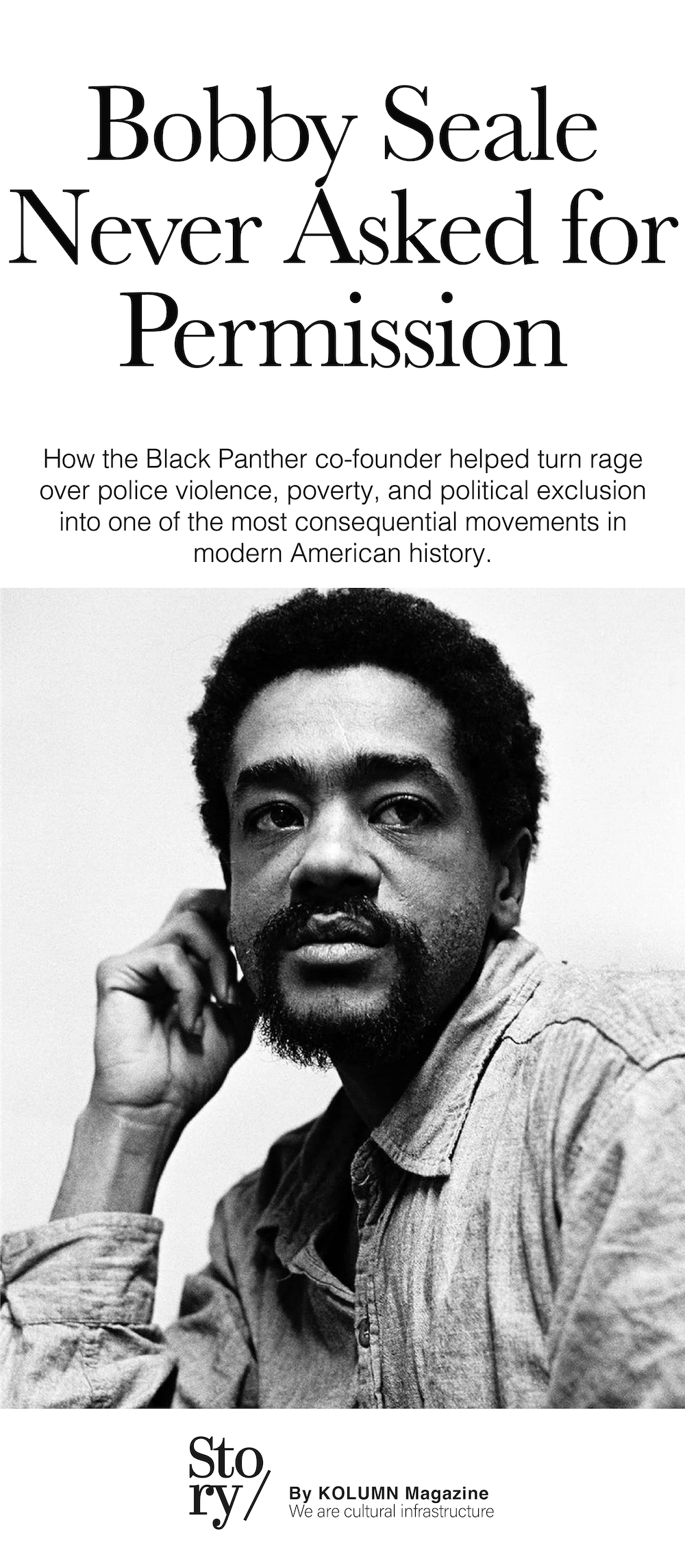
Bobby Seale’s legacy is not just that he protested power. It is that he tried to organize ordinary people to wield it.
By KOLUMN Magazine
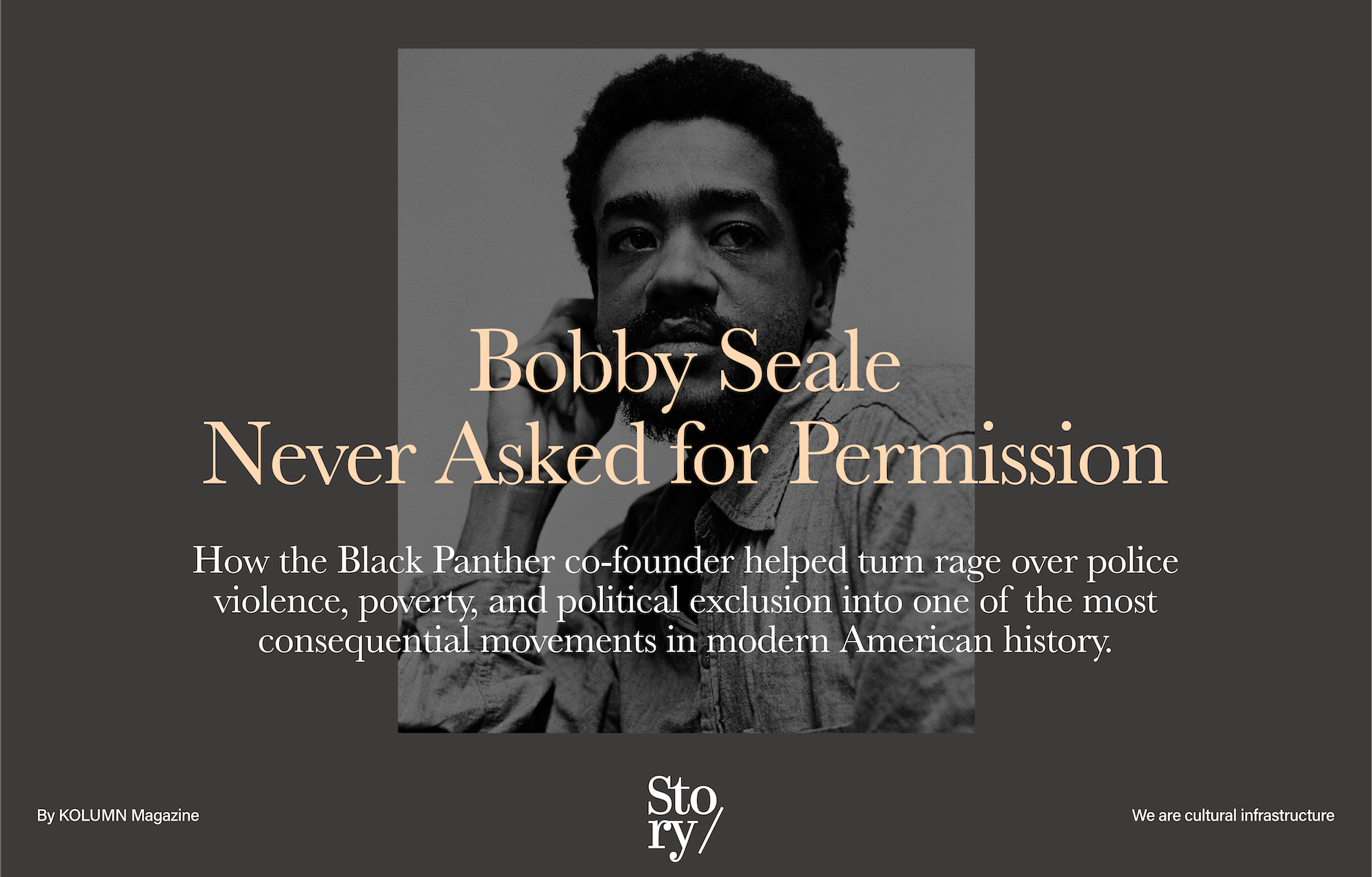
Bobby Seale has long occupied a strange place in American memory. He is famous enough to be recognized as one of the founders of the Black Panther Party, yet often flattened into a symbol: the beret, the militancy, the courtroom outrage, the photograph of a man the state tried to literally bind and silence. That version of Seale is not false, exactly. It is just radically incomplete. To understand his significance, you have to move past the spectacle and into the mechanics of what he actually helped build: an organization, a political language, a method of community survival, and a critique of American power that has refused to stay in the past.
Seale was born Robert George Seale on October 22, 1936, in Liberty, Texas, and grew up in a family that moved through several Texas cities before settling in Oakland, California, during World War II. That migration matters. Like many Black families who moved west in search of work and a measure of dignity, the Seales landed in a city that offered industrial possibility without racial justice. Oakland could promise employment, but not equality; it could offer urban opportunity, but not protection from policing, segregation, or exclusion. Seale’s politics would eventually emerge from that contradiction: the gap between what America said about itself and what Black people actually experienced.
Merritt College and the Meeting That Changed Everything
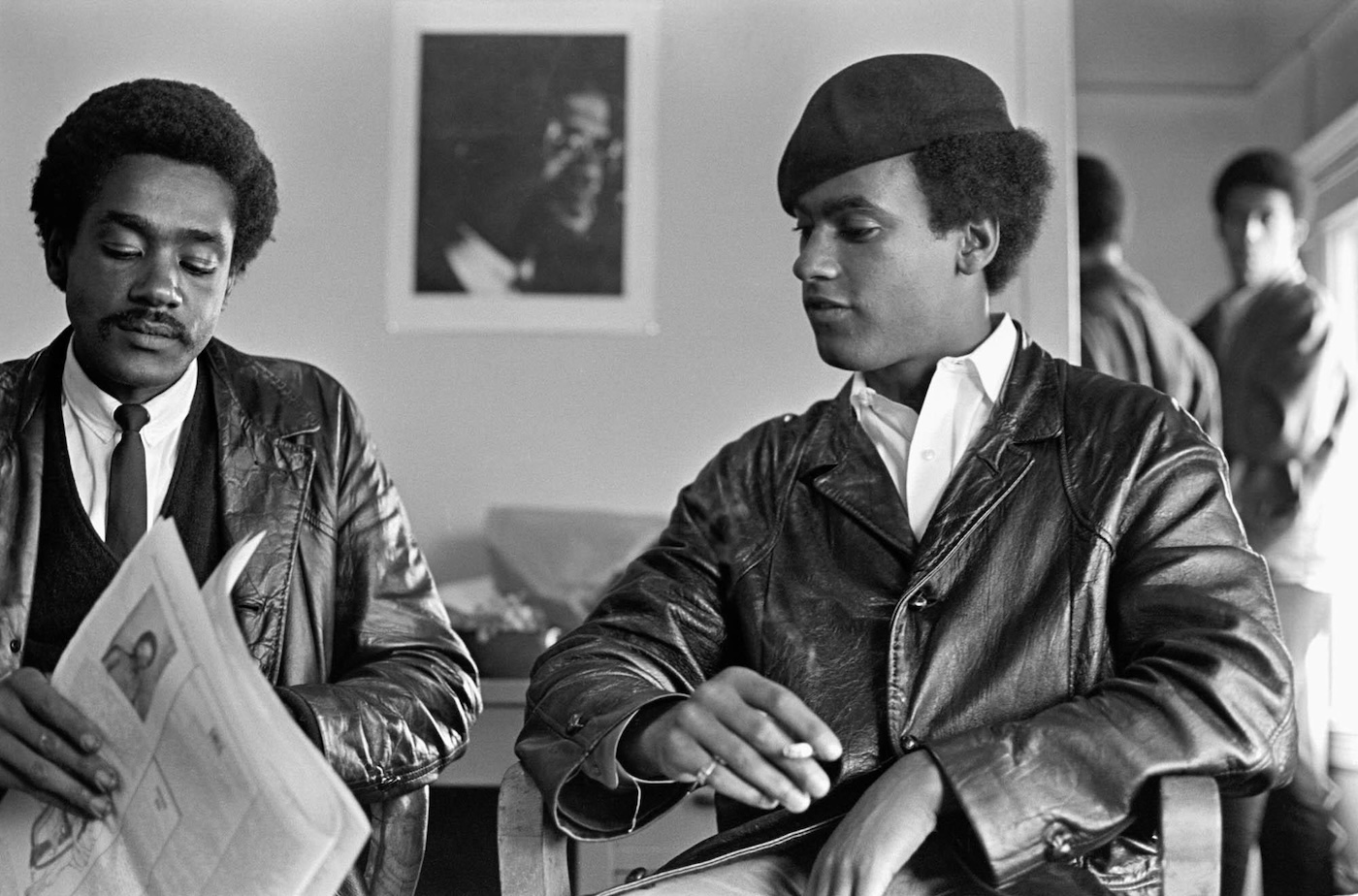
Before he became a revolutionary icon, Seale was a working-class young man moving through the ordinary and brutalizing institutions that shaped mid-century Black American life. He served in the U.S. Air Force, and after his service attended Merritt College in Oakland. Merritt was crucial. It was there that he met Huey P. Newton, and it was there that the political chemistry between theory and discipline, rhetoric and organization, began to solidify. Seale was not a detached ideologue. He was a doer, an organizer, a man attentive to structure. Newton brought a deep appetite for political philosophy; Seale brought administrative seriousness, strategic instinct, and a blunt, usable style of communication. Together they made something much larger than themselves.
Building the Black Panther Party
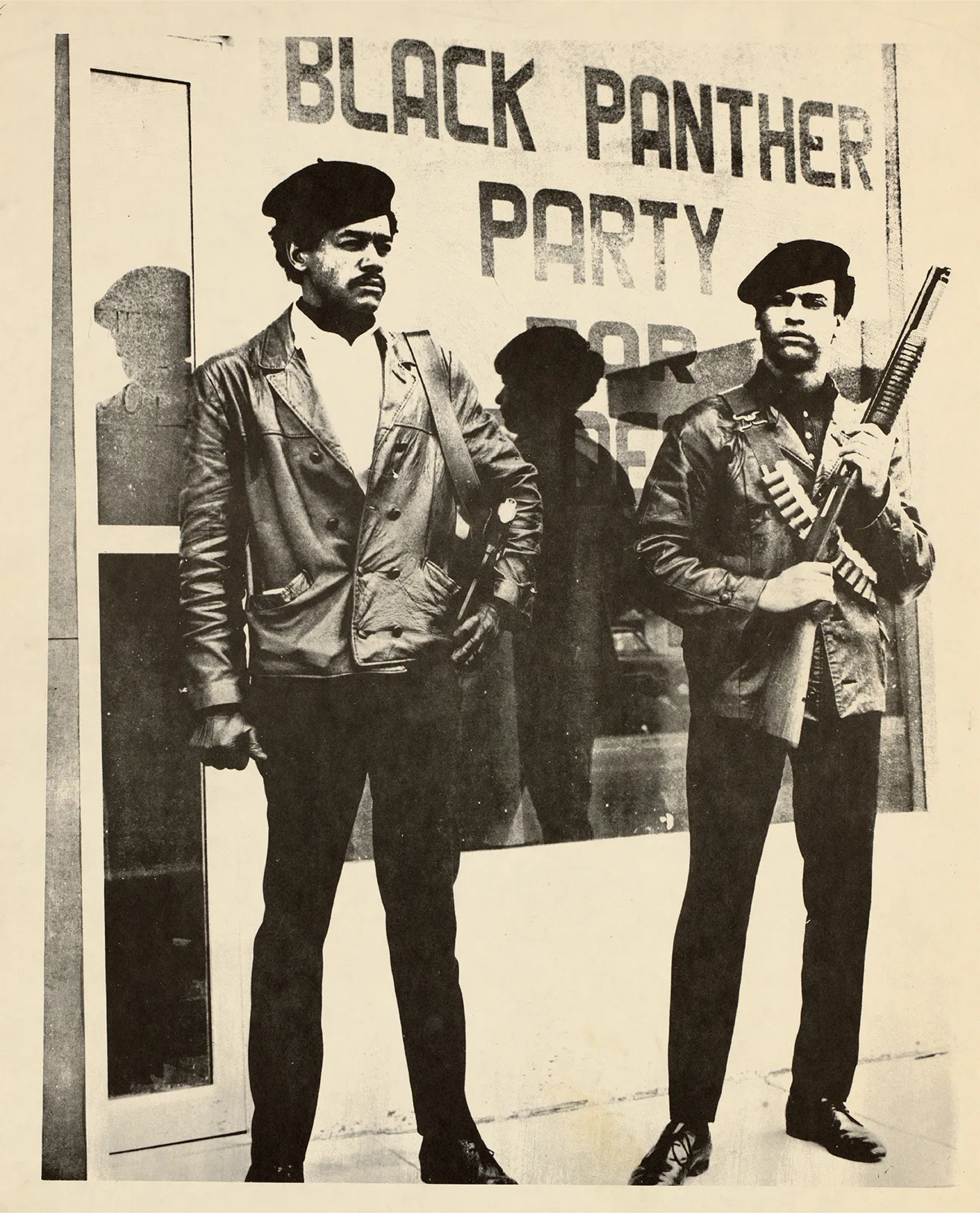
That “something” became the Black Panther Party for Self-Defense, founded in Oakland in October 1966. The origin story has become legendary, but its continuing force lies in how grounded it was. The party did not begin as abstraction. It began with police violence, unmet basic needs, frustration with the limits of liberal reform, and a conviction that Black people needed an organization capable of both political education and material action. Seale and Newton drew inspiration from Malcolm X, from anti-colonial struggle, and from the Lowndes County Freedom Organization in Alabama, whose black panther symbol helped give the new party its name. The symbolism mattered, but so did the method: the panther, Seale later explained, was not aggressive by nature, but dangerous when cornered. That metaphor captured both the mood and the argument of the moment.
The Ten-Point Program and Community Survival
The Panthers’ Ten-Point Program remains one of the clearest statements of radical Black democratic demands produced in the twentieth century. It called for freedom, full employment, decent housing, education that told the truth about Black history, exemption of Black men from military service, an end to police brutality, freedom for Black prisoners, fair trials, and “land, bread, housing, education, clothing, justice and peace.” Seale co-wrote it with Newton, and what stands out now is not only its militancy but its breadth. The document fused anti-police-brutality politics to class critique, anti-war politics, educational justice, and local control. It was not simply a manifesto of anger. It was a blueprint for governance from below.
That is one of the central truths about Seale that popular memory often misses. He was never only interested in confrontation. He was interested in institution-building. The Panthers became widely known for armed patrols observing police, and those patrols were indeed central to the party’s early public identity. At the time, California law still permitted the open carrying of loaded firearms, and Seale and Newton understood both the legal framework and the theatrical force of public patrol. They wanted to expose a basic American hypocrisy: that “law and order” could be celebrated as civic virtue when wielded by white authorities, but cast as criminal menace when Black citizens monitored the state’s behavior.
He understood that people do not join movements only because they are angry. They join because someone shows up with a plan, a breakfast tray, a newspaper, a clinic, a ride, a class, a program.
But the Panthers were never just the image of the gun. Even sympathetic retellings can get stuck there, seduced by the visual power of leather jackets and rifles. Seale himself repeatedly pushed back on that reduction. The party’s community “survival programs” became among its most enduring contributions: free breakfasts for children, health initiatives, political education, clothing drives, grocery distribution, liberation schools, and assistance for seniors. Scholars, museums, and oral histories have stressed that these programs were not side projects. They were core political work. They reframed the meaning of security. For Seale and the Panthers, safety did not mean merely the absence of police abuse; it meant the presence of food, healthcare, education, and community control.
The free breakfast program, in particular, has become one of the clearest examples of that philosophy. The Panthers did not just denounce hunger; they fed children before school. That distinction is part of why the program resonated so widely and why the FBI considered it dangerous. Hoover’s bureau understood that a movement becomes much harder to marginalize when it meets visible needs more effectively than public institutions do. In the long historical view, Seale helped popularize a model of Black political activism rooted in dual practice: resistance to state violence and the building of alternative community capacity. That template would echo through later movements, even among activists who would never identify as Panthers.
Repression and the Courtroom as Battleground
To write about Bobby Seale honestly, though, is to resist the temptation of sainthood. The Black Panther Party was a complicated, internally contested organization that contained deep tensions over gender, leadership, ideology, discipline, and violence. It drew committed organizers, brilliant political educators, traumatized young people, charismatic egos, and people under relentless surveillance. Some chapters were extraordinarily effective; others were chaotic. Some leaders developed sharp community programs; others were drawn toward internal purges, factional combat, or destructive macho posturing. Seale’s own role has to be located inside that messier truth. He was one of the movement’s most consequential builders, but he was also part of an organization shaped by the enormous stresses—and sometimes the damaging excesses—of revolutionary politics under repression.
That repression was real, systematic, and devastating. The FBI’s COINTELPRO operations targeted Black political groups broadly and the Panthers specifically. The aim was not neutral law enforcement. It was disruption, fragmentation, discrediting, infiltration, and political neutralization. Historians, federal archives, and later cultural criticism have all underscored that the Panthers became one of the most aggressively targeted Black radical organizations in the country. For Seale, this meant surveillance, prosecution, demonization, and the steady transformation of political conflict into legal siege. The American state did not merely disagree with the Panthers. It treated them as an internal enemy.
No single image captures that better than the Chicago conspiracy trial. Seale was one of the original “Chicago Eight” defendants charged after the protests surrounding the 1968 Democratic National Convention, even though his role in the planning and events was marginal. His attorney, Charles Garry, was ill, and Seale demanded either his own right to defend himself or a delay. Judge Julius Hoffman refused. What followed became one of the most notorious spectacles in American legal history: Seale, protesting his lack of representation and the court’s refusal to recognize his rights, was bound and gagged in the courtroom. The incident was so extreme that it entered national political memory as proof of how willing the state was to humiliate Black dissent in the language of judicial order. His case was severed, turning the Chicago Eight into the Chicago Seven, and his contempt conviction was later reversed.
The symbolism of that moment has almost overwhelmed the man inside it. Bound and gagged, Seale became an emblem of state overreach, but the event also reveals something else about him: his insistence on political agency. He refused to behave like a properly submissive defendant, refused to accept representation he did not want, refused the choreography of legal decorum when that decorum masked a substantive denial of rights. That refusal made him legible to later generations of activists who saw in him not just militancy but an unwillingness to legitimize processes designed to absorb and diminish radical challenge.
If Chicago turned Seale into a national symbol, the New Haven Black Panther trials revealed the wider machinery of political prosecution. Seale and Ericka Huggins were tried in connection with the murder of Alex Rackley, a Panther suspected of informing. The case became a cause célèbre, drawing major demonstrations and national attention. The jury deadlocked heavily in favor of acquittal for Seale, and charges were later dropped. The trial remains part of the difficult history of the Panthers’ internal violence, paranoia, and vulnerability to infiltration. It also remains part of the history of prosecutorial ambition in a political climate eager to criminalize Black radical leadership. The honest reading is not tidy. The Panthers were under attack, and they were also capable of grave internal harm. Both are true.
From Protest to Political Power
By the early 1970s, as the Panthers shifted emphasis from armed self-defense toward survival programs and electoral engagement, Seale again showed a side of his politics that casual memory misses. In 1973, he ran for mayor of Oakland. He finished second in the first round and forced a runoff, a remarkable showing that demonstrated the Panthers’ local reach and the seriousness of their turn toward municipal power. This campaign matters because it punctures the lazy notion that Seale was only interested in protest from the outside. He also understood that governance mattered, that city halls and school systems mattered, and that local politics could become terrain for Black self-determination. Oakland’s later Black political evolution did not belong to Seale alone, but his campaign helped widen the imaginable.
Seale’s politics were never just oppositional. He wanted power close enough to allocate food, shape schools, and change the daily conditions of life.
Legacy, Memory, and Modern Echoes
This is where Bobby Seale becomes especially legible to the present. Contemporary audiences often encounter the Black Panthers through two opposing caricatures: either as reckless militants or as retroactively sanitized community humanitarians. Seale’s life resists both simplifications. He belonged to a movement that believed the American state was structurally violent toward Black people and that communities had the right to defend themselves. He also belonged to a movement that fed children, ran schools, printed newspapers, held classes, organized tenants, and engaged elections. To understand Seale is to understand that Black radicalism in the late 1960s was not a detour from democratic aspiration. It was a demand to make democracy materially real.
His continuing relevance also owes something to the way his political vocabulary anticipated current debates. Long before “mutual aid” became a common term in activist discourse, the Panthers were already practicing a form of organized community provision. Long before contemporary reformers argued that public safety must include healthcare, food, housing, and education, Seale and his comrades were making the same case in a more confrontational idiom. Long before social movements normalized the idea of monitoring police as a civic necessity, the Panthers were doing exactly that. This does not make Seale a simple ancestor of present-day activism; history is never that neat. But it does mean his work remains startlingly contemporary.
The educational legacy matters too. One of the most durable lines from the Ten-Point Program demanded schooling that exposed “the true nature of this decadent American society” and taught Black people their “true history” and “role in the present-day society.” That language can sound incendiary to some ears, but it also helps explain why Seale still matters in current fights over curriculum, historical memory, and public truth-telling. The Panthers insisted that political domination worked not only through police and prisons, but through ignorance, erasure, and distortion. Word In Black’s recent reflection on Panther educational vision makes clear how alive that argument remains. Seale helped put educational struggle at the center of radical Black politics, not at the margins.
Why Bobby Seale Still Matters
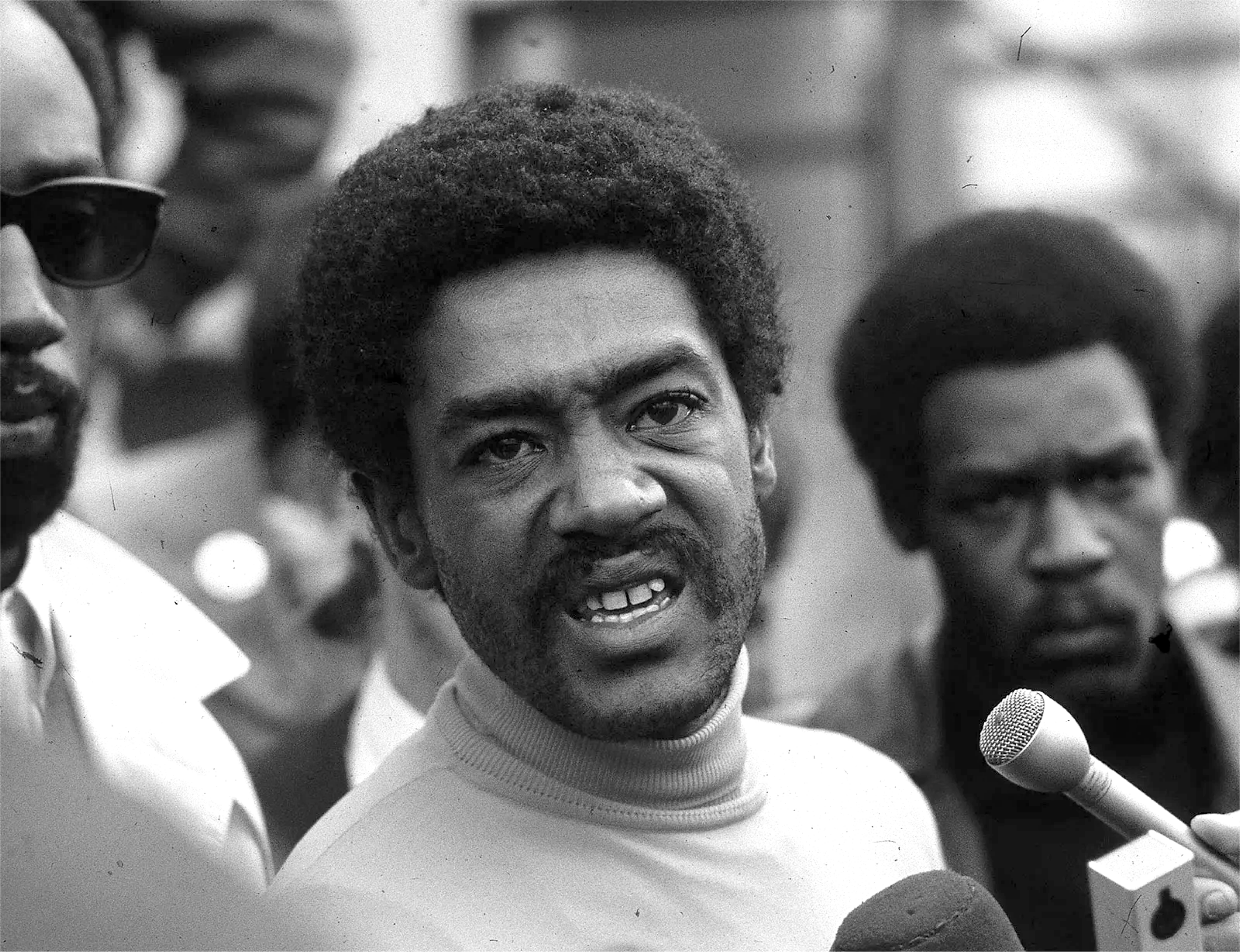
Seale’s public life after the Panthers has sometimes been treated as a footnote, but that is too dismissive. He wrote books, lectured widely, remained active in public memory work, and kept insisting on a fuller account of what the Panthers were. His 1970 book Seize the Time and later A Lonely Rage helped narrate the party from the inside; his 2016 collaboration with photographer Stephen Shames, Power to the People, participated in the ongoing struggle over how the Panthers should be remembered. This mattered because historical memory was never neutral terrain. Seale spent decades contesting the dominant story that reduced the Panthers to criminality, style, or doomed masculine theater. He wanted the record to show organization, policy, service, and analysis.
There is, of course, a reason the simpler version of Bobby Seale has endured. America has long preferred Black radical figures either demonized or domesticated. The dangerous man with the gun is easier to contain than the organizer who exposes structural inequality with receipts. The flamboyant revolutionary makes for stronger visuals than the municipal thinker or the architect of a breakfast program. Even some tributes to the Panthers can slide into nostalgia, treating them as beautiful relics rather than as serious critics of capitalism, policing, and racial hierarchy. Seale’s significance lies partly in how inconvenient he remains to all of these habits of memory.
That inconvenience extends to the culture industry. Films, documentaries, and media retrospectives have periodically revived public interest in Seale and the Panthers, but often through the logic of drama: raids, guns, courtroom eruptions, state violence, betrayal. Those stories are real, and many are essential. Yet the quieter, less cinematic work of drafting programs, managing chapters, producing newspapers, and building services was just as central to Seale’s political life. The best scholarship and museum work on the Panthers has tried to restore that balance, showing that the organization’s political imagination was broader than the image most often attached to it.
One useful way to think about Bobby Seale is as a translator. He translated theory into practice, outrage into program, local grievance into national language. He understood that people needed analysis, but also breakfast. They needed rhetoric, but also a newspaper. They needed a critique of imperialism, but also a ride to a clinic. This practical radicalism helped distinguish the Panthers from both liberal integrationism and purely symbolic militancy. Seale did not believe change would come from moral appeal alone. He believed it required organization strong enough to confront the state and useful enough to matter in everyday life.
It is also worth saying that Seale’s legacy is not universally comfortable even among admirers of Black liberation politics. The Panthers’ gender politics were uneven. Women did immense intellectual, organizational, and emotional labor, and over time became a majority of the membership, but the public mythology of the party often remained male-centered. Later scholarship and reporting have rightly complicated the old story, foregrounding women’s leadership and clarifying how masculinist culture could distort movement life. Writing about Seale seriously means placing him inside that broader organizational history rather than letting him stand alone as the movement’s singular engine. He was foundational, but not solitary.
Still, the fact that Seale was not singular does not make him interchangeable. The chairmanship mattered. His ability to articulate the Panthers’ aims to the press mattered. His organizational role mattered. His survival into old age matters, too. Unlike figures whose legacies were sealed by assassination, Seale has had the awkward privilege of living long enough to witness his own transformation into history. That means he has also had to watch the Panthers become a t-shirt, a movie trope, a campus shorthand, a law-enforcement obsession, a museum exhibit, and, increasingly, a reference point in arguments about what public safety and community care should mean. Few radical leaders get to spend decades contesting their own canonization. Seale has.
The recent honoring of Seale in Oakland—where the city moved to commemorate him with “Bobby Seale Day” and a commemorative street renaming—illustrates how much the public narrative has shifted. A man once surveilled, prosecuted, and vilified by government now receives official recognition from the city most bound up with his political life. That does not erase the history of repression; in some ways it sharpens it. Official honor often arrives decades after the danger has passed, after the most radical edge of a figure’s work can be softened. But it also signals that Seale’s importance is no longer deniable. Oakland is acknowledging what history already established: he helped reshape the city’s political identity and, through it, the nation’s political imagination.
The state once tried to silence Bobby Seale in court. Decades later, his hometown put his name on the street.
So what, finally, is Bobby Seale’s significance? It is not merely that he co-founded the Black Panther Party, though that alone would be enough to secure a major place in American history. It is that he helped redefine what Black political struggle could look like in the post-civil-rights era. He represented a turn from pleading to power, from respectability to self-definition, from civil-rights formalism to a more sweeping demand for material justice. He was part of a generation that insisted voting rights and anti-segregation law were not enough if police still brutalized Black communities, schools still lied, jobs still excluded, and hunger still organized daily life.
His significance also lies in the insistence that protest and governance are not opposites. Seale’s life argued that a movement can challenge the legitimacy of state violence while practicing forms of public service the state has failed to provide. It can critique capitalism and still worry about administration. It can be rhetorically fierce and deeply practical. That combination is one reason the Panthers remain so resonant. They were not asking only to be included in existing institutions. They were asking who those institutions served, who they abandoned, and what communities had the right to build in response. Seale was one of the clearest architects of that argument.
For journalists, historians, and readers trying to place Bobby Seale in the larger American story, the challenge is to resist both romance and recoil. He was neither a comic-book insurgent nor a harmless civic elder waiting to be safely celebrated. He was a radical organizer forged by migration, war, policing, urban inequality, student politics, and the unfinished promises of American democracy. He helped create a movement that was visionary, embattled, disciplined, contradictory, charismatic, and at times self-destructive. He also helped create political language and practical models that continue to shape the way Americans talk about race, state power, and community survival.
In that sense, Bobby Seale’s story is not just about the 1960s. It is about a recurring American problem: what happens when a democracy leaves whole communities exposed to violence and deprivation, and those communities decide they are done waiting to be rescued. Seale’s answer was not polite. It was not always tidy. It was not always strategically flawless. But it was serious. It demanded that political rhetoric become infrastructure, that dignity become policy, and that Black people claim the authority to define their own safety, history, and future. That is why he still matters. Not because he fits comfortably into the nation’s memory, but because he doesn’t.
More great stories
Afro Sheen, Wall Street, and the Architecture of Black Possibility
July 6, 2026
No Comments
The Fire Inside the Fourth
July 5, 2026
No Comments