


Bob Moses’s greatness was not theatrical. It was the steadiness to keep organizing in places where the line between democracy and death was frighteningly thin.
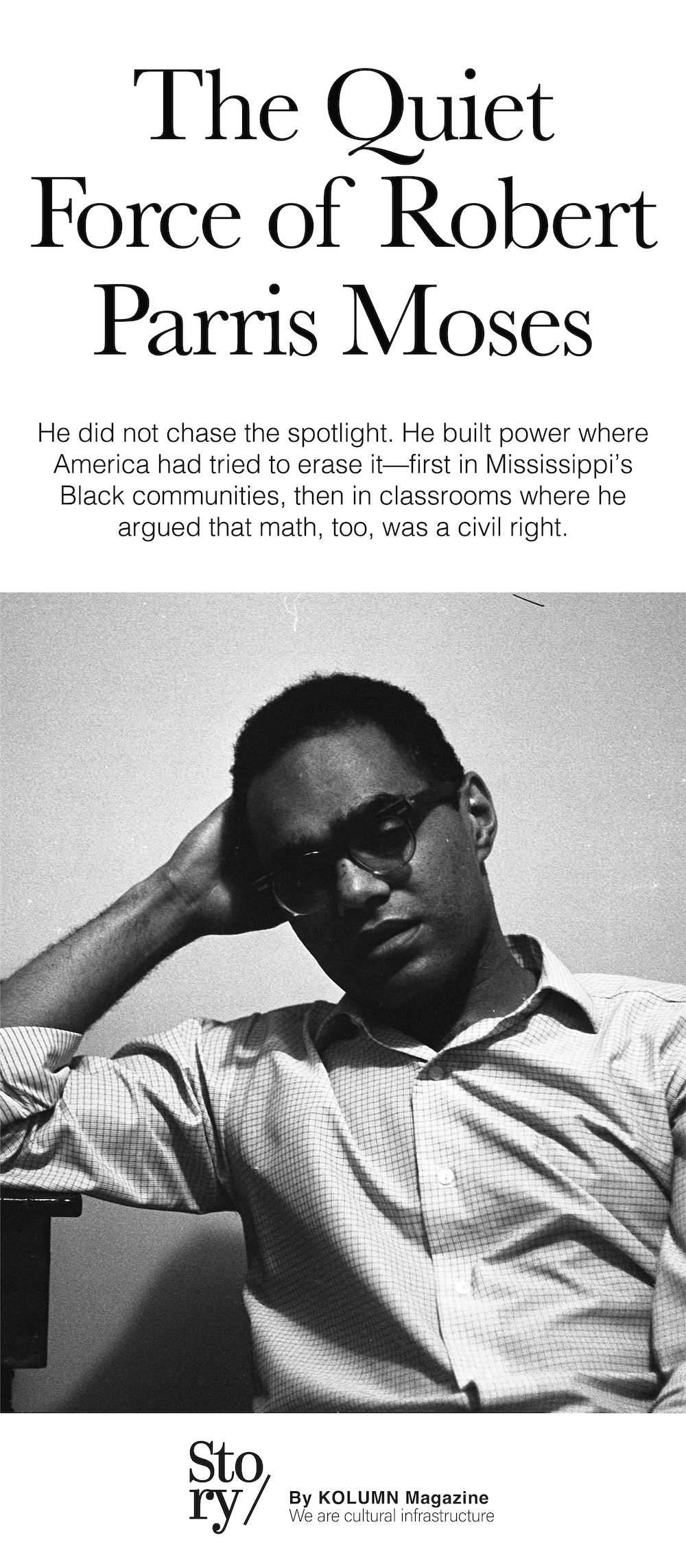
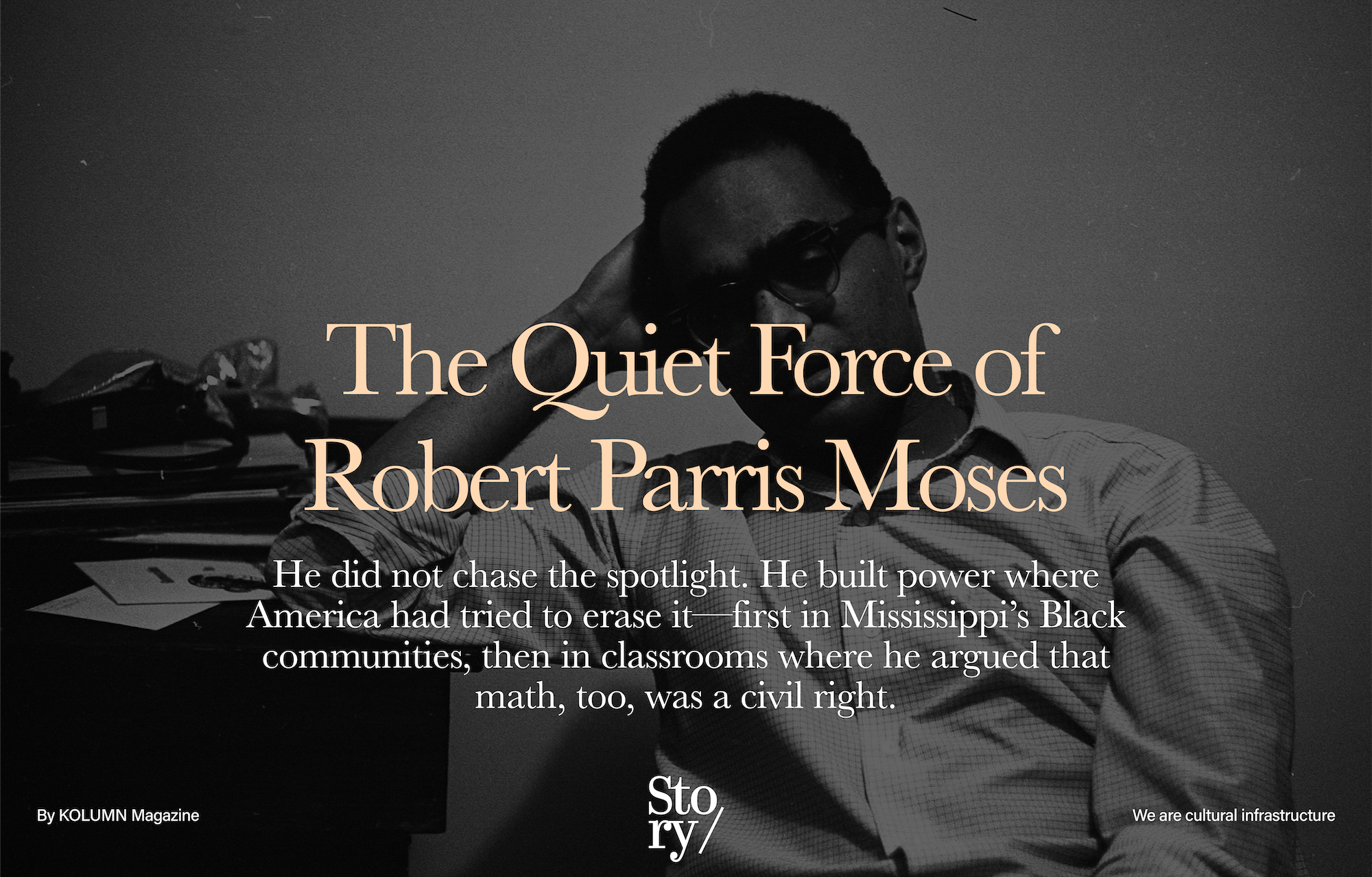
Bob Moses’s greatness was not theatrical. It was the steadiness to keep organizing in places where the line between democracy and death was frighteningly thin.
By KOLUMN Magazine
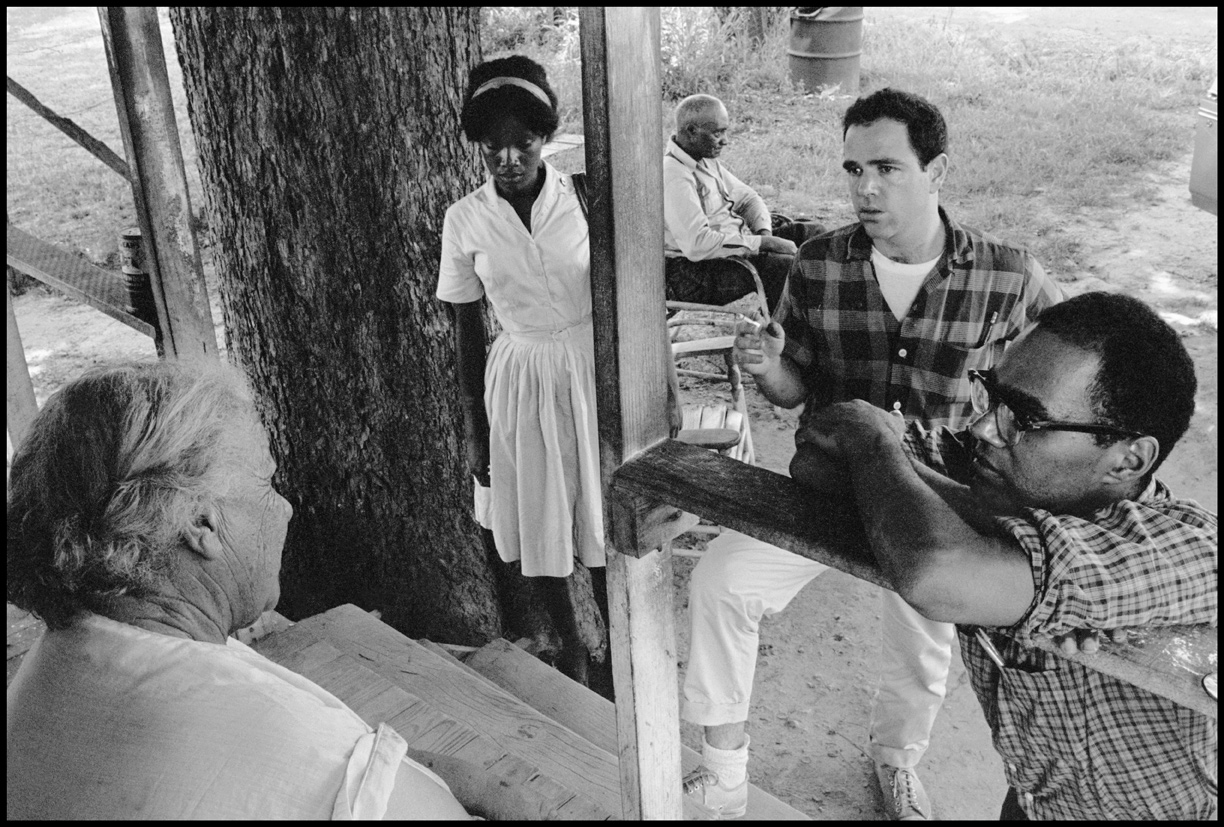
Robert Parris Moses was never built for celebrity. He was soft-spoken, methodical, disciplined, and intentionally allergic to the kind of charisma that turns political struggle into personal mythology. Yet few activists did more to reshape the practical architecture of the civil-rights movement. As a field organizer for the Student Nonviolent Coordinating Committee, or SNCC, he helped make Mississippi—the state often described as the movement’s most dangerous battleground—central to the national fight for Black political power. He was instrumental in voter-registration work in places where attempting to register Black citizens could get people fired, beaten, jailed, or killed. He helped develop the organizing logic that led to Freedom Summer in 1964. He was also deeply involved in the creation of the Mississippi Freedom Democratic Party, which challenged the legitimacy of Mississippi’s all-white Democratic delegation at the national convention that same year.
And then, in one of the most remarkable second acts in modern activist life, Moses turned to education. After years in movement work, after exile and time in Tanzania, after the disappointments and fractures that followed the high point of the 1960s, he came back to the United States and argued that math literacy was the next essential democratic threshold. In 1982, using his MacArthur Fellowship as a springboard, he founded the Algebra Project, insisting that access to algebra was not some narrow curricular question but part of the unfinished civil-rights struggle. For Moses, algebra was not merely a school subject. It was a gatekeeper, a structural checkpoint that decided which young people would be tracked toward power and which would be locked out of it.
That throughline matters. Moses did not live two separate lives, one in movement politics and another in education reform. He lived one long argument: that democracy is only real when ordinary people can access the tools required to participate in it. In Mississippi, that tool was the ballot. In late 20th-century America, he came to believe, one of those tools was mathematics.
To understand Robert Parris Moses is to understand a form of Black political leadership that does not flatter power, does not seek applause, and does not confuse visibility with impact. It is to understand why some of the movement’s most important victories were won not by the most famous voice in the room, but by the person willing to sit quietly, listen carefully, and help local people recognize their own authority.
A Harlem childhood, a philosophical mind
Robert Parris Moses was born in Harlem on January 23, 1935, and was educated in New York public schools before attending Hamilton College, where he earned a bachelor’s degree in philosophy in 1956. He then completed a master’s degree in philosophy at Harvard in 1957. Before fully entering the southern freedom struggle, he taught mathematics in New York City. Those details can sound almost too tidy in retrospect: Harlem, philosophy, Harvard, mathematics, moral seriousness. But they matter because they reveal something about the intellectual texture of Moses’s later work. He was not merely brave. He was deeply analytical. He thought structurally. He had the kind of mind that looked past the event itself and toward the design of the system producing it.
In another life, Moses might have stayed inside academia. He had the credentials for it and the temperament, too: reflective, precise, unflashy, interested in fundamental questions. But history pushed, and he responded. The sit-in movement of 1960 jolted him. Like many young Americans, and particularly many young Black Americans, Moses saw in the student-led direct-action campaigns a new kind of moral seriousness—less deferential, more participatory, more rooted in collective courage than in formal institutional respectability. He joined the southern struggle after being inspired by those actions, first working with the Southern Christian Leadership Conference before being steered by Ella Baker toward a model of organizing that better matched his instincts.
That Ella Baker connection is essential. Baker distrusted overly centralized, personality-driven leadership. She believed in bottom-up organizing, in developing local people rather than importing saviors, in cultivating durable community power instead of staging symbolic moral theater. Moses became one of the people who most fully absorbed and operationalized that philosophy. When Baker sent him into the Deep South to connect with local activists, she was not merely assigning travel. She was positioning him inside a lineage of organizing that prioritized listening before commanding.
One of his most consequential early encounters came with Amzie Moore in Mississippi. Moore, a seasoned NAACP activist and World War II veteran, had already been looking for a way to harness the energy unleashed by the sit-ins. Moses’s visit helped create the bridge between local Mississippi activism and SNCC’s field-based voter-registration strategy. That encounter would prove historic. Mississippi was not simply another southern state. It was, in many respects, the state where white supremacist violence and Black disenfranchisement had been most thoroughly organized into daily governance. To go there was not just courageous. It was strategic. If Mississippi could be cracked, the moral structure of American democracy would be forced into the open.
Mississippi: where theory met terror
Moses arrived in Mississippi at a moment when civil-rights activism in the state was both alive and extraordinarily vulnerable. Local Black Mississippians had been resisting for generations, often with little national attention and enormous personal cost. What Moses and SNCC brought was not resistance itself but an organizing framework that could connect scattered local efforts, train young workers, and slowly build the capacity for a broader assault on disenfranchisement. He began in McComb and then worked in places like Amite County, where violence was not incidental to politics but one of its governing mechanisms.
This is the part of Moses’s story that should never be sentimentalized. Mississippi was lethal terrain. Black people who tried to register to vote risked losing jobs, homes, credit, and physical safety. Organizers were harassed, arrested, surveilled, and attacked. Moses himself was beaten and arrested in Amite County. According to accounts preserved by SNCC historians and later biographical sources, he became the first Black person in that county to file assault charges against a white man for violence—an act almost as politically radical as the organizing itself. The all-white jury acquitted the attacker. A judge reportedly told Moses he could not protect him and escorted him to the county line. That episode distilled the whole system: white violence, white impunity, white legal theater dressed up as order.
Moses stayed.
That fact deserves its own paragraph because the mythology of courage often flattens the actual psychology of danger. Moses was not some swaggering adventurer. Contemporary recollections and later profiles consistently describe him as calm, understated, almost inward. The Washington Post obituary noted that he remained in the thick of danger for years—his office burned, his body jailed, his life repeatedly threatened. The Atlantic remembered him as a leader whose quietness was itself a political style, one suited to the long discipline of grassroots work rather than headline performance.
His organizing also depended on trusting local Black Mississippians as political thinkers, not just as victims. That distinction is one of the keys to Moses’s significance. Too much mainstream storytelling about the civil-rights era still frames Black southerners as waiting for movement leaders to awaken them. Moses understood something else: the people most oppressed by the system often understood it best. What they needed was not imported leadership but accompaniment, structure, coordination, and protection where possible. His famous reflection—“Leadership is there in the people”—was not a slogan. It was an organizing principle.
That principle had consequences. It meant Moses was attentive to local figures who might otherwise have been overlooked by national narratives. It meant understanding the brilliance of people like Fannie Lou Hamer, whose formal schooling had been limited but whose political clarity was immense. It meant recognizing that mass democratic participation could not be choreographed from above. It had to be built from the ground. In that sense, Moses was not just working in Mississippi. He was helping to redefine the meaning of political leadership in Black America.
Herbert Lee, Louis Allen, and the cost of helping
The danger around Moses was not abstract. It had names.
Herbert Lee was one of them. A farmer in Amite County, Lee used his truck to drive Moses around as they encouraged Black residents to attempt voter registration. In a place where nearly every public gesture could be monitored and punished, that kind of assistance was itself an act of political defiance. On September 25, 1961, Lee was murdered by Mississippi state legislator E. H. Hurst in broad daylight, after disputes over Lee’s involvement with SNCC organizing. The killing sent a brutal message to local Black communities: helping the movement could cost you your life.
Another name was Louis Allen, a witness connected to the aftermath of Lee’s murder and a man who later sought to tell the truth about white violence in the county. Allen faced increasing harassment and was eventually murdered in 1964. The federal government later acknowledged that investigators developed information suggesting local involvement but never secured sufficient evidence for criminal charges. These were not isolated crimes. They were instruments of civic terror, designed to enforce racial hierarchy by making democratic participation feel suicidal.
To write about Moses without writing about the people around him would be to betray his own politics. He never imagined himself as the singular hero of Mississippi. In fact, his significance lies partly in how stubbornly he resisted that framing. But that very resistance can make it easier for later generations to miss the courage he embodied. It took a particular kind of nerve to walk into communities where helping a voter-registration campaign could get a man like Herbert Lee killed, and still ask people to act. It took another kind of moral discipline to remain there after the killing.
Bob Moses’s greatness was not theatrical. It was the steadiness to keep organizing in places where the line between democracy and death was frighteningly thin.
By the early 1960s, SNCC’s work in Mississippi was reshaping both the state and the movement. What organizers learned in places like McComb and Amite County influenced SNCC’s broader style: deeper listening, local leadership development, skepticism of centralized hierarchy, and an insistence that civil rights was not a performance for national audiences but a practical struggle over daily power.
Freedom Summer and the national stage
By 1964, Moses had become a central strategist in the Council of Federated Organizations, or COFO, the umbrella coalition linking SNCC, CORE, NAACP, and SCLC activity in Mississippi. He was a principal architect of the Freedom Summer Project, which brought hundreds of mostly northern volunteers—many of them white college students—into Mississippi to support voter registration, Freedom Schools, and community organizing. The project was never just about numbers. It was also about forcing the nation to look at what Mississippi had been allowed to be.
That decision remains one of the most debated and significant tactical choices of the era. Moses and others understood that Black Mississippians had been suffering violence for years with limited national response. Bringing in white volunteers from elite northern schools could change the visibility equation. The terrible logic was obvious: if white students were threatened or killed, the nation might finally pay attention to what Black Mississippians had been enduring all along. PBS SoCal’s retrospective notes that Moses asked white student volunteers to participate in ways that would support voter registration and literacy work, helping expose the violent resistance that greeted Black citizenship claims in the state.
Within days of the project’s launch, James Chaney, Andrew Goodman, and Michael Schwerner were murdered. Chaney was a local Black Mississippian; Goodman and Schwerner were white Jewish volunteers from New York. Their deaths became international news. They also confirmed the scale of the terror movement workers faced. Moses reportedly gathered frightened volunteers and led discussions about whether and how to continue. This, too, is part of his legacy: not just devising bold strategy, but maintaining focus after catastrophe.
Freedom Summer did not instantly dismantle Mississippi’s racial order. That was never a realistic expectation. But it achieved something historically enormous. It expanded Freedom Schools. It intensified voter-registration efforts. It widened the moral and media aperture through which the nation viewed Mississippi. And it laid the groundwork for one of the most audacious political challenges of the decade: the Mississippi Freedom Democratic Party.
The Mississippi Freedom Democratic Party and the betrayal of liberalism
When Black Mississippians were effectively shut out of the state’s official Democratic Party, Moses and other organizers helped build an alternative: the Mississippi Freedom Democratic Party, or MFDP. The goal was not symbolic complaint for its own sake. It was to challenge the legitimacy of Mississippi’s segregationist, all-white regular delegation at the 1964 Democratic National Convention. If the Democratic Party claimed to be the party of democracy, then it had to answer for seating delegates chosen through racist exclusion.
The MFDP brought with it one of the most searing political testimonies of the era, delivered by Fannie Lou Hamer. Her account of violence, repression, and voter suppression should have made compromise impossible. Instead, the convention exposed the limits of liberal courage. President Lyndon B. Johnson, unwilling to alienate white southern Democrats, maneuvered to block the MFDP from being fully seated. The compromise offered—two at-large seats without real power—was widely understood by movement activists as an insult. The segregationist delegation remained effectively protected.
This was one of the defining political disappointments of Moses’s generation. The lesson was devastatingly clear: even after all the bloodshed in Mississippi, even after national attention, the Democratic establishment could still choose institutional peace over democratic justice. For Moses, who had spent years organizing at extraordinary personal risk, the Atlantic later observed that the broken promises of politicians contributed to his growing disillusionment and eventual departure from the heart of movement work.
That disillusionment was not cynicism. It was recognition. Moses understood that institutions do not surrender power merely because injustice has been eloquently described. They yield when forced. The MFDP challenge remains one of the clearest examples of how Black grassroots organizing brought American hypocrisy into full view, only to discover that revelation alone was not enough.
The Mississippi Freedom Democratic Party did more than challenge a delegation. It challenged the country’s self-image, and the country blinked.
Still, the MFDP mattered immensely. It shifted the terms of debate inside the Democratic Party. It amplified the leadership of Black Mississippians, especially women who had long been treated as peripheral by the national press. And it demonstrated that democracy could be reimagined from below, even when formal institutions refused ratification. That, in classic Moses fashion, was both a political defeat and an organizing advance.
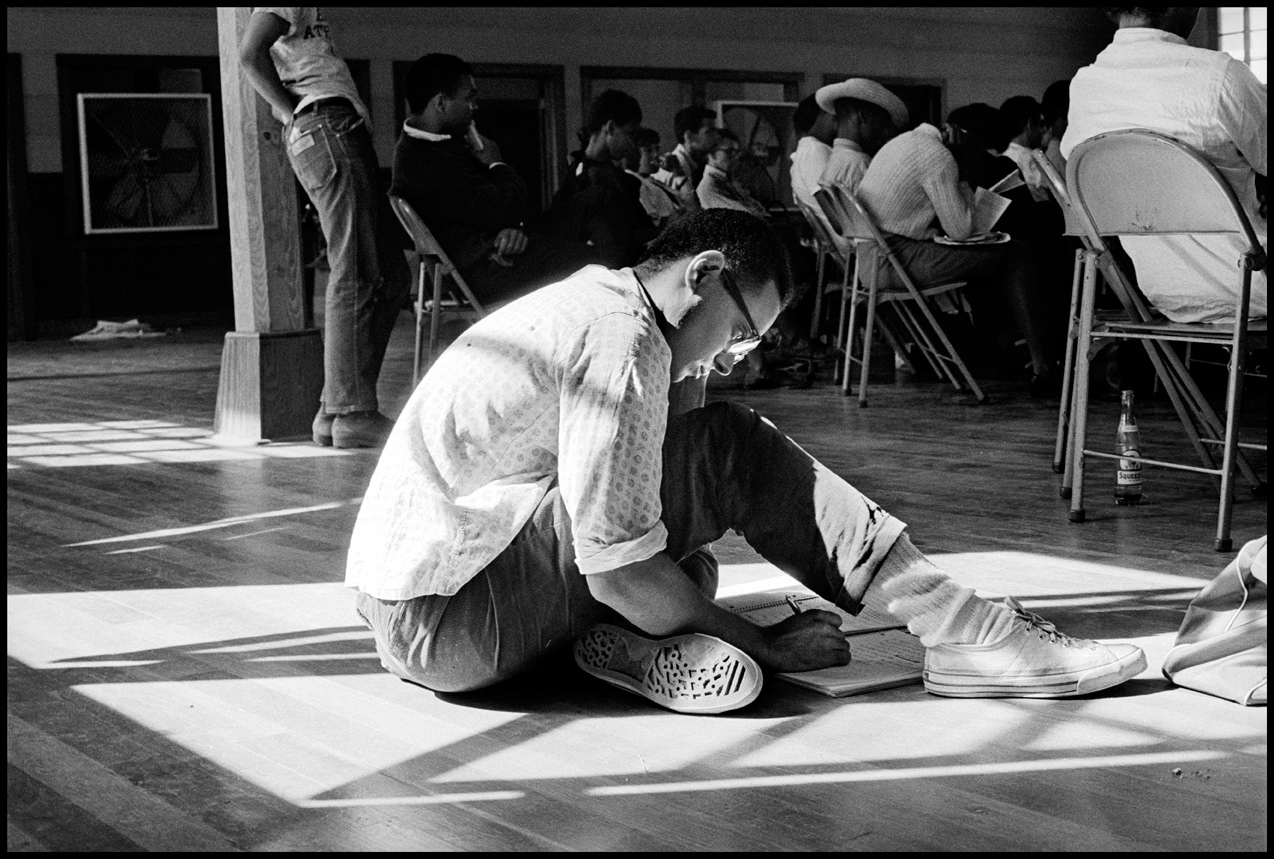
Leaving the country, carrying the struggle
By the mid-1960s, Moses was exhausted, radicalized, and facing another confrontation with the U.S. state—this time through the Vietnam-era draft. Sources indicate that he received a draft notice in 1966 despite being older than the official age cutoff, leading him to suspect political targeting. He left for Canada and later moved to Tanzania, where he lived with his wife Janet and worked as a teacher and in the Ministry of Education for much of the 1970s.
This period is sometimes treated as an interlude, but that misses its significance. Tanzania in the postcolonial era represented, for many Black intellectuals and activists, a site of possibility—a place where questions of education, liberation, governance, and development could be approached outside the immediate constraints of U.S. racial politics. Moses’s years there were consistent with his longstanding interest in the relationship between knowledge and freedom. He was not abandoning struggle. He was living inside a different context for it.
When he returned to the United States after amnesty for draft resisters, he resumed academic work and eventually taught mathematics in Cambridge, Massachusetts. The pivot back toward teaching was not accidental or merely practical. It grew out of what he was seeing as a parent and educator. According to multiple accounts, one important catalyst came when he learned that his daughter’s school was not giving students adequate access to algebra. That concern became the seed of something much larger.
Algebra as a civil right
In 1982, Moses received a MacArthur Fellowship and used it to launch the Algebra Project. On the surface, the project was an educational initiative focused on mathematics literacy, especially for low-income students and students of color. In practice, it was a civil-rights intervention built on the same community-organizing logic Moses had developed in Mississippi. The Algebra Project argued that algebra was a gatekeeper course, a crucial threshold for access to higher-level math, college preparation, and eventually jobs in a rapidly changing economy. If poor Black children were systemically denied algebra, then they were being denied part of the infrastructure of citizenship.
Moses said as much over the years. The Washington Post quoted him in 2021 saying that simple literacy was no longer enough in a knowledge economy and that “math literacy will be a liberation tool” for people trying to escape poverty. He and collaborator Charles Cobb Jr. also framed this work explicitly in Radical Equations: Math Literacy and Civil Rights, arguing that the struggle for equal citizenship had entered a new terrain. Hamilton College, his alma mater, summarized the book’s core claim plainly: math literacy for all children was a key next step in the fight for equal citizenship.
This was a startlingly expansive idea, and it remains one of Moses’s most important contributions. Plenty of people argue for better schools. Far fewer explain educational inequality with the same moral and political seriousness that civil-rights activists brought to voting rights. Moses did. He saw algebra not as elite abstraction but as a social filter. A child denied access to rigorous math instruction was not merely underprepared. That child was being told, in bureaucratic language, where they belonged.
The Algebra Project’s pedagogy reflected Moses’s organizing instincts. Rather than begin with abstraction, it rooted mathematical concepts in students’ everyday experiences and language. It sought to demystify math, train teachers, involve parents and communities, and help students who had often been written off by schools. SNCC Digital notes that the work in Cambridge grew into a national nonprofit dedicated to “raising the floor” in math education. The organization’s current self-description still emphasizes operating in an organizing mode, building local and national collaborations in the spirit Moses established.
There is something beautifully consistent about this. In Mississippi, Moses insisted that poor Black sharecroppers, domestic workers, farmers, and local activists were fully capable of political leadership. In classrooms decades later, he insisted that low-income Black children were fully capable of mathematical thought. In both cases, the system’s first move was the same: lower expectations, restrict access, call the result natural. Moses’s response was also the same: organize.
Why Moses still feels ahead of his time
It is tempting to call Moses underrated, and in a popular sense he is. But the more precise description might be that he is difficult for mainstream history to metabolize. American public memory loves singular icons and dramatic speeches. Moses’s power was more procedural than theatrical. He believed in meetings, local relationships, patient infrastructure, and the slow cultivation of confidence in people who had every reason to doubt the state would ever serve them. That is harder to turn into a neat civic myth. It is also closer to how change usually works.
His legacy has gained renewed attention through obituaries, scholarly work, and movement retrospectives. The Washington Post emphasized the continuity between his civil-rights leadership and his educational activism. The Atlantic called attention to his “quiet courage” and his deep faith in grassroots organizing. The Smithsonian’s National Museum of African American History and Culture underscored his role in organizing more than 1,000 people for Freedom Summer and his importance to the MFDP challenge. SNCC’s archives continue to frame him not simply as a tactician, but as someone who helped define an organizing tradition.
That tradition feels urgently relevant now. We live in a political culture obsessed with visibility, virality, and personal branding. Moses represented almost the opposite ethic. He led from behind the scenes when possible. He distrusted hero worship. He treated local people as the protagonists of their own liberation. He was rigorous without being performative, radical without rhetorical inflation, intellectually ambitious without drifting into abstraction detached from lived conditions.
There is also the matter of scale. Moses understood that rights are only meaningful when ordinary people can exercise them. In that sense, he belongs to a class of organizers who were never satisfied with legal change alone. Voting rights on paper meant little if terror ruled the county. Educational opportunity in theory meant little if algebra functioned as a hidden border wall. Moses always seemed interested in the mechanics of access: what structures actually let people move, decide, learn, and govern.
Robert Parris Moses did not confuse recognition with transformation. He cared about whether people could really get through the door.
That may be why his work continues to resonate across different fields. Historians claim him as a central figure in SNCC and Mississippi freedom organizing. Political thinkers see in him a model of participatory democracy. Educators see a radical advocate for math equity. None of those readings are wrong. Together, they suggest something bigger: Moses was one of the rare American activists whose method traveled intact across struggles.
The measure of the man
Robert Parris Moses died in 2021 at age 86. Obituaries from The Washington Post, The Guardian, Hamilton College, and other institutions remembered him as a civil-rights leader, educator, and founder of the Algebra Project. But obituary language, by design, tends to compress. Moses’s life resists compression because its significance lies not only in what he did, but in how he understood power.
He helped make Mississippi impossible for America to ignore. He helped expose the gap between Democratic rhetoric and democratic practice. He helped transform the idea of leadership inside the freedom struggle, proving that a movement could be guided by someone who did not need to dominate the room. Then he spent decades telling the country that educational inequality was not a side issue or a matter of technocratic reform. It was another front in the same fight over who gets counted, who gets prepared, and who gets left behind.
There is a particular dignity in that continuity. Many activists are remembered for a moment. Moses should be remembered for a method. He believed in the intelligence of ordinary people. He believed in building rather than merely denouncing. He believed that systems of exclusion could be confronted by teaching people how to move through them together. And he believed, even after betrayal, violence, and political disappointment, that democracy was still worth expanding.
His life also forces a harder question onto the present. If Moses was right that math literacy is a civil right, then what do current disparities in school funding, course access, teacher quality, and racialized academic tracking say about the condition of American democracy? If he was right that leadership already exists in the people, what happens when institutions systematically starve those people of the resources needed to act? Those are not historical questions only. They are contemporary indictments.
Robert Parris Moses remains one of the clearest examples of what movement seriousness looks like. Not trend, not branding, not moral exhibitionism. Seriousness. The willingness to enter dangerous places, trust neglected people, study the system, build infrastructure, absorb setbacks, and keep going. The willingness to connect the right to vote with the right to learn. The willingness to understand freedom not as inspiration but as capacity.
That is why Moses matters. Not because he fits neatly into the civil-rights pantheon, but because he expands what that pantheon should include. He reminds us that the freedom struggle was always about more than singular laws and singular heroes. It was about building a society in which people at the bottom were no longer treated as disposable, voiceless, or incapable. He spent his life proving that they were none of those things.
And perhaps that is the clearest way to say it: Robert Parris Moses changed America by refusing to act as though America’s most neglected people needed him to become their savior. He helped them become more fully legible to a nation built on not seeing them. Then he asked that nation to stop pretending ignorance.
That is not quietism. That is radical discipline. That is Robert Parris Moses.
More great stories
Afro Sheen, Wall Street, and the Architecture of Black Possibility
July 6, 2026
No Comments
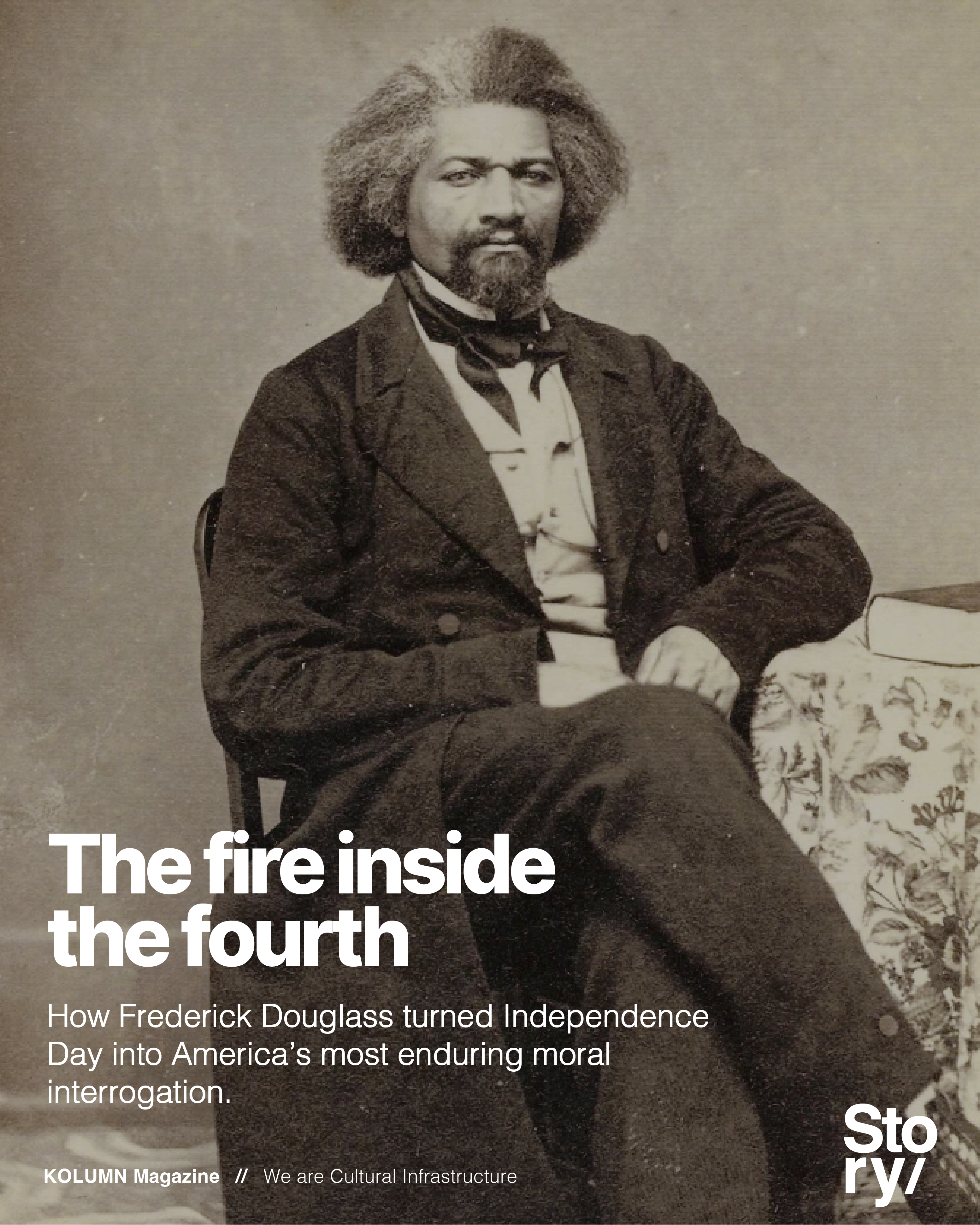
The Fire Inside the Fourth
July 5, 2026
No Comments