



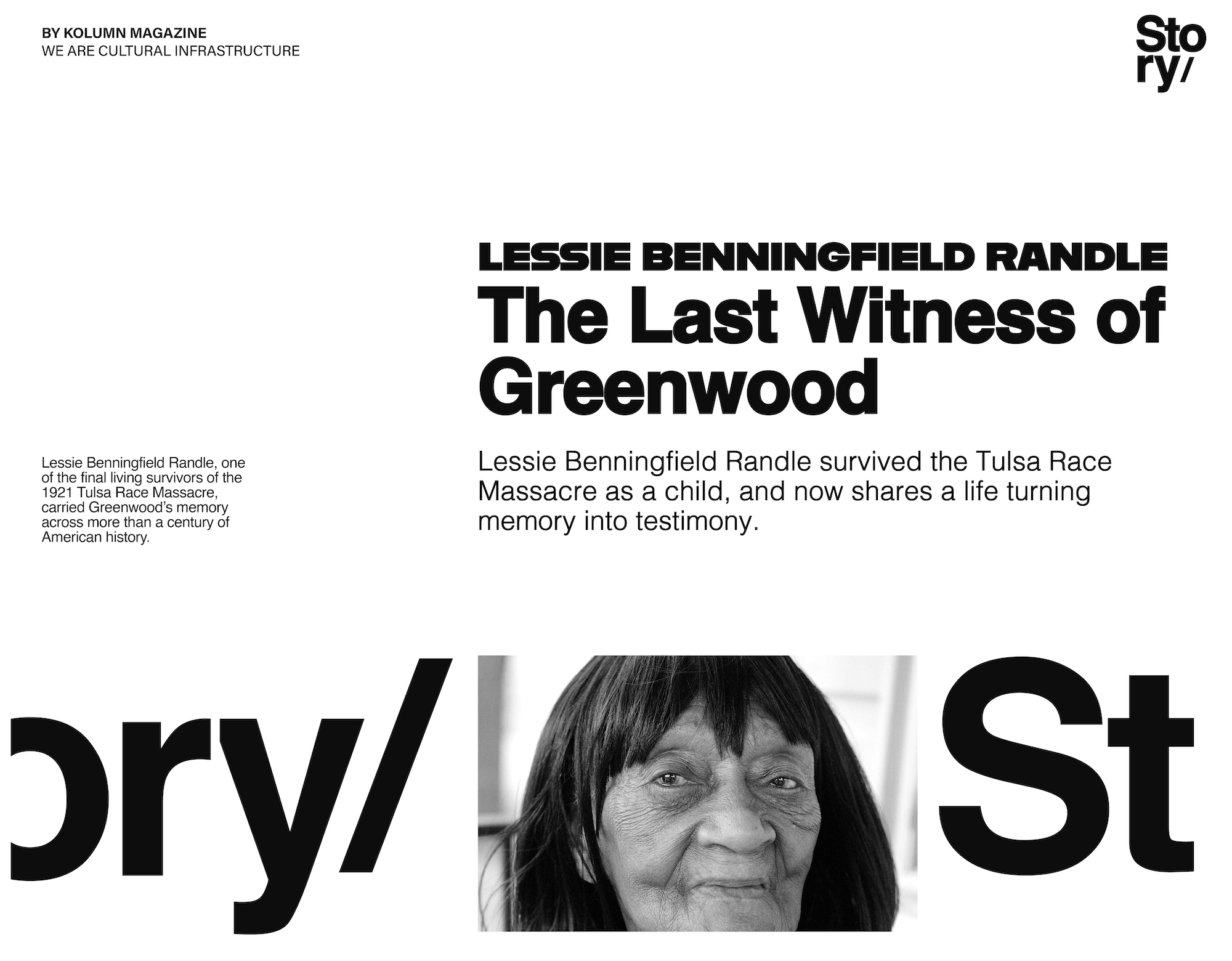
Lessie Benningfield Randle did not merely remember the massacre. She survived the country’s long attempt to make forgetting a civic policy.
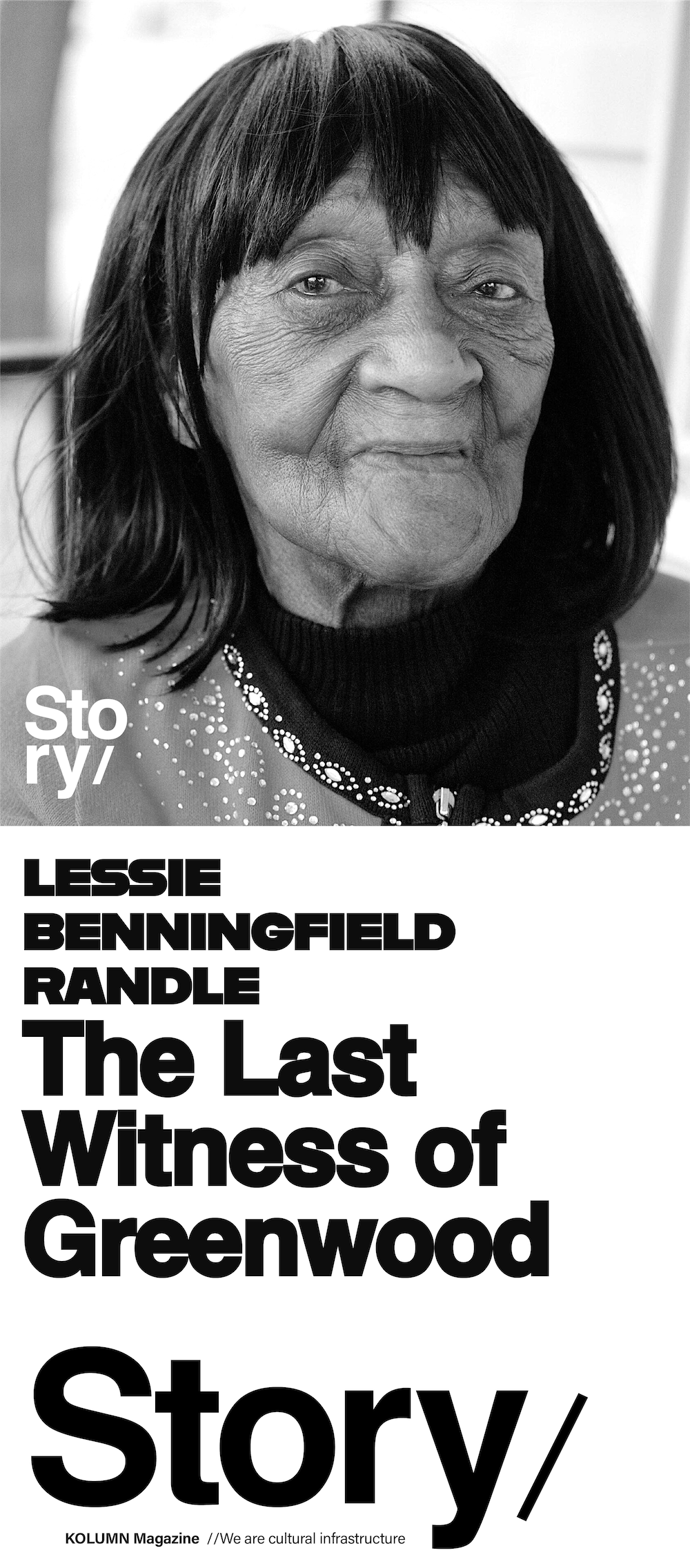
Lessie Benningfield Randle did not merely remember the massacre. She survived the country’s long attempt to make forgetting a civic policy.
By KOLUMN Magazine
Lessie Benningfield Randle has lived so long that America has had to keep revising what it thought it could bury. Born on November 10, 1914, and known to generations of descendants, organizers, lawyers and witnesses as “Mother Randle,” she is, according to reporting from The Associated Press and survivor documentation maintained by the Gerontology Research Group, the last known living survivor of the 1921 Tulsa Race Massacre after the death of Viola Ford Fletcher in November 2025. Some biographical accounts identify her birthplace as Grayson, Oklahoma, while the Gerontology Research Group lists Okmulgee, Oklahoma; the discrepancy is a reminder that Black life in early 20th-century Oklahoma was often documented unevenly, especially for families whose histories were later fractured by racial violence. What is not in dispute is the essential fact of her life: as a little girl, she saw Greenwood burn, and more than a century later, she insisted that America call the fire by its name.
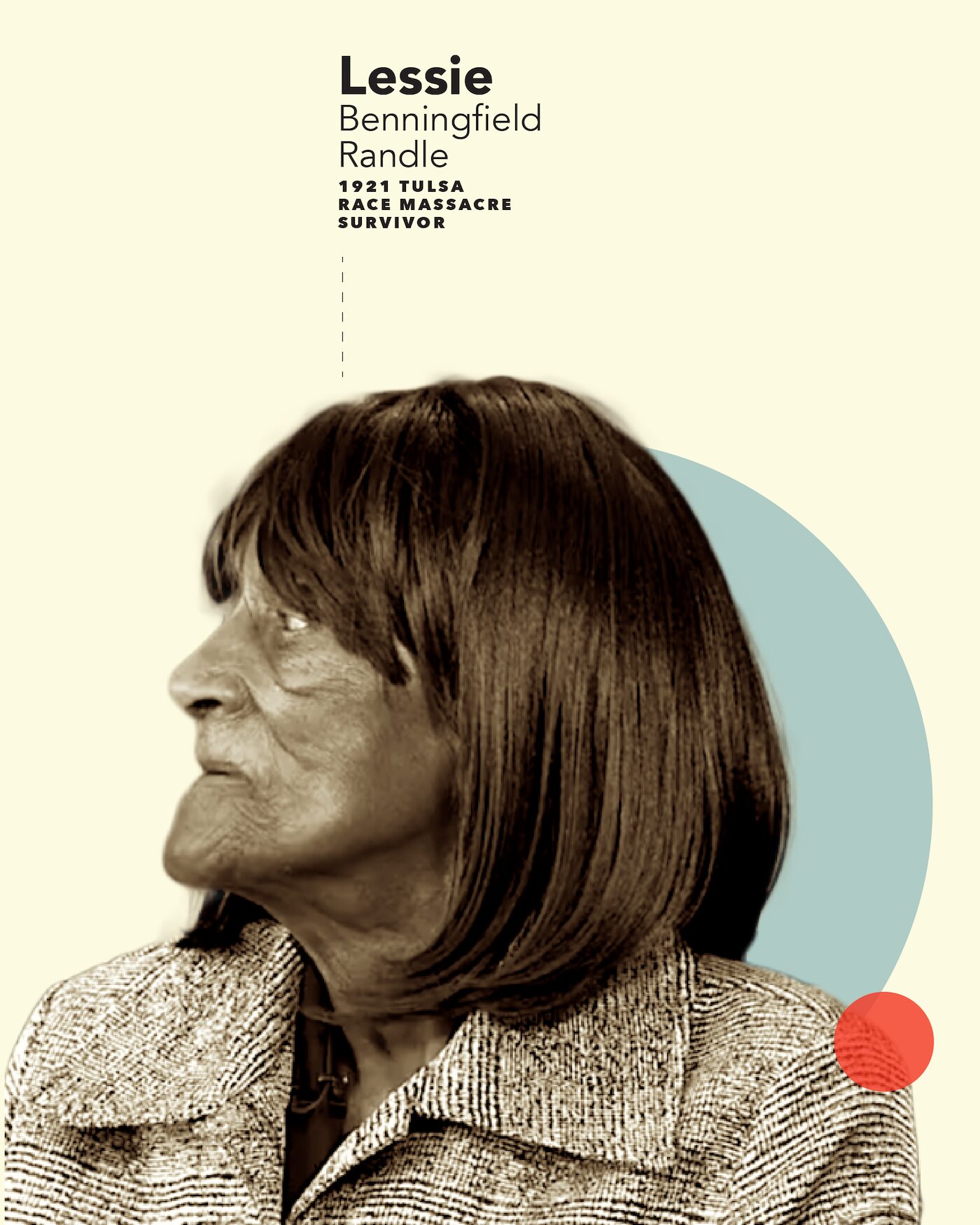
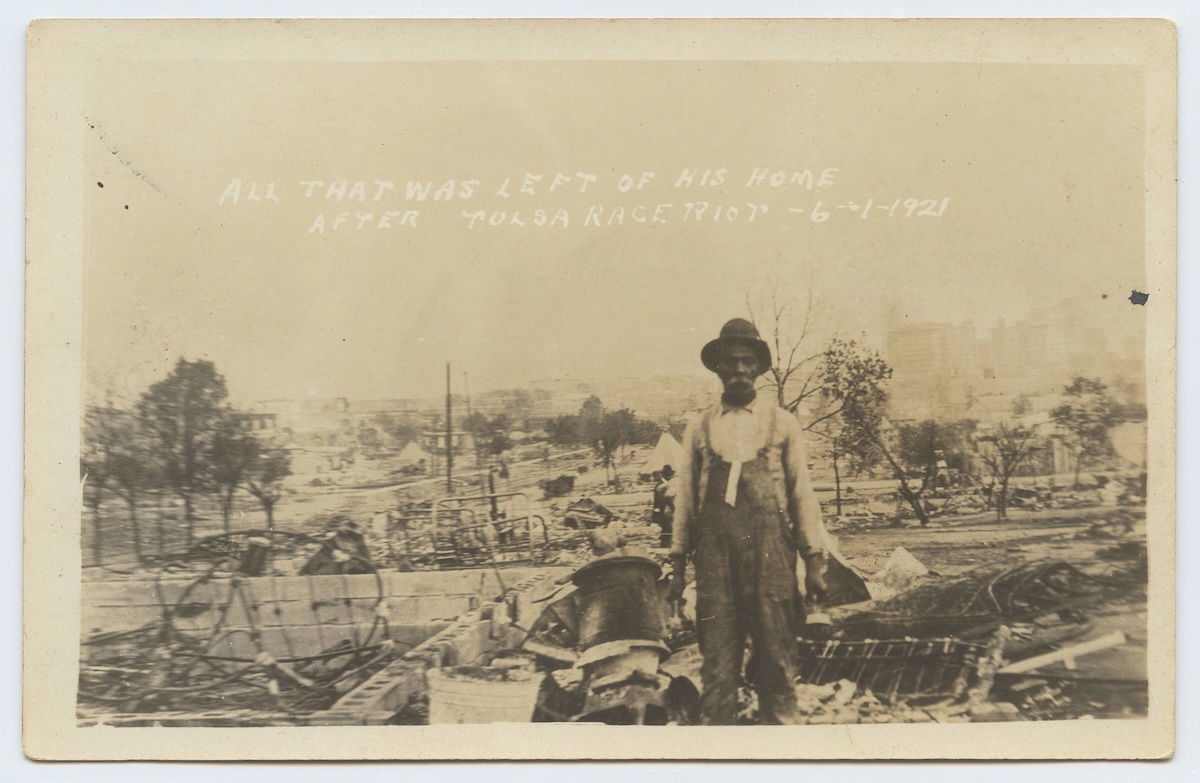
Randle was born years after Oklahoma statehood, when Black towns, Native sovereignty, land hunger, oil money and Jim Crow ambition all collided on the same red dirt. By the time she was six, her family was living in Tulsa’s Greenwood District, the nationally known Black business enclave that newspapers, historians and residents later called Black Wall Street. The Oklahoma Historical Society describes the massacre that destroyed Greenwood as one of the worst episodes of racial violence in American history, with more than 1,000 homes and businesses destroyed over roughly 18 hours and credible death estimates ranging from 50 to 300. The Tulsa Historical Society and Museum likewise frames Greenwood before the massacre as an affluent African American community whose business district and surrounding residential neighborhoods were nearly destroyed in June 1921. Randle’s childhood was not an abstraction inside those statistics. It was a home. A block. A neighborhood. A childhood interrupted by armed white men, flames, smoke and the knowledge that the adults around her could not make the world safe.
The massacre began after a familiar racial script: an allegation involving Dick Rowland, a young Black man, and Sarah Page, a young white elevator operator, became a pretext for white mob violence. The Justice Department’s 2025 review, published by the U.S. Department of Justice, concluded that what followed was not spontaneous disorder but a coordinated attack in which white Tulsans, aided by failures and actions of public authority, devastated Greenwood. KOLUMN has previously carried this broader historical frame in its coverage of the Justice Department report, noting that the federal review characterized the massacre as a “coordinated, military-style attack” rather than an uncontrolled riot. That distinction matters because Randle’s life has been lived against the damage done by a lie: the old civic lie that Greenwood fell because of chaos, not because of organized racial terror.
A Girl in the Fire
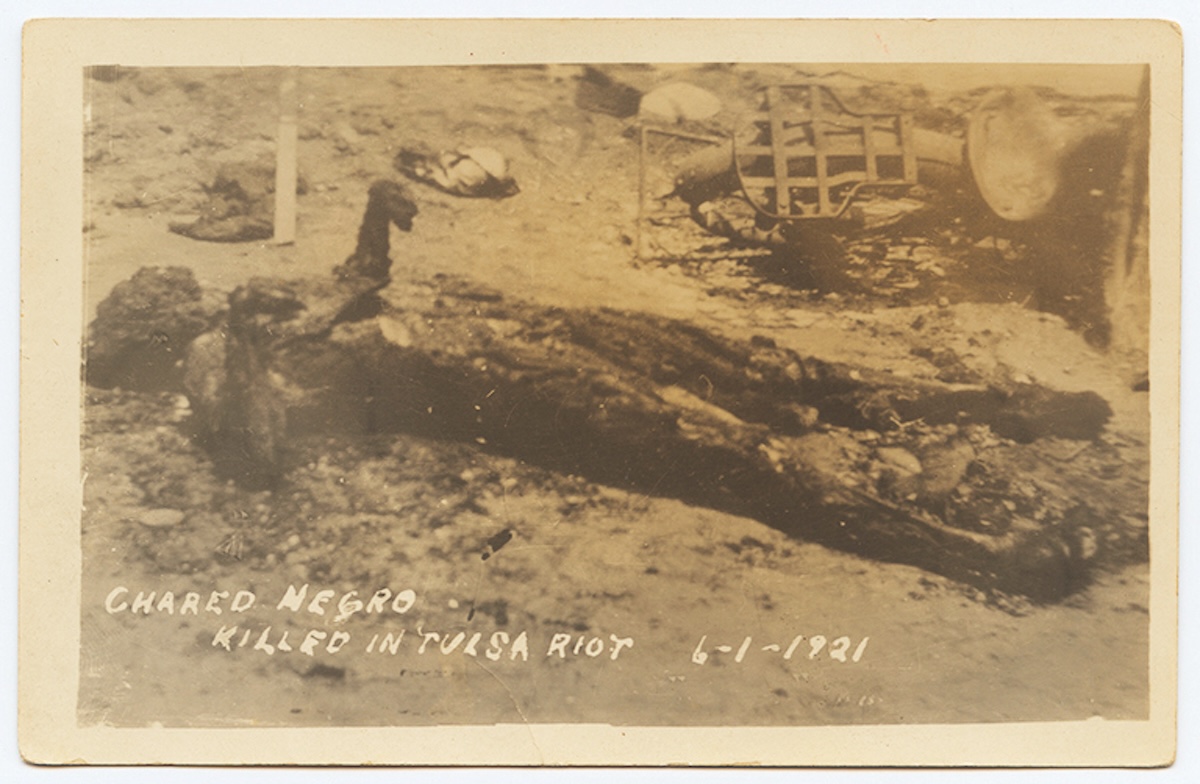
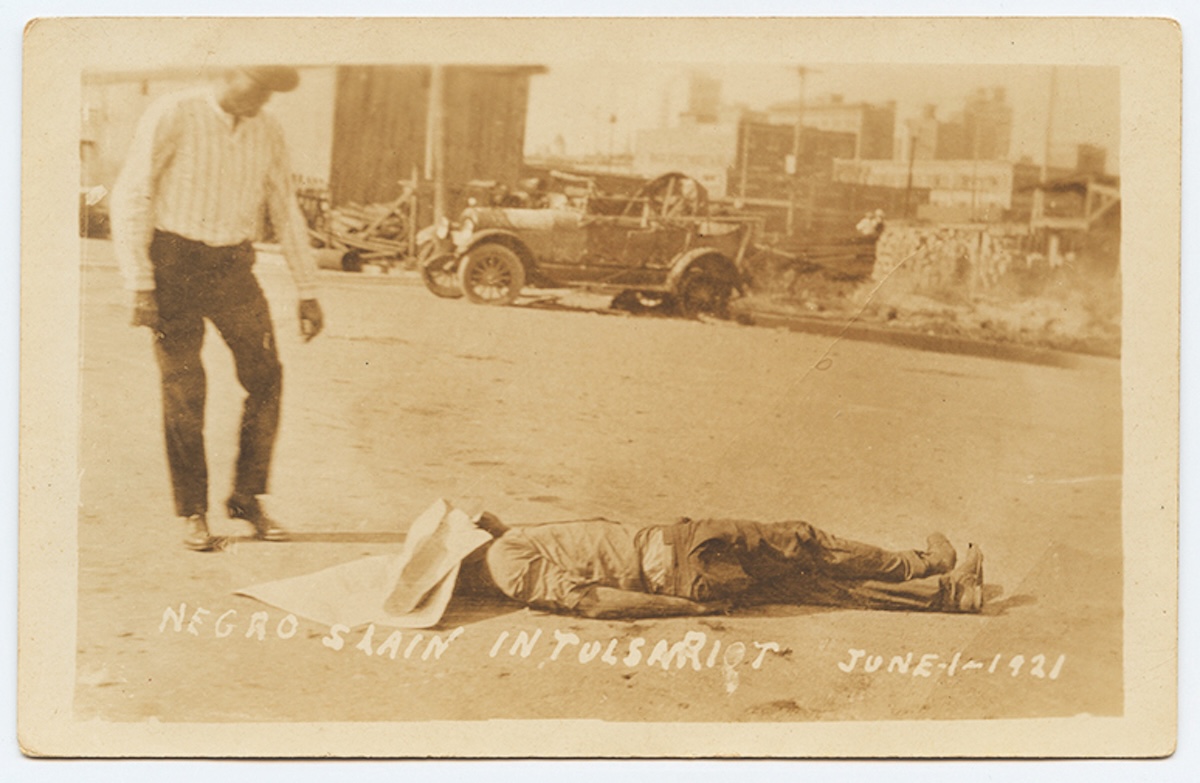
Randle was six years old when the violence came. In later testimony and public accounts, she described memories that did not fade into childhood haze: Black bodies in the street, homes burning, fear so total that it became part of the nervous system. Justice for Greenwood reported that Randle’s family home was looted and destroyed during the massacre and that she suffered emotional and physical distress in its aftermath. In her 2021 congressional testimony, quoted by the Children’s Defense Fund, Randle said she could still see Black men being shot, Black bodies lying in the street, Black businesses burning and airplanes overhead. “I have lived through the massacre every day,” she told lawmakers, a sentence that compressed a century of trauma into one plain declaration.
The story of Greenwood’s destruction has often been told through aerial photographs and casualty estimates, through insurance claims and commission reports, through the language of property loss. But Randle’s testimony forces a different scale. A six-year-old child does not experience racial terror as a historical event. She experiences it as noise, heat, running, separation, hunger, silence, the sudden disappearance of what adults had promised was permanent. The Oklahoma Historical Society notes that the violence unfolded from May 31 to June 1, 1921; the Justice Department review published by the Department of Justice situates the massacre within a national pattern of early 20th-century white mob attacks on Black communities. Randle’s memory sits where those two levels meet: national pattern and individual wound.
For decades, the massacre was not just minimized; it was administratively buried. Survivors were left to live with memories that public institutions refused to honor. The Justice Department report states that federal prosecution is no longer possible because statutes of limitations have expired, perpetrators have died and constitutional constraints would now impede criminal cases. But the same report also says that the absence of prosecution does not negate the horror, depravity or generational trauma of the massacre. Randle’s life became a living answer to that paradox. If the courts could not punish the dead perpetrators, the survivors could still prosecute the memory of the crime in public.
The Long Silence After the Smoke
After the massacre, Greenwood rebuilt itself with astonishing force. But rebuilding was not restoration. Randle’s family, like so many others, had to navigate loss without compensation, grief without official acknowledgment and survival inside a city that benefited from amnesia. The 2001 Oklahoma commission report, archived by the Oklahoma Historical Society, helped reopen public discussion after decades of suppression, and the Justice Department later reviewed that commission’s work alongside Red Cross reports, National Guard documents, lawsuits, photographs, news accounts and survivor interviews. Those archives show a community attacked, displaced, detained, undercompensated and then expected to move on.
Randle did move forward, but not untouched. Public biographies published by Black Wall Street Times identify her as Lessie Evelyn Benningfield before marriage, and Black Wall Street USA’s biographical tribute lists her parents as George Washington Benningfield and Kizzie Mae “Katie” Broadus, farmers who raised several children. Later records show Randle marrying and raising a family of her own. The Gerontology Research Group records that she married Ben Hammond in Tulsa in 1939 and Warner Randle in 1941, outliving both husbands. Black Wall Street USA’s tribute lists her children as Warner, Paul, Phillip, Wanda and Cathy, and notes that she also raised Doris, her aunt’s daughter, as her own. Those details matter because they keep her from being flattened into a symbol. Randle was not simply “a survivor.” She was a daughter, wife, mother, caregiver, neighbor, churchwoman, elder and citizen.
Her adult life unfolded in the shadow of a city that kept changing around Greenwood. Justice for Greenwood has argued that Randle’s family experienced a second dispossession when urban renewal forced her from her family home in Greenwood in 1980. That claim belongs to a broader North Tulsa history: the massacre destroyed Black wealth violently, and later planning decisions, highways, disinvestment and urban renewal policies damaged what Black Tulsans rebuilt. Randle’s biography therefore stretches across two eras of racial dispossession. First came the mob with guns and fire. Then came the paperwork, planning maps and redevelopment logic that treated Black neighborhoods as obstacles to municipal progress.
From Private Memory to Public Testimony
For much of the 20th century, survivors of the massacre carried their memories privately. Some did not speak because speaking was dangerous. Others spoke inside families but not in public. By the centennial, however, Randle, Viola Ford Fletcher and Hughes Van Ellis had become the last living witnesses capable of placing their bodies before the nation and saying: we were there.
On May 19, 2021, Randle testified before a U.S. House subcommittee during a hearing titled “Continuing Injustice: The Centennial of the Tulsa-Greenwood Race Massacre.” Public Radio Tulsa reported that the three known living survivors—Randle, Fletcher and Van Ellis—appeared before Congress less than two weeks before the massacre’s 100th anniversary. Spectrum News quoted Randle telling lawmakers, “It means a lot to me to finally be able to look at you all in the eye and ask you to do the right thing.” That sentence should be read as both plea and indictment. Randle was not asking for pity. She was asking the government to recognize that the violence had never ended simply because the fires went out.
Her testimony joined Fletcher’s now-famous declaration that she had lived through the massacre every day and Van Ellis’s insistence that survivors had been made to feel invisible. Word In Black captured the emotional force of that moment, when centenarians carried the weight of a century into the official record. The power was not just in what they remembered. It was in what the country had failed to do while they aged.
President Joe Biden visited Tulsa for the massacre’s centennial in 2021, becoming the first sitting president to participate in such a commemoration, according to coverage from The New York Times. Randle was present at events marking the anniversary, and images from that period show her seated near Fletcher and Van Ellis—three survivors in a city still arguing over the meaning of repair. The symbolism was immense, but symbolism was never enough. Randle and the other survivors wanted compensation, accountability and a public remedy proportionate to the public harm.
Three Survivors, One Final Demand
In their final public years together, Randle, Viola Ford Fletcher and Hughes Van Ellis became a kind of living tribunal. Fletcher, born in 1914 like Randle, was seven during the massacre. Van Ellis, Fletcher’s younger brother, was an infant. Together, the three represented different forms of survival: memory, inheritance and bodily proof. They appeared at commemorations, gave interviews, pursued litigation and pressed the federal government to act. Good Morning America reported that Fletcher attended Randle’s 110th birthday celebration in Tulsa in November 2024, after Van Ellis had died on October 9, 2023, at age 102. The image of the two women together at 110—Mother Randle and Mother Fletcher—was tender, but it was also politically severe. America had waited until nearly the end of their lives to take their claims seriously.
In May 2022, the three survivors received a $1 million donation from Business for Good, a New York philanthropic organization founded by Ed and Lisa Mitzen. Public Radio Tulsa reported that Fletcher, Randle and Van Ellis were presented with the check at the Greenwood Cultural Center and that the gift would be split among them. The donation was historic and humane, but it was private charity, not public restitution. That distinction haunted the survivors’ legal fight. A gift could acknowledge suffering. It could not substitute for a government remedy.
The survivors’ lawsuit, filed against the City of Tulsa and other defendants, argued that the massacre and its continuing effects constituted a public nuisance. The Oklahoma Supreme Court summarized the plaintiffs’ argument in Randle v. City of Tulsa: the defendants’ actions and omissions, beginning with the massacre and continuing into the present, allegedly created ongoing harm. In June 2024, however, the court affirmed dismissal of the case. Reuters reported that the state’s highest court rejected the claims of Randle and Fletcher, then the last two known living survivors, and held that Oklahoma’s public nuisance law could not be used to remedy the continuing consequences of the massacre. The decision was devastating not because it was surprising, but because it arrived so late. The survivors were not young litigants with decades ahead of them. They were centenarians asking whether the law had any room left for truth.
After the ruling, advocates pressed for federal action. Reuters reported in July 2024 that Randle and Fletcher called for a federal investigation into the massacre, and the Justice Department later completed its review under the Emmett Till Unsolved Civil Rights Crime Act. When the DOJ report was released in 2025, it confirmed much of what survivors and historians had long said: the massacre was organized, devastating and enabled by public failure. Yet the report also concluded that no prosecution could now proceed. In the moral ledger of Randle’s life, that finding reads like a national confession without a sentence.
Mother Randle and Mother Fletcher
The companionship between Randle and Fletcher in their last public chapter deserves careful attention. Too often, survivors are treated as solitary vessels of memory. In Tulsa, the final witnesses became a small community of elders, bound not only by what they endured but by the strange burden of outliving nearly everyone else who could corroborate it from experience. Fletcher’s death on November 24, 2025, at age 111, reported by The Associated Press, left Randle as the last known living survivor. Hughes Van Ellis had died two years earlier. The trio that once appeared together had become one woman.
Fletcher and Randle shared more than longevity. They shared a public role neither had sought as children but both accepted in old age: to keep the massacre from being softened into heritage tourism. Fletcher published her memoir Don’t Let Them Bury My Story in 2023 through Ballantine Books, and Randle’s testimony and advocacy similarly resisted burial. The two women stood together through court hearings, commemorations and appeals for federal intervention. The Children’s Defense Fund described Randle and Fletcher appearing together at a Tulsa courthouse in April 2024 for an Oklahoma Supreme Court hearing on their lawsuit. At that point, each was 109. The scene carried an almost unbearable ethical force: two women who had waited more than a century for justice were still required to prove that their suffering belonged in court.
Their final years also revealed something about the politics of age. America loves elder witnesses when they can be honored without consequence. It is less comfortable when those witnesses ask for money, land, restitution and structural repair. Randle and Fletcher complicated the ceremonial script. They accepted flowers, birthday celebrations and applause, but they did not allow commemoration to become closure. Good Morning America reported that Randle’s grandson Antonio Randle described the DOJ inquiry as deeply gratifying because the family had heard about the massacre for generations. That family memory, passed down through ordinary conversation, became part of a national record only because the survivors refused to let politeness replace justice.
The City That Remembered Late
Tulsa’s relationship to Greenwood has always been double: pride and evasion, memorial and market, apology and resistance. The city now hosts commemorations, museums, tours and public discussions. But Randle’s life asks whether remembering without repair is another form of extraction. KOLUMN’s earlier coverage of the Justice Department report placed the massacre inside a continuing national conversation about racial terror, civic responsibility and the long afterlife of unremedied harm. Randle’s story sharpens that frame because she is not a descendant speaking through archival reconstruction. She is the archive.
In 2025, Tulsa Mayor Monroe Nichols proposed a $105 million “Road to Repair” plan aimed at addressing the massacre’s legacy through a private charitable trust, scholarships, housing assistance and North Tulsa infrastructure investments. The Associated Press reported that the proposal did not include direct cash payments to the last known survivors, then Randle and Fletcher. That omission matters. A city may invest in the future and still fail the living witnesses of the past. The debate over Tulsa’s repair efforts shows how often American institutions prefer descendants in the abstract to survivors in the flesh. Descendants can be served through programs. Survivors ask uncomfortable questions about debt.
Randle’s own legal theory, through the public nuisance lawsuit, was that the massacre’s harm did not end in 1921. This argument is historically sound even where courts have rejected it legally. Greenwood’s destruction erased accumulated wealth, disrupted education, scattered families, damaged health, altered property ownership and reshaped the geography of opportunity. The Justice Department report published by the Department of Justice acknowledged generational trauma and supports the broader moral claim that the massacre’s consequences persisted well beyond the initial attack. Randle’s body carried that persistence. Her presence made it harder to say the past was past.
A Life Larger Than Witness
To call Randle a survivor is accurate but insufficient. Survival can sound passive, as though endurance were merely the absence of death. Randle’s life suggests something more active. She endured the massacre, raised a family, sustained memory, participated in litigation, testified before Congress and allowed her own pain to be used as public evidence. That is not passive survival. It is civic labor.
Her title, “Mother Randle,” carries cultural weight. In Black communities, “Mother” is not just a reference to age. It signals authority, care, endurance and moral standing. It can mean a church elder, a community matriarch, a woman who has earned reverence through service and suffering. Randle’s public identity as Mother Randle placed her in that lineage. She was not simply Lessie Randle, plaintiff. She was Mother Randle, witness. Mother Randle, elder. Mother Randle, a woman whose memory made the nation less able to lie.
The danger in writing about Randle is making her too noble, too symbolic, too easily absorbed into a redemptive national story. There is no clean redemption here. Randle has lived to see the massacre acknowledged by presidents, historians, journalists, museums and federal investigators. She has also lived to see courts deny her lawsuit, governments avoid direct restitution and public officials praise survivors while declining to make them whole. Her longevity is wondrous. It is also an indictment. No one should have to reach 111 still asking for justice for a crime committed when she was six.
What She Leaves While Still Living
As of today, May 2026, Lessie Benningfield Randle is living history in the most literal sense. After Fletcher’s death, she stands as the last known person able to say, from memory, what it meant to be a child in Greenwood when white Tulsa burned it down. That status is almost impossible to comprehend. She is older than the modern civil rights movement, older than Social Security, older than television, older than most institutions now charged with preserving her story. She has outlived Jim Crow’s formal architecture, the rise and fall of urban renewal, the civil rights era, the Black Power era, the age of mass incarceration, the Obama presidency, the Trump era, the Biden centennial commemoration and the first federal review of the massacre.
But Randle’s significance is not simply chronological. It is ethical. Her life asks whether America’s historical memory is allowed to remain decorative, or whether memory must impose obligations. The Justice Department can name the massacre. Museums can display photographs. Journalists can write anniversary essays. Cities can raise banners. But Randle’s central question remains: what does the country owe the people it allowed to be robbed, burned, displaced and ignored?
Her answer has been consistent. She has asked for justice, not sentiment. She has asked for restitution, not pity. She has asked the country to do the right thing while she is still here to see it. In that demand, Mother Randle belongs not only to Tulsa history but to the broader history of Black witnesses who forced America to look at what it had done: Ida B. Wells documenting lynching, Mamie Till-Mobley opening her son’s casket, Fannie Lou Hamer testifying about Mississippi violence, and the elders of Greenwood telling Congress that the massacre was not memory alone but an unpaid bill.
Lessie Benningfield Randle’s life began in rural Oklahoma and moved through one of the most prosperous Black districts in America before that district was attacked. It continued through grief, family, work, aging, testimony and law. It now rests in the fragile space between witness and legacy. When the last survivor is gone, the country will lose something no archive can replace: the living voice of a child who saw Greenwood burn. Until then, Mother Randle remains what she has been for more than a century—evidence, elder, rebuke and light.
More great stories
Afro Sheen, Wall Street, and the Architecture of Black Possibility
July 6, 2026
No Comments
The Fire Inside the Fourth
July 5, 2026
No Comments