



The Institute for Colored Youth did not merely educate notable people. It helped make Black professional life imaginable.
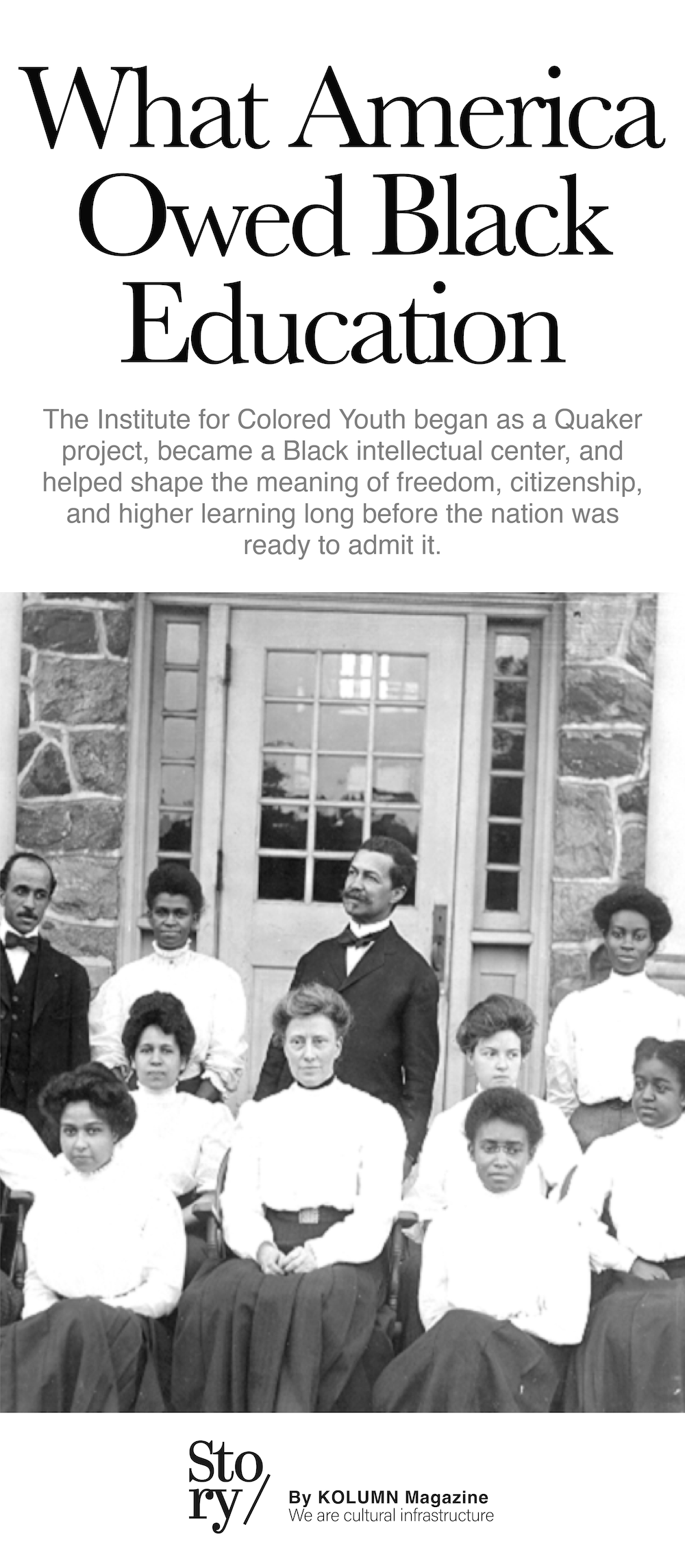
The Institute for Colored Youth did not merely educate notable people. It helped make Black professional life imaginable.
By KOLUMN Magazine
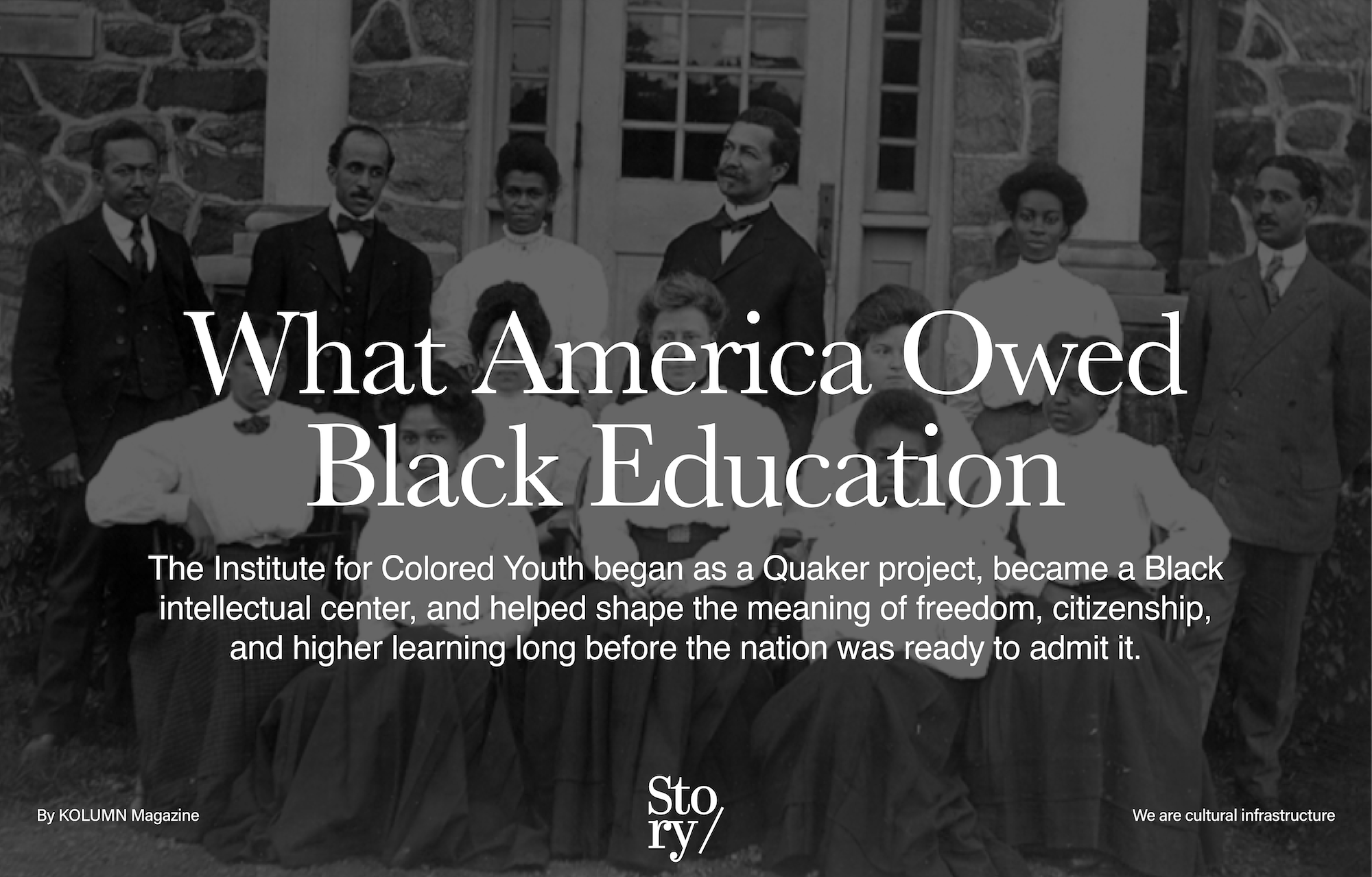
In the broad, frequently flattened story of American education, the Institute for Colored Youth is often reduced to a neat line of historical trivia: it was the beginning of what became Cheyney University, the oldest historically Black institution of higher education in the United States. That fact is true, and important, but it is not enough. The Institute for Colored Youth was not simply first in a chronological sense. It was first in a more demanding way. It stood at the intersection of Black aspiration, Quaker benevolence, Black intellectual labor, and the brutal national argument over whether African Americans were to be trained for citizenship, leadership, and ideas — or merely for service.
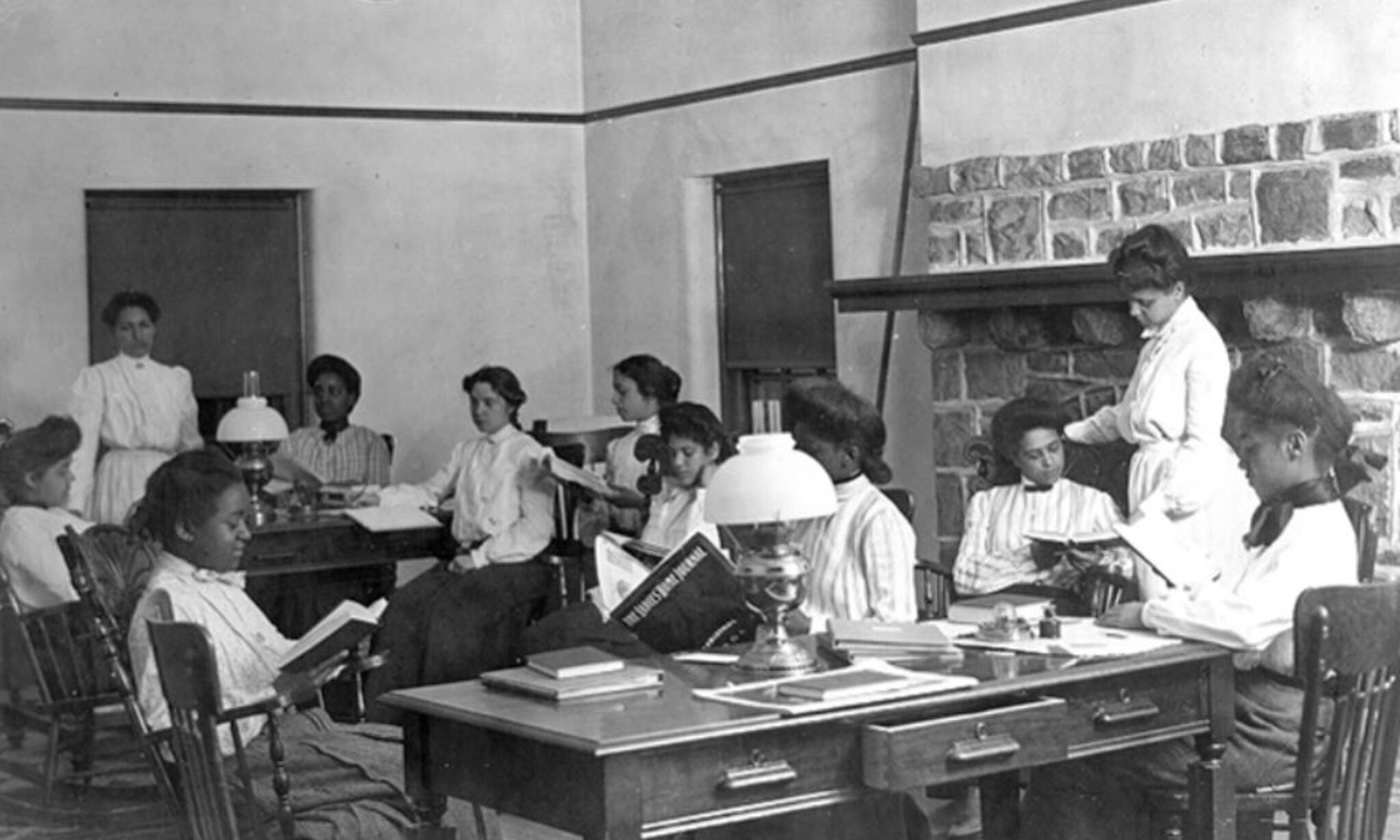
To understand the Institute is to understand that Black education in the United States did not begin as a gift graciously handed down by the powerful. It emerged from struggle, from organized demand, from communities insisting that literacy, discipline, and intellectual development were not luxuries but tools of survival and self-definition. In Philadelphia, a city that liked to think of itself as morally enlightened, Black residents still faced job exclusion, segregation, and public contempt. The Institute for Colored Youth became one response to that reality: a school created in a white philanthropic framework, but gradually transformed by Black teachers, Black students, and Black families into something far larger than its founders may have imagined.
Its history is, in one sense, the history of a school. But it is also the history of a question that America has never fully stopped asking: What kind of education is considered appropriate for Black people? Academic or industrial? Classical or practical? Liberating or disciplinary? Community-centered or funder-directed? In the nineteenth century, the Institute for Colored Youth became one of the clearest stages on which that question played out. Its answer, at least for a crucial stretch of its life, was bold: Black students deserved the full weight of intellectual seriousness.
The bequest that built the school — and the contradictions inside it
The Institute’s origin story begins with Richard Humphreys, a Quaker philanthropist and silversmith who left $10,000 in his will to create a school for “the descendants of the African Race.” The bequest represented one-tenth of his estate, and the language of the gift laid out a mission that fused academic instruction with training in mechanic arts, trades, and agriculture, all in service of preparing Black youth to become teachers and useful members of society. The legal and organizational steps that followed led to the formal establishment of the school in 1837, first under the name African Institute and soon after as the Institute for Colored Youth.
That founding story is admirable, but it is not simple. Humphreys has often been remembered as a benevolent Quaker reformer, and he was that. But he was also a figure whose life touched the wider Atlantic world shaped by slavery. Philadelphia historians have noted the uncomfortable fact that the institution’s origin cannot be cleanly separated from wealth accumulated in a society deeply entangled with enslavement and racial hierarchy. That tension matters. The Institute for Colored Youth was born not in a morally pure universe, but in the compromised one that produced so many American institutions. The significance of the school lies partly in what Black communities and Black educators made from that compromised inheritance.
There is also the matter of intent. Humphreys’s bequest came in an era when many white reformers were willing to support Black education only if it was tethered to uplift, labor discipline, or social management. The early mission language reflected that paternal frame. Yet from the beginning, the very act of establishing a formal institution for Black learning created a space that could be stretched far beyond paternalism. Education, once offered, has a way of exceeding the boundaries imagined by donors. A school founded to produce useful, orderly workers can become a school that produces critics, organizers, scholars, and institutional builders. The Institute for Colored Youth would do exactly that.
“The story of the Institute for Colored Youth is not the story of benevolence alone. It is the story of what Black students and Black educators did with an opening that was never meant to be limitless.”
Before Cheyney, before the legend, there was experimentation
The school’s earliest years were not yet the polished beginning that later commemorations sometimes imply. After the Quaker managers organized the institution, they experimented with different forms of instruction, including agricultural and industrial models outside the city. These early efforts reflected both the practical concerns of the founders and the era’s racial assumptions about the kinds of labor Black students should be prepared to perform. Over time, however, the managers concluded that the institution should place greater emphasis on formal schooling and teacher preparation.
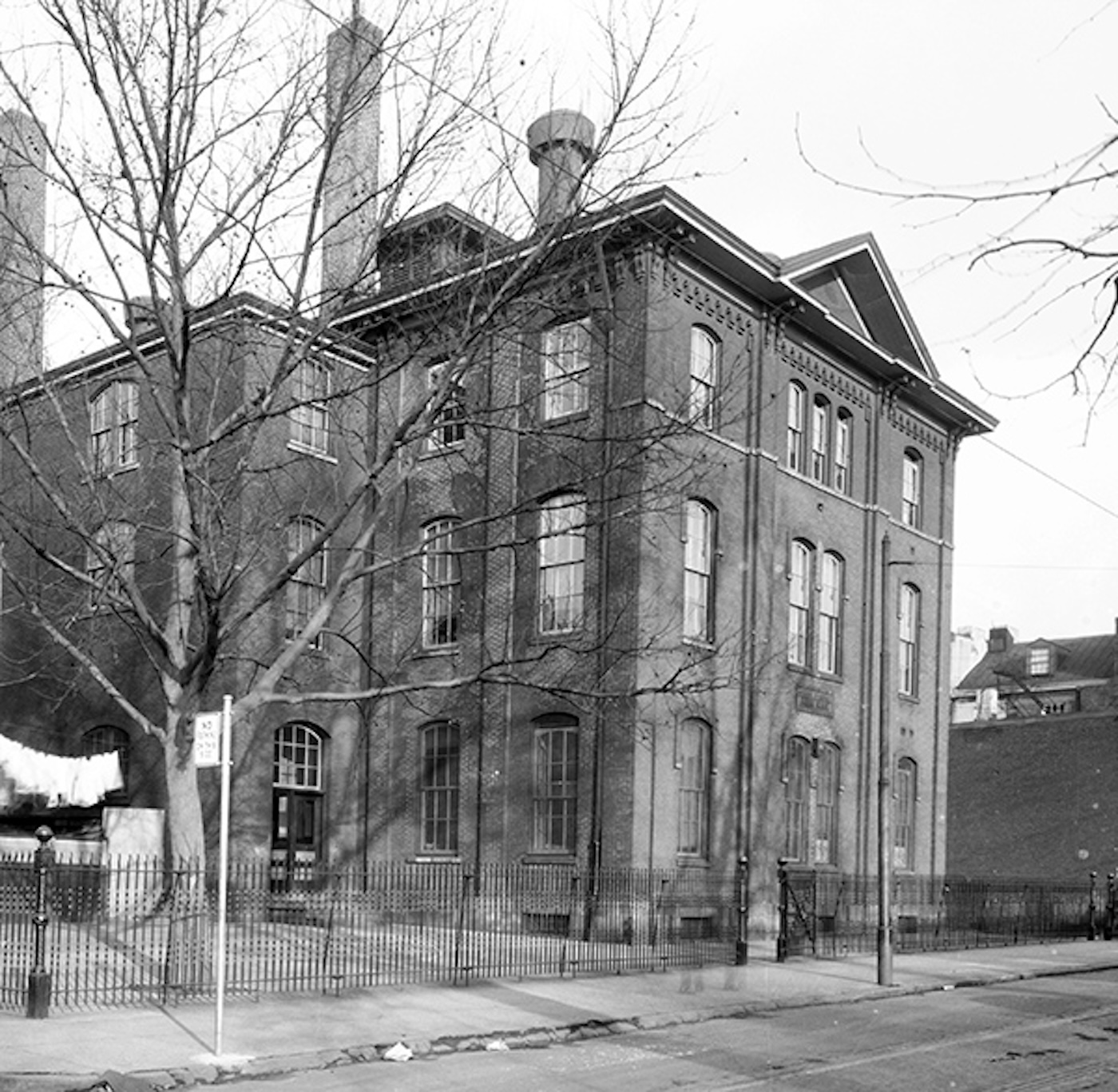
That shift was decisive. By the time the Institute opened at 716–718 Lombard Street in Philadelphia in the early 1850s, it was moving toward a more ambitious model. The school became coeducational and developed boys’ and girls’ high school divisions along with preparatory departments. What emerged was not merely a trade school for Black children barred from white institutions. It was a rigorous educational environment that increasingly resembled the best academic schools of its day, except that its students were Black and its faculty, notably, were Black as well.
This is one of the Institute’s most important and underrated facts: although it was controlled by a Quaker board, the teaching force became overwhelmingly African American. That mattered pedagogically and symbolically. In a nation organized around assumptions of Black inferiority, the Institute placed Black men and women in front of classrooms as authorities in mathematics, languages, literature, and science. Students did not simply learn subjects; they learned what Black expertise looked like.
By 1864, Octavius V. Catto — one of the Institute’s most celebrated alumni and later a teacher there — described a school with four departments, six Black teachers, a library of more than 2,000 volumes, and a course of study that included Latin, Greek, geometry, and trigonometry. That curriculum is worth dwelling on because it rebukes the common misconception that early Black education was necessarily basic, remedial, or narrowly vocational. At the Institute for Colored Youth, classical learning was part of the point.
Philadelphia’s Black world made the Institute matter
The Institute did not rise in isolation. It belonged to a dense Black civic world in nineteenth-century Philadelphia — churches, benevolent associations, anti-slavery networks, literary cultures, and families committed to education as collective advancement. The school’s significance came not only from what happened inside the building, but from its reciprocal relationship with that larger world. Students and teachers moved between the classroom and the city’s Black institutions, carrying ideas and obligations with them.
This context helps explain why the Institute became such a powerful training ground for teachers. In segregated Philadelphia, the number of educational opportunities available to Black students was constrained, and Black communities understood that well-trained teachers would be essential to building their own institutional capacity. The Institute met that need. Its graduates did not simply collect diplomas; many took up posts in schools, expanded access to education in Black neighborhoods, and helped create systems of instruction where none adequately existed before.
Catto’s 1864 commencement address is especially revealing on this point. He emphasized not only the school’s academic history but also the concrete positions its alumni had taken up — in medicine, teaching, and public service. He framed those achievements as evidence against racist slander and as proof that education could refute the lie of Black incapacity. That was the Institute’s broader civic function: it turned scholastic achievement into political argument.
The Institute’s alumni list reads like an early architecture of Black public life. Octavius Catto, of course, became a teacher, civil rights activist, and voting-rights organizer. Caroline LeCount became an educator and civil rights figure in Philadelphia. Rebecca Cole became one of the first Black women physicians in the United States. Jacob C. White Jr. became a major education leader. Ebenezer D. Bassett would go on to become the first Black U.S. diplomat, serving as ambassador to Haiti. These were not accidental outliers. They were the result of an institution that expected Black excellence and treated Black students as capable of serious intellectual formation.
The Bassett years and the rise of intellectual confidence
When Ebenezer D. Bassett became principal in 1857, the Institute entered one of its defining periods. Bassett was a graduate of Connecticut’s state normal school and a rare Black academic figure in the antebellum North. Under his leadership, the Institute deepened its academic ambitions and sharpened its role as a center of Black intellectual seriousness. Bassett himself later became a national figure, but his work at the Institute is central to understanding how the school matured before and during the Civil War.
The curriculum during this period matters because it was a direct affront to dominant racial ideology. Advanced mathematics, classical languages, formal rhetoric, and science were not neutral offerings. In the mid-nineteenth century, they were declarations. To teach Black students these subjects was to insist they were suited for disciplined reasoning, moral leadership, and public authority. The Institute’s academic program became a rebuttal in syllabus form.
And yet the school was not merely aspirational in an abstract sense. It was practical in the deepest way. It prepared teachers, yes, but it also prepared translators of freedom — people who could take knowledge back into communities, schools, churches, and movements. This is why the Institute’s significance exceeds the usual “first HBCU” shorthand. Its graduates were not just credentialed individuals. They were multipliers.
By the early 1860s, the Institute needed more space, and the managers undertook fundraising for a new site. The new building at Ninth and Bainbridge opened in 1866 with expanded facilities, including a lecture hall and chemistry laboratory. Physical expansion mirrored intellectual confidence. The school was growing because the demand for Black education — serious Black education — was growing too.
Fanny Jackson Coppin and the institution at its height
No figure is more inseparable from the Institute for Colored Youth than Fanny Jackson Coppin. Born enslaved, educated at Oberlin, hired at the Institute in 1865, and promoted to head principal in 1869, Coppin became one of the great architects of Black education in the nineteenth century. Britannica notes that her leadership at the Institute included innovations such as a practice-teaching system and a robust industrial-training department. Pennsylvania history sources go further, arguing that under her administration the school established a tone of high achievement and cultural distinction that shaped its early legacy.
Coppin is sometimes flattened into a symbol of uplift, but that understates her complexity. She was not anti-intellectual, and she was not simply an accommodationist. She appears instead as a strategist: someone who understood that Black students needed access to both intellectual formation and economic tools, and that schools serving Black communities would be judged by hostile outsiders on multiple fronts. Her reforms tried to expand, not diminish, the institution’s usefulness. She abolished corporal punishment, strengthened connections with parents, issued monthly reports on both scholarship and conduct, and developed systems that linked theory to classroom practice.
Under Coppin, the Institute became a national model for Black teacher preparation. She professionalized instruction and elevated expectations. She also broadened the school’s impact on women’s education, helping make it a place where Black young women could see disciplined scholarship and public purpose as compatible and necessary. In a century that narrowed the horizons of Black women at every turn, that mattered enormously.
At the same time, Coppin’s embrace of industrial education has to be understood within the period’s tensions. For some Black educators, industrial training offered practical pathways in a hostile economy. For critics, it risked reinforcing a second-tier vision of Black life. The Institute under Coppin tried to hold both ideas at once: practical skill and academic discipline. That balancing act was not always stable, but it was historically intelligible. She was leading a Black institution in a white supremacist nation; purity was never on offer. Strategy was.
A school of Black teachers, a school of Black citizens
The Institute’s greatest achievement may have been its insistence that education was inseparable from civic belonging. Students were trained to master subjects, but also to inhabit public life. Catto’s career is an obvious example. After graduating as valedictorian in 1858, he returned to teach at the Institute and emerged as one of Philadelphia’s most important Black civil rights leaders, organizing for equal rights and Black suffrage before he was murdered in 1871. His life shows how seamlessly the Institute linked scholastic discipline and democratic struggle.
The same is true of Bassett, whose later appointment as ambassador to Haiti became a milestone in U.S. diplomatic history, and of Rebecca Cole, whose medical career expanded the possibilities for Black women in the professions. Even when alumni left Philadelphia, they carried the Institute’s ethos with them. The school’s function was not to produce isolated success stories but to seed Black institutional life across cities, classrooms, and professions.
This is why the Institute’s relationship to the concept of HBCUs is so foundational. Before there was an established sector of historically Black colleges and universities, there was this experiment in Black-directed excellence inside a racist republic. Later HBCUs would emerge in large numbers after the Civil War and especially in the South. But the Institute for Colored Youth supplied an earlier model: a place where Black students could be intellectually challenged, socially affirmed, and institutionally cultivated long before such arrangements were common.
The broader importance of HBCUs today still rests on that same foundation. As The Washington Post observed in a wider reflection on Black colleges, these institutions have remained vital pathways to higher education for Black Americans while also nurturing belonging, pride, and activism. The Institute for Colored Youth was doing a version of that work before the category itself had stabilized.
The move to Cheyney, and the narrowing of vision
If the Institute’s nineteenth-century story includes a golden age, it also includes a rupture. In 1902, the school moved from Philadelphia to George Cheyney’s farm, roughly 25 miles west of the city. The relocation eventually produced the institution now known as Cheyney University. But the move also marked a change in educational philosophy. Historical accounts indicate that the all-white board curtailed the collegiate program, dismissed faculty including the eminent scholar Edward Bouchet, and shifted more decisively toward industrial education.
This moment deserves careful treatment because it is easy to narrate it as simple progress: city school becomes rural campus, campus becomes university. That is only partly true. Institutionally, the move did help create the line of continuity that leads to the present-day university. Intellectually, however, some historians see it as a contraction — a turn away from the more expansive, classical, and urban Black intellectual culture that had flourished in Philadelphia.
In other words, the move to Cheyney was both preservation and loss. It preserved the institution. It altered its soul. That dual reality is central to understanding the Institute’s significance. Black educational history is full of such compromises, where survival required translation into forms more acceptable to white managers, legislatures, or accreditors. The question was never simply whether a school would exist. It was what kind of school it would be allowed to become.
Still, continuity matters. Cheyney University itself officially traces its founding to 1837 and continues to identify that legacy as the origin of the first HBCU in the nation. The contemporary university explicitly frames its mission as a continuation of that historic role, even as it works through twenty-first-century institutional pressures.
Why the Institute still matters now
There are at least three reasons the Institute for Colored Youth remains urgent, not merely commemorative.
The first is that it complicates the American story about educational access. It reminds us that Black higher learning did not begin after emancipation, nor only in the South, nor only as a late concession to democracy. It began earlier, in the North, amid active Black community struggle and under the pressure of anti-Black exclusion. The Institute’s existence exposes how long Black Americans have had to build serious educational institutions in spite of the nation, not because of it.
The second is that it complicates the story of curriculum. Debates about “useful” education versus “liberal” education are often presented as neutral policy disputes. In Black educational history, they were never neutral. They were arguments about hierarchy, citizenship, and who was deemed entitled to abstraction. The Institute’s classical curriculum, especially during its most intellectually ambitious years, announced that Black students were entitled to the same rigorous encounter with ideas as anyone else.
The third is that it clarifies what institutions really are. Buildings matter. Charters matter. Endowments matter. But institutions are also made by the people who animate them. The Institute became significant because of Bassett, Coppin, Catto, LeCount, White, Cole, and countless less famous students and teachers whose work created a tradition. The school’s meaning was authored from within.
That lesson lands with particular force in the present. Cheyney University has faced well-documented financial and accreditation pressures in recent years, even as it has also seen accreditation reaffirmed and public efforts to chart a more stable future through strategic planning. The fact that the descendant institution of the Institute still has to fight for secure footing says something unsettling about the American habit of celebrating Black educational history while underfunding Black educational futures.
The long afterlife of a name
The phrase “Institute for Colored Youth” is, to modern ears, jarring. It carries the racial vocabulary of another era, one that classified Black people from the outside. But historical names can reveal as much as they obscure. The name tells us the institution emerged in a society where Black children were discussed as subjects to be managed, categorized, and improved. The school’s history tells us something else: those children, and the teachers who followed them, were never merely objects of reform. They were makers of an educational tradition.
That is why the Institute deserves more than ceremonial praise. It deserves analytical respect. It deserves to be understood as a site where Black educational philosophy was lived, tested, and contested. It deserves to be placed not on the margins of the American education story, but near the center. The United States did not simply produce elite colleges and then later decide Black people should have schools too. It produced racial exclusion, and Black people — sometimes with allies, often in tension with those allies — built institutions capable of defying that exclusion. The Institute for Colored Youth was one of the earliest and most consequential of them.
In the end, the Institute’s significance is not that it was perfect. It wasn’t. It was shaped by philanthropy, paternalism, curricular conflict, and the compromises that come with trying to educate Black students in a white supremacist society. Its significance is that, despite all of that, it became a place where Black intellect was treated as real, where Black teachers were treated as authoritative, and where Black students were prepared not just to labor, but to lead.
And that, more than a century and a half later, still sounds radical.
More great stories
When Bobby Hutton Fell
March 13, 2026
No Comments
Alice Ball’s Cure, and the Theft That Followed
March 12, 2026
No Comments