




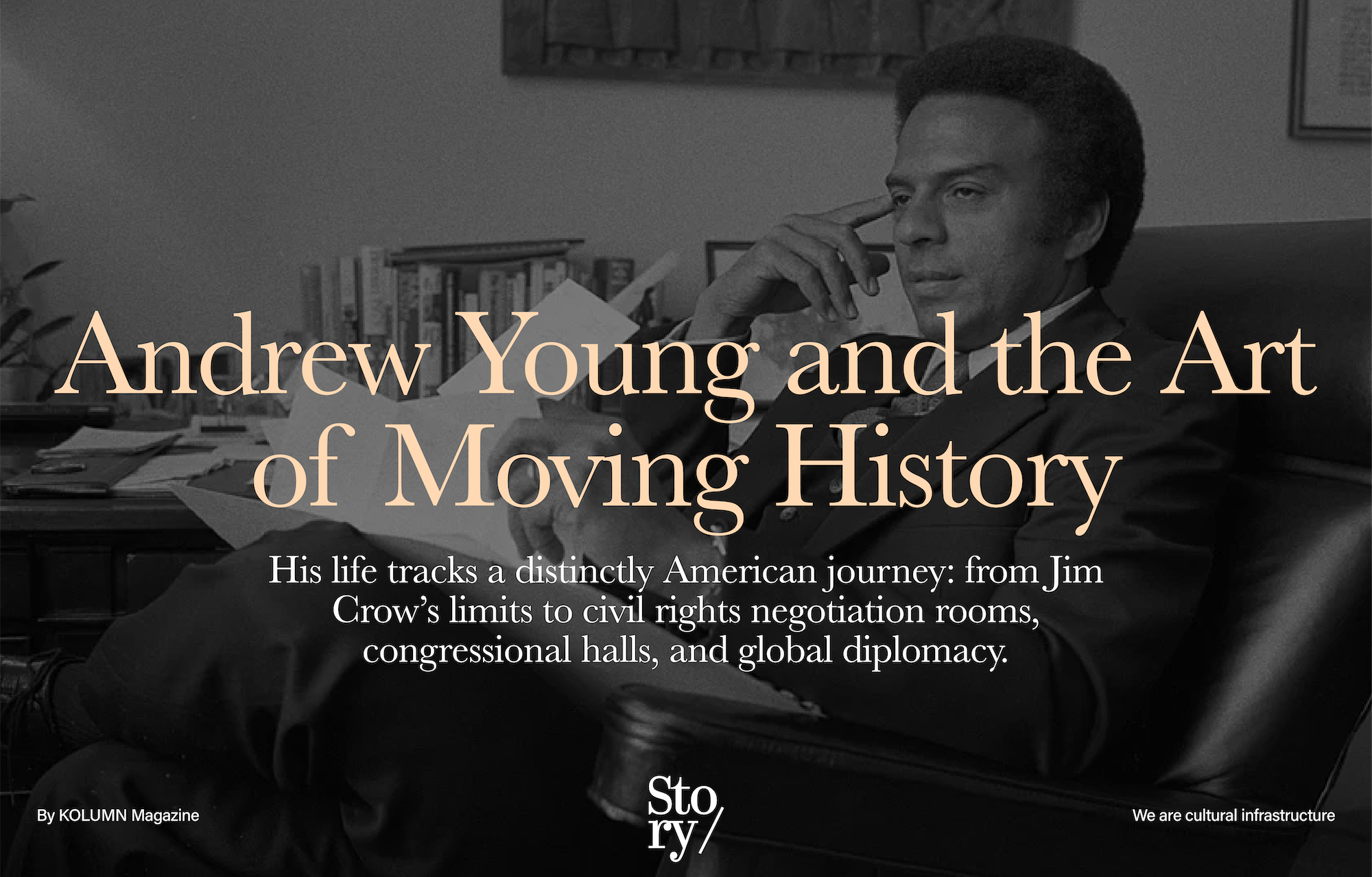
He was not merely a marcher in the frame. He was often the person figuring out how the frame could hold.
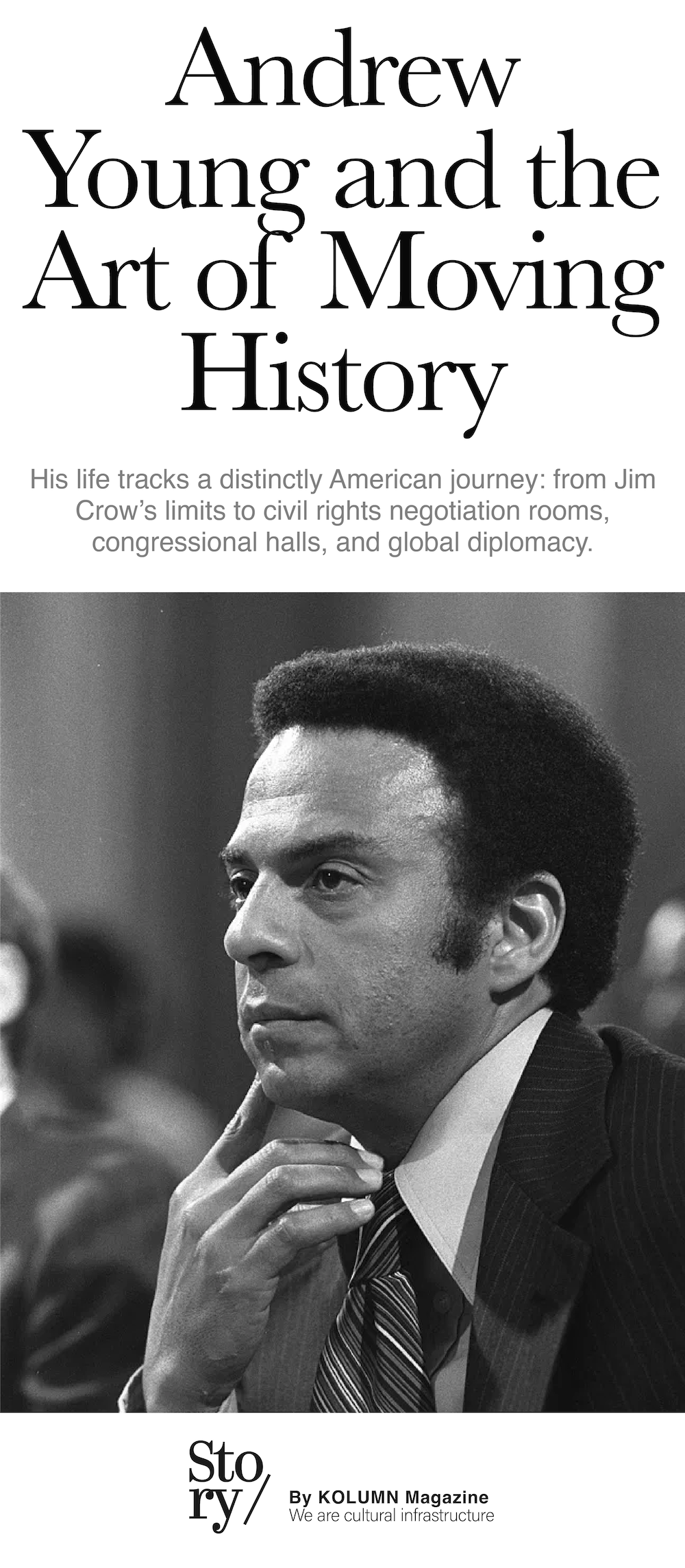
He was not merely a marcher in the frame. He was often the person figuring out how the frame could hold.
By KOLUMN Magazine
Andrew Young has spent so much of his public life near history’s center that it can be easy to misread his role in it. He was there in the thick of the civil rights movement, a close aide to Martin Luther King Jr., a strategist for the Southern Christian Leadership Conference, a negotiator in some of the movement’s tensest campaigns, and a witness to King’s assassination in Memphis. Then he stepped into electoral politics, became the first Black congressman from Georgia since Reconstruction, served as Jimmy Carter’s ambassador to the United Nations, and remade Atlanta’s image as a global Black city of commerce and diplomacy. That résumé is so large it can flatten the man. Andrew Young’s real significance is not just that he did many things. It is that he understood, earlier than many of his contemporaries, that freedom work had to travel through multiple arenas if it was going to last. It had to live in churches, in streets, in courthouses, in Congress, in City Hall, and at the UN.
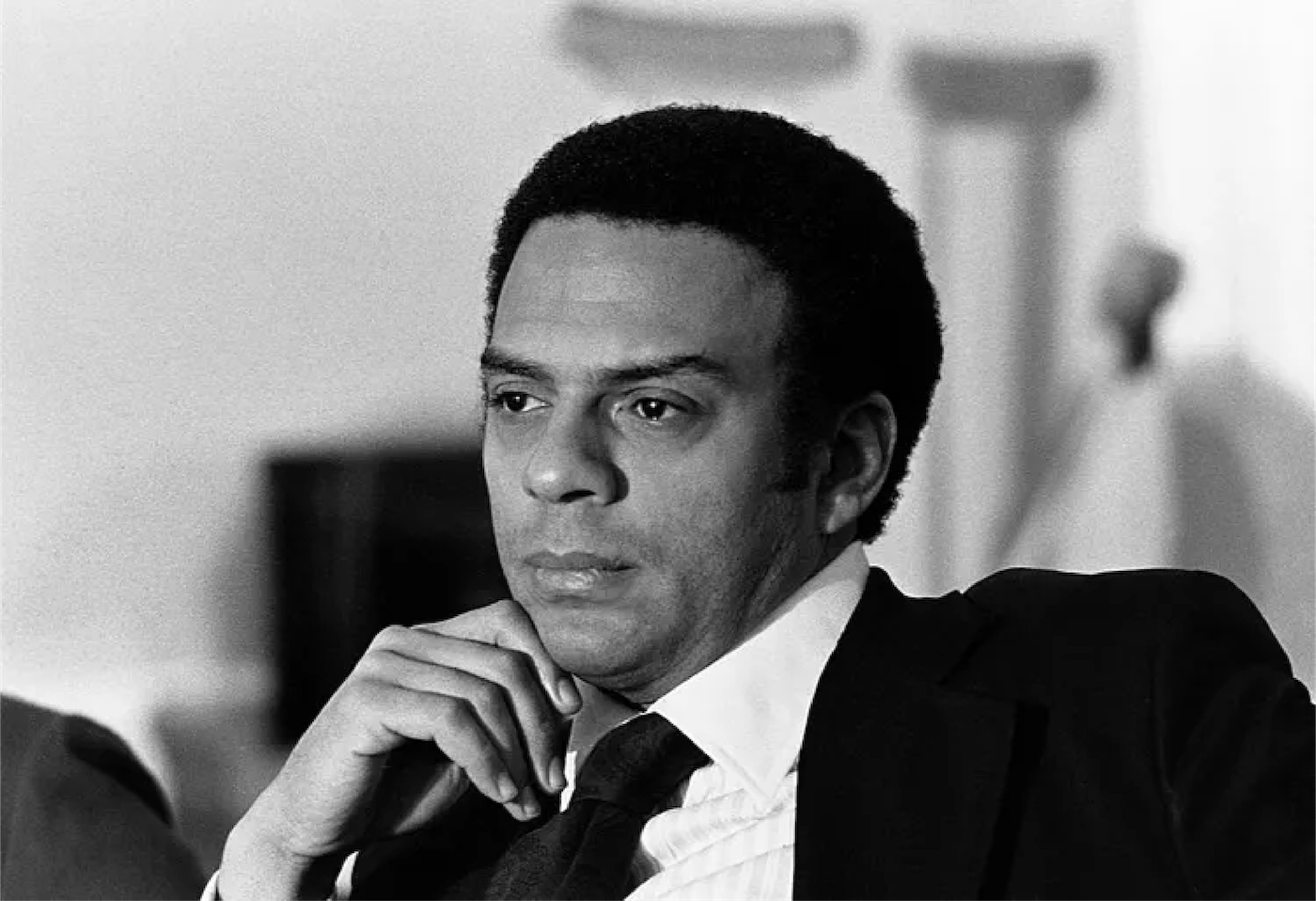
Young, born Andrew Jackson Young Jr. in New Orleans on March 12, 1932, came from a relatively stable, middle-class Black family. His father was a dentist and his mother a schoolteacher, and he grew up in a neighborhood where his family’s status did not exempt them from segregation’s humiliations. That combination mattered. He knew the language of aspiration and the blunt force of racial hierarchy at the same time. He attended Dillard University briefly, graduated from Howard University with a biology degree in 1951, and then chose the ministry over dentistry, earning a divinity degree from Hartford Theological Seminary in 1955 before being ordained in the United Church of Christ.
That biography can sound straightforward on paper, but it planted the core tension that shaped his life. Young was never only a preacher, never only a moralist, never only a politician. He belonged to that generation of Black Southern clergy for whom theology and public life were inseparable. In Alabama and Georgia, where he served as a pastor, he confronted voter suppression and white intimidation directly. He organized registration efforts, faced threats, and began leaning into Gandhian nonviolence not as abstract philosophy but as an operating system for social conflict. The church gave him his ethical grammar; the South gave him his subject matter.
What made Young unusual, though, was not just that he believed in nonviolence. Many did. It was that he grasped how nonviolence had to be administered. Someone had to teach it, schedule it, negotiate around it, and make it legible to hostile officials, anxious moderates, national media, and ordinary Black Southerners who were staking their bodies on its promise. That was Young’s lane. The Martin Luther King Jr. Research and Education Institute notes that his work as a pastor, administrator, and voting-rights advocate led him into the SCLC, where he became one of King’s most trusted advisers and confidants. In Young’s own recollection, he often found himself voicing the “conservative view” inside movement debates, not because he was timid, but because he understood the difference between symbolic courage and strategic timing.
That distinction matters because Andrew Young’s story is frequently told as a supporting role inside the larger mythology of King. He deserves better than that. He was a principal architect of movement infrastructure. Through the Citizenship Education Program and related organizing work, he helped teach communities how to register voters, build local leadership, and turn moral outrage into civic participation. Stanford’s King Institute notes that SCLC staff including Young trained local communities in Christian nonviolence and citizenship-school work. The House History office adds that when King and Ralph Abernathy were jailed in Albany, Young handled vital responsibilities on the outside and mediated between SCLC and local police. He was not the speech on the evening news; he was often the person who made the campaign possible by morning.
The movement’s public memory has always favored the spectacular image: the march, the dog, the club, the sermon, the bridge. Young’s gift was for the less glamorous art of transition. He could sit with activists and officials, carry messages between camps, and see negotiation not as surrender but as one stage of struggle. During Birmingham in 1963, that skill proved invaluable. Contemporary accounts and later summaries consistently describe him as a mediator who helped navigate talks amid chaos. TIME, reflecting on his career decades ago, described him as a conciliator and charmer who could quietly negotiate compromise even under extreme pressure. The Andrew Young Center likewise credits him with playing a key role in the Birmingham desegregation agreement. In other words, he specialized in converting confrontation into concrete movement.
Birmingham is one of those places where Young’s style becomes clearest. He was not interested in conflict for conflict’s sake. He understood that protest had to create a crisis serious enough to force response, but he also knew that every crisis required interpreters. Movements need people who can dramatize injustice, and they also need people who can explain terms, manage sequence, and extract concessions. Young did that work repeatedly in Birmingham, St. Augustine, Selma, and Chicago. Stanford notes his involvement across those major campaigns, while The Root’s concise biography points specifically to his direct presence beside King in Birmingham, St. Augustine, and Selma.
St. Augustine, Florida, in 1964, is perhaps the sharpest example of Young’s strange blend of visibility and behind-the-scenes labor. He was brutally beaten there during demonstrations timed to intensify national pressure as the Senate debated the Civil Rights Act. In a recent AP report on the documentary Andrew Young: The Dirty Work, Young recalled the episode with the mordant humor that has long been part of his political style, calling it the most successful beating he had ever received because public revulsion helped push legislation forward. There is a hard truth inside that line. Young understood, maybe more coldly than some of his peers, that American reform often required translating Black suffering into undeniable public cost. That is not cynicism. It is political realism learned the brutal way.
“Andrew Young understood that nonviolence was not passive. It was disciplined confrontation designed to produce leverage.”
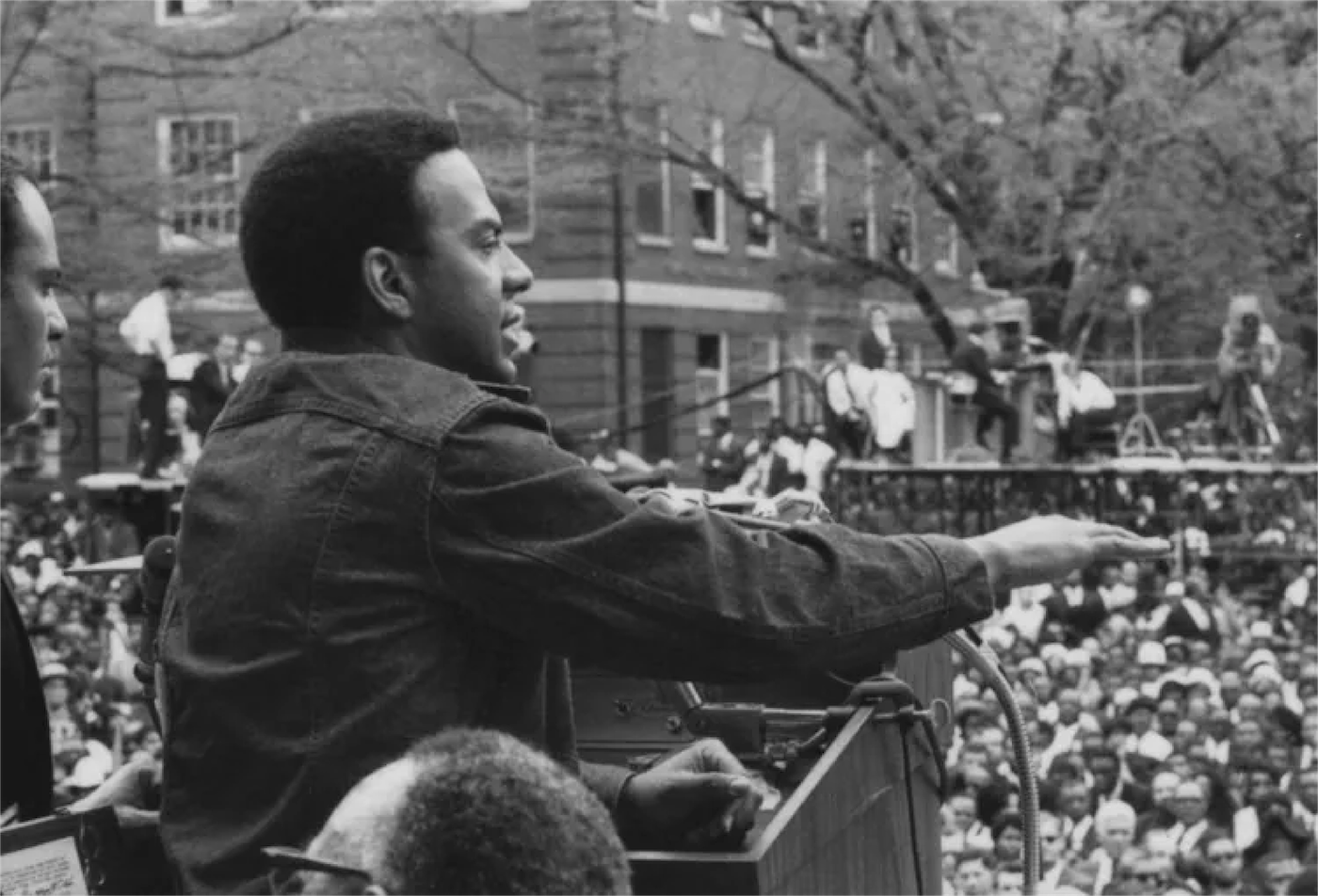
If King was the movement’s greatest moral voice, Young was one of its clearest operational minds. He could think in sequences: when to escalate, when to talk, when to let television do its work, when to broaden the coalition, when to reassure nervous whites, when to lean on federal actors, when to preserve movement unity. That administrative intelligence is easy to underrate because it does not always sound poetic. But anyone who has studied political movements knows that charisma without logistics burns out fast. Young knew how to build continuity.
The death of King in 1968 broke open a strategic question for Black freedom politics: what next? For some, the answer lay in radicalization. For others, in local control. For still others, in preserving movement institutions without surrendering their ethical core. Young chose electoral politics, and that choice was not universally admired. It could look, depending on where one stood, like adaptation or accommodation. But Young himself framed it as a continuation of movement work by other means. The House History office quotes him describing political office as a way of sustaining what the movement had done and still needed to do. That line gets at the heart of his political philosophy. He did not think entering government meant leaving the struggle. He thought the struggle had reached a stage where refusing power could become its own kind of failure.
His first congressional run in 1970 failed, but the loss gave him a sharper read on Atlanta politics and Georgia’s Fifth District. He chaired the Atlanta Community Relations Commission, built visibility, and returned in 1972 to win. That victory made him the first Black representative from Georgia since Jefferson Long’s Reconstruction-era service, and one of the first Black members elected from the former Confederacy in the modern era alongside Barbara Jordan of Texas. It was, symbolically, a breakthrough. But it was also substantive. Young’s coalition politics, what he called a New South coalition of Black voters, liberal voters, and white labor voters, previewed the kind of multiracial Southern politics that would remain difficult, fragile, and indispensable.
Young’s congressional years are sometimes treated as a bridge between more famous chapters, but they deserve more attention. In the House, he tried to extend King’s human-rights vision into legislative and international questions. The House History office notes that his grassroots movement experience and diplomatic sensibility helped him take principled but pragmatic positions. That combination—principled and pragmatic—comes up again and again with Young because it describes the balance he kept trying to strike. He was never a purist. But neither was he a man without anchors. He believed in rights talk, in democratic inclusion, and in Black political presence. He also believed that results required coalition management, patience, and sometimes unpopular compromise.
That blend prepared him for the Carter administration, where his appointment as US ambassador to the United Nations in 1977 was both historic and revealing. He became the first African American to hold the post, but just as important, he brought a civil-rights framework into diplomacy. Georgia State’s biography notes that he carried Carter’s emphasis on human rights into international affairs and helped negotiate an end to white-minority rule in Namibia and Zimbabwe. AP’s report on France’s 2023 honor for Young similarly highlighted his advocacy for human rights and his efforts connected to ending white-minority rule in what is now Zimbabwe. Young was part of a generation of Black American leaders who saw decolonization, anti-apartheid politics, and civil rights as connected struggles, not separate files.
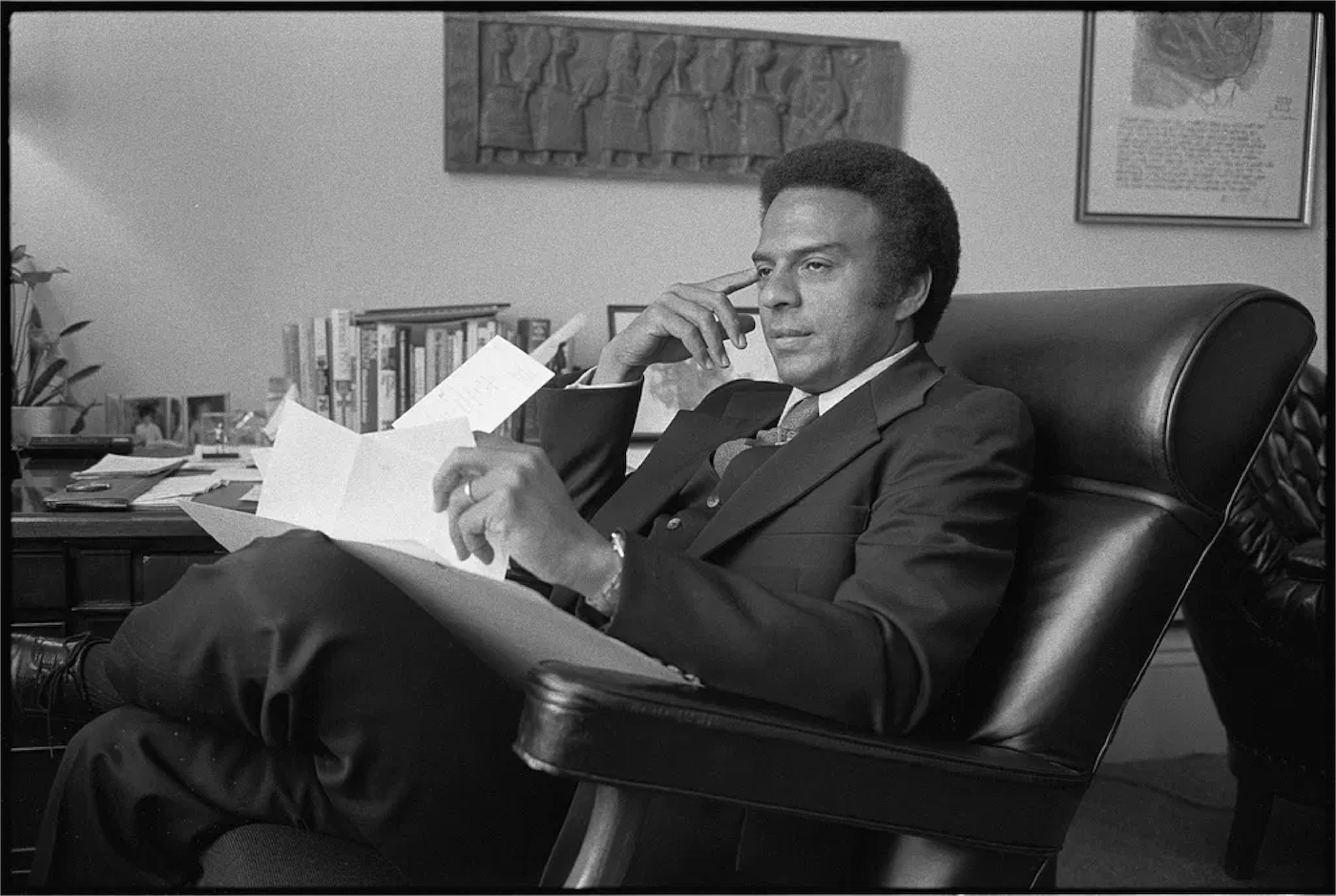
This is where Andrew Young starts to look less like a national figure with international interests and more like an early theorist of Black global politics in practice. He did not use that language the way later academics or activists might, but he embodied it. The same man who had mediated in Southern desegregation fights now sat on the world stage pressing human rights questions that linked Africa, the Caribbean, and the United States. He understood that American democracy could not preach freedom abroad while dodging racial truth at home, and he also understood that Black Americans had moral and strategic reasons to care deeply about African liberation.
Still, Young’s time at the UN was not a triumphal march. It exposed the limits of improvisational moral diplomacy inside rigid Cold War protocol. The central controversy was his 1979 meeting with Zehdi Terzi, the Palestine Liberation Organization’s observer at the UN, at a moment when US policy forbade such contact. The State Department’s official historical record states plainly that Young announced his resignation after revelations of the meeting, which had violated US policy. The House History office likewise notes that he resigned amid severe criticism over it.
The “Andy Young affair,” as it became known, remains one of the more revealing episodes of his career because it distilled both his strengths and his vulnerabilities. He was often most effective when he crossed lines others considered untouchable, when he talked to people power preferred not to acknowledge, when he treated negotiation as a tool rather than a reward. That habit had served him in Birmingham and Selma. At the UN, it collided with geopolitical red lines. Young later made clear that he did not really regret the instinct behind the contact. That posture fit him. He had spent his career believing that refusing to talk was often the surest way to preserve conflict. The problem was that states, unlike movements, do not always prize improvisation from their envoys.
“Young’s controversy at the UN was not an aberration from his character. It was, in a way, its extension: he kept believing that adversaries had to be engaged.”
It is easy, in hindsight, to cast that resignation as a fall. But it also marks a deeper through line in Young’s life: he was rarely comfortable with narrow definitions of respectability. Even when he wore the suit of the state, he retained the instincts of a movement negotiator. That made him unusually effective in some settings and politically vulnerable in others. It also made him hard to categorize. He was too establishment for radicals, too improvisational for institutions, too international for provincial politics, and too Southernly practical for ideological romance.
Then came Atlanta, and with it perhaps the most underappreciated stage of his public life. Young was elected mayor in 1981 and served two terms from 1982 to 1990. If the civil rights years showed his ability to convert protest into leverage, the mayoral years showed his ability to convert symbolic Black political power into economic and civic positioning. The House History office says he traveled extensively to promote Atlanta as a financial competitor on the world stage and played an active role in bringing the 1996 Olympic Games to the city. Georgia State’s biography goes further, crediting his administration with attracting more than 1,100 businesses, over $70 billion in foreign direct investment, and more than a million jobs. Those numbers come from commemorative and institutional sources, so they should be read as part of a legacy narrative as much as a ledger. Still, the broad point is beyond dispute: Young helped sell Atlanta as a global, Black-led, business-friendly metropolis.
That project is where admiration and critique of Young often meet. For some, he stands as a builder of modern Black urban power, someone who expanded Atlanta’s reach, deepened its international profile, and helped normalize the idea that a Black Southern city could be both culturally rooted and globally ambitious. For others, the Atlanta model—boosterish, corporate, unevenly distributed in its gains—raises familiar questions about who benefits when Black political symbolism aligns closely with elite growth agendas. Young did not invent that tension, but he embodied it in ways that still feel contemporary. He represented a generation of Black elected officials trying to govern cities after formal segregation, when the agenda shifted from legal access to capital flows, infrastructure, tourism, and image.
To understand Young fully, one has to take that complexity seriously. He was not simply a protest elder who later wore municipal suits. He believed economic development was part of civil rights. He believed bringing international business to Atlanta mattered. He believed airports, conventions, and Olympics bids could expand the possibilities of Black civic life. He also believed, and said in different ways across decades, that the movement’s victory required entry into the places where budgets, contracts, and diplomatic relationships are decided. That conviction made him a model for some later Black officeholders and a cautionary figure for others.
The Olympics are a telling case. Young was deeply involved in helping Atlanta secure the 1996 Games, and the city later honored him through Andrew Young International Boulevard, a naming that reflects his role in that effort. To supporters, the Olympics confirmed Atlanta’s arrival as a world city, one tied to Black leadership rather than defined by resistance to it. To critics, mega-events often bring displacement, polished image management, and selective prosperity. Young, characteristically, would likely argue that history rarely offers clean options, only chances to move the balance of power. That has always been his temperament: not utopian, not defeatist, but relentlessly transactional in the service of larger ideals.
His post-mayoral life has extended that pattern. Through the Andrew J. Young Foundation, board service, business activity, and public speaking, he has remained a fixture in conversations about democracy, development, Africa, and civil rights memory. Georgia State notes that he and Carolyn McClain Young founded the Andrew J. Young Foundation in 2003 to support education, health, leadership, and human rights in the United States, Africa, and the Caribbean. His later honors—including France’s decision in 2023 to elevate him within the Legion of Honor—suggest that the world still reads him not only as a veteran of the 1960s but as a durable transnational figure.
There is also the matter of age, memory, and witness. Recent coverage around the documentary Andrew Young: The Dirty Work underscores that Young, now in his nineties, is among the dwindling number of living figures who can still narrate the movement from inside its rooms rather than from the archive. AP’s reporting frames the documentary partly around that urgency: time is running short to hear directly from those who did the work. That fact gives Young’s public reflections added weight, even when one disagrees with him. He is not simply recounting events. He is defending a theory of change forged under conditions that younger generations inherit more often through clips than through danger.
And that theory of change can be divisive. Young has sometimes sounded skeptical of newer protest formations, especially when he sees them as less disciplined, less strategic, or less rooted in nonviolent training than the movement he knew. A 2015 Washington Post op-ed by Young on Black Lives Matter made that tension plain. Whether one agrees with his assessment or not, it reveals a larger truth: Andrew Young belongs to a school of politics that values moral clarity, institutional patience, coalition breadth, and disciplined confrontation. He is suspicious of politics that courts visibility without durable structures. Younger activists, understandably, may hear that as generational conservatism. But it is also the worldview of a man who saw firsthand how fragile breakthroughs can be.
That arguability is part of why Andrew Young matters. He is not a sainted symbol who can be placed safely in a museum case. He forces harder questions. What does it mean to move from movement to governance without losing moral purpose? When does compromise become betrayal, and when is it the only path to concrete gain? Can Black political power inside American institutions remain accountable to the poor, the excluded, and the international struggles that helped define its language? Young’s life does not settle those questions. It stages them.
His significance, then, lies in more than longevity or résumé. It lies in his function as a bridge figure. He linked the Black church to electoral politics, Southern struggle to international diplomacy, civil rights protest to urban development, and moral witness to institutional power. Many people can claim one of those realms. Few can credibly claim all of them. The breadth of his career helps explain why he remains difficult to summarize. He was never just one thing long enough to become a caricature of it.
He also complicates the lazy distinction between radicals and pragmatists. Young was pragmatic, yes, but his pragmatism emerged from deep movement experience, not from comfort. He had been jailed. He had been beaten. He had watched the federal government move too slowly and local white power resist too viciously. His dealmaking was not born of abstraction; it was born of having seen what happened when there was no deal, no law, no federal intervention, no public pressure strong enough to alter the equation. That history gave him a patience that could look centrist from the outside but was, in origin, survivalist and strategic.
There is something distinctly American in Andrew Young’s trajectory, and something distinctly Black about the burden of it. He had to be excellent in multiple languages at once: the sermonic language of justice, the legal language of rights, the insider language of legislative bargaining, the diplomatic language of states, and the civic language of growth and prosperity. White public figures are often allowed singularity. Black public figures, especially those of Young’s generation, were asked to be translators across worlds that did not trust one another. Young spent his life doing that translation. Sometimes he did it brilliantly. Sometimes controversially. Always recognizably.
In the end, Andrew Young’s legacy may be best understood through the kind of labor he himself highlighted: the dirty work, the unglamorous work, the connective work. History tends to celebrate the climactic moment. Young’s career reminds us that progress also depends on the people who prepare meetings, broker terms, calm factions, read the room, call the bluff, widen the coalition, and stay long enough after the march to argue over what comes next. He did not just help desegregate lunch counters or expand voting rights or raise Atlanta’s global profile. He helped define a model of Black public leadership that refused to choose between conscience and institution.
For a country that still loves easy heroes and cleaner narratives than history can provide, Andrew Young offers something more useful: a life that shows how change actually travels. It travels through persuasion and pressure, through faith and tactics, through public sacrifice and private negotiation. It travels from local church basements to international chambers. It travels imperfectly. It travels with contradiction. And sometimes, if someone like Andrew Young is doing the carrying, it travels farther than anyone expected.
More great stories
Before “Global Black Politics” Had a Name, Vicki Garvin Was Living It
March 13, 2026
No Comments
When Bobby Hutton Fell
March 13, 2026
No Comments