



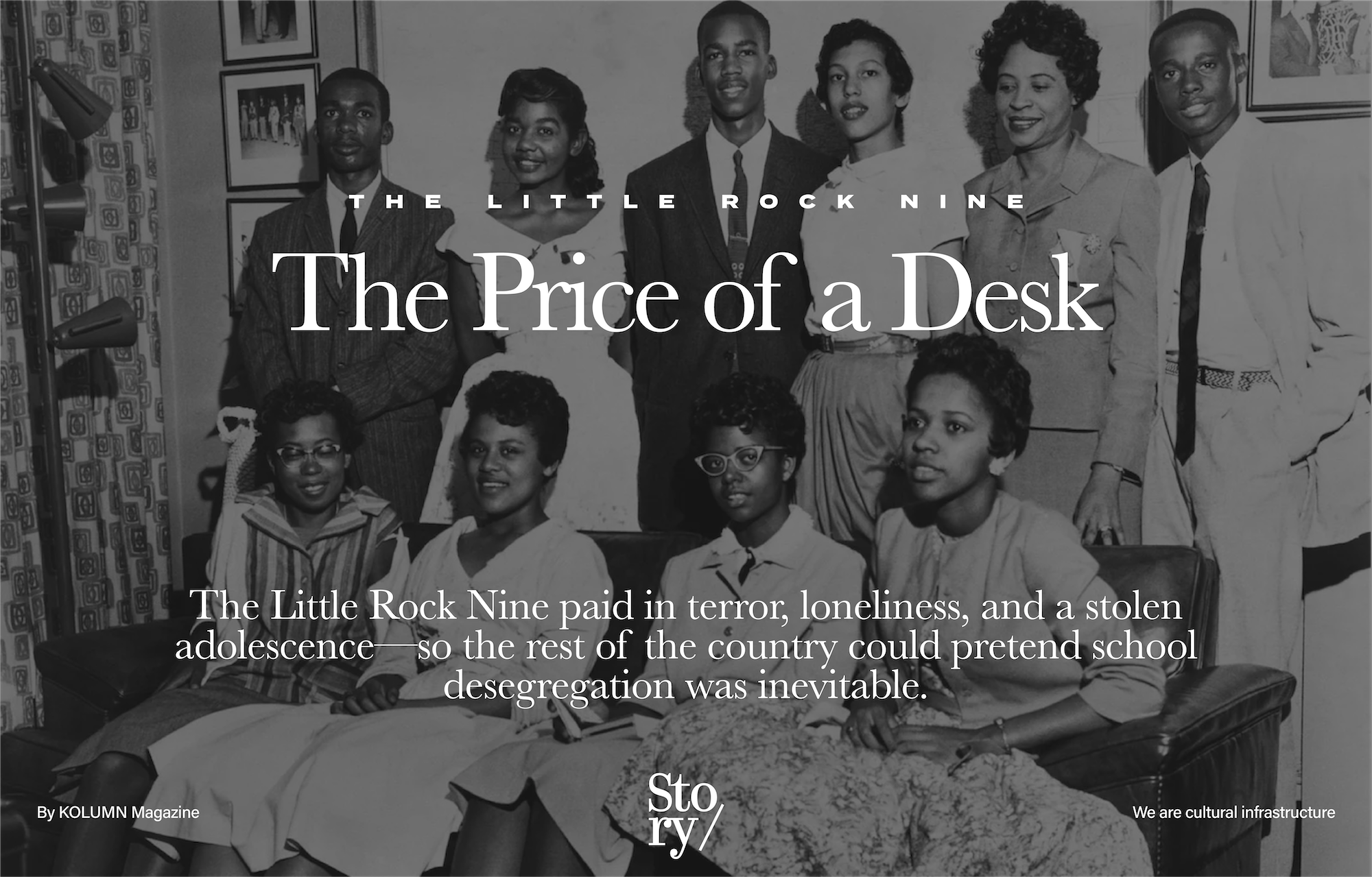
The Little Rock Nine did not simply integrate a school. They forced the federal government to decide whether it meant what it had said in Brown v. Board of Education.
The Little Rock Nine did not simply integrate a school. They forced the federal government to decide whether it meant what it had said in Brown v. Board of Education.
By KOLUMN Magazine
A nation can tell itself stories for a long time—about fairness, about progress, about the steady arc of history bending toward justice—until one ordinary morning insists on evidence. In Little Rock, Arkansas, that evidence took the form of nine Black teenagers in pressed clothes, holding books tight to their bodies like shields, walking toward a public high school that belonged to them by law and by tax receipt and by citizenship, yet did not belong to them in the eyes of a roaring crowd.
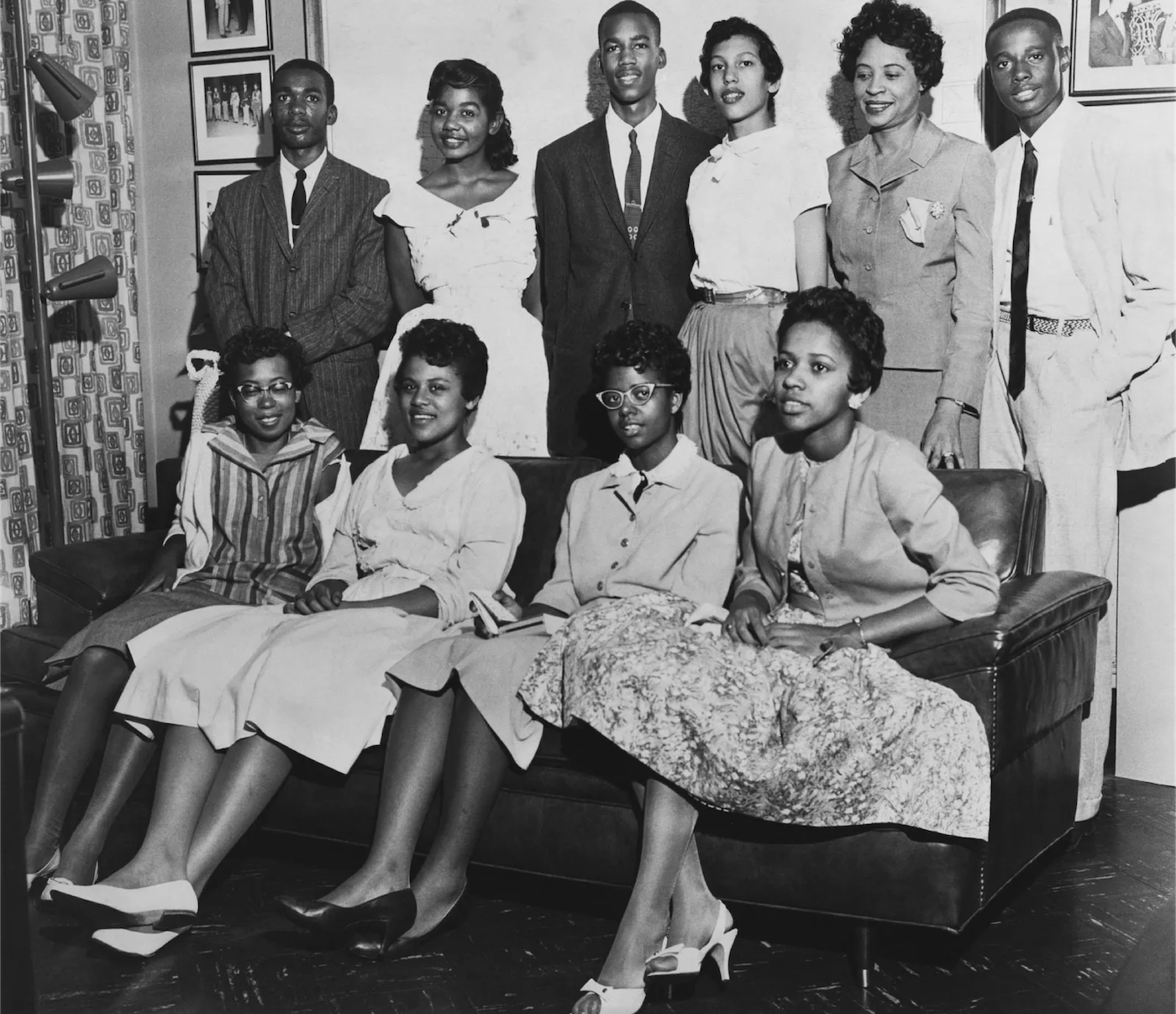
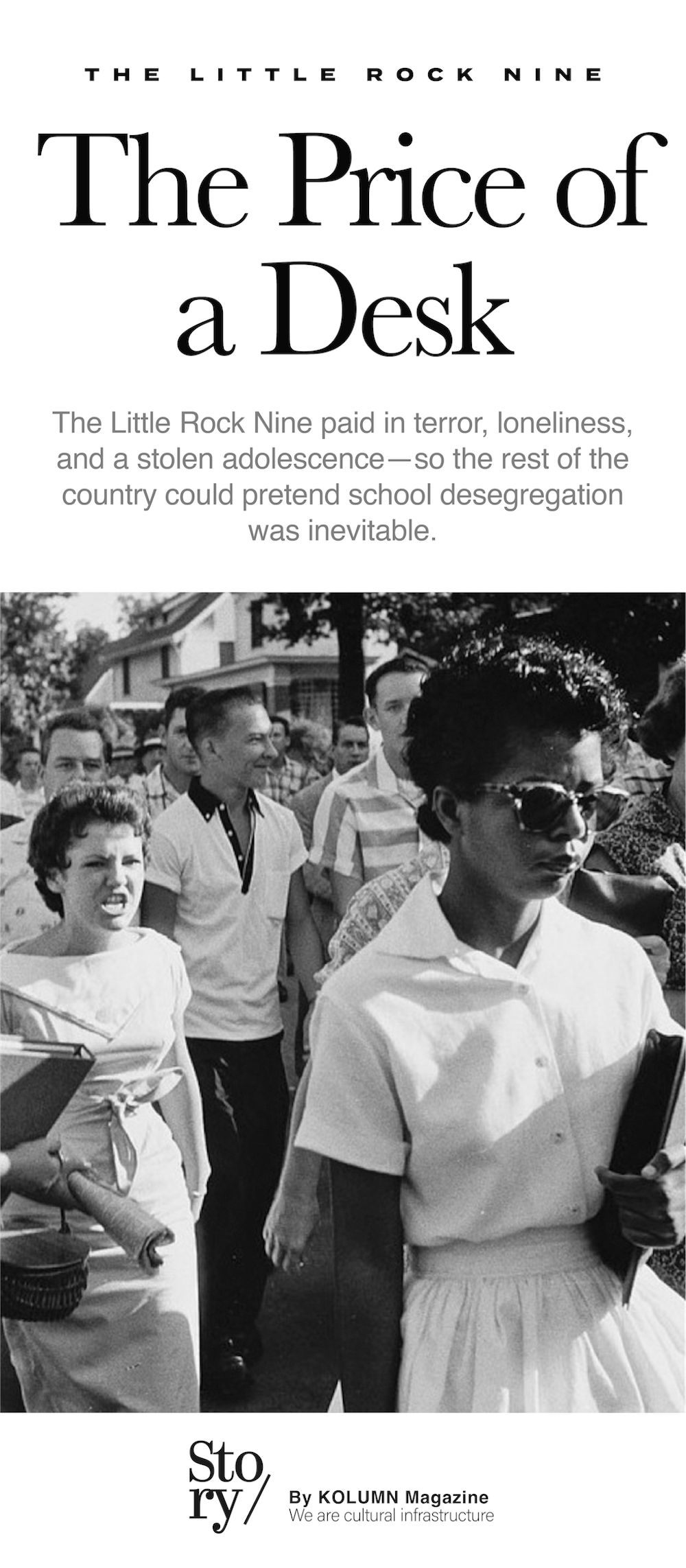
The most reproduced image from the crisis is often described as a snapshot of hatred, but it is also a portrait of a system doing what it does when challenged: the solitary student as a public target; the mob as civic performance; the state as accomplice. The Little Rock Nine were not famous when they were selected. They were children with report cards and chores and church clothes. History did not ask their permission before moving into their lives. And yet, for weeks in 1957—and for years afterward—their names became shorthand for a question the United States had been dodging since Reconstruction and before: when the Supreme Court says a constitutional right exists, who enforces it when a state refuses?
The crisis at Little Rock Central High School has been taught as a turning point, and it was. But “turning point” can make the story feel clean, like a hinge that swings once and stays in place. Little Rock was messier: a protracted contest between federal authority and state defiance; a master class in “Massive Resistance”; a case study in how public education becomes a battleground for the country’s anxieties about race, power, and social order. The Little Rock Nine did not simply integrate a school. They forced the federal government to decide whether it meant what it had said in Brown v. Board of Education—and they exposed the human cost of making children the tip of the spear.
Brown’s promise, and the long delay that followed
By the time Little Rock erupted onto front pages and evening broadcasts, the legal architecture for the showdown had been erected years earlier. In 1954, the Supreme Court ruled that segregation in public schools violated the Constitution, rejecting the premise that separate systems could ever be equal. The decision was moral as well as legal, but it did not come with a turnkey mechanism for compliance. Local and state officials across the South understood what was being demanded and also understood how to slow-walk it—through delay, procedural maneuvering, political theater, and open intimidation.
Little Rock’s school board pledged to move toward desegregation, but like many districts, it embraced gradualism and tried to manage integration as an engineering problem rather than a civil right. The phased approach that emerged—often referred to in historical timelines as the Blossom Plan—was designed to begin with the high school level, limiting the number of Black students who would enter white institutions and spreading the change over time. The National Park Service’s documentation of the period emphasizes how this “phased” approach, and later revisions to it, shaped the fight that followed, not least by narrowing desegregation to one symbolic site: Central High”
But gradualism was not neutral. It was a political wager: that delay would exhaust the plaintiffs, placate segregationists, and allow white leadership to maintain control of the timeline. The NAACP and local Black families were asked, in effect, to treat constitutional rights like a waiting list.
Daisy Bates and the infrastructure of courage
If the Little Rock Nine are remembered as brave teenagers—and they were—their bravery did not appear out of thin air. It was cultivated, organized, and supported by adults who understood that the confrontation ahead would be as much psychological as physical. One of those adults was Daisy Bates, a journalist and NAACP leader who became central to the story not only as an organizer but as a symbol of what the segregationist order feared: a Black woman using the press, networks, and institutional strategy to puncture the myth that white supremacy was simply “the way things were.”
KOLUMN Magazine, in a recent reflection on Bates’s work, frames her as an editor under pressure—someone whose journalism “made enemies—and then made history,” a reminder that the battle over Central High was also a battle over narrative: who gets to describe reality, who gets believed, and what counts as legitimate public speech.
Bates and the NAACP did more than encourage students. They selected them, prepared them, built safety plans, and attempted to coordinate logistics in a city where the threat environment was obvious. The Smithsonian’s National Museum of African American History and Culture notes that the school board’s pledge to desegregate was “explosive” for the community, “fraught with anger and bitterness,” and that the night before the planned entry, Governor Orval Faubus ordered the National Guard to block it—framing his action as protection while functionally making the state a barricade.
This is one of the enduring lessons of Little Rock: rights on paper do not execute themselves. They require people and institutions willing to force compliance, and they require communities willing to endure retaliation for insisting the paper be honored.
The first day: When the state put on a uniform
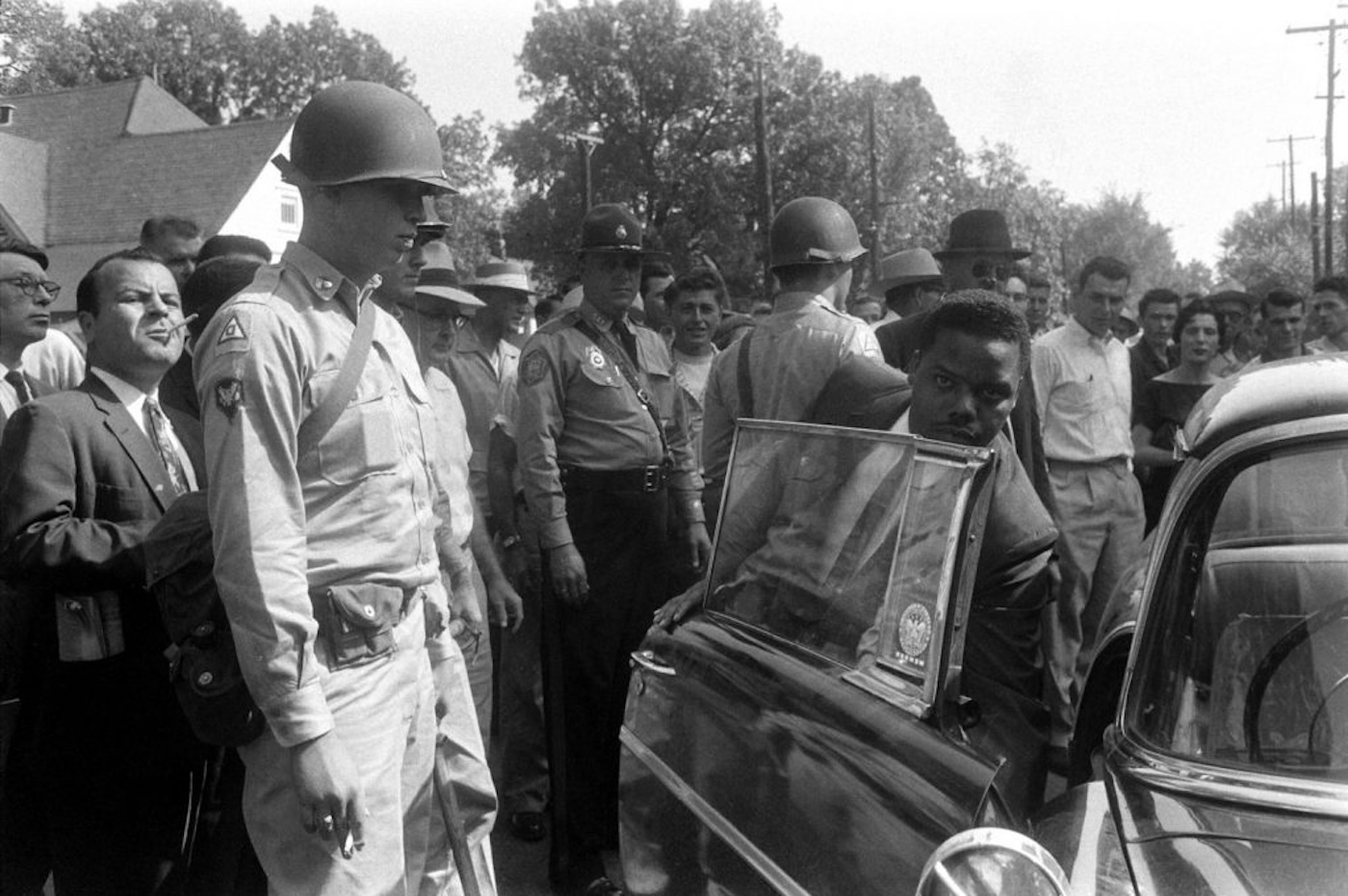
On September 4, 1957, the students arrived. The plan had been for them to meet and enter together, but miscommunication and shifting conditions scrambled coordination—an early indication that the adults in charge of “order” were not interested in keeping these children safe so much as keeping them out. Elizabeth Eckford, separated from the group, walked alone toward Central High, only to encounter the Arkansas National Guard—deployed under Faubus—standing as a human wall between her and the building.
The symbolism was stark: the state’s military apparatus, deployed not to protect citizens from violence but to enforce a racial boundary. The Smithsonian account describes how a belligerent mob, alongside the Guard, prevented entry again the next day even after a federal judge ordered the students to attend.
Faubus insisted he was preserving peace. But “peace,” in this context, meant preserving segregation by giving violent resistance the power of veto. The Guardian’s archival reporting on the showdown recounts the basic trajectory: the school board voted to integrate; Faubus deployed the Guard to prevent the nine from entering; the crisis became a test of Brown’s enforceability.
The crowd’s fury—captured in photographs and eyewitness accounts—was not spontaneous. It was the product of years of political messaging that treated integration as invasion, Black students as threats, and federal law as tyranny. What Little Rock revealed is how quickly a community can be mobilized to treat children as enemy forces when those children represent a breach in the caste system.
The federal government hesitates—then chooses a side
The drama in Little Rock is sometimes described as a clash of personalities: Faubus the defiant governor, Eisenhower the reluctant enforcer. But at its core, it was a clash between a constitutional order and a local regime of racial control.
President Dwight D. Eisenhower did not come to office as a movement civil-rights crusader, and he initially sought de-escalation. Yet Little Rock created a problem the White House could not manage through statements alone: a governor was openly defying federal court orders, using state forces to obstruct them, while a mob performed sovereignty in the street.
The National Archives’ documentation of Executive Order 10730 captures the sequence: Faubus called out the Guard on September 2, citing rumored “caravans” and potential disorder; the crisis intensified; and Eisenhower ultimately moved to authorize federal intervention to maintain order during integration. (National Archives)
That decision involved more than optics. Eisenhower federalized the Arkansas National Guard and sent in U.S. Army troops—members of the 101st Airborne Division—to enforce the court’s mandate and protect the students as they entered and attended school. The Smithsonian notes that after the mayor of Little Rock pleaded for help, the intervention allowed the nine to begin regular class attendance under armed protection.
The National Park Service, in its interpretive framing of the site today, centers a line that reads like both warning and thesis statement: “Mob rule cannot be allowed to override the decisions of our courts.”
Whether those words are read as moral clarity or minimal constitutional maintenance, they underscore what was at stake: if a mob and a governor could nullify federal rulings by force, then the rule of law was optional—contingent on whether the beneficiaries of the ruling could physically claim it.
Inside Central High: Integration as daily siege
The image that survives in public memory is the escorted entry—soldiers with rifles, teenagers with notebooks, a line moving through hostility. But the more harrowing story is what happened after the cameras left.
Central High was not integrated in spirit; it was integrated under occupation. The students were guarded, monitored, and isolated. Their bodies could be kept alive by federal presence, but their humanity was harder to secure in a building where many classmates and some adults treated them as intruders.
The Washington Post, in a retrospective on a 1957 reunion decades later, offered a glimpse of the long shadow: Carlotta Walls, the article noted, avoided talking about the experience with her children for years, protective not only of herself but of how the story could shape them—how rage could be inherited. The point is not simply that it was painful. It is that it was formative in ways the nation rarely counts when it tallies the “cost” of integration.
The Guardian’s later reporting, looking back at the anniversary, emphasizes that the students endured daily harassment and violence and that their effort became a pivot point not just in education but in the broader civil rights movement. It also argues that the country still grapples with segregation, now often driven by geography and economics as much as explicit law.
That continuity matters, because Little Rock is often used as a closed chapter: a story of a hard past overcome by courage. But for the students, the chapter did not close neatly at graduation. For many, it re-opened in their nervous systems, their family lives, their career paths, their sense of public safety.
The Atlantic’s assessment, written on the anniversary, makes a similar point with a different emphasis: the 1957 escort solved an immediate enforcement problem, but it did not “finish” integration as a national project. The legal victory did not automatically deliver equal schooling, and the United States continued to produce segregated outcomes through different means.
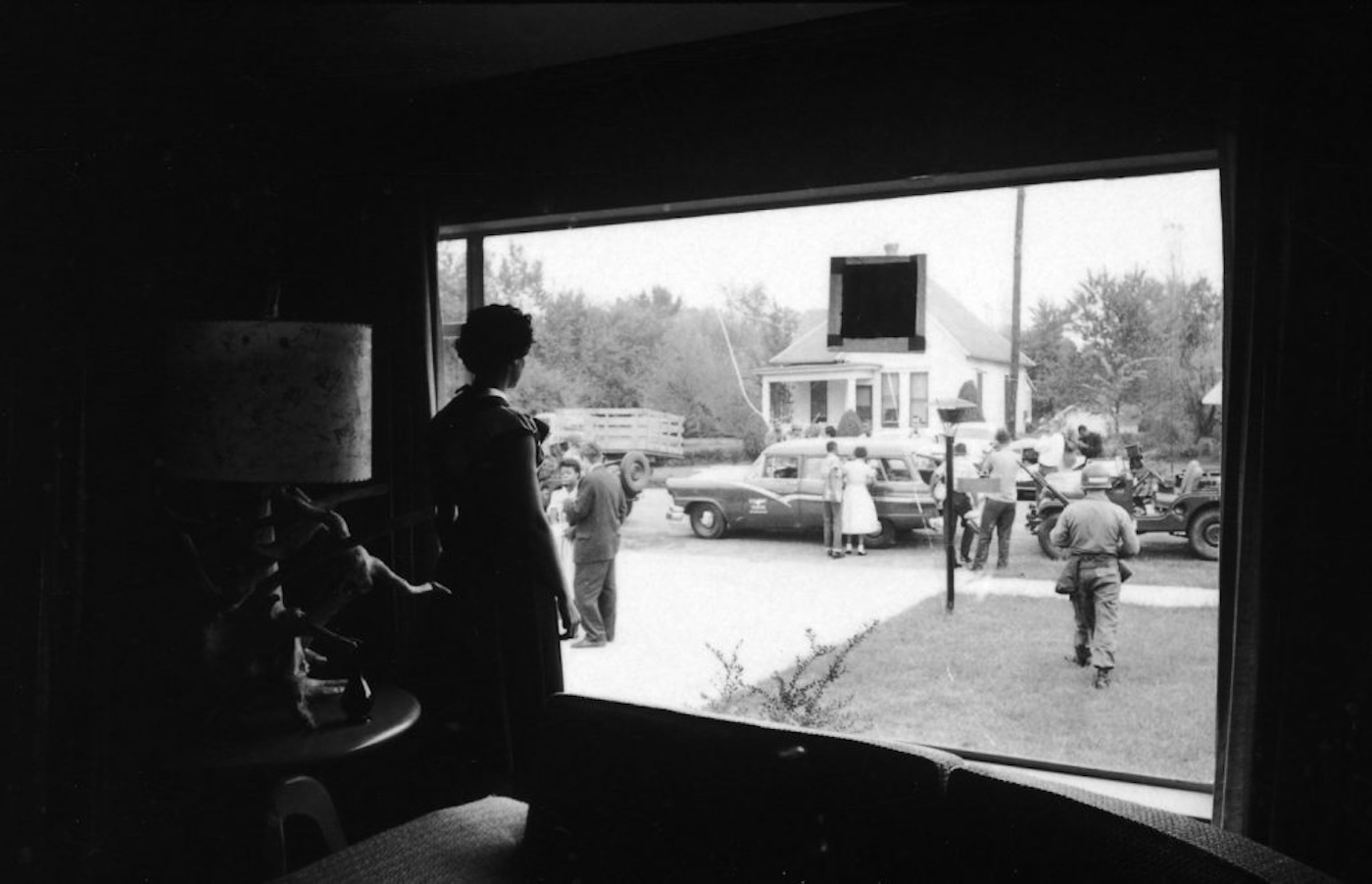
“Massive Resistance,” refined: The year after, and the schools that closed
Segregationists learned from Little Rock in real time. If you cannot stop integration forever, you can make it so costly that few will attempt it. You can turn public education itself into a hostage.
In 1958, after the first year of besieged integration, Little Rock became a national example of how far resistance could go: the city’s public high schools were closed for a year rather than integrated fully—an episode commonly referred to as “the Lost Year.” The AP’s historical recap on the date underscores how the students’ entry became a pivotal civil-rights moment; what follows, historically, is how quickly segregationists tried to punish the entire system to preserve hierarchy.
The personal consequences are legible in obituaries as much as in textbooks. When Thelma Mothershed Wair died in 2024, the Associated Press recounted that after the closures, she completed her studies out of state and built a long career in education and public service—an arc that embodies both damage and resilience.
The closures are important not only as local drama but as policy precedent: resistance movements have long been willing to defund, destabilize, or dismantle public goods if those goods become vehicles for racial equality.
Cooper v. Aaron: The Supreme Court reasserts supremacy—unanimously
If the Central High crisis forced the executive branch to act, the backlash forced the judiciary to clarify its own authority. In Cooper v. Aaron (1958), the Supreme Court confronted Arkansas officials’ attempts to delay or undermine desegregation orders. The Court rejected the argument that desegregation could be suspended due to hostility and turmoil, and it reaffirmed that states are bound by the Court’s interpretation of the Constitution.
The case is often taught as a doctrinal moment—the supremacy of federal law, the binding power of Supreme Court rulings—but it is also a narrative sequel to the street theater of 1957. The mob outside Central High and the Guard at the door were not just local actors; they were the visible edge of a political theory: nullification by intimidation. Cooper v. Aaron slammed that theory at the level of constitutional principle.
Yet principle, again, did not eliminate the need for enforcement. The Court can declare; the executive must act; communities must absorb the shock.
The Little Rock Nine as individuals, not just an icon
One of the hazards of iconic status is that it flattens people into symbols. “The Little Rock Nine” can become a monument—solid, simplified, distant—when in fact it refers to nine distinct lives: Melba Pattillo Beals, Minnijean Brown Trickey, Elizabeth Eckford, Ernest Green, Gloria Ray Karlmark, Carlotta Walls LaNier, Thelma Mothershed Wair, Terrence Roberts, and Jefferson Thomas.
Each carried the experience differently. Some left Arkansas. Some stayed connected to civil rights work. Some guarded their privacy. Some spoke publicly, insisting on historical accuracy not as nostalgia but as protection against revision. In contemporary reflections, outlets like The Root have emphasized the students’ own language about sacrifice and presence—Terrence Roberts, for example, describing the importance of staying, of insisting that the right be inhabited, not merely declared.
Ebony, writing on the 60th anniversary, framed the legacy as unfinished business, linking the 1957 confrontation to ongoing patterns of segregation in schooling—an argument that refuses to treat Little Rock as a moral souvenir. Word In Black similarly uses the anniversary as a lens to examine contemporary resegregation and unequal resources, insisting that commemoration without policy attention becomes performance.
This is not to say “nothing has changed.” It is to say that Little Rock is best understood not as a singular victory but as a template: how equality is won in law, resisted in practice, partially enforced, and then re-contested through new mechanisms.
The role of media: Photographs that became arguments
Little Rock unfolded in an era when national television news and wire-service photography could make local violence a national event. Images from Central High—soldiers escorting teenagers; mobs jeering; faces twisted in rage—traveled across the country and around the world, collapsing distance and forcing viewers to confront what “segregation” looked like when challenged.
AP’s archival framing of the story highlights how the images of paratroops with bayonets escorting students became a symbol of both heroism and national shame: a democracy requiring military protection for children to attend class.
But images also have a second life. They can become so familiar that they lose their capacity to shock. They can become, in the public mind, the entire story—entry as climax—when the truer horror was duration: the day-after-day reality of attending school under siege.
KOLUMN Magazine’s attention to Daisy Bates is a reminder that journalism in this story was not merely documentation; it was infrastructure. Bates understood that what happened in Little Rock would be contested not only in courts and streets, but in public memory—in whose version of events would become “common sense.”
What Little Rock proved—and what it did not
It proved that federal enforcement was possible. Eisenhower’s intervention, and the federalization of the Guard under Executive Order 10730, made clear that a state could not openly defy court orders without triggering federal response—at least not without cost.
It proved that the politics of “order” could be inverted: the state claimed it was preventing chaos while enabling mob intimidation, and the federal government claimed it was restoring order while deploying soldiers against local resistance. The crisis revealed that “order” is not a neutral value; it depends on whose rights are being defended.
It proved that children could be drafted into history. That is both inspiring and appalling. Inspiring, because the students’ discipline and endurance exposed the moral bankruptcy of segregation. Appalling, because a functioning democracy should not require adolescents to be courageous to receive what is ordinary.
And it did not prove—could not prove—that integration would be completed. The Atlantic’s point about the “unfinished task” remains central: the legal breach of formal segregation did not automatically build equitable schools, and the United States has repeatedly allowed housing policy, district boundaries, funding mechanisms, and political backlash to reproduce separation and inequality.
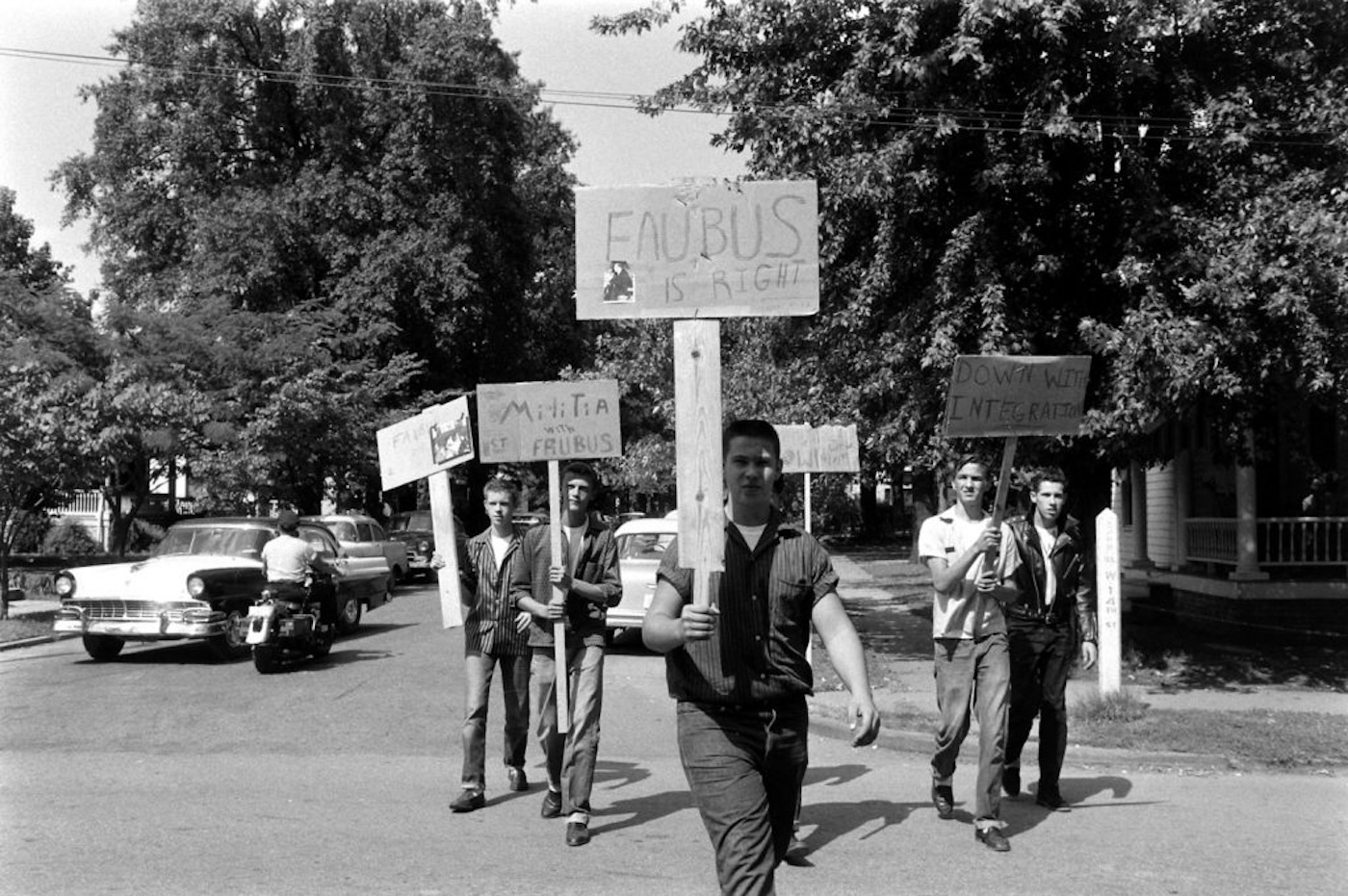
The legacy, measured in law, memory, and the stubborn math of inequality
Over time, the nation has offered the Little Rock Nine the kinds of honors it knows how to give: commemorations, medals, historic-site designations. Central High is now a National Historic Site and still functions as a school, an unusual living monument where the past is not sealed behind glass.
Those recognitions matter. They are signals about what the country chooses to canonize. But they are not substitutes for structural change, and the students themselves have often insisted on that distinction in interviews and anniversaries.
This is where modern commentary from Black outlets becomes especially valuable. Word In Black and Ebony treat the anniversary not as a feel-good ritual but as a diagnostic: if the Little Rock Nine had to be protected by the military to access quality schooling, what does it mean that, decades later, Black children are still more likely to attend under-resourced schools shaped by segregation’s afterlives?
The question is not rhetorical. It is policy-facing.
Little Rock also leaves a legacy for journalism. The story is a caution against treating federal action as moral awakening; it is also a caution against treating local violence as aberration rather than governance by other means. And it is a reminder that the press can either launder euphemisms (“racial tensions,” “outside agitators,” “states’ rights”) or name what is happening: the organized defense of a racial hierarchy.
Why the Little Rock Nine still matter, now
They matter because their story clarifies what civil rights are: not feelings, not slogans, not seasonal curriculum units, but enforceable claims on public institutions. They matter because they show the interplay between courts, executives, and local power—the way a governor can manufacture crisis, the way a mob can attempt to legislate through terror, the way a president can be forced into action by the spectacle of defiance.
They matter because their lives complicate the nation’s preferred narrative of progress. It is tempting to treat Little Rock as the moment “America changed,” full stop. A more honest reading is that Little Rock is the moment America was forced to reveal itself on camera—and then forced, briefly, to enforce its own rules.
And they matter because the central moral demand of the story is still unresolved: a child’s access to a safe, excellent public education should not depend on the child’s willingness to endure public cruelty. If it does, then the right is conditional, and the democracy is unfinished.
In 1957, nine teenagers walked into that unfinished democracy anyway. They walked not because they were naïve about the hatred outside—though they could not have fully predicted its intensity—but because their community insisted that a constitutional promise had to be lived into existence. The United States has spent decades congratulating itself for what those students did. The more serious tribute would be to build a school system—and a civic culture—where no child ever has to do it again.
More great stories
Afro Sheen, Wall Street, and the Architecture of Black Possibility
July 6, 2026
No Comments
The Fire Inside the Fourth
July 5, 2026
No Comments