



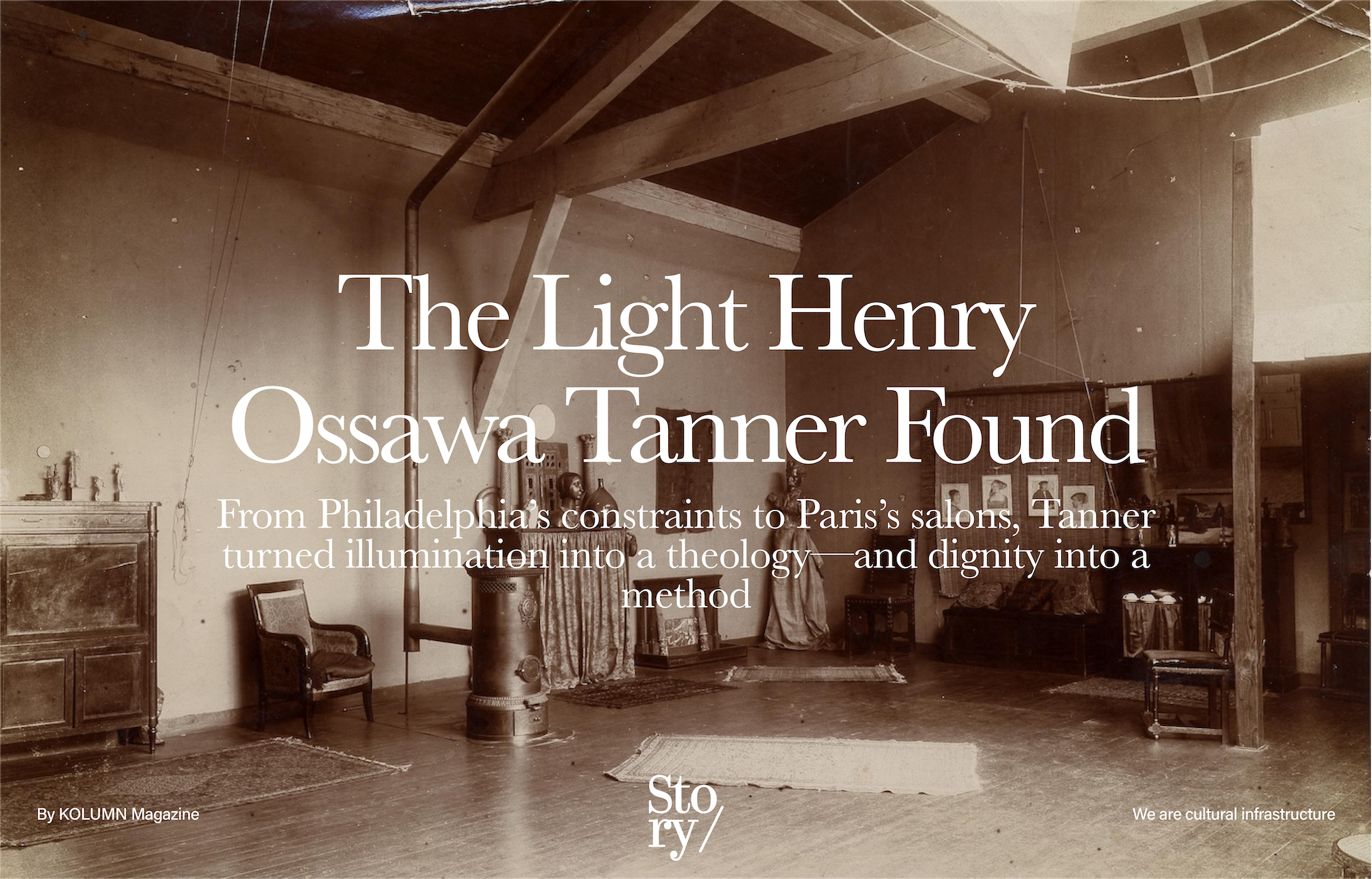
Tanner’s life did not begin as a neutral pursuit of beauty. It began inside institutions—church, family, abolitionist legacy—where art and ethics were never cleanly separable.
Tanner’s life did not begin as a neutral pursuit of beauty. It began inside institutions—church, family, abolitionist legacy—where art and ethics were never cleanly separable.
By KOLUMN Magazine
There are artists whose lives feel like a straight line between talent and recognition, and then there are artists whose careers become an argument with the societies that claimed them. Henry Ossawa Tanner belongs to the second category: a painter whose biography reads like an index of American possibility and American refusal—training, ambition, skill, discipline—followed by the familiar narrowing that confronted Black artists in the nineteenth century. His response was neither quiet resignation nor performative rage. It was a practical, devastating sentence: he would leave.
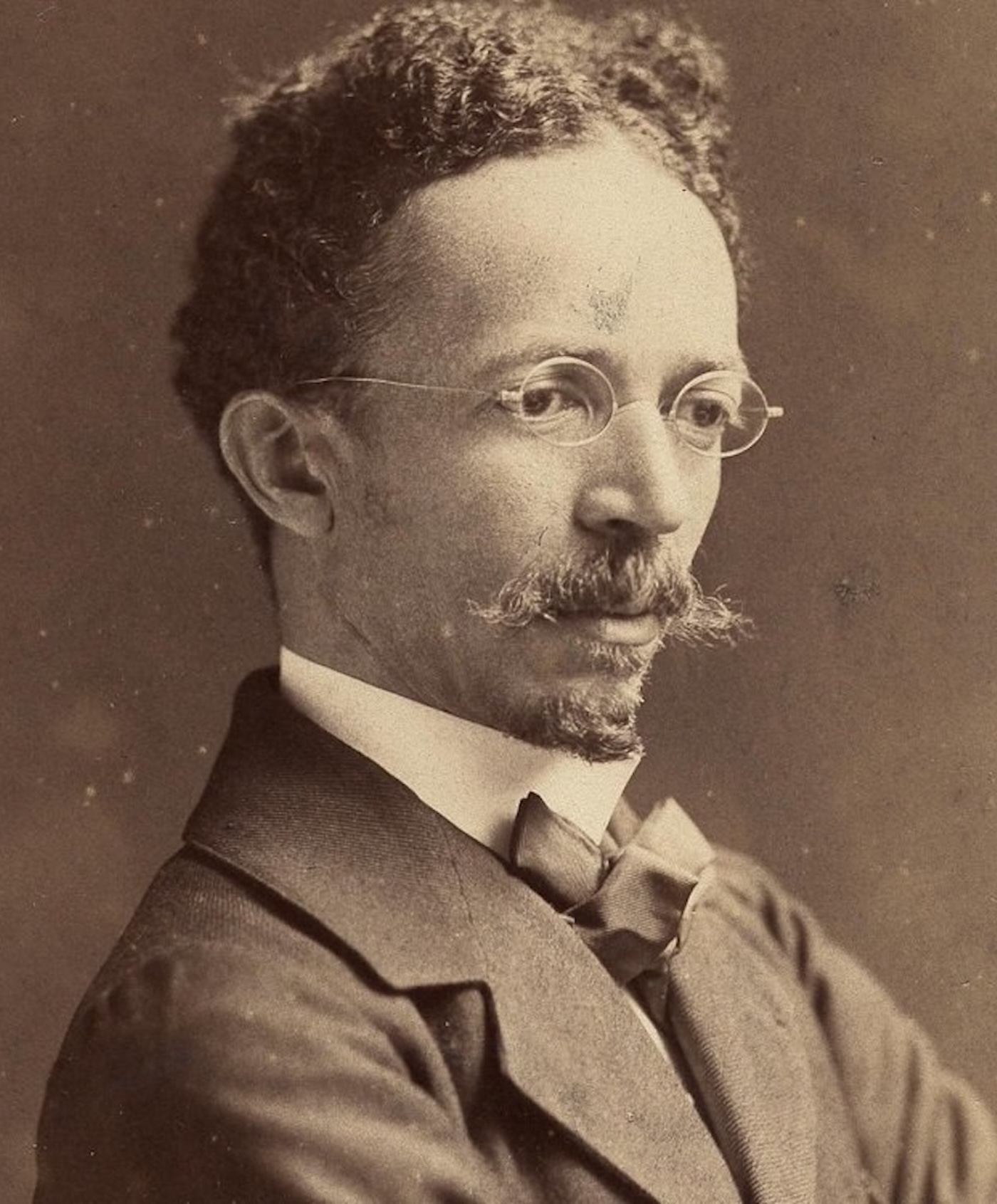
Tanner’s significance today is often introduced through a pair of domestic scenes—The Banjo Lesson and The Thankful Poor—paintings that have become touchstones for how Black life was visualized outside of caricature at the end of the nineteenth century. Scholars and museum interpreters repeatedly emphasize the dignity Tanner grants his sitters: ordinary people depicted as whole people, rendered with tenderness and compositional seriousness rather than as props for white amusement. But to stop there is to miss what made Tanner both historically exceptional and artistically difficult to categorize. After those iconic genre works, he became, in his own lifetime, most celebrated for religious paintings—works that the French state purchased, exhibited, and effectively certified as part of its cultural patrimony. He was, in other words, a Black American painter whose greatest institutional acclaim arrived through images of biblical drama and spiritual encounter, created largely in France, with a sensibility shaped by travel in North Africa and the Middle East.
That arc—Pittsburgh to Philadelphia to Paris, the intimate to the sacred, the American to the expatriate—makes Tanner unusually useful as a prism. In him, we can study how racism restricts not only opportunities but subjects; how exile can be both escape and strategy; how religion can be both inheritance and artistic laboratory; and how “success” can arrive in a form that complicates the narratives we want to tell about Black modernity. If the United States often measures cultural achievement by proximity to its own institutions, Tanner’s career suggests another metric: the ability to build a world where your work can breathe.
A childhood shaped by faith, learning, and a fugitive history
Henry Ossawa Tanner was born in 1859 in Pittsburgh, the first of five children to Benjamin Tucker Tanner and Sarah Miller Tanner. His father’s résumé reads like the infrastructure of Black aspiration in the nineteenth century: educator, editor, and eventually a bishop in the African Methodist Episcopal Church. His mother’s biography carried the other half of the century’s brutal truth: she had escaped slavery, aided by the Underground Railroad—history not as abstraction but as family memory.
Tanner’s unusual middle name—“Ossawa”—is commonly traced to Osawatomie, Kansas, where John Brown began antislavery activities, a detail that turns a name into a signal flare about the moral universe surrounding his upbringing. Even when that etymology appears as a biographical aside, it matters: Tanner’s life did not begin as a neutral pursuit of beauty. It began inside institutions—church, family, abolitionist legacy—where art and ethics were never cleanly separable.
In 1864 the family settled in Philadelphia, a city that offered both relative opportunity and a dense set of racial hierarchies. The Smithsonian’s artist biography notes that Tanner’s artistic interests developed there and recalls an origin story that sounds almost cinematic: at thirteen he watched a painter working in Fairmount Park and decided, with adolescent clarity, that he would become an artist. The decision did not erase the obstacles. It simply named the scale of what he would have to push through.
For Black painters of Tanner’s era, apprenticeship and academic training were not guaranteed pathways. They were guarded doors. Even where talent was obvious, racism could reduce a student to novelty or isolate them into a kind of permanent audition. Tanner’s breakthrough—at least in formal terms—came when he enrolled at the Pennsylvania Academy of the Fine Arts in 1879 and studied under Thomas Eakins, one of the era’s most influential American realists and an educator known for his rigorous anatomical approach. Tanner is frequently identified as the only Black student in his cohort, a fact that underscores both his exceptionality and his solitude in that space.
Eakins’s influence on Tanner is often described as technical—drawing from life, studying structure, treating the human body as architecture. But the relationship also reveals something about how artistic lineage can form even in unequal conditions. Eakins later painted Tanner’s portrait, a gesture that—whatever we make of Eakins as a complicated figure—suggests professional respect that exceeded the era’s common limits. Still, respect from a teacher did not translate into a society willing to see a Black painter as a peer. Training, for Tanner, was real; belonging was conditional.
The American ceiling and the decision to leave
If Tanner’s early years demonstrate the building of skill, his young adulthood clarifies the cost of trying to live as a Black artist in the United States. A museum biography from the National Gallery of Art notes directly that he moved to France in 1891 to escape racism in America. That framing is sometimes softened in popular retellings into a story of cosmopolitan ambition—Paris as the world capital of art, the Salon as the ultimate proving ground. Those things were true. But the moral center of the move is better captured by the line preserved in a major Tanner monograph in which Tanner explained that he could not “fight prejudice and paint at the same time.”
That sentence deserves to be read slowly, because it is not simply complaint. It is a theory of attention. It suggests that racism does not merely deny opportunity; it consumes the cognitive and emotional bandwidth required to make serious work. Tanner’s choice implies that creative labor is itself a kind of resource, and prejudice is a tax that can become total.
In 1891 he went to Paris and studied at the Académie Julian, one of the studios that trained international students and fed the Salon system. The move did not mean he was suddenly free of racial assumption—France, too, carried stereotypes and colonial fantasies. But as the Atlantic recently put it, the French biases he encountered were “more benign than those institutionalized in the United States,” a difference large enough to change what a Black artist could attempt and sustain.
This is the paradox at the heart of Tanner’s legacy. America produced him—family, church, training, a certain moral seriousness—and then made it harder for him to be what it had trained him to become. France offered an art world in which he could, at minimum, compete on something closer to professional terms. The result was that one of the most important American painters of his generation became, in practical effect, an expatriate. The country lost proximity to his daily life, but it did not lose the claim his paintings make on its history.
The genre paintings that re-taught the viewer how to look
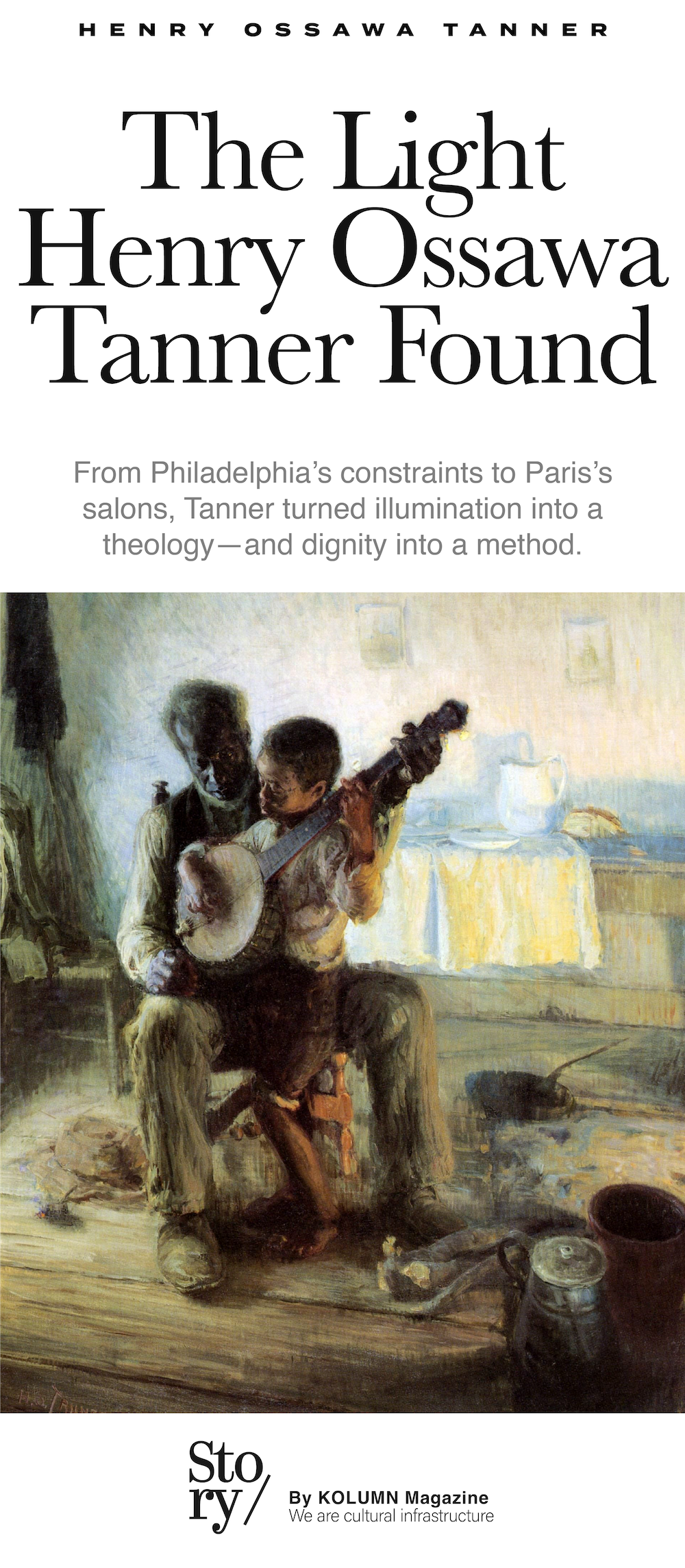
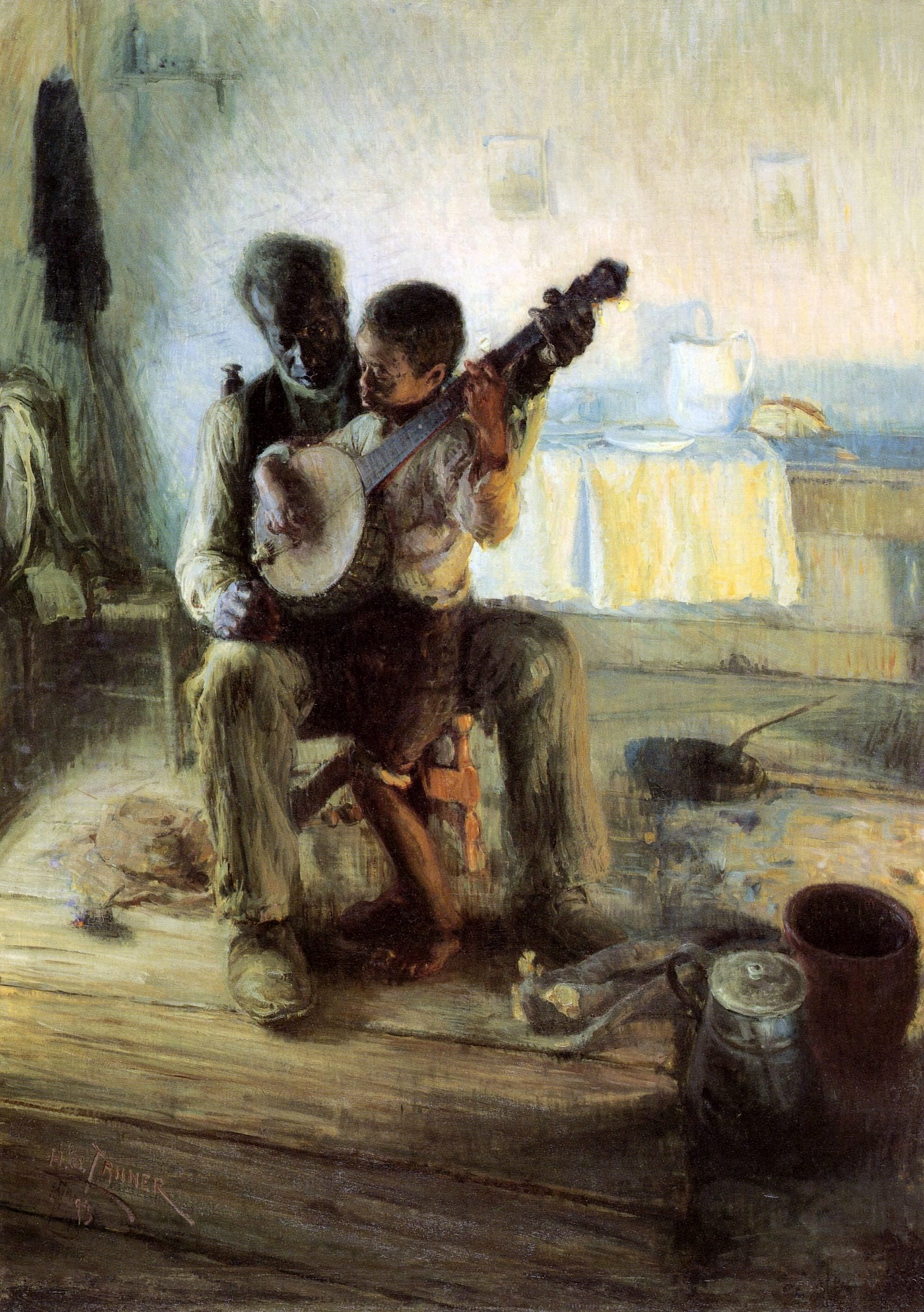
Tanner’s name is now inseparable from The Banjo Lesson (1893) and The Thankful Poor (1894), works that sit at the intersection of realism, empathy, and cultural rebuttal. The Banjo Lesson, held by Hampton University, depicts an older man teaching a boy to play the banjo in a modest interior. It is often described as a direct counter-image to the racist entertainment tropes that surrounded Black music in the late nineteenth century—minstrel caricature, the reduction of Black creativity to spectacle for white consumption. The compositional decision is crucial: there is no stage, no audience, no performance. There is only instruction, intimacy, inheritance.
Smarthistory’s analysis emphasizes the dignity and self-possession Tanner grants his subjects, drawing on art historian Judith Wilson’s observation that these ordinary figures appear extraordinary precisely because they are presented without the era’s degrading distortions. The point is not that poverty becomes picturesque; it is that poverty does not cancel personhood. Tanner’s people are neither mascots nor threats. They are thinkers, elders, children—human.
What makes these paintings more than moral documents is that Tanner’s ethics are executed through craft. The light in The Banjo Lesson is not sentimental glow; it is structure, guiding attention, organizing space, creating a psychological atmosphere that makes the viewer linger. The scene’s quiet insistence—the hands on the instrument, the boy’s posture, the older man’s proximity—becomes a lesson in looking. Tanner forces a viewer accustomed to caricature to confront a different rhythm: care.
The same can be said of The Thankful Poor, a work the Smithsonian highlights in its educational materials as one of Tanner’s best-known images of African American life. Two figures sit at a table, heads bowed in prayer, the moment both spiritual and material. In Tanner’s hands, religion is not a prop; it is a lived practice embedded in domestic survival. The painting refuses the idea that Black religiosity is mere “folk color.” It is theology as daily discipline.
For KOLUMN Magazine’s readership—attuned to the politics of representation and the cost of caricature—these works matter because they illustrate how imagery shapes civic imagination. To depict Black people as tender, thoughtful, and complex in 1893 was not simply a stylistic choice; it was an intervention.
Yet there is also a danger in over-fixating on these genre paintings, as if Tanner’s great contribution was to show Black Americans to white audiences in a more acceptable way. That interpretation can accidentally place whiteness back at the center. Tanner’s real achievement is broader: he expanded the visual language available to Black life on canvas and proved that Black subjects could anchor “high” painting without apology, without translation into stereotype, without theatrical permission.
Paris, the Salon, and the state’s stamp of legitimacy
If Tanner’s genre paintings are the works through which contemporary Americans most often encounter him, his career in France was, in his own lifetime, defined by another set of canvases—religious paintings that placed him inside the European system of critical acclaim.
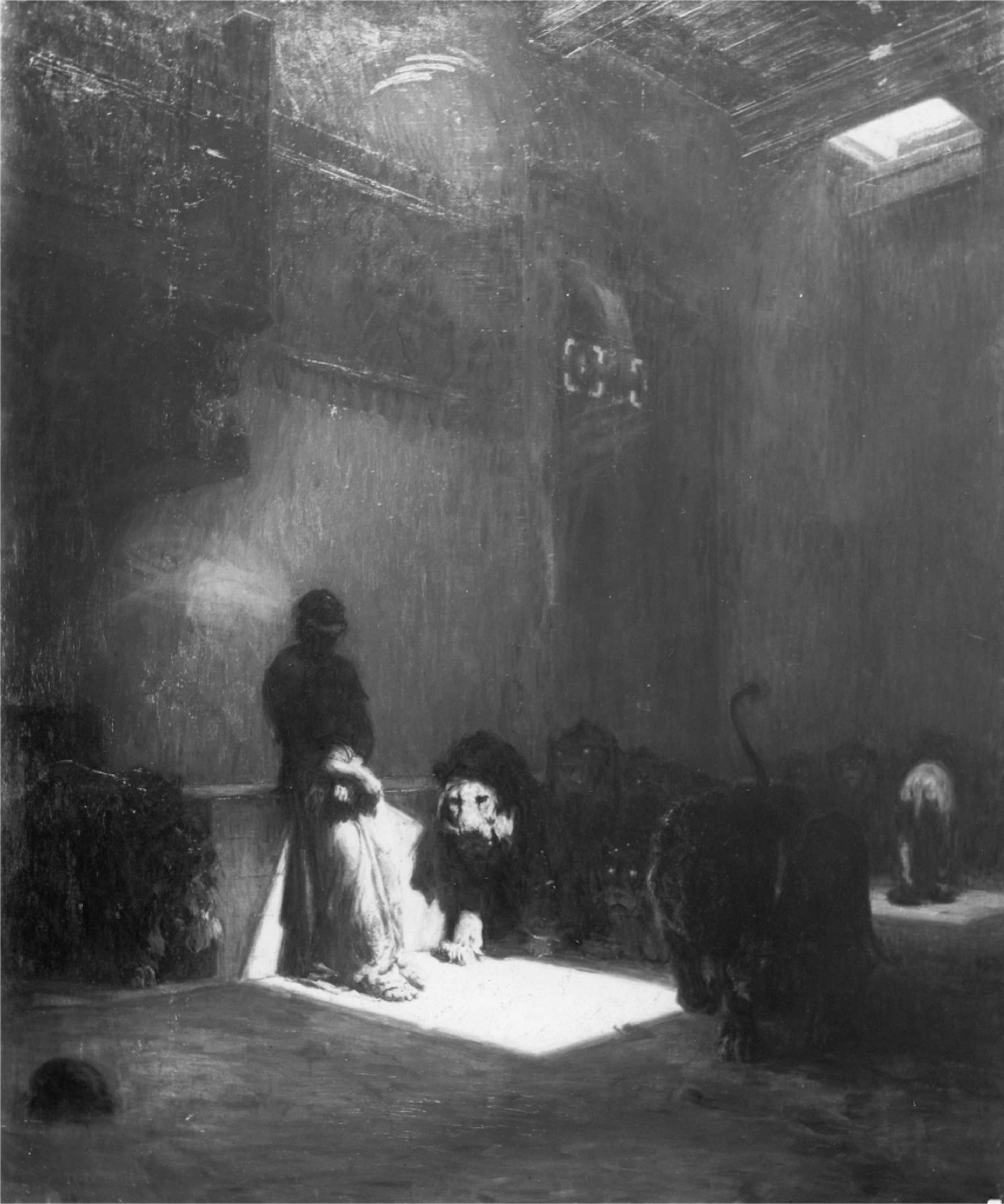
In 1896 Tanner painted The Resurrection of Lazarus, a dramatic biblical scene that would become one of his signature achievements. The Musée d’Orsay’s provenance record states that the French state acquired the painting from the artist at the Salon in 1897 for the Luxembourg Museum, where it remained for decades before moving through French national collections and ultimately to the Musée d’Orsay. In an era when state purchase served as a form of cultural canonization, the acquisition was not just financial support; it was institutional recognition.
Art historians have long noted the painting’s reception at the Salon, including the award of a medal and the role of the work in establishing Tanner’s reputation. What matters, historically, is not only that Tanner succeeded, but that he succeeded through a subject that was often treated as the European tradition’s private property: Christian narrative painting. Tanner did not merely enter the tradition; he re-energized it with modern light and psychological intensity.
This is where Tanner becomes artistically surprising. It would have been easy—given his biography—to imagine his “proper” oeuvre as exclusively racial uplift: scenes of Black domestic life, portraits of community. He did some of that, and those works are essential. But Tanner also insisted on another identity: painter of faith, painter of scripture, painter of spiritual encounter. The son of an AME minister, he made religion not only an inheritance but a modern artistic problem to solve.
That insistence is part of why his legacy cannot be reduced to a single lane. Tanner is central to Black art history, yes—but he is also central to the history of religious modernism in painting, to the story of American expatriate success, and to the question of what happens when a Black artist’s most “universal” works are embraced abroad more readily than at home.
The Holy Land, North Africa, and the ethics of seeing “elsewhere”
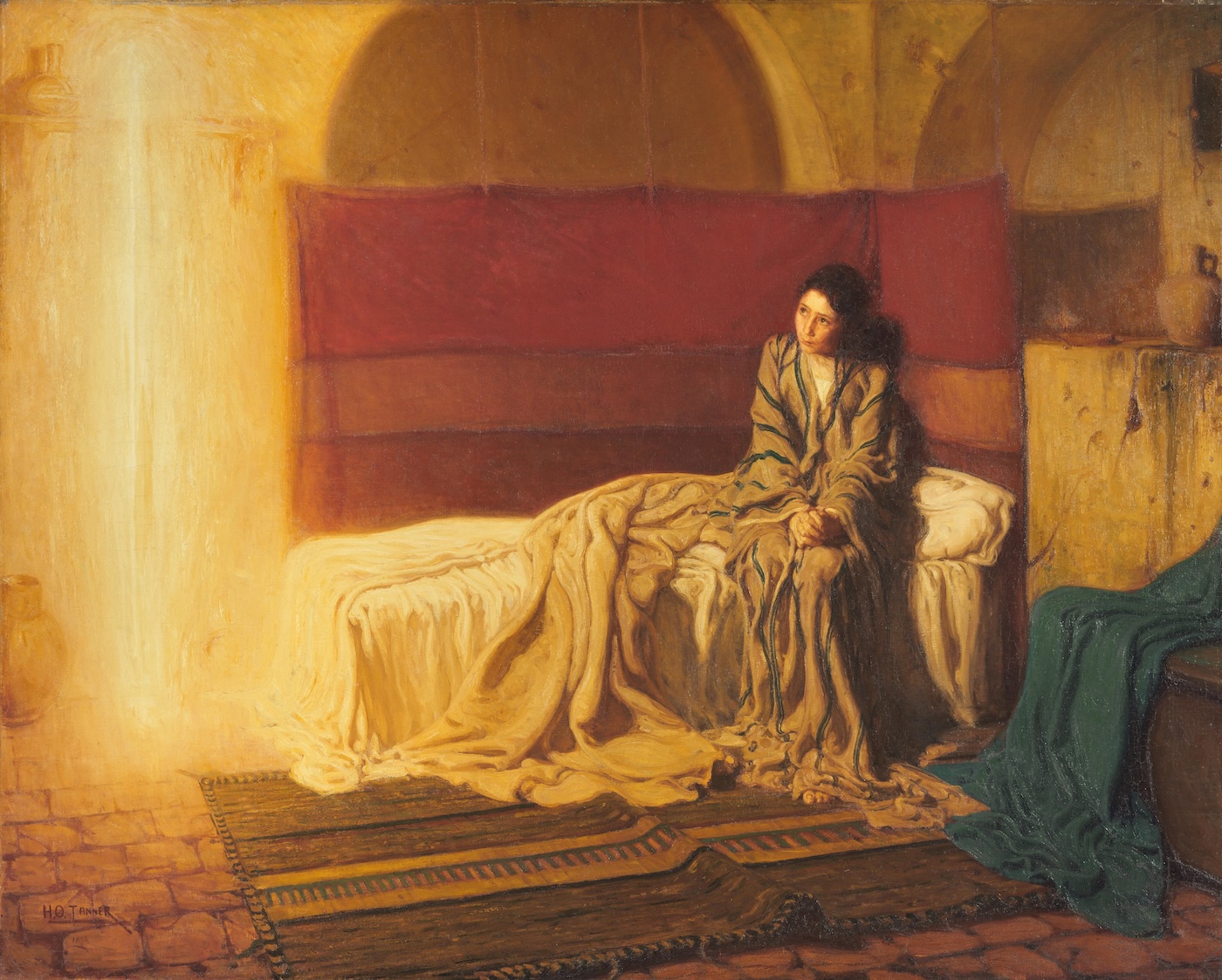
Tanner’s religious paintings were not produced solely from studio imagination. After establishing himself, he traveled in 1897 to Egypt and Palestine, a journey that shaped how he handled light, architecture, and the human figure. The Philadelphia Museum of Art’s object record for The Annunciation notes that Tanner painted the work soon after returning to Paris from that trip, motivated by a desire to experience the people, culture, architecture, and light of the Holy Land firsthand.
The Annunciation (1898) is frequently described as “unconventional,” and the PMA text is explicit about why: Tanner depicts Gabriel not as a winged figure but as a pillar of luminous presence, flooding Mary’s space with radiance. It is a painting about light as theology—divinity not as ornament but as force. Mary is not idealized into porcelain calm; she is human, thoughtful, perhaps wary. Tanner’s modernism shows up not as abstraction but as psychological realism in a sacred scene.
Yet Tanner’s travel and “Holy Land” imagery also sit near the edge of a complicated history: European and American “Orientalism,” the long tradition of Western artists using North Africa and the Middle East as aesthetic resource. One reason Tanner remains fascinating is that he complicates the binary. He was not a French orientalist painter extracting exoticism from colonized places; he was a Black American, living in France, navigating a different relationship to Western power, while still working within art-market appetites for “biblical authenticity.” The scholarly literature treats this complexity directly—examining hybridity, the “Blood of the Holy Land,” and how Tanner negotiated authenticity, modernity, and belief.
The significance here is ethical as much as stylistic. Tanner’s work asks what it means to “see” a place and a people—especially when the viewer (and the market) carries fantasies. His best paintings from this period do not read as postcards. They read as meditations: on faith, on history, on how light behaves in real spaces, and on how spiritual narrative can be anchored in material observation without collapsing into tourism.
A modern spirit, a rural France studio, and war work
By the turn of the twentieth century, Tanner had built a career that many American artists—Black or white—would have envied: regular exhibitions, critical respect, and institutional acquisitions. But his life in France was not only Paris. A major exhibition overview from the Pennsylvania Academy of the Fine Arts, for Henry Ossawa Tanner: Modern Spirit, emphasizes the many facets of his career, including his leadership role in an artist’s colony in rural France and his work aiding American servicemen through Red Cross efforts in World War I France.
That summary matters because it corrects a shallow image of expatriate life as permanent escape into café culture. Tanner’s France included community and labor. It included service during wartime. It included, as PAFA frames it, technical and scientific innovations across his oeuvre—evidence that Tanner’s modernism was not only thematic but procedural.
Tanner’s war work is sometimes treated as biographical decoration—an interesting aside. But in the context of his lifelong negotiation with national identity, it carries weight. Here is an artist who left the United States because its racism made sustained work nearly impossible, and yet he still contributed to efforts tied to American soldiers abroad. Exile did not necessarily erase affiliation. It complicated it.
France, for its part, formally honored Tanner. He was made a chevalier of the Legion of Honor, a recognition referenced in multiple discussions of Black artists in France and in broader cultural coverage of Black modernism. The precise moment of that honor is often cited as part of his long arc of European acclaim; the larger point is stable: Tanner became the kind of artist whose prestige could be stamped by the French state.
The “American” in Tanner: Landscapes, twilight, and a second way of belonging
It is tempting to frame Tanner as a painter who traded America for Europe. But the work complicates any clean exchange. One of the most revealing examples is not a biblical epic or an iconic genre scene but a small, atmospheric landscape: The Seine (c. 1902), in the National Gallery of Art’s collection. The NGA’s description reads like a quiet manifesto: Paris at twilight, hazy skyline, dreamlike hues, the river as soft boundary. The same record notes plainly that Tanner moved to France in 1891 to escape racism and remained abroad for the rest of his life, becoming one of the first African American artists to earn international fame.
Landscapes like this suggest another aspect of Tanner’s significance: his ability to paint belonging without declaring it. There is no flag in The Seine, no overt claim to citizenship. There is only atmosphere—an artist learning to inhabit a place through attention.
And yet Tanner’s “American” identity continued to surface in other ways. His early training, his moral seriousness, his fascination with the dignity of ordinary life: these are not simply personal traits. They are also products of Black American institutions—church culture, abolitionist memory, Philadelphia’s Black intelligentsia—shaping the artist even when he lived oceans away.
After death: What survives, what gets rescued, and what still gets erased
Tanner died in 1937, but the afterlife of his reputation has been uneven in the way American cultural memory is often uneven. His religious paintings dominated his lifetime acclaim; after his death, popular attention shifted, with The Banjo Lesson becoming for many viewers the emblem of his achievement. Even summaries of his career note this reversal in “public esteem.” That shift says as much about audience appetite as it does about Tanner. Genre scenes of Black life can be more easily slotted into U.S. narratives about race and progress; religious epics painted in France can be treated as impressive but “elsewhere.”
And yet the institutional facts keep interrupting any attempt to minimize him. The Musée d’Orsay still holds The Resurrection of Lazarus, with a provenance trail that underscores the seriousness of French state investment in his work. American museums—from the Philadelphia Museum of Art to the Smithsonian American Art Museum—maintain his presence in their collections and interpretive programs. Archives preserve the paper trail of his life; the Smithsonian’s Archives of American Art maintains the Henry Ossawa Tanner papers, signaling his importance as a subject of ongoing scholarship rather than mere celebration.
There is also the literal matter of preservation: the places associated with Tanner’s life. In 2023, Smithsonian Magazine reported that a Philadelphia row house linked to Tanner—described as having hosted generations of Black scholars and leaders—was at risk and needed stabilization as part of a restoration process. This is how legacy often looks in practice: not just museum labels, but roofs and walls, fundraising and community advocacy, the fight to keep a story physically inhabitable.
Even the White House collection becomes part of this conversation. Coverage and commentary have noted Tanner among the historically limited number of African-American-derived works in the White House’s holdings, including mention of his Sand Dunes at Sunset, Atlantic City. The symbolism is obvious: an artist once boxed out of full recognition in his own country becomes, over time, part of the country’s most visible cultural interior. But symbolism is not restitution. It is, at best, acknowledgment.
What Tanner means now: Representation, faith, exile, and the right to complexity
So what is Tanner’s significance, beyond the timeline of his life?
First, he changes the story of Black representation in American art by demonstrating that dignity can be both subject and method. Tanner did not paint Black life as spectacle, nor did he paint it as apology. He painted it as human reality, with the same seriousness that academic painting reserved for elites. That intervention has consequences. It establishes a precedent for later artists who would insist on interiority rather than stereotype.
Second, Tanner changes the story of American art by making expatriation part of the canon. He becomes, as the Guardian has framed him in broader surveys of African American art, an early figure in the Paris narrative: the first African American painter to move to Paris and be accepted into the Salon, positioned at the beginning of a long lineage of artists who found in Europe a different kind of air. His life shows that leaving was not abandonment. It was often survival—and strategy.
Third, Tanner complicates the assumption that Black art must be primarily about race to be politically meaningful. His religious paintings are not “race-less.” They are made by a Black artist shaped by American racism, working within European institutions, translating faith through modern light. The political meaning is embedded in the fact that he claimed the right to paint scripture at the highest level and be judged there. The assertion is quiet but radical: Black genius is not confined to “Black topics.” It can take up the grand narratives and re-make them.
Fourth, Tanner’s career exposes a persistent American habit: celebrating Black excellence most comfortably when it arrives with foreign certification. The French state purchase of The Resurrection of Lazarus—so clearly documented in the Musée d’Orsay’s own records—functions like a stamp America did not reliably provide him while he lived. That dynamic still echoes in contemporary culture, where international acclaim can sometimes do what domestic institutions resist.
Finally, Tanner matters because his work refuses simplification. He is not only a “first.” He is not only an “uplift” painter. He is not only a religious artist. He is a craftsman of light, an anatomist trained in realism, a spiritual modernist, an expatriate negotiating belonging, and a Black American artist who understood that the battle for representation is also a battle for complexity.
For readers encountering Tanner now—through museums, reproductions, and the resurgent interest documented in outlets from Ebony to Smithsonian Magazine—his life offers a usable lesson: the point is not merely to be included in the room. The point is to build (or find) a room in which you can do your work without being reduced.
More great stories
Afro Sheen, Wall Street, and the Architecture of Black Possibility
July 6, 2026
No Comments
The Fire Inside the Fourth
July 5, 2026
No Comments