


By KOLUMN Magazine
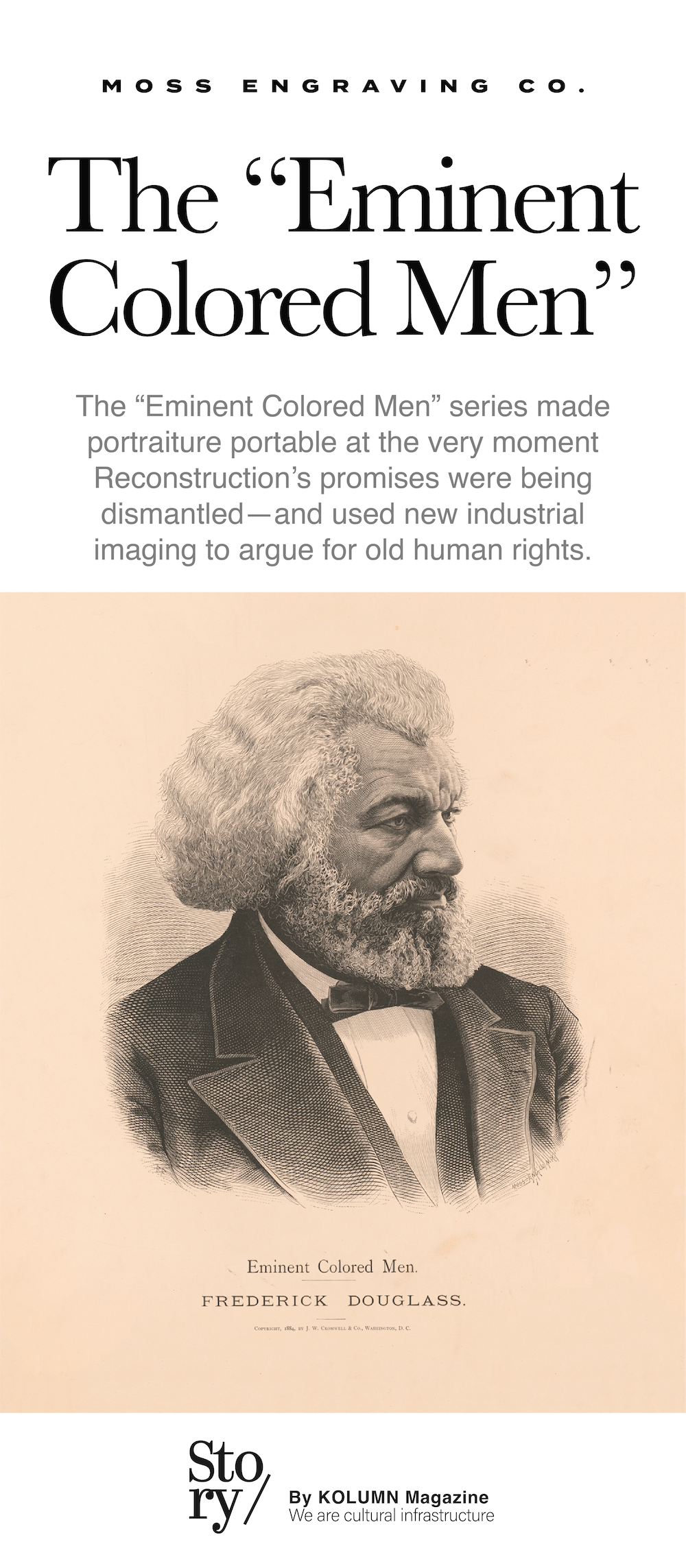
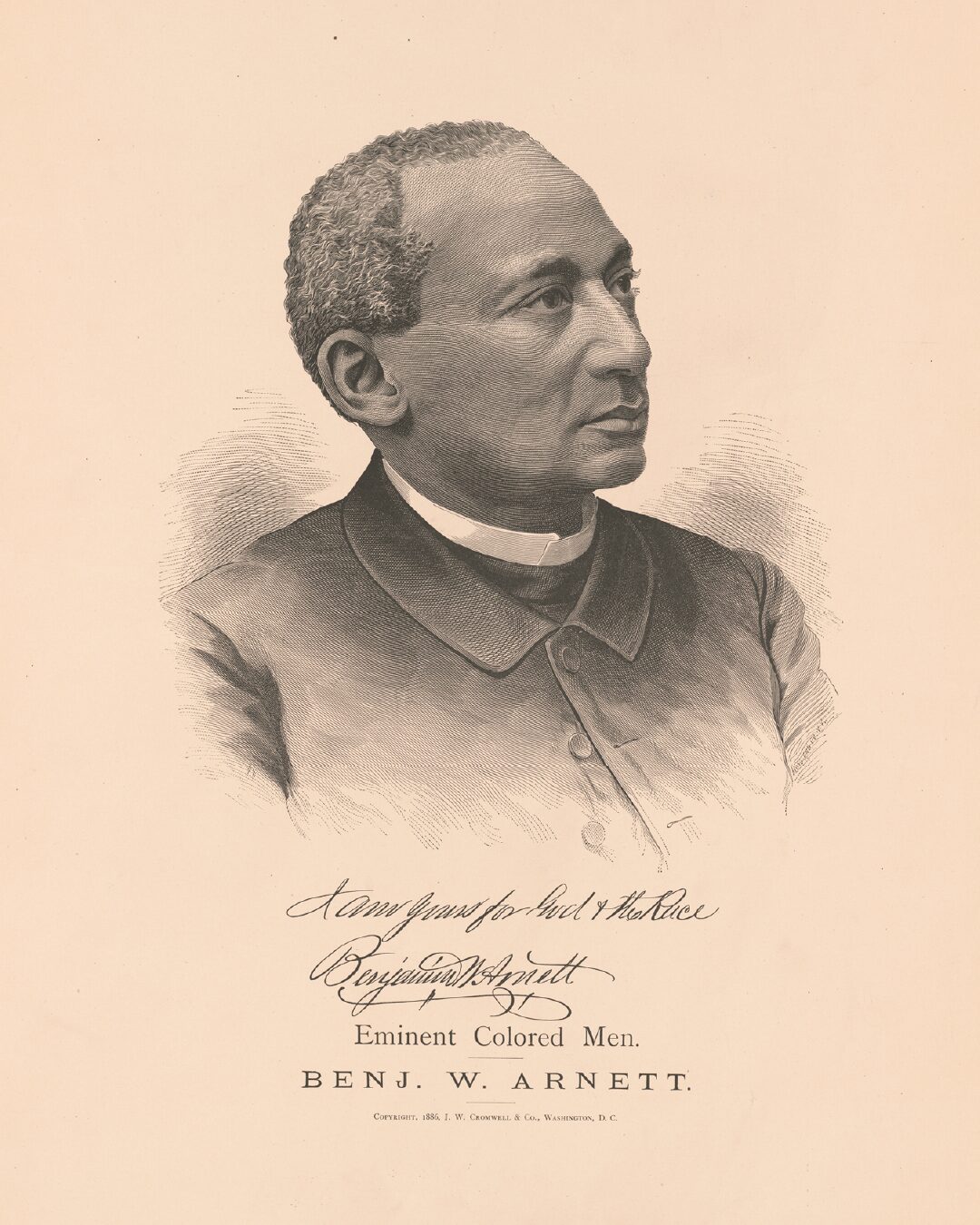
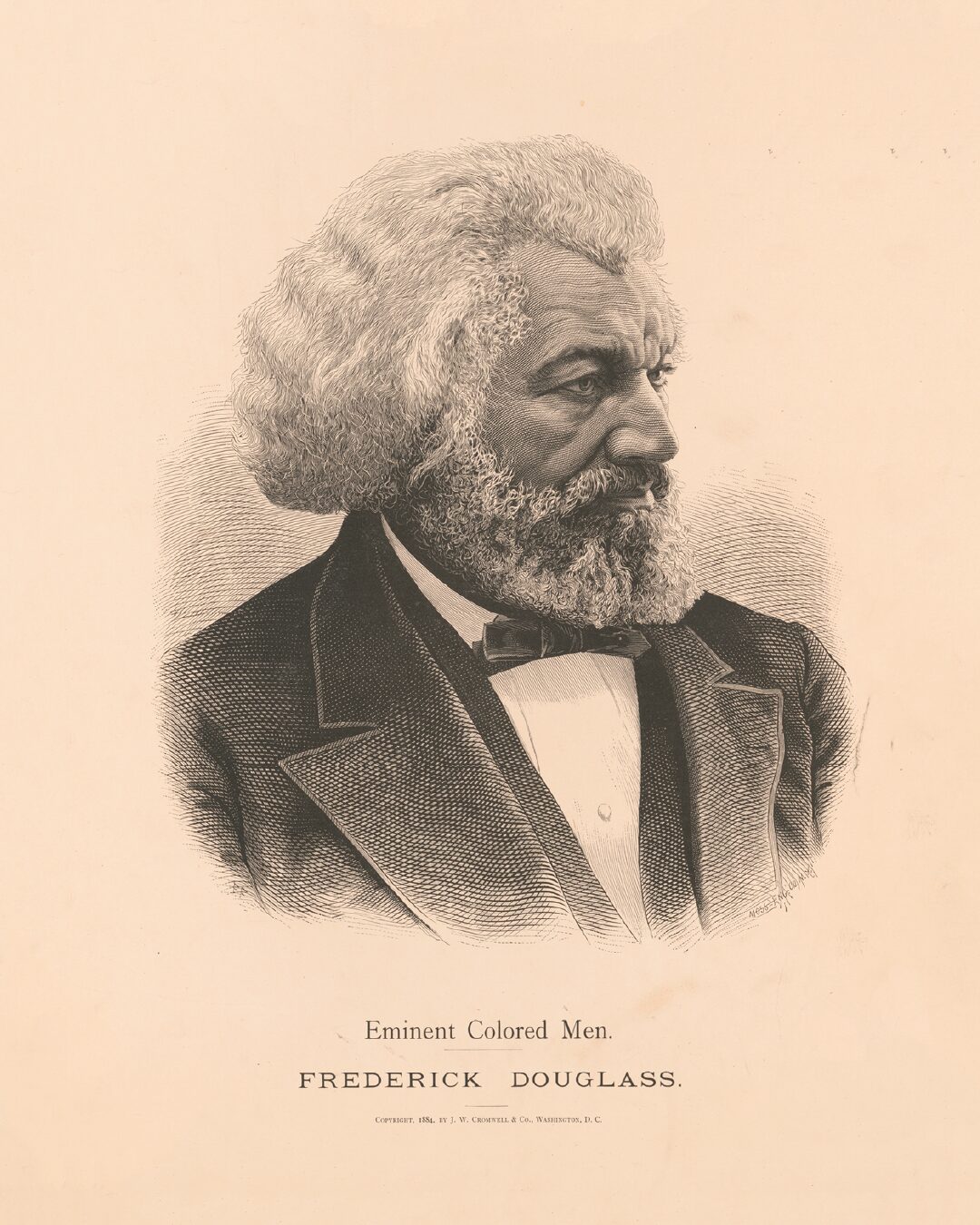
If you encounter an “Eminent Colored Men” print in a library catalog, it reads like a straightforward artifact description: head-and-shoulders portrait, facing right; line photoengraving; published in New York by the Moss Engraving Company; dated in the 1880s or 1890s; no known restrictions. (The Library of Congress) The language of institutional record-keeping is deliberately cool. It must be. But the object itself—large, formal, and insistent—rarely feels neutral.
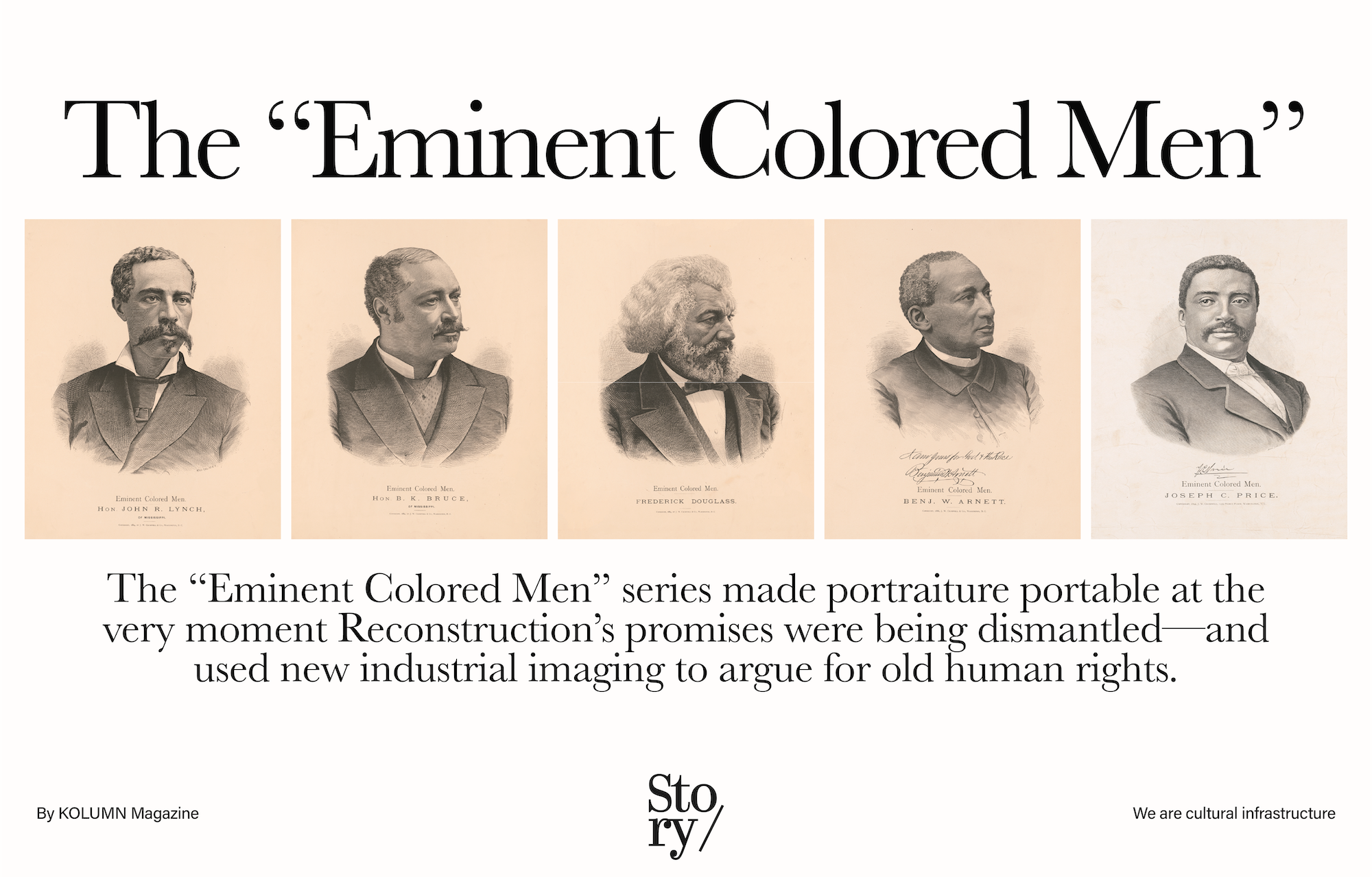
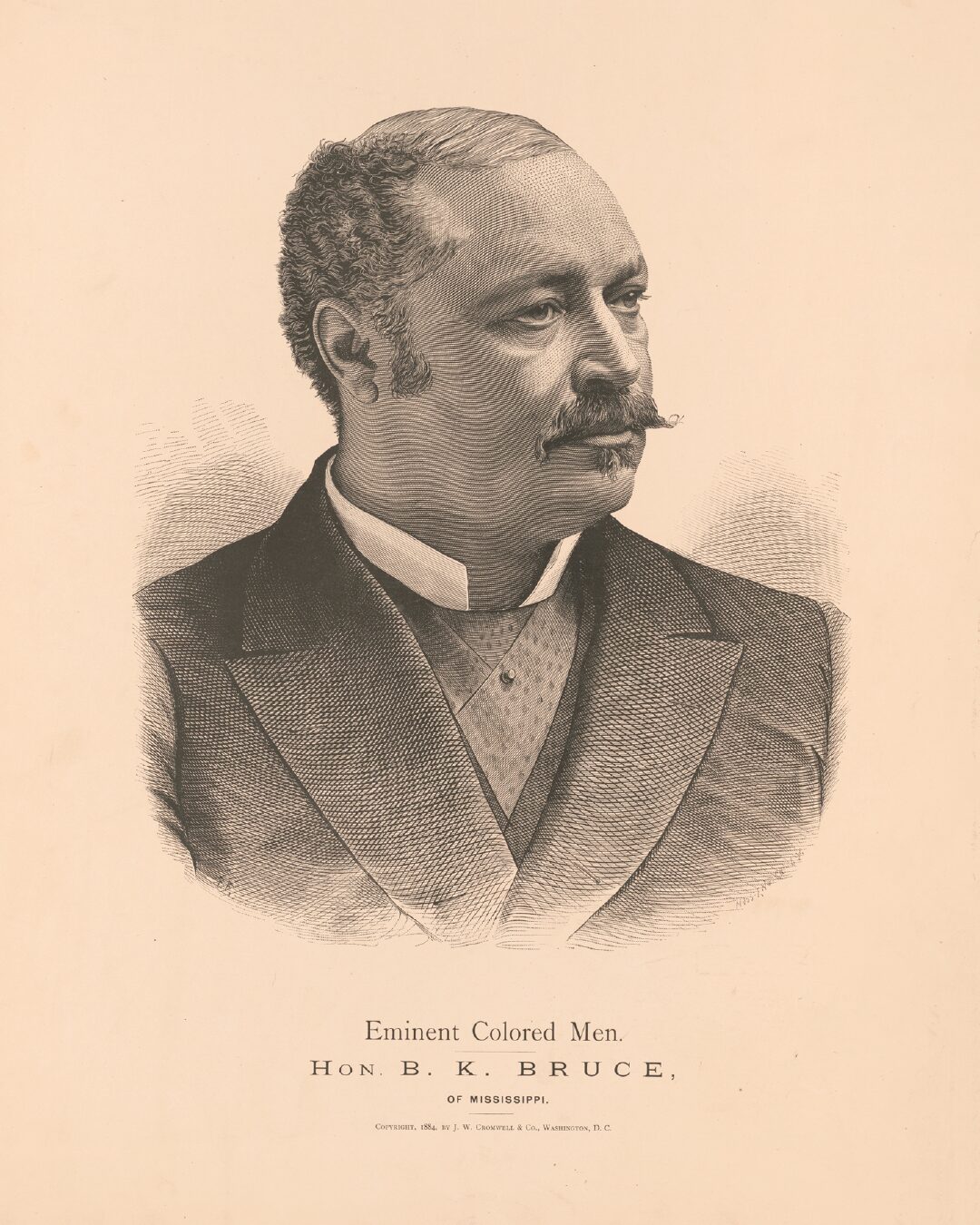
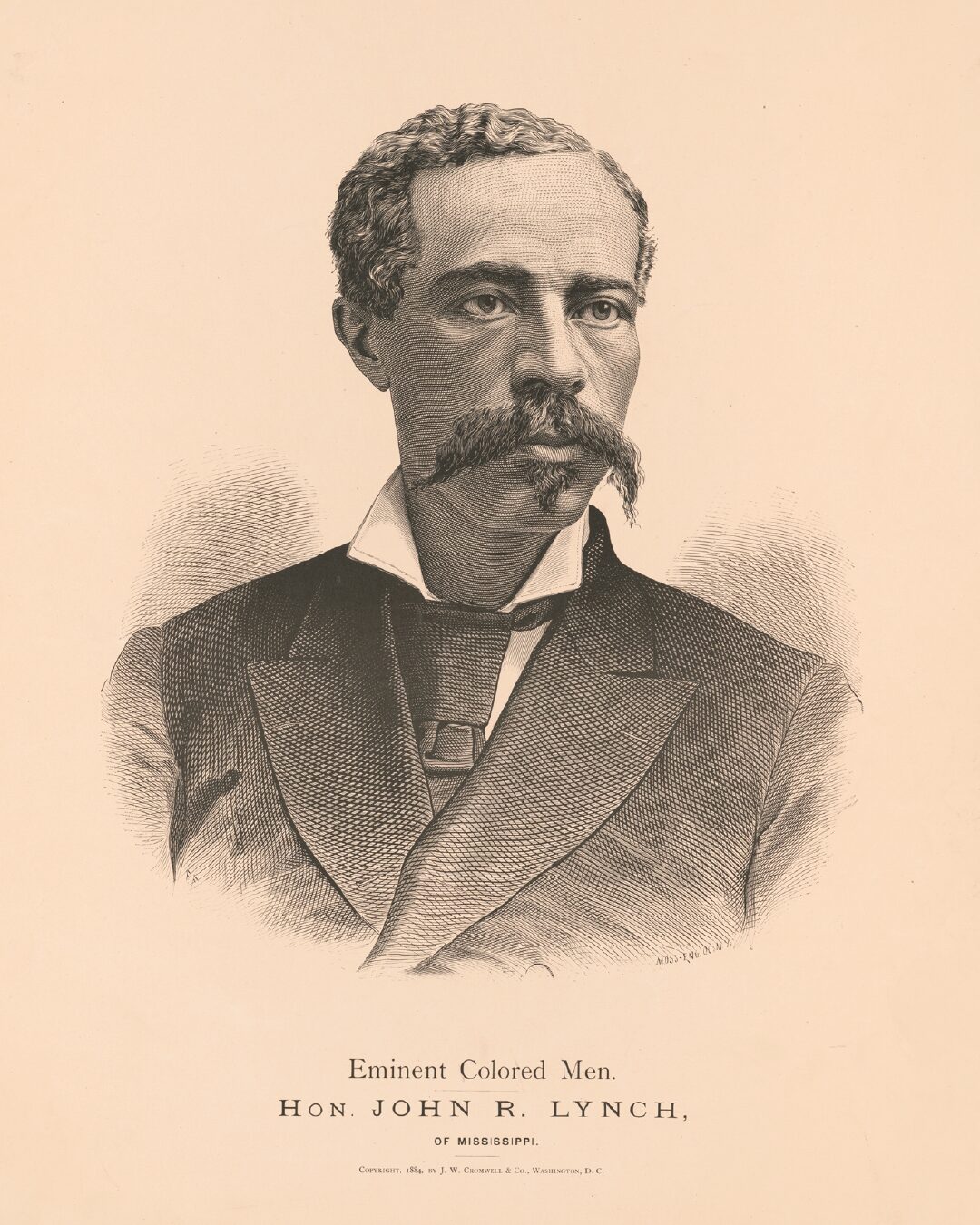
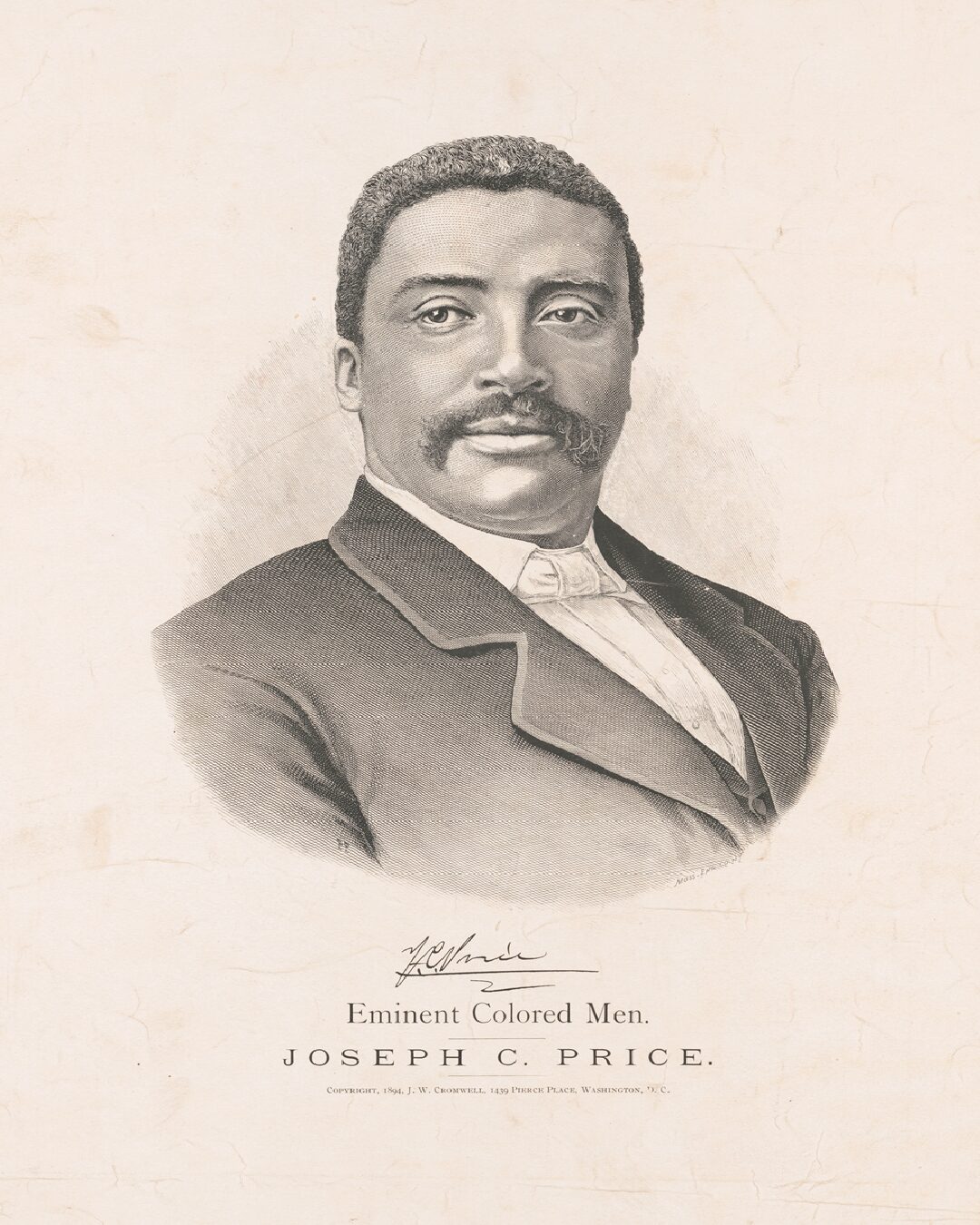
The series title sits under the subject’s face like a verdict. Beneath the verdict, the name: Frederick Douglass. Hon. B. K. Bruce. Hon. John R. Lynch. Benj. W. Arnett. Joseph C. Price. (The Library of Congress) And then the quiet signatures of production: “Moss Eng. Co. N.Y.”; the medium—line photoengraving; and, crucially, the copyright claim, often by John Wesley Cromwell (or “J. W. Cromwell & Co.” in Washington, D.C.). (The Library of Congress)
Taken together, those details locate the prints in a specific American hinge-point. The country had moved from emancipation to Reconstruction and then, rapidly, to retrenchment: federal withdrawal from the South, political violence, disfranchisement campaigns, and a public memory increasingly shaped by reconciliation between white North and white South. In that atmosphere, the phrase “Eminent Colored Men” does more than flatter its subjects. It argues with the nation.
Benjamin W. Arnett
Benjamin W. Arnett was an AME minister and Ohio legislator who fused pulpit authority with policy work. In the Ohio General Assembly, he pushed against discriminatory “Black Laws” and argued for equal access to public institutions. His career shows Reconstruction’s North as contested terrain, not refuge.
Frederick Douglass
Frederick Douglass, born enslaved in Maryland, remade himself through literacy, escape, and unmatched oratory. He became the most prominent abolitionist of the 19th century, then a postwar statesman, editor, and moral critic of American racism. His public life insisted freedom required enforcement, not rhetoric alone.
Blanche K. Bruce
Blanche K. Bruce, born enslaved, rose through education and Reconstruction-era Mississippi politics to national office. Serving in the U.S. Senate from 1875 to 1881, he became the first Black senator to complete a full term. He advocated civil rights and federal investment, embodying Black governance amid violent backlash.
John R. Lynch
John R. Lynch, born enslaved in Mississippi, became a central Reconstruction leader: Speaker of the Mississippi House and later a U.S. congressman. He defended civil rights and fair elections while white supremacist “Redemption” campaigns dismantled Black political power. His career, later writings, and memory work rebutted Reconstruction’s distortions.
Joseph C. Price
Joseph C. Price was a minister-educator who treated schooling as freedom’s infrastructure. As founder and first president of Livingstone College in North Carolina, he built an institution designed to train Black leadership in an era of tightening segregation and disfranchisement. His prominence signaled that classrooms could be political strongholds.