



The work of keeping other people’s work alive.
The work of keeping other people’s work alive.
By KOLUMN Magazine
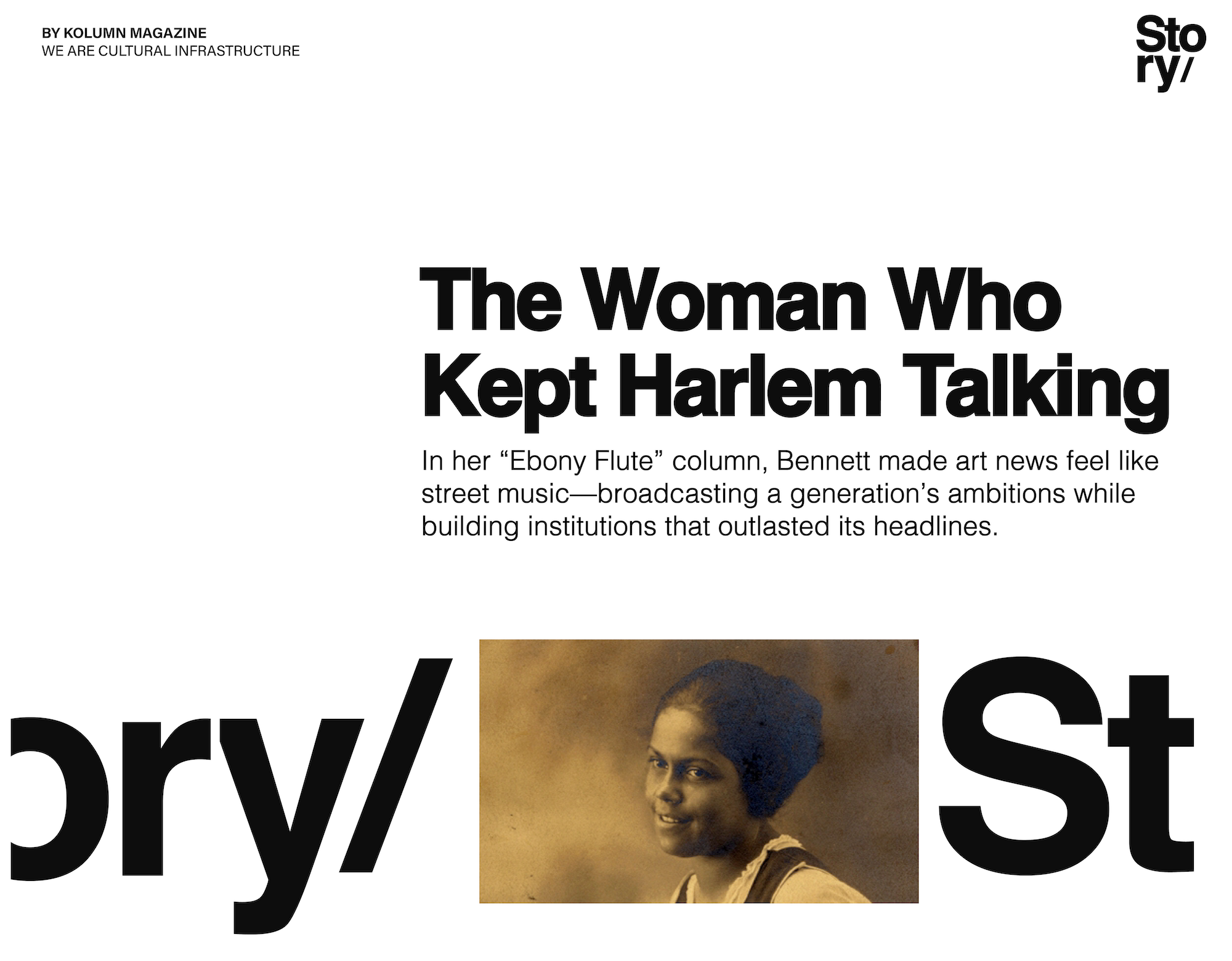
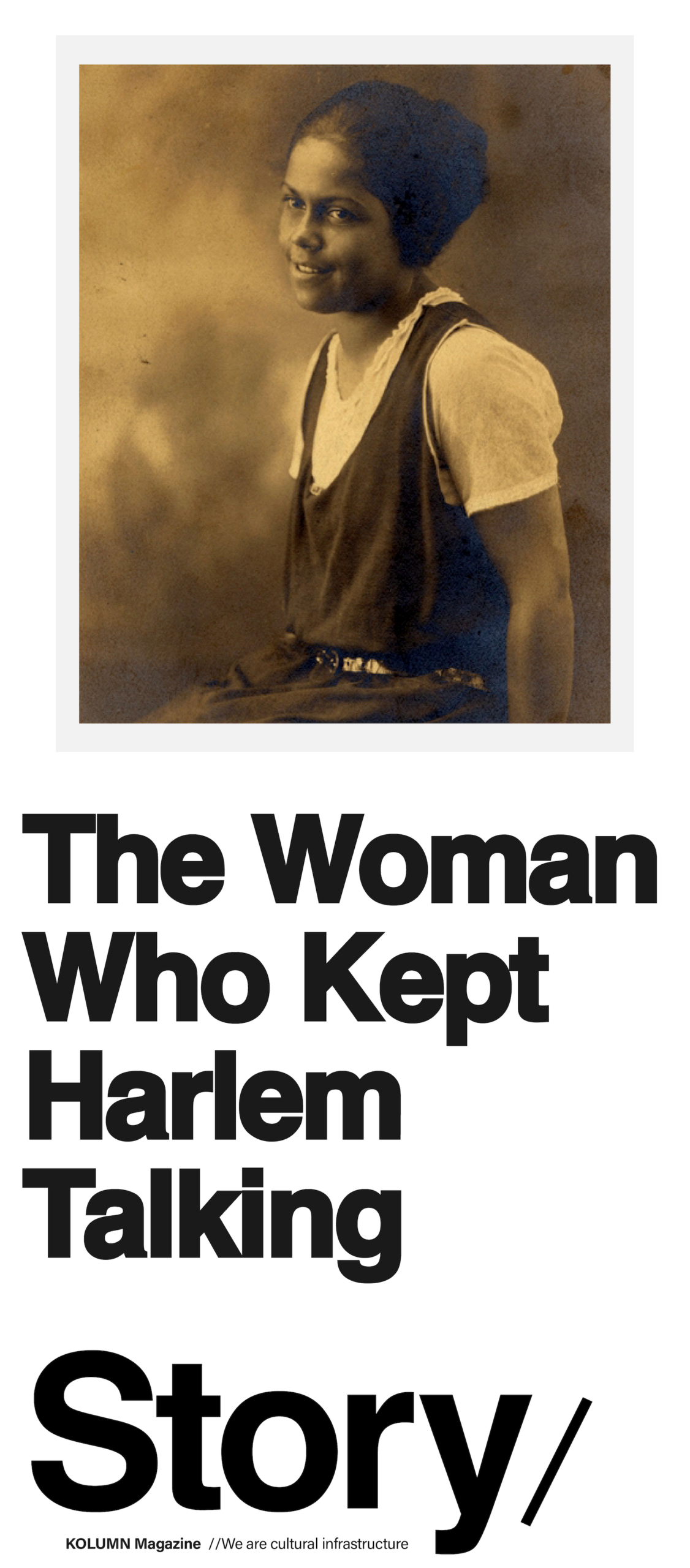
There are Harlem Renaissance legends whose names arrive pre-lit—already framed in syllabi, already quoted on posters, already embalmed into consensus. And then there are figures like Gwendolyn B. Bennett, whose work is less a single monument than a system of wiring: poems and drawings, yes, but also announcements, introductions, schedules, rooms, committees, columns, and classrooms. Her genius can be read on the page, but her significance shows up just as vividly in the infrastructure of a cultural moment—how news traveled, how artists met, how younger talent got seen, how an “era” became a network rather than a set of isolated masterpieces.
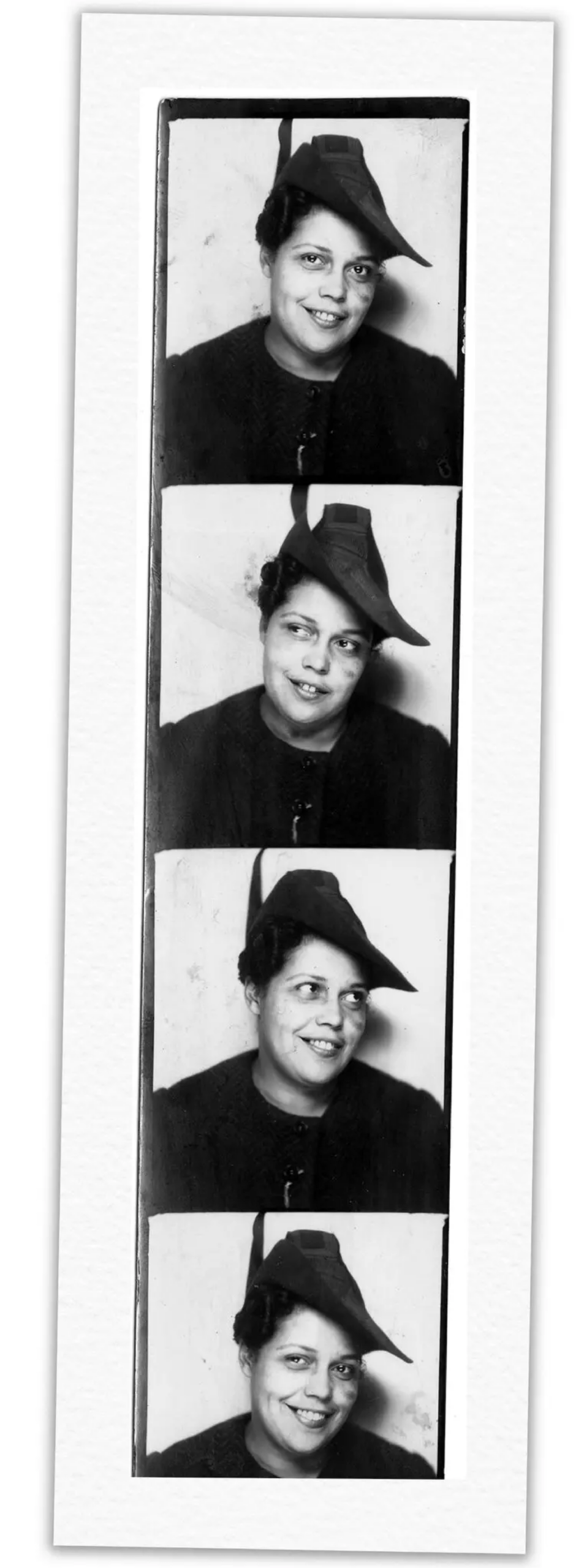
Bennett’s biography, like her reputation, refuses to behave. It runs through Texas and an Indigenous reservation in the West, then across a childhood torn by divorce and a father’s control; through New York City classrooms; into the nerve center of Harlem’s literary press; out again into Florida, away from the capital of Black modernism; back to New York and into the federal cultural bureaucracy of the New Deal; and later into the chill of Cold War suspicion, when the very idea of collective cultural work could be recast as political threat. Along the way, she made art that insisted on Black beauty and women’s interiority, and she built platforms that helped other people’s careers keep breathing.
That last part—the work of keeping other people’s work alive—is precisely what history often fails to reward. Bennett is “vital” in encyclopedic summaries, “overlooked” in modern recovery projects, and too frequently treated as an asterisk beside more continuously published peers. But the closer you look, the more her story reads as an x-ray of the Harlem Renaissance itself: its ambitions, its gender politics, its reliance on periodicals and patronage, its geographic fragility, and the way later decades could erase a life without ever formally censoring it.
Bennett was born on July 8, 1902, in Giddings, Texas, and died on May 30, 1981, in Reading, Pennsylvania. Those coordinates sound straightforward—birth, death, a line between them—but her early years were not linear. Biographical accounts and archival notes emphasize a turbulent childhood shaped by her parents’ divorce and an episode in which her father took her away, moving the family from place to place. This instability matters not as melodrama but as context: Bennett’s later career is marked by a fierce competence in making and remaking home—found families, editorial circles, arts organizations—precisely the kinds of social architecture that steadier childhoods sometimes make invisible.
By the late 1910s and early 1920s, Bennett is in New York City, where her education becomes one of her clearest through-lines. She studied at Columbia University and the Pratt Institute, training in both fine arts and teaching. The double identity—artist and educator—would define her. If some Harlem Renaissance figures are best understood as purely literary or purely musical, Bennett belongs to the cohort for whom “art” was a civic practice: something you learned, taught, made public, and defended as necessary to Black self-definition.
Her first publications arrive early, and in the right places. Poets.org notes that Bennett published her first poem, “Nocturne,” in 1923, in the National Urban League’s Opportunity magazine, and that she also designed a cover for The Crisis around that time—already moving between text and image, between two of the era’s most important Black periodicals. These credits are not small. The Crisis, edited for years by W. E. B. Du Bois, and Opportunity, tied to the Urban League, were more than magazines; they were engines of taste, debate, and career-making. To appear there was to enter a public conversation about what Black modernity could look like.
Bennett’s early work sits inside that conversation as both aesthetic argument and emotional register. Consider her poem “Advice,” which stages a subtle rebellion against external expectations: a voice is told to write “Brown poems” of “prehistoric rhythms,” and the poem refuses the constraint even as it acknowledges the seduction of instruction. The tension here—between being curated by others and curating oneself—runs through the Harlem Renaissance as a whole, especially for women writers navigating patronage, respectability politics, and the pressure to represent “the race” in digestible form.
By 1924, Bennett is teaching art at Howard University, a position that speaks to her seriousness as a visual artist and to the expanding institutional reach of Black higher education in the era. Howard in the 1920s is not only a campus; it is an ecosystem, connected to Washington, D.C.’s own Black intellectual life and to the broader renaissance that moved between Harlem and other urban centers. For Bennett, teaching was never merely a fallback. It was part of how the renaissance reproduced itself: through craft, critique, and community.
Her year in Paris, supported by scholarship, adds an international dimension that shows up across Harlem Renaissance biographies: the idea that modern Black art needed to see itself in a larger world than Jim Crow America. Poets.org notes that she studied art in Paris on a scholarship leave from Howard. Paris is often romanticized in these stories, but Bennett’s life refuses easy romance. Poets.org also records that her father died shortly after her return, under circumstances described as a probable suicide following allegations of fraud and embezzlement. Again, not tragedy for tragedy’s sake. Bennett’s career repeatedly intersects with rupture—personal, financial, political—and her output is partly defined by what those ruptures interrupted.
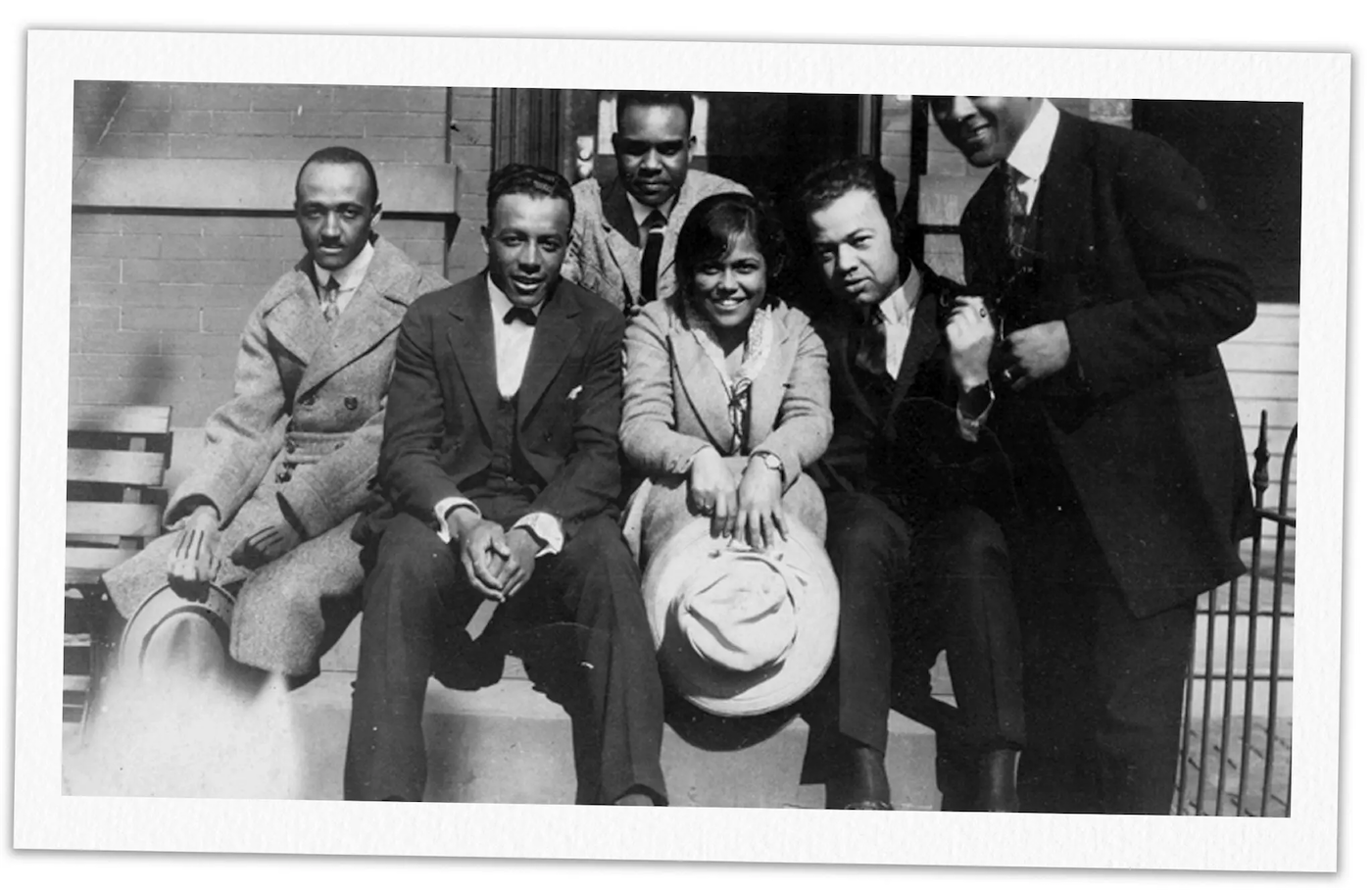
If the middle 1920s are Bennett’s public ascent, they are also when she becomes something like Harlem’s cultural correspondent. After Paris, she returns to New York and becomes assistant to the editor at Opportunity. More consequentially, she writes a column, “The Ebony Flute,” which ran in Opportunity from 1926 to 1928 and served as a kind of ongoing dispatch from the renaissance’s busy interior: readings, exhibitions, personalities, small victories, and the social life of Black modernism. A later scholarly treatment of the column in PMLA underscores what many casual histories miss: Bennett wasn’t just participating in the renaissance; she was narrating it in real time, shaping how it understood itself.
It is difficult, from the perspective of later “greatest hits” anthologies, to grasp how essential this kind of work was. The Harlem Renaissance was not a single stage with a spotlight; it was a set of rooms. It lived in salons, in rented apartments, in offices where someone had to take minutes, solicit submissions, fill pages by deadline, and announce what mattered. Bennett’s “Ebony Flute” functioned as both mirror and megaphone: it reflected a scene back to itself and amplified it to readers elsewhere.
The scene she was describing was both thrilling and contested. In 1924, there is the famous Opportunity-sponsored dinner often cited as a ceremonial ignition point for the renaissance’s mainstream recognition. The Root, recounting the event, notes that Bennett read a poem titled “To Usward,” dedicated to Jessie Fauset and to Black youth with “a song to sing” and “a story to tell.” This moment captures Bennett’s peculiar positioning: young, talented, and already in conversation with the women editors and organizers who were themselves foundational and too often minimized. It also highlights her thematic commitments—youth, aspiration, cultural inheritance—without reducing her to a single slogan.
Two years later, Bennett helps birth one of the renaissance’s most mythic artifacts: Fire!!, the short-lived but enduringly discussed magazine associated with a younger, more experimental cohort. Bennett is widely identified as an editor of the magazine’s single issue, alongside figures including Zora Neale Hurston and Aaron Douglas. Fire!! is often remembered as a flare—bright, brief, defiant. Bennett’s presence there matters because it places her at the hinge between worlds: the institutional respectability of Opportunity and The Crisis, and the insurgent energy of younger artists impatient with being respectable on command.
Yet Bennett’s life also illustrates how quickly a renaissance can become geographically fragile. In 1927 she married Albert Joseph Jackson, and accounts indicate she resigned from Howard after the administration disapproved of the relationship. She then moved with her husband to Eustis, Florida—far from Harlem’s editorial bloodstream. The relocation is often described as damaging to her work, in part because the distance made it harder to keep up with the constant churn of cultural news that powered her column. If the renaissance relied on proximity—on walking to someone’s apartment, on being seen—then Florida becomes not simply a change of scenery but an exile from the very mechanism of visibility.
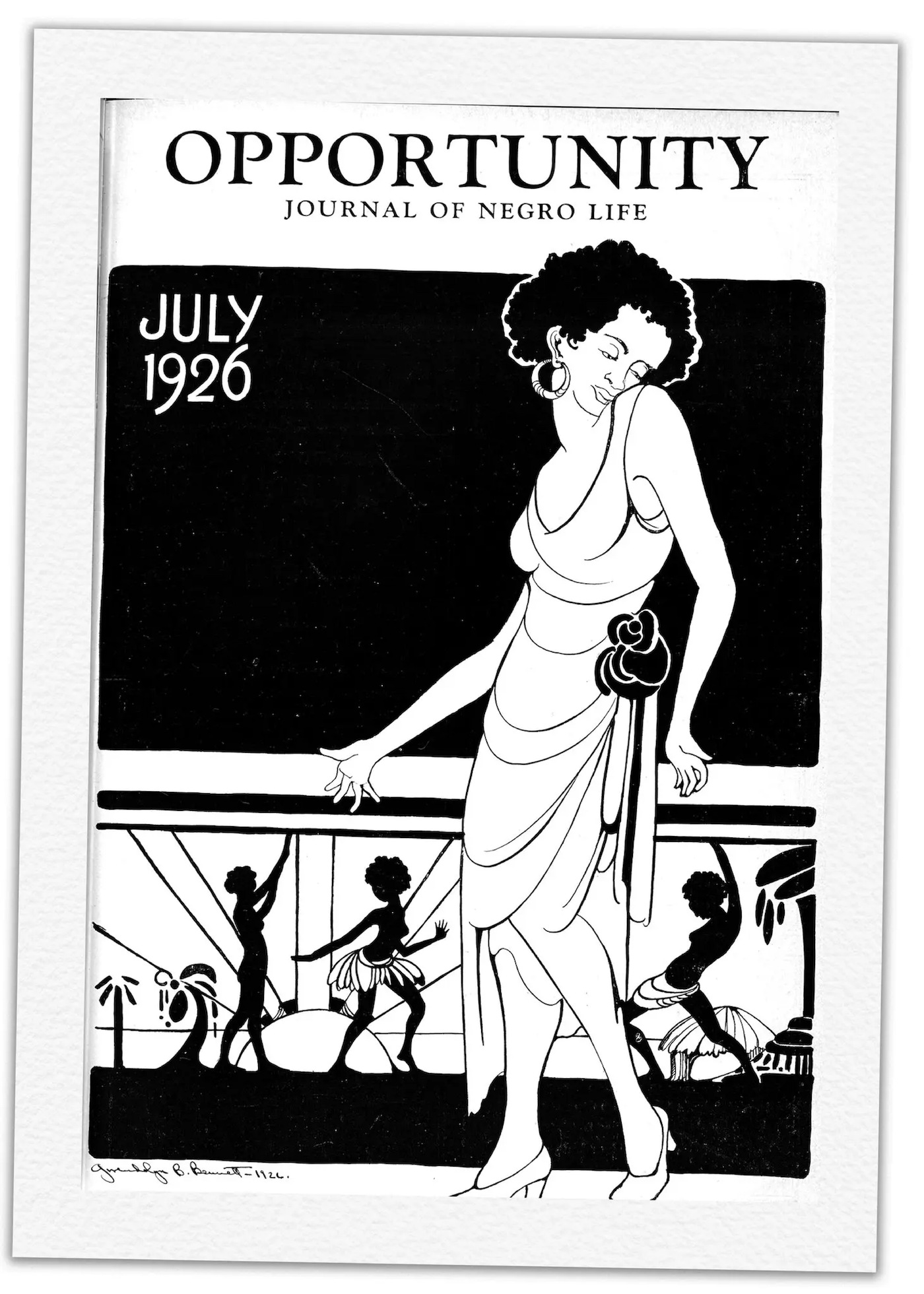
This is one of Bennett’s recurring lessons: talent is not the only currency in cultural history. Access, location, and institutional affiliation shape who stays legible. A poet who publishes sporadically, who teaches, who edits, who moves away, can be remembered as “minor” despite being central. Bennett’s story asks readers to interrogate the categories themselves: what do we mean by central, and central to what? To the production of masterpieces, or to the maintenance of a living community where masterpieces can happen?
By the 1930s, Bennett’s work shifts further toward arts administration and public cultural institutions. Multiple sources describe her involvement with the Works Progress Administration’s Federal Art Project, including a leadership role at the Harlem Community Art Center—an influential WPA-sponsored site that offered classes, exhibitions, and a cultural home base for artists and residents. The Center itself is often described as a focal arena for Harlem’s artistic life in the late 1930s and early 1940s; records and summaries note substantial attendance and participation in classes and programming.
This phase of Bennett’s career is crucial for understanding her significance beyond literature. The New Deal arts programs are frequently remembered through murals and famous names, but their deeper legacy was the creation of public pathways for working artists—especially those shut out of traditional patronage. In Harlem, where race and economics braided into a tight knot of exclusion, the idea of a federally supported art center carried obvious political meaning. Bennett’s leadership there places her at the intersection of Black cultural autonomy and federal cultural policy—someone translating community need into institutional form.
She also wrote directly about this work. An online exhibit of Federal Art Project material preserves an essay attributed to Bennett titled “The Harlem Community Art Center,” published by the Federal Art Project—evidence that she did not see administration as separate from authorship, but as another way of making public argument. In the same period, she appears in accounts of the Harlem Artists Guild, an organization linked to major sculptor Augusta Savage and to the broader push for Black artists’ inclusion and fair treatment.
What emerges is a portrait of Bennett as a cultural worker in the fullest sense: poet, illustrator, teacher, editor, columnist, administrator, advocate. The Harlem Renaissance is often narrated as a parade of individual brilliance. Bennett’s life suggests an alternate narrative: a movement built by people who could do many jobs and who understood that art required scaffolding.
Then, as midcentury politics tightened, that scaffolding became dangerous.
Poets.org reports that Bennett was suspended from her post at the Harlem Art Center after coming under scrutiny from the House Un-American Activities Committee (HUAC), and that she remained an object of scrutiny into the 1950s. It is hard to overstate what this kind of attention did to careers, especially for Black artists already navigating fragile funding and institutional precarity. HUAC investigations did not require a conviction to accomplish their goal; suspicion alone could isolate a person from opportunities, chill their associations, and reshape the story others told about them.
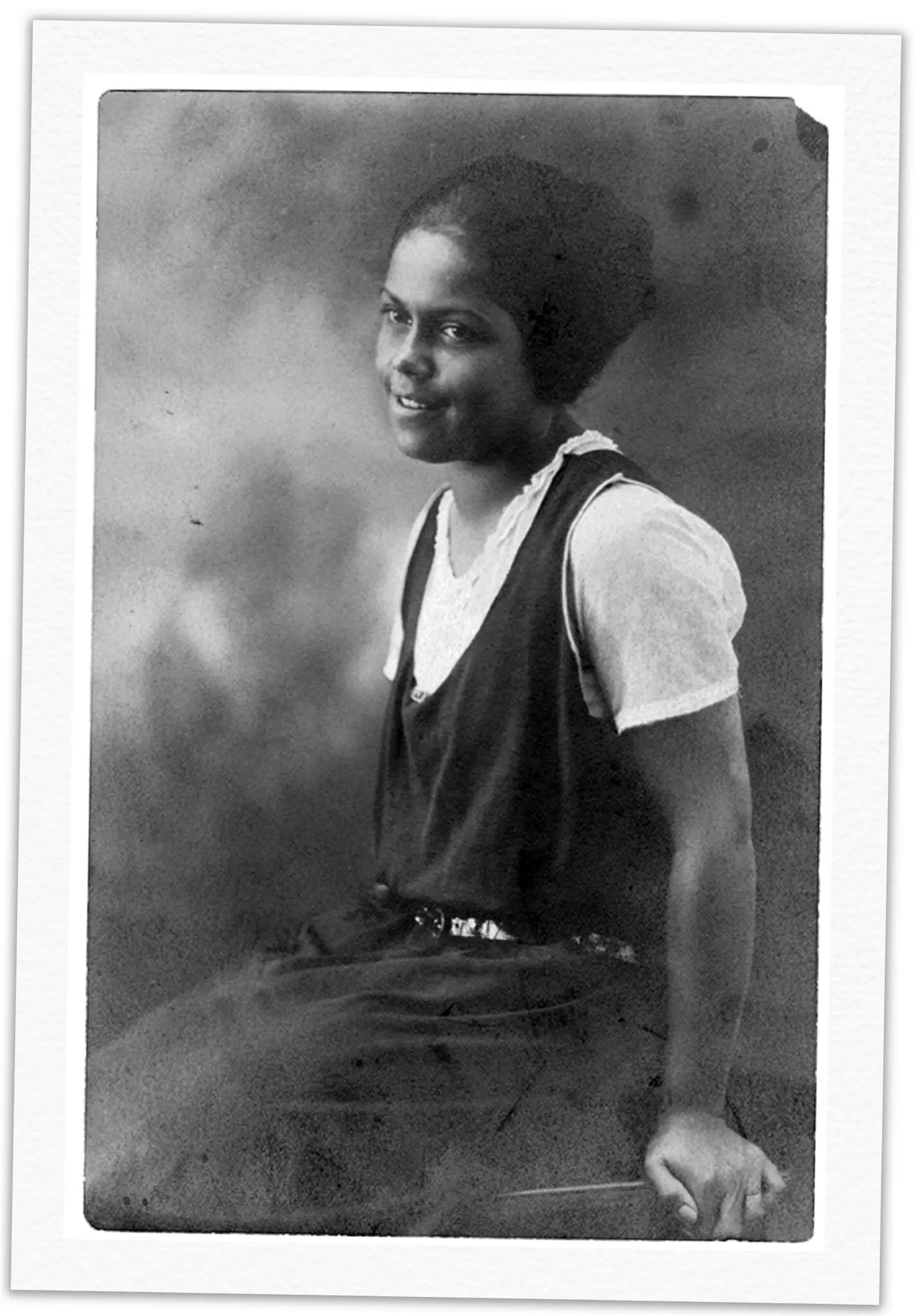
Here, Bennett’s life becomes an archive of American contradiction. The same federal apparatus that, through the WPA, had helped fund community-based arts could, in a different political climate, help undermine the careers of cultural workers by recasting their networks as suspicious. Bennett’s significance is inseparable from this irony. Her career demonstrates how Black cultural production in the United States has often had to survive by building institutions, and then survive again when institutions turn punitive.
The later decades of Bennett’s life are less public, but not empty. Multiple biographical summaries note that she worked for Consumers Union (the organization associated with Consumer Reports) from 1948 to 1968. After that, she and her second husband, Richard Crosscup—whom she married in 1940, in an interracial marriage that contemporaries often deemed socially unacceptable—moved to Pennsylvania and operated an antiques shop. Crosscup died in 1980, and Bennett died the following year.
To tell that ending plainly is to risk misunderstanding it as retreat, as if the renaissance heroine simply vanished. But a more honest reading is structural: Bennett’s later life reflects what happens when artistic labor is not continuously subsidized, continuously archived, continuously marketed, and continuously protected by institutions. Her movement into steady employment can be read as pragmatism, as survival, and as another form of invisibility imposed by a culture that romanticizes the starving artist but punishes the artist who chooses stability.
It also raises the question of what we think a literary life “should” look like. Bennett never published a major book of poetry in her lifetime, a fact often used—implicitly or explicitly—to rank her beneath peers with more consolidated bibliographies. But if you treat periodical publication, editorial labor, visual art, and institution-building as legitimate outputs—if you treat the magazine page and the community art center as seriously as the book—then Bennett’s career looks less like an interrupted promise and more like a different model of achievement.
Her poems, in the meantime, continue to do their quiet work. “Advice” remains a compact manifesto about refusing to be aestheticized by someone else’s expectations. Other poems associated with her—often anthologized from the 1920s—circle themes of Black beauty, racial pride, longing, and the interior lives of women, frequently with a visual artist’s attention to color, texture, and line. Even when the poems are brief, they feel composed by someone who understood image as argument.
What, then, is Bennett’s significance?
One answer is canonical: she is a vital Harlem Renaissance poet, essayist, and artist, present in the major journals of the day and associated with defining institutions. Another answer is editorial: through “The Ebony Flute,” she helped define the renaissance’s self-image by narrating it as it happened. Another is institutional: her leadership in WPA-era Harlem arts programming helped create access and training pathways for a wider community of Black artists. Another is political: her HUAC scrutiny illustrates how quickly cultural work could be criminalized in midcentury America, and how easily that criminalization could contribute to historical erasure.
But perhaps the most useful answer—especially for readers trying to understand the Harlem Renaissance not as mythology but as lived reality—is that Bennett’s life makes visible the movement’s dependence on people who did not only “create,” but also convene. She is a case study in how Black women, in particular, carried disproportionate burdens of cultural labor: teaching, editing, hosting, organizing, keeping minutes, building platforms, and still finding time to write. Her relative obscurity is not an accident. It is a symptom of how we have been trained to value art that arrives as a finished object over art that functions as a social practice.
Modern archives help correct that training. Collections at institutions like the New York Public Library and Yale’s Beinecke Library document Bennett’s papers and professional record, pointing researchers toward a fuller understanding of her life beyond a handful of anthologized poems. Recent scholarship and edited volumes have also worked to consolidate her output and make it easier to teach and cite—an essential step for any writer whose work was scattered across magazines rather than bound between covers.
Recovery, though, is not merely a scholarly project. It is a cultural choice about what kind of history we want. If we continue to tell the Harlem Renaissance as a story of a few marquee names, we will misunderstand it as a miracle—something that happened because geniuses appeared. If we tell it through figures like Bennett, we will understand it as a system—something built, maintained, and constantly repaired by people whose names were never supposed to be the headline.
In that sense, Bennett is not only a Harlem Renaissance figure. She is an argument about movements themselves. She demonstrates that “significance” is often mismeasured; that cultural eras rely on editors as much as authors, on teachers as much as performers, on administrators as much as painters. She also demonstrates how fragile a life’s record can be when tragedy strikes, when politics sour, when geography shifts, when institutional support evaporates.
And yet, despite everything that worked against continuous recognition—distance, suspicion, scattered publications—her work persists in the places where movements keep their real memory: in archives, in poems that still unsettle easy categories, and in the continuing insistence that Black women’s cultural labor is not auxiliary to history, but one of the ways history happens.
More great stories
Afro Sheen, Wall Street, and the Architecture of Black Possibility
July 6, 2026
No Comments
The Fire Inside the Fourth
July 5, 2026
No Comments