

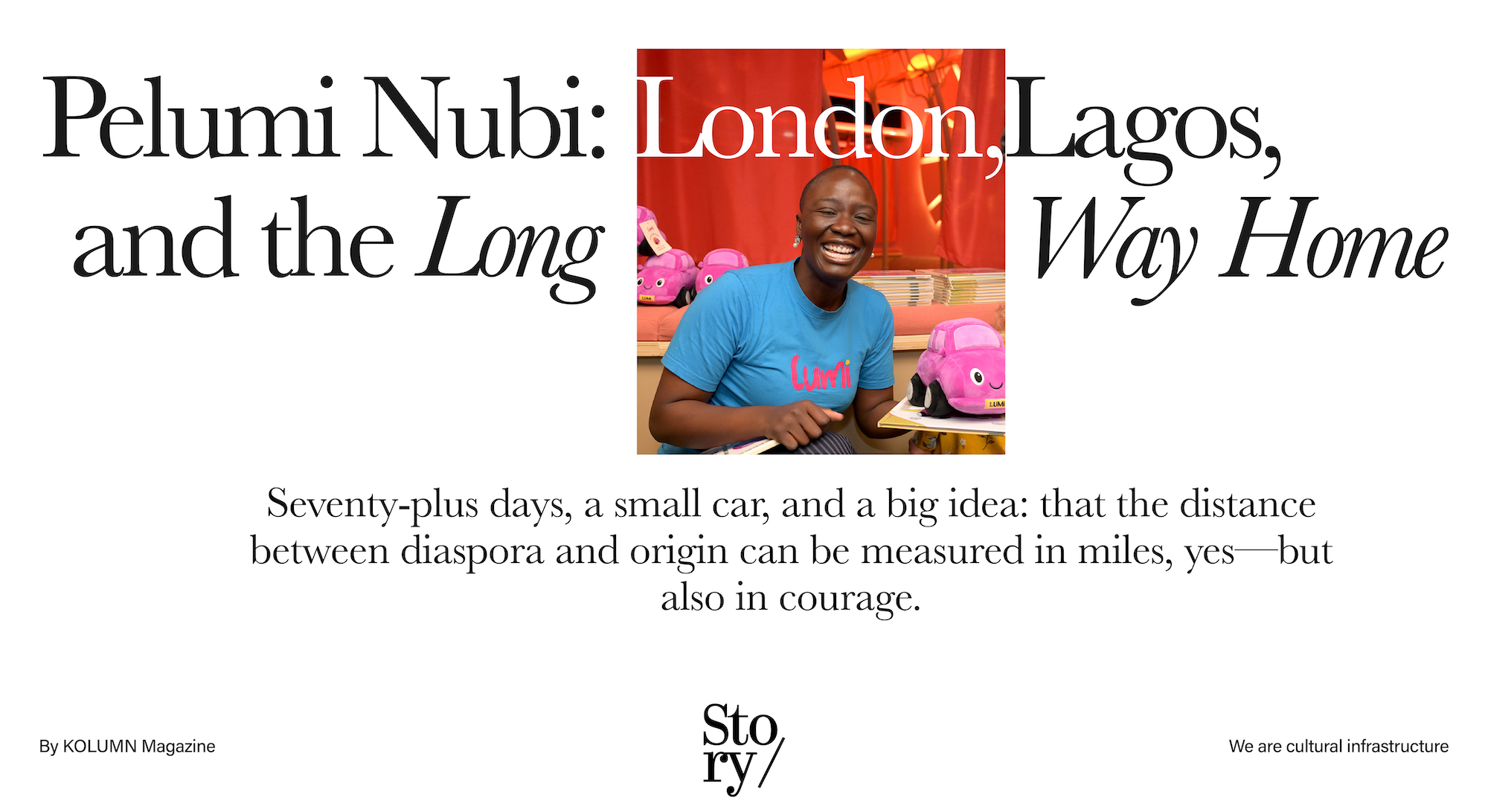
To travel overland is to confront how the modern world is organized: who gets to move smoothly, who gets delayed, who gets questioned, who is assumed to be legitimate.
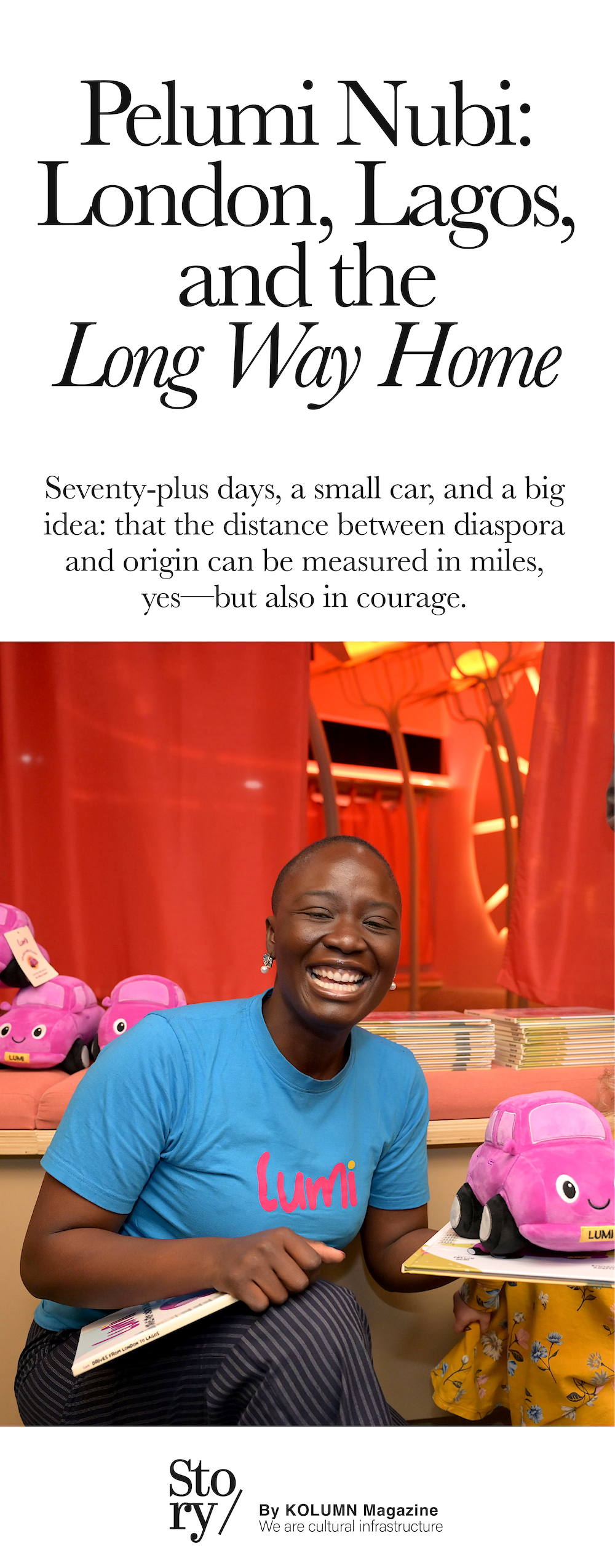
To travel overland is to confront how the modern world is organized: who gets to move smoothly, who gets delayed, who gets questioned, who is assumed to be legitimate.
By KOLUMN Magazine
Photographs accompanying this article are by Jermaine Gibbs, a Baltimore, Maryland–based photographer whose work documents Black life with intimacy, restraint, and deep historical awareness. Gibbs is known for visual storytelling that centers dignity over spectacle, capturing subjects in moments of quiet resolve as well as public transformation. His images often sit at the intersection of culture, movement, and memory, emphasizing texture, presence, and emotional truth.
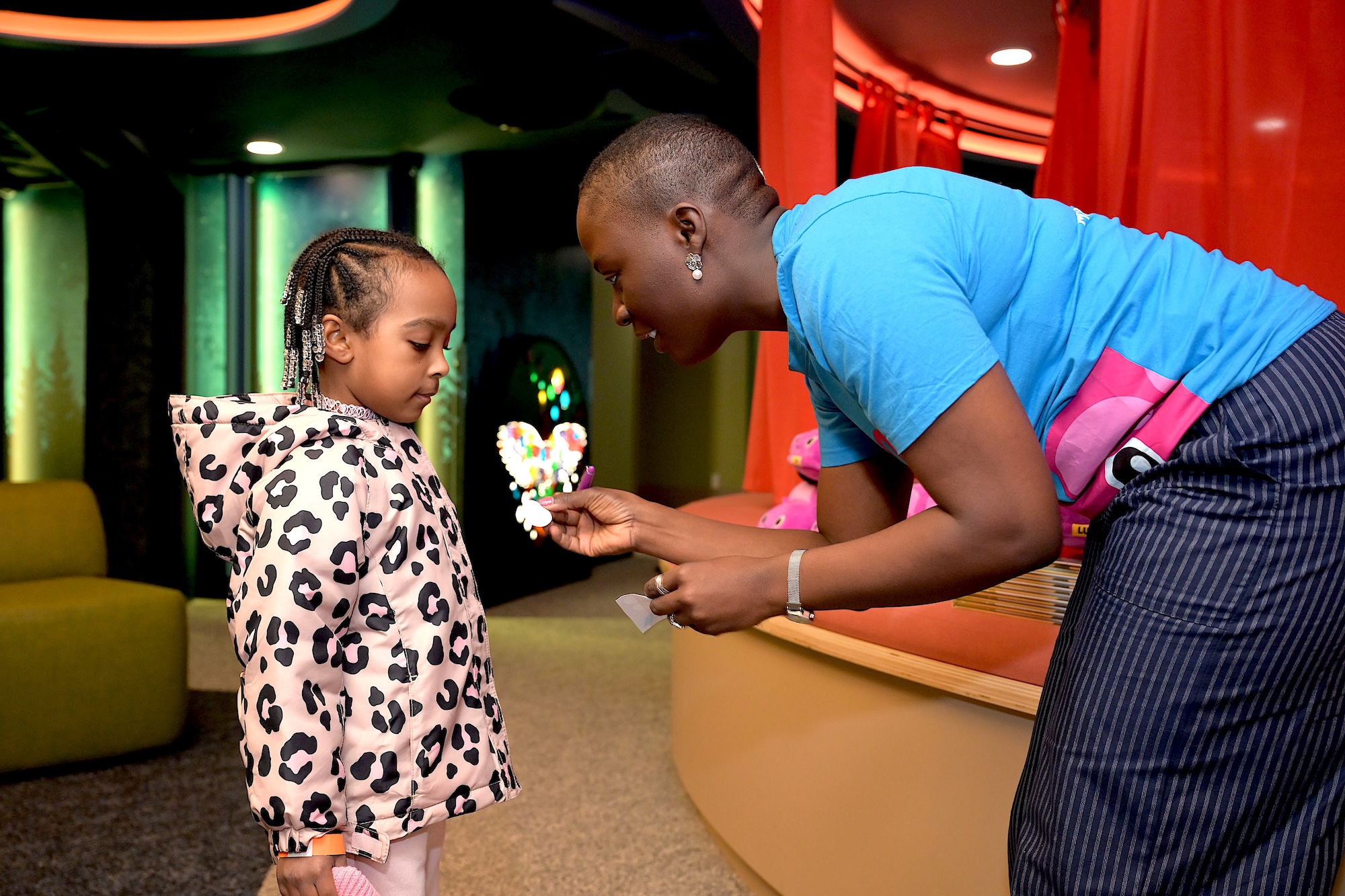
On the days when the road is kind, it can feel like a private agreement between a driver and the horizon. The world narrows to lanes, light, and the small rituals of motion: a hand returning to the wheel after a sip of water, the glance that confirms the next turn, the quiet arithmetic of fuel. But the road is rarely kind for long—certainly not across continents, certainly not for a solo traveler negotiating the particular friction that attaches itself to a Black woman moving through spaces where she is alternately hypervisible and ignored.
Pelumi Nubi left London in early 2024 with a plan that sounded, at first hearing, like the kind of dare that thrives on disbelief: she would drive by road from the United Kingdom to Lagos, Nigeria—alone. In the telling that later raced around social media and newsrooms, the details became part of the legend: the tiny Peugeot she loved, the purple hue that made the car feel like a character, the sheer number of borders, the length of time—often reported as roughly 68 to 74 days—and the audacity of attempting it in a vehicle not designed for the romance of overlanding.
There are claims embedded in the coverage that deserve the careful handling good journalism demands. Nubi has widely been described as the first Black woman to complete a solo road trip from London to Lagos, and in some accounts as the first woman to drive that route solo. Those statements, echoed in multiple outlets, reflect the available reporting and the trip’s documented public record—but they also sit within a broader truth about travel history: long, difficult journeys are not always archived, especially when the travelers are women, and especially when they are Black. What can be said, with confidence, is that Nubi’s journey became internationally recognized precisely because she documented it in real time, because major outlets amplified it, and because her arrival in Lagos was staged as public celebration—an event that turned a personal challenge into a civic symbol.
The phrase that appears again and again in her interviews is not “record,” or “history,” or even “fearless,” though all of those are applied to her. It’s the simplest provocation: why not. That question, almost childlike, is deceptively sophisticated. It asks what makes certain experiences seem normal for some people and unthinkable for others. It asks why adventure gets coded as an indulgence unless it’s filtered through certain bodies, certain passports, certain assumptions about safety and belonging. And it asks why a route that exists on maps and in freight logistics can feel, in the imagination, like a fantasy when the driver is a Black woman traveling alone.
A life built in motion
Nubi’s biography—British-Nigerian, born in Lagos and raised in the United Kingdom—offers a familiar frame for diasporic life: two homes, two sets of references, a constant toggling between origin and present tense. In interviews, she has described the London-to-Lagos journey as an effort to connect those homes in the most literal way, refusing the convenient rupture of air travel. Instead of compressing distance into hours, she wanted to inhabit it.
That insistence—on time, on texture—matters. It’s easy to romanticize the overland traveler as someone seeking “authenticity,” a word that can flatten local complexity into scenery for outsiders. Yet Nubi’s stated motivations often point in a different direction: curiosity about West Africa’s coastline and interior routes, a desire to expand her own footprint on the continent, and a project of representation—showing Black women, and particularly African women and diasporic Black women, in an adventure narrative that is too often coded white and male.
Multiple profiles also note her pivot away from a more conventional academic path, with at least one major interview describing how the pandemic disrupted years of research and helped push her toward travel as a new center of gravity. The detail is important not because it adds drama, but because it clarifies what her trip represented: not a sudden whim, but a reorientation. The road trip was a kind of thesis—about risk, about self-trust, about whether the “responsible” life is always the one that looks respectable from a distance.
Long before London-to-Lagos became a headline, Nubi had built a public identity as a travel content creator—someone whose work sits at the intersection of personal narrative, logistics, and performance. Travel influencing can look, from the outside, like a stream of beaches and captions. But long-haul solo travel is also planning: route research, visa strategy, vehicle prep, contingency thinking. Nubi’s choice to do the journey in a Peugeot 107, rather than a rugged overlanding vehicle, functioned as both constraint and message. It suggested that “adventure” does not require a certain aesthetic of gear and expense—even if, in reality, the trip demanded significant resources.
In that contradiction—the modest car and the extraordinary undertaking—you can see how her story caught fire. It wasn’t just that she was driving far. It was that she was driving far in a way that undercut the gatekeeping mythology of adventure travel.
Building a home inside a small car
A Peugeot 107 is, in most people’s imagination, a city car: errands, commutes, short hops. In Nubi’s telling, it became something else—part shelter, part studio, part confessional. Reports describe her modifying the car with a sleeping setup and practical additions that made it possible to camp and to live cheaply when needed, turning the vehicle into a small, mobile room.
This kind of adaptation belongs to a long tradition of travel improvisation, but it is rarely centered in mainstream coverage unless it is framed as quirky. In Nubi’s case, it was the infrastructure of her independence. Sleeping in the car meant she could keep moving even when accommodation was unavailable, unsafe, or too expensive. It also meant she could control her environment in moments when being alone in unfamiliar places pressed hard against her nerves.
There is another layer here, one that only appears when you listen closely to what solo women travelers say to one another. A car is not just transport. It’s a boundary. It’s a lock you can control. It’s a place to retreat. It’s a way to manage the constant negotiation of space that women, particularly women traveling alone, are forced to perform: how friendly to be, how firm, how to accept help without surrendering agency. Nubi has spoken in interviews about the added dimensions of solo travel as a woman—what you carry, how you plan stops, how you move through moments that men rarely have to calculate.
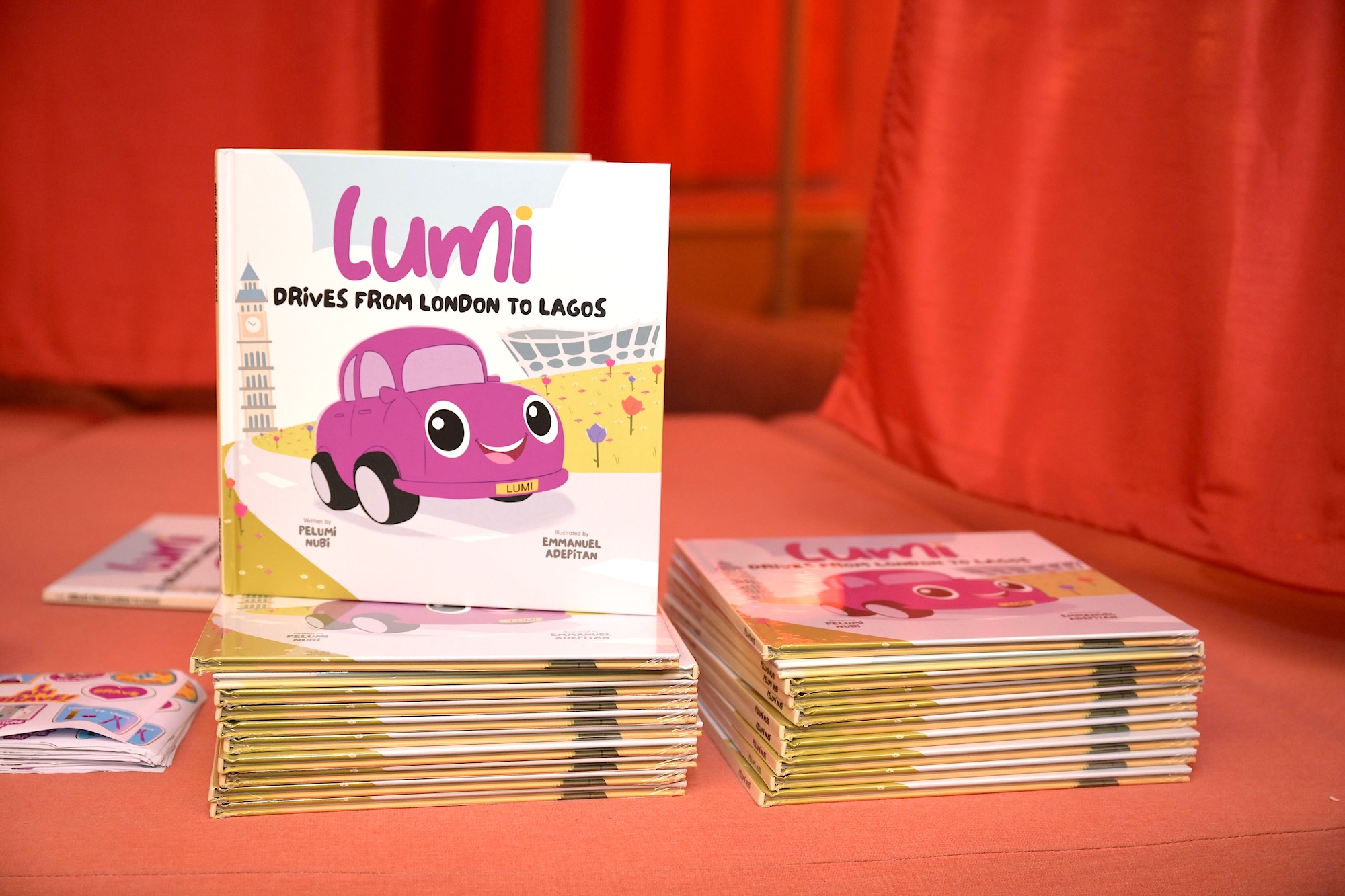
In the public narrative, her car’s nickname—often rendered as “Lumi” or as part of a longer Yoruba-influenced name—also served a purpose. Naming the car made the journey legible as story. It introduced companionship into solitude. It gave followers something to worry about besides the driver’s well-being, a dynamic she herself has joked about, according to one reported interview.
The joke lands because it reveals something true about internet spectatorship: audiences will bond with objects as proxies, sometimes because it feels less intimate than admitting fear for a stranger’s safety, sometimes because it’s easier to project onto a thing than to confront the vulnerability of a human body moving through real risk.
The road as narrative: From Europe toward Africa
Nubi’s route, as described across profiles, moved through parts of Europe and down toward North and West Africa, ultimately arriving in Lagos in early April 2024. Different outlets report the trip’s scope with slight variations: 16 or 17 countries, 68 or 74 days, distances expressed in miles or kilometers. Those discrepancies are not unusual; they reflect the way long journeys are counted, the way detours are included or excluded, and the way media summaries compress complexity.
What is consistent is the shape of the story: a departure from London, a European stretch that allowed her to settle into the rhythm, and then the moment when the trip tipped into something else—when terrain, bureaucracy, and security dynamics began to define each day. Several profiles highlight striking segments: mountain roads in Morocco, the vastness of desert crossings, and the now-famous ride on Mauritania’s iron ore train, a brutally practical freight line that has become an icon of extreme travel.
Even in secondhand descriptions, you can feel how these moments functioned as punctuation marks in her narrative. The train ride is particularly telling: it’s not necessary for a road trip, not in the strict sense. It is, instead, a willingness to step outside the frame, to accept discomfort as part of the story she wanted to live. That matters because it distinguishes her trip from a mere endurance drive. It was also, explicitly, a journey of discovery—of places she wanted to see, not just pass through.
But the road is not a string of cinematic highlights. The deeper reality of overland travel is often bureaucratic: visas, vehicle paperwork, insurance, border fees, inspections, and the soft power dynamics that shape how travelers are treated. Reuters’ video report framed Nubi’s trip partly through the idea of promoting a “safe and borderless Africa,” a phrase that captures both aspiration and tension.
The aspiration is obvious: a continent where movement is easier for Africans, where intra-African travel is not strangled by paperwork and suspicion, where borders do not function as choke points for corruption or delay. The tension is equally obvious: borders exist, and they bite hardest when you are alone, unfamiliar, and visibly outside the norm of who is expected to be driving through.
In interviews and reporting, Nubi has discussed border challenges and the need to rely on local knowledge when digital tools failed—when GPS no longer offered clean solutions, when the road became less a line on a phone screen and more a series of human negotiations.
To travel overland is to confront how the modern world is organized: who gets to move smoothly, who gets delayed, who gets questioned, who is assumed to be legitimate. Those questions become sharper when the traveler is a Black woman holding a British passport but moving toward Nigeria not as a tourist “visiting Africa” but as a person returning to a place she calls home. Her identity complicates the usual categories. She is both insider and outsider, and the road forced her to live inside that complexity day after day.
Visibility, vulnerability, and the particular politics of being alone
One reason Nubi’s trip resonated so widely is that it sits at the intersection of two cultural shifts. The first is a growing public appetite for overland narratives—travel that is slow enough to feel like a story rather than a transaction. The second is the rise of Black women travel creators who insist on being seen in spaces that have historically excluded them. Nubi’s journey became a case study in that insistence: a literal crossing of borders paired with a symbolic crossing of expectations.
Media profiles and interviews repeatedly return to what it meant for her to be alone. Not just “solo,” as a marketing adjective, but alone in the practical sense—responsible for the car, the route, the mechanics, the communications, the content creation. Peugeot’s own magazine-style interview emphasized the multi-role burden of solo travel: in group expeditions, tasks are distributed; alone, the traveler must do everything.
That “everything” includes managing fear. It includes reading rooms, reading roads, reading officials. It includes handling the small aggressions that attach themselves to women traveling alone: unsolicited attention, patronizing doubts, the casual assumption that a woman must be rescued from her own ambition. Nubi’s public storytelling did not always foreground these moments as trauma, but their presence—implicitly and explicitly—adds weight to the accomplishment.)
There is also the matter of race. Several travel narratives, including those associated with Nubi’s wider body of work, describe the experience of being stared at, touched, or treated as novelty in places where Blackness is not common. That kind of exposure changes how you occupy the road. It forces you into a level of self-awareness that other travelers may never have to develop.
When Nubi’s journey is framed as “inspiration,” it risks becoming too clean. Inspiration stories often sand down the parts that make audiences uncomfortable: the real danger, the uncertainty, the possibility of failure. Yet Nubi’s trip included moments that refused polish. Chief among them was a serious car accident that multiple outlets reported occurred during the West African portion of her route, described in some accounts as happening in Liberia and in others as occurring elsewhere in the region.
The fact of the accident matters more than the precise location in a narrative sense, though accuracy demands we note the inconsistency. The accident became a turning point in the public arc: proof that the trip was not a curated fantasy. It also created a question that hovered over the final stretch—whether she would finish.
That she did finish, and that her finish was celebrated so publicly, is part of why the story traveled. Endurance narratives often need a crisis to make the ending feel earned. In Nubi’s case, the crisis was real.
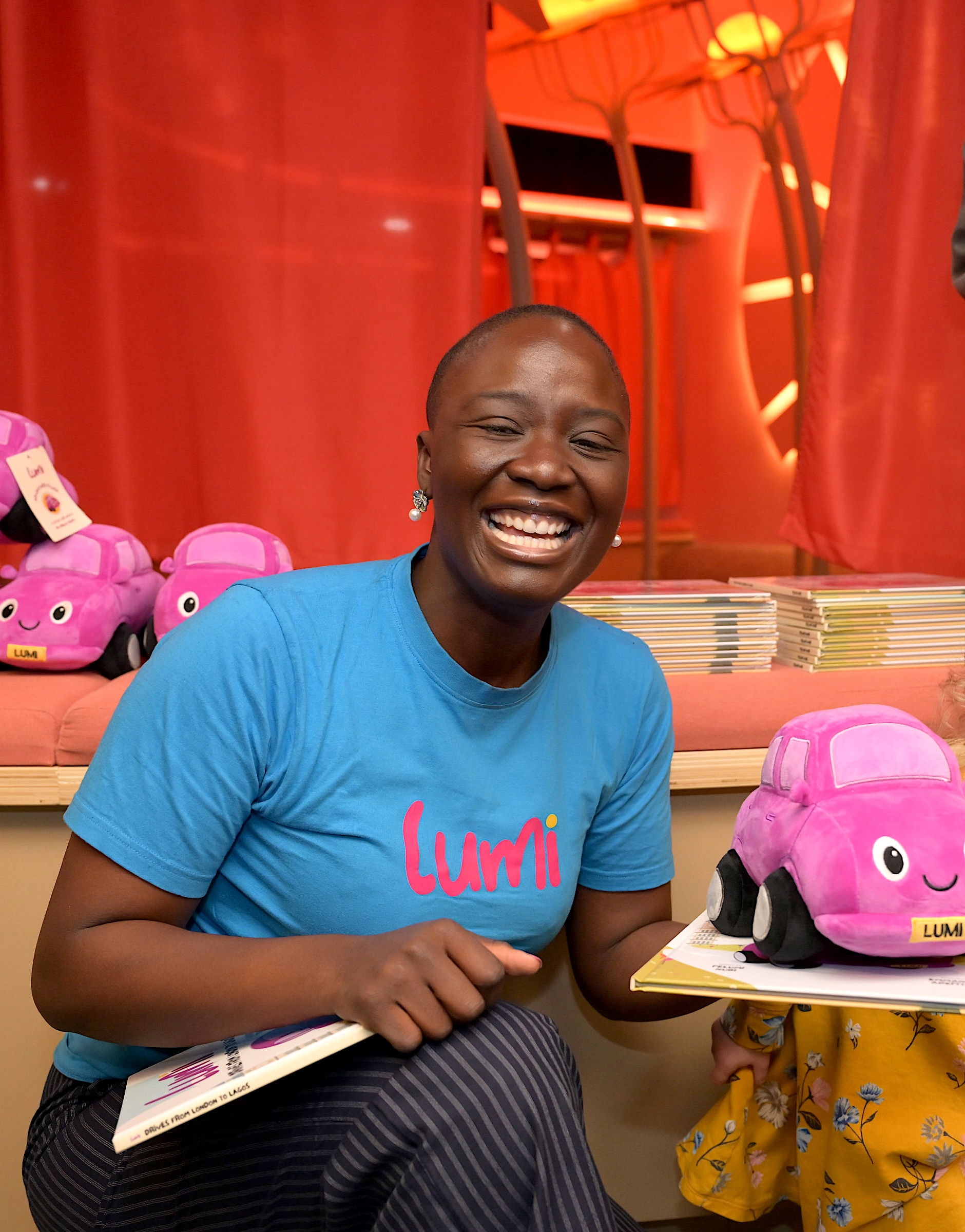
The accident and the discipline of continuing
A road trip that lasts more than two months will contain breakdowns of multiple kinds: mechanical, emotional, logistical. The accident introduced all three at once. Reports described severe vehicle damage and a pause in her forward motion.
In the modern travel-influencer economy, a crisis also becomes content—not necessarily in a cynical way, but in the unavoidable way that a creator’s life is also her work. When you have built a following around a journey, the journey’s worst day is still part of the feed. That can be a form of accountability and honesty, but it can also be a pressure: to narrate pain before you have processed it, to perform resilience while you are still shaken.
Nubi’s documentation appears to have navigated that tension by continuing to show the trip as it was—messy, delayed, real—while still keeping the larger narrative intact. Her public presence during the journey created a kind of distributed witnessing. People who would never meet her felt invested. That investment, in turn, shaped how the story was told by media outlets after the fact: not as a solitary act in a vacuum, but as a communal event watched in real time.
This is one of the defining features of contemporary adventure. The old mythology of the explorer depends on isolation: the lone figure against the wild. But Nubi was alone and not alone. She drove by herself, yet she traveled with an audience in her pocket. The attention did not remove risk, but it changed its texture. Help could be crowdsourced. Advice could arrive instantly. So could doubt, criticism, and the moralizing panic of strangers who feel entitled to judge a woman’s choices.
The road trip, in this sense, is not just a physical feat. It is an experiment in public autonomy.
Arriving in Lagos: When a personal journey becomes a civic event
Nubi arrived in Lagos on April 7, 2024, according to multiple accounts, to a welcome that was closer to a festival than a quiet homecoming. Reporting described crowds, celebration, and an atmosphere that framed her arrival as more than personal accomplishment.
There is a powerful emotional logic to that kind of arrival. For diasporic people, “home” can be both intimate and abstract. A flight collapses the transition. A road trip insists on earning it. When Nubi crossed into Nigeria and rolled toward Lagos, she was not simply returning. She was arriving with evidence—of each mile, each crossing, each night survived. The celebration met her not just as a daughter or friend but as a symbol: proof that the distance between diaspora and origin can be traversed on one’s own terms.
That symbolism was quickly formalized. Within days, Lagos State Governor Babajide Sanwo-Olu appointed Nubi as a tourism ambassador, a gesture that was widely covered in Nigerian media and beyond.
Depending on the outlet, the announcement included details of gifts—reports that she received a vehicle and housing support, and that her trip costs might be covered or “written off” by the state. These details became their own mini-debate online, as public gifts often do, raising questions about what society rewards and why. But from a strategic communications perspective, the state’s decision makes sense: Nubi had effectively produced a global tourism campaign through lived experience. Her content placed West African landscapes, roads, and border towns into the feeds of audiences who might otherwise never consider that kind of travel. For Lagos, naming her an ambassador turned that organic publicity into official narrative.
There is an irony here that a journalist has to hold without sneer. Nubi’s trip was, in part, an assertion of “borderless” possibility. The state’s embrace is, in part, an acknowledgment that borders—and the stories that cross them—remain politically useful. Her journey became a way to brand Lagos not just as a destination, but as an endpoint of endurance, a city worthy of pilgrimage by road.
The claim of “first,” and what it reveals about recognition
The “first Black woman” framing, repeated across international coverage, functions like a headline hook. It is also a mirror held up to the archive. Why does this kind of achievement require the qualifier—Black woman—before it is legible as history? The answer is not that Black women have not traveled, not that they have not taken risks, not that they have not crossed continents. The answer is that recognition is distributed unevenly, and the categories we use to correct for that inequality can sometimes feel both necessary and insufficient.
Nubi’s “first” claim is widely reported, including by Reuters and major travel outlets, and it is anchored by the public documentation of her journey. But it also sits within a larger pattern: the archive expands when people insist on being seen. In earlier generations, a woman attempting such a route might have been treated as reckless rather than heroic, or might have been quietly discouraged into invisibility. In the social media era, visibility can be weapon and shield. It can also be a form of proof.
At the same time, “first” language can flatten the community that makes a journey possible. Even the most solo traveler relies on others: mechanics, border officials, strangers who offer directions, friends who send money, followers who share advice, families who hold their breath. Nubi herself has acknowledged reliance on people she met along the way and the kindness of locals when technology and planning could not solve everything.
A more accurate way to understand her accomplishment is not simply as solitary conquest but as a highly personal act conducted within a web of human contact—contact she had to manage, interpret, and negotiate alone.
The influencer as logistician, witness, and producer
Traditional travel writing often pretends the writer is an observer floating above the scene, a neutral eye. Nubi’s form of travel storytelling is different. As a content creator, she is both subject and narrator, producer and product. Her journey had to be lived and edited simultaneously. Peugeot’s profile captured this tension directly, emphasizing that she managed not only the driving and the planning but also the communication and social media documentation on the road.
This is labor—real labor—and it is part of what modern audiences often misunderstand about influencer culture. A person can be exhausted, scared, and still required (by the logic of the platform, by the expectations of followers, by sponsorship dynamics) to post, to narrate, to translate experience into content. In Nubi’s case, that translation did something culturally valuable: it turned routes that many audiences treat as blank space into a series of lived places.
It also challenged a stubborn assumption: that Africa is a place one “visits” only in curated pockets, and that overland movement across African countries is either impossible or inherently irresponsible. The truth, as always, is more complicated. Overland travel can be dangerous; security conditions vary; governments issue advisories for reasons. But the assumption that the entire route is uniformly “too dangerous” often reveals more about Western perceptions than about the continent itself.
Nubi’s trip did not prove that risk is imaginary. It proved that risk is navigable, and that narratives about risk are often racialized and gendered—especially when the traveler does not match the default image of the adventurous overlander.
In interviews, she has also framed the journey as a way to encourage people to take smaller steps toward bigger adventures—to build confidence rather than waiting for perfect circumstances. This ethos is part of what made her story portable. It is not only a feat; it is a template.
What the road trip suggests about the future of African travel narratives
Nubi’s London-to-Lagos journey arrived at a moment when conversations about intra-African mobility have become louder: about trade corridors, tourism, visas, and the lived experience of borders. Reuters’ framing—“safe and borderless Africa”—lands as an aspirational slogan, but it also hints at policy realities: the difficulty of moving across neighboring countries, the frictions that constrain commerce and tourism, the way borders can be sites of both security and extraction.
In that context, Nubi’s trip is both personal and political, even if it was not designed as activism in the traditional sense. A Black woman driving alone across multiple African borders becomes a stress test for systems: what documentation is demanded, how arbitrary discretion is applied, how safety is managed. The trip becomes a story not only about bravery but about infrastructure—roads, checkpoints, ferries, fuel availability, and the informal economies that arise to help travelers survive.
It also becomes a story about cultural imagination. For diasporic Africans in Europe and North America, the continent can become fragmented into family destinations and heritage touchpoints. A road trip knits those fragments into continuity. It suggests that Africa is not only a place you arrive at; it is a place you traverse, one nation bleeding into the next, one language yielding to another, one coastline revealing itself in slow motion.
Travel media has often failed to tell these stories with nuance, oscillating between danger porn and safari fantasy. Nubi’s documentation offered something else: a first-person narrative of complexity, where kindness and difficulty coexist, where landscapes are not backdrops but lived environments, where the traveler is not a detached observer but a Black woman whose body changes the meaning of every encounter.
This is why her story circulated beyond travel circles. It was about movement, yes, but also about who is allowed to move, and what it costs to claim that right publicly.
The cost of a dream, and the economy of attention
One reported account described the trip’s financial reality as significant—tens of thousands of pounds when all costs were counted. That detail complicates the “you can do it too” messaging in a way that is not cynical, just honest. Most people cannot absorb the costs of a multi-month overland journey without support, savings, sponsorship, or a willingness to take on debt. The democratizing story—anyone can do it with a small car—sits beside the reality that time itself is a privilege. Two-plus months on the road requires a life structured to allow it.
But this is also where Nubi’s professional identity matters. As a content creator, she is not only spending money; she is producing an asset: content that can generate income, partnerships, speaking opportunities, and brand relationships. In a modern media economy, a journey can be both expense and investment.
The danger, ethically, is that audiences see only the highlight reel and misunderstand what is transferable. Nubi’s real contribution may not be that everyone should drive from London to Lagos. It may be that people should think harder about what they have been told is impossible—and who benefits when they believe it.
This is also why her trip became news. News organizations are drawn to stories that compress broader social themes into a single human narrative. In Nubi’s drive, editors could see diaspora, gender, race, travel culture, African mobility, and the internet’s ability to turn private feats into public events. The story had spectacle, yes—but it also had meaning.
After the finish line: Legacy, symbolism, and the next road
Some reporting describes Nubi’s car becoming a kind of artifact after the journey—donated or displayed as a symbol of the accomplishment. Whether in a museum-like setting or simply preserved as a celebrated object, the idea makes sense: the car is proof. It is also metaphor. The small vehicle that “shouldn’t” have been able to do it becomes a stand-in for the person who did.
In the months after her arrival, her story continued to circulate through interviews, podcasts, and brand features, each adding a slightly different emphasis: empowerment, logistics, African tourism, women’s safety, the psychology of doing hard things. This is what happens when a personal act becomes public property: people read their own needs into it.
For some, Nubi’s journey is a permission slip—proof that daring does not require waiting for the “right” version of your life. For others, it is a critique of the narrow scripts offered to Black women: be sensible, be cautious, be small. For still others, it is a tourism advertisement, an invitation to imagine West Africa not as an end point but as a route.
A seasoned journalist has to hold all these readings at once without collapsing the story into any single moral. Nubi’s drive is inspirational, yes, but it is not inspirational because it is tidy. It is inspirational because it is complicated: because it contains fear and stubbornness, because it involves borders and breakdowns, because it exposes the gap between what people say is possible and what is actually doable when someone refuses to accept the limits.
And there is one more reason the story endures. A solo road trip is, ultimately, an argument with the future. You get in the car, you point it toward a distant city, and you gamble that the person who arrives will still be you—only altered. Nubi’s interviews suggest that she did arrive altered: more certain of her capacity, more aware of the world’s contradictions, more convinced that self-trust is not a slogan but a practice learned mile by mile.
The road from London to Lagos is not just a line on a map. In 2024, it became a public story about what happens when a Black woman decides she will not take the shortcut—not because she enjoys hardship for its own sake, but because she wants to feel the distance between her homes, to know it in her bones, to make it undeniable.
The internet can turn anything into content, and sometimes that cheapens the thing itself. In Nubi’s case, the content did not replace the journey; it testified to it. It allowed people who have been taught to make their dreams smaller to watch someone do the opposite in real time.
The question that powered her trip—why not—remains the most radical part. Because it is not only about travel. It is about permission. It is about the borders inside us that are easier to obey than to cross.
More great stories
Afro Sheen, Wall Street, and the Architecture of Black Possibility
July 6, 2026
No Comments
The Fire Inside the Fourth
July 5, 2026
No Comments