


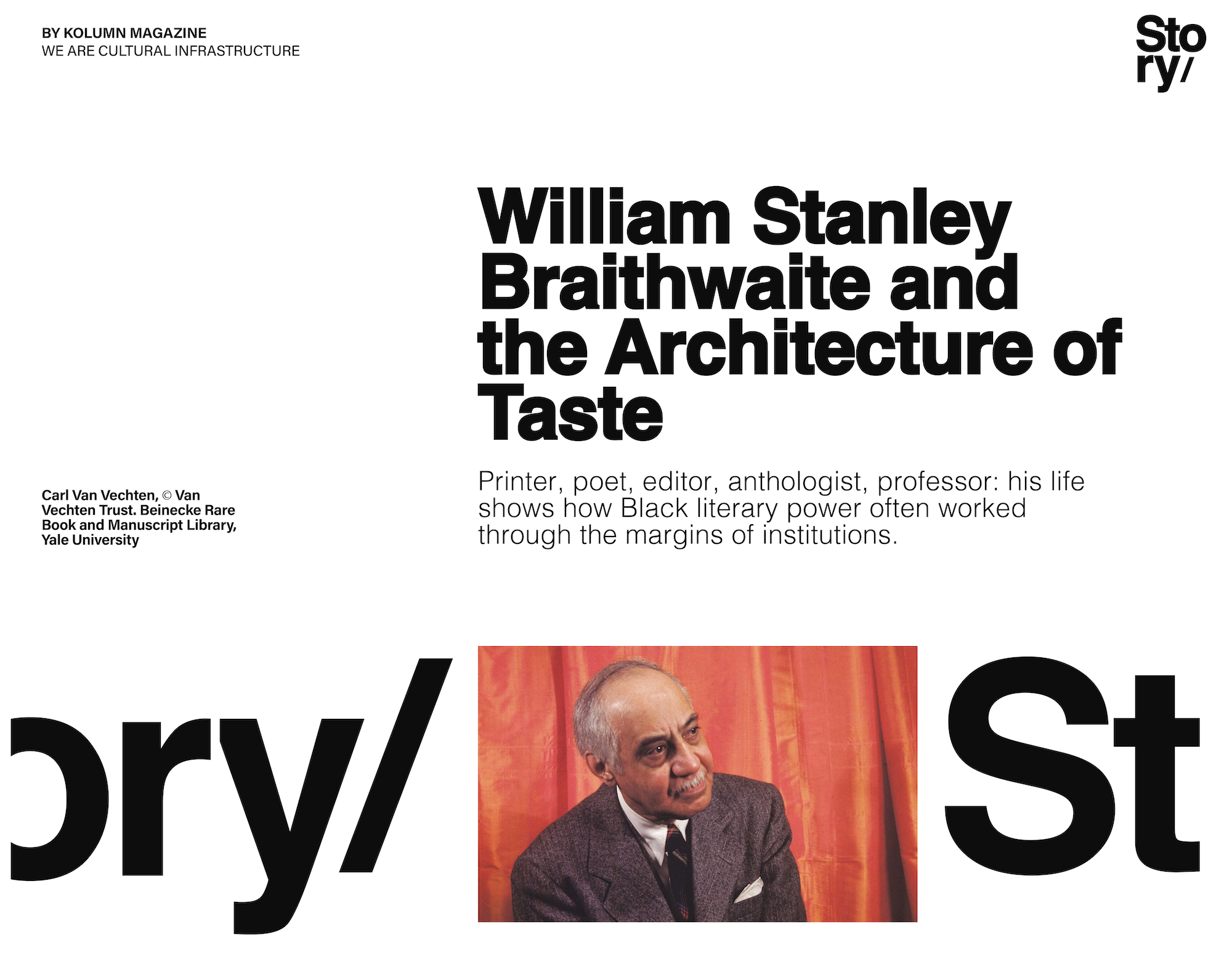
Braithwaite did not merely write poems. He helped decide which poems America would remember.
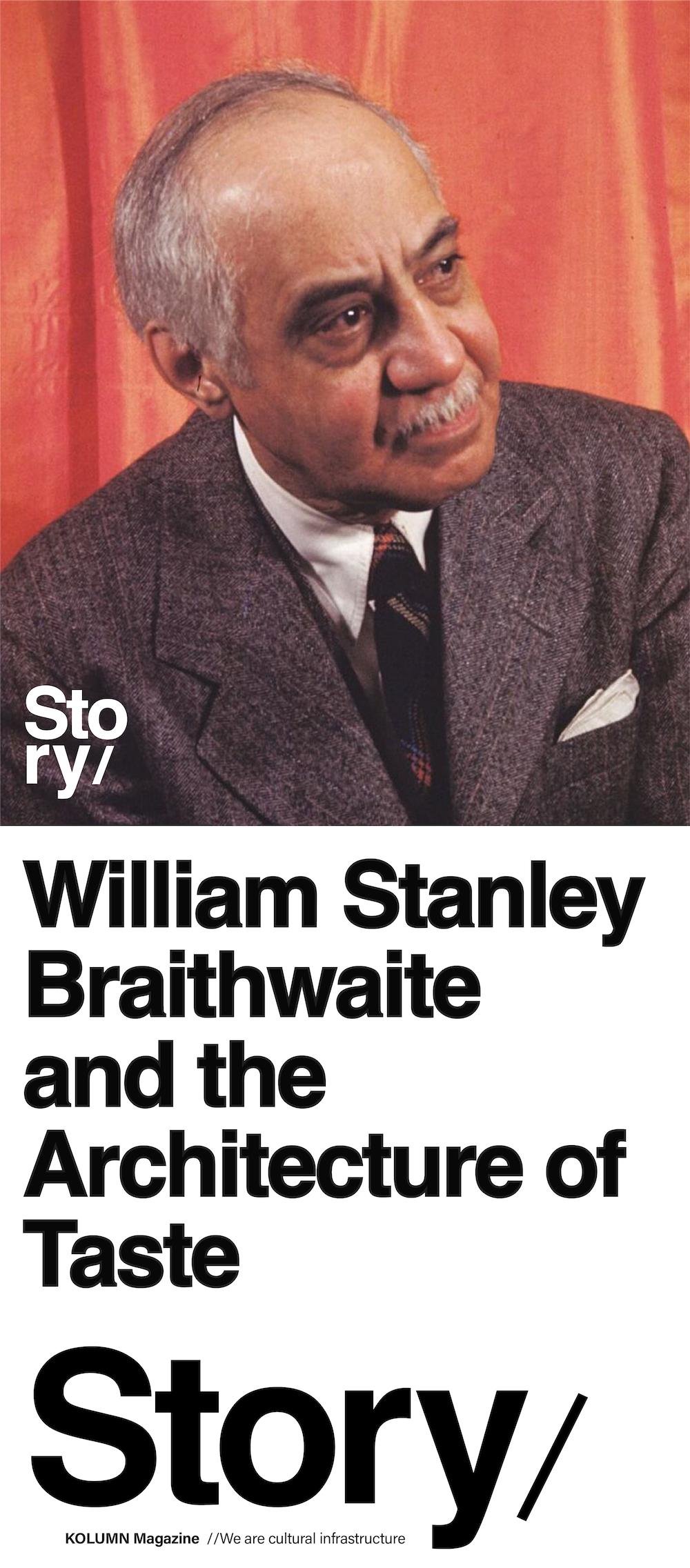
Braithwaite did not merely write poems. He helped decide which poems America would remember.
By KOLUMN Magazine
William Stanley Braithwaite’s life begins with a kind of American compression: race, class, migration, apprenticeship, grief, print, ambition. Born in Boston on December 6, 1878, Braithwaite came from a family history that crossed the British Caribbean, the post-slavery South, and the literary Northeast; the Poetry Foundation notes that his father was from the West Indies and that his maternal grandmother had been enslaved in North Carolina. childhood was not the standard myth of literary grooming. It was more abrupt, more American. His father educated him at home, then died when Braithwaite was still young, leaving the boy to leave formal schooling and work to help support the family.
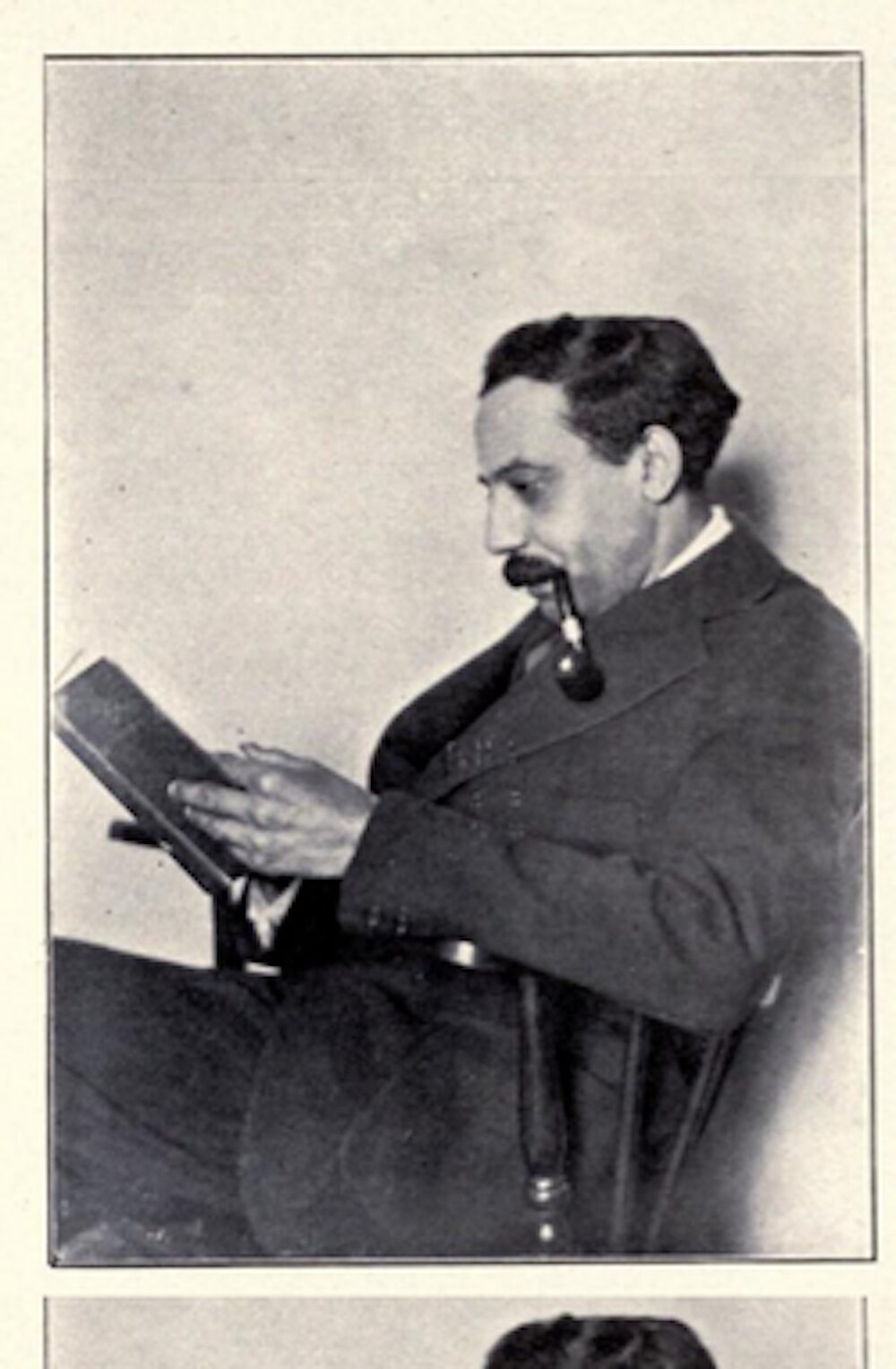
That interruption could have ended the story. Instead, it redirected it. By adolescence, Braithwaite entered the world of print as an apprentice typesetter, a trade that placed him inside the machinery of literature before the literary establishment welcomed him into its rooms. The Brinkerhoff Poetry Foundation describes him as “poet, critic, publisher, and editor,” a deceptively tidy list for a career that moved across nearly every gate in the literary ecosystem. He learned not only how words sounded, but how they were selected, arranged, printed, circulated, and legitimized.
A Printer’s Apprentice in the Republic of Letters
Braithwaite’s early working life matters because it complicates the usual romance of literary ascent. He did not arrive as a credentialed gentleman poet. He arrived through labor. As a young man, he worked in publishing, where exposure to books and typesetting gave him a practical education in literary form, taste, and production. Poets.org identifies him as a poet, literary critic, editor, and anthologist, born in Boston, who would later become one of the most visible poetry arbiters of the early twentieth century.
His first major book, Lyrics of Life and Love, appeared in 1904, when he was still in his twenties. The title sounds almost deliberately universal, and that universality would become both his aspiration and his controversy. Braithwaite admired lyric tradition, especially the English Romantics, and Britannica’s student biography notes that much of his verse reflected that influence. In an age when Black writers were often expected either to protest racial injustice explicitly or to reassure white audiences through respectability, Braithwaite pursued a different, sometimes uneasy route: aesthetic authority.
That choice has made him difficult to place. He was a Black literary figure who did not always write in the idiom later critics expected from Black modernism. He believed deeply in craft, lyricism, and what he saw as universal standards. But the “universal,” in America, has rarely been innocent. It has often meant the tastes of institutions that excluded Black people while claiming neutrality. Braithwaite worked inside that contradiction. He challenged exclusion by becoming indispensable to the literary mainstream, even as his own critical standards sometimes placed him at odds with more race-conscious currents of Black writing.
The Boston Evening Transcript and the Making of a Critic
In 1905, Braithwaite became a literary critic for the Boston Evening Transcript, a position that helped transform him from poet into national tastemaker. His annual surveys of poetry became the seedbed for the work that would define him: the Anthology of Magazine Verse series. The Brinkerhoff Poetry Foundation describes that series as “seminal,” noting that it highlighted poets working in both conventional and experimental modes and included Black poets within a broad national field.
This is where Braithwaite’s significance becomes larger than biography. Anthologies are not neutral containers. They are arguments. They tell readers what matters, what should be preserved, and who belongs in the conversation. Braithwaite’s anthologies gathered poems from magazines at a moment when periodicals were central to American literary culture. Craig S. Abbott’s study, “Magazine Verse and Modernism,” treats Braithwaite’s anthologies as important documents in the relationship between magazine culture and modernism.
An anthology is never just a book. It is a map of power, taste, access, and memory.
For a Black critic to occupy that position in the early twentieth century was extraordinary. The country that gave Braithwaite a column was still a country of lynching, disfranchisement, segregated schooling, racist science, and literary paternalism. Yet he became one of the people whose annual judgment could shape a poet’s visibility. His authority did not eliminate racism; it moved through it. That distinction is crucial. Braithwaite did not stand outside the racial order. He worked inside its institutions while subtly altering their boundaries.
The Anthologist as Cultural Infrastructure
KOLUMN has recently returned again and again to figures who preserved Black literary and intellectual life against erasure—writers like Arna Bontemps, Charles W. Chesnutt, Pauli Murray, and Harold Cruse. KOLUMN’s own description of its mission as “Cultural Infrastructure” is useful here because Braithwaite’s career was precisely infrastructural: he helped maintain the systems through which literature traveled.
Braithwaite was not simply producing poems for individual readers. He was organizing a field. His anthologies functioned as annual audits of American poetry, and their scale grew over time. Accounts of his career note that the Magazine Verse series expanded across the years and drew from a wide range of publications, including both commercial magazines and smaller literary venues. That kind of work is slow, editorial, cumulative. It does not always produce the glamorous image of the artist alone at the desk. It produces something more durable: a record.
The record matters because literary movements are often remembered through a handful of names. But movements are built by editors, publishers, reviewers, teachers, correspondents, librarians, printers, and anthologists. Braithwaite inhabited several of those roles at once. The New York Public Library’s finding aid for his papers identifies him through a long archival life—papers stretching from 1902 to 1976—and notes his 1918 Spingarn recognition for outstanding achievement in literature. Archives like that do not merely preserve a writer. They preserve the network around a writer.
Race, Restraint, and the Question of “Universality”
Any serious account of Braithwaite must confront the tension at the center of his reputation. He was a Black writer whose work did not always foreground Black political struggle, and some later critics have found his aesthetic conservatism limiting. Scholarship on the Harlem Renaissance and white critical tradition notes that Braithwaite was associated with a view of literature that often prized traditional aesthetic criteria over explicit racial protest.
That criticism is not without force. The early twentieth century was not an abstract literary moment. It was the age of Jim Crow consolidation and Black resistance. W. E. B. Du Bois’s famous insistence that “all art is propaganda” emerged from a world in which Black humanity itself was under public assault. Braithwaite’s preference for lyric universality could appear, to some, as retreat. The Lehigh digital anthology notes that he encouraged some emerging Black writers, including Georgia Douglas Johnson, toward lyricism and away from overt politics and race-consciousness, even while he supported writers who did not share his preferences.
But the fuller story is more complicated than a simple charge of evasion. Braithwaite’s anthologies included Black poets, and his public stature made him a bridge between Black literary production and national literary recognition. He was not outside Black literary history; he was one of its contested architects. His limitations were real, but so was his labor. His politics were not always where later readers might want them to be, but his editorial practice helped create openings for Black writers in spaces that had often been closed.
A Black Critic Before the Harlem Renaissance Became a Brand
Braithwaite is often discussed in relation to the Harlem Renaissance, but he was not merely a figure who appeared after the movement arrived. He helped prepare the ground on which its writers would be read. Britannica’s article on Du Bois and African American literature names Braithwaite as a widely read critic of poetry among the figures shaping Black literary development in the early twentieth century.
His relationship to the Harlem Renaissance was both influential and uneasy. The Lehigh digital anthology notes that in 1926 Braithwaite gave critical approval to the emerging Harlem Renaissance through an essay on the Black presence in American literature published in Alain Locke’s The New Negro. That point matters because Locke’s anthology became one of the defining documents of the movement, a text that helped frame the “New Negro” as both literary subject and political symbol.
Yet Braithwaite was not simply swept into the movement’s energy. Some scholars have argued that he was not fully aligned with its modernist or nationalist impulses. JSTOR’s listing for “Magazine Verse and Modernism” notes the view that Braithwaite was “not in tune with the New Negro movement.” That distance is revealing. Braithwaite belonged to an older formation of Black literary aspiration—one that often sought recognition through mastery of inherited forms. The Harlem Renaissance, by contrast, increasingly insisted that Black modernity had its own forms, rhythms, vernaculars, and insurgent claims.
Still, the younger writers knew his importance. Countée Cullen dedicated Caroling Dusk: An Anthology of Negro Poets to Braithwaite, and James Weldon Johnson acknowledged his influence. That is not a minor footnote. It means Braithwaite’s authority was visible to the very writers who would come to define the period in retrospect.
The Spingarn Medal and the Public Meaning of Recognition
In 1918, the NAACP awarded Braithwaite the Spingarn Medal for his achievements in literature. The award, established to honor outstanding achievement by African Americans, situated him among nationally recognized Black figures at a time when literary prestige carried political weight. Dartmouth’s archival biography also notes that Braithwaite received honorary degrees from Atlanta University and Talladega College.
The Spingarn Medal matters because it shows how Black institutions understood Braithwaite’s achievement. He was not simply a critic valued by white literary circles. He was also recognized by Black civic leadership as a figure whose literary work mattered to the race’s public standing. In a segregated society, recognition of Black excellence was never only symbolic. It was a counter-archive, a rebuttal to the machinery of denigration.
Braithwaite’s award also raises a question that still shadows Black literary life: What kinds of achievement become legible as racial achievement? Is a Black poet serving Black freedom only when writing directly about race? Or can Black achievement also consist of entering a field that tried to exclude Black authority and reshaping its standards from within? Braithwaite’s life does not answer the question cleanly. It forces the question to remain open.
Publishing, Periodicals, and the Business of Poetry
Braithwaite also tried to build publishing institutions, not just participate in them. He launched the Poetry Journal in 1912 and later the Poetry Review of America in 1916, though both ventures proved short-lived. In 1921, he founded the B. J. Brimmer publishing company, which issued poetry, nonfiction, and anthologies.
These ventures reveal another side of his significance: Braithwaite understood that taste required infrastructure. Reviews could praise poets, but publishing houses made them available. Anthologies could preserve reputations, but periodicals created literary conversation in real time. The marketplace for poetry has rarely been easy, and the difficulty was sharper for a Black editor working in a field shaped by both aesthetic hierarchy and racial exclusion.
That practical awareness connects him to a larger Black print tradition. From nineteenth-century Black newspapers to Harlem Renaissance magazines to later independent presses, Black literary history has depended on people willing to build platforms when established institutions offered only conditional entry. Braithwaite’s style may have been genteel, but his institutional imagination was serious. He knew that poems needed channels.
Atlanta University and the Teacher Without the Usual Credentials
In 1935, Braithwaite accepted a teaching position at Atlanta University, where he taught creative literature for a decade before retiring in 1945. That appointment placed him inside one of the most important Black educational institutions in the country. It also turned the self-educated printer’s apprentice into a professor.
The irony is instructive. Braithwaite’s formal schooling had been interrupted by family necessity, yet he became a teacher of literature. His authority did not come from degrees in the conventional sense; it came from decades of reading, editing, reviewing, publishing, and corresponding. Dartmouth’s archival entry notes both his Atlanta University years and the honorary degrees he received, suggesting the belated institutional recognition of a man whose education had been largely self-made.
At Atlanta University, Braithwaite entered the world of historically Black higher education at a moment when Black colleges served as both classrooms and cultural command centers. He taught creative writing before creative writing had become the professionalized university industry it would later become. His presence there linked magazine culture, Black institutional life, and literary mentorship.
Harlem, Late Life, and the Long Afterlife of an Editor
After leaving Atlanta, Braithwaite moved to Harlem, where he lived until his death in 1962. The move is almost too symbolically neat: the older Boston critic, who had helped prepare the literary terrain before and during the Harlem Renaissance, spent his final years in the neighborhood most associated with that movement’s mythic geography.
He died on June 8, 1962, at age 83. By then, American poetry had changed dramatically. Modernism had altered the lyric field. The Harlem Renaissance had become history. The Black Arts Movement was on the horizon. The genteel standards Braithwaite prized no longer held unquestioned authority. Yet his work remained embedded in the record of American poetry because he had helped make that record.
This is often how editorial power survives: not through fame equal to the writers being edited, but through the architecture left behind. Braithwaite’s name may not circulate today with the familiarity of Langston Hughes, Claude McKay, Countee Cullen, or James Weldon Johnson. But those more familiar names moved through a literary ecosystem that men like Braithwaite helped shape. To recover him is not to displace them. It is to understand the machinery that helped make literary memory possible.
Why Braithwaite Still Matters
Braithwaite matters now because the questions around his life remain alive. Who gets to define literary excellence? How does race shape supposedly neutral standards? What happens when Black writers seek entry into institutions that were not built for them? When is universality a genuine artistic aspiration, and when is it a mask for exclusion? How do we judge a Black critic whose work opened doors even when his aesthetic politics sometimes narrowed the terms of entry?
His career also reminds us that Black literary history is not only the history of defiant manifestos and breakthrough masterpieces. It is also the history of painstaking editorial work. Braithwaite read widely. He selected. He introduced. He indexed. He corresponded. He taught. He published. He turned the scattered production of magazine poetry into a visible annual record. In doing so, he became one of the quiet engineers of American literary culture.
KOLUMN’s broader archive of Black cultural figures often returns to the same principle: memory is not self-maintaining. KOLUMN’s recent writing on Arna Bontemps frames preservation as a central act of Black literary survival, and that frame helps clarify Braithwaite’s importance. Bontemps preserved Black literary memory through archives, libraries, and children’s literature. Braithwaite preserved a different but related field: the annual pulse of American poetry, including Black poets whose work might otherwise have passed through magazines and disappeared.
The final measure of Braithwaite’s life may be this: he was not always the poet future generations most needed, but he was often the editor they could not afford to lose. His significance lies in the space between creation and preservation, between ambition and gatekeeping, between Black excellence and the institutions that tried to decide what excellence meant. He lived inside that tension and left behind a record capacious enough to keep arguing with us.
William Stanley Braithwaite should be remembered not as a footnote to the Harlem Renaissance or merely as a respectable Boston critic, but as a builder of literary infrastructure. He made anthologies into instruments of canon formation. He made criticism into access. He made the annual survey a cultural ledger. And in a country where Black intellectual labor has too often been borrowed, minimized, or erased, he made himself difficult to ignore.
More great stories
Afro Sheen, Wall Street, and the Architecture of Black Possibility
July 6, 2026
No Comments
The Fire Inside the Fourth
July 5, 2026
No Comments