



By KOLUMN Magazine
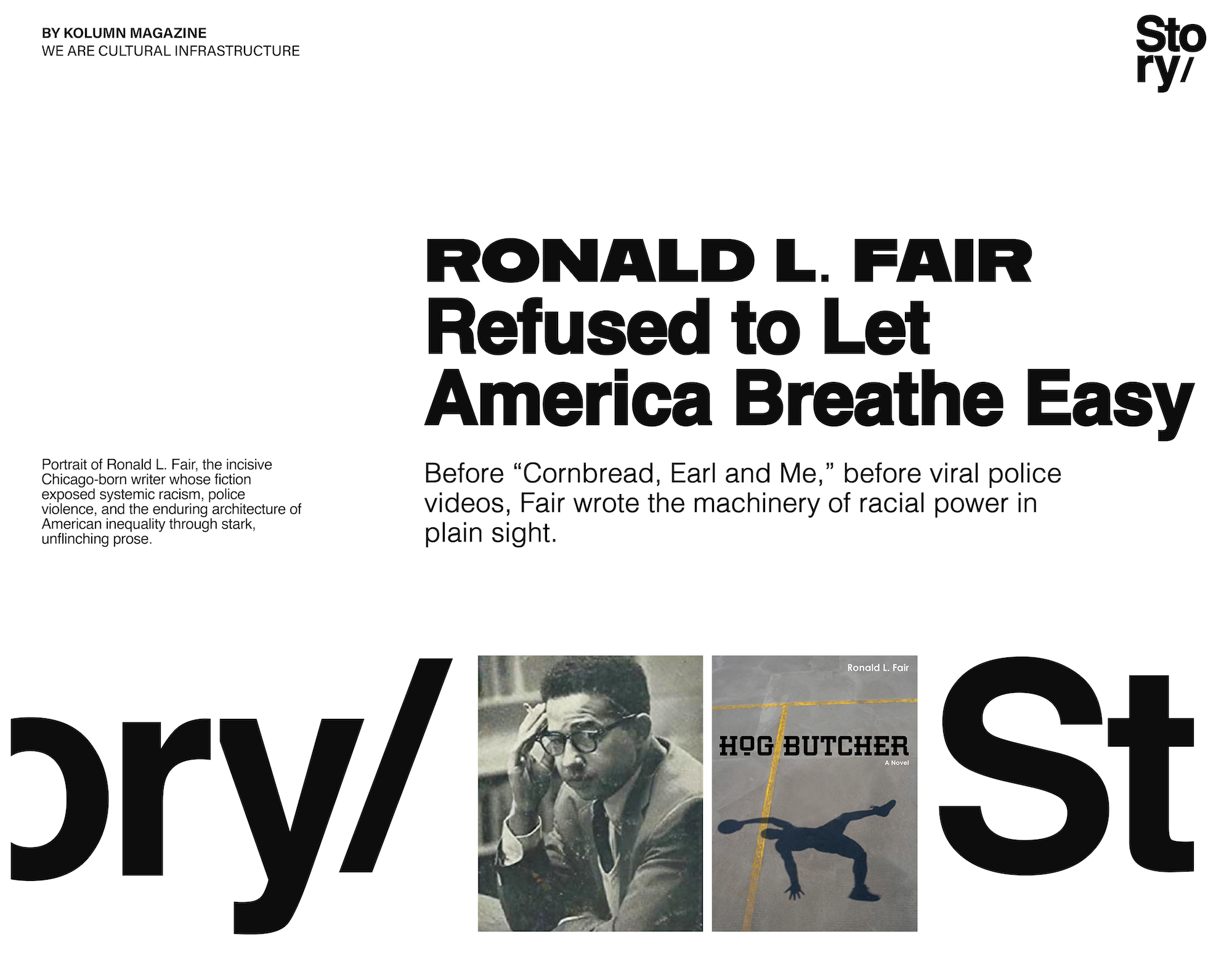
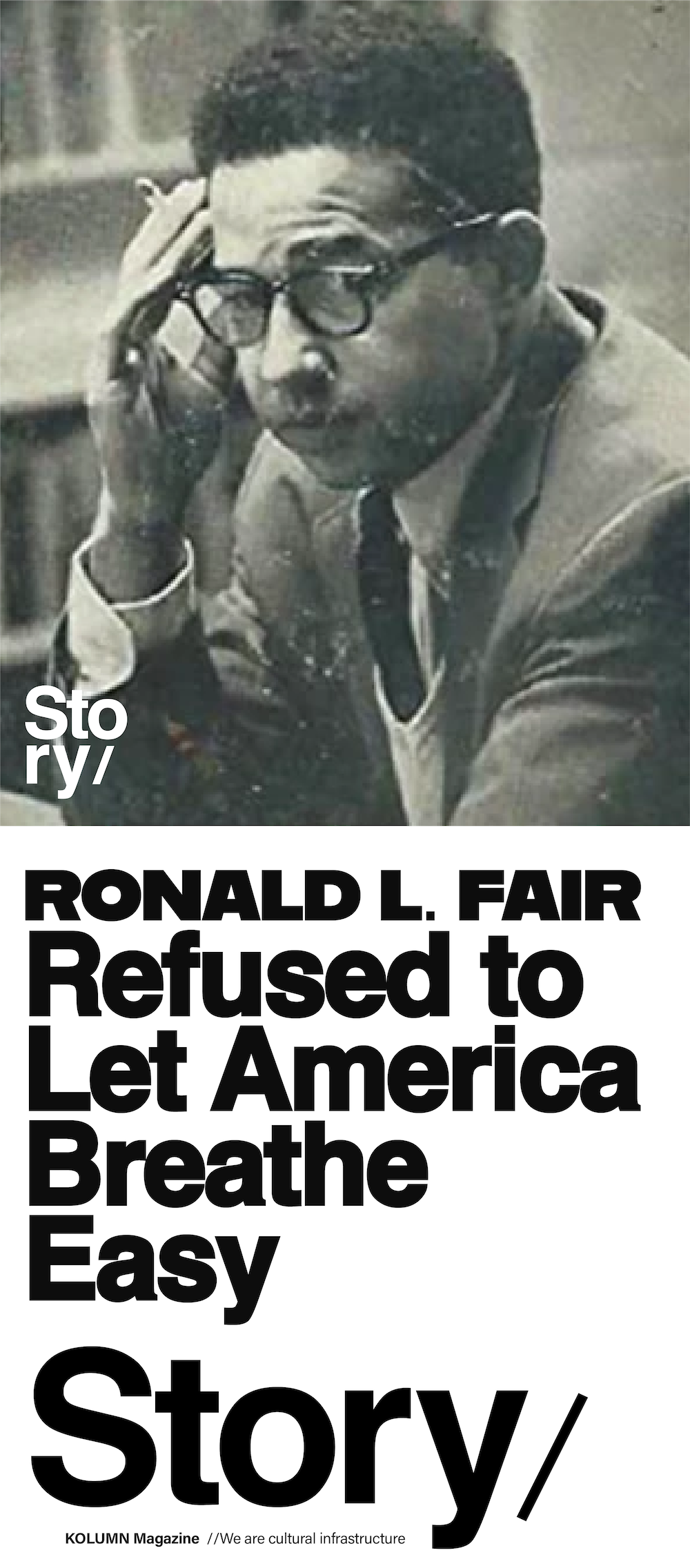
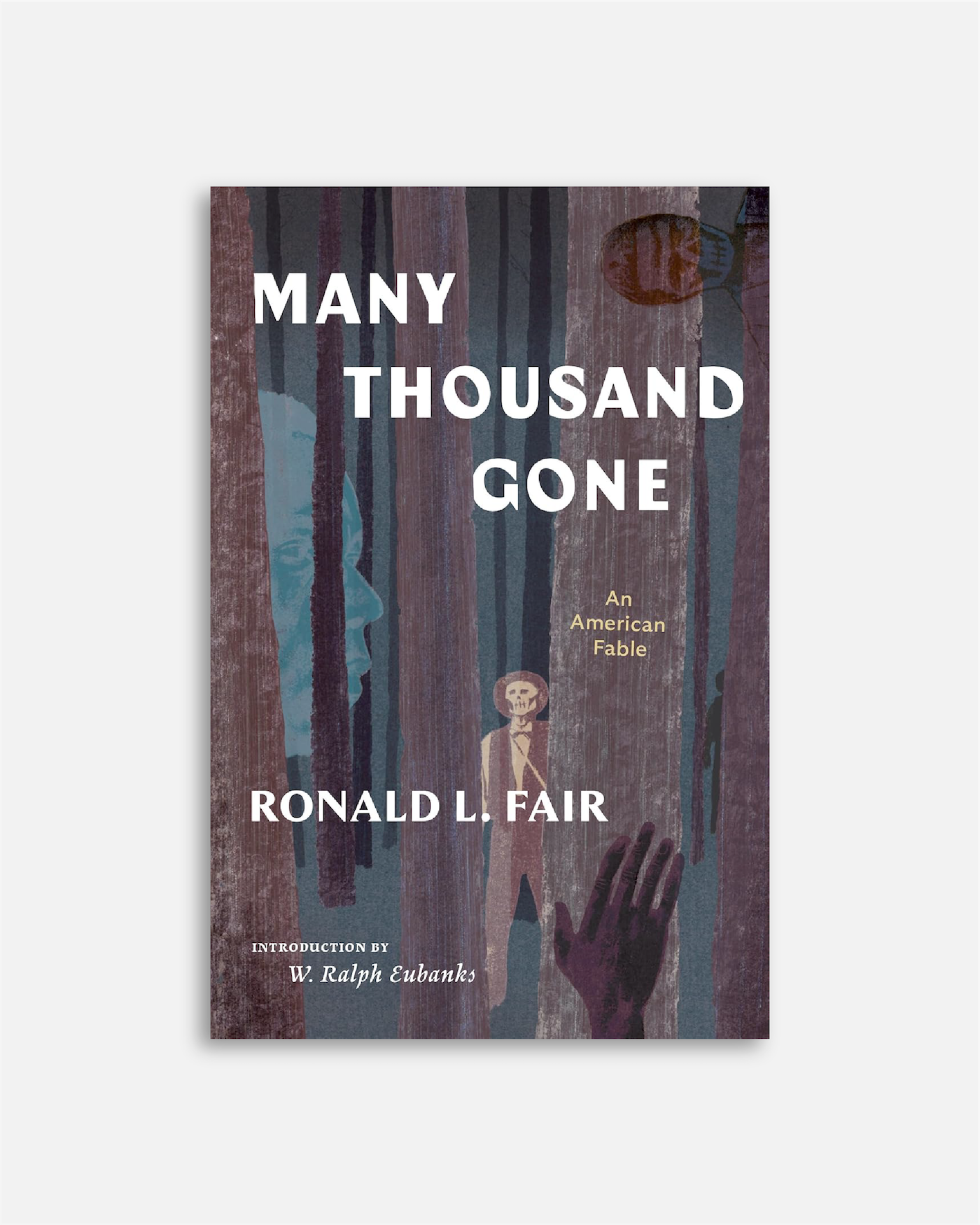
Ronald Lymond Fair belongs to the category of Black American writers whose absence from the popular canon says nearly as much about the country as their books do. He was born in Chicago in 1932, served as a hospital corpsman in the U.S. Navy, studied at the Stenotype School of Chicago, worked for years as a court reporter, and then turned that listening—legal, civic, racial, intimate—into fiction that exposed the quiet architecture of American violence. The Library of America’s 2023 reissue of Many Thousand Gone: An American Fable describes Fair’s debut as a Civil Rights-era allegory about a fictional Mississippi county where slavery never truly ended, a premise that reads less like speculative invention than moral diagnosis.
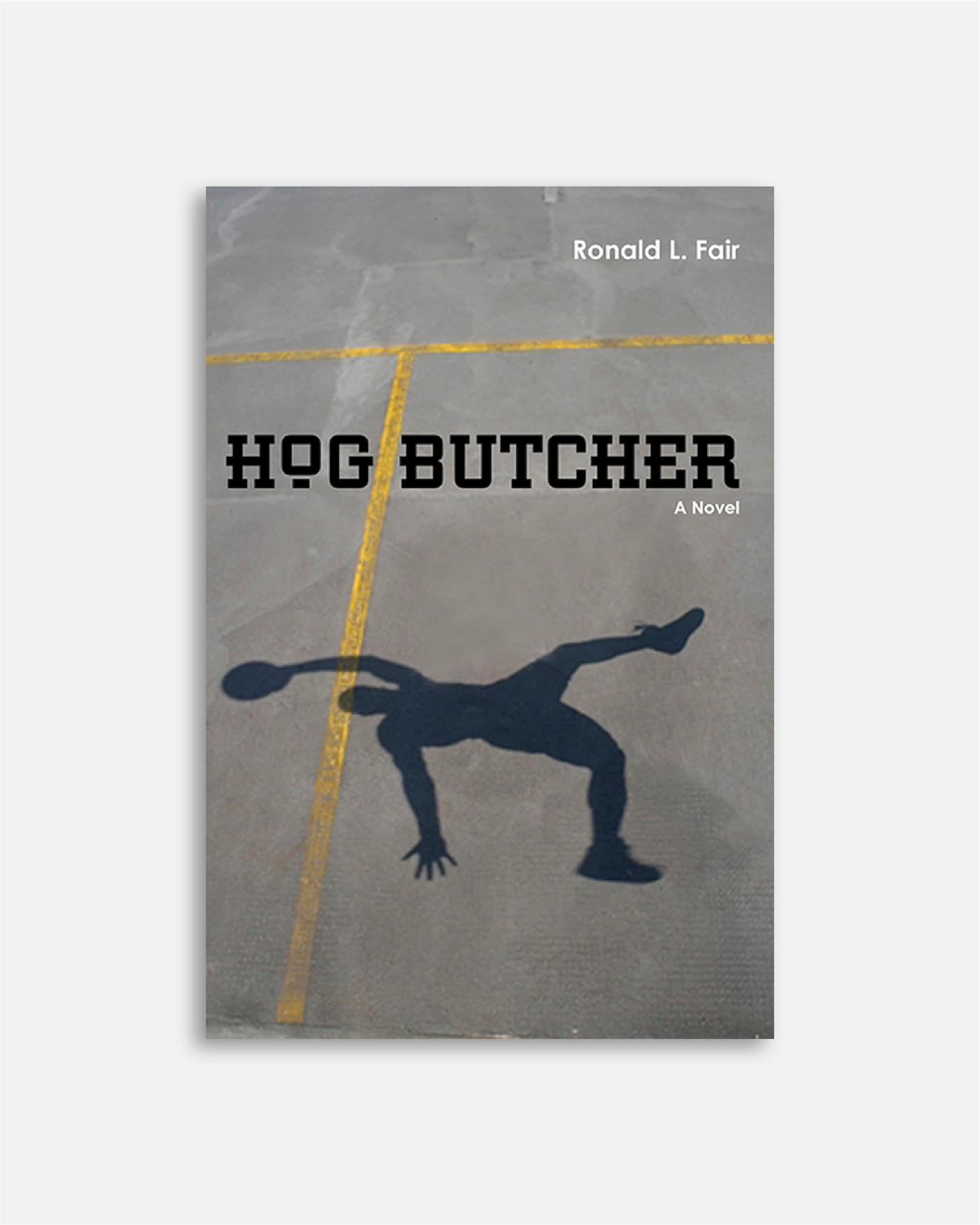
Fair’s best-known novel, Hog Butcher, published in 1966, took that same diagnostic force north. It told the story of Nathaniel “Cornbread” Hamilton, a gifted Black high school basketball player on the South Side of Chicago, shot by police after being mistaken for a burglary suspect. The novel later became the 1975 film Cornbread, Earl and Me, featuring a young Laurence Fishburne in his film debut, but the book remains darker, stranger, more structurally ambitious than the movie that carried its story into Black popular memory.
The Chicago That Made Him
Fair’s Chicago was not merely a setting. It was an inheritance. His parents came from Mississippi, part of the larger Black migration out of the South and into northern cities that transformed the country between the 1910s and 1970. The Library of Congress describes the Great Migration as one of the largest internal migrations in U.S. history, driven by Jim Crow, racial violence, and the search for work in cities such as Chicago, Detroit, New York, Philadelphia, Los Angeles, and Baltimore.
Chicago promised escape, but it delivered another syllabus in containment. Migrants who fled plantation logic found segregation in housing, schools, labor, policing, and public life. That contradiction sits at the center of Fair’s imagination. As CrimeReads notes, Fair knew “the levels of race inequality” in Chicago through housing, schooling, banking, salaries, and policing, and Hog Butcher converted that intimate knowledge into a naturalistic portrait of a city where Black life could be misread, managed, and eliminated by authority.
Fair’s route into literature was practical before it was mythic. His work as a court reporter mattered. He understood official language, evasive testimony, bureaucratic ritual, and the way institutions launder violence through procedure. In Hog Butcher, the killing is not the end of the story; it is the beginning of the system’s defense of itself. The police, courts, civic leaders, welfare officials, and frightened adults all become part of the machinery pressing a child witness toward silence.
The American Fable
Fair’s first novel, Many Thousand Gone, appeared in 1965, at the crest of the Civil Rights Movement. Its premise is brutally simple: in Jacobs County, Mississippi, slavery has survived into the 1960s through terror, local law enforcement, sexual exploitation, and regional complicity. The Library of America’s description emphasizes that Black people attempting to flee are hunted down and killed, and that Black women in the county have been made sexually available to white men for generations.
That is not subtle fiction. It is allegory sharpened into accusation. Fair’s innovation was to make the metaphor plain: Jim Crow was not slavery’s opposite but one of its afterlives. His fictional county did not ask readers whether slavery had legally ended. It asked whether American power had ever surrendered the habits slavery taught it.
The novel’s 2023 republication by the Library of America is itself a form of correction. Fair had become, for many readers, a name attached to a movie adaptation or a footnote in Black Chicago letters. The reissue restored Many Thousand Gone as a work of Civil Rights-era literary insurgency, with W. Ralph Eubanks introducing Fair’s “extended metaphor for Black life under Jim Crow.”
Hog Butcher and the Lie of Innocent Mistakes
If Many Thousand Gone exposed slavery’s unfinished business, Hog Butcher made the northern city answer for itself. The plot is spare: Cornbread, a beloved Black teenager headed to college on a basketball scholarship, runs through the rain with orange soda and is shot by police who mistake him for someone else. Kirkus, reviewing the novel in 1966, called Fair “a very nice writer” who handled the story with “eloquent economy,” while noting that the killing leads into inquests where old pressures silence what really happened.
The force of the novel lies in its refusal to isolate the shooting as tragedy alone. Cornbread’s death reveals the whole city. Fair moves among children, mothers, police officers, judges, lawyers, neighborhood people, and official functionaries. Cecil Brown, writing in the 2014 Northwestern University Press edition, argued that Fair’s impressionistic style and interior monologue placed Hog Butcher beside Richard Wright’s Lawd Today! as a milestone in rendering Black consciousness on the page.
That formal choice matters. Fair does not simply tell readers that power lies. He lets them hear the interior weather of those trapped inside the lie. The result is a novel about police violence, yes, but also about narrative violence: who gets believed, who gets rewritten, who gets turned from victim into suspect, who is forced to prove the obvious.
KOLUMN has returned often to this terrain: the place where Black literature becomes an instrument for reading power. In its recent essay on Richard Wright’s Native Son, KOLUMN described Wright’s novel as a work that forced America to confront race, fear, housing, policing, and social containment rather than sentimentalize them. Fair belongs in that same argument, but with a crucial difference. Wright made the city a pressure chamber that helped produce catastrophe. Fair made the system itself the protagonist’s killer.
The Child Witness
The moral center of Hog Butcher is not Cornbread alone. It is Wilford, the child who sees what happened and is pressured to betray his own eyes. Kathleen Rooney, writing for the Chicago Literary Hall of Fame, praised Fair’s compact omniscience and argued that Hog Butcher deserves to sit beside To Kill a Mockingbird on syllabi precisely because it rejects white-savior exceptionalism and shows power trying to preserve itself.
That comparison is useful because it clarifies what Fair was not doing. He was not writing courtroom uplift. He was not giving America a benevolent white conscience to admire. He was not designing innocence as a refuge. He was writing a world in which a Black child’s truth threatens civic order because civic order has already organized itself around a lie.
In this sense, Hog Butcher feels unnervingly contemporary. The novel predates the modern archive of police videos, but it understands the social choreography that follows a killing: the official account, the intimidation of witnesses, the demand for calm, the conversion of grief into disorder, the burden placed on Black communities to prove harm that the state insists was procedure.
From Page to Film
The 1975 adaptation, Cornbread, Earl and Me, carried Fair’s story into a different cultural register. Released during the Blaxploitation era, the film starred Laurence Fishburne as Wilford, NBA player Keith Wilkes as Cornbread, Rosalind Cash as Wilford’s mother, and Bernie Casey as one of the police officers. CrimeReads notes that the film told the story more tightly from Wilford’s point of view, while Fair’s novel used third-person omniscience to show how the killing affected multiple sides of the city.
The adaptation helped preserve the story, but it also simplified Fair’s architecture. Film made Cornbread’s death visible. The novel made the system audible. That difference is essential to Fair’s significance. He was not only interested in the spectacular moment of violence. He was interested in the paperwork, fear, compromise, and social exhaustion that follow it.
Exile and Disappearance
Fair published World of Nothing: Two Novellas in 1970 and the autobiographical novel We Can’t Breathe in 1972. Then his public literary career narrowed, even as his ambitions did not. The Chicago Literary Hall of Fame notes that Fair moved to Finland in 1977, turned increasingly toward sculpture, and died there in 2018 in a death that appears to have gone largely unreported in American newspapers.
Cecil Brown’s remembrance for The Common Reader helped bring Fair back into view. Brown wrote that in the early 1970s critic Shane Stevens called Fair “one of the two best black writers in the country,” yet Fair’s promise never fully reached the recognition it deserved.
That obscurity is not incidental. It is part of the story. Black literary history is full of writers whose work arrived too early for the institutions that should have sustained it, or too uncompromising for markets that preferred racial pain translated into reassurance. Fair’s later remark to Brown that “being a Black writer was a dead end,” reported by CrimeReads, is devastating because it sounds less like bitterness than evidence.
Why Ronald L. Fair Matters Now
Fair matters because he understood that racism was not merely attitude but administration. His fiction is about sheriffs, courts, police departments, schools, neighborhoods, newspapers, and families under pressure. He wrote as if the entire society were a witness stand.
He also matters because his work bridges geographies too often separated in American memory. Many Thousand Gone says the South never fully abandoned slavery’s logic. Hog Butcher says the North absorbed and modernized that logic. Together, the novels demolish one of America’s favorite evasions: that racial terror belonged to a region, not a nation.
His timing was extraordinary. Many Thousand Gone arrived the same year as the Voting Rights Act. Hog Butcher arrived in 1966, the year the Black Panther Party was founded in Oakland after years of anger over police violence and unmet community needs—a lineage KOLUMN recently explored in its essay on Bobby Seale. (kolumnmagazine.com) Fair was writing inside that historical combustion, but his fiction did not become trapped in its moment. It kept moving forward, waiting for the country to catch up to what it had already shown.
The phrase We Can’t Breathe, the title of Fair’s 1972 autobiographical novel, now lands with chilling retrospective force. Fair could not have known how the language of breath would become central to twenty-first-century protests against police violence. But he knew the condition. He knew constriction as politics, as atmosphere, as literary subject.
The Canon He Deserved
To recover Fair is not simply to add another neglected name to a reading list. It is to alter the map. Black Chicago literature cannot be told only through Wright, Gwendolyn Brooks, Lorraine Hansberry, Frank London Brown, or later generations. Fair belongs in that constellation because he gave the city one of its most precise moral x-rays.
He also belongs in a broader KOLUMN lineage of writers who treated Black cultural memory as infrastructure. Recent KOLUMN essays on Arna Bontemps and David Bradley have asked how Black literature preserves what official memory neglects or buries. Fair’s work answers with severity: literature preserves not by comforting the reader, but by refusing to let the record close.
Ronald L. Fair died far from Chicago, but Chicago never left his books. Neither did Mississippi. Neither did the courtroom. Neither did the child witness. His fiction remains a warning against the national habit of calling violence an accident when the system is working exactly as designed.
Fair did not write to decorate American letters. He wrote to indict the country’s alibis. That may be why his books fell quiet for so long. It is also why they are still breathing.