



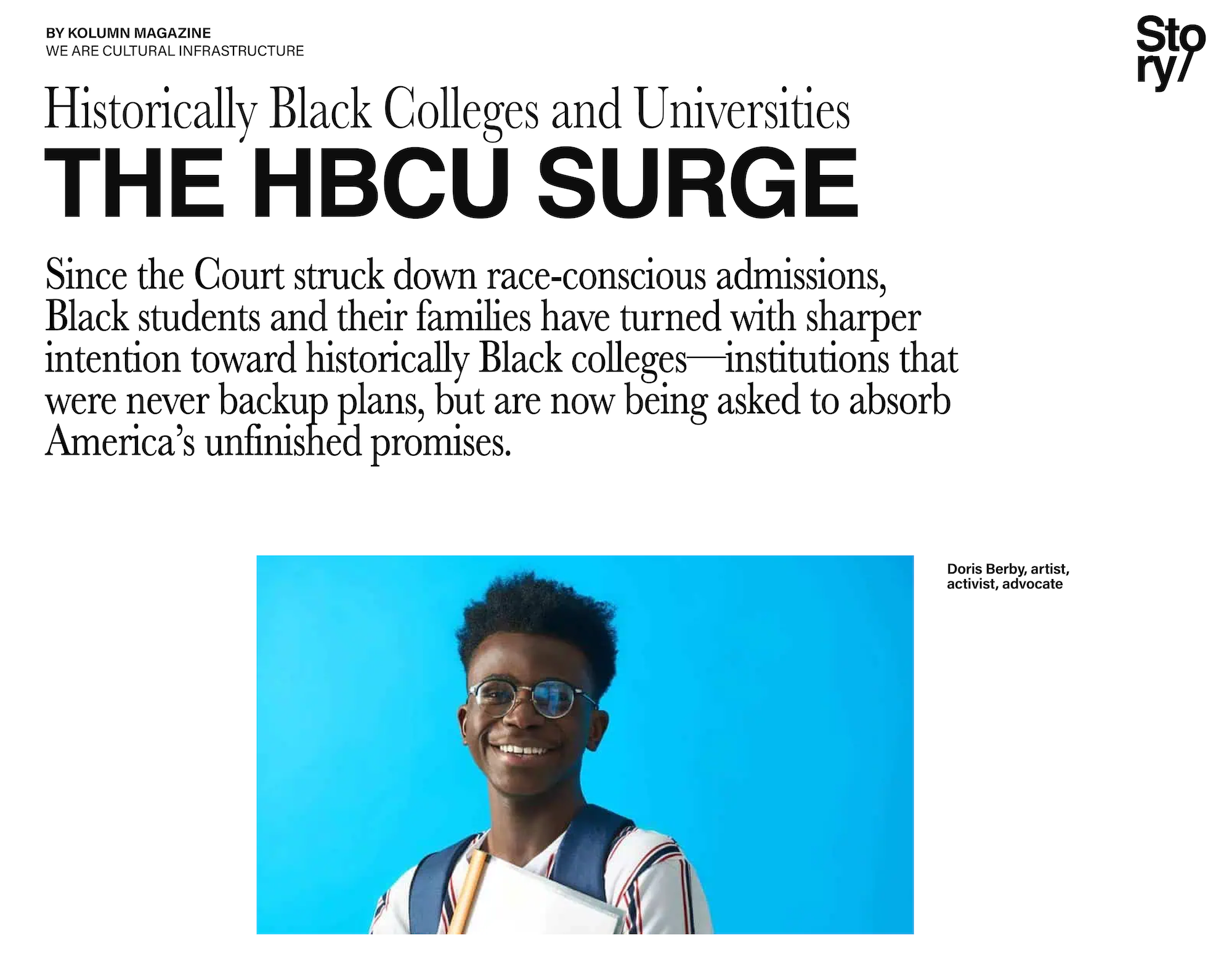
The Court may have ruled on admissions doctrine, but Black students answered with a broader question: Where, exactly, are we meant to belong?
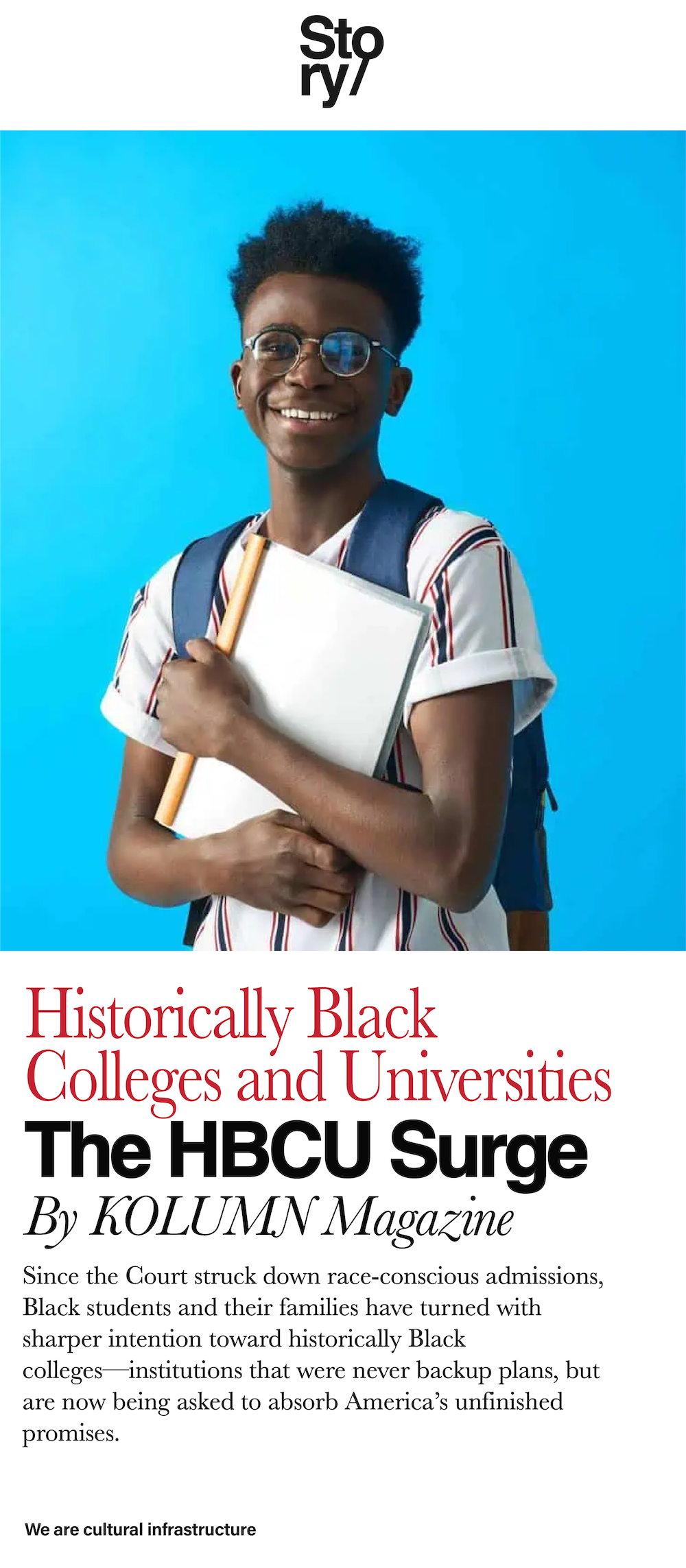
The Court may have ruled on admissions doctrine, but Black students answered with a broader question: Where, exactly, are we meant to belong?
By KOLUMN Magazine
The Supreme Court’s June 29, 2023 decision in Students for Fair Admissions v. Harvard and its companion case against the University of North Carolina did more than rewrite admissions law. It reordered the emotional geography of higher education. In the majority opinion, the Court held that the race-conscious admissions systems used by Harvard and UNC violated constitutional and statutory limits, even as it left open the possibility that applicants could still discuss how race shaped their lives in essays and other materials. In the narrow legal sense, the ruling targeted selective admissions regimes. In the wider American sense, it sent a message to Black students and Black families that the terms of belonging at elite institutions were once again unstable, contested, and subject to rollback.

What followed was not a simple migration, not a clean transfer of applicants from predominantly white institutions to Historically Black Colleges and Universities (HBCUs), and certainly not a neat morality tale in which one sector’s loss automatically became another’s gain. But there was a shift, and it was real. Reporting from Inside Higher Ed, Word In Black, Howard Magazine, and institutional statements from campuses such as North Carolina A&T, Hampton University, and Bethune-Cookman University shows that many HBCUs experienced meaningful growth in applications, freshman classes, or total enrollment after the ruling. The numbers differ by campus. The causes do, too. But the pattern is broad enough to call a trend and complicated enough to resist cliché.
That distinction matters. HBCUs are too often written about in one of two unserious registers: either as sacred relics of Black history or as redemption arcs for a nation that never invested in them properly to begin with. The current enrollment story requires a sharper lens. These institutions were not standing still, waiting for white America to fumble diversity so they could inherit attention. They had been spending years building national brands, upgrading recruitment, expanding digital outreach, strengthening honors programs, raising philanthropic dollars, and reminding Black students that an HBCU experience was not a consolation prize but an affirmative choice. The Court’s ruling did not invent that appeal. It accelerated public recognition of it.
KOLUMN has already spent time tracing the broader Black higher-education ecosystem—through institutions like the United Negro College Fund and through campus formations such as Black Student Unions. This moment belongs in that same lineage. The post-2023 HBCU enrollment rise is not just an admissions story. It is a story about institutional trust, Black family strategy, selective exclusion, cultural belonging, and the long political afterlife of a country that still treats Black educational mobility as negotiable. That is why this trend matters beyond recruitment offices and freshman headcounts. It reveals where Black students believe they will be read accurately, challenged seriously, and allowed to become large versions of themselves.
The Numbers Are Real, but They Are Not Simple
Any honest accounting has to begin with a warning: application spikes and enrollment increases are not interchangeable. One of the most useful correctives comes from Common App, whose June 2024 report found no major national break in applicant behavior in the first full admissions cycle after the ruling. Black applicants on the platform submitted 9 percent more applications from 2022–23 to 2023–24, but that growth was broadly in line with recent patterns rather than evidence of an immediate, singular shock. In other words, the nationwide application market did not suddenly transform overnight. That matters because it prevents lazy claims that every HBCU gain can be traced directly and exclusively to the Court.
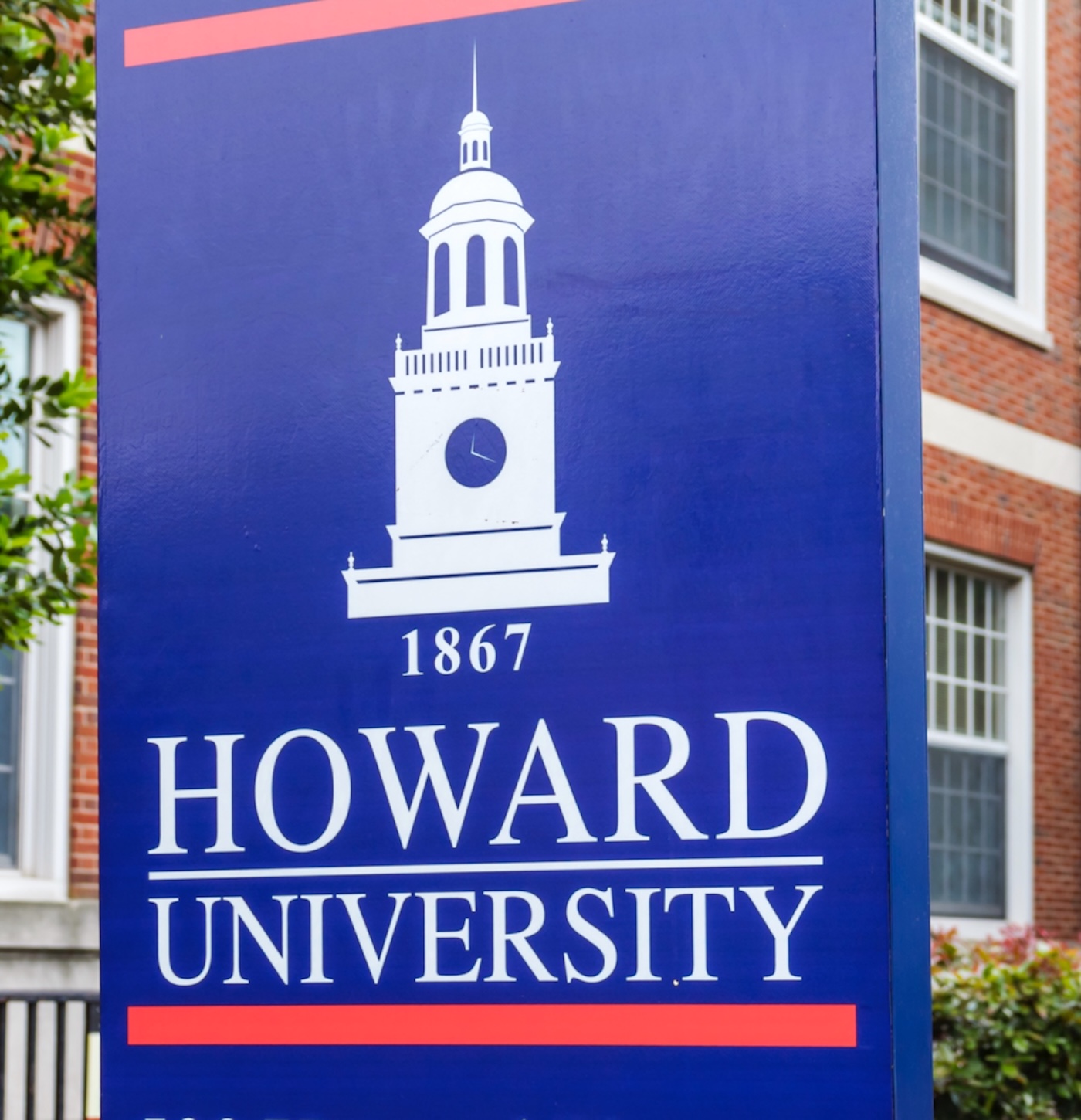
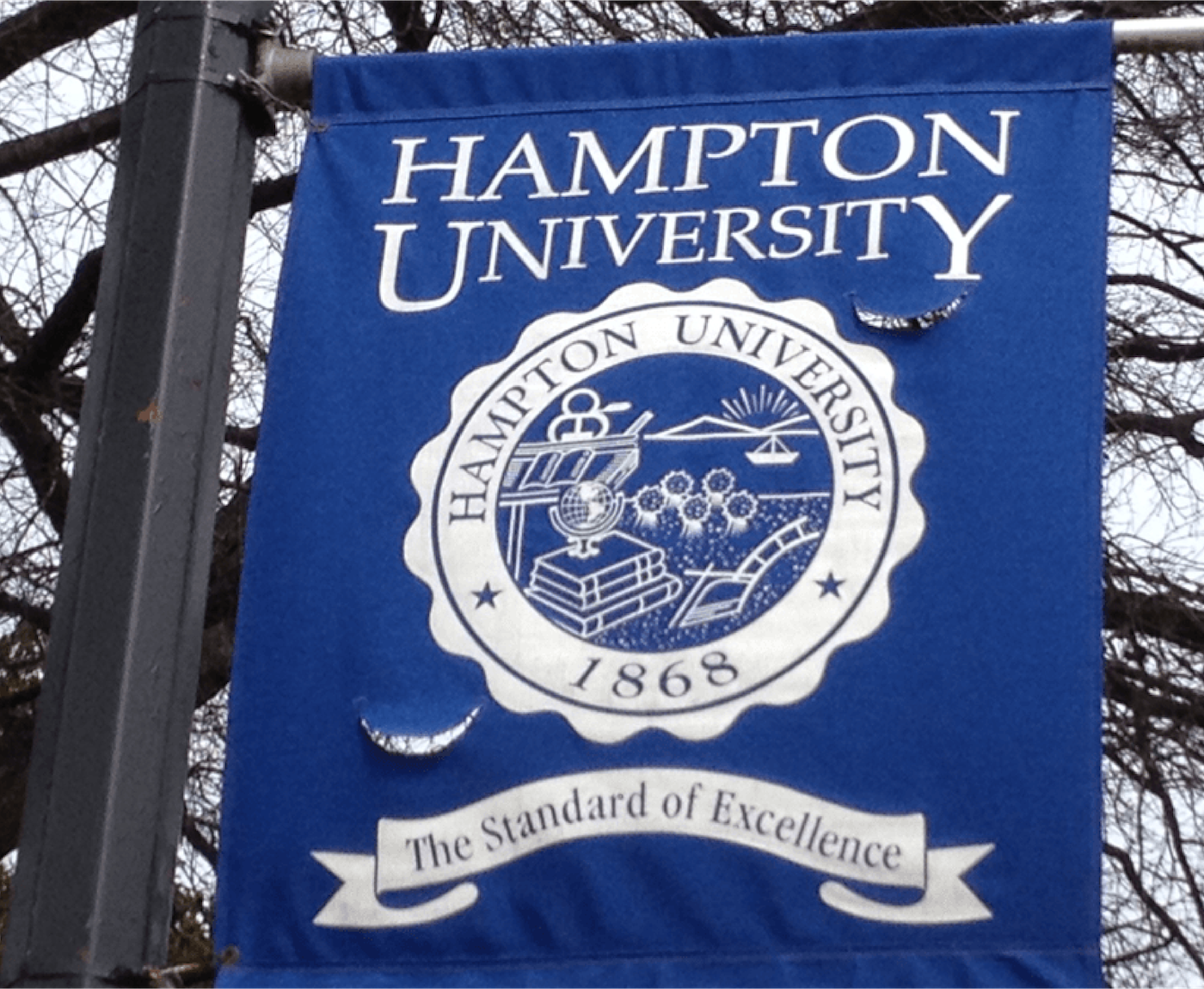
And yet, even with that caution in place, institution-level data makes clear that a cluster of HBCUs saw extraordinary momentum. Howard Magazine reported that Howard received 36,393 applications for fall 2024, a historic record and a 79 percent jump since fall 2022; the university’s new student enrollment rose to approximately 2,796, up 23 percent year over year. North Carolina A&T announced in September 2024 that total enrollment had climbed to 14,311 on the strength of more than 47,000 undergraduate and graduate applications, with 3,432 new undergraduates. Hampton University said it had received more than 17,000 applications for 2024–25, up from 13,000-plus the prior year. Bethune-Cookman University reported a 24.13 percent overall enrollment increase for fall 2024, reaching 3,123 students, including 1,150 freshmen.
Inside Higher Ed added other examples that help show the breadth of the movement. Hampton’s rise from about 13,000 to 17,000 applications for the Class of 2028 was one. Morehouse College, the publication reported, moved from roughly 6,000 applications to more than 8,000, a 34 percent increase. That same article described an environment in which HBCU leaders were seeing not only more applications but stronger student interest overall, even as they worried whether their campuses had the beds, aid, faculty bandwidth, and administrative infrastructure to absorb the demand responsibly.
National enrollment estimates suggest the same thing from a different angle. Inside Higher Ed, citing the National Student Clearinghouse Research Center’s fall 2024 estimates, reported that HBCU enrollment grew by 3.8 percent. The Clearinghouse’s methodological notes also show that for fall 2024 it treated HBCU results as a distinct category based on a panel of institutions submitting data across 2022 through 2024, reflecting the sector’s analytical importance even amid coverage constraints. Word In Black likewise described bar-chart evidence from the Clearinghouse showing HBCU enrollment growth after the ruling. The exact percentages deserve careful handling, but the directional truth is hard to miss: the sector moved upward at a moment when the national conversation expected Black access to contract.
Still, the cleanest sentence is not “affirmative action ended, so students fled to HBCUs.” The cleaner sentence is this: after the Court destabilized one path to selective higher education, more students intensified their interest in institutions that had always offered something different—something many Black families now regarded not merely as culturally rich, but strategically safer.
What HBCUs Were Offering That the Market Could Not
The enrollment story makes more sense when you stop thinking only in terms of admissions mechanics and start thinking about institutional feeling. What many HBCUs offer is not simply representation as an abstract demographic good. They offer an atmosphere in which Blackness is not a supplemental diversity objective but part of the institutional grammar. That can sound sentimental until you read how students and administrators themselves describe the draw.
For many students, the HBCU question was never, “Can I get in?” It was, “Where will I be seen in full?”
At Howard, Howard Magazine framed the university’s largest incoming class in its history as a “talent stampede,” and the story emphasized what students often say more plainly than higher-ed consultants do: the attraction is connection, the relief of not having to miniaturize yourself, the possibility of being academically ambitious without being racially isolated. Howard’s appeal is not reducible to prestige, though Howard has prestige in abundance. It is also the promise that one can arrive on campus and be intellectually stretched without being treated as evidence in someone else’s diversity experiment.
That logic extends well beyond Howard. North Carolina A&T explicitly tied its record enrollment to a mix of academic quality, affordability, and campus culture. Hampton’s leadership described strong applications and enrollment growth as a function of the university’s “elevated student experience.” Word In Black quoted Angela Nixon Boyd, Hampton’s associate vice president of enrollment management and dean of admission, underscoring how the Court’s decision sharpened Black students’ attention to campuses where they could still imagine themselves thriving. Those are different institutional messages, but they point toward the same conclusion: HBCUs were benefiting from a convergence of symbolism and substance.
This is where too much mainstream reporting has historically flattened the story. HBCUs are not attractive merely because white institutions became more hostile or less accessible. They are attractive because they produce forms of educational affirmation that many selective institutions have never fully understood. That includes mentorship, historical literacy, social confidence, peer recognition, and a sense that Black excellence is ordinary enough not to require spectacle. UNCF makes the case in economic language—annual national impact, employment creation, lifetime earnings—but the social meaning is just as important. These campuses do not simply enroll students. They confer interpretive shelter while demanding performance.
To say that now is not to romanticize the sector. HBCUs vary widely in selectivity, endowment strength, housing stock, administrative capacity, graduation rates, and fiscal stability. Some are flush with momentum; others are still recovering from years of chronic underinvestment or internal turmoil. But the post-ban rise in interest reveals a larger point: when the legitimacy of Black access at elite white campuses is publicly contested, Black families often look toward institutions whose missions were built precisely to survive that kind of contest.
The Other Side of the Ledger: Black Enrollment at Selective PWIs
The HBCU increase cannot be understood apart from what happened elsewhere. At many of the nation’s most selective colleges, the first admissions cycles after the ruling brought visible drops in Black enrollment. The Washington Post reported that UNC-Chapel Hill saw the share of Black students in its incoming class decline after the ruling. Days later, the same newspaper reported that Harvard’s Black student enrollment had also fallen in the first class admitted after the Court barred affirmative action. By October 2025, an Associated Press analysis of 20 selective institutions found that Black enrollment had dropped at nearly all of them compared with 2023, with some schools posting especially steep declines.
Those declines do not automatically convert one-for-one into HBCU enrollment gains. Some students shifted to public flagships. Some changed application strategies. Some likely deferred or chose institutions based on aid, geography, or family obligations. But the national picture that emerges is unmistakable: Black students became less visible at many of the institutions that dominate prestige markets, while historically Black campuses became more attractive to a wider set of students seeking both excellence and certainty. The Hechinger Report described the pattern this way in early 2026: highly selective institutions saw Black enrollment decline or remain flat, even as overall Black and Hispanic enrollment at four-year institutions rose. That is not a contradiction. It is a redistribution of opportunity and ambition across sectors.
The psychological effect is just as important as the statistical one. For decades, affirmative action’s fiercest critics insisted that race-conscious admissions cast doubt on Black students’ merit. In the ruling’s wake, some of those same critics celebrated declining Black representation at elite campuses as proof of institutional “fairness.” Black students were therefore asked to navigate a familiar insult in updated language: either your presence is suspect when race is considered, or your absence is inevitable when it is not. Against that backdrop, HBCUs increasingly looked less like alternatives and more like refusal—refusal of a system that keeps demanding Black excellence while endlessly litigating Black legitimacy.
There is also a pipeline issue here that should not be ignored. When elite institutions lose Black students, the consequences travel outward into professional schools, faculty recruitment, high-status networks, and public leadership. That makes the HBCU surge not just a happy countertrend but a structural necessity. If Black representation contracts at the most resourced institutions, then the burden on HBCUs to educate future doctors, lawyers, engineers, teachers, and public servants only intensifies. The sector has always carried that burden. The post-2023 environment simply made the imbalance more visible.
The Cost of Being Proven Right
Here is the hardest truth in the story: HBCUs may be winning more students while still being asked to do more with less. Growth is not free. A bigger applicant pool requires more admissions processing, more aid packaging, more housing, more advising, more classroom capacity, more counseling services, more internet bandwidth, more maintenance, more transportation, more food-service capacity, and more staffing throughout the institution. A campus can be in high demand and still be financially vulnerable. In fact, demand can expose vulnerability faster than stagnation does.
That tension runs through nearly every serious source on the subject. Inside Higher Ed asked directly whether perennially underfunded institutions could handle the influx. Brookings has argued that HBCUs remain chronically underfunded because of state underinvestment, lower endowments, and structural barriers to capital. EdTrust pointed in 2024 to a $12 billion funding disparity between land-grant HBCUs and their non-HBCU peers from 1987 to 2020. And UNCF warned in its 2024 economic impact framing that even as HBCUs generate billions in national economic activity, their funding needs remain urgent.
This is why the triumphalist version of the story is incomplete. Yes, it is significant that campuses like Howard, A&T, Hampton, and Bethune-Cookman reported sharp increases. Yes, it is meaningful that national analysts are now writing about HBCUs as beneficiaries of a broader realignment in Black college choice. But institutions cannot enroll prestige. They cannot house public approval. They cannot counsel students with trend pieces. If America wants to interpret HBCU enrollment growth as proof of resilience, then it also has to confront the price of that resilience.
The federal and philanthropic worlds have recognized pieces of that argument, though unevenly. UNCF’s 2024 economic impact report described HBCUs as generating $16.5 billion in economic impact, while UNCF’s facts page underscores their role in workforce production and community stability. The White House Initiative on HBCUs continues to frame these institutions as central to national opportunity, and recent presidential actions have reiterated the symbolic importance of HBCUs. But symbolic affirmation and durable investment are not the same thing. A country can praise Black colleges loudly and still underfund them precisely when their social importance becomes impossible to deny.
The irony, then, is brutal. The same legal and political shifts that made many Black students feel less secure at elite PWIs have increased reliance on institutions that have long been denied equal material footing. HBCUs are being asked to stabilize the consequences of retrenchment in American higher education while still living with the residue of that same retrenchment.
A Broader Reordering of Black College Choice
It would be a mistake to describe the post-ban HBCU turn as purely reactive. For many families, what changed after 2023 was not their respect for HBCUs but their willingness to prioritize them earlier, more intentionally, and with less deference to white prestige. That distinction matters because it marks a cultural shift in how Black aspiration is being mapped.
What looks like a surge in HBCU enrollment is also a shift in Black valuation: less hunger for permission, more appetite for place.
For generations, ambitious Black students were trained to read selective white institutions as validation and HBCUs as heritage. That binary was always false, but it held. The current moment is loosening it. The market power of Howard, Spelman, Morehouse, A&T, Hampton, Florida A&M, and others is increasingly tied to the fact that students can desire both excellence and Black institutional tradition without imagining one as compensation for the other. When Spelman reported a 17.7 percent increase in early applications for fall 2026, it was less an isolated admissions note than evidence that elite HBCU desirability is not fading after the first rush of post-ruling attention.
The demographic history of HBCUs also complicates the story in useful ways. According to NCES, there were 99 HBCUs in 2022. Pew Research Center found that Black students made up 76 percent of HBCU enrollment that year, down from 85 percent in 1976, reflecting a long period in which students of other racial and ethnic backgrounds grew faster at these institutions than Black enrollment did. That history matters because it shows HBCUs have already been operating in a more demographically diverse landscape than many casual observers realize. They are historically Black, not demographically frozen. Their post-2023 rise is therefore not the emergence of some newly narrow racial refuge. It is the expansion of institutions that have long mixed mission clarity with evolving student bodies.
The Court’s decision sharpened one political fact that Black families have always known: inclusion at predominantly white institutions is contingent. HBCUs, by contrast, were built for continuity. They were founded under exclusion, developed through state neglect, survived desegregation’s paradoxes, and now stand in a period when the formal language of diversity remains popular while the legal tools that once sustained it have narrowed. Their current enrollment rise is part practical response, part historical vindication, and part strategic recalibration by students who no longer see any reason to treat white institutional desire as the main measure of educational worth.
Why This Moment Demands Better Reporting Than Celebration Alone
There is a temptation—especially in magazines, especially in Black magazines—to resolve this story in uplift. Resist it. The trend deserves pride, but pride without analysis turns institutions into symbols and students into scenery. HBCU leaders have been warning for years that visibility without investment can become another extraction. America notices Black colleges most enthusiastically when some other institution has failed Black people first.
The better question is not whether HBCUs are “having a moment.” It is whether the country will meet the consequences of that moment. Will legislatures, philanthropies, federal agencies, and private donors respond to increased demand with sustained capital and operating support? Will states that underfund public HBCUs reverse course, or will they applaud enrollment growth while leaving campuses to stretch residence halls, aid budgets, and student services past the point of strain? Will corporate recruiters who love HBCU branding deepen long-term partnerships, or will they continue to visit during career-fair season and disappear when infrastructure dollars are needed? Brookings, UNCF, and EdTrust all point, in different ways, toward the same answer: admiration is not a funding model.
It is also worth asking how durable the shift will be. Enrollment booms can be cyclical. Application surges can normalize. FAFSA disruptions, economic conditions, state policy changes, and demographic shifts can all complicate future years. But even if some of the immediate spike softens, the reputational effect may last. Once Black students see institutions like Howard or A&T absorbing national attention with confidence, once families begin to talk about HBCUs not as fallback options but as first-choice destinations, and once the data shows visible contraction at certain elite PWIs, college choice patterns can change in ways that outlive the original legal shock.
That is why this story belongs inside a larger argument about Black institutional power. HBCUs are not merely receiving displaced students from a broken admissions order. They are helping reorganize the map of Black ambition in real time. And they are doing it while the rest of higher education still struggles to decide whether diversity is a mission, a legal risk, a donor problem, or a branding exercise.
The Meaning of the Surge
So what, finally, does the increase in HBCU enrollment since the Supreme Court’s 2023 affirmative action ban actually mean?
It means, first, that Black students and their families are strategic readers of political reality. They understood the Court’s decision not as an abstract constitutional seminar but as a signal about where future vulnerabilities might emerge. They responded by looking harder at institutions with longstanding records of educating Black students well.
It means, second, that HBCUs entered this moment with stronger brands and broader appeal than many outsiders had recognized. Campuses such as Howard, North Carolina A&T, Hampton, Bethune-Cookman, Spelman, and Morehouse did not suddenly become desirable because the Court ruled against affirmative action. They were already building demand. The ruling intensified it and made it easier for the wider public to notice.
It means, third, that America’s celebrated “choice” architecture in higher education remains profoundly unequal. When Black enrollment drops at elite institutions and rises at HBCUs, that is not just a lifestyle preference story. It is a stress test of who gets resourced, who gets protected, and who is expected to absorb national failure gracefully.
And it means, finally, that Black colleges remain what they have always been: not marginal institutions waiting for rescue, but central institutions repeatedly asked to rescue the meaning of American education. The current surge should not be read as an anomaly. It should be read as a reminder. When the country narrows one avenue of access, Black communities do what they have long done—they return to the institutions that were built not just to include them, but to imagine them as foundational.
The sharpest conclusion, then, is also the simplest. The affirmative action ban did not create HBCUs’ value. It revealed how many people already knew where that value lived. The challenge now is whether the nation will keep treating that revelation like a news hook, or finally fund it like a future.
More great stories
Afro Sheen, Wall Street, and the Architecture of Black Possibility
July 6, 2026
No Comments
The Fire Inside the Fourth
July 5, 2026
No Comments