



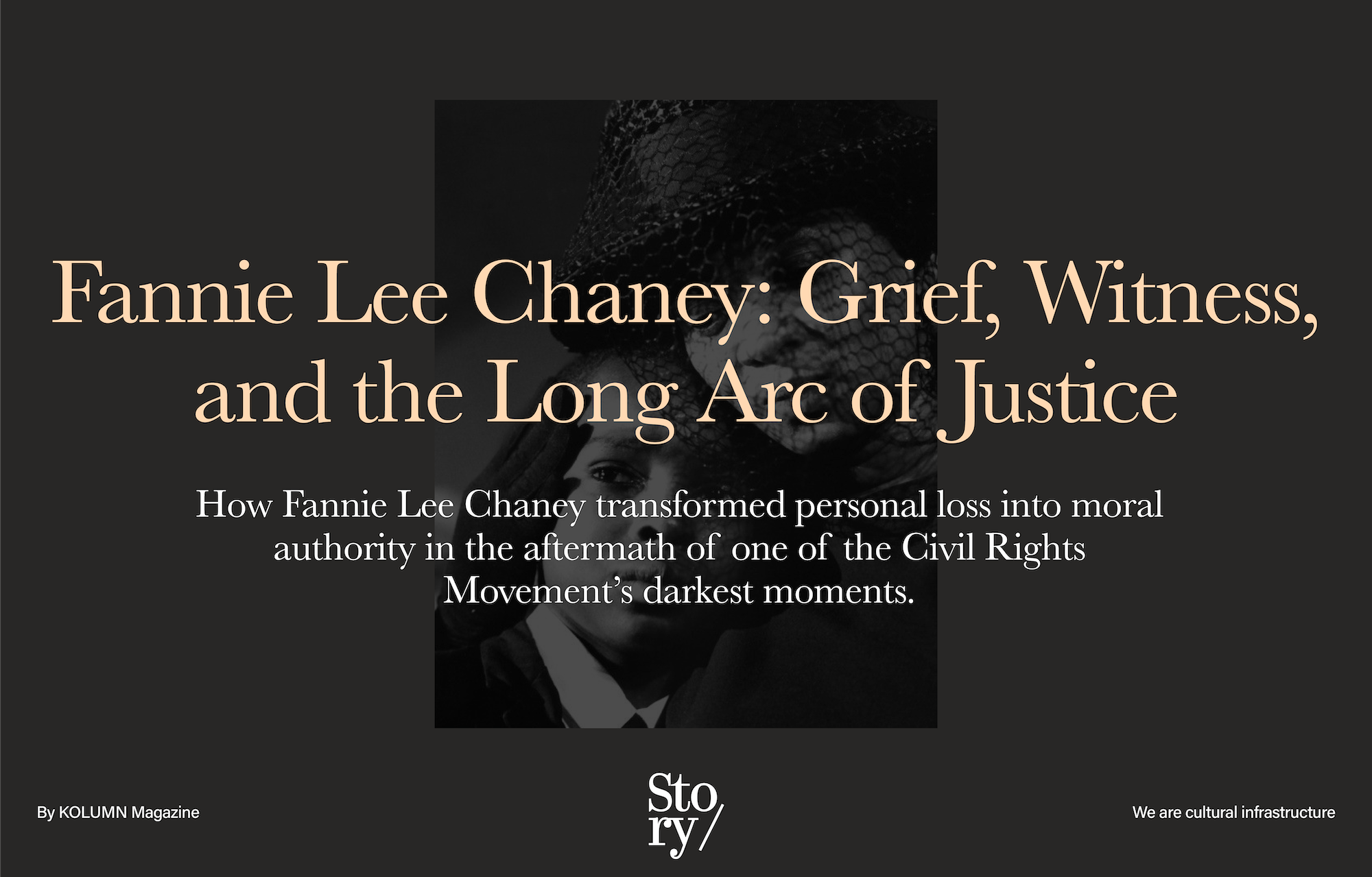
We didn’t even get a phone call… Nobody told us nothing.”
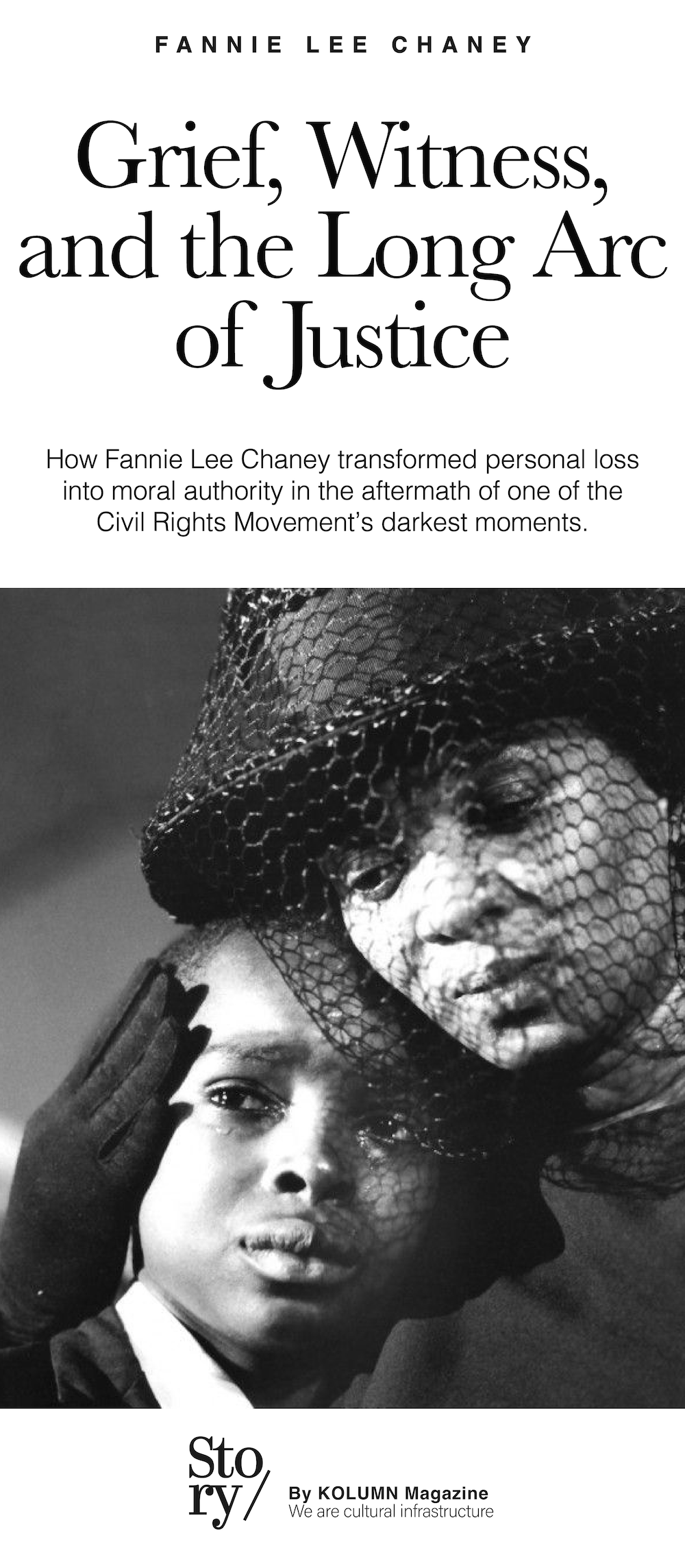
We didn’t even get a phone call… Nobody told us nothing.”
By KOLUMN Magazine
Before her name became synonymous with grief sharpened into resistance, Fannie Lee Chaney was a working-class Black woman in Mississippi, navigating the quiet violences of segregation that structured daily life in the Jim Crow South. Born in 1925, she came of age in a world where the rules were not just written into law but enforced through fear, custom, and brutality.
Mississippi in the early and mid-20th century was not simply segregated—it was engineered to suppress. Black citizens were systematically denied the vote, excluded from economic mobility, and subjected to a racial caste system that operated with both bureaucratic precision and mob violence. It was within this landscape that Chaney raised her children, including her son, James Chaney.
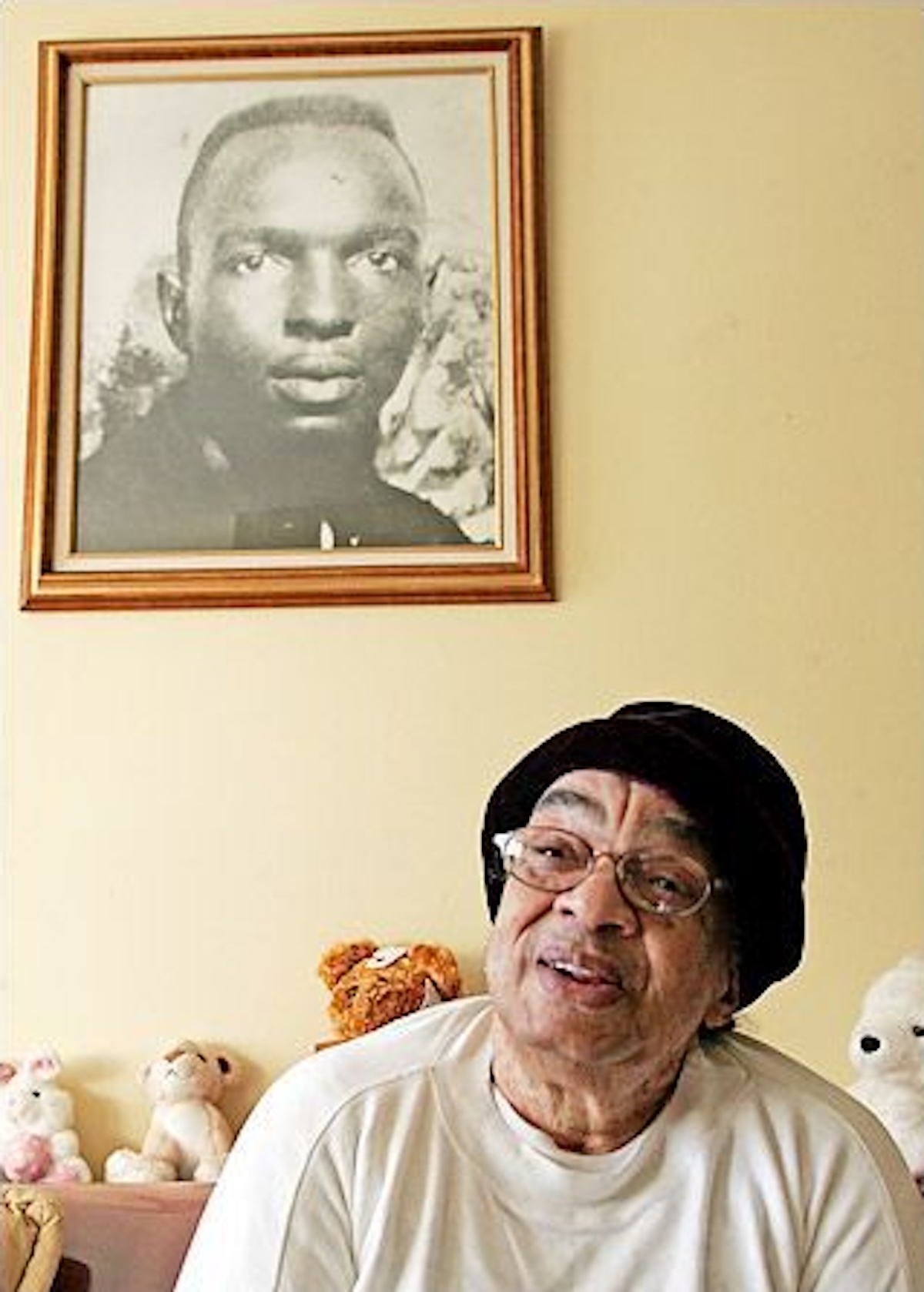
James was, by many accounts, spirited and politically aware. He grew up watching his mother navigate the contradictions of survival in a state that offered little protection to people who looked like them. The lessons were unspoken but clear: keep your head down, stay cautious, and understand that justice was not guaranteed.
But by the early 1960s, a shift was underway. Across the South, young Black Americans—many the children of parents like Fannie Lee Chaney—were refusing to accept the inherited limits of their lives. They joined sit-ins, freedom rides, voter registration drives. They believed, perhaps for the first time in generations, that change was not only possible but imminent.
James Chaney was one of them.
Freedom Summer and the Gathering Storm
The summer of 1964 would come to be known as Mississippi Freedom Summer—a coordinated effort by civil rights organizations to register Black voters in one of the most violently resistant states in the country. Volunteers, many of them white college students from the North, traveled to Mississippi to work alongside local activists.
Among them were Andrew Goodman and Michael Schwerner. Together with James Chaney, they formed a small but determined unit of organizers committed to dismantling the barriers to Black political participation.
Their work was dangerous. Churches were burned. Activists were beaten, arrested, and, in some cases, killed. The presence of white volunteers brought national attention, but it also intensified local hostility. White supremacist groups, including members of law enforcement, operated with near-total impunity.
On June 21, 1964, Chaney, Goodman, and Schwerner were arrested in Neshoba County, Mississippi, after investigating the burning of a Black church. They were released from jail that evening—but never made it back.
Their disappearance would soon become one of the most infamous cases of the Civil Rights Movement.
“We Didn’t Even Get a Phone Call”
When her son went missing, Fannie Lee Chaney entered a nightmare that would stretch on for weeks. The initial response from local authorities was indifferent at best, obstructive at worst. The assumption—unstated but understood—was that the lives of Black men did not warrant urgency.
The federal government eventually intervened, launching a massive search effort. But even then, the dynamics of race shaped the narrative. National media coverage often focused more heavily on the disappearance of the two white activists, Goodman and Schwerner, than on James Chaney.
For Fannie Lee Chaney, this disparity was not abstract—it was painfully visible.
“We didn’t even get a phone call,” she later recalled, describing the early days of the search. “Nobody told us nothing.”
The search ended in August 1964, when the bodies of all three men were discovered buried in an earthen dam. They had been brutally murdered—shot at close range by members of the Ku Klux Klan, with the complicity of local law enforcement.
The nation reacted with shock. But for Chaney, the shock was not new. What was new was the scale of attention—and the opportunity to speak.
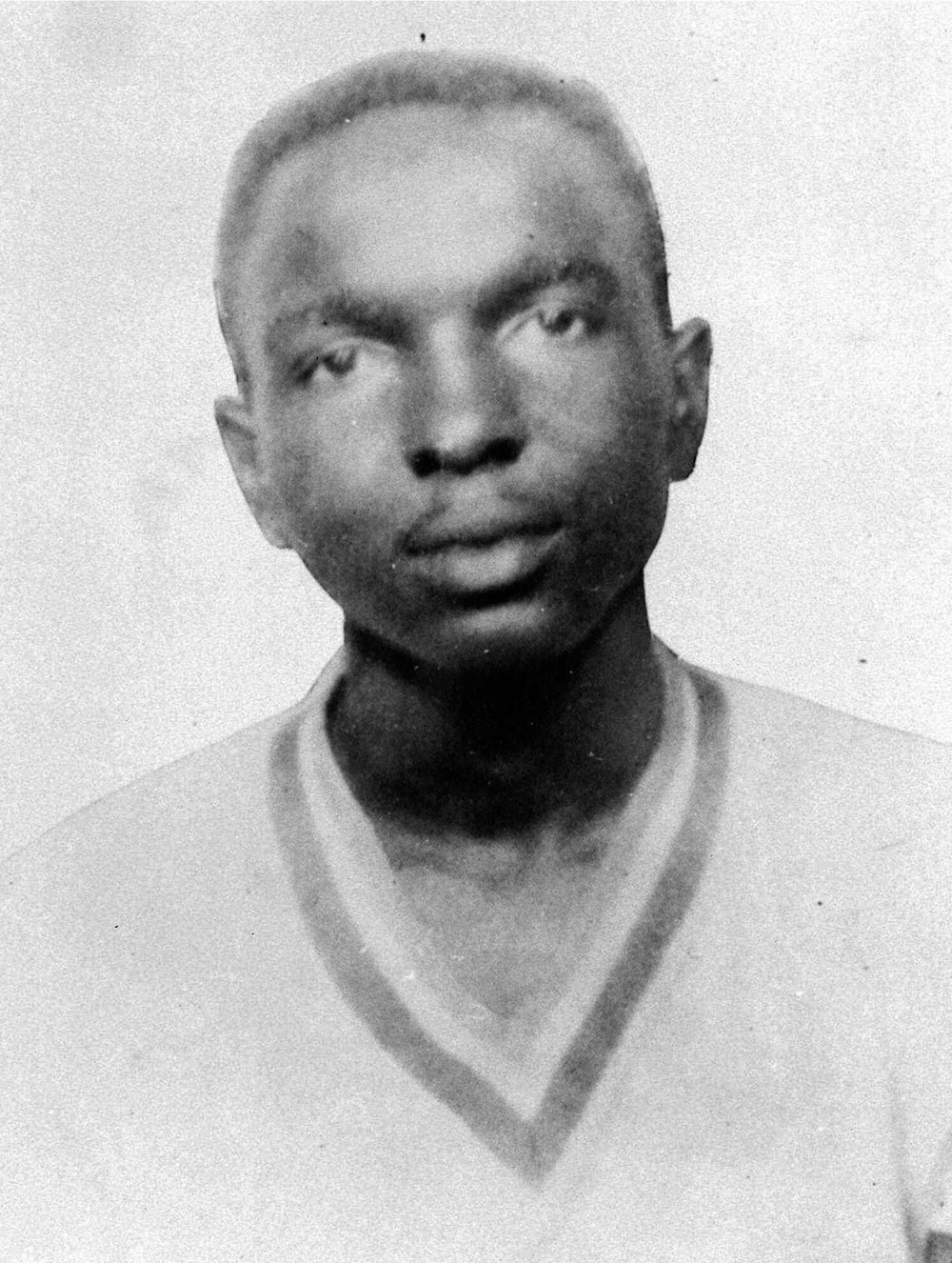
A Mother Steps Into the Public Eye
Grief can silence, but it can also clarify. In the weeks following the discovery of her son’s body, Fannie Lee Chaney emerged as a powerful and unflinching voice.
At a time when many Black women were expected to grieve quietly, she refused. She spoke to reporters, attended hearings, and confronted officials. Her words carried the weight of personal loss, but also the authority of lived experience.
“I want you to know that I’m tired of this kind of thing happening,” she said during one public statement. “I want you to know that I’m going to work until I die to see that justice is done.”
Her activism was not polished or mediated. It was direct, often raw, and deeply moral. She did not speak in abstractions; she spoke in truths that were difficult to ignore.
In many ways, Chaney became a bridge between the personal and the political. Her story forced Americans—particularly white Americans—to confront the human cost of the systems they had long ignored or justified.
The Trial That Wasn’t Justice
In 1967, three years after the murders, a federal trial was held against several of the perpetrators. It was a partial victory: for the first time in Mississippi history, white men were convicted of civil rights violations in the killing of Black citizens.
But the charges were limited. The defendants were not tried for murder—state authorities refused to prosecute. Instead, they were charged with conspiring to violate the victims’ civil rights.
The sentences were light. None of the convicted served more than six years in prison.
For Fannie Lee Chaney, this was not justice. It was, at best, an acknowledgment. At worst, it was a continuation of the same system that had allowed the crime to occur in the first place.
“They killed my child,” she said, “and they didn’t pay for it.”
Her critique was not limited to the courtroom. She understood that the failure of justice was systemic—that it reflected deeper structures of inequality embedded in law enforcement, the judiciary, and the political system.
Bearing Witness in a Reluctant Nation
In the years that followed, Chaney continued to speak, to travel, and to bear witness. She became a living reminder of what had happened in Mississippi—and of what continued to happen across the country.
Her activism did not always receive the same level of attention as the movement’s more visible leaders. She was not a national figure in the mold of Martin Luther King Jr. or Rosa Parks. But her role was no less essential.
She represented a different kind of leadership—one rooted not in institutional power or organizational structure, but in moral clarity. She spoke not as a strategist or a politician, but as a mother who had lost her child to racial violence.
That perspective carried its own authority.
In interviews and public appearances, she repeatedly emphasized the need for systemic change. She spoke about voting rights, economic inequality, and the persistence of racism in American life. She connected her personal story to broader patterns, insisting that what had happened to her son was not an isolated incident.
The Long Road to Accountability
For decades, the case of the 1964 murders remained a symbol of incomplete justice. While the federal convictions had established some level of accountability, many of those involved had never been prosecuted.
In 2005—more than 40 years after the murders—one of the key perpetrators, Edgar Ray Killen, was finally tried and convicted of manslaughter in a Mississippi state court. The trial was widely seen as a belated attempt to address the failures of the past.
For Fannie Lee Chaney, who had died in 2007, the conviction came late in her life. It was a moment of recognition, but also a reminder of how long justice had been delayed.
The trial underscored a broader truth: that the legacy of the Civil Rights Movement was not confined to the 1960s. The struggles it addressed—and the injustices it exposed—continued to shape American society decades later.
A Legacy Beyond Tragedy
It would be easy to define Fannie Lee Chaney solely by the tragedy that brought her into the public eye. But to do so would be to overlook the broader significance of her life and work.
She was not only a grieving mother; she was an activist, a witness, and a moral force. Her willingness to speak—to confront power, to challenge narratives, to demand accountability—helped shape the national conversation around civil rights.
Her story also complicates the way we remember the Civil Rights Movement. It reminds us that the movement was not only about marches and legislation, but also about loss, resilience, and the enduring struggle for justice.
“I’m not bitter,” she once said. “But I’m not satisfied.”
That distinction is critical. It reflects a refusal to accept injustice without succumbing to despair—a commitment to continue pushing for change, even in the face of profound loss.
The Power of Witness
In many ways, Fannie Lee Chaney’s greatest contribution was her role as a witness. She bore witness not only to the murder of her son, but to the broader system that made such violence possible.
Her testimony—both formal and informal—helped document a period of American history that might otherwise have been obscured or minimized. It provided a human dimension to events that could easily be reduced to statistics or abstractions.
This role of witness is particularly important in the context of historical memory. The way we remember the past shapes how we understand the present—and how we imagine the future.
Chaney’s story challenges us to confront uncomfortable truths. It asks us to consider not only what happened, but why—and what has changed, and what has not.
Echoes in the Present
The issues that defined Fannie Lee Chaney’s life—racial violence, systemic inequality, the struggle for justice—remain deeply relevant today. While the legal framework of segregation has been dismantled, many of the underlying dynamics persist.
Contemporary movements for racial justice often draw on the legacy of the Civil Rights Movement, including the stories of individuals like Chaney. Her example continues to resonate, offering both inspiration and a reminder of the work that remains to be done.
In this sense, her life is not only a historical narrative but an ongoing one. It speaks to the continuity of struggle—and to the enduring need for voices that are willing to speak truth to power.
Remembering Fannie Lee Chaney
To remember Fannie Lee Chaney is to engage with a complex and often painful history. It is to acknowledge the realities of racial violence and systemic injustice, but also to recognize the resilience and courage of those who have confronted these challenges.
Her legacy is not easily categorized. It is not confined to a single moment or event. Instead, it unfolds across decades, encompassing both personal loss and public activism.
In the end, what remains most striking is not only what she endured, but how she responded. She refused to be silent. She refused to accept injustice as inevitable. And in doing so, she helped shape a broader struggle for justice that continues to this day.
“I’ll never stop talking about what happened,” she said. “Because if I do, it’ll happen again.”
That commitment—to remember, to speak, to resist—may be her most enduring legacy.
More great stories
Afro Sheen, Wall Street, and the Architecture of Black Possibility
July 6, 2026
No Comments
The Fire Inside the Fourth
July 5, 2026
No Comments