




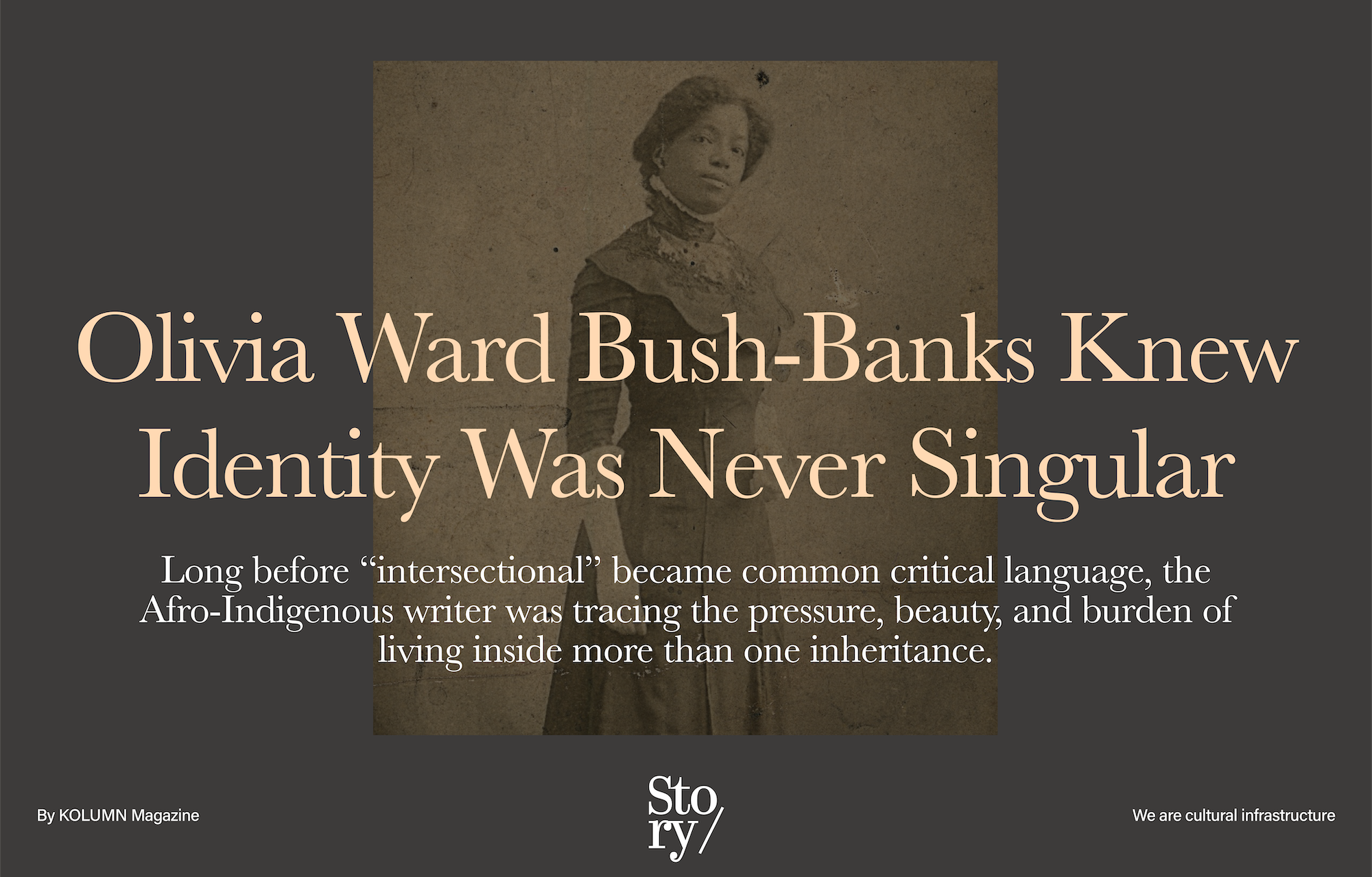
Olivia Ward Bush-Banks belongs in any serious conversation about Black women’s writing, Afro-Indigenous history, and the cultural infrastructure around the Harlem Renaissance.
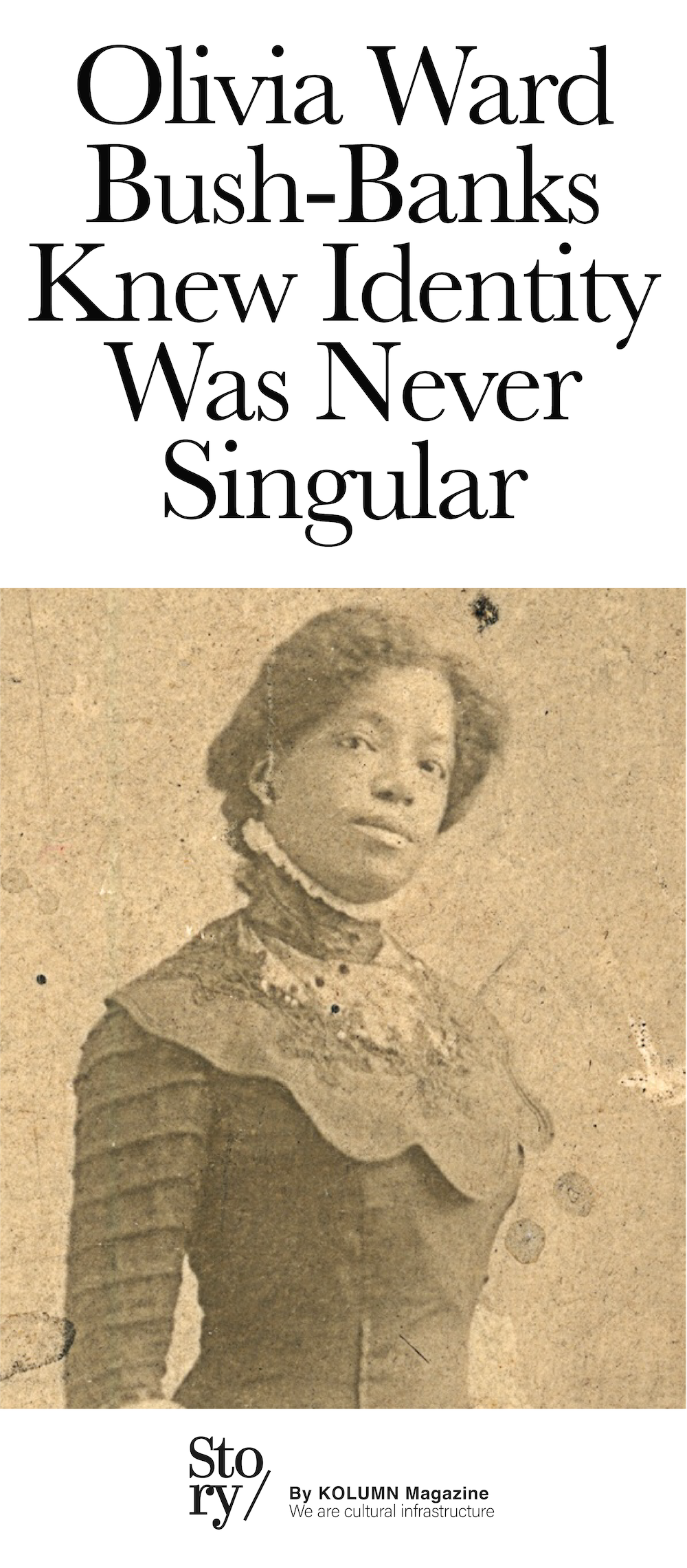
Olivia Ward Bush-Banks belongs in any serious conversation about Black women’s writing, Afro-Indigenous history, and the cultural infrastructure around the Harlem Renaissance.
By KOLUMN Magazine
Olivia Ward Bush-Banks should be more widely known than she is. That is the clearest fact one arrives at after spending time with her life and work. She was a poet and journalist, a dramatist and teacher, a cultural worker and organizer, a woman of African American and Montaukett descent who wrote with unusual clarity about race, memory, faith, land, injustice, and belonging. Born in Sag Harbor, New York, in 1869 and dead in New York City in 1944, she lived across the decades that bridged Reconstruction’s collapse, the hardening of Jim Crow, the Great Migration, the New Negro era, and the Depression. Her career touched Black print culture, Indigenous historical preservation, community theater, arts criticism, and education. Yet she is still too often treated as a footnote rather than what she more accurately was: a connective figure whose life helps explain how Black and Indigenous literary histories actually overlap.
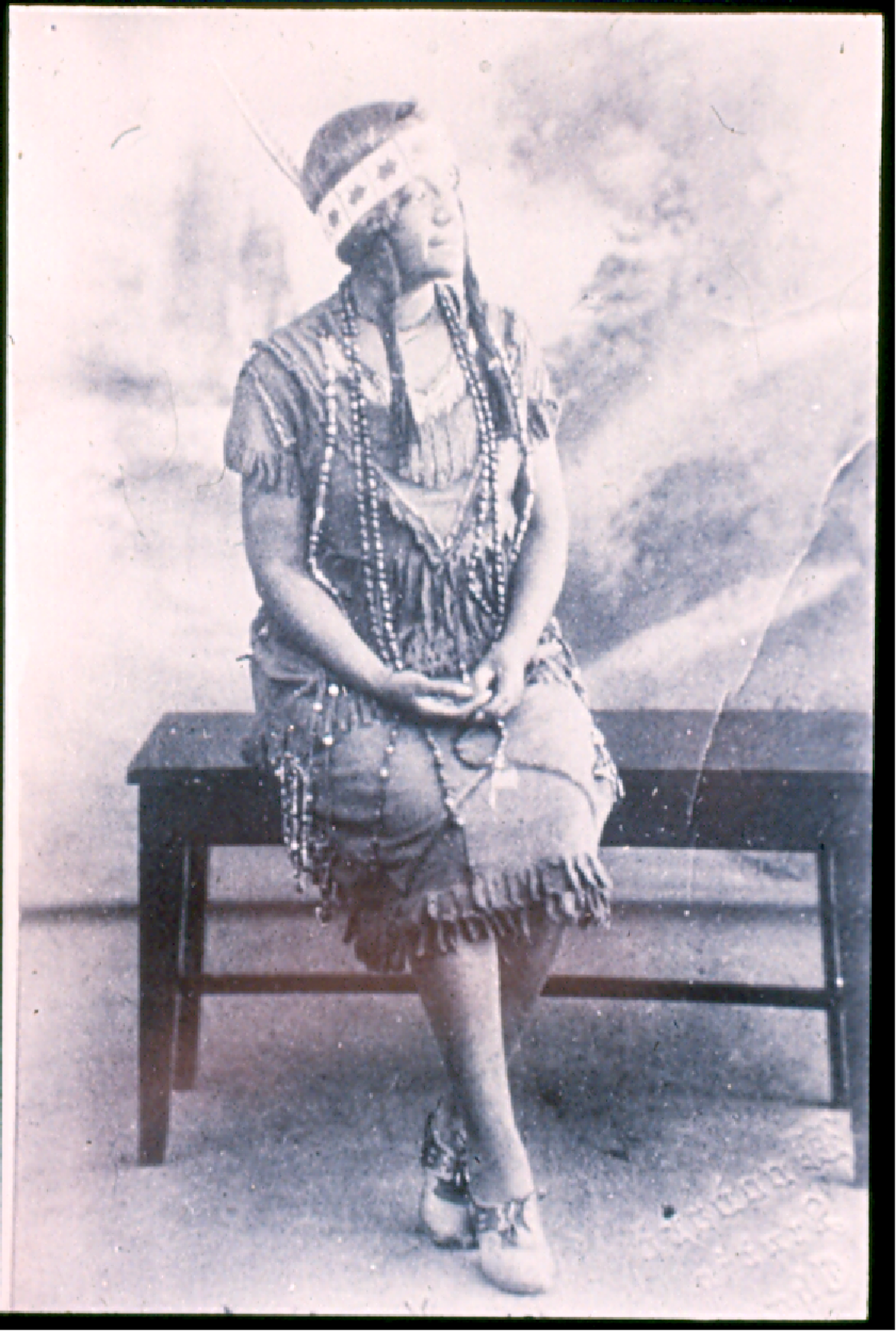
That overlap matters. Bush-Banks did not merely happen to possess multiple ancestries; she wrote from within them. Her poems and dramatic work return again and again to the fact that identity in America was never as neat as the dominant culture wanted it to be. Scholar DeLisa D. Hawkes argues that Bush-Banks’s writing challenges narrow ideas about indigeneity, race, and Americanness, and the line Hawkes highlights from Bush-Banks’s autobiographical writing is especially revealing: she had “lost” a stable sense of racial distinctness while being “of African and Indian descent.” That is not a line of confusion so much as a line of diagnosis. Bush-Banks understood that the problem was not her complexity. The problem was an American order that had little use for complexity when Blackness and Indigeneity were involved.
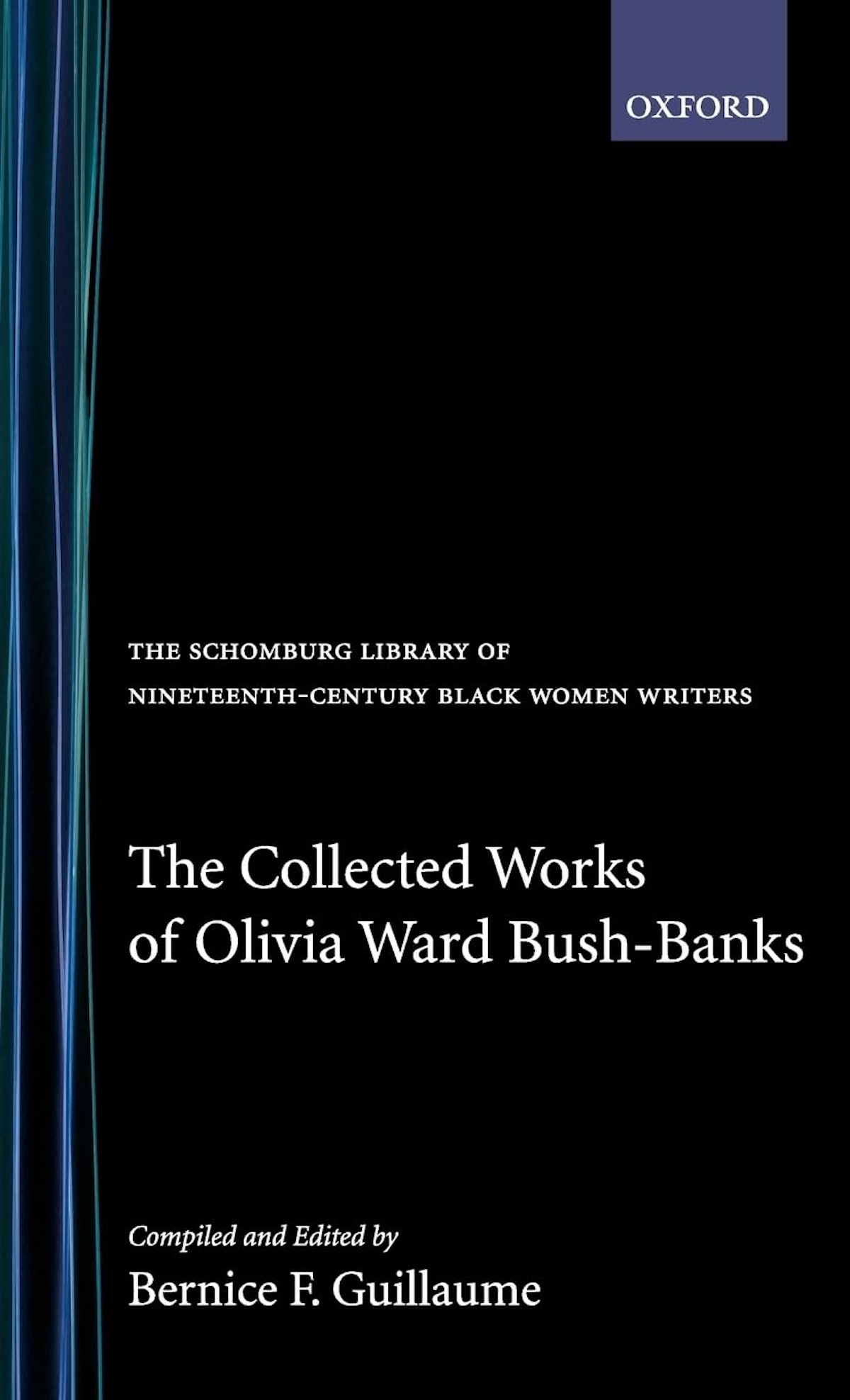
She was also, quite simply, prolific. Hawkes notes that between 1899 and 1942 Bush-Banks composed more than seventy works. Much of that material never entered the mainstream literary bloodstream, and a good deal of it survived in fragments, archives, or later recovery projects rather than through continuous republication. That fact is central to her story. Bush-Banks is not only a subject for literary appreciation; she is a case study in how American literary memory works, whom it rewards, and whom it lets drift to the margins. The 1991 Oxford University Press volume The Collected Works of Olivia Ward Bush-Banks, edited by her descendant Bernice F. Guillaume, was therefore not merely a scholarly exercise. It was an act of restoration.
Born Into Movement, Loss, and Inheritance
Bush-Banks was born on February 27, 1869, in Sag Harbor, according to the Academy of American Poets and multiple literary reference sources, to parents of African American and Montauk descent. Brown Alumni Magazine’s reporting on her family history adds texture to that fact, describing parents of mixed Black and Montaukett descent and a childhood marked by repeated uprooting after her mother died when Olivia was still an infant. Her father moved the family to Providence, Rhode Island, and young Olivia was ultimately raised by her maternal aunt Maria Draper. Those early conditions matter because Bush-Banks’s writing would later carry a deep sensitivity to displacement, ancestry, and the fragile work of continuity.
The outlines of her girlhood already contain the themes of her adulthood. She lost her mother early. She was moved between places and caretakers. She inherited not one fixed social identity but several, all of them marked in public life by forms of exclusion. The literature that later emerged from her pen did not come from abstraction. It came from someone who knew, firsthand, what it meant to assemble a self from interrupted lines of family, geography, and recognition. A biographical essay published by the Three Village Historical Society, while not a scholarly journal, aligns with the broader record in describing how Bush-Banks’s aunt supported her developing love of drama and poetry even as she studied practical subjects in school. That mix of art and survival would remain with her for life.
Providence was where Bush-Banks began writing seriously. The Academy of American Poets notes that she started composing poems while at Providence High School, many of them reflecting on heritage and biracial identity. That is an important detail because it places her literary consciousness early, not as a late-career flourish but as a durable part of her self-making. She was not an accidental writer. She was a writer from youth, even if the conditions around her demanded other labor too.
Making a Career While Making a Life
Too many literary biographies glide too quickly past the economics of women’s lives. Bush-Banks’s cannot be understood that way. She married Frank Bush in 1889, had two daughters, and by the mid-1890s was divorced and supporting not only her children but also her aunt. Several sources describe those years as financially difficult, with Bush-Banks moving between Providence and Boston in search of work while continuing to write. That kind of dual labor, earning and creating at once, is not incidental background. It is the material condition under which much Black women’s literature was produced, and Bush-Banks’s career embodies it.
Her first book, Original Poems, appeared in Providence in 1899. The University of Pennsylvania’s digital reproduction preserves the volume’s dedication, which is as close as one gets to a public artistic credo. Bush-Banks dedicates the “little booklet” to “the people of my race, / The Afro-Americans,” and frames the work as an offering shaped by racial uplift, endurance, and moral witness. Even the prefatory lines speak in the vocabulary of progress against impossible odds: “Rather measure our progression / By the depths from whence we came.” That rhetoric places her squarely within a turn-of-the-century Black literary culture that saw writing as both art and communal responsibility.
“Bush-Banks wrote as if history, prayer, race, and land were always speaking to one another. In her work, they usually are.”
The reception mattered too. The Academy of American Poets records that Paul Laurence Dunbar praised Original Poems, saying it “should be an inspiration to the women of our race.” That is not a trivial endorsement. Dunbar was one of the most prominent Black poets of the period, and his approval signaled that Bush-Banks was not some obscure local hobbyist. She had entered a real literary conversation. By 1900, the Academy notes, she had contributed to publications including the Boston Transcript, Voice of the Negro, and Colored American Magazine.
What survives of Original Poems shows an author already working across several registers at once: racial justice, Christian faith, historical memory, and the natural world. The UPenn text makes plain that the collection includes poems such as “Crispus Attucks,” “Honour’s Appeal to Justice,” “The Walk to Emmaus,” and “Morning on Shinnecock.” Even just that table of contents reveals her range. She moved from Black historical heroism to spiritual meditation to Indigenous landscape and memory without treating those concerns as separate compartments.
A Poet of Black Commitment and Indigenous Memory
One of the more striking things about Bush-Banks is how early and how openly she announced a Black political commitment while also preserving Montaukett history and feeling. Some critics, especially in older literary sorting habits, wanted authors to fit a cleaner category: Black poet, Native poet, religious poet, Harlem Renaissance adjunct, regional writer. Bush-Banks resists that sorting. Her early work makes clear that she understood Black struggle as central to her vocation, and her later writing and historical work make equally clear that Montaukett continuity was not a decorative ancestry but a living inheritance.
“Morning on Shinnecock” offers one window into that inheritance. Published later in relation to Montauk settings and preserved both by Poets.org and UPenn, the poem begins with pastoral calm and visual beauty before pivoting into a more inward meditation on transience and sorrow. The landscape is not merely scenery. It is memory-bearing ground. The poem’s morning radiance opens onto the realization that beauty fades into the hard day. That movement, from wonder to grief, mirrors much of Bush-Banks’s larger sensibility: the world contains grandeur, but history keeps interrupting it.
A later critical reading on Lehigh’s African American poetry anthology site notes that Bush-Banks often connected her African American and Native ancestries through a shared history of colonial violence and dispossession. That point is crucial. She was not simply alternating themes depending on audience. She was tracing common structures of harm. Long before contemporary academic language made such analysis fashionable, Bush-Banks was already writing from the knowledge that conquest, slavery, erasure, and racialized dispossession were not isolated chapters in separate textbooks. They were entangled realities.
Long Island, the Montaukett, and the Work of Historical Refusal
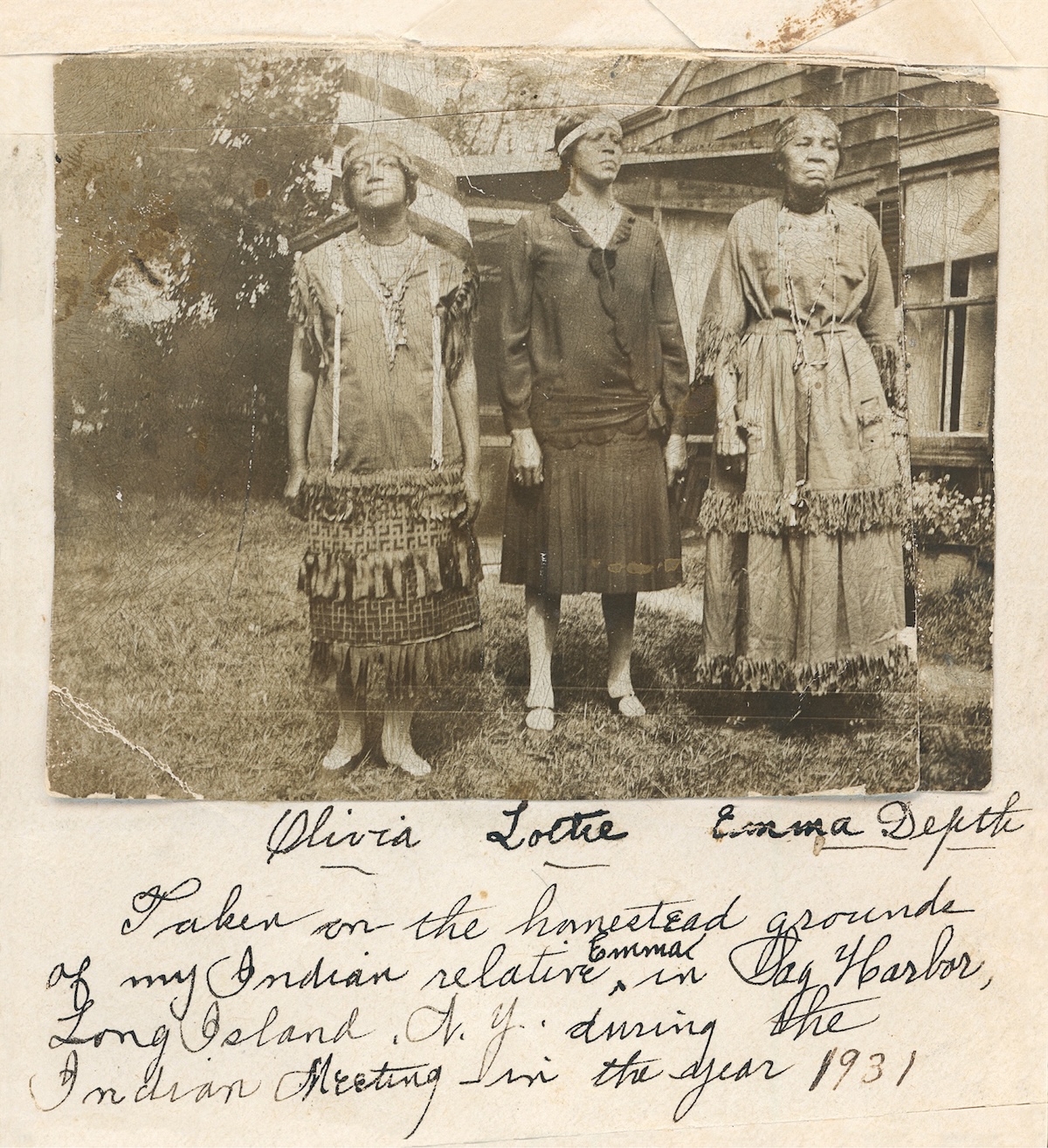
If Bush-Banks had written only poetry, her place in literary history would still deserve greater attention. But she also served as historian for the Montaukett tribe, and that role enlarges her significance considerably. The Academy of American Poets says she held that position until she remarried in the early 1920s; other historical accounts place the work especially in the years after her return to Long Island in the 1910s. Either way, the point stands: she was not only representing Montaukett memory artistically, she was helping preserve it institutionally and communally.
That preservation took place in the shadow of erasure. The Three Village Historical Society summarizes the 1910 decision in Wyandank Pharoah v. Jane Benson et al., in which Judge Abel Blackmar declared the Montaukett tribe “extinct” in legal terms, stripping it of land and recognition. Bush-Banks’s historical work thus existed against an official regime of disappearance. To call someone a tribal historian under those conditions is to understand the role differently. She was not curating a closed past. She was refusing an imposed death sentence on behalf of a people still very much alive.
This is one of the reasons her writing on Native subjects should not be read as quaint local color. It was political. It was archival. It was an answer to a state and a society prepared to treat Indigenous presence in the Northeast as already concluded. Bush-Banks knew otherwise. Her writing and historical work insist that Montaukett life persisted in language, kinship, memory, ritual, and land attachment even when law tried to deny it.
That refusal also gives modern readers a better way to understand her importance. Bush-Banks was not ahead of her time in some vague celebratory sense. She was in direct argument with her time. She wrote and remembered against the grain of the official story.
Driftwood and the Expansion of Her Voice
Bush-Banks’s second poetry collection, Driftwood, appeared in 1914 and is generally treated as her best-known book. The Academy of American Poets lists it as a key work, and local historical essays describe it as the volume in which her artistic maturity is most evident. The book broadened her concerns while retaining the religious and moral seriousness of the earlier work. It included elegiac pieces, meditations on hope and injustice, and poems attentive to both Black historical memory and the emotional weather of daily life.
The title alone is suggestive. Driftwood is something carried by force, marked by travel, altered by water, and washed ashore with its history still inside it. That feels apt for Bush-Banks, whose own life was shaped by displacement, survival, and reassembly. The collection’s spiritual and political textures also show a writer resisting easy cynicism. She was deeply alert to prejudice, grief, and exclusion, but she did not surrender the language of hope. In a prose passage cited by the Three Village Historical Society, she describes prejudice as the “floating wreckage of chattel slavery,” a phrase that feels both poetic and analytical. Slavery, in that sentence, is not over because its debris still obstructs the national course.
That sentence alone explains why Bush-Banks deserves a larger readership. She could name structure without flattening feeling. She could turn moral argument into image. She could see the afterlife of slavery not as an abstraction but as wreckage still breaking the surface.
Chicago, the New Negro Movement, and Cultural Infrastructure
After her second marriage, to Anthony Banks, Bush-Banks moved to Chicago, where her career entered another phase. The Academy of American Poets and other biographical sources say she advocated for the New Negro Movement and founded the Bush-Banks School of Expression there. This period matters because it places her not just near the Harlem Renaissance in a geographical or social sense, but inside the broader Black cultural infrastructure that sustained it. The Renaissance was never only about the famous names who ended up in anthologies. It also depended on teachers, editors, hosts, critics, dramatists, and institution-builders. Bush-Banks was one of those people.
The Bush-Banks School of Expression sounds, on first hearing, like a footnote. It is more than that. Historical accounts describe it as a place where Black artists could gather, perform, and develop their work, with actors and musicians giving recitals and performances there. In other words, Bush-Banks helped create space. That kind of labor is often feminized, under-credited, and then forgotten by posterity, even though artistic movements collapse without it. She was doing cultural architecture.
Some accounts, including pieces from Long Island historical organizations and reference summaries, also state that Bush-Banks helped early in the careers of Richmond Barthé and Langston Hughes. That claim appears in several secondary sources, though not all provide the same level of documentary detail, so it is best treated as a plausible and repeated tradition rather than a fully settled archival conclusion. Even with that caution, the broader point is secure: Bush-Banks operated in serious Black artistic circles, and her home-school-school-salon model helped nurture talent beyond her own byline.
Drama, Journalism, and the Work Beyond the Book
Bush-Banks’s significance is also easy to miss if one looks only for bound volumes. Much of her career happened in forms that literary prestige culture historically ranked lower: magazine work, newspaper columns, educational theater, unpublished plays, community arts labor. That is precisely why she matters. She reminds us that Black women’s authorship has often flourished outside the narrow containers critics later privileged.
Her dramatic interests stretch back to her Boston years, when she served as assistant dramatic director at the Robert Gould Shaw Community House. Later accounts say she taught drama in Chicago public schools, and in the 1930s she worked in New York as a drama coach under the Works Progress Administration, including at the Abyssinian Baptist Church’s community center in Harlem. Those details show a writer who saw performance as civic practice, not just literary ornament. Drama was pedagogy, community formation, and public expression.
She also wrote journalism and criticism. The Academy notes that in the 1930s she wrote for the Westchester Record-Courier, and other accounts describe her as a cultural arts columnist or editor there. Again, that role matters. Criticism is part of literary history too. To write about culture in a newspaper is to shape public taste, public conversation, and the visibility of artists. Bush-Banks was not only producing art; she was mediating it for readers.
Then there is the unpublished material. The Amistad Research Center blog notes that the Bush-Banks papers contain published and unpublished fiction and reflect her work as teacher, poet, playwright, historian, and activist. That archive matters because it proves the scale of the surviving record and the extent to which her career exceeded what reached print in her lifetime. In a more just canon, unpublished or unproduced Black women’s work would not automatically count less. It would count as evidence of the barriers that shaped literary visibility in the first place.
Indian Trails and the Politics of a Fragment
One of the most compelling pieces in Bush-Banks’s record is the unfinished or fragmentary play Indian Trails: Or Trail of the Montauk. Scholars and historical essays describe it as a work rooted in Montaukett tradition and in the political crisis surrounding Indigenous land and recognition. Because the play survives only in part, it occupies that frustrating but familiar category of Black and Indigenous women’s literature: a text known enough to signal importance, damaged enough to limit full recovery.
Still, even the surviving descriptions are revealing. The play is said to address the fracturing of Montaukett cultural unity and to imagine restoration. That is not nostalgia in a soft sense. It is a political imagination at work, dramatizing what legal institutions denied. Bush-Banks was using theater to stage a different future, one in which return and justice were thinkable.
This is where her writing feels especially modern. She understood that literature could preserve, but also that it could project. It could remember what had been stolen and also rehearse what redress might look like. For an Afro-Indigenous writer in the early twentieth century, that was a radical literary act.
Grief, Faith, and the Intimate Scale of Loss
One of the most compelling pieces in Bush-Banks’s record is the unfinished or fragmentary play Indian Trails: Or Trail of the Montauk. Scholars and historical essays describe it as a work rooted in Montaukett tradition and in the political crisis surrounding Indigenous land and recognition. Because the play survives only in part, it occupies that frustrating but familiar category of Black and Indigenous women’s literature: a text known enough to signal importance, damaged enough to limit full recovery.
Still, even the surviving descriptions are revealing. The play is said to address the fracturing of Montaukett cultural unity and to imagine restoration. That is not nostalgia in a soft sense. It is a political imagination at work, dramatizing what legal institutions denied. Bush-Banks was using theater to stage a different future, one in which return and justice were thinkable.
This is where her writing feels especially modern. She understood that literature could preserve, but also that it could project. It could remember what had been stolen and also rehearse what redress might look like. For an Afro-Indigenous writer in the early twentieth century, that was a radical literary act.
Grief, Faith, and the Intimate Scale of Loss
Not all of Bush-Banks’s work operates at the scale of race, tribe, or nation. Some of its power lies in how deftly she writes private pain. “Regret,” one of her best-known poems now widely anthologized online, is a compact poem of remorse after irreparable loss. Brown Alumni Magazine reports a family tradition that connects the poem to her estrangement from her eldest daughter Rosamund, who died before reconciliation could occur. That claim, again, sits partly in family and descendant knowledge rather than formal documentary certainty, but it gives the poem a haunting biographical shadow. Even without that backstory, the poem lands because it understands how ordinary injury becomes permanent too late.
Bush-Banks was especially good at writing in a register that joined sorrow to spiritual seriousness without becoming sentimental. Her poetry returns often to faith, but faith in her work is not decorative piety. It is a survival mechanism, a moral grammar, a way of holding grief without letting it consume language altogether. The Lehigh anthology page notes recurring themes of religion, hope, history, nature, and social justice in her work. That convergence feels exactly right. She wrote as someone for whom the sacred and the historical were never very far apart.
Why She Slipped from View
The harder question is not why Bush-Banks mattered. It is why she became so easy to overlook.
Part of the answer is structural. She wrote across genres. She published in magazines and newspapers. She did educational and community arts work. She was a Black woman whose career did not conform neatly to the forms later canon-makers most wanted to enshrine. She was also Afro-Indigenous, which placed her outside simplified racial narratives that often govern both Black literary study and Native literary study. And much of her work remained unpublished, fragmentary, or archival. Each of those factors makes recovery harder. Together they almost guarantee under-recognition.
There is also a chronology problem. Bush-Banks sits awkwardly, productively awkwardly, between categories. She is too early to fit the most commercialized version of Harlem Renaissance celebrity and too late to sit comfortably in nineteenth-century recovery projects without qualification. Yet Oxford placed her in the Schomburg Library of Nineteenth-Century Black Women Writers, and scholars now increasingly read her into twentieth-century Black and Indigenous modernities as well. She belongs in both frames, which is precisely why she can disappear from each when the field gets lazy.
Her relative obscurity also says something unflattering about the way American culture distributes remembrance. It prefers origin myths and singular icons. Bush-Banks offers neither. She is not reducible to one movement, one masterpiece, one identity, or one city. She asks for a more rigorous kind of attention.
The Recovery of Olivia Ward Bush-Banks
The recovery of Bush-Banks’s work owes a great deal to descendants and scholars, especially Bernice F. Guillaume. Brown Alumni Magazine’s account of Guillaume’s 1974 discovery of her great-grandmother’s handwritten note inside a copy of Original Poems is one of those beautiful archival stories that also doubles as cultural indictment. The book had sat for decades, largely untouched. Guillaume later edited The Collected Works of Olivia Ward Bush-Banks, published by Oxford in 1991. That edition remains one of the main reasons serious readers can access Bush-Banks today in anything like a coherent form.
Guillaume’s story also underscores something essential: recovery is labor. It takes genealogical work, archival patience, editorial judgment, and institutional support. The writer does not simply “come back.” Someone has to bring her back, carefully. Brown’s reporting quotes the 1899 note in which Bush-Banks wrote that if “humanity” were helped “by one thought or word” of hers, she would feel she had reached a long-desired end. More than a century later, that ambition still feels active.
What Her Life Means Now
So what, finally, is Olivia Ward Bush-Banks’s significance?
She matters because she expands the map. She expands the map of Black women’s literature by showing how much of it lived in columns, classrooms, clubs, and community stages, not just bookshelves. She expands the map of Indigenous literary history by insisting that Northeastern Native life did not vanish into myth. She expands the map of Harlem Renaissance culture by showing that its ecology included older women, teachers, dramatists, and institution-makers, not only the glamorous few whose faces ended up on posters. She expands the map of American identity by making clear that Black and Native histories were not separate lanes but braided conditions.
She also matters because she poses a challenge to criticism itself. Are we prepared to read writers whose archives are uneven, whose genres are mixed, whose identities trouble disciplinary boundaries, and whose greatness is distributed across many forms of labor rather than concentrated in one universally assigned classic? Bush-Banks makes that question unavoidable.
And she matters because the language still lives. In the dedication to Original Poems, in the sorrow of “Regret,” in the landscape feeling of “Morning on Shinnecock,” in the moral pressure of her writing on prejudice and justice, Bush-Banks sounds like someone who knew that literature was not there to flatter the nation. It was there to tell the truth about it, and maybe to help imagine something better.
That is why she deserves more than rediscovery as a periodic heritage-month name. She deserves placement. Not token inclusion, not a passing mention, not a paragraph in a survey course, but a secure place in the story of American letters. Olivia Ward Bush-Banks was a serious writer, a serious cultural worker, and a serious historical witness. The canon misplaced her. The record no longer excuses us for doing the same.
More great stories

Afro Sheen, Wall Street, and the Architecture of Black Possibility
July 6, 2026
No Comments
The Fire Inside the Fourth
July 5, 2026
No Comments