





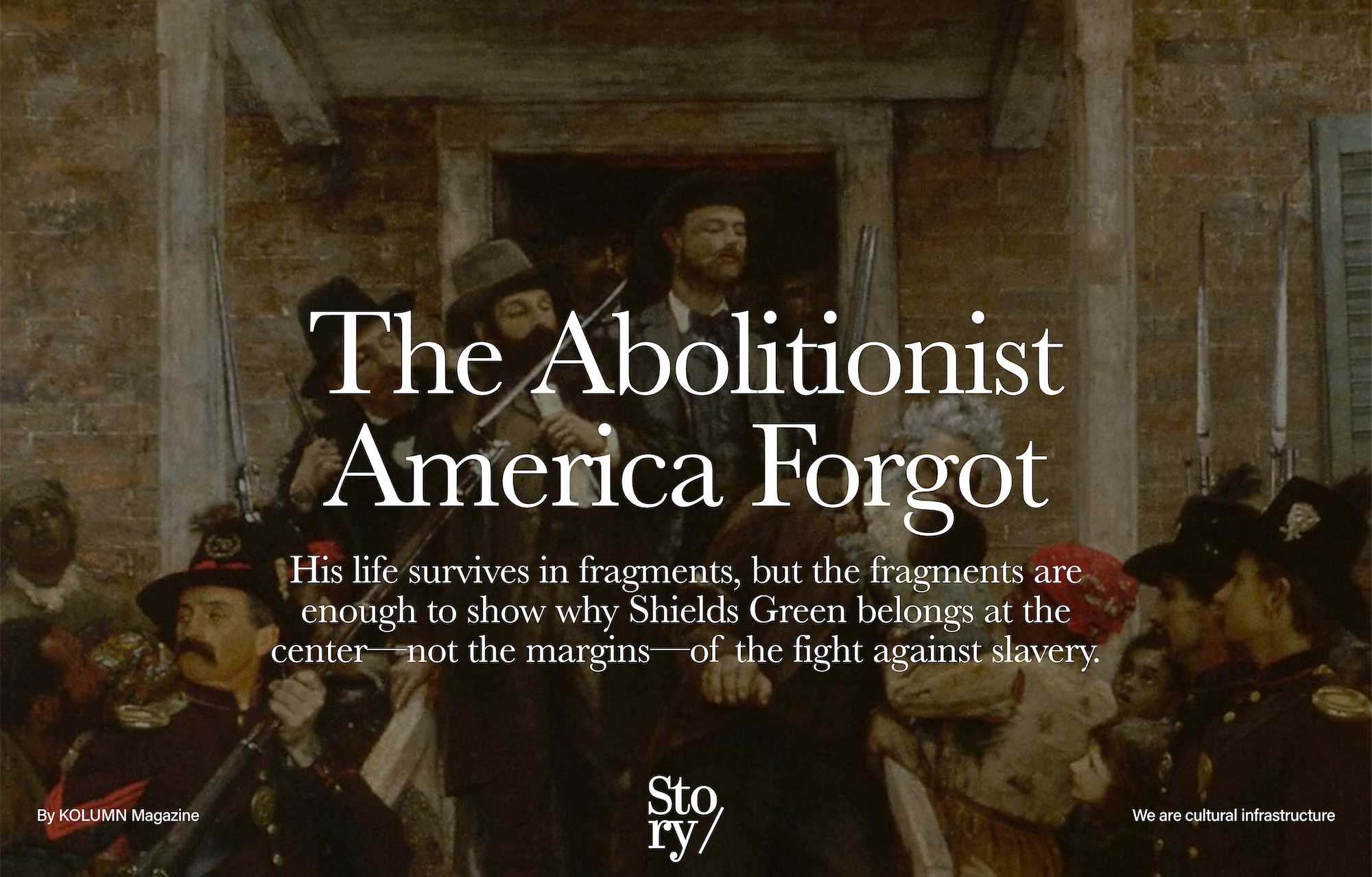
Shields Green’s significance does not depend on recovering every missing biographical detail. It depends on seeing clearly what the existing record already shows.
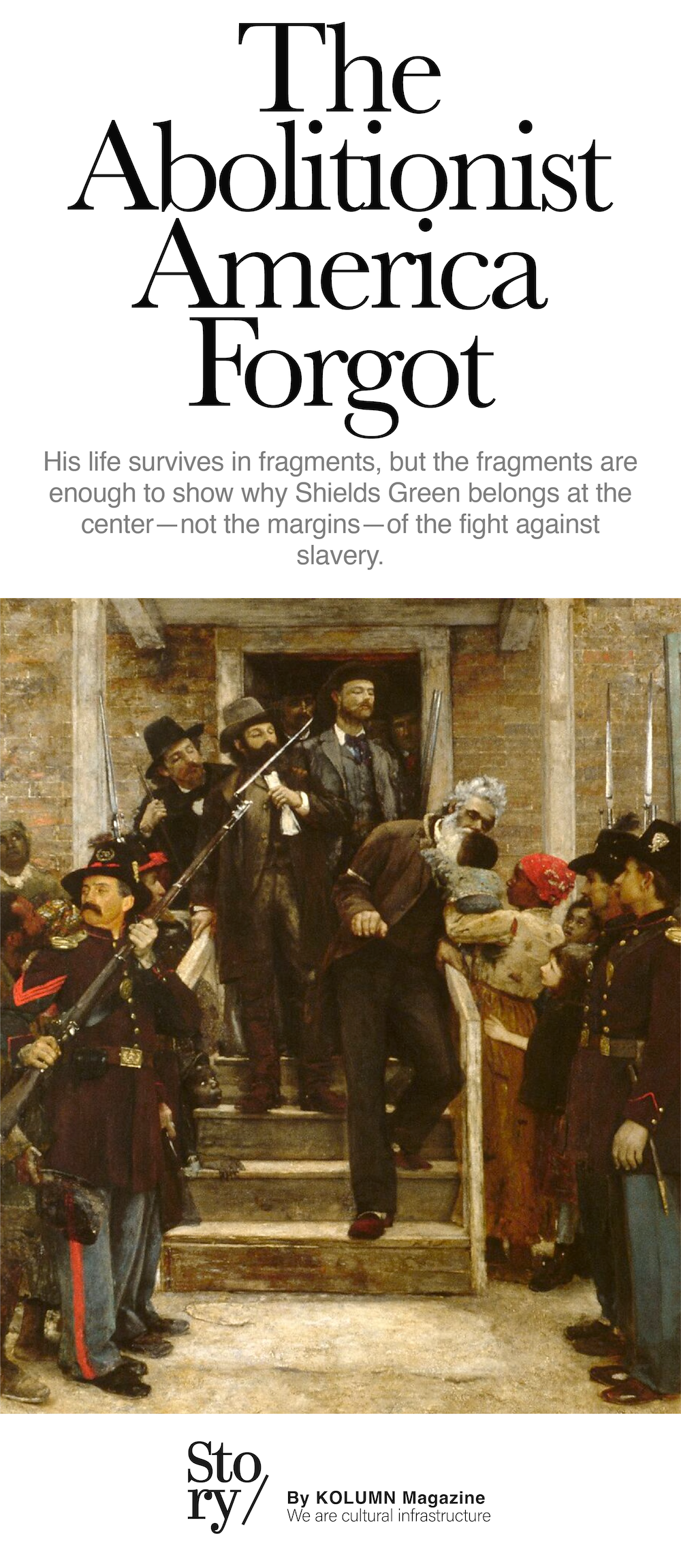
Shields Green’s significance does not depend on recovering every missing biographical detail. It depends on seeing clearly what the existing record already shows.
By KOLUMN Magazine
It is possible to say something true about Shields Green by beginning with what we do not know. We do not know his exact birth year. We do not know enough about his childhood to narrate it with confidence. We do not know the names of the people who raised him, the man who claimed to own him, or the family he may have left behind when he escaped slavery. We do not even know enough to cleanly separate the man from the mythology that accumulated around him later. What survives instead is a thin archive: Frederick Douglass’s recollections, scattered newspaper descriptions, the record of Harpers Ferry, the account of his trial, and the memorial traces left by people who recognized courage when they saw it, even if the country at large did not.
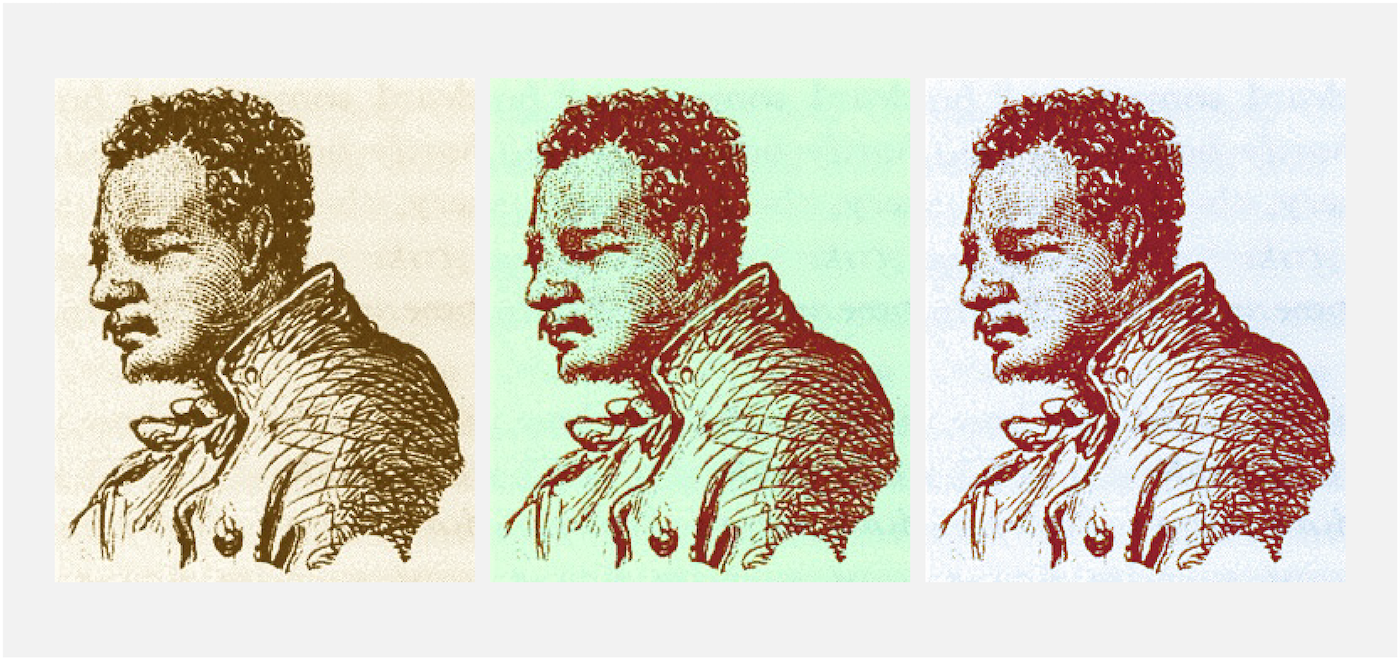
And yet the record, thin as it is, still says something thunderous. Shields Green was a man who escaped slavement, identified by Douglass as a fugitive from Charleston, South Carolina, who lived for a time in Rochester, New York, and moved within the abolitionist world that linked the Underground Railroad, Black political struggle, and John Brown’s increasingly militant anti-slavery campaign. He met Brown through Douglass. He went with Douglass to Chambersburg, Pennsylvania, for the now-famous final consultation before the Harpers Ferry raid. When Douglass refused to join what he believed would be a suicidal assault on federal property, Green was given the chance to leave too. He declined. In Douglass’s telling, Green answered with one of the most consequential lines in abolitionist history: “I b’leve I’ll go wid de ole man.”
That sentence has echoed for more than a century because it compresses so much into so little. It is not polished rhetoric. It is not a speech crafted for posterity. It is not a manifesto. It is a decision. And in that decision lies the reason Shields Green matters. He was not merely a supporting character in John Brown’s drama. He was one of the Black men whose presence made Brown’s raid more than a white abolitionist’s gesture. Green embodied the fact that enslaved and formerly enslaved Black people were not passive symbols in the anti-slavery struggle. They were strategists, couriers, resisters, fugitives, workers, armed participants, and, when required, martyrs.
“I b’leve I’ll go wid de ole man.”
That line survives because it does what the best historical testimony often does: it restores agency. Green was not dragged into Brown’s orbit. He chose. He listened to Douglass, who saw Harpers Ferry as a “trap of steel.” He listened to Brown, who still believed that a direct blow against slavery could ignite broader revolt. Then he made his own decision and accepted the likely cost.
The problem of writing a man who was not meant to be remembered
Writing about Shields Green requires unusual care because the temptation to overstate is built into the subject. When the archive is sparse, legend rushes in. One recurring claim is that Green was of African royal descent, a story that helped explain his nickname, “Emperor.” Another is that he was more deeply tied to Oberlin than the evidence can actually prove. Modern scholarship and local historical work have pushed back on both kinds of embellishment, arguing that Green’s real life is compelling enough without romantic inflation. The more responsible approach is to say that the origins of the nickname remain uncertain, and that although Oberlin later memorialized him, he likely never truly resided there as one of its own.
That uncertainty is not a flaw in the story. It is part of the story. Enslaved people were routinely denied the conditions that make biography possible. Their births went unrecorded or poorly recorded. Their labor was counted more carefully than their inner lives. Their family lines were broken by sale, terror, and forced movement. Their words were less likely to be preserved except when white officials, white journalists, or white reformers chose to record them. In Green’s case, the scarcity is especially severe. Even among Brown’s raiders, he is one of the least documented. That does not mean he mattered less. It means the historical system that preserved some people was designed to lose others.
Frederick Douglass remains the single most important witness to Green’s pre-raid life, and Douglass’s description is revealing. Green, he wrote, was “a man of few words,” with “singularly broken” speech, but also a man whose “courage and self-respect made him quite a dignified character.” That is not a sentimental portrait. It is a precise one. Douglass, who understood performance, intellect, bearing, and discipline as political weapons, recognized in Green a serious man. Brown did too. Douglass says Brown saw at once what “stuff” Green “was made of.”
Those details matter because they shift Green from myth to temperament. He emerges not as an abstraction called “the Black raider,” but as a person with restraint, grit, and what Douglass considered dignity. That dignity would matter again and again—in Chambersburg, at Harpers Ferry, in the jail at Charles Town, and in the way his memory survived afterward, more among Black communities and radical memory circles than in the mainstream national story.
From Charleston to Rochester
The broad outline of Green’s movement through the world is clear even where specifics are not. Douglass identified him as a fugitive from Charleston, South Carolina, a city that was not exactly casual about letting enslaved people escape. Charleston was a major slave port, a place deeply invested in the protection of slavery and especially alert to insurrectionary possibility in the wake of Denmark Vesey and the city’s long regime of racial surveillance. To flee such a place and make it north was itself an act of nerve, planning, luck, and endurance. Douglass specifically noted that South Carolina was not a state “from which a slave found it no easy matter to run away.” Green did it anyway.
By the late 1850s, Green was in Rochester, living in or around Douglass’s world. Rochester mattered because it was not only a northern city; it was a strategic abolitionist node. Douglass coordinated Underground Railroad activity there, and the city’s proximity to Canada made it a last American stop for many freedom seekers. Historical work on Rochester notes that Douglass’s home became an important station in those clandestine efforts and that Green himself was remembered as someone who guided freedom seekers to Douglass’s house. That detail, though modest, is enormously revealing. It suggests Green was not merely being sheltered by the abolitionist network. He was working inside it.
That is a crucial distinction. Too many accounts of the era flatten formerly enslaved people into grateful recipients of northern benevolence. But the Underground Railroad was not charity. It was a dangerous political infrastructure sustained by Black initiative as much as white assistance, and often more. Green’s presence in Rochester places him inside a world where fugitivity was turning into organized resistance, where the escaped were not just survivors but participants in a larger campaign against the slave system.
In Rochester, John Brown and Shields Green met. Brown had stayed in Douglass’s house while working on his plans, including the so-called Provisional Constitution for a liberated anti-slavery polity. This was not yet Harpers Ferry in its final form, but it already showed Brown thinking beyond protest and toward sustained conflict. Douglass says Brown and Green had ample opportunity to know each other there. Brown, who had a habit of assessing men for courage and usefulness, clearly judged Green to be someone he could trust under pressure.
Chambersburg and the choice that made history
The most dramatic single episode in Green’s life before Harpers Ferry is the Chambersburg meeting. Brown summoned Douglass to meet him in an old stone quarry near Chambersburg, Pennsylvania, a staging ground close enough to the borderlands of slavery to be tactically useful. Brown asked Douglass to bring money and to bring Shields Green. Douglass obeyed the summons. He and Green traveled together, stopping in New York along the way, and made their way to the rendezvous.
What followed has become one of the signal scenes in abolitionist memory. Brown laid out his plans. Douglass objected. He saw the raid not as a liberating strike but as catastrophe waiting to happen. Brown insisted. The conversation stretched on. At the end, Douglass refused to join. He then turned to Green and told him he could return home with him. This was Green’s exit ramp. No one could later say he had not been warned. No one could say he was ignorant of the danger. Douglass had made the danger plain. Brown had made the commitment plain. Green then chose Brown.
There is a tendency in some retellings to frame Green’s decision as loyal but simple, the act of a man who followed charisma more than strategy. That reading feels too easy. Green’s choice may have been influenced by Brown’s force of personality, but it was also legible within the political logic of the time. For a fugitive from slavery, the United States in 1859 was not a functioning democracy with a few moral defects. It was a regime that had nationalized human theft through the Fugitive Slave Act, defended bondage through the courts, and treated Black freedom as provisional. Brown’s raid was reckless. It was also an answer, however desperate, to a country that had turned legality into an instrument of permanent captivity. Green’s choice makes more sense when one remembers what the law looked like from below.
Douglass saw a “trap of steel.” Green saw a cause worth dying for.
This is where Shields Green begins to stand apart even from the larger legend of John Brown. Brown has never lacked biographers, defenders, critics, or cultural afterlives. Green has often appeared only as a footnote in Brown’s story. But the Chambersburg decision is exactly why he deserves his own frame. Brown chose to attack slavery. That was astonishing but not entirely surprising; he had been moving toward violence for years. Douglass chose not to go. That was prudent and historically consequential in its own way, preserving one of the century’s greatest Black voices. Green, however, chose the path that almost certainly ended in death even though he had the least institutional protection, the fewest avenues back from disaster, and the weakest claim on public sympathy. That was not secondary courage. It may have been the hardest courage in the quarry that day.
Harpers Ferry: the raid and the reality
On the night of October 16, 1859, Brown’s men moved on Harpers Ferry. The plan was bold, improvised, and ultimately doomed. Brown intended to seize the federal armory and arsenal, gather weapons, encourage enslaved people to join, and retreat into the mountains where a long anti-slavery struggle could begin. It was less a conventional uprising than the start of a guerrilla war against slavery. The raid failed militarily, but in failure it changed the country. The nation watched a white abolitionist and an interracial band of followers strike directly at slavery’s armed order. That spectacle deepened sectional panic, widened moral lines, and helped push the United States toward civil war. (National Park Service)
Five Black men joined Brown at Harpers Ferry: Osborne Perry Anderson, John Anthony Copeland Jr., Lewis Sheridan Leary, Dangerfield Newby, and Shields Green. Their presence is essential to understanding what Brown thought he was doing and how the raid should be remembered. This was not an abstract war for Black freedom without Black participants. It was an interracial insurgent effort in which Black men assumed risk at the center of the action. Later accounts have sometimes remembered Brown as though he alone carried the raid’s moral force. That has always been false. The Black raiders, Green among them, turned Brown’s anti-slavery conviction into shared action.
The final hours in the engine house have become iconic, but they were also brutally concrete. According to the National Park Service timeline, when the Marines stormed the engine house on the morning of October 18, Green and Edwin Coppoc surrendered while other raiders were killed or incapacitated. By then, the raid had collapsed. Brown was wounded. Several of his men were dead. The hostages survived. The hoped-for mass slave rising did not materialize. The state had reasserted control. Green, however, had remained in the fight long enough to be captured in the center of the disaster.
That fact, too, is worth lingering on. Green was not a planner in the way Brown or Kagi were planners. He is not known to have authored strategic documents. His historical role is not theoretical but embodied. He was there. He stayed. He fought. When the moment for surrender came, it came only after the raid had turned into a fatal trap. That is one reason later scholars and writers keep returning to him. Even stripped of myth, Green remains one of the clearest examples of anti-slavery commitment carried all the way to the wall.
The trial, racism in the courtroom, and a segregated road to death
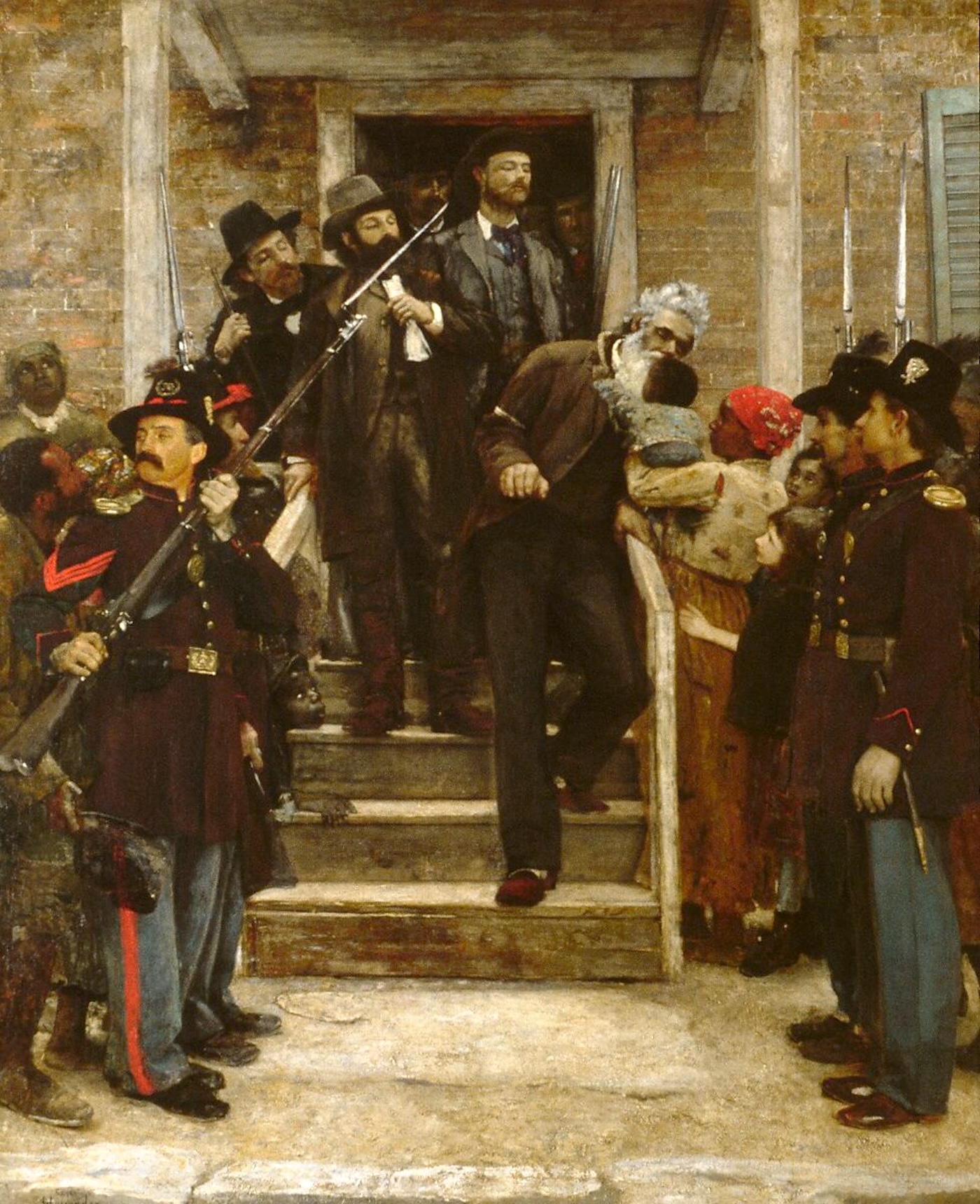
After the raid, Green was taken to jail in Charles Town, Virginia, alongside Brown and other captured raiders. What happened next reveals another truth about Shields Green’s significance: his life illuminates not just anti-slavery militancy but the racial order that answered it. Legal scholar Steven Lubet’s account of the trials of Green and John Copeland shows that while Brown was treated with a degree of respect by captors and observers, Green and Copeland were handled far more roughly. Lubet’s summary is blunt: Green and Copeland were tried for murder and treason, benefited from the defense of Boston lawyer George Sennott, and were acquitted on the treason count through a strategy that turned the logic of Dred Scott back on Virginia. But even as law operated, racism operated harder.
The legal irony was devastating. If Black people could not be citizens, Sennott argued, how could they commit treason against the Commonwealth? The move partially succeeded; Green and Copeland escaped conviction on treason while still being convicted of murder and sentenced to die. In other words, anti-Black constitutional logic could sometimes spare a charge without sparing a body. The system would not grant Black citizenship, but it would absolutely grant Black death.
Green’s treatment after sentencing was also shaped by race. Lubet notes that Virginia authorities maintained racist distinctions even in execution, separating Green and Copeland from their white comrades. Their bodies were not treated as the remains of political actors or even condemned men entitled to dignity. They were claimed by Winchester Medical College for dissection. Oberlin historical records, which preserve the later memorial story, confirm that after Green and Copeland were executed on December 16, 1859, medical students claimed their bodies as teaching cadavers. James Monroe went to Virginia trying to recover Copeland’s remains and saw Green’s body at the college, but the effort to restore bodily dignity failed.
Even in death, slavery’s order tried to make Black bodies available for use.
That detail is not incidental. It clarifies the world Green was fighting. Harpers Ferry is often told as a prelude to Civil War, which it was. But at the level of the body, the story is even starker. The same civilization that prosecuted him as a criminal insurgent also treated his corpse as disposable material. There is a straight line between slavery’s commodification of the living and the post-execution appropriation of the dead. Green’s fate exposes that line with terrible clarity.
Why Shields Green matters beyond John Brown
So why does Shields Green matter now, beyond his role in the familiar pageant of Harpers Ferry? He matters first because he corrects the moral geometry of the abolitionist story. American memory has often been more comfortable celebrating white anti-slavery heroes than confronting the autonomy of Black resistance. Brown can be admired as a righteous white martyr without forcing the country to fully reckon with Black insurgent will. Green disrupts that comfort. He reminds us that Black people did not simply inspire white conscience; they also acted on their own political judgment, including through force.
He matters, too, because his life reveals the range of abolitionism. The movement was never only speeches, newspapers, petitions, and legislative contests, though it included all of those. It was also vigilance committees, rescue operations, clandestine travel, armed self-defense, and at times revolutionary violence. Green’s life moved through that whole spectrum: fugitive, Underground Railroad operative, associate of Douglass, recruit of Brown, raider, prisoner, executed abolitionist. Compressing him into “one of Brown’s men” strips away the scale of that journey.
There is also something politically urgent in the fact that Green has so often been forgotten. The Washington Post’s retrospective on the Black men who joined Brown makes the point plainly: they have been forgotten in public memory despite their central role in the raid. That forgetting is not random. It reflects how national narratives often prefer Black suffering to Black militancy, and symbolic inclusion to concrete leadership. Green is harder to assimilate into a tidy patriotic story because he was not asking America to improve itself gradually. He joined an armed attempt to break slavery open..
And yet Green is not just useful as an emblem of militancy. He is also a figure through whom one can see moral seriousness at a very intimate scale. Douglass’s description of him as dignified, reserved, and courageous is striking partly because it resists caricature. Green was not remembered as flamboyant. He was remembered as steady. The famous line about going with “de ole man” can sound folkloric when pulled loose from context. Within context, it is austere. It sounds like a man who has weighed the matter and has no need for theater.
The afterlife of memory
Green’s historical afterlife has been uneven, but not empty. On Christmas Day in 1859, memorial observances were held in Oberlin for Green, Copeland, and Leary. By the mid-1860s, a cenotaph had been erected commemorating those men. The current Oberlin Heritage Center account notes that the monument, now in Martin Luther King Jr. Park, honors three African American men who joined Brown’s raid and explicitly includes Green, even though he likely never truly lived in Oberlin. That is revealing in its own way. Oberlin, a radical anti-slavery town, effectively adopted Green into its civic memory because his sacrifice fit the moral community it wanted to claim.
The monument’s inscription is strikingly direct: these men “gave their lives for the slave.” That phrasing matters. It situates them not as adventurers, not as fanatics, but as people who died in service of liberation. The memorial also reflects Reconstruction’s moral horizon. The Latin phrase on the monument, as the Oberlin materials explain, only makes sense in a post-emancipation moment: “At last, slavery is dead, praise God.” Green’s memory thus entered public stone not merely as tribute to a lost cause, but as vindication. His death was being re-read in the light of slavery’s destruction.
Still, commemoration is not the same as incorporation into mainstream history. Brown remained famous. Green lingered at the margin. Recent scholarship and public history work have begun to correct that imbalance. The very existence of a modern book-length study of Green, praised by scholars and public intellectuals for changing how readers understand Brown, Douglass, and slavery itself, suggests the field is finally moving toward him. But the recovery is late. It should trouble us that it has taken so long to center a man whose choice at Chambersburg and whose presence at Harpers Ferry were so consequential.
A life in fragments, a legacy in full
In the end, Shields Green’s significance does not depend on recovering every missing biographical detail. It depends on seeing clearly what the existing record already shows. He was a fugitive from slavery who made his way into the heart of the abolitionist movement. He lived close enough to Frederick Douglass for Douglass to know his character and trust him with dangerous work. He was invited to step back from John Brown’s impossible plan and refused. He fought at Harpers Ferry. He was captured, tried, condemned, and hanged. Then the same social order he had fought treated his body as available matter. Later generations of Black memory and radical memory tried, in stone and story, to reclaim him.
That arc is enough to make Shields Green important. More than enough, really. It places him in the company of those American figures whose lives expose the moral stakes of their age with unusual force. Green tells us that resistance to slavery was not only legislative, literary, or rhetorical. It was sometimes quiet, armed, unspectacular, and absolute. It was sometimes a man of few words choosing the more dangerous road because the safer road led back into a nation built to hunt him.
For a long time, Shields Green has occupied a strange historical position: admired by those who know, nearly invisible to those who do not. But invisibility is not the same as insignificance. In some ways, it is the opposite. The people most likely to be blurred in the national portrait are often the ones whose clarity would change the composition of the whole. Green is one of those figures. Move him from the edge to the center and the story of abolition changes. It becomes less paternal, less decorous, less white, less comforting, and more true.
Which may be the best reason to keep writing him back in. Shields Green does not offer America a flattering memory. He offers an exacting one. He asks what freedom required, who was willing to risk everything for it, and why the nation still finds some of its bravest people easier to memorialize in fragments than to fully remember.
More great stories
Afro Sheen, Wall Street, and the Architecture of Black Possibility
July 6, 2026
No Comments
The Fire Inside the Fourth
July 5, 2026
No Comments