




He should be remembered in full, which means resisting both pious exaggeration and casual dismissal.
He should be remembered in full, which means resisting both pious exaggeration and casual dismissal.
By KOLUMN Magazine
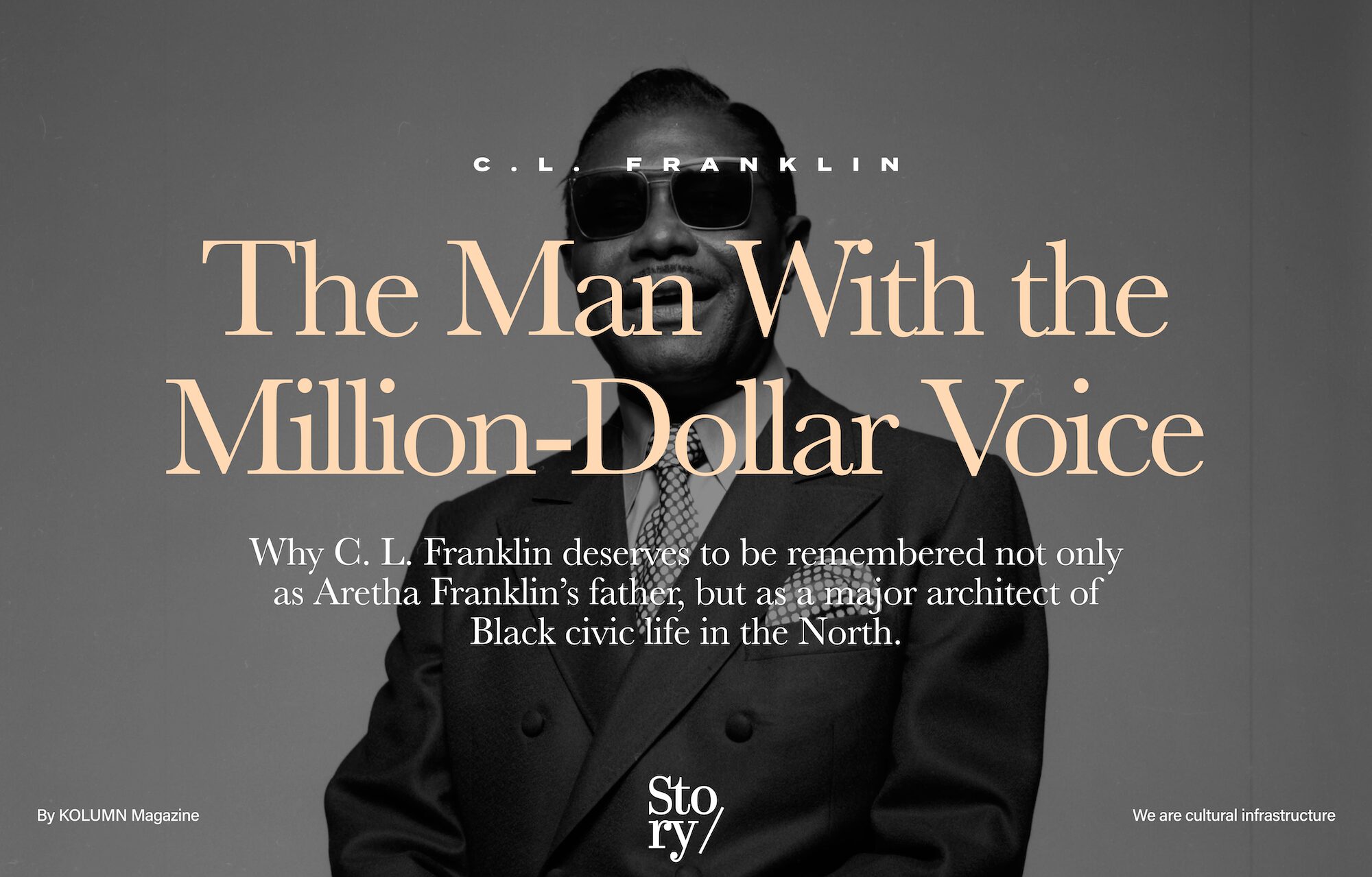
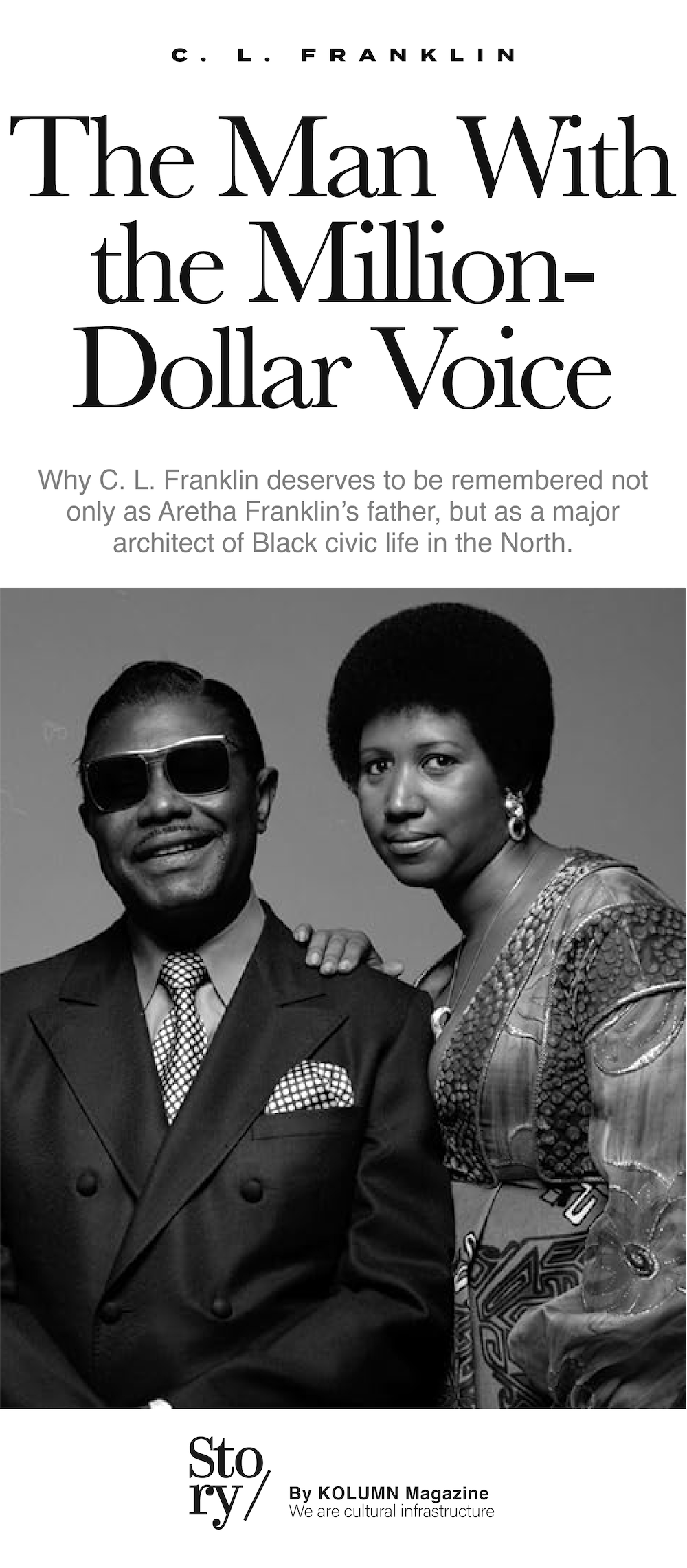
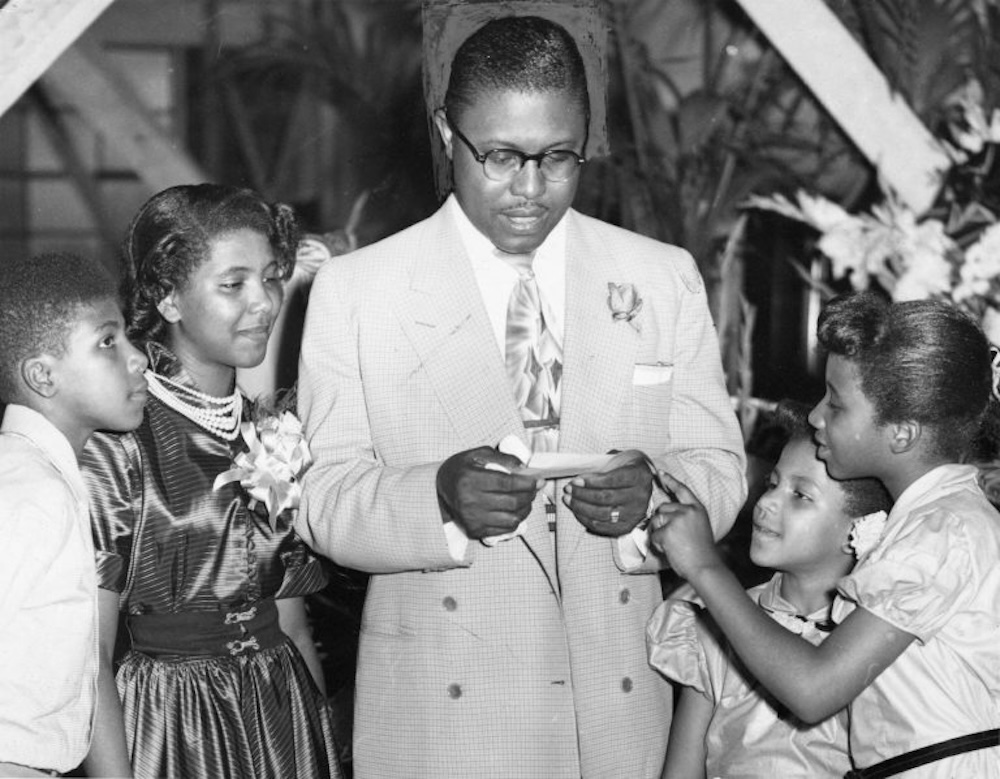
C. L. Franklin stood at the intersection of several American stories at once. He was a preacher of extraordinary force, a nationally known recording artist in the era before the term “content platform” existed, a Detroit pastor whose church sat at the center of Black civic life, a civil rights activist who helped organize one of the most consequential marches of 1963, and a man whose household shaped one of the greatest singers in modern history. He was also, inevitably, a complicated figure: charismatic, politically influential, artistically gifted, personally flawed.
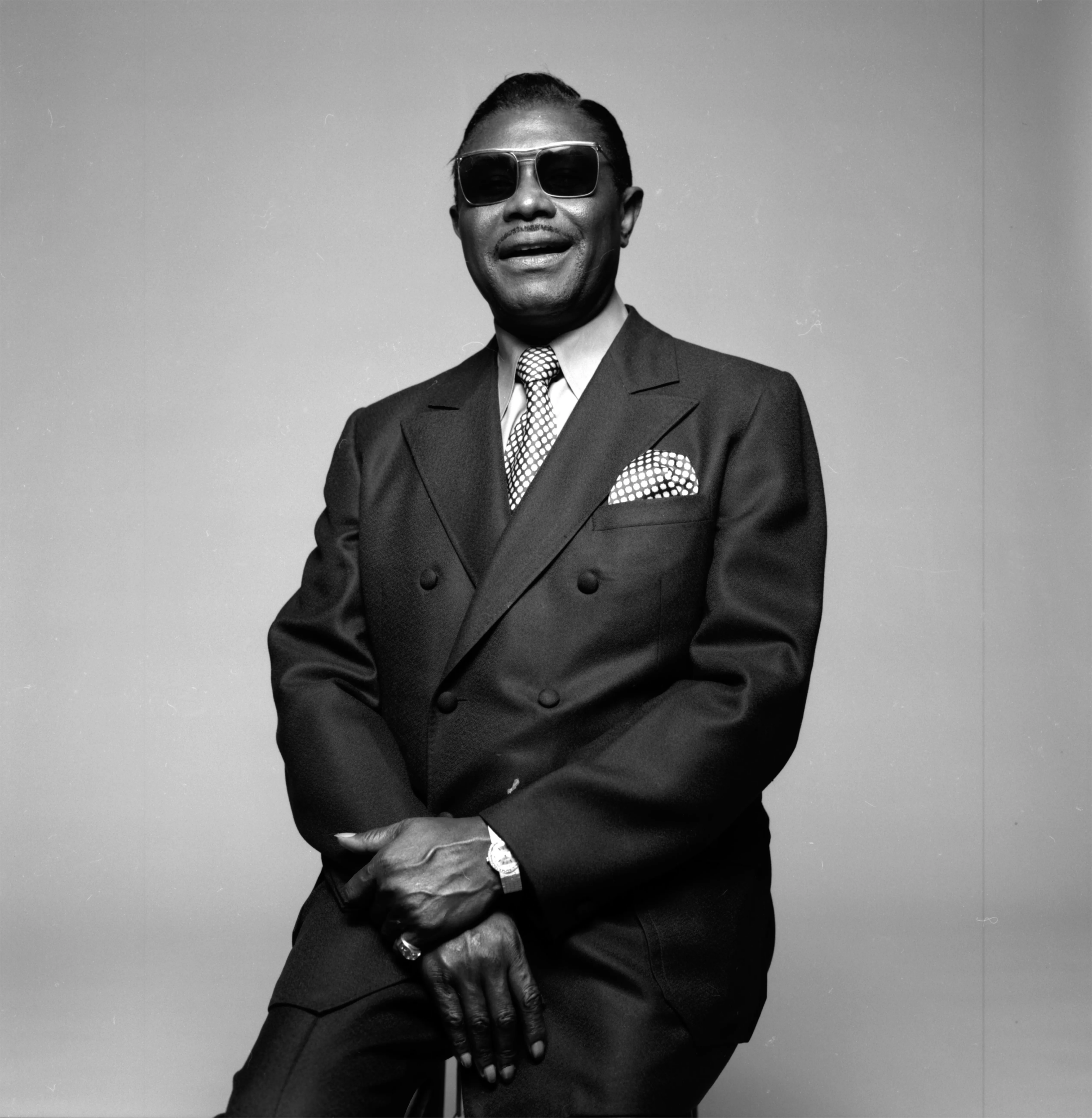
That complexity matters. Too often, C. L. Franklin is reduced to a supporting role in someone else’s legend, usually introduced as Aretha Franklin’s father and left there, as though his main contribution to American life was proximity to genius. That is an impoverished way to tell the story. Long before Aretha Franklin became the Queen of Soul, her father was already a major figure in Black America. By the 1950s and 1960s, he had made himself into something rare: a local pastor with national reach, a minister whose sermons sold on records, a churchman whose voice traveled through Black neighborhoods far beyond Detroit, and an activist who understood that northern segregation demanded not only moral outrage but organization.
His significance lies partly in what he represented. Franklin belonged to a generation of Black ministers who did not see preaching as confined to Sunday ritual. In that tradition, the church was sanctuary, political school, cultural commons, mutual-aid institution, performance space, and pressure center. He embodied that multipurpose role almost perfectly. He could thunder from the pulpit, raise money, shape public opinion, broker alliances, host movement figures, cultivate artists, and speak in a language that made religious conviction sound inseparable from Black dignity. That blend of the spiritual, the civic, and the performative is a big reason his life still matters.
A Mississippi beginning, a national voice in the making
Clarence LaVaughn Franklin was born in Mississippi in 1915, in a world shaped by Jim Crow, plantation labor, racial hierarchy, and the harsh economics of the rural South. The basic outlines of his early life are familiar to anyone who studies the Great Migration generation: poverty, precocious talent, religious formation, and movement from the South into northern urban life. What distinguished Franklin was the way he converted those conditions into style and authority. Before he became the renowned pastor of New Bethel Baptist Church in Detroit, he had already begun developing the expressive preaching voice that would later make him famous. Scholars and biographical accounts alike emphasize that his oratorical power did not come from thin air. It emerged from the sermonic traditions of the Black South, where preaching functioned as theology, performance, argument, and communal emotional release all at once.
He pastored in Memphis before ultimately moving north, and that matters because Memphis sat at a crossroads of sacred music, commerce, and Black public culture. By the time Franklin arrived in Detroit in 1946 to lead New Bethel Baptist Church, he brought with him not only ministerial experience but a sensibility already shaped by migration-era Black life. Detroit was ready-made terrain for such a figure. The city was booming, Black migrants were reshaping its neighborhoods and institutions, and yet racial discrimination in housing, employment, schools, and public accommodations remained deeply entrenched. In other words, Detroit was a place where a gifted preacher could become something more than a pastor. He could become a civic actor. Franklin did.
New Bethel grew under his leadership into one of Detroit’s most important Black churches. Accounts from the Detroit Historical Society and other sources describe him as both speaker and singer, a man whose religious authority was amplified by musical intuition and a keen sense of cadence. That combination turned sermons into events. Franklin’s preaching had architecture. He could begin conversationally, proceed through interpretation, build emotional momentum, and arrive at a shouted climax that felt less like a conclusion than a release of stored communal feeling. Listeners did not just hear him; they experienced him.
The phrase most associated with him, “the man with the million-dollar voice,” was not hype in the cheap sense. It was a description of market value and cultural reach. Franklin’s sermons were recorded and sold widely, making him one of the first ministers to transform Black preaching into a mass-mediated product. The Library of Congress notes that his 1953 recording of “The Eagle Stirreth Her Nest,” captured by Detroit entrepreneur Joe Von Battle and later inducted into the National Recording Registry, helped establish him as a national spoken-word force. That sermon, and the many recordings that followed, carried his ministry far beyond those seated in New Bethel’s pews.
The sermon as art form
One way to understand Franklin’s importance is to take his preaching seriously as art. That may sound obvious, but American cultural history has often separated high art from Black vernacular genius, or treated religious oratory as socially important but aesthetically secondary. Franklin disrupts that hierarchy. He belonged to a class of Black preachers whose vocal technique influenced not only other ministers but also singers, performers, and later recorded music. The arc of a Franklin sermon could resemble song structure: invocation, refrain, modulation, crescendo, call-and-response, emotional break. The line between preacher and performer was not clean because, in the Black church tradition, it was never meant to be.
That is part of why his role in American music history is larger than family biography. Aretha Franklin’s genius was her own, but she was formed inside an environment where voice itself was treated as instrument, testimony, and power. Reporting on Aretha Franklin’s life repeatedly returned to the politically charged household created by her father, one in which major civil rights figures and major musicians passed through the same doors. The Washington Post, PBS, Time, and the King Institute all note how deeply her upbringing was shaped by her father’s church and movement connections. In that sense, C. L. Franklin did not simply influence a daughter. He helped build one of the most consequential cultural incubators in modern Black America.
But Franklin’s records also mattered in their own right. At a time when radio, records, and touring circuits were remaking Black public life, he understood that the pulpit could travel. His embrace of gospel caravans and recorded sermons expanded the geography of ministry. Detroit Historical Society notes that he joined gospel tours in the 1950s and later created C. L. Franklin’s Gospel Caravan, featuring artists including the Clara Ward Singers and a young Aretha Franklin. That decision tells you something crucial about him: he grasped the church not as a fixed building but as a mobile network of performance, witness, and influence.
Detroit, the Black church, and the making of a civic leader
If Franklin had remained only an electrifying preacher, he would still merit remembrance. What elevates him further is the way he translated church authority into civic action. In Detroit, that meant confronting the fiction that racism was a southern problem. Midcentury Detroit offered industrial jobs and Black institutional growth, but it also offered segregated neighborhoods, unequal schools, employment discrimination, and routine humiliation in public life. Northern liberal self-congratulation had a way of obscuring all that. Franklin did not share those illusions.
He became active in civil rights work that linked the pulpit to urban struggle. Accounts of his activism note his efforts against discriminatory practices affecting Black workers, including Black members of the United Auto Workers in Detroit, and his broader role in campaigns against racial inequity in the city. Some details of that labor-facing work are better preserved in scholarship than in short biographical summaries, but the consistent picture across biographical and historical sources is of a minister who understood that racial justice in the North required engagement with jobs, unions, public accommodations, and municipal power—not just abstract declarations of brotherhood.
That framing is important because it rescues Franklin from a sentimental narrative of movement history. The standard civil rights story often runs southward: Montgomery, Birmingham, Selma, Washington. Detroit appears, if at all, as backdrop. But historians of northern freedom struggles have spent decades arguing that this map is incomplete. Franklin stands as evidence of that. He was part of a northern Black leadership class that knew segregation had metropolitan forms: real estate covenants instead of plantation lines, employment ladders blocked by race, downtown businesses that served Black dollars without honoring Black humanity. His activism belonged to that terrain.
In that sense, he was not merely importing southern civil rights politics into Detroit. He was adapting movement language to northern conditions. That required both coalition and friction. Detroit’s Black religious and political leadership was not monolithic. Figures such as Franklin and the Rev. Albert Cleage Jr. could share broad goals while disagreeing sharply about strategy, ideology, or institutional control. Those tensions were real, but they also demonstrate the seriousness of the political world Franklin inhabited. He was not operating in a simplified morality play. He was working inside a city where labor, liberalism, Black nationalism, Christianity, and electoral power intersected and sometimes collided.
The Walk to Freedom and Franklin’s place in movement history
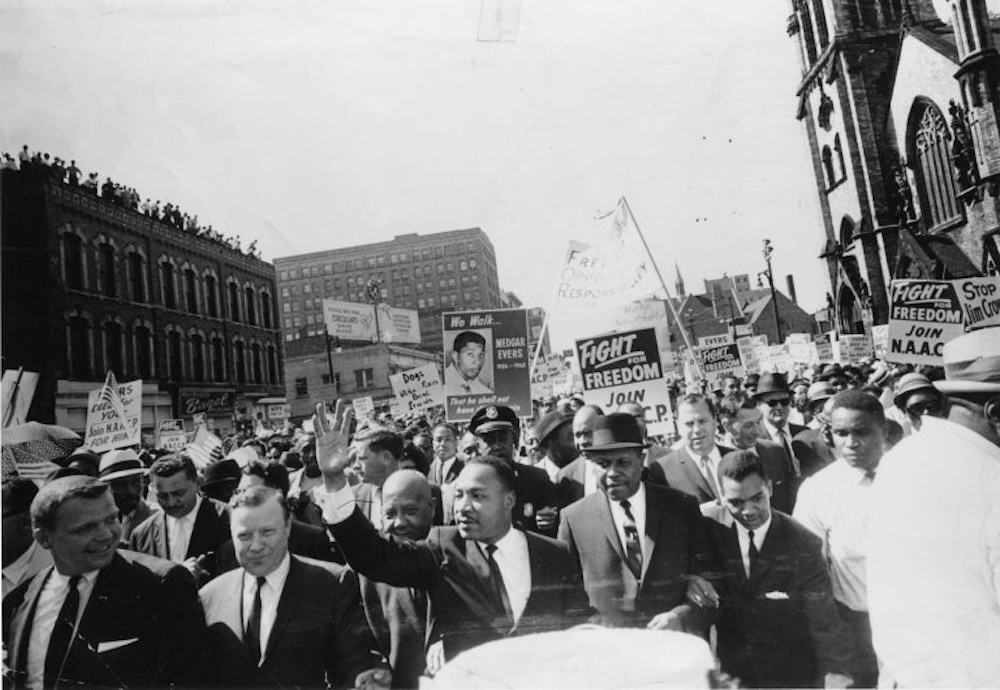
If one event secures Franklin’s place in national civil rights history, it is the 1963 Detroit Walk to Freedom. On June 23 of that year, more than 125,000 people marched down Woodward Avenue in what was then the largest civil rights demonstration in the nation’s history. Franklin helped lead and organize the march through the Detroit Council for Human Rights, working alongside other Detroit leaders and bringing Martin Luther King Jr. to the city as featured speaker. It was there, in Detroit, that King delivered an early version of what would become famous two months later in Washington as the “I Have a Dream” speech.
That alone should make Franklin a much more familiar figure in the national imagination than he is. The Walk to Freedom was not some minor warm-up act. It was a major demonstration, a rehearsal in scale and moral theater for the March on Washington, and a vivid reminder that Detroit was central to the freedom struggle. National Park Service materials, Detroit PBS, and historical overviews all affirm the march’s size and significance. King himself reportedly described it as one of the most wonderful things that had happened in America. Franklin’s role in making that possible means he belongs not on the margins of movement history but near its center.
The walk also clarified Franklin’s particular kind of leadership. He was not a theorist in the academic sense. He was not chiefly known for writing manifestos or seeking office. His gift was mobilization through moral authority. He could help create the conditions under which masses of ordinary Black Detroiters, labor allies, clergy, and national leaders occupied public space together. That is not glamorous work in the way later documentaries often prefer, but it is indispensable work. Movements are made not only by famous speeches but by people who can turn grievance into turnout, and turnout into memory. Franklin did that.
There is also a subtler point. Franklin’s involvement in the walk complicates the idea that northern Black churches were politically cautious or merely respectable institutions. New Bethel under Franklin was respectable, yes, but it was also politically alive. The church served as a place where cultural prestige, religious ritual, and civil rights action were braided together. That is precisely the kind of institution the movement depended on. Franklin helped make it so.
The house on Linwood, the movement in the living room
Part of Franklin’s legend comes from the company he kept and the world he gathered around him. His home and church were known gathering spaces where major Black public figures appeared. Martin Luther King Jr. was among his friends and allies. So were artists, gospel stars, and movement workers moving through Detroit’s dense Black institutional life. Aretha Franklin’s upbringing in that atmosphere has been well documented: she grew up in a place where music and movement were not separate categories, where celebrity and ministry overlapped, and where political conversation was ordinary.
This domestic and ecclesial world matters because it demonstrates how Black leadership reproduced itself. Franklin’s church was not just a venue for speeches. It was a formation space. Young people learned what authority sounded like. Musicians learned what emotional truth required. Activists learned what networks could be activated. Visitors encountered a Detroit Black world that was sophisticated, aspirational, wounded, strategic, and culturally radiant. In many ways, Franklin presided over a node in a much larger Black urban republic.
Yet any honest account has to admit that this world was not free of strain. Franklin’s personal life was complicated, and some accounts of the Franklin family story have noted pain, patriarchal imbalance, and the uneven costs of charisma. Biographical sketches also mention his legal troubles, including arrests related to drunk driving, drug charges, and tax matters. These details do not erase his public achievements, but they do belong to the record. The most serious historical writing on Franklin resists hagiography for exactly this reason. He was consequential because he was human in a particularly concentrated way: inspiring, contradictory, admired, and difficult.
That refusal to sanitize him is not punitive. It is clarifying. Black church leadership in twentieth-century America often demanded impossible things from its stars. Pastors were expected to be moral exemplars, political strategists, community fundraisers, artistic virtuosos, father figures, and public symbols all at once. Franklin excelled at several of those roles, but no one carries that much projected meaning without fracture. To note that is not to diminish him. It is to place him more accurately inside the institution that made him and that he, in turn, helped redefine.
Aretha, inheritance, and the politics of sound
No serious article on C. L. Franklin can ignore Aretha Franklin, but the relationship deserves more than easy shorthand. It is true that his fame has often been eclipsed by hers. It is also true that her artistry carries his imprint in profound ways. The church he led, the musical culture he cultivated, the caravan tours he organized, and the movement-centered household he maintained all shaped the context in which her talent developed. Multiple accounts note that she traveled with him and performed in settings tied to his ministry long before she became a secular music giant.
Still, Franklin’s importance is not simply genealogical. He helped construct the architecture within which Black sacred performance fed modern American popular music. His sermons circulated on records. His voice modeled dynamic phrasing. His church life fused spiritual urgency with public address. When commentators later described Aretha Franklin’s singing as containing sermon, cry, testimony, and command all at once, they were also describing the world C. L. Franklin represented. That does not reduce her originality. It situates it in lineage.
There is also politics in that lineage. Aretha Franklin’s later public commitments to civil rights did not emerge from nowhere. Time’s account of her activism, as well as coverage from the King Institute and other outlets, underscores that she was raised in a politically engaged household anchored by her father’s relationships and commitments. In that sense, C. L. Franklin’s legacy reaches beyond preaching and beyond Detroit. It extends into one of the defining musical careers of the twentieth century, and through that career into the broader Black freedom tradition.
Why Franklin matters to understanding northern civil rights
One reason Franklin’s stature feels strangely under-acknowledged is that American memory is still catching up to the full geography of the civil rights movement. For too long, the movement has been narrated as though its deepest battles occurred only below the Mason-Dixon line. Franklin’s life argues otherwise. Detroit’s freedom struggle involved churches, unions, neighborhood institutions, political organizations, and campaigns against discrimination that were every bit as real as their southern counterparts, even when they took different forms. Franklin’s activism belongs to that under-told northern history.
He also matters because he exemplified a specifically Black mode of leadership that does not fit neatly into secular categories. In many mainstream accounts, clergy are treated as symbolic endorsers standing just outside “real” politics. Franklin’s career shows how wrong that can be. For Black communities in midcentury Detroit, the church was often one of the few durable institutions with enough legitimacy, physical space, and communication power to do the work that other institutions refused to do. Ministers like Franklin were therefore not ornamental. They were infrastructural. They connected suffering to strategy.
That is one reason the phrase “activist” fits him, even if it does not capture the whole man. He did not merely voice general support for justice. He took part in movement building, allied with King, helped organize a landmark march, addressed discrimination in his own city, and used the institutional weight of New Bethel to advance Black civic power. To call him only a pastor is to understate him. To call him only a celebrity preacher is worse. He was a religious leader whose ministry was inseparable from public struggle.
Violence, silence, and the cruel final chapter
Franklin’s life ended with a kind of tragic stillness that seems almost unbearable when measured against the force of his voice. In June 1979, he was shot during what authorities described as an attempted robbery at his Detroit home. He never fully recovered, remaining in a coma for years before dying in 1984 at age 69. Contemporary obituary coverage and later historical summaries agree on the basic outline: one of the most resonant voices in Black America was, in effect, taken out of public life by violence long before his death certificate was signed.
There is a harsh symbolism there. Franklin had spent decades turning breath into power, and then he was rendered voiceless. For his family, especially Aretha Franklin, the ordeal was devastating and prolonged. Coverage of Aretha’s life later noted how she moved back to Detroit in part to help care for him. The family tragedy became part of the larger Franklin story, another reminder that public grandeur and private pain often sit alarmingly close together.
And yet even this final chapter reinforces his stature. His death was not treated as the passing of a local curiosity. He was remembered as a preacher and activist, a Detroit leader, a national Black religious figure, and a man whose civic influence had been widely felt. That language matters. It tells us how contemporaries understood him before later memory flattened him into a footnote in Aretha Franklin’s biography.
The legacy: beyond footnote, beyond paternity
So how should C. L. Franklin be remembered now? First, as one of the most important Black preachers of the twentieth century, a minister whose recorded sermons helped preserve and popularize a style of sacred oratory that shaped American culture well beyond church walls. The Library of Congress’s recognition of “The Eagle Stirreth Her Nest” is not nostalgic tokenism. It is an acknowledgment that Franklin’s recorded voice belongs in the nation’s archive.
Second, he should be remembered as a significant figure in the history of northern civil rights. His leadership in the Detroit Walk to Freedom alone would justify that status, but his broader role in Detroit’s Black public life makes the case even stronger. Franklin understood that racism in the North wore modern clothes and needed modern resistance. He treated ministry as a platform from which to fight it.
Third, he belongs in any serious conversation about the relationship between the Black church and American democracy. Franklin’s career demonstrates that the church has never been only about private salvation. In Black communities especially, it has often been a site where moral language is converted into political vocabulary, where beauty and resistance share a stage, and where leadership is judged by what it does in public as much as what it proclaims in scripture. Franklin knew that instinctively. He preached heaven, but he also organized Detroit.
Finally, he should be remembered in full, which means resisting both pious exaggeration and casual dismissal. He was an imperfect man. He lived with contradictions. His household, like many households built around charismatic authority, contained shadows as well as brilliance. But historical seriousness requires proportion. Franklin’s flaws were real; so was his achievement. The task is not to choose between them. It is to tell the truth about both.
That truth leads to a larger conclusion. C. L. Franklin mattered because he helped define a distinctly Black mode of modern leadership: rooted in the church, fluent in performance, engaged in movement politics, connected to labor and city life, and capable of translating communal grief into public demand. He belongs to the generation that made the Black pulpit one of the most powerful democratic institutions in America, especially when other institutions failed. He also belongs to the cultural lineage that produced some of the nation’s most enduring music, rhetoric, and moral witness.
If he is less remembered than he should be, that says as much about the country’s habits of memory as it does about his life. America often knows how to celebrate singular stars. It is less skilled at remembering the institutional builders, the coalition makers, the preachers who doubled as strategists, the local leaders whose work made national moments possible. C. L. Franklin was one of those figures. He did not simply stand near history. He gave it language, stage, and crowd.
And maybe that is the clearest way to put it. Before many Americans heard freedom in Washington, Detroit had already heard it through the ministry and organizing of C. L. Franklin. His voice carried scripture, but it also carried a city’s demand to be seen. In that sense, his legacy is not only ecclesiastical or familial. It is civic. It is cultural. It is American.
More great stories
Afro Sheen, Wall Street, and the Architecture of Black Possibility
July 6, 2026
No Comments
The Fire Inside the Fourth
July 5, 2026
No Comments