

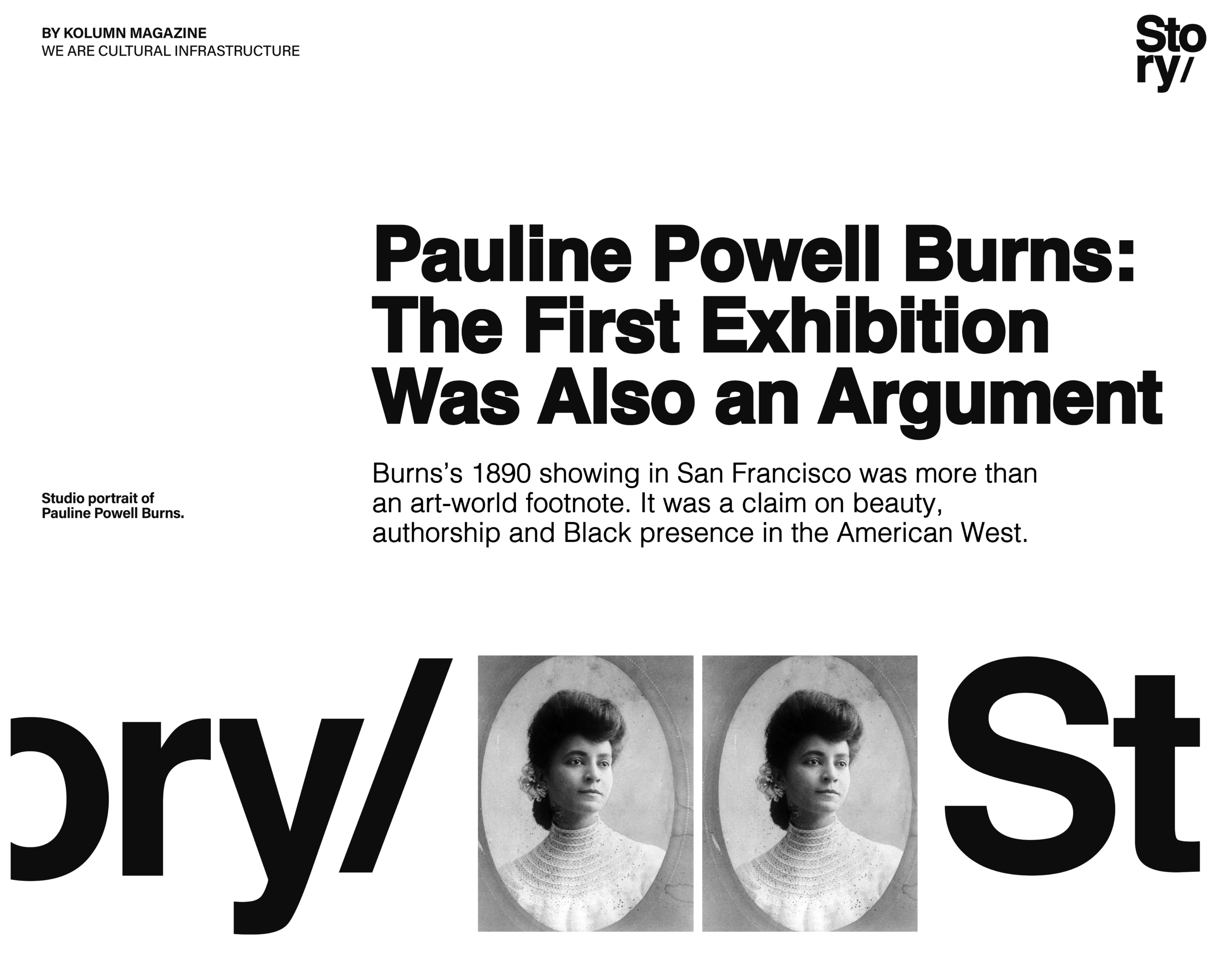
Burns’s first exhibition was not only a debut. It was a quiet breach in the architecture of exclusion.
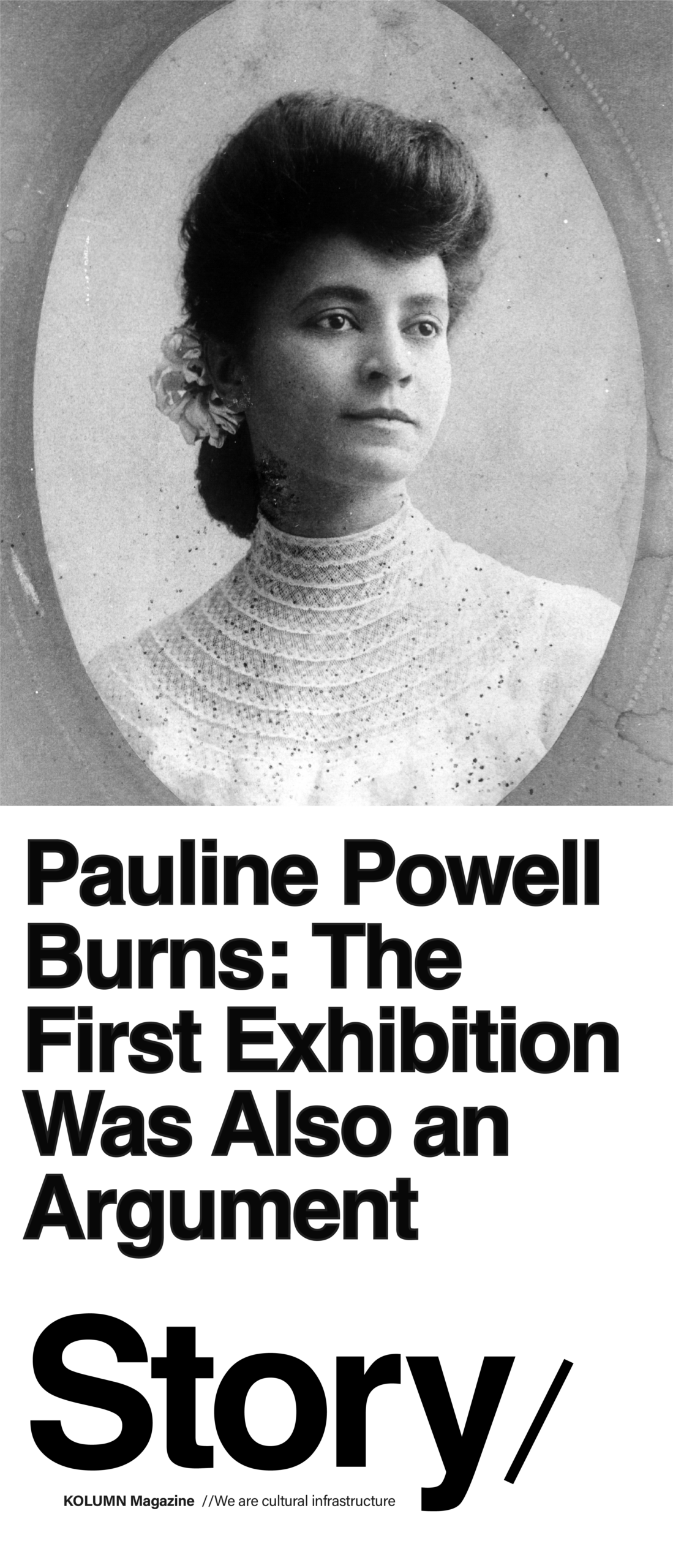
Burns’s first exhibition was not only a debut. It was a quiet breach in the architecture of exclusion.
By KOLUMN Magazine
There are artists who arrive in the historical record with manifestos, exhibitions, reviews, letters, diaries, students, enemies, scandals, photographs, archives. Then there are artists like Pauline Powell Burns, whose life must be recovered from fragments: a birth record here, a fair notice there, a surviving painting, a museum object page, a family line that reaches back to Monticello and forward into California’s Black civic imagination.
Burns was born Pauline Powell in Oakland, California, in the early 1870s and died in 1912, at only 40. She was a painter and a pianist. She was also, by the best available accounts, the first African American artist to publicly exhibit paintings in California, showing work at San Francisco’s Mechanics’ Institute Fair in 1890 when she was still a teenager, according to the Mechanics’ Institute and the Oakland Public Library.
That sentence is easy to write and too easy to flatten. “First” can become a decorative label, a plaque word, a way to honor someone without fully confronting the world that made the firstness necessary. Burns did not simply exhibit a painting. She crossed into public artistic space at a time when Black women were expected to labor, perform respectability, teach, serve, survive—and, if gifted, to do so without the durable institutions that turned white artists into movements and collections. Her appearance at the Mechanics’ Institute Fair was an act of cultural entry. It said that a young Black woman in Oakland had the right to make images, to show them, and to be considered not as a curiosity but as an artist.
Her best-known surviving work, Violets, painted around 1890, is now held by the Smithsonian’s National Museum of African American History and Culture. The museum identifies the work as oil paint on cardboard, measuring 10¾ by 12⅜ inches unframed, a small object that carries an outsized historical charge, according to the Smithsonian National Museum of African American History and Culture. At first glance, the painting appears modest: a gathering of flowers, quiet and domestic, seemingly far from the thunder of history. But the Smithsonian National Museum of African American History and Culture notes that in the Victorian era, flowers carried coded meanings, and blue violets symbolized watchfulness, faithfulness and love. That is the power of the work. Its intimacy is not a retreat from history. It is one way history survived.
From Monticello to Oakland
Burns’s story begins before her birth, in the forced geography of American slavery. She was a great-granddaughter of Joseph and Edith Fossett, members of the enslaved community at Thomas Jefferson’s Monticello, according to Monticello’s Getting Word project. Her grandmother, Isabella Fossett, was sold away from Monticello and her family at the age of eight, later escaping to Boston in the 1840s with the help of a free pass forged by her brother Peter Fossett, according to Monticello.
That lineage matters not because it turns Burns into an appendage of Jefferson’s story, but because it reverses the frame. American history has long made Jefferson central and the people he enslaved peripheral. Burns’s life insists on the opposite. The more important line runs from the blacksmith’s shop and the auction block to Boston, Cincinnati and Oakland; from forced separation to artistic authorship; from a child sold out of Monticello to a granddaughter whose hand made images now preserved by the national museum of Black history.
Monticello’s Getting Word project describes the Fossett descendants as a family whose generations fought social and political injustice, from aiding fugitives to desegregating streetcars and participating in sit-ins. Burns belongs inside that long freedom tradition, though her medium was not the courtroom, pulpit or protest line. Her medium was cultural presence. A painting of flowers may seem like a delicate inheritance, but in her hands delicacy becomes evidence: a Black woman’s eye, discipline and artistic ambition were present in nineteenth-century California.
By 1872, Monticello’s Getting Word migration map notes, Isabella Fossett’s daughter Josephine Powell had moved with her husband, a Pullman porter, to Oakland, where Pauline Powell Burns would become known as an artist and musician. Oakland was not incidental. In the late nineteenth century, the city became a destination for Black families building institutions, businesses, churches and social networks in the American West. Burns grew up in a place where Black life was not an afterthought to the region’s development but one of its engines.
Oakland Before the Myth
The Oakland into which Burns was born was not yet the shorthand of later national imagination: not yet the Oakland of the Black Panther Party, not yet the Oakland of postwar migration, not yet the Oakland of radical posters and raised fists. But the civic foundations were already being laid. Black Californians were building schools, churches, clubs, businesses, fraternal networks and artistic communities in a state that often celebrated freedom while practicing exclusion.
“To place Burns in California art history is to admit that Black women were not late arrivals to the West’s cultural life. They were there at the beginning of its public record.”
This is the world KOLUMN has returned to in previous art features such as its profile of Robert Seldon Duncanson, which argued that Black landscape painting was never merely scenic, and its recent writing on Alma Thomas, Claude Clark and Vivian Browne, each of whom forced American art to account for the artists it had trained itself not to see, as seen in KOLUMN Magazine. Burns belongs in that same editorial lineage, but she also pushes it earlier and westward. She asks us to locate Black visual modernity not only in Harlem, Washington, Philadelphia, Chicago or Cincinnati, but also in Oakland and San Francisco before the twentieth century had fully begun.
The Oakland Public Library identifies Burns as among the earliest African American artists to exhibit painting in California and notes that she was born in Oakland and first exhibited at the Mechanics’ Institute Fair in San Francisco in 1890. This matters because California art history has often been narrated through white plein-air painters, Gold Rush image-makers, European-trained landscapists and later modernists. Burns disturbs that map. She was not outside California art. She was there at its public threshold.
The 1890 Exhibition
The Mechanics’ Institute Fair was a major nineteenth-century San Francisco venue for industry, invention, craft, art and public display. Its history notes that artists such as William Keith and Thomas Hill showed at its fairs, and that Pauline Powell Burns exhibited there in 1890 at age 18, according to the Mechanics’ Institute. To appear in that space was to enter a civic theater of taste and progress. It was not a private parlor recital. It was a public claim.
Burns’s known early work centered on still lifes and flowers, genres often associated with women artists in the nineteenth century. That association has sometimes been used to diminish the field, as if flower painting were merely decorative. But such a view says more about the hierarchy of art history than about the work itself. Still life requires precision, composition, color judgment and restraint. It also offers room for symbolism, intimacy and coded feeling. In an era when Black women were routinely denied the privilege of interiority, a small still life could become a radical assertion: I see. I choose. I arrange the world.
The Smithsonian National Museum of African American History and Culture notes that still lifes, especially floral still lifes, were popular among nineteenth-century women artists and that Burns received notable recognition for her talent in the genre. That phrase—“notable recognition”—is important, but it also exposes the limits of the record. We know she was recognized. We know too little about how that recognition sounded, who gave it, how far it traveled, and why it did not generate the institutional scaffolding that might have preserved more of her work.
That is one of the recurring tragedies in Black art history. The loss is not only that artists were excluded. It is that even when they were noticed, the structures of preservation often failed them. Reviews disappeared. Works were sold privately, damaged, misplaced or uncatalogued. Women’s careers were folded into family histories. Black artistic achievement was treated as exceptional rather than foundational. Burns’s archive is thin not because her life was insignificant, but because significance and preservation have never been the same thing.
The Painter and the Pianist
Burns was not only a visual artist. She was also a pianist who gave public recitals in the Bay Area, according to BlackPast and Invaluable. That dual identity—painter and musician—places her inside a broader nineteenth-century culture of Black artistry in which performance, pedagogy, refinement and public respectability were often intertwined.
For Black women in Burns’s era, music could open doors that painting could not. Piano performance was legible to middle-class audiences as discipline, education and cultivated femininity. Painting, especially public exhibition, carried a different risk. It asked the viewer to accept not only the artist’s talent but her authority. A pianist interprets a score; a painter composes a world. Burns did both.
Her musical career may also help explain why her art was not fully centered in later accounts. BlackPast notes that she was sometimes better known as a pianist than as a painter. That imbalance is revealing. The record often preserves what a society is prepared to recognize. A Black woman at the piano fit one category of acceptable accomplishment. A Black woman as a public visual artist challenged another.
In this way, Burns’s life resembles a larger pattern in Black cultural history: talent was permitted when it entertained, elevated or reassured dominant audiences; it became more threatening when it claimed authorship over representation. Burns’s paintings do not shout. They do something subtler. They remain.
Reading Violets
Violets is small enough to miss and strong enough to reorganize a room. Its scale invites nearness. It does not announce itself through monumentality. It asks the viewer to come closer, to look at the density of petals, the tonal variation, the carefully managed contrast between softness and structure. The work is not a grand historical canvas, and that is precisely why it matters. Burns did not need an epic subject to enter history. She made the ordinary bear witness.
“The flowers do not look like protest. But survival often enters the archive quietly.”
The Smithsonian National Museum of African American History and Culture dates Violets to around 1890 and identifies Burns as an American artist who lived from 1872 to 1912. The museum’s interpretation situates the flower within Victorian symbolic language, where blue violets suggested watchfulness, faithfulness and love, according to the Smithsonian National Museum of African American History and Culture. In Burns’s context, those meanings take on additional resonance. Watchfulness becomes the vigilance of a people whose freedom was never secure. Faithfulness becomes fidelity to family memory across forced migration. Love becomes not sentimentality but continuity.
This is not to overburden the painting with meanings Burns may never have written down. It is to read the work with historical care. Black art has too often been forced into one of two cages: either treated as sociological evidence with no aesthetic autonomy, or celebrated as “universal” only when stripped of Black historical context. Burns resists both reductions. Violets is formally disciplined and historically alive. It is a painting, not merely a document. It is also a document, not merely a painting.
Scarcity, Market and Museum Memory
Only a small number of Burns’s works are known to survive. Swann Galleries, writing in 2014 about California artists Pauline Powell Burns and Beulah Woodard, described Burns’s work as “extremely scarce” and noted that Violets, circa 1890, was among the first works by the pioneering artist to appear at auction. The same account stated that the largest known collection of her paintings was at the Oakland Museum of California, according to Swann Galleries.
Scarcity can make an artist romantic to collectors, but it should make historians uneasy. A scarce body of work is not always the result of modest production. It can be the result of neglect, fragile materials, domestic storage, racial exclusion, gendered dismissal and the absence of institutional acquisition when the artist was alive. Burns painted on cardboard, cardstock and canvas; works on paper and board are vulnerable to deterioration. The survival of Violets is not a neutral fact. It is a rescue.
The National Museum of African American History and Culture’s acquisition and interpretation of Violets gives Burns a national platform she did not have in life. Artsy, previewing the Smithsonian museum’s opening, placed Burns’s Violets among works by more widely known Black artists such as Sam Gilliam, Rashid Johnson, Lorna Simpson and Alma Thomas, noting that the inaugural exhibition included both major names and relatively unknown works like Burns’s textured flower painting. That curatorial placement matters. It refuses a history of Black art that begins only when the market or mainstream museum system becomes interested. Burns is not a prelude. She is part of the structure.
JSTOR’s 2022 announcement of open images from the Smithsonian’s National Museum of African American History and Culture singled out Burns’s Violets as an intimate still life and described her as self-taught, highly regarded in her day, and among the first African American artists to exhibit publicly in California. The word “self-taught” must be handled carefully. In art history, it can sometimes imply innocence or separation from sophistication. For Black artists denied access to academies, “self-taught” often means something else: disciplined under constraint, educated through alternative routes, skilled without institutional permission.
A Black Woman Artist Before the Gate Opened
Burns’s life unfolded before the Harlem Renaissance, before the New Negro arts movement, before the Harmon Foundation exhibitions, before the Works Progress Administration opened complicated but real opportunities for Black artists, before the Black Arts Movement made cultural self-determination a public demand. She worked before there was a broad vocabulary for what she represented.
That is why her significance cannot be measured only by the number of known works. She forces a chronology correction. Black women artists were not waiting in silence for the twentieth century to begin. They were painting, performing, teaching, showing, improvising careers in the narrow space allowed them. Burns’s presence in 1890 California complicates any account of American art that treats Black women’s visibility as a late development.
KOLUMN’s recent art coverage has repeatedly returned to the problem of delayed recognition. In its profile of Vivian Browne, KOLUMN Magazine described rediscovery as a larger question of “who gets remembered, who gets filed into categories, and who gets admired only after the culture finally catches up.” Burns stands at the root of that question. She was not rediscovered because she had disappeared naturally. She was obscured by the systems that made disappearance routine.
Her story also belongs alongside KOLUMN’s writing on Henry Ossawa Tanner, which argued that a Black artist need not paint explicitly racial subjects for the work to carry political meaning, as explored by KOLUMN Magazine. Burns’s flowers operate in that same register. The politics are embedded in the right to make them, exhibit them and have them survive under her name.
The Western Problem in Black Art History
Black art history is still too often told along an eastern corridor: Boston, New York, Philadelphia, Washington, Richmond, Charleston, Atlanta. Cincinnati appears because of Duncanson. Chicago appears because of the South Side and the New Negro networks. Los Angeles appears later, often through assemblage, muralism and postwar movements. Oakland and San Francisco appear too rarely in the nineteenth-century account.
Burns helps correct that. Her life demonstrates that the Black West was not only a migration destination or a political symbol. It was a site of artistic production. California’s racial order differed from the Jim Crow South, but it was not innocent. Black Californians faced discrimination in housing, employment, education and public life. Against that backdrop, Burns’s exhibition becomes a civic act. She did not simply live in Oakland. She helped author the visual record of Black Oakland before the city became nationally famous as a center of Black political imagination.
The Mechanics’ Institute now acknowledges her 1890 exhibition as the first showing of paintings by an African American artist in California. This is the kind of institutional correction that matters: not symbolic inclusion after the fact, but a revised account of who was present in the room.
The Short Life
Burns married Edward E. Burns in 1893, according to biographical summaries compiled by BlackPast. She died in 1912. Swann Galleries notes that she lived a relatively short life, dying that year, and BlackPast identifies tuberculosis as the cause.
“Her death at 40 did not end a career so much as interrupt a historical possibility.”
The shortness of the life is painful because it leaves so many questions unanswered. What might Burns have painted in middle age? Would she have continued still life, expanded into portraiture, taught younger artists, joined women’s clubs, exhibited more widely, shaped Oakland’s Black cultural institutions? Did illness narrow her production? Did marriage change the public record of her work? Were paintings lost in family dispersals, private homes, estate sales? The responsible historian cannot invent answers. But the responsible writer must let the questions stand, because they mark the shape of the loss.
Tuberculosis was not merely a private illness in the early twentieth century. It was entangled with housing, poverty, urban conditions and public health inequities. To say Burns died of tuberculosis at 40 is to say that a significant Black woman artist died in a society where talent did not guarantee protection. The archive preserves the date. It cannot measure the unwritten paintings.
What Her Work Asks of Us Now
The modern recovery of Burns’s life is part of a broader reckoning with Black women artists whose careers were minimized by race, gender, geography and genre. But recovery cannot stop at celebration. It must move toward criticism, exhibition, acquisition, conservation and teaching.
Burns should be discussed in surveys of nineteenth-century American art, California art, Black women’s history and the visual culture of the American West. Her work should be placed in conversation with Edward Mitchell Bannister, Robert Seldon Duncanson, Grafton Tyler Brown, Edmonia Lewis and later Black women artists who confronted the museum world’s exclusions from different positions. She should also be read alongside the domestic arts, music culture and club networks that shaped Black women’s public life before the twentieth century’s better-documented movements.
The point is not to inflate Burns beyond the evidence. It is to take the evidence seriously. A young Black woman from Oakland exhibited in San Francisco in 1890. She painted still lifes with skill. She performed as a pianist. Her family history connected the violence of Monticello to the self-making of Black California. Her surviving work entered the Smithsonian National Museum of African American History and Culture. Each fact is sturdy. Together, they form a life that demands more than a footnote.
The Archive as a Moral Test
KOLUMN Magazine’s larger project has often been to treat Black historical recovery not as nostalgia but as cultural infrastructure. Burns’s story belongs precisely there. She is not only a subject for art historians. She is a test of how a culture handles partial evidence. Does it dismiss what is fragmentary? Or does it recognize that fragmentation is often the signature of historical violence?
To write Burns well is to resist both exaggeration and erasure. She was not famous on the scale of Tanner or Duncanson. She did not leave behind a large known body of work. She did not found a school or publish a theory of art. But none of those absences diminishes the force of what remains. In fact, they clarify it. Burns’s significance lies in the combination of precedent, survival and symbolic density. Her life joins enslavement’s aftermath to western Black institution-building. Her art joins Victorian still life to Black female authorship. Her exhibition joins public culture to the long struggle over who gets to be seen.
The violets are still there. Small, watchful, faithful. A cluster of flowers painted by a young woman whose country had not yet learned how to remember her. That she is now visible at all is the result of curators, archivists, scholars, descendants, collectors and institutions willing to look again. But looking again is only the beginning.
Pauline Powell Burns should not be remembered merely as the first African American artist to exhibit paintings in California. She should be remembered as an artist who reveals how much of Black art history survives in narrow margins—and how powerful those margins become when read with care. She left behind more than violets. She left a challenge: to build an art history capacious enough to hold the lives it once allowed to disappear.
More great stories
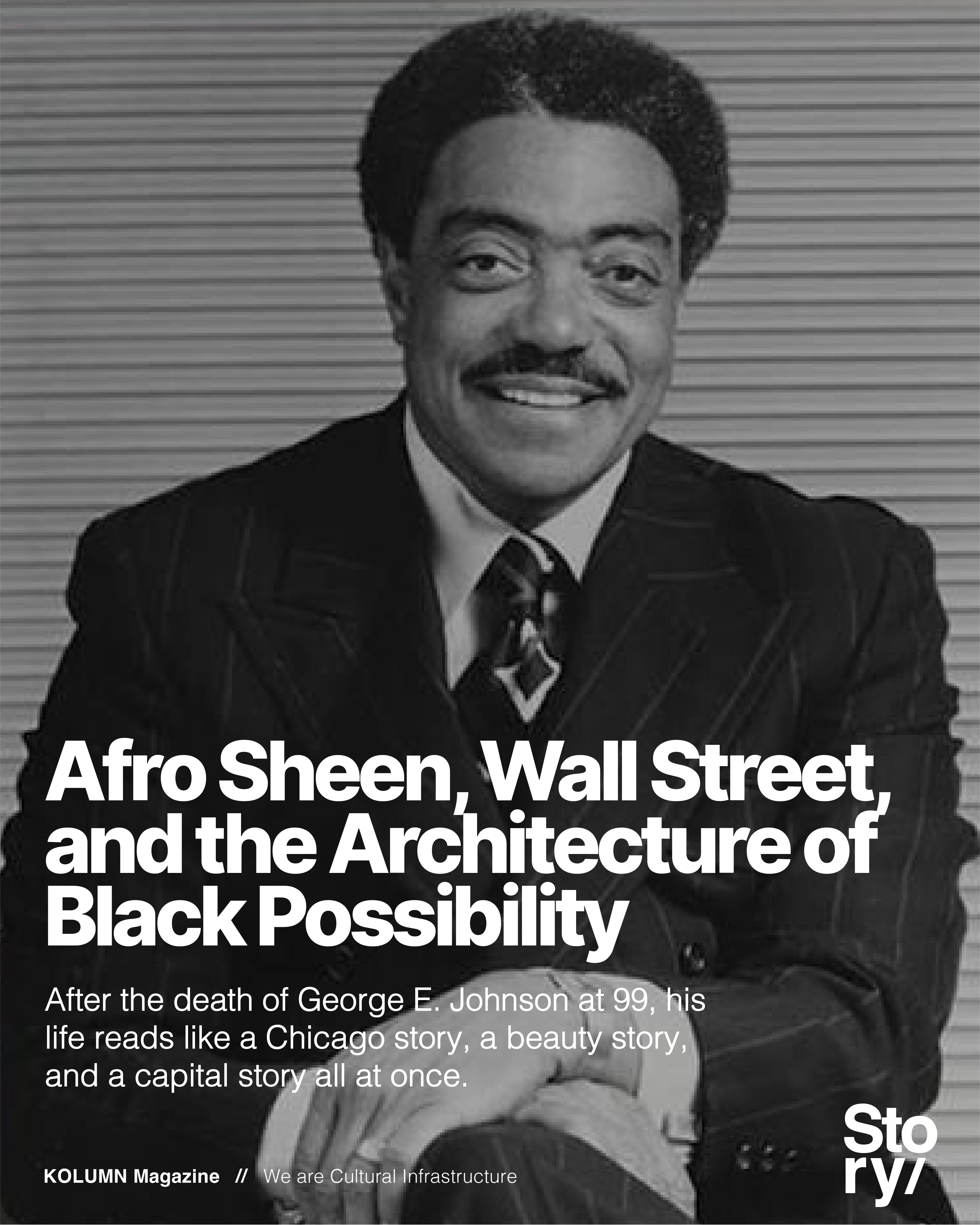
Afro Sheen, Wall Street, and the Architecture of Black Possibility
July 6, 2026
No Comments
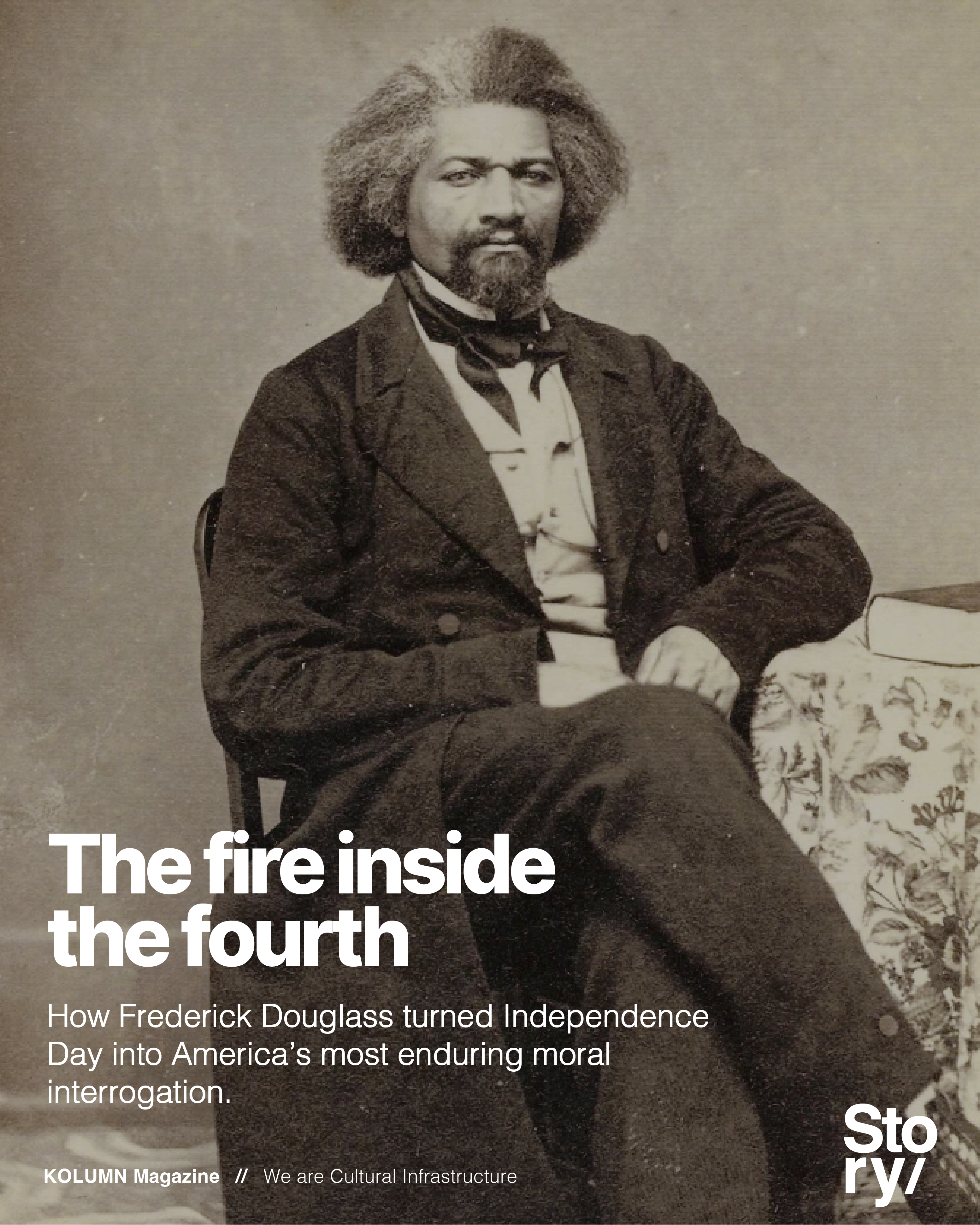
The Fire Inside the Fourth
July 5, 2026
No Comments