




The uncomfortable category of American figures whose lives expose the gap between the republic’s self-image and its conduct.
The uncomfortable category of American figures whose lives expose the gap between the republic’s self-image and its conduct.
By KOLUMN Magazine
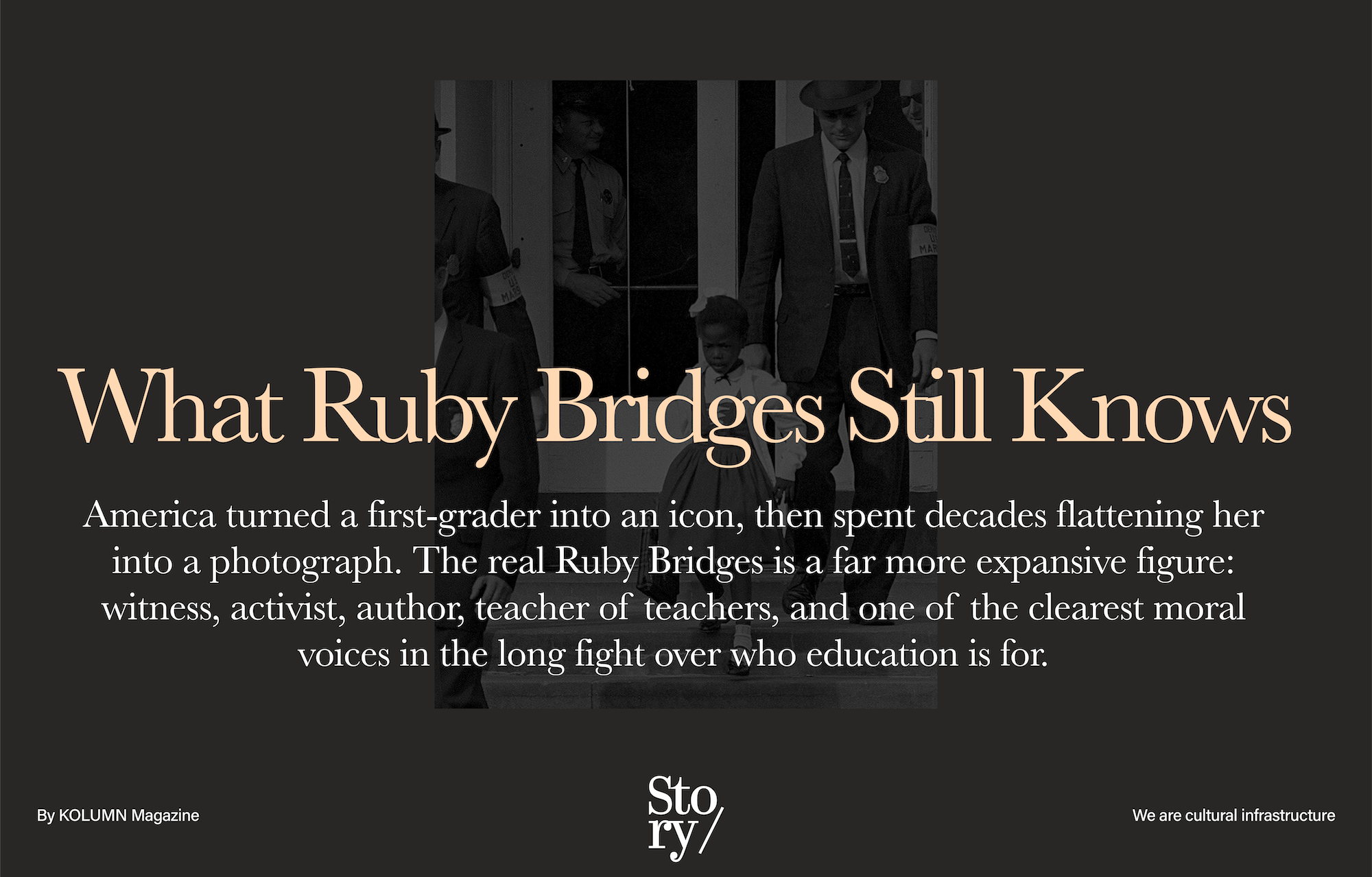
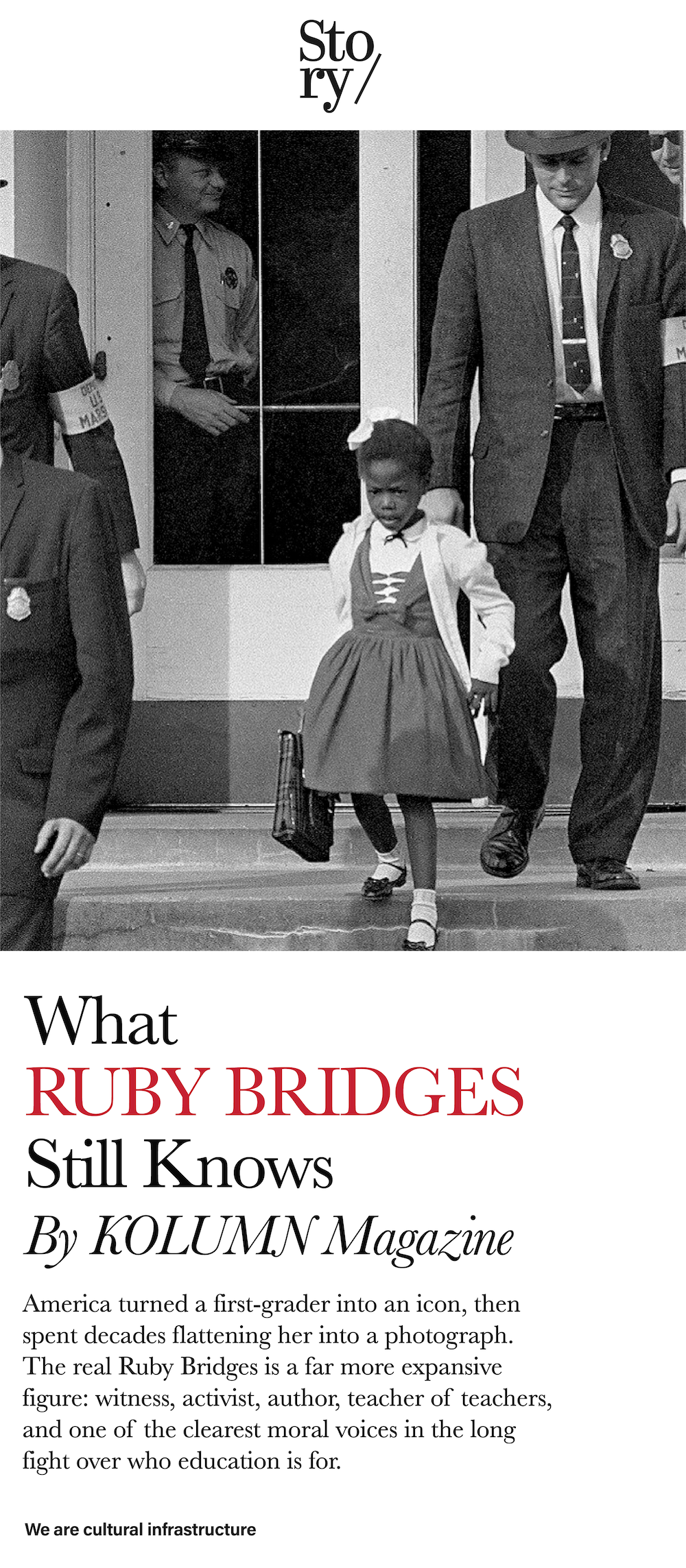
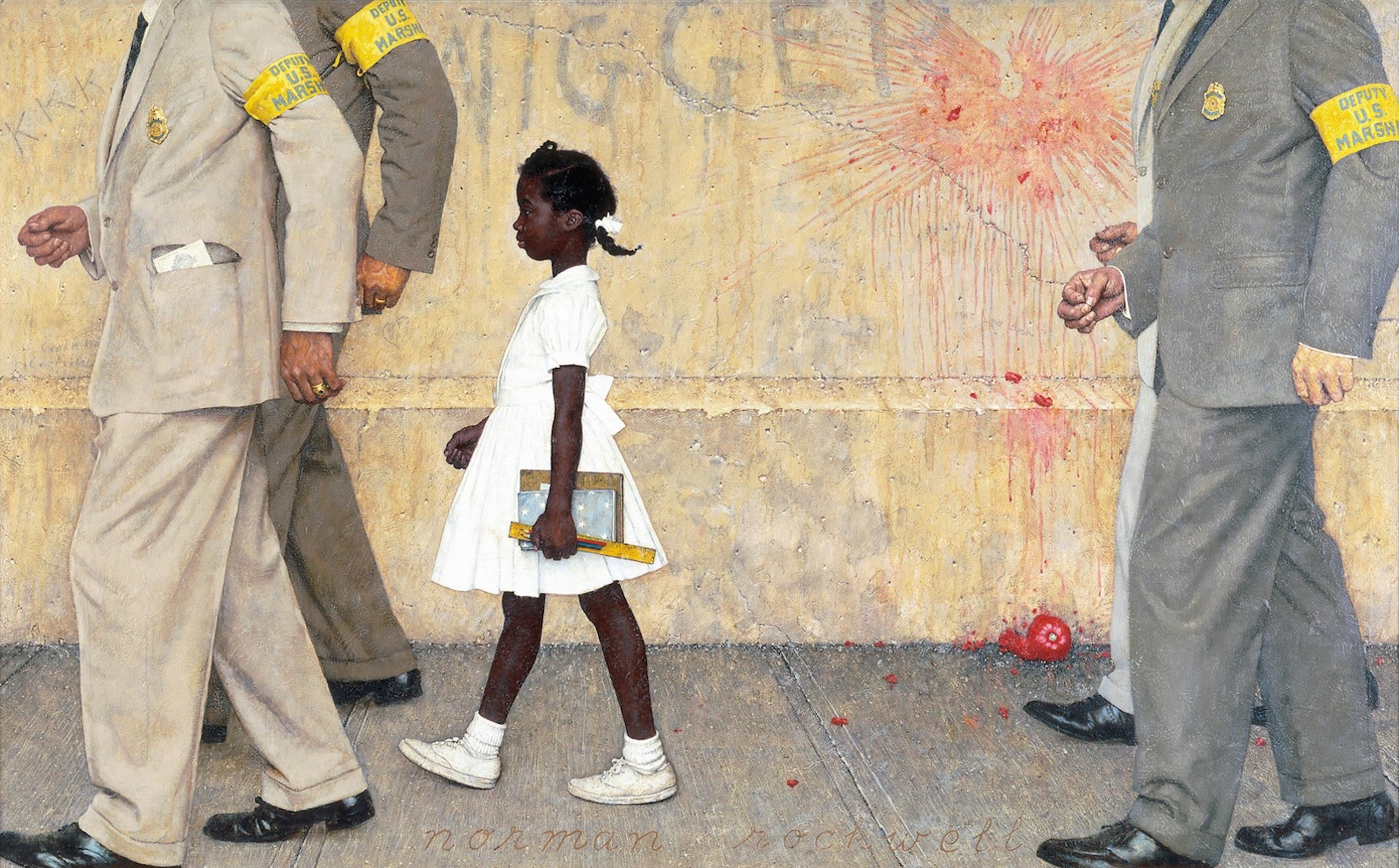
Ruby Bridges is one of those names that American culture thinks it already understands. The image arrives before the biography does: a small Black girl in a pressed dress, lunch pail in hand, framed by the torsos of federal marshals and a wall made ugly by white hatred. It is one of the definitive tableaux of the civil rights movement, and like many definitive tableaux, it has been asked to do too much. It has been used to symbolize innocence, national progress, constitutional order, racial cruelty, Black courage, white shame, and the possibility of redemption. What it often has not been allowed to do is return Ruby Bridges to herself. She entered public memory as a child under siege. She has spent the rest of her life insisting that the story did not end at the schoolhouse door.
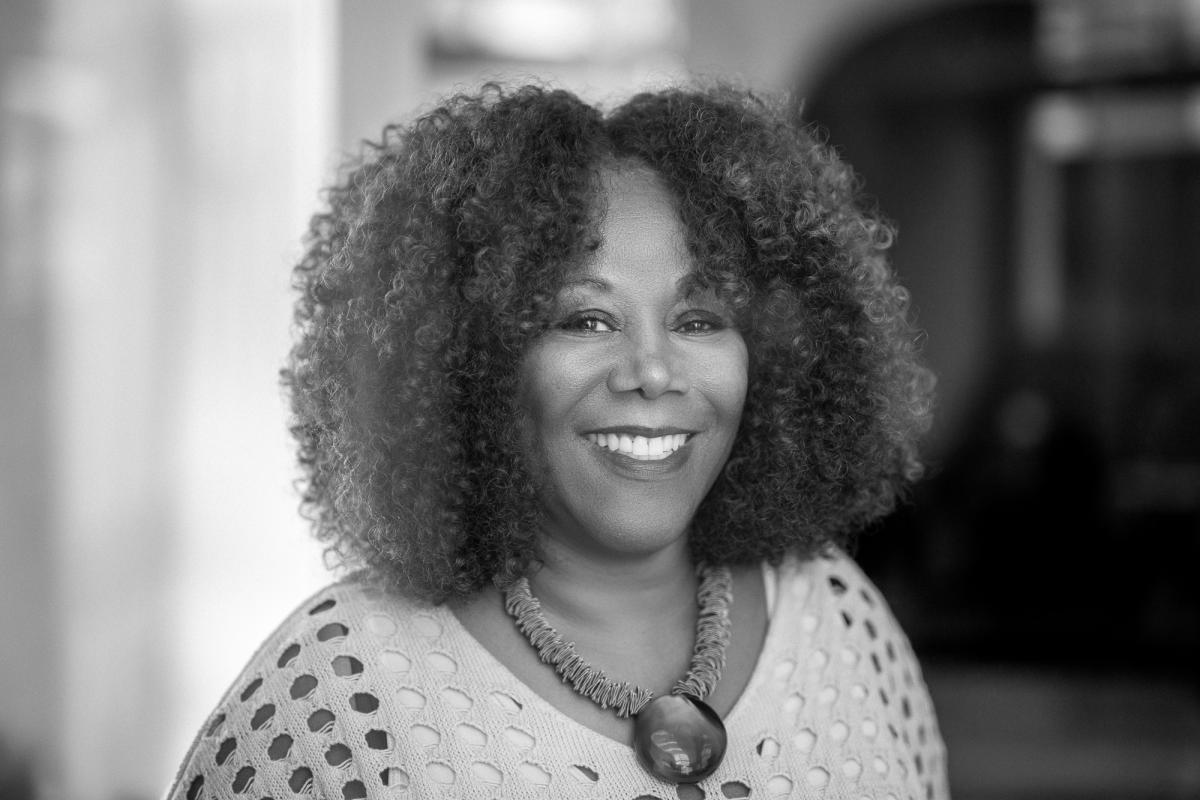
Bridges was born Ruby Nell Bridges on September 8, 1954, in Tylertown, Mississippi, to Abon and Lucille Bridges. When she was still very young, the family moved to New Orleans in search of better work and better schooling, a migration pattern that belongs to a much larger Black story in the mid-20th-century South: parents trying to improvise dignity inside systems designed to ration it. That date matters. She was born the same year the Supreme Court decided Brown v. Board of Education, yet the country that announced segregated schools unconstitutional remained, in practice, committed to preserving them. By the time Bridges reached school age, the legal edifice had cracked, but the social machinery of white resistance was still fully armed.
The Morning That Reframed a Nation
The drama of November 14, 1960, did not emerge from nowhere. It came after years of southern defiance following Brown, after litigation, delay, maneuver, and local attempts to turn federal law into a dead letter. The Library of Congress notes that a federal court order finally forced New Orleans public schools to desegregate and set that Monday in November as the date Black children would enter formerly white schools. Bridges was one of six Black children who passed the qualifying test used by officials as a gatekeeping device. Three girls went to McDonogh 19. Ruby went alone to William Frantz Elementary. Even at the level of administration, the system was trying to minimize the breach. It could not stop desegregation outright, so it tried to stage-manage its smallest possible version.
There is a tendency in American retellings to drape that morning in the language of destiny, as if Bridges somehow marched toward history with full knowledge of what she was carrying. But Bridges herself has consistently refused that mythologizing. In a 2021 interview with The Guardian, she said her parents had not explained that she was going to integrate a white school and that, accustomed to New Orleans spectacle, she believed she had wandered into something like a Mardi Gras parade. In a 2024 interview excerpt reported by the same paper, she described that innocence as the thing that protected her. That detail matters because it restores the central obscenity of the scene: the nation was not testing the bravery of a seasoned activist. It was forcing a six-year-old child to absorb the violence of white adulthood.
Inside the School: Isolation as Policy
The crowd outside William Frantz was not metaphorical. It was not “controversy” in the softened contemporary style. It was a mob. Protesters shouted slurs, waved signs, and treated the arrival of a Black child as a civilizational emergency. One woman held a small coffin with a Black doll inside. The federal government sent deputy marshals because local protection could not be trusted. Bridges’ walk into the building has since been aestheticized through photography, painting, film, and curriculum, but the historical record remains plain: white citizens gathered to terrorize a little girl for attempting to attend public school. If that sentence still sounds excessive, it is only because American memory has spent so much energy deodorizing segregation.
Inside the school, the ugliness did not dissolve; it changed form. Barbara Henry, a white teacher who had recently moved from Boston, was the only teacher willing to teach Bridges in an integrated classroom. White parents began removing their children. By the end of Ruby’s first week, she was effectively a class of one, taught alone by Henry, and neither teacher nor student missed a day that year. Other indignities followed. Bridges ate separately, was kept from ordinary communal school life, and moved through the building under constant concern for her safety. School, the institution so often romanticized as democracy’s nursery, became for Bridges a theater of official isolation.
That relationship with Henry is one reason the Ruby Bridges story has remained emotionally durable across generations. It offers not redemption exactly, but proof that institutions are never made only of their rules; they are also made of the people who either enforce cruelty or refuse it. Bridges has repeatedly described Henry with gratitude, and Henry’s choice has become an enduring case study in what ordinary professional ethics can look like under abnormal moral pressure. It is important not to sentimentalize this either. Henry did something admirable. She also did something basic: she taught the child in front of her. Part of what makes her memorable is that so many others in that building had decided not to do even that.
The Cost Paid at Home
Bridges’ parents paid dearly for the decision. In the 2021 Guardian profile, Bridges recalled that both of her parents had grown up without access to regular schooling and wanted something different for their children. That aspiration collided with reprisal. Her mother lost her job. Her father lost his job as well, and the family’s notoriety made ordinary survival precarious. This is the part of desegregation history that national mythology routinely underplays. The cost was not borne only by courtroom lawyers, presidents, and major organizations. It was borne by Black families whose rent, food, work, and safety were made contingent on whether they would accept the social contract of white supremacy. The bravery here was not theatrical. It was domestic.
If Bridges’ first year at William Frantz has often been narrated as a lonely ordeal, it also became an object of unusually serious observation. The psychiatrist Robert Coles spent years studying the pressures desegregation placed on children and their families. In his 1963 Atlantic essay, he framed the question not as a symbolic contest but as a human one: what happens to children when adult political warfare floods the classroom? That framing remains useful because it resists the patriotic simplification that often shadows school-integration stories. Bridges was not merely a “pioneer.” She was also a child forced to metabolize loneliness, surveillance, danger, and notoriety in real time. Coles helped make that psychic dimension legible. So did Bridges herself, later, when she wrote and spoke about the experience with an emotional clarity that history books often lack.
It is also worth saying plainly that Ruby Bridges was not alone in desegregating New Orleans schools, even if public memory often behaves as though she were. The AP and later commemorative work in New Orleans have repeatedly pointed back to the New Orleans Four: Bridges, Leona Tate, Gail Etienne, and Tessie Prevost. Ruby’s singular image became the canonical one, but the city’s desegregation was always a two-school story and a four-girl story. That broader frame matters for historical accuracy, and it matters for what it reveals about celebrity inside civil rights memory. America often remembers movements through one face because one face is easier to teach, market, and mythologize. But ease is not the same thing as truth.
This is where KOLUMN’s own recent work provides a useful internal echo. In “The Courage No One Photographed,” the magazine argued that civil rights memory is distorted by what gets imaged and what gets left peripheral. In “The Man Who Walked Through Mississippi,” KOLUMN made a related point about James Meredith: that public remembrance often shrinks a life to one emblematic act and then mistakes that reduction for understanding. Ruby Bridges has endured a version of the same treatment. She is famous enough to be instantly recognizable and flattened enough to be misremembered. The icon threatens to eclipse the activist. The child threatens to erase the woman.
The Image That Defined an Era
No artifact did more to cement Bridges in national consciousness than Norman Rockwell’s The Problem We All Live With, the 1963 painting published in Look magazine in January 1964. It transformed a news event into a national allegory. Cropping the marshals at the shoulders, Rockwell made Bridges the only fully visible figure, which had the effect of both isolating and exalting her. The wall behind her carried the country’s sickness in plain view: a racial slur, KKK graffiti, a splattered tomato. Decades later, when the painting was displayed outside the Oval Office during Barack Obama’s presidency, the White House described it as an enduring national symbol of the struggle for racial equality. The symbolism was almost too neat: a Black president contemplating the image of a Black child who had to be federally escorted to first grade. Almost. The neatness disappears once one remembers how incomplete that arc remains.
Obama’s 2011 meeting with Bridges helped reintroduce that image to a newer generation, but it also revealed how much public culture prefers Ruby Bridges as a completed chapter. The fantasy goes like this: a brave child helped desegregate a school; a grateful nation eventually honored her; therefore the republic, though imperfect, ultimately corrected itself. Bridges’ adult life has been a long argument against that complacent reading. The point of her public witness has never been that America solved the problem. It has been that the problem mutates, reappears, and seeks new institutional cover. That is why she has stayed in the field as a speaker, author, and organizer rather than retreating into the safe role of historical relic.
Bridges’ second act matters because it moves the story from memory to practice. The Library of Congress describes her as a lecturer who continues telling her story to adults and children alike. The Ruby Bridges Foundation says it works to guide younger generations toward a more peaceful and harmonious future, and its annual Ruby Bridges Walk to School Day has become one of the clearest institutional expressions of how Bridges understands legacy: not as commemoration for its own sake, but as civic rehearsal. The foundation reports more than 650,000 participants in 2023, and the event invites students not merely to honor a photograph from 1960 but to connect that history to contemporary bullying, racism, and democratic life. In other words, Bridges has spent years trying to keep the story alive at the level where it matters most: among children, in schools, before the adult world teaches them how to look away.
Beyond the Photograph: Reclaiming the Narrative
Bridges publishing record serves the same purpose. The Library of Congress notes that her 2022 picture book I Am Ruby Bridges retells the historic day for young readers in her own voice. Other works, including Through My Eyes, This Is Your Time, and Dear Ruby, Hear Our Hearts, extend that project across age groups: memoir, reflection, correspondence, political instruction. What Bridges has done, shrewdly and persistently, is refuse to leave interpretation of her life to textbook committees, nostalgic politicians, or people who prefer the story trimmed to fit their preferred moral. She has become her own interpreter. That is not incidental to her significance. It is central to it. Too often Black historical figures are asked to donate their past to national memory and then remain silent while others explain what it meant. Bridges declined that arrangement.
That refusal has become newly urgent in the age of book challenges, curriculum panic, and performative innocence. In 2023 and 2024, Bridges found herself in the strange but not surprising position of watching books and films about her own life become targets in the culture wars. Chalkbeat reported her remarks at the Ruby Bridges Reading Festival in Memphis, where she spoke about the need to fight book bans and keep books available to children. Word In Black covered the Florida dispute over a film about her life after a parent complaint. And in 2024, Bridges told NBC, in comments reported by The Guardian, that claims her story makes white children uncomfortable are “ridiculous,” adding that history is sacred and should not be altered. Few developments capture the moral confusion of the present more cleanly than this one: the country that once screamed at Ruby Bridges for going to school now produces adults who want to keep schoolchildren from learning why she had to be escorted there.
That continuity is not rhetorical flourish. It is analytical fact. The old segregationist order depended on controlling access: access to buildings, access to classrooms, access to public authority, access to narrative legitimacy. Contemporary censorship campaigns often use different language, but they circle the same strategic target. They are battles over who gets to define harm, who gets to edit the historical record, and which children are presumed to need protection from the truth. Bridges has been unusually precise about this. Her argument is not simply that her story is inspiring. It is that suppressing it is itself a political act, one that launders the past for the comfort of adults. That is why she remains such a potent figure in the present. She links civil-rights memory to contemporary educational struggle without any need for forced analogy. The line runs straight through her own life.
Memory Under Siege: Education, Censorship, and the Present
If there is a temptation in writing about Bridges to cast her purely as a moral saint, it should be resisted for the same reason hagiography should be resisted in any serious journalism: it narrows the person. What makes Bridges important is not merely that she was brave. Many children are brave because adults leave them no alternative. What makes her important is that she converted a moment of coerced symbolism into a lifetime of conscious public work. She came to understand the meaning of what had happened to her and then chose, again and again, to place that understanding in service of others. She became a speaker, an author, a foundation leader, a public educator, and an advocate for the idea that children can become agents of social repair rather than inheritors of adult prejudice. The courage of the first-grader is inseparable from the discipline of the elder.
Recognition has followed, though recognition is always a mixed instrument. William Frantz Elementary, the site of her ordeal, is now part of the Louisiana Civil Rights Trail. Commemorations in New Orleans have worked to restore the broader story of the New Orleans Four. Universities continue to invite Bridges to address graduates, including Tulane in 2021 and Bryn Mawr in 2026. Honors matter; they institutionalize memory and can redirect public attention toward suppressed histories. But honors also risk becoming a substitute for the harder work Bridges’ life still demands: telling the truth about public education, racial backlash, and the emotional burden placed on Black children when the country decides to stage its constitutional crises through them. The ceremony is never the same thing as the lesson.
There is another reason Bridges remains essential now. She complicates the American appetite for consolation. Her story does contain hope, but not the cheap kind. Not the hope that says the nation naturally bends toward justice if one waits long enough. Bridges’ version of hope is more disciplined and more demanding. It is rooted in education, repetition, honesty, and intergenerational responsibility. The National Women’s History Museum quotes her saying that all of us are standing on someone else’s shoulders and that we have a responsibility to keep opening the door. That is not triumphalism. It is assignment. It places obligation on the living rather than admiration on the dead. And it insists that memory without continuation is just another form of abandonment.
What, then, is the significance of Ruby Bridges? The easy answer is that she desegregated a school. The truer answer is that she revealed, with devastating clarity, how much force the United States was willing to mobilize over the simple proposition that a Black child could sit in a classroom. She revealed, too, how much of the democratic project depends on children being protected from adult hatred and how often the country fails that basic standard. But Bridges also revealed something else: that historical meaning is not fixed at the moment of an event. It is fought over afterward. In speeches, paintings, books, bans, trails, curricula, commemorations, and magazines such as this one, the struggle continues over what her life is allowed to mean.
Ruby Bridges still unsettles because she still makes a claim on the present. She does not belong to the sepia-toned past where the nation likes to keep its racial tests. She belongs to the unfinished argument over public truth. She belongs to classrooms. She belongs to the long Black tradition of people who were forced into history early and then chose to become custodians of it later. And she belongs, too, to the uncomfortable category of American figures whose lives expose the gap between the republic’s self-image and its conduct. The six-year-old at William Frantz has never really stopped walking. The country, embarrassingly, is still trying to decide whether it will meet her halfway.
More great stories
Afro Sheen, Wall Street, and the Architecture of Black Possibility
July 6, 2026
No Comments
The Fire Inside the Fourth
July 5, 2026
No Comments