
Andrew Young was rarely the loudest voice in the room. He was often the one figuring out how the room worked.
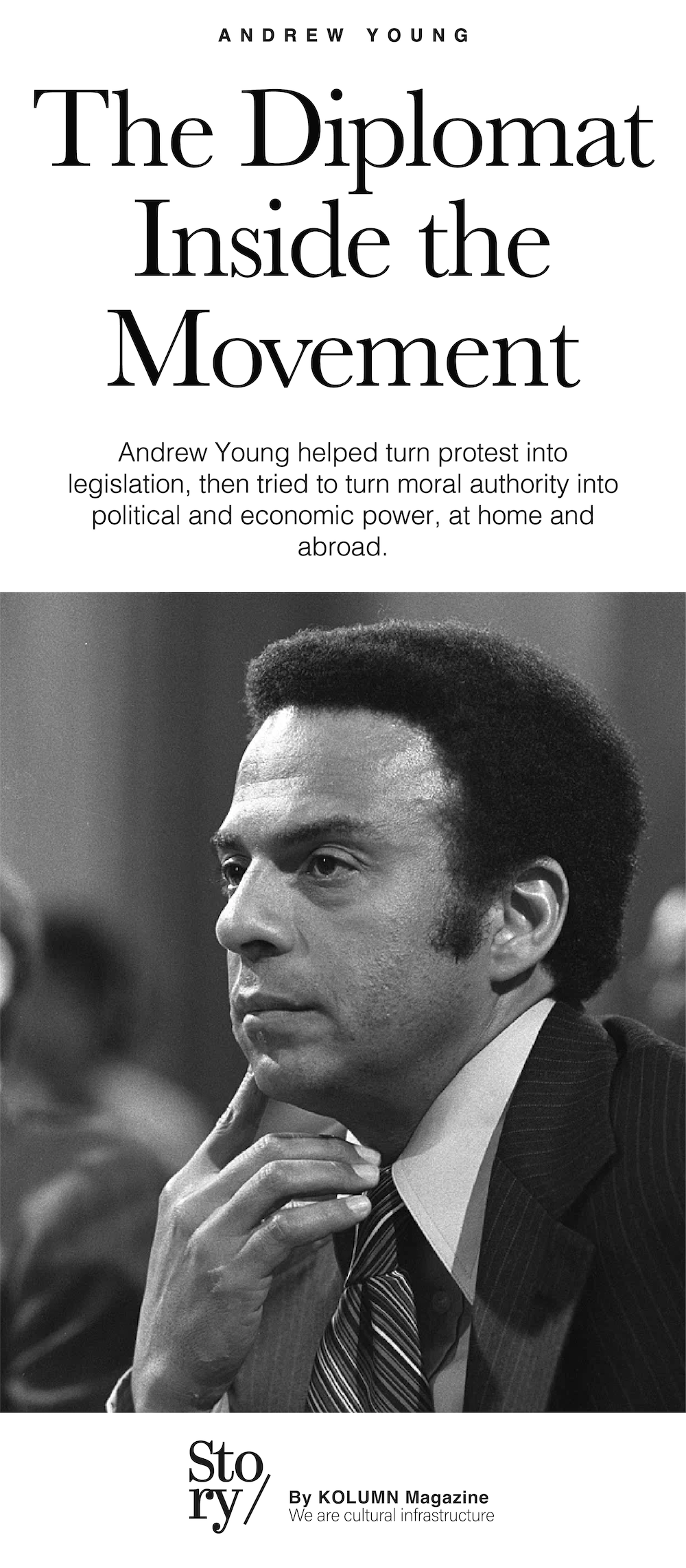
Andrew Young was rarely the loudest voice in the room. He was often the one figuring out how the room worked.
By KOLUMN Magazine
Andrew Young has lived so many public lives that it can be tempting to flatten him into a résumé. Civil rights strategist. Pastor. Congressman. United Nations ambassador. Mayor of Atlanta. Adviser. Elder statesman. Public intellectual. Global business connector. But what makes Young significant is not merely that he held all of those titles. It is that he carried a particular theory of change through each one of them. He believed protest mattered, but he also believed negotiation mattered. He believed moral witness mattered, but he also believed institutions mattered. He believed in movements, but he never stopped asking what happens the morning after the march. That question, more than anything else, may explain why Andrew Young remains such a distinctive figure in modern American life.
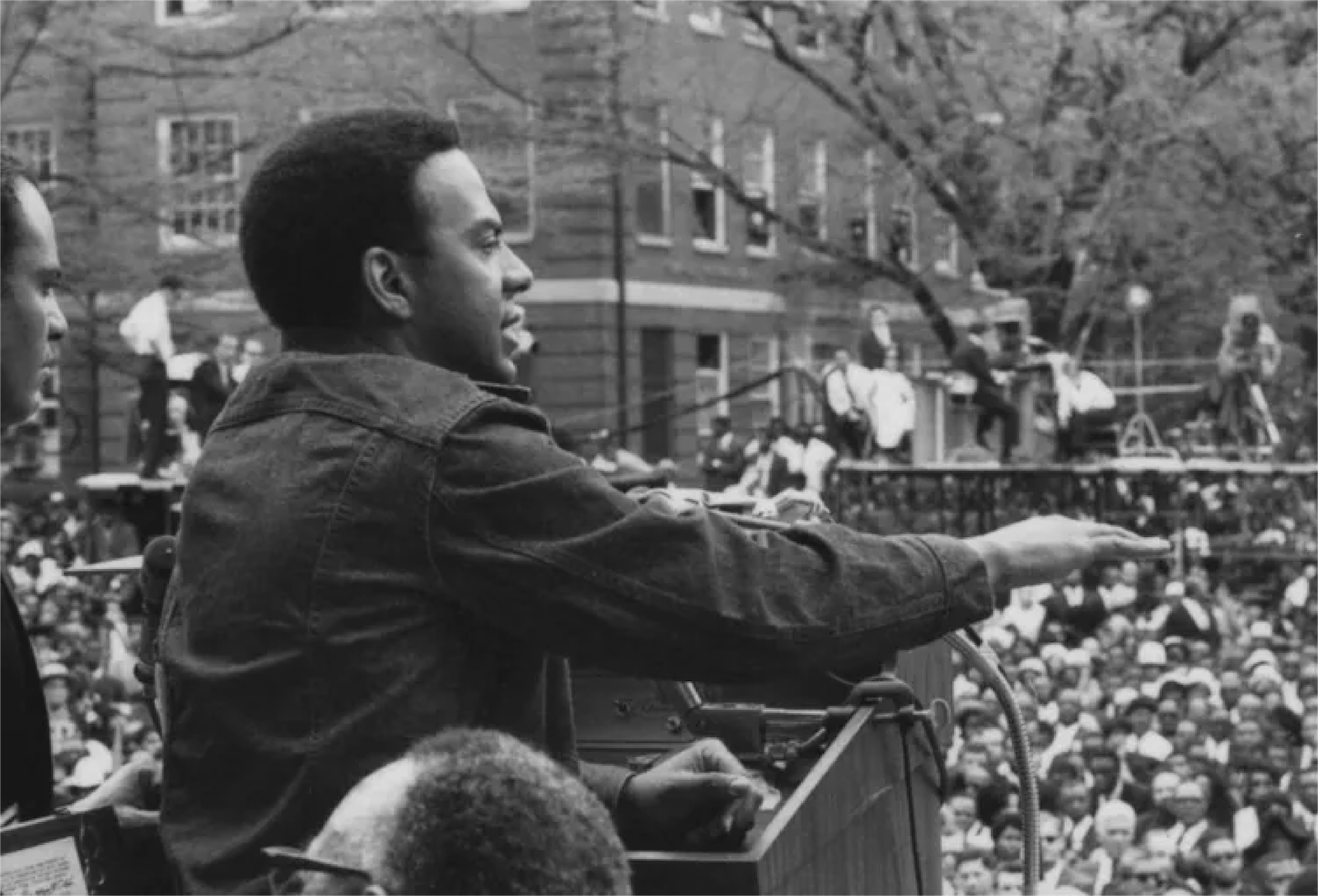
Young was born Andrew Jackson Young Jr. on March 12, 1932, in New Orleans, into a comparatively comfortable Black family: his mother was a teacher and his father a dentist. That fact matters because it complicates any easy mythology. Young did not come out of nowhere, and he was not formed only by deprivation. He was formed by Black aspiration under segregation, by the constant knowledge that education, discipline and self-possession could not fully protect a Black family from a racist order, but could help equip it to navigate one. He attended Dillard University, graduated from Howard University, and then earned a divinity degree at Hartford Theological Seminary before entering the ministry. The path looks linear in retrospect, but it was already pointing him toward a style of leadership that fused religious language, institutional discipline and political realism.
The Organizer Behind the Orator
That fusion would become central to his life. Young did not arrive in the civil rights movement as a bomb-thrower or a natural showman. He arrived as an organizer and mediator, a pastor with administrative gifts. Stanford’s King Institute notes that his work as a pastor, administrator and voting-rights advocate drew him into the orbit of Martin Luther King Jr. and the Southern Christian Leadership Conference, where he became one of the movement’s key tacticians. SCLC’s own operating model depended on people like Young and Dorothy Cotton training local leaders in nonviolence and citizenship education. The public tended to see the speeches, the arrests and the crises. Young was part of the less glamorous machinery that made those moments possible.
That distinction is important because it gets at both Young’s strengths and his historical reputation. In the popular memory of the Black freedom struggle, charisma often crowds out logistics. Yet the movement required a class of operators who could negotiate with mayors, calm local factions, translate strategy across organizations and keep campaigns from collapsing under pressure. Young excelled at that work. A Washington Post review of his memoir described him as one of King’s closest colleagues and, by 1963, effectively King’s chief of staff. Recent coverage of the documentary Andrew Young: The Dirty Work makes a similar point more bluntly: Young himself described much of what he did as the movement’s “dirty work,” the essential but unglamorous labor behind the headline moments.
Turning Protest Into Policy
He was there for the campaigns that turned the civil rights movement from regional revolt into national reckoning. In Birmingham, in St. Augustine, in Selma and elsewhere, Young helped manage the friction between local conditions and national strategy. Word In Black, reflecting on the economic pressure tactics of the movement, cited Young’s argument that Birmingham’s confrontation was not only about Bull Connor’s brutality, but about mass demonstrations and disciplined economic withdrawal that effectively paralyzed the city. That was classic Young: a reminder that moral drama matters, but only when attached to structure, leverage and organization. The point was never just to be seen suffering. The point was to make the old order unworkable.
His fingerprints are all over the two landmark federal victories of the era. Georgia State University’s Andrew Young School says plainly that Young was a key strategist and negotiator in the campaigns that helped lead to the Civil Rights Act of 1964 and the Voting Rights Act of 1965. That claim is more than ceremonial praise. It locates him in the bridge space between grassroots protest and legislative consequence. He belonged to that subset of movement leaders who understood that winning public sympathy was not enough; the federal government had to be forced into action, and that required timing, coalition management and a clear sense of the legal and political endgame.
Bearing Witness in Memphis
Young also became one of the principal witnesses to the movement’s deepest trauma. He was in Memphis when King was assassinated in April 1968. The public image of Andrew Young on the balcony of the Lorraine Motel, pointing outward in the seconds after the shot, has become part of American iconography; The Atlantic’s photo essays have helped keep that image in circulation, and Washington Post recollections have underlined Young’s place among King’s closest strategists. But the historical significance of that moment goes beyond pathos. King’s murder shattered the movement’s central leadership structure and forced surviving lieutenants like Young to answer a brutal question: how do you continue when the man around whom so much strategy revolved is gone?
From Movement Strategist to Congressman
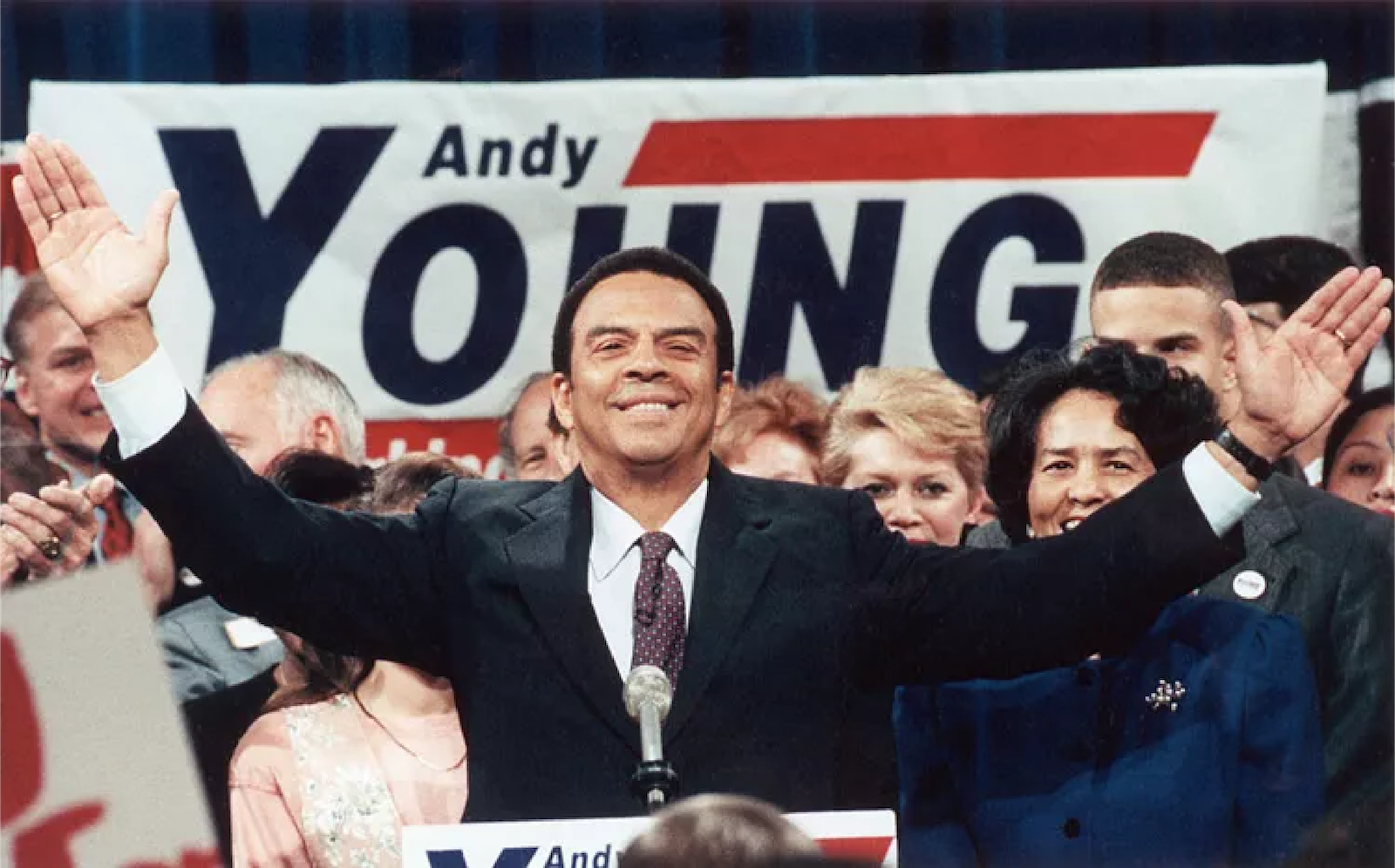
Young’s answer was politics, though not in a narrow or purely electoral sense. The King Institute notes that after King’s assassination Young moved into electoral politics and later said that King had given his life “purpose and sustenance.” That phrasing matters because it suggests continuity rather than reinvention. Young did not leave movement work behind when he ran for office; he translated it. He lost his first congressional bid in 1970, then won in 1972, becoming the first Black congressman elected from Georgia since Reconstruction. In Congress he served three terms and joined the Congressional Black Caucus while working on foreign policy, urban development and legislation affecting his Atlanta district.
“For Young, the vote was never the end of the story. It was the opening bid.”
This transition is one of the most revealing parts of his career. Some activists moved into office and got dismissed as moderates or insiders. Young instead seemed to view public office as an extension of movement strategy by other means. He had spent years learning how power yielded, where it stalled, how it rationalized itself and what kinds of pressure forced it to move. Congress offered a different battlefield, but one with familiar rules: build alliances, identify leverage, keep the moral frame clear and never forget the material stakes. He was particularly interested in urban investment and foreign relations, which is to say he had already begun to think past the first generation of civil rights victories toward questions of political economy and global alignment.
Diplomacy and the Global Stage
That broader horizon helps explain why Jimmy Carter chose Young to serve as ambassador to the United Nations in 1977. The appointment made history: Young became the first Black American to hold that post. More than symbolism, though, Carter was tapping someone who had a genuinely expansive worldview. Georgia State University says Young used the ambassadorship to push negotiations toward the end of white-minority rule in Namibia and Zimbabwe and to carry Carter’s human-rights emphasis into international diplomacy. The Root, in reflecting on Carter’s relationship with Black America, noted Young’s own explanation that his international perspective came in part from the Black church and the global Black diaspora it exposed him to. Young was not simply a domestic civil-rights figure exported to Turtle Bay; he was someone who already understood racial justice in transnational terms.
His tenure at the U.N. also revealed both the promise and peril of that approach. Young was notably sympathetic to developing nations and more willing than many American officials to treat decolonization, African self-determination and the politics of the Global South as serious diplomatic matters rather than rhetorical side issues. Stanford’s King Institute summarizes his diplomatic style as a “sympathetic approach” to developing nations. In another political register, The Atlantic has argued that American civil-rights progress strengthened U.S. influence abroad during the Cold War; Young embodied that overlap between domestic reform and international legitimacy. He could speak to newly independent nations with a credibility that many American diplomats simply did not possess.
Controversy, Resignation, and Political Risk
In 1979, he resigned after it was revealed that he had met with the Palestine Liberation Organization’s representative to the United Nations, contrary to official U.S. policy at the time. The State Department’s Office of the Historian states that Young announced his resignation on August 15, 1979, after the unauthorized July meeting came to light. Washington Post coverage shortly after the resignation noted Young’s criticism of the U.S. policy barring such contacts as “ridiculous.” Those two facts, taken together, capture a larger truth about Young: he often believed he could widen the space of American policy by acting on political realities that official doctrine preferred to ignore. Sometimes that instinct made him visionary. Sometimes it made him vulnerable.
There is a temptation to read the PLO episode simply as a fall from grace. That is too neat. It was certainly a damaging scandal. It cost him the ambassadorship and gave his critics ammunition. But it also previewed a pattern that would become more visible later in his career: Andrew Young was often ahead of, or at least outside, conventional consensus on how to speak with adversaries and how to incorporate the excluded into legitimate political conversation. His wager was that diplomacy without realism was theater. The trouble, as ever, was that realism in public life is punished unevenly. Young’s style made admirers see a courageous bridge-builder and detractors see a man overly confident in his own ability to freelance history.
Reimagining Atlanta: Power, Growth, and Tension
He returned to Georgia not as a spent force but as a political figure with unfinished business. In 1981, after encouragement that reportedly included pressure from Coretta Scott King, Young ran for mayor of Atlanta and won, succeeding Maynard Jackson. Washington Post reporting from that campaign shows a figure already known nationally, trying to translate movement prestige and diplomatic fame into municipal authority. His victory also placed him in a city that had become a laboratory for Black political power and a test case for whether symbolic breakthroughs could produce durable economic transformation.
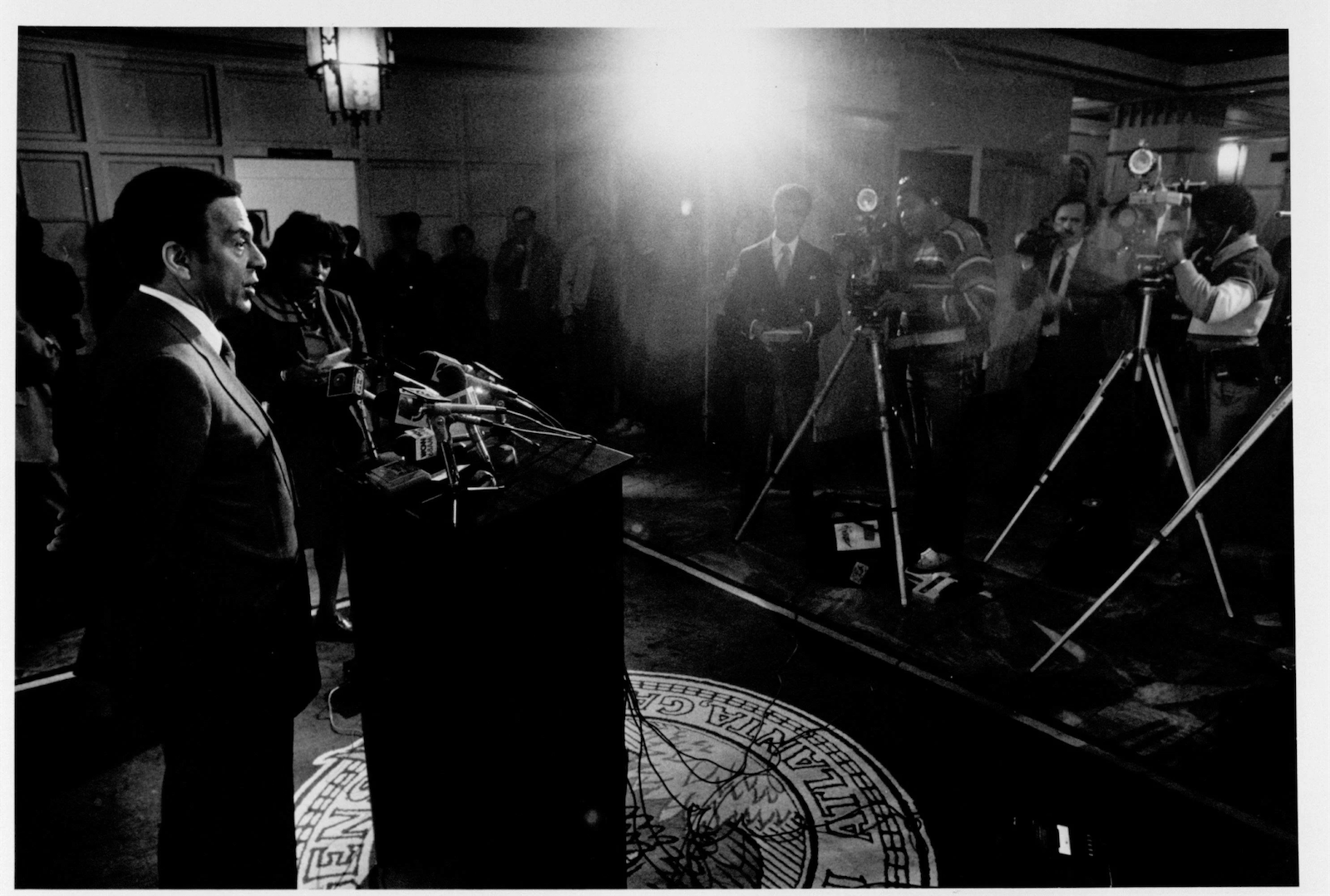
If King had taught Young about moral leadership, Atlanta taught him to think like a civic executive. During two terms as mayor, from 1982 to 1990, Young helped market Atlanta as an international city and expand on the minority-inclusion agenda pioneered by Jackson. The Atlanta History Center says he was instrumental in promoting Atlanta globally and later, alongside Billy Payne, helped build the city’s successful bid for the 1996 Olympics. The city also deepened ties with South African cities during and after apartheid, reflecting Young’s ongoing effort to connect Black municipal leadership in the United States to African political and economic futures.
Supporters credit Young with helping bring enormous new private investment into Atlanta. His own institutional biography at Georgia State says he brought in major levels of investment and helped expand Atlanta’s global reach, while his foundation and related biographies describe him as a long-running advocate for linking social justice to economic opportunity. Even allowing for the self-promotional gloss that official biographies can carry, the broader point is well-supported: Young understood city leadership less as custodianship than as deal-making on behalf of a Black-led metropolis determined to become indispensable. Atlanta under Young was selling not only convention space and corporate relocation potential, but an idea of modern Black urban governance that could talk business without disavowing civil-rights lineage.
“Young’s genius was not just that he could enter elite rooms. It was that he tried to carry the movement’s claims into them.”
That approach made him both influential and controversial. The harder question about Young’s mayoralty is the same question that haunts Atlanta’s modern mythology more broadly: who exactly benefited from all that growth? Atlanta became richer, more visible and more globally connected. It also remained unequal. Minority business opportunities expanded, and the city’s Black political class consolidated institutional power. But growth politics can produce winners and losers even when administered by historic figures. Young’s mayoralty demonstrated the possibilities of Black executive leadership in a major Southern city. It also exposed the limits of development as a substitute for redistribution. That tension has shadowed Atlanta ever since.
The Long View: Economics, Power, and Legacy
To understand Young fairly, you have to see that this was not a betrayal of movement ideals so much as his own interpretation of what those ideals required in a late-20th-century city. The Root has summarized this as a kind of political “rebranding,” but that term does not quite do justice to the continuity. Young’s politics always contained an economic thesis. Rights without capital, dignity without jobs, representation without investment: these were incomplete victories to him. A 2009 Root piece quoting Young distilled this thinking with unusual clarity: “When you switch from politics to finance,” he said, “that doesn’t apply anymore. You must work, invest, think, dream and create for yourself.” Whether one agrees with that emphasis or not, it helps explain the full arc of his career.
His post-mayoral life only reinforced that orientation. He served in a range of public, nonprofit and business-facing roles, including work tied to development in Africa and the Caribbean and, later, involvement with the Atlanta Olympic effort. The National Park Service’s Walk of Fame entry notes that President Clinton appointed him in 1994 to oversee the Southern Africa Development Fund. The Atlanta History Center emphasizes his central role in the 1996 Olympics bid. These were not side quests. They were extensions of Young’s long-running argument that civil rights, urban modernity, global capitalism and Black institutional leadership were all intertwined.
This is also where assessments of Young tend to split. Admirers see one of the rare movement veterans who grasped that legal equality alone would not secure Black flourishing; therefore he pursued investment, international trade, corporate relationships and city-building. Critics see someone too comfortable with power brokers, too enamored of elite access, too likely to trust the market to do moral work it is not designed to do. Both views contain some truth. Young’s career resists sanctification precisely because it unfolded in the messy terrain where ideals meet budgets, treaties, party politics and real estate. He was never merely an icon. He was a practitioner. Practitioners make compromises. The serious question is whether the gains they win justify the bargains they strike.
Yet even those criticisms can obscure what may be most durable about his legacy. Young helped create an expanded model of Black public leadership. He was neither only a movement man nor only an elected official. He was not confined to church, street, Congress, diplomacy or City Hall. He moved across those domains and insisted they belonged in conversation with one another. That model matters now because contemporary politics often breaks leadership into separate boxes: activist or insider, radical or pragmatic, moral or material, domestic or international. Young’s life argues that those binaries are often false. The same person can register voters, bargain with presidents, sell a city, challenge foreign-policy orthodoxy and still speak in the cadences of the church.
He has also become, in recent years, one of the last living central witnesses to the classic civil-rights era. That status carries symbolic power of its own. PBS interviews in 2025 and 2026 framed Young not simply as a retired dignitary, but as someone still interpreting the present through the long memory of the movement. AP’s reporting on Andrew Young: The Dirty Work similarly emphasized that Young does not see his work as finished. That matters because aging movement veterans are often turned into monuments before they are allowed to remain thinkers. Young, by contrast, continues to speak in an active tense. He has remained willing to assess the country, debate the usefulness of protest, defend negotiation and insist on hope without sentimentality.
And hope, in Young’s case, is not a soft word. It is a disciplined one. In public conversation after public conversation, he has returned to a line of thought that runs through his whole life: pessimism may be emotionally understandable, but it is politically useless. That position is rooted partly in religion, partly in historical memory and partly in sheer tactical experience. If you lived through the brutality of Jim Crow, helped win major federal legislation, watched your closest friend be assassinated, got thrown out of a Cabinet-level post, rebuilt a career and then helped remake a city, you are unlikely to confuse setbacks with finality. Young’s optimism is not naïveté. It is muscle memory.
That does not make him right about everything. On some issues, younger activists have judged his gradualism or his affection for institutional power too forgiving. On others, his faith in economic development has seemed more persuasive to chambers of commerce than to residents on the sharp end of displacement and inequality. But generational disagreement is not evidence of irrelevance. If anything, it underlines Young’s place in a living argument within Black politics: how much change comes from confrontation, how much from coalition, how much from state action, how much from capital formation and how much from simply refusing to leave the negotiating table. Young has spent six decades making one answer to those questions. The fact that people still dispute it is part of why he still matters.
Andrew Young’s significance, then, is not only biographical. It is interpretive. His life offers a way to read the second half of the American 20th century and the opening decades of the 21st: the movement years, the rise of Black electoral leadership, the Carter-era turn toward human rights, the globalization of Southern cities, the tension between symbolic representation and material inequality, the question of whether access to power can be morally transformative or merely absorptive. Few public figures carry all of that in one body. Young does.
What finally sets him apart is that he never treated freedom as a single-domain project. For some leaders, rights were the story. For others, elected office was the story. For still others, Black business development was the story, or diplomacy was the story, or city-building was the story. Young insisted they were chapters in the same book. He spent his life testing whether the moral energy of the civil rights movement could be converted into lasting political and economic power. The answer, in his telling, was yes, but only partially, unevenly and never automatically. Progress had to be organized, legislated, financed, defended and then reimagined again.
That is why Andrew Young endures as more than an elder statesman or a surviving witness. He remains a usable figure. Not because his path can be copied neatly; it cannot. The institutions, coalitions and geopolitical conditions that shaped him are different now. He remains usable because he forces a harder kind of political thinking. He asks what victory is for. He asks what moral credibility can purchase when translated into policy. He asks whether symbolic breakthroughs can become material ones. And he asks, over and over, whether a movement knows what to do once it gets close enough to power to touch it.
In the end, Andrew Young may be best understood as the diplomat inside the movement and the movement man inside diplomacy, the preacher inside politics and the politician inside the pulpit. He has spent nearly a century traversing the fault lines of American democracy and, in the process, showing that justice work is never only one thing. It is protest, yes. It is law, yes. It is money, policy, coalition, memory, municipal ambition, foreign affairs and institutional endurance. Young’s life is not tidy enough for sainthood. It is more useful than that. It shows what it looks like when a freedom fighter decides that changing the world requires not just marching against power, but learning how to work it.
More great stories
Afro Sheen, Wall Street, and the Architecture of Black Possibility
July 6, 2026
No Comments
The Fire Inside the Fourth
July 5, 2026
No Comments