



You cannot turn your back on the idea of justice.
You cannot turn your back on the idea of justice.
By KOLUMN Magazine
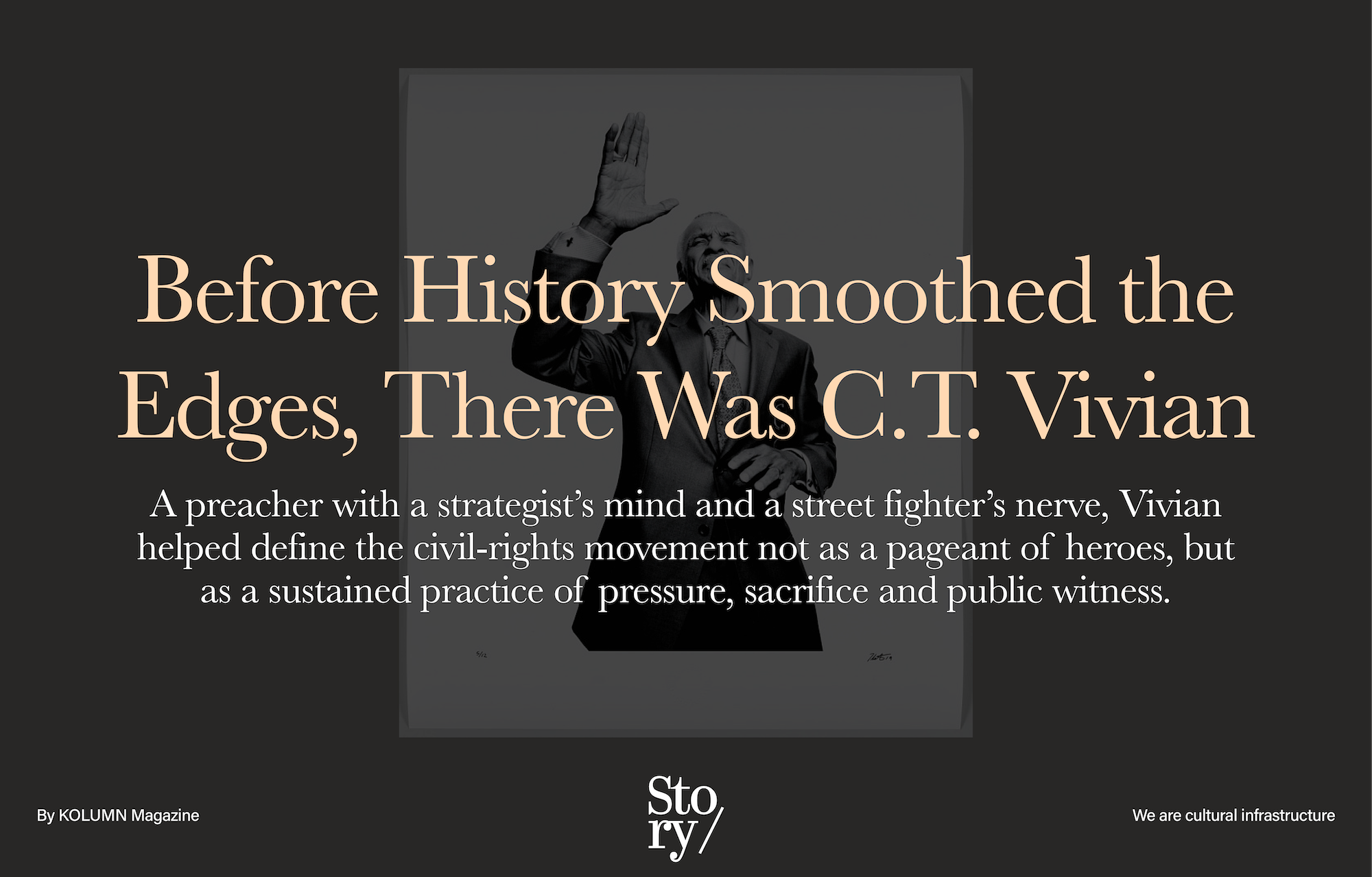
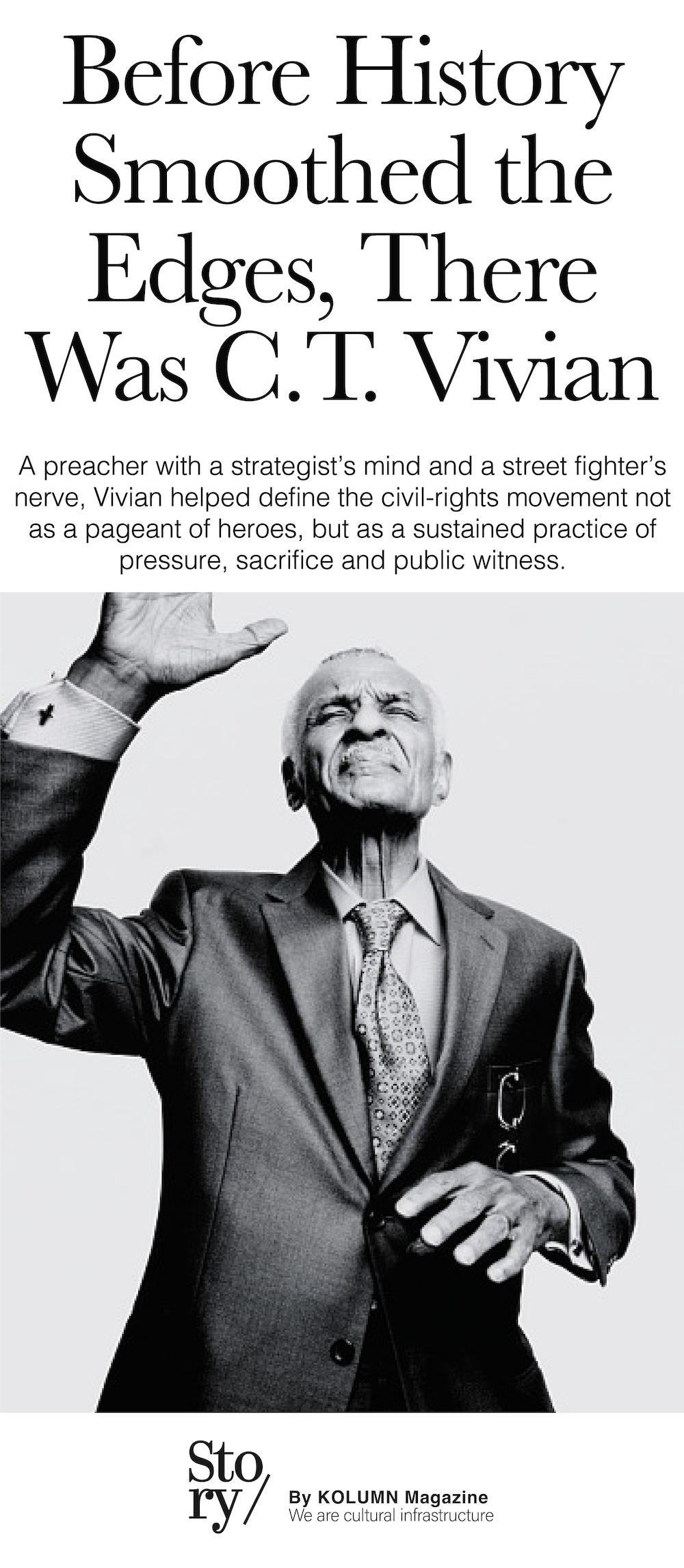
There are some figures from the civil-rights movement whose names became civic shorthand almost immediately. Martin Luther King Jr. is one. John Lewis became another. And then there are people like C.T. Vivian, towering in influence but, for too long, less fully absorbed into the mainstream American memory than their work deserved. That imbalance says less about Vivian than it does about how the country remembers social change. America likes a few saints, a few speeches, a few commemorative bridges. It is less comfortable with the organizers, tacticians and movement clergy who made democracy answerable to its own promises day after day, city after city, jail after jail. Vivian was one of those people. He was not ornamental to the movement. He was structural to it.
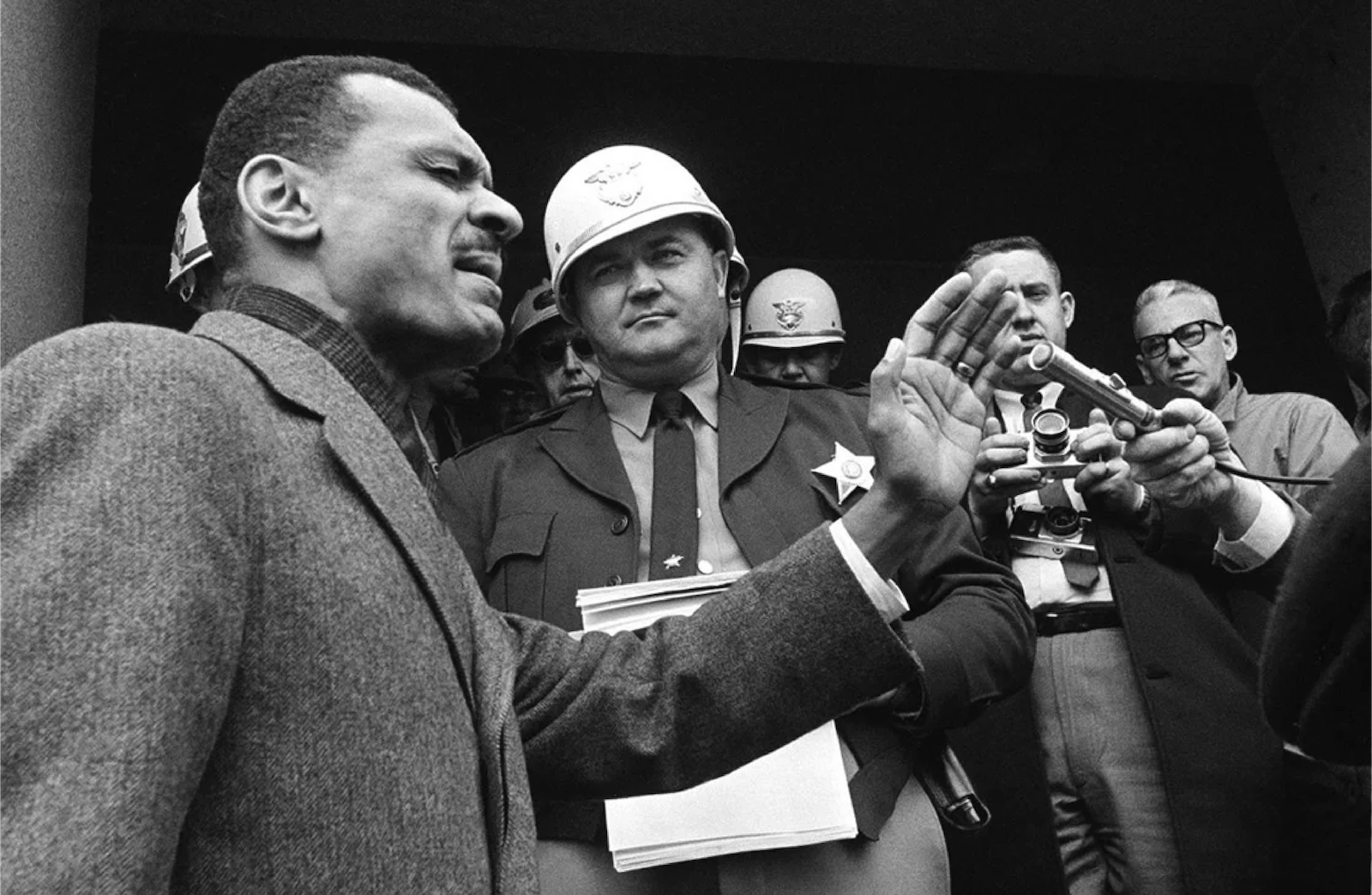
By the time he died in Atlanta on July 17, 2020, at 95, Vivian had lived several public lives inside one long moral career: minister, field organizer, strategist, author, institution-builder, voting-rights advocate and elder statesman of Black freedom struggle. He had been a close aide to King, a participant in the Nashville sit-ins, a Freedom Rider, a visible force in Selma, an architect of post-movement institution building in Atlanta, a co-founder of anti-racist organizing initiatives against the Ku Klux Klan and white-supremacist violence, and eventually a recipient of the Presidential Medal of Freedom. He also died on the same day as John Lewis, a grim coincidence that made the loss feel almost liturgical, as though a particular generation of American democratic conscience had decided to leave the stage together.
What made Vivian so significant was not simply that he was present at key moments. Plenty of people were present. His distinction was that he understood confrontation as both moral theater and practical leverage. He knew how to stand in front of a courthouse door, a lunch counter, a hostile sheriff or an indifferent institution and force the country to see what it was. His version of nonviolence was never soft-focus. It was disciplined, but it was also direct, insistent and unsentimental. He did not confuse civility with justice, or politeness with peace. He treated democracy as something that had to be made concrete in public.
That line, delivered during his 1965 confrontation with Dallas County Sheriff Jim Clark in Selma, is the quote most often attached to Vivian. It deserves its staying power. Not just because it is memorable, but because it captures the whole architecture of his politics. The point was never merely that one cruel official could be shamed. The point was that justice, once named publicly, acquires a life beyond the man blocking the door. Vivian understood that public speech, if grounded in courage and collective struggle, could expose the illegitimacy of power in real time.
Before Nashville, before Selma, before the cameras
Cordy Tindell Vivian was born on July 30, 1924, in Howard County, Missouri, and was raised largely in Macomb, Illinois, after moving there with his mother as a child. He attended local public schools, later enrolled at Western Illinois University, and developed early habits of reading, argument and leadership. The broad outlines of this origin story matter because Vivian was not produced by southern movement romanticism alone. His political consciousness was shaped in the Midwest as well, in spaces where racial inequality could hide behind a less theatrical style than Jim Crow’s official brutality but remained no less real in practice.
In Peoria, where he worked at the Carver Community Center, Vivian joined and helped lead sit-in efforts in 1947 to challenge segregated dining spaces, including Barton’s Cafeteria. This was more than a decade before the Greensboro sit-ins would enter the national canon. The Peoria action did not become one of the sacred classroom episodes in the standard civil-rights timeline, but it mattered enormously in understanding Vivian. It showed that his commitment to direct action preceded the high period of the southern movement and that he had already concluded, early, that local segregation could be broken by organized, collective pressure.
That early history also complicates the tidy mythology that nonviolent direct action emerged fully formed only after a handful of better-known southern flashpoints. Vivian’s life reminds us that movement knowledge circulated through churches, community centers, local NAACP networks, labor spaces and ordinary Black institutions long before the national press found it photogenic. He belonged to a generation that had to test tactics before they were legible as “history.” The later visibility of Nashville and Selma did not create Vivian’s courage. It revealed a courage that had already been practiced.
Nashville and the making of a movement strategist
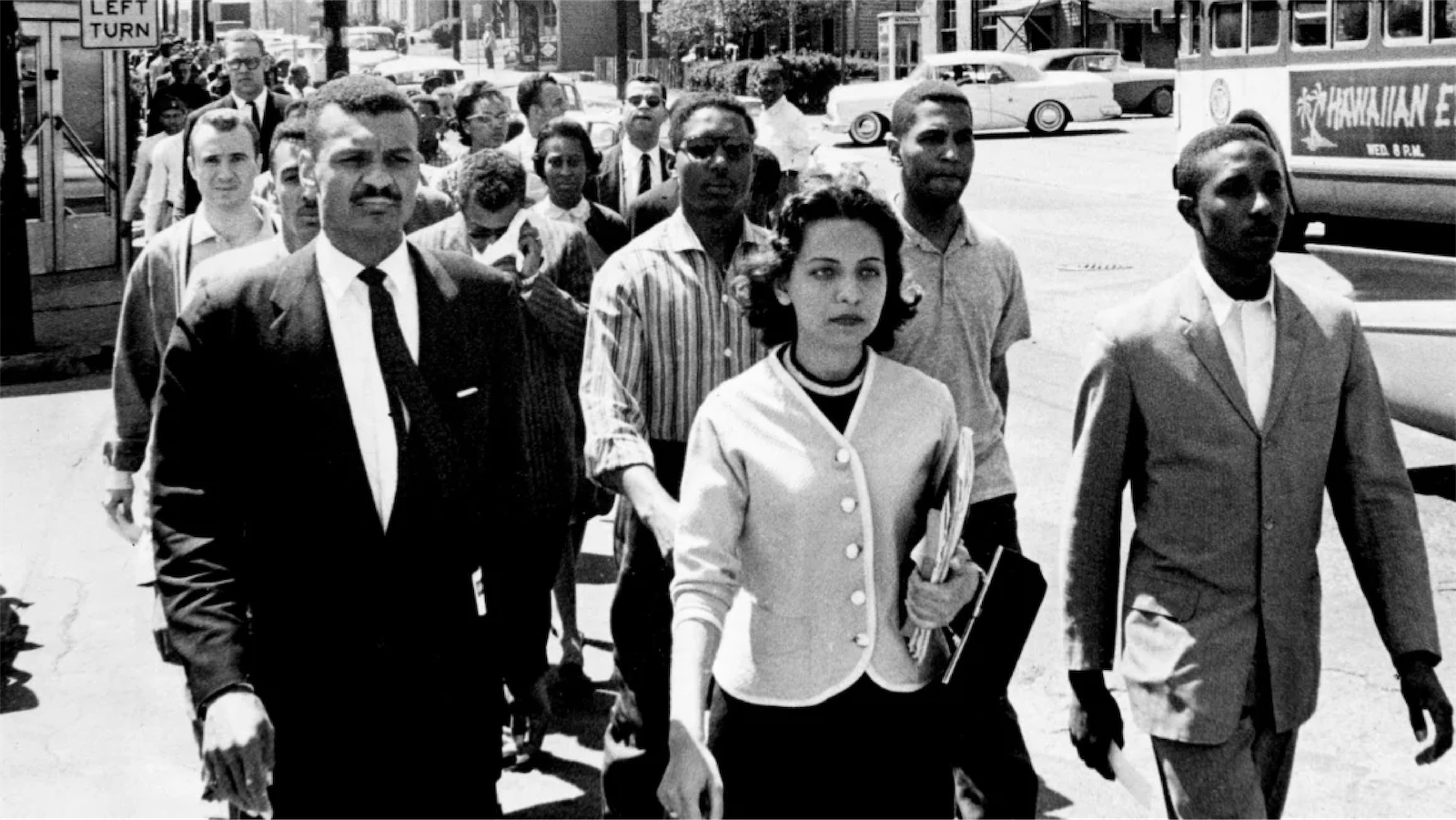
When Vivian moved to Nashville and studied at the American Baptist Theological Seminary, he entered one of the most important laboratories of nonviolent direct action in modern U.S. history. There he encountered James Lawson, whose workshops in Gandhian strategy and Christian nonviolence helped train a remarkable cohort that included Diane Nash, John Lewis, Bernard Lafayette, James Bevel and others. Vivian was older than many of the students around him, and he brought something distinctive to the mix: a preacher’s cadence, an organizer’s realism and a sharpened sense of what confrontation required psychologically.
The Nashville movement is often remembered as a student story, and it was. But it was also a story of intergenerational discipline, church infrastructure and tactical rigor. Vivian helped found the Nashville Christian Leadership Conference and became part of the campaigns that targeted segregated lunch counters and the wider moral legitimacy of racial apartheid in the city. One of the movement’s signature moments came in 1960, when Vivian and Diane Nash confronted Mayor Ben West at City Hall and pressed him publicly on whether racial discrimination was morally wrong. The force of that exchange lay in its clarity: not a plea, not an abstraction, but a public demand that the political class answer the moral question it had been dodging. West’s response helped open the way to desegregation in Nashville.
Vivian’s role in Nashville underscores one of the defining traits of his public life: he was unusually skilled at translating movement pressure into civic exposure. He understood that segregation survived not only through violence but through evasive language, procedural delay and the cultivated ambiguity of white moderates. His genius was to strip that ambiguity away. He was rarely interested in allowing opponents the comfort of appearing confused about what justice required. In that sense, he fit squarely within the best traditions of movement ministry: prophetic, yes, but also devastatingly precise.
The Freedom Rides and the theology of risk
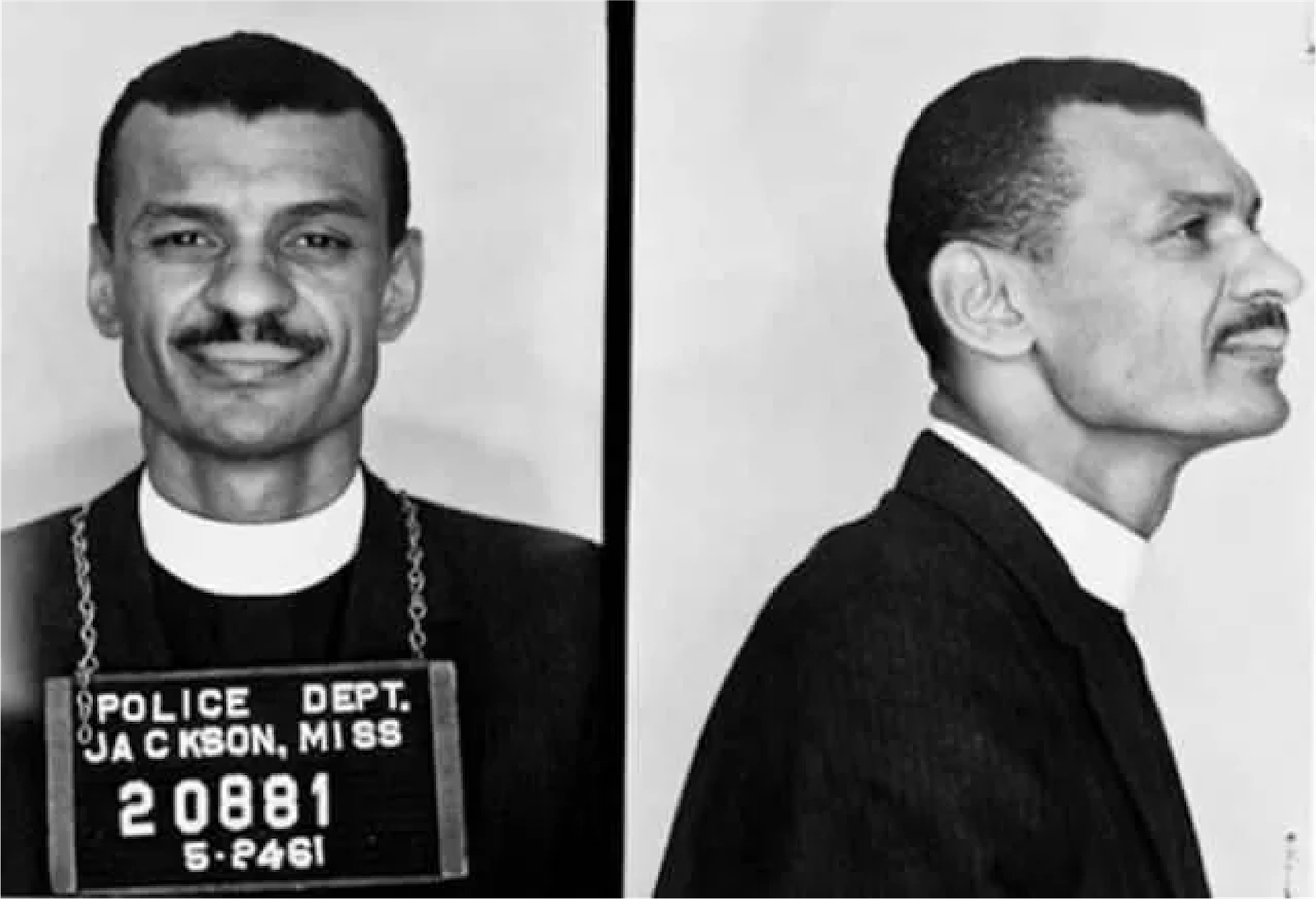
If Nashville revealed Vivian as a tactician, the Freedom Rides revealed him as a man who had made peace with danger. In 1961, when violence by white mobs and official indifference threatened to crush the campaign, Nashville activists helped continue the rides after CORE’s initial buses were attacked. Vivian joined that effort, and like many of his peers, he was arrested and jailed in Mississippi. The point of the Freedom Rides was not symbolic travel. It was to expose the federal government’s unwillingness to enforce its own desegregation rulings in interstate travel. To get on those buses was to wager body and life against state complicity and mob law.
This matters because Vivian’s career cannot be understood apart from his theology of action. He was a minister, but not in the decorative sense American public life sometimes assigns to clergy. His faith did not withdraw him from conflict; it radicalized his obligations within it. James Lawson later reflected that the religious dimension of the movement is often flattened in retrospect, and Vivian’s life is one of the clearest correctives to that flattening. He belonged to a cohort for whom nonviolence was not weakness, image management or liberal etiquette. It was a disciplined moral method rooted in the idea that human dignity had to be enacted even under assault.
“It’s in the action that we find out who we really are.”
That line, repeated by President Obama when honoring Vivian with the Medal of Freedom, reads like a compressed autobiography. Vivian believed that identity was clarified through struggle, not declared in comfort. You learned who you were, and what your society was, when principles cost something. That conviction helps explain the through line from Peoria to Nashville to Mississippi to Selma and beyond. He did not merely espouse justice. He entered the places where justice was being denied and put his body, voice and reputation there.
King’s lieutenant, but never just a lieutenant
It is accurate to describe Vivian as one of King’s close advisers and senior SCLC figures. It is also incomplete. Too often the phrase “King aide” can reduce major organizers to supporting cast. Vivian’s relationship to King matters, but so does his independent significance. As national director of affiliates for the Southern Christian Leadership Conference, he helped build and connect local campaigns, extending the movement’s reach beyond a few headline-grabbing spectacles. He was central to translating SCLC’s moral language into actual organizing infrastructure.
King recognized in Vivian what others did too: nerve, eloquence and a refusal to sentimentalize struggle. Vivian was known for a sharp tongue and an unblinking willingness to confront authority. But he was not reckless. He was strategic. That distinction is critical. The best movement organizers are often misremembered as merely brave, as though courage alone explains their impact. Vivian’s courage mattered, but so did his analysis. He knew where power sat, how it hid, how it laundered itself through law-and-order language, and how public action could delegitimize it.
He was also active in major campaigns outside the most over-narrated sites of civil-rights memory. In St. Augustine in 1964, one of the most violent theaters of the movement, Vivian was among the SCLC leaders helping lead direct-action efforts that brought national attention to segregationist terror there. The campaign’s brutal imagery, including attacks on demonstrators and the infamous Monson Motor Lodge pool incident, helped intensify pressure for passage of the Civil Rights Act of 1964. Vivian’s presence in St. Augustine is a reminder that his career was not defined by one famous clip from Selma. He was a recurring force wherever the movement needed pressure, organization and witness.
Selma, the camera and the anatomy of courage
Still, Selma remains the clearest single window into Vivian’s public style. In February 1965, following a federal court order that should have enabled Black citizens to register to vote, Vivian led a group to the Dallas County courthouse. There, Sheriff Jim Clark tried to block them. Cameras captured the confrontation. Vivian spoke. Clark turned away, then struck him. Vivian was bloodied, arrested and removed. The image became part of the moral evidence that helped the nation see what Black southerners had long known: voting-rights denial was not an abstract legal defect but a violent, organized regime.
What is striking about the footage, even now, is Vivian’s composure. He does not posture. He does not perform outrage for its own sake. He speaks as though he is both indicting Clark and educating the audience beyond him. That was one of his gifts. He understood that every confrontation had multiple publics: the immediate opponent, the Black community being defended, the national audience watching, and the future itself. He knew how to speak to all of them at once.
The clip also helped cement a distorted habit in American memory: elevating moments of Black suffering while understating the strategic intelligence behind them. Vivian was not significant because he was beaten. He was significant because he knew exactly why he was there, what the confrontation would reveal and how democratic legitimacy could be wrestled away from those abusing state power. Selma was not noble because a sheriff hit a preacher. It was consequential because organizers like Vivian had constructed a situation in which the sheriff could no longer hide what the system was.
The weeks around Selma also connected Vivian to the larger struggle in nearby Marion, Alabama, where the violent repression of demonstrators protesting the jailing of James Orange culminated in the shooting of Jimmie Lee Jackson. National Park Service materials identify Vivian as an organizer of that Marion demonstration after Orange’s arrest. Jackson’s death then became one of the immediate catalysts for the Selma-to-Montgomery march. In other words, Vivian was not just present for the iconic scenes that followed. He was part of the preceding chain of organizing, repression and escalation that made those scenes historically possible.
After the movement’s so-called peak
One of the enduring problems in popular civil-rights storytelling is that it treats 1965 almost like an ending. The Voting Rights Act passes, and the credits roll. Vivian’s life makes that narrative impossible. After the legislative victories of the mid-1960s, he continued working on what might be called the harder phase of freedom struggle: institution building, educational access, economic power and anti-racist infrastructure. During the summer after Selma, he conceived and directed Vision, an educational initiative that helped hundreds of Alabama students attend college with scholarships. Later interpretations of his career, including work from Stanford’s King Institute, have emphasized that his commitment to educational equity deserves much more attention than it usually receives.
This post-1965 work is where Vivian begins to look especially contemporary. He understood that formal rights, while indispensable, were insufficient by themselves. Voting rights mattered. So did desegregated lunch counters. But the larger question was always whether Black communities would have the material, educational and institutional power to exercise citizenship fully. That was never a secondary issue for him. It was the point.
In Atlanta, he went on to found the Black Action Strategies and Information Center, known as BASIC, and later co-founded what became the Center for Democratic Renewal, originally the National Anti-Klan Network, alongside Anne Braden and others. These efforts targeted white-supremacist organizing and tried to build multiracial responses to hate and racial violence. That work, too, now looks prescient. Vivian recognized that white supremacy was not a relic awaiting dignified burial by civil-rights legislation. It would mutate, reorganize and seek new legitimacy. He treated anti-racist defense as an ongoing civic requirement, not a commemorative posture.
He also helped establish and serve on the board of Capitol City Bank and Trust in Atlanta, a Black-owned institution, underscoring another essential part of his worldview: protest and institution building were not opposites. Marching mattered. So did creating durable organizations that could widen Black agency in everyday life. This is one reason Vivian resists easy categorization. He was at once prophetic and managerial, street-level and structural, a man of visible confrontation and quiet construction.
Why Vivian still feels under-told
Part of the answer is stylistic. Vivian was not a mythmaker of himself. He did not become a singular emblem in the way some other movement figures did. He moved across causes and institutions, and he kept working. That kind of career often produces less tidy public branding, even when it produces immense historical consequence. Another reason is that American memory often privileges the most easily teachable symbols over the durable labor that sustains change. Vivian is harder to flatten because he was both frontline witness and back-end builder.
There is also the inconvenient sharpness of his politics. Vivian fits uneasily into the national desire for a civil-rights movement drained of disruption. He was committed to nonviolence, yes, but he was not committed to comfort. He did not use religious language to soften injustice into a matter of misunderstanding. He named systems. He challenged institutions. He treated voting rights as democracy’s foundation, not one issue among many. That clarity can sound uncomfortably current because it is.
“You are made by the struggles you choose.”
That line has been repeated so often since his death that it risks becoming motivational décor. In Vivian’s life, it meant something much tougher. It meant that moral identity is produced through disciplined commitments, not private sentiment. He chose the struggle against segregation. He chose the struggle for voting rights. He chose the struggle for educational opportunity. He chose the struggle against the Klan and organized white supremacy after many Americans wanted to declare the old crisis over. The phrase is powerful because he lived it literally.
The minister as democratic realist
There is a temptation, when writing about movement clergy, to present them as moral dreamers floating above politics. Vivian was something more interesting: a democratic realist. He believed in the nation’s promise, but he had no illusions about what it took to drag institutions toward it. He was a preacher, but he was also a practitioner of pressure. He believed in redemption, but not without accountability. In that sense he belonged to a line of Black religious leadership for whom spiritual conviction and strategic conflict were inseparable.
That realism helps explain why Vivian remained relevant deep into old age. He did not become a nostalgia figure content to be thanked for yesterday. He continued speaking, teaching and intervening. Even the placement of his papers with Emory University and the donation of his vast book collection for a library in his name suggest how seriously he took the work of historical transmission. Vivian knew memory was political terrain. He wanted future generations to inherit more than images of heroism. He wanted them to inherit tools.
He also understood that historical inheritance is fragile. Rights can be narrowed. Public memory can be sanitized. The radicalism of nonviolent direct action can be repackaged as harmless patriotism. Vivian’s life stands against that sanitizing impulse. He embodied a version of citizenship in which the test of patriotism was not reverence for national myth but willingness to confront national betrayal. That is one reason his witness still cuts so cleanly into present debates over voting access, racial terror, historical truth and the uses of public protest.
What C.T. Vivian leaves behind
C.T. Vivian leaves behind an argument about democracy more than a mere biography. The argument is that rights become real only when ordinary people, organized and willing to risk something, force institutions to honor them. The argument is that nonviolence is not the absence of pressure but one of its most refined forms. The argument is that religious faith, in its best public expression, should deepen one’s willingness to confront injustice rather than excuse it. And the argument is that movement work does not end when the cameras go away or when one law is signed.
In this sense, Vivian’s life offers a corrective not only to how America remembers the civil-rights movement, but to how it imagines social change altogether. He reminds us that the movement was built by people who studied, planned, trained, argued, failed, adapted and kept going. Not icons descending from the clouds, but organizers with theology, discipline and stamina. He reminds us that courage is most consequential when attached to strategy. He reminds us that justice is not self-executing.
And maybe most of all, he reminds us that history is not shaped only by those who become the face of an era. It is also shaped by those who become its nerve endings: the ones who feel the pressure first, carry the message outward, and make the larger body politic finally react. Vivian was one of those figures. He stood at lunch counters before the country was ready to mythologize them. He rode into danger before the nation knew how to applaud it. He stood on courthouse steps and told a sheriff, and by extension a country, that justice was bigger than the men trying to block it. He kept saying it in one form or another for the rest of his life. The remarkable thing is that he was right.
More great stories
Afro Sheen, Wall Street, and the Architecture of Black Possibility
July 6, 2026
No Comments
The Fire Inside the Fourth
July 5, 2026
No Comments