



Her response to opposition was not retreat. It was writing.
Her response to opposition was not retreat. It was writing.
By KOLUMN Magazine
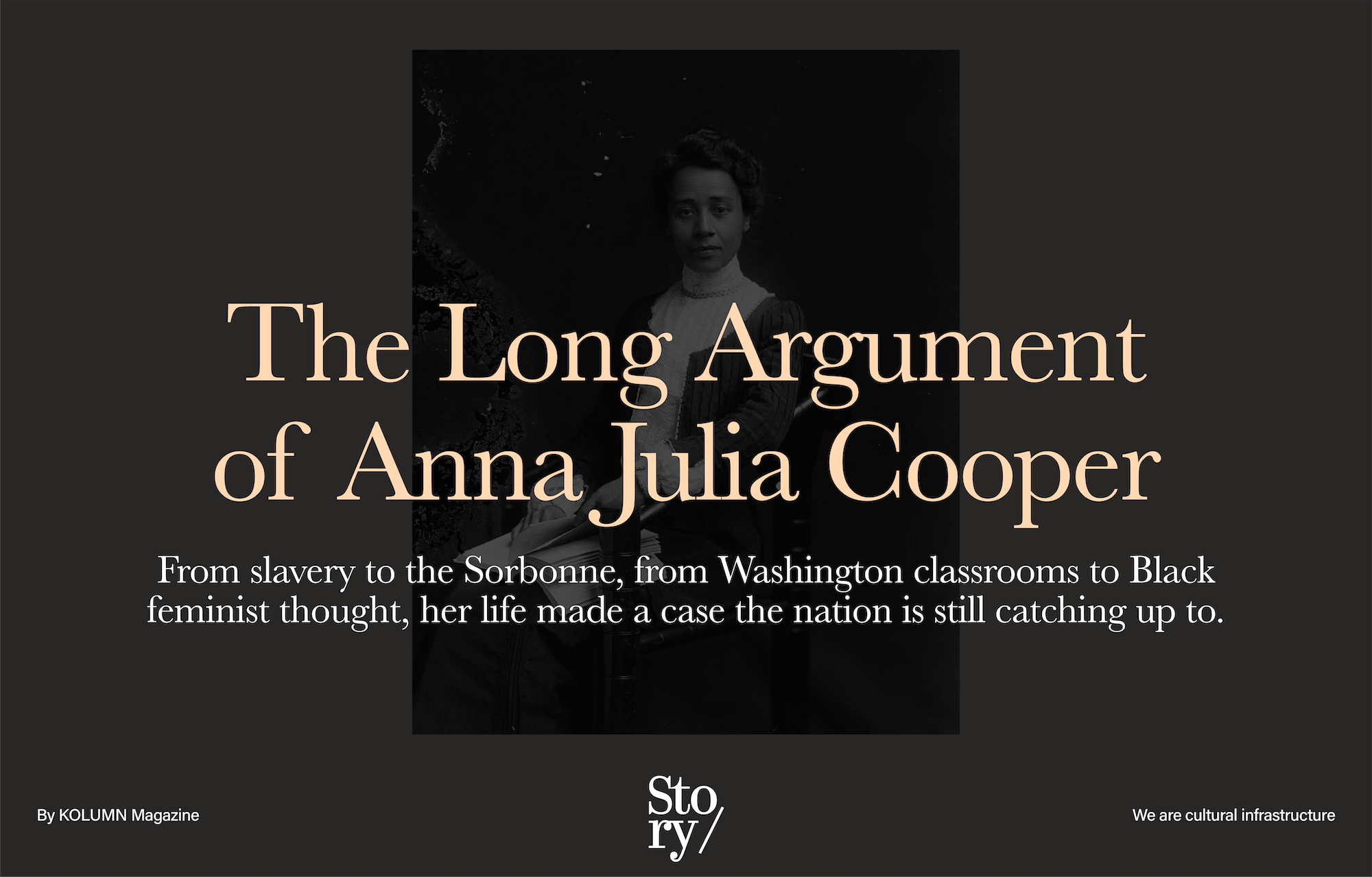
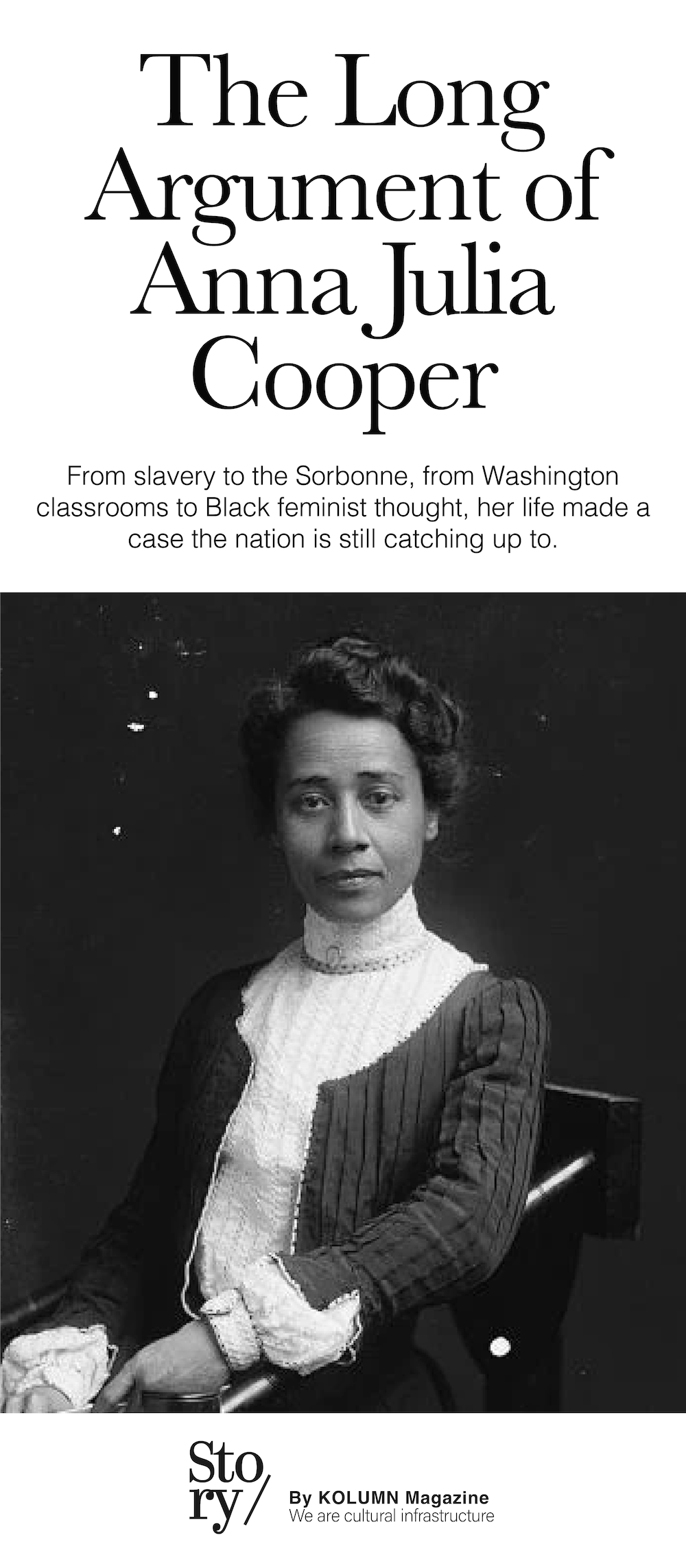
Anna Julia Cooper is one of those figures who seems to grow larger the more seriously you read her. She was born enslaved in Raleigh, North Carolina, in 1858, lived through the Civil War, Reconstruction, Jim Crow, two World Wars, and the dawn of the modern civil-rights era, and died in Washington in 1964 at 105 years old. Across that astonishing span, she became an educator, essayist, school leader, organizer, classicist, public intellectual, and one of the foundational thinkers in what would later be called Black feminist thought. She was not simply ahead of her time. She was diagnosing problems that the country still struggles to name cleanly.
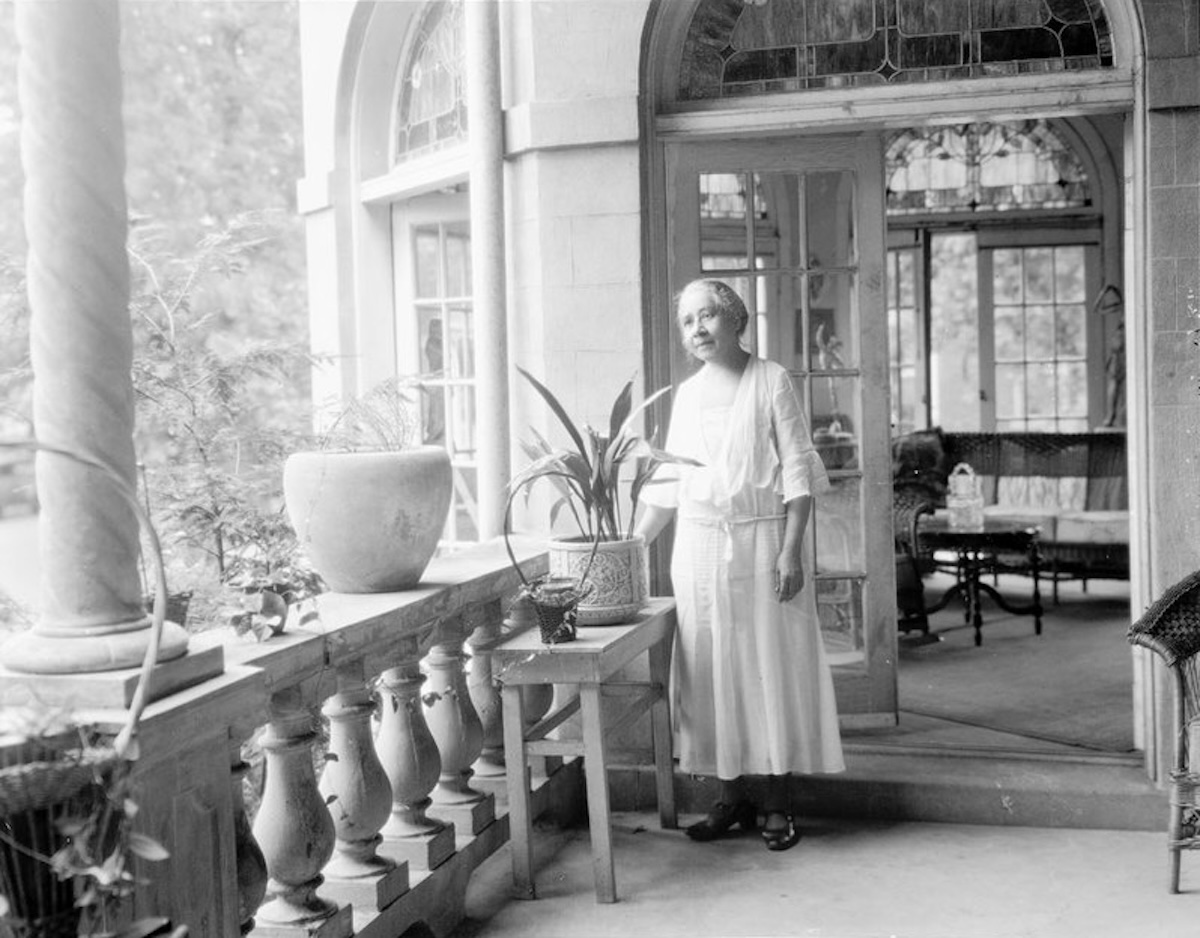
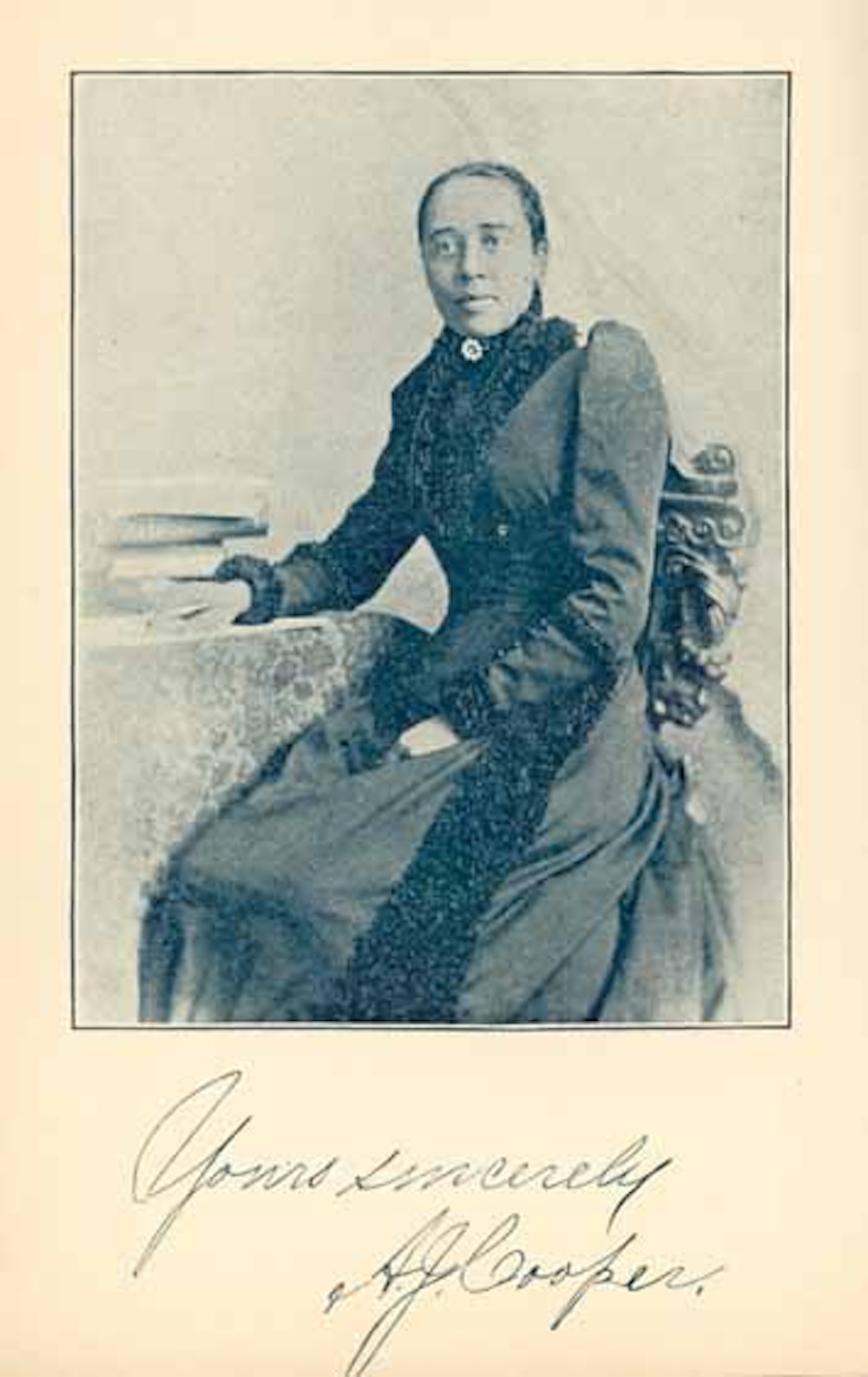
That is one reason Cooper can feel so contemporary. She wrote about race and gender not as separate injuries that happened to occasionally overlap, but as forces that shaped Black women’s lives together, all at once. In A Voice from the South in 1892, she argued that Black women occupied a distinct position in the United States, one formed by both the “woman question” and the “race problem.” Today, that insight reads as startlingly modern, but in her own time it was more than modern. It was disruptive. She was refusing the terms of a public debate that was mostly being conducted by white men and, often, by Black men who did not fully account for Black women as political thinkers in their own right.
What makes Cooper especially compelling is that her life and thought were never neatly confined to one lane. She was a classroom teacher who became a principal. A literary stylist who did institutional work. A scholar of the classics who also understood the everyday mechanics of Black survival. An advocate for higher education who never mistook credentials for liberation by themselves. She believed in disciplined study, moral seriousness, and social responsibility, but she also believed that a democratic society that denied Black women full humanity was intellectually dishonest at its core.
To write about Cooper now is to write about a mind that cut through the sentimentality of American self-mythology. She did not reject the nation’s ideals outright. She did something harder. She tested them. She asked whether democracy actually meant democracy. Whether citizenship actually included Black people. Whether education was truly public if Black students were steered away from intellectual life. Whether womanhood as a public category included Black women at all. Those questions give her work its durability. She was not merely seeking admission into existing structures. She was interrogating the terms on which those structures claimed legitimacy.
Born into bondage, formed in discipline
Cooper entered the world as Anna Julia Haywood, the daughter of Hannah Stanley Haywood, an enslaved woman in Raleigh. Multiple sources note that her father was likely her mother’s enslaver or another white man from the Haywood family, though her mother never publicly clarified the question. That uncertainty matters, not as tabloid biography, but because it helps explain why sexual coercion, racial hierarchy, and the vulnerability of Black women run so powerfully through Cooper’s worldview. She did not theorize domination from a distance. She came from within its architecture.
“When and where I enter.” (Project Gutenberg)
After emancipation, she enrolled at Saint Augustine’s Normal School and Collegiate Institute, founded with support from the Freedmen’s Bureau. There, one sees the early shape of Cooper’s character. She excelled as a student, tutored to help cover expenses, and successfully petitioned to take courses that had been reserved for boys. That detail can sound small in retrospect, but it reveals a recurring pattern in her life: she encountered institutional boundaries, named them, and pressed against them with rigor rather than spectacle. Her rebellion was usually scholarly, procedural, and devastatingly logical.
She married fellow student and future minister George A. C. Cooper in 1877. He died only a couple of years later, leaving her widowed young. The early loss did not shrink her life. If anything, it sharpened her independence. She continued teaching and then made her way to Oberlin College, where she again challenged prescribed limits by pursuing the more demanding “gentlemen’s courses,” including mathematics, Latin, and Greek. She earned her bachelor’s degree in 1884 and later a master’s degree in mathematics. Even that résumé item is quietly radical. A Black woman born enslaved in the 1850s emerging as a mathematician and classicist in the 1880s was not just unusual. It was a direct contradiction of the racial and gender ideologies of the age.
The St. Augustine’s and Oberlin years matter not only because they show upward mobility, but because they explain Cooper’s lifelong insistence that education must not be reduced to mere utility. She knew firsthand that intellectual training could be a site of freedom. Not symbolic freedom. Real freedom. The kind that enlarges one’s vocabulary, one’s range of reference, one’s ability to challenge official narratives and one’s refusal to accept the supposedly natural place assigned to you. Her later battles over curriculum in Washington would emerge from this conviction.
The teacher who refused a smaller horizon
By the late 1880s, Cooper was teaching at Washington’s M Street School, later known as Dunbar High School, one of the most distinguished Black public schools in the country. There she became part of Black Washington’s intellectually formidable world while also developing a reputation as a demanding educator. The school itself mattered enormously. It was proof that Black students, when given rigorous instruction, could excel at the highest levels. That seems obvious now. At the time it directly contested the assumptions of white educational authorities and many accommodationist reformers who believed Black students should be channeled primarily into industrial or vocational training.
Cooper did not despise vocational education; that would be an oversimplification. What she opposed was the idea that Black children should be denied access to the full intellectual inheritance available to others. At M Street, and later as principal, she defended a curriculum that included classical study and college preparation. The disagreement was not bureaucratic trivia. It was a fight over the meaning of citizenship. Was public education supposed to make Black students serviceable, or fully developed? Was it meant to keep social order intact, or open the possibility of leadership? Cooper was on the side of the larger horizon.
That put her at odds with powerful currents in American education. The National Park Service notes that she argued for college opportunities rather than a narrow vocationalism often associated with Booker T. Washington’s model. Columbia’s Black History project and the Smithsonian both underline that her tenure as principal became controversial precisely because white school authorities objected to her college-preparatory vision for Black students. She was eventually forced out in 1906. In current language, one might say she was punished for taking Black excellence too literally.
What is striking is how familiar the conflict still feels. Cooper insisted that Black students deserved rigor, breadth, and intellectual ambition, while authorities worried that such ambition exceeded what Black education should be. The particulars change across eras, but the structure of the argument survives. Who gets to be prepared for power? Who is told to be practical while others are encouraged to be expansive? Cooper saw that educational debates were never only about pedagogy. They were about social permission.
A Voice from the South and the arrival of a major mind
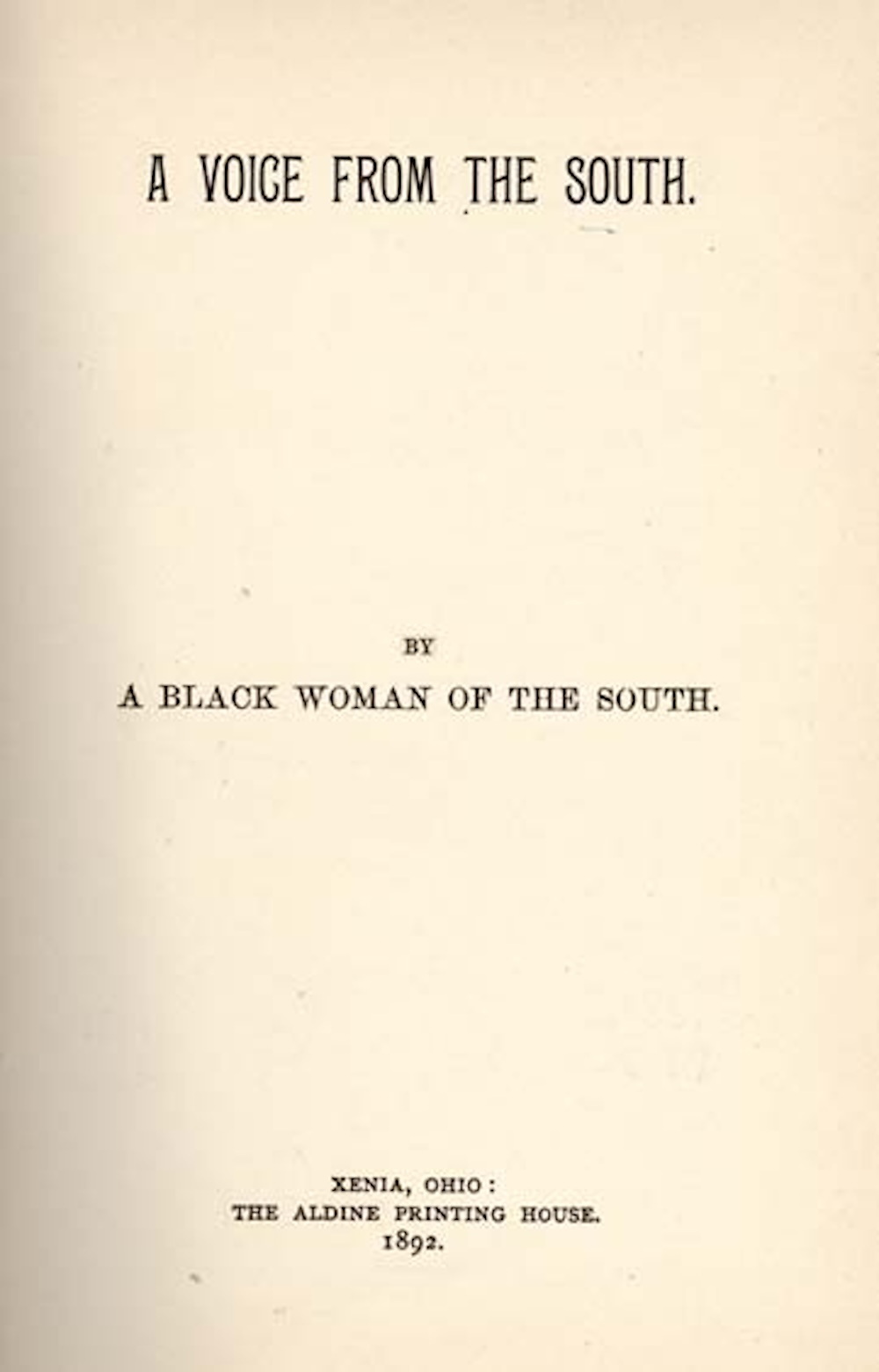
Published in 1892, A Voice from the South: By a Black Woman of the South remains Cooper’s most famous work and the text on which much of her public reputation rests. It deserves that status. The book is neither a memoir nor a single sustained treatise. It is a collection of essays, addresses, and reflections that move across education, womanhood, racial justice, literature, American democracy, and moral philosophy. Yet the book has unity because Cooper’s governing question never really changes: what would it mean to take Black women seriously as thinkers, builders, and agents of the race’s future?
“Not the boys less, but the girls more.”
The opening pages announce the intervention with unusual force. Cooper argues that in all the talk about “the Negro problem,” one witness has not been heard: the Black woman. The Stanford Encyclopedia of Philosophy highlights this argument as central to her philosophical significance, noting that she exposed the limits of white accounts of Black life and Black male accounts of Black womanhood. This was not identity talk for its own sake. It was epistemological. Cooper was arguing that who gets to speak affects what a society is capable of knowing. Silence was not just exclusion; it was distortion.
That is one reason scholars continue to read her as a precursor to later Black feminist theory and standpoint theory. She understood that the view from the underside of power reveals things that official narratives routinely conceal. The “problem,” in her frame, was not simply prejudice in the abstract. It was a whole civic method built on hearing the wrong witnesses and mistaking partial vision for universal truth. The National Park Service calls A Voice from the South the first book-length articulation of Black feminist theory, while the Smithsonian describes it as one of the most enduring statements of nineteenth-century Black feminist thought. Those labels are useful, but they should not flatten the literary force of the book itself. Cooper was analytical, yes, but she was also elegant, ironic, cutting, and often lyrical.
Her treatment of Black womanhood is especially memorable because she refused both pity and abstraction. She wrote about the vulnerabilities faced by Black girls and women in the South, including precarious family structures and gendered exposure to harm, but she refused to cast Black women only as victims. They were indispensable actors in racial progress. In one of her most cited formulations, she linked the dignity of Black womanhood to the advancement of the whole race. The line has been quoted for generations because it compresses her philosophy so efficiently: no race can rise by ignoring the people who carry its heaviest contradictions.
That sentence remains one of the cleanest summaries of Cooper’s educational politics. She was not arguing that Black boys should matter less. She was pointing to an imbalance in attention, investment, and imagination. It is a line that still lands because it names a habit American institutions have never fully kicked: noticing Black women’s labor while underinvesting in Black women’s flourishing.
Before the word existed, she had the framework
One of the laziest ways to talk about Anna Julia Cooper is to say she “anticipated intersectionality” and leave it there. The point is true but incomplete. Yes, her work clearly articulates that Black women face a distinct social condition produced by both racism and sexism. But what makes her more than a precursor is the depth of her institutional analysis. She was not simply adding race to gender or gender to race. She was showing how public discourse itself becomes dishonest when it treats Black women as secondary to both categories.
Her argument about the “unique position” of Black women is widely cited because it gets at this dual structure with remarkable economy. But her broader method matters just as much. In essay after essay, she asked who gets framed as representative, who gets cast as exceptional, who is thought civilized enough for liberal rights, and who must always wait. The Stanford Encyclopedia places her within feminist philosophy, critical race theory, epistemology, and African American political philosophy for exactly this reason. Cooper was not simply offering moral uplift. She was building an analysis of power.
She also refused the false binary that says one must choose between race solidarity and feminist critique. Cooper took Black communal advancement seriously and also criticized the patriarchal habits within Black public life. That was risky. In an era when African Americans were battling disfranchisement, segregation, and white terror, there was always pressure to mute intraracial critique for the sake of unity. Cooper did not embrace that trade. She understood that a politics that asks Black women to disappear for the race is already compromised at the level of principle.
This helps explain why she keeps resurfacing in contemporary scholarship and public history. She did not merely advocate inclusion. She challenged the structure that decides who counts as fully human in the first place. That is also why her work crosses disciplinary lines so easily. Historians, philosophers, literary scholars, Black studies scholars, education researchers, and political theorists can all claim her, because she was thinking across all of those terrains before the academy sorted them into departments.
The organizer, not just the author
It would be a mistake to treat Cooper as a solitary genius whose significance lives only on the page. She was a joiner, builder, and institutional actor. The Smithsonian notes that she took part in organizations including the Colored Women’s League of Washington, the Phyllis Wheatley YWCA, the Colored Settlement House, and the executive committee of the Pan-African Conference. Columbia likewise notes her role in founding organizations aimed at Black civil rights and mutual support in Washington.
Those affiliations matter because they place Cooper in the dense associational world of Black reform. She was not operating as a detached intellectual issuing pronouncements from above. She was embedded in the practical work of institution building, women’s organizing, migrant support, educational access, and transatlantic political conversation. When she attended major gatherings in the 1890s and early 1900s, including the World’s Congress of Representative Women and the Pan-African Conference in London, she was not there as a decorative presence. She was part of a Black internationalist current that understood local injustice and global empire as related problems.
The Pan-African dimension is especially revealing. Cooper’s thought is often domesticated into a purely American story: slavery, schooling, Black women’s advancement, Washington politics. But her intellectual horizon was broader. The Library of Congress and other sources note her engagement with Pan-African organizing, and her later scholarly work on slavery and the French Revolution would deepen that transnational frame. She understood that freedom struggles moved across borders, that Black political life could not be read only through the nation-state, and that imperial histories shaped modern ideas of rights and citizenship.
This is part of what makes her feel so alive now. Cooper did not isolate domestic policy from the wider world. She knew that race is always national and transnational at once.
The Sorbonne, the dissertation, and the second life of her intellect
Many public accounts of Cooper end too quickly with A Voice from the South, as though she wrote one landmark book and then spent the rest of her life as a historical afterimage. That does her a disservice. One of the most extraordinary chapters of her life came later, when she pursued doctoral study in France and completed a dissertation at the Sorbonne. The Stanford Encyclopedia notes that she defended her thesis in 1925, at age 66, becoming the fourth Black American woman to earn a Ph.D.
The feat is impressive on its face, but the conditions make it even more so. Stanford’s account notes that by early 1924 she had selected a thesis topic while facing pressure to return to her teaching job or lose it, and that she continued research and writing under intense constraints. The completed dissertation, on France’s attitude toward slavery during the Revolution, was not a vanity credential. It was serious historical scholarship. Cooper placed colonial slavery and Black freedom struggles at the center of how one should understand the French and Haitian Revolutions, refusing the Eurocentric habit of treating slavery as peripheral to Enlightenment politics.
That intellectual move is deeply consistent with the younger Cooper’s method. Once again, she was asking what happens when supposedly universal ideas are examined from the vantage point of those excluded from their promises. Liberty, equality, fraternity: what do those words mean in a world built on colonial domination and plantation slavery? She was not content to recite the slogans of modernity. She wanted an audit.
The later dissertation also expands the way we should think about her. Cooper was not only a Black feminist thinker of the United States. She was a scholar of revolution, empire, slavery, and political ideas in the Atlantic world. The Library of Congress’s 2025 essay on her underscores the breadth of her life in law, education, civil rights, and philosophy, while the Stanford entry emphasizes the underappreciated significance of her doctoral work on the Haitian and French revolutionary context. Taken together, those sources make clear that Cooper’s intellectual legacy is still larger than the standard public script allows.
Punished for leading
There is a temptation, when writing about pioneers, to smooth out the conflicts and make the life seem inevitable. Cooper’s was not. She faced institutional retaliation. Her ouster from M Street was a reminder that brilliance did not protect Black women from discipline when they challenged the design of power. A 2024 Washington Post opinion essay by Shirley Moody-Turner, editor of The Portable Anna Julia Cooper, frames the episode in terms that feel recognizable now: a Black woman leader in education pushed out through tactics that modern readers will find painfully familiar.
The specifics matter. Cooper’s commitment to rigorous academic preparation for Black students was not simply a philosophical difference. It threatened a segregated order that wanted Black schooling to remain legible, limited, and manageable. Her position as principal gave her enough authority to put those convictions into practice, which made her dangerous in a way a merely symbolic reformer would not have been. Institutions often celebrate Black women as inspirational while resisting Black women as decision-makers. Cooper experienced the older version of that pattern firsthand.
Yet her story after M Street is not one of disappearance. She kept teaching. She kept writing. She kept building. She moved into another significant phase of public work.
Frelinghuysen University and the politics of second chances
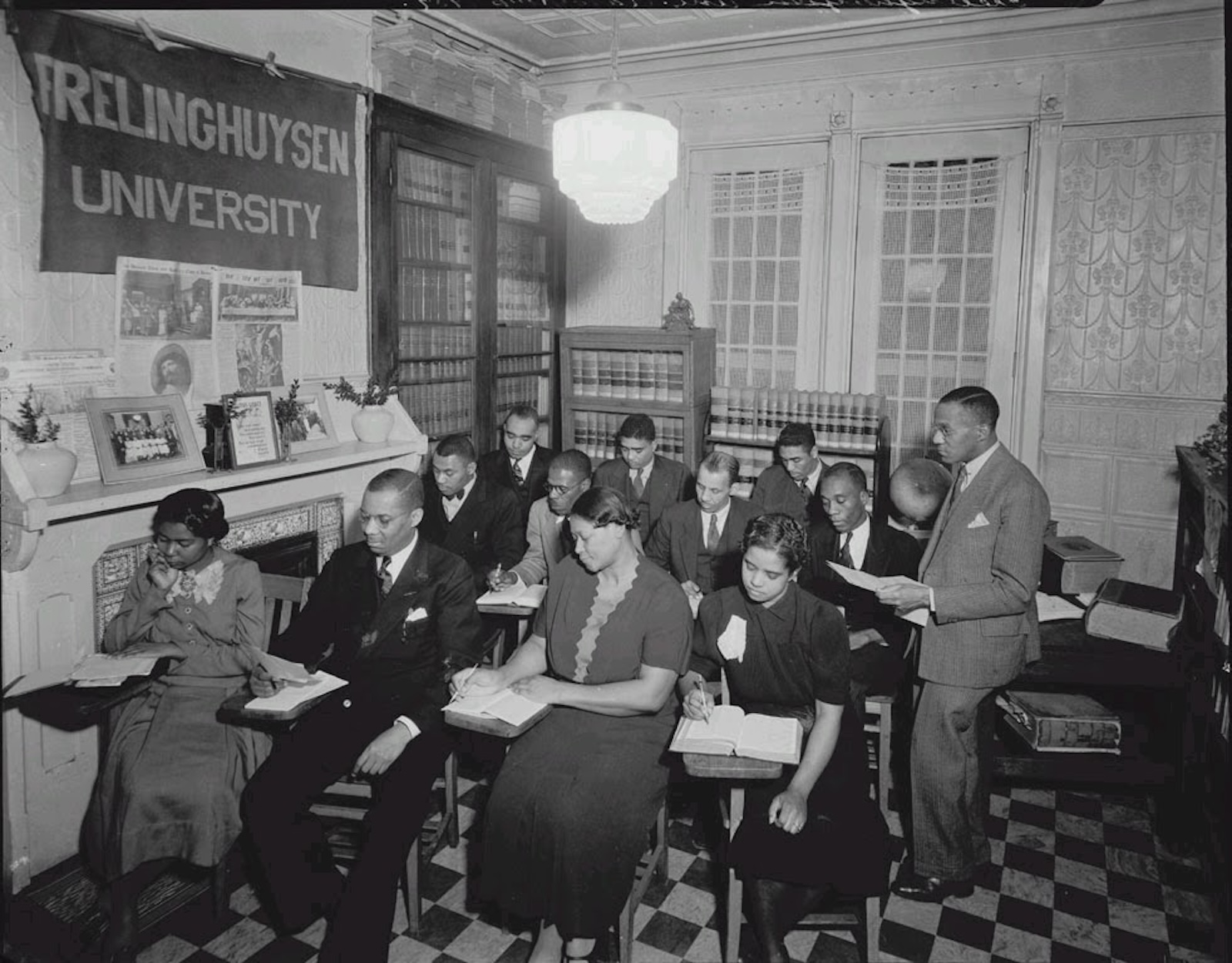
After retiring from Dunbar High School in 1930, Cooper became president of Frelinghuysen University, a Washington institution founded to provide educational opportunities for Black adults. The Smithsonian notes that the school served people who lacked access to higher education and that Cooper ran into familiar obstacles when the D.C. Board of Education refused to let the school grant bachelor’s degrees. Even then, she did not fold. She relocated part of the institution’s operations into her own home on T Street.
That detail tells you a great deal about her ethics. Cooper believed education was not a luxury for the young and already-credentialed. It was a democratic necessity, including for working Black adults whose lives had been narrowed by segregation and exclusion. Frelinghuysen was an extension of her long conviction that public life should be made intellectually accessible to those systematically denied it. The classroom, in her hands, was not merely a site of instruction. It was a site of repair.
There is also something moving about the image of her home becoming part of the university’s infrastructure. American history is full of Black institutions improvised under pressure, sustained by sacrifice, and built through domestic spaces made public. Cooper’s participation in that tradition links her to generations of Black women whose labor made educational life possible even when the state would not. Her greatness was never only abstract. It lived in administrative work, teaching schedules, organizational persistence, and the refusal to let closed doors remain final.
Why Cooper still matters
Cooper’s afterlife in American thought is now secure, but it was not always. For long stretches, she was admired in fragments: a quote here, a women’s-history mention there, a classroom excerpt without the full scale of her intellectual architecture. That has changed in part because institutions such as Howard, the Library of Congress, the National Museum of African American History and Culture, Columbia, and the National Women’s History Museum have helped recover and circulate her work, and because scholars have continued to insist that she belongs in the first rank of American thinkers.
Still, the problem Cooper named has not vanished. Public debates continue to flatten Black women’s political thought into testimony, affect, or service rather than theory. Education policy still regularly asks whether some students really need the deepest forms of intellectual preparation. Feminist politics still struggles with race. Antiracist politics still struggles with gender. And democratic rhetoric still outruns democratic practice. Cooper remains relevant because she did not offer comforting answers to those tensions. She exposed them as constitutive.
Her endurance is also literary. She wrote with compression and force. Her sentences can pivot from velvet to steel in a line or two. She could be sermonically elevated, but she could also be acidly precise. She understood that style is not decoration in political writing. Style is part of authority. It is part of how a thinker refuses diminishment. That matters because Black women in public life have so often been policed for tone, affect, and propriety. Cooper wrote as someone fully entitled to seriousness.
And then there is the sheer scale of the life. Born enslaved. Educated through Reconstruction. Published in the nadir of Black civil rights. Ousted, reemerging. Traveling internationally. Organizing locally. Earning a doctorate in her sixties. Leading an adult-education institution in retirement. Living long enough to see the modern civil-rights movement rise into view. Few American lives so vividly connect the nineteenth century’s unfinished emancipation to the twentieth century’s still unfinished democracy.
More than precursor, more than symbol
Anna Julia Cooper is often positioned as a forerunner to other people’s ideas. That is true, but it can also be a way of placing her permanently in prelude. Better to say this: she produced major ideas of her own. She made one of the clearest nineteenth-century arguments that Black women stand at the center, not the margin, of democratic analysis. She showed that education is a struggle over personhood. She demonstrated that rights language is empty if it cannot survive contact with race, gender, and empire. She modeled an intellectual life grounded in both scholarship and institution building.
If her name is still not as widely known as it should be, that says less about the scale of her achievement than about the habits of American memory. Cooper spent her life insisting that Black women were indispensable to understanding the republic. The republic has been slow to return the favor. But that imbalance is changing, and rightly so. Read closely now, she does not feel like a minor corrective to the canon. She feels like a test of whether the canon knows what it is doing.
In the end, Cooper’s significance is not only that she said Black women matter. It is that she explained why any society that cannot hear Black women clearly will misunderstand itself. That argument was radical in 1892. It is not less radical now.
More great stories

Afro Sheen, Wall Street, and the Architecture of Black Possibility
July 6, 2026
No Comments
The Fire Inside the Fourth
July 5, 2026
No Comments