




The protest was not a detour from Morehouse history. It was Morehouse history, arguing with itself in public.
The protest was not a detour from Morehouse history. It was Morehouse history, arguing with itself in public.
By KOLUMN Magazine
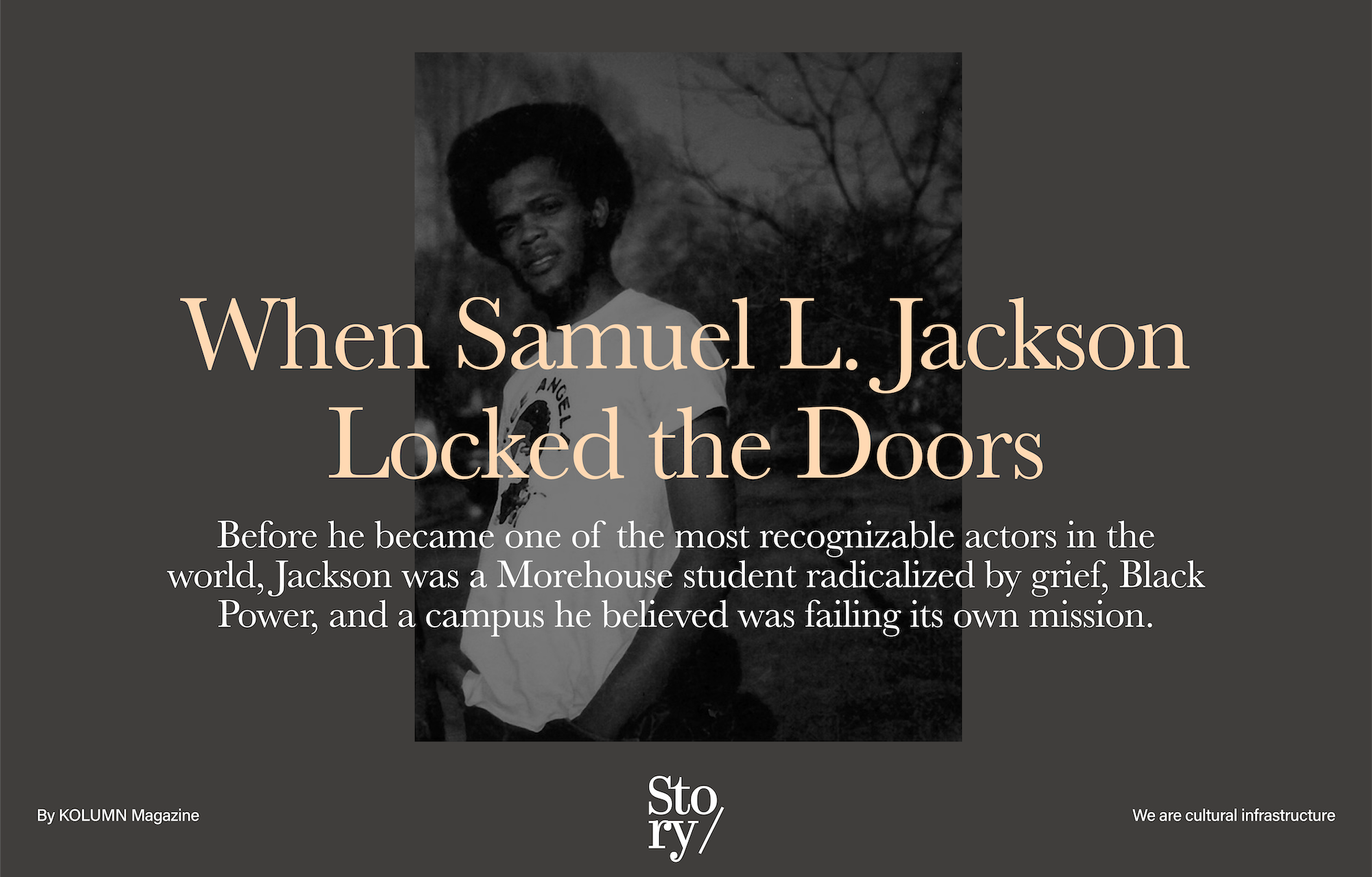
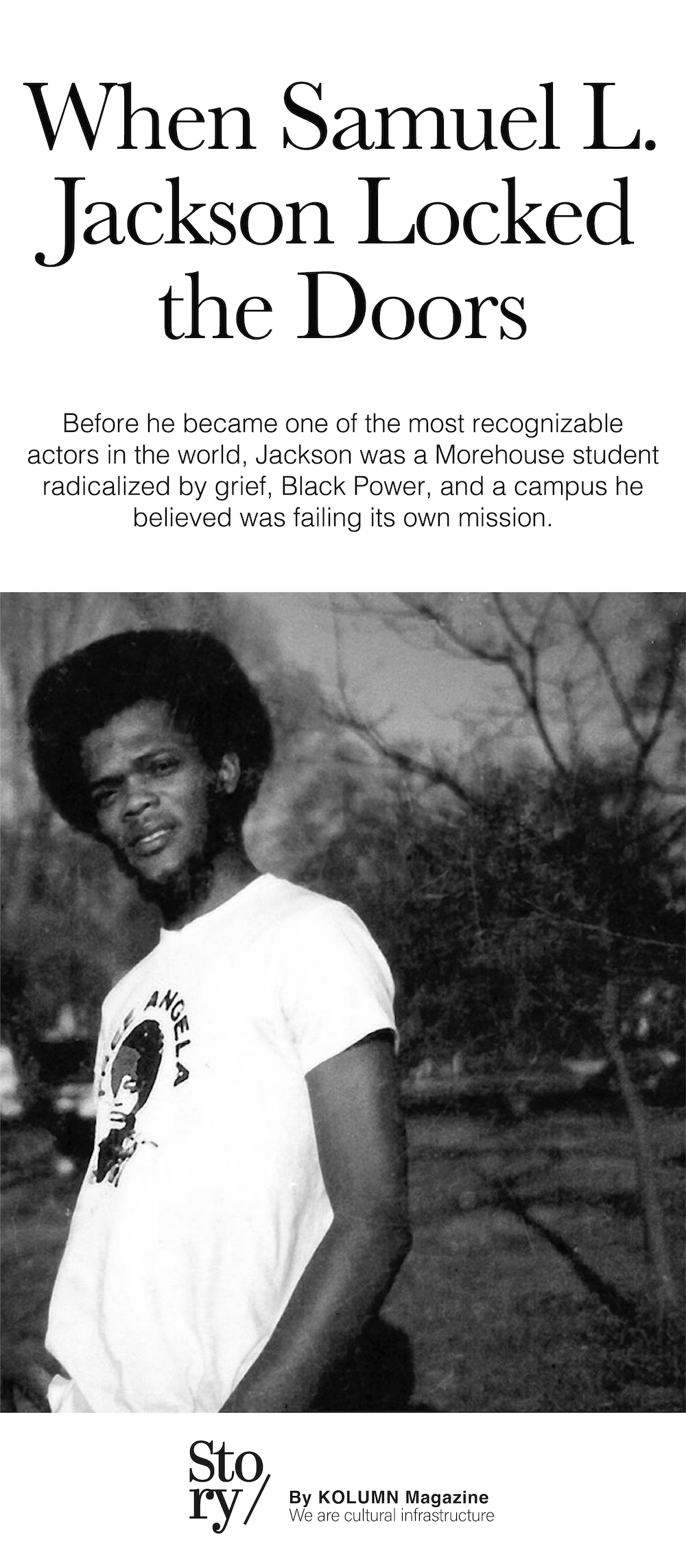
There is a version of Samuel L. Jackson that popular culture knows by heart: the blockbuster star, the flinty moral force, the man who can bend a scene with a pause, a glare, or a line read that lands like a thrown blade. But long before Pulp Fiction, before Marvel, before the public persona hardened into legend, Jackson was a Morehouse student in Atlanta trying to figure out what kind of Black man he was supposed to become in a country that had just murdered Martin Luther King Jr. That earlier Samuel L. Jackson was not yet famous, not yet canonized, not yet safely folded into American celebrity. He was politicized. He was impatient with decorum. And in 1969, he became part of one of the most memorable student protests in Morehouse history.
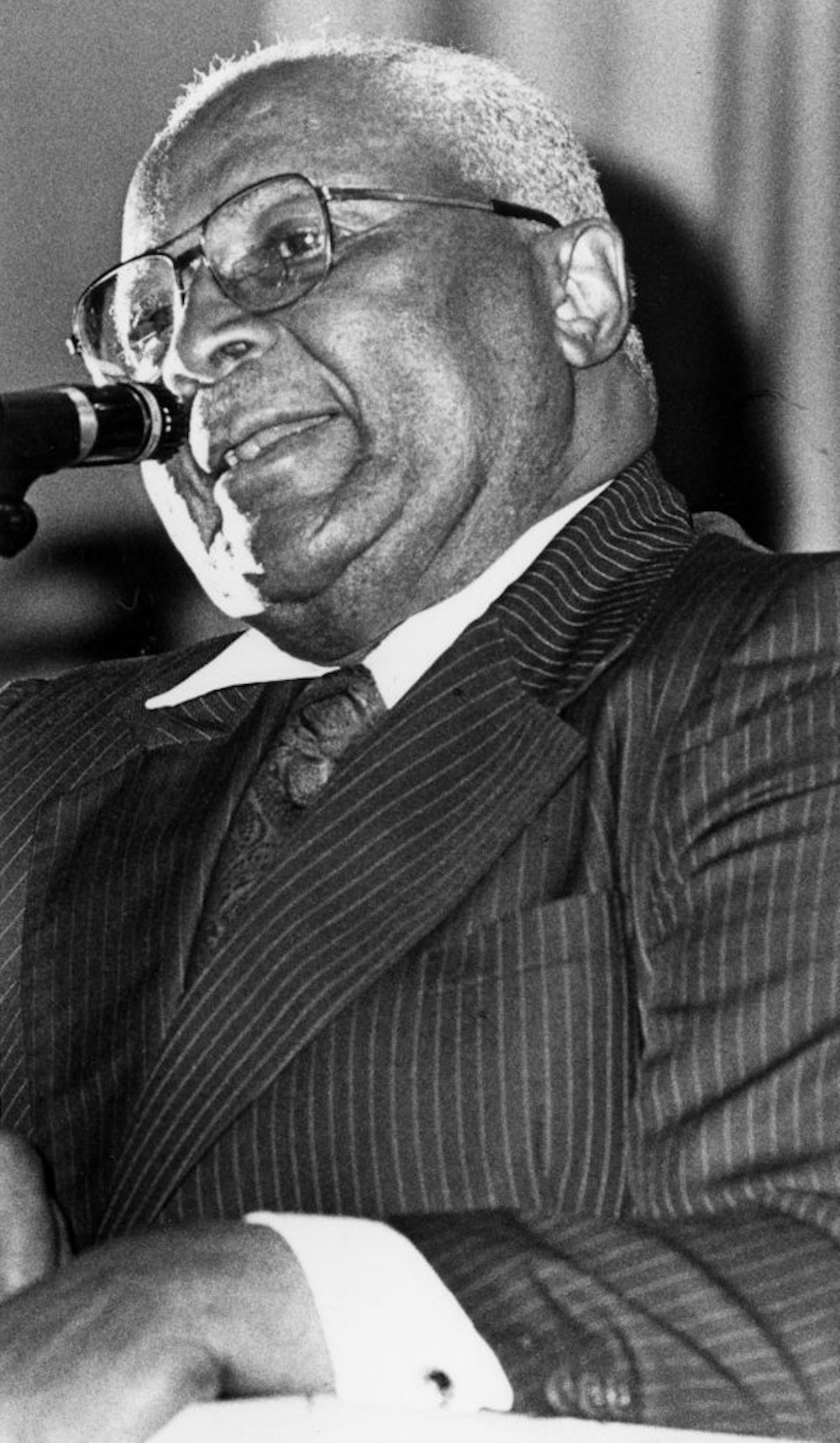
The broad contours of the story are now familiar in miniature. Jackson, then a Morehouse student, joined a group of activists who locked members of the college’s board of trustees inside Harkness Hall during a campus protest. Among those caught in the standoff was Martin Luther King Sr., known widely as “Daddy King.” The protest was aimed at issues that now sound entirely legible within the history of Black campus activism: the absence of Black studies, the governance of the institution, and the relationship between a prestigious Black college and the Black communities around it. Jackson was later expelled, spent time away from campus, and eventually returned to graduate in 1972.
But that summary is too neat, too compressed, too celebrity-trivia ready. What happened at Morehouse in 1969 matters because it was not simply a youthful indiscretion by a future actor. It was a collision between two visions of Black advancement. One was the long Morehouse tradition of disciplined leadership, institutional legitimacy, and race uplift through cultivated excellence. The other was an insurgent late-1960s politics shaped by Black Power, antiwar rebellion, urban inequality, and the aftershocks of King’s assassination. Jackson’s protest sits precisely at that collision point. To reduce it to a quirky pre-fame anecdote is to miss what it reveals about Black colleges, Black respectability, and the generational struggle over what real freedom should look like.
A college built to produce leadership, and to define it
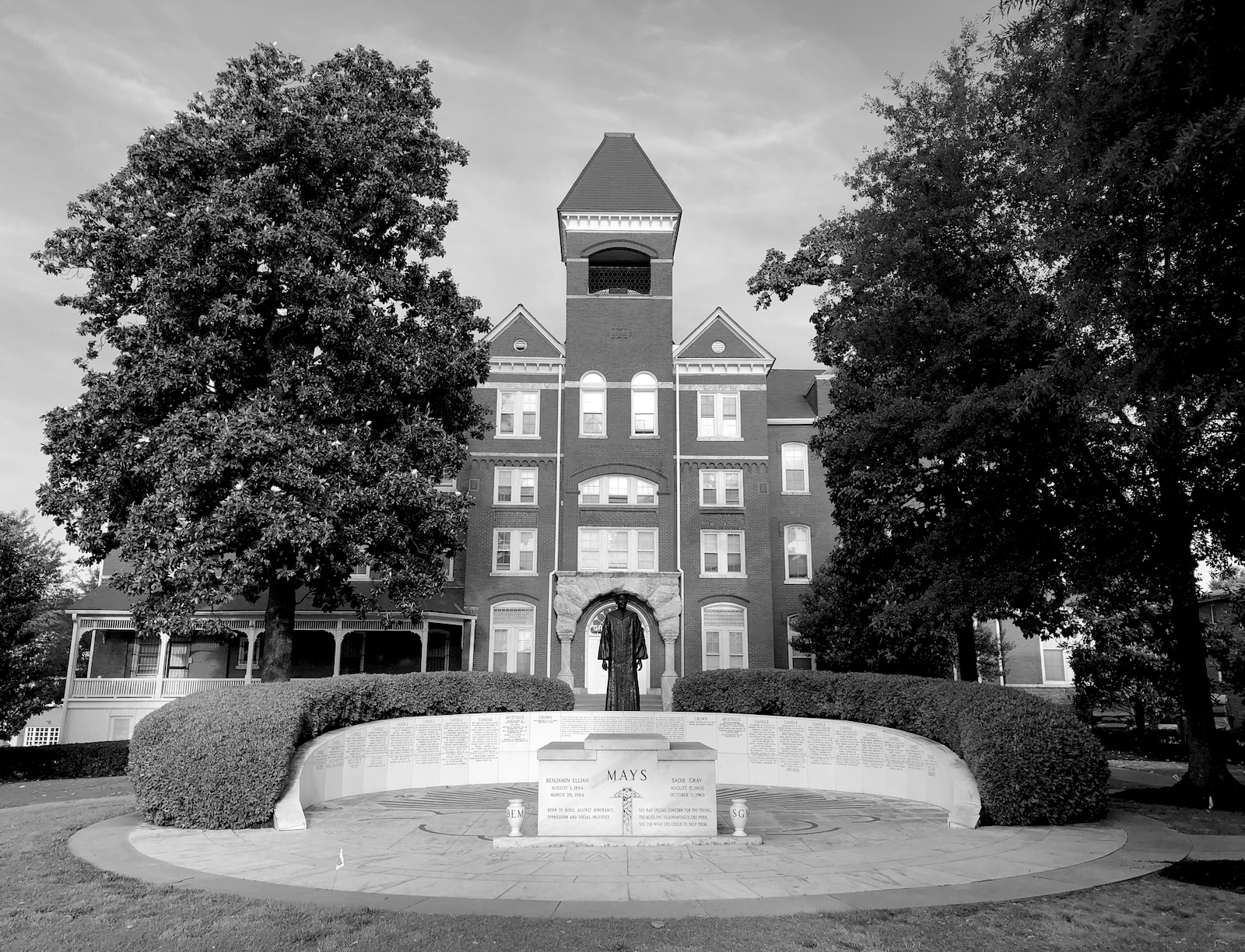
To understand why the 1969 protest carried such symbolic weight, it helps to begin with Morehouse itself. Founded in 1867, the institution occupies a singular place in Black higher education. The school describes itself as the nation’s only historically Black private liberal arts college for men, and its catalog frames its mission in explicitly moral and civic terms: to develop men of disciplined minds who will lead lives of leadership and service. The college’s foundational principles include justice, equality, democracy, liberation, and a special responsibility to teach the history and culture of Black people.
That language is important, especially in hindsight. Because by 1969, Morehouse had already become one of the symbolic capitals of Black male leadership in America. Martin Luther King Jr. was among its most famous alumni. So were generations of ministers, scholars, public servants, and movement figures. The institution carried prestige, but also burden. It was never just a college campus. It was a factory of expectation. Students were not merely earning degrees; they were being prepared, shaped, and often disciplined into a certain idea of representative Black manhood.
That tension between formation and freedom shows up in Jackson’s recollections of campus life. In an excerpt published by Literary Hub from Gavin Edwards’s 2021 biography of Jackson, the future actor described Morehouse as a place that was “breeding politically correct negroes,” a school he believed was more invested in respectable leadership than in deeper political confrontation. It is a blunt formulation, and one that should be read not as neutral description but as a young activist’s indictment of institutional caution. Yet the quote helps name the central struggle of the moment: whether a college celebrated for producing Black leaders would also make room for students demanding a sharper, more explicitly radical relationship to Black liberation.
This was not a contradiction unique to Morehouse. Across the country, the late 1960s transformed campus politics. Black students at predominantly white institutions and at HBCUs alike were pressing for Black studies departments, Black faculty, curricular reform, and forms of governance that reflected their communities rather than older paternal structures. But at Morehouse, those fights carried special symbolic voltage because the college was so deeply tied to a polished public image of Black excellence. Student protest there was never only about policy. It was about who got to define the meaning of excellence in the first place.
The shadow of the Atlanta Student Movement
The 1969 action did not appear out of nowhere. It belonged to a much longer Atlanta tradition of student organizing. In 1960, the Atlanta Student Movement emerged from the Atlanta University Center, driven by students from institutions including Morehouse, Spelman, and other Black colleges in the city. The movement, anchored by the Committee on the Appeal for Human Rights, organized marches, pickets, and sit-ins that helped desegregate restaurants, stores, and public facilities in Atlanta. Official and historical accounts trace that movement to Morehouse students including Lonnie King, Joseph Pierce, and Julian Bond, whose organizing helped puncture Atlanta’s carefully marketed racial moderation.
That lineage matters because it complicates any easy opposition between Morehouse respectability and protest. Morehouse was not simply a conservative institution suddenly interrupted by rebellion. It was already part of a broader ecology of Black intellectual and political struggle in Atlanta. The city’s Black colleges had long served as incubators for dissent, even when campus administrations were less enthusiastic about the pace or style of that dissent. The school’s reputation for leadership was partly built by students who challenged power, not just by students who learned how to enter it.
Still, the mood of 1969 was different from the early Civil Rights era. The nonviolent direct-action politics of 1960 had not disappeared, but they were now joined by something harder-edged. The assassination of King in April 1968 marked a moral and strategic rupture for many young Black Americans. The old choreography of gradual reform, interracial appeal, and liberal patience no longer seemed adequate. Jackson later recalled that he was angry at King’s assassination but not shocked by it, and that he believed change would require something beyond “sit-ins” and “peaceful coexistence.” Even through secondary accounts, that statement illuminates the emotional atmosphere of his political formation: grief moving toward militancy.
Jackson’s personal proximity to that historical moment was unusually direct. In 2018, he wrote about serving as an usher at Martin Luther King Jr.’s funeral in Atlanta. He then traveled to Memphis for the march in support of striking sanitation workers, the very struggle King had gone there to support before he was assassinated. This was not abstract politics absorbed from newspapers or dorm-room debate. It was lived proximity to historical trauma and movement culture at one of the most volatile turning points of the 20th century.
The making of a protest
By the spring of 1969, Jackson had joined a group of Morehouse undergraduates called Concerned Students. According to the Edwards biography excerpt, the group wanted to petition the board of trustees to remake the college. Their demands were sweeping and revealing. They called for a Black studies program, stronger involvement with the housing projects adjacent to the Morehouse campus, a majority of voting trustees to be people of color, and the consolidation of Atlanta’s six Black colleges into a larger institution centered on Black studies to be called Martin Luther King University.
Those demands deserve to be read slowly. The Black studies request fits a nationwide student pattern, but the others show how ambitious the students’ political imagination had become. They were not asking merely for a course addition or a symbolic statement. They were questioning governance, geography, and mission. They were insisting that the college answer to the Black neighborhood around it, not just to donors, alumni prestige, or inherited institutional habit. And the proposal for “Martin Luther King University” signaled a desire to transform the Atlanta University Center into something more ideologically coherent and explicitly tied to Black liberation rather than elite management.
When the students tried to discuss their concerns with the trustees, they were rebuffed, according to the same account. That refusal became catalytic. The students went outside Harkness Hall, where the board was meeting, gathered chains that had been used to keep pedestrians off the grass, bought padlocks from a hardware store, and chained the doors shut. They locked themselves in with the trustees. The improvisational detail is almost cinematic, but it is also instructive: a campus’s own architecture and codes of order were turned against its governing body.
The standoff lasted 29 hours. Students painted revolutionary slogans across campus, including “M. L. King University Now.” Spelman students joined in, some climbing in through a second-floor window. Among them was LaTanya Richardson, who would later marry Jackson. Her recollection in the Edwards excerpt captures the sensibility of the period with disarming clarity: “Wherever somebody was speaking about revolution and change, I showed up for it.” That sentence does not just describe participation. It describes a generation’s political weather.
The students, according to the account, fed the trustees and took care of them during the lock-in. About six hours into the standoff, Martin Luther King Sr. complained of chest pains, and the students allowed him to leave through that same second-story route. Jackson later joked that they let him out so they would not be accused of murder. The dark humor is vintage Jackson, but the deeper point is that even the most confrontational Black student politics of the moment still had to negotiate the symbolic gravity of Daddy King and the King legacy. That one of the hostages was King’s father transformed the protest into something almost allegorical: the sons of the movement literally confronting the fathers.
The hostage story and the problem of language
The protest is often summarized in shorthand as the moment Samuel L. Jackson “held Martin Luther King Sr. hostage.” That phrase is not false, exactly, but it distorts as much as it clarifies. It sensationalizes the event in a way that can flatten its politics into celebrity oddity. “Hostage” is the term that sticks in headlines because it shocks, and because it gives the episode tabloid energy. But the fuller historical record suggests something more specific: a campus lock-in or occupation in which trustees were forcibly confined as leverage in a political standoff over institutional reform.
That distinction matters. Not to sanitize the protest, which was confrontational and coercive by design, but to place it within the vocabulary of late-1960s student uprisings rather than crime spectacle. The students were not carrying out some apolitical act of menace. They were using disruption to force an institution to hear demands it had refused to hear through ordinary channels. The difference between “hostage-taking” and “lock-in” is partly descriptive, but it is also ideological. One tells the story as deviance; the other tells it as insurgent politics.
Even the Guardian, in a 2002 profile, framed the event in relation to the lack of a Black studies program, emphasizing the substantive grievance beneath the drama. Britannica similarly summarizes Jackson’s expulsion as stemming from his having locked board members in a building for two days in protest over the composition of the mostly white board. Those accounts, while brief, point back toward the structural questions at issue: curriculum, representation, and power.
In this sense, the language around Jackson’s protest becomes part of the article’s subject. How Black student rebellion gets remembered often depends on whether later institutions and media choose to narrate it as visionary pressure or unruly embarrassment. A famous actor makes the anecdote portable. But the portability can come at the expense of political depth.
A clash over Black studies, and over the meaning of Black education
Of all the students’ demands, the call for a Black studies program may be the easiest for modern audiences to understand, partly because the institutional landscape has shifted so much since 1969. What was once radical insistence has, at many colleges, become formalized academic structure. Morehouse today has an Africana Studies program that explicitly prepares “socially-conscious servant leaders” through the interdisciplinary study of African American and Pan-African cultural and historical experiences. The college says the program equips students to analyze systemic issues impacting communities of African descent worldwide, and its current curriculum includes courses in Black liberation movements, Africana theory, and African American history. Morehouse’s general education program likewise says students are grounded in African and African diasporic heritage and explore themes of social justice, equity, and protest across disciplines.
That does not mean the 1969 protesters “won” in any simple or immediate sense. Institutional change rarely works that cleanly. The concessions extracted during the lock-in were, according to the Edwards excerpt, later repudiated by the administration. But the broad historical irony remains: one of the protest’s central demands now appears deeply legible within Morehouse’s stated academic mission. The school that once faced student fury for lacking Black studies now publicly presents Africana Studies as integral to the formation of Men of Morehouse.
There is a larger lesson here about higher education. Black studies programs across the United States were not gifts handed down by enlightened administrations. They were frequently won through confrontation, occupation, coalition, and reputational risk. Students forced universities to acknowledge that the study of Black life was not ornamental or extracurricular but central to understanding the modern world. Jackson’s Morehouse protest belongs to that national genealogy.
And there is another, subtler lesson too. The demand for Black studies was never just about adding content. It was about changing the institution’s epistemology, changing who counts as a knower, which histories are treated as foundational, and whether scholarship itself will answer to living Black communities. That is why the students paired Black studies with community involvement and board reform. They understood that curriculum without power redistribution can become a kind of decoration.
Daddy King in the room
No account of the 1969 Morehouse protest can avoid the presence of Martin Luther King Sr. That he was among the trustees confined during the lock-in has given the story much of its afterlife. It adds irony, drama, and generational symbolism. But it also raises a more uncomfortable question: what happens when a younger cohort confronts not white power alone, but respected Black authority?
Daddy King stood for a form of Black institutional legitimacy that was earned, not invented. He was not some outsider to the freedom struggle. He had shepherded the Ebenezer Baptist Church tradition, helped shape the world from which Martin Luther King Jr. emerged, and carried his own considerable moral authority in Atlanta. Yet by 1969, moral authority itself was under renegotiation. Younger activists were less willing to defer automatically to elders, even revered elders, if they believed those elders were sustaining structures that no longer matched the urgency of the moment.
That does not make the confrontation simple or noble in every dimension. There is a reason the story still has the power to unsettle. The protest crossed lines that many would regard as reckless, especially given King Sr.’s age and stature. But that discomfort is part of its significance. The Black freedom struggle was never one seamless moral consensus. It included strategic, generational, and institutional conflict. Morehouse in 1969 staged that conflict in concentrated form: an elite Black college, trustees with establishment credibility, students radicalized by the death of King Jr., and a fight over whether gradualism could still command loyalty.
In that sense, Daddy King’s presence in the locked building was more than a historical curiosity. It dramatized the transition from one era of Black politics to another. The movement’s heirs were no longer content to inherit symbols; they wanted structural concessions.
Punishment, exile, and return
At first, the students appeared to have won something tangible. According to the Edwards account, Charles Merrill, the chair of the board of trustees, signed an agreement granting amnesty and promising that participants would not be punished. Yet after the semester ended and the student body had dispersed, the administration moved against the protesters. Registered letters summoned students back to campus for hearings. Jackson was expelled by the Morehouse Advisory Committee. The timing, coming after most students had gone home, suggests an institutional preference for quiet discipline over public confrontation.
Here again, the protest reveals the mechanics of institutional self-preservation. Colleges often celebrate principled dissent in retrospect while punishing it in real time. The same campus that now embraces social justice language and Africana-centered learning was, in 1969, still capable of disciplining students who tried to force change through direct action. That tension is not hypocrisy so much as a reminder that institutions are usually transformed by pressure before they narrate the transformation as part of their values.
Britannica notes that Jackson spent two years in Los Angeles as a social worker before returning to Morehouse, where he was inspired by a Negro Ensemble Company production to study acting. He graduated in 1972. That return matters. The story is often told as expulsion, full stop, but the fuller arc is rupture and reentry. Jackson did not simply wash his hands of Morehouse. He came back, completed his degree, and carried the institution with him, even as he remained evidence of one of its fiercest internal reckonings.
That arc also complicates the temptation to frame Morehouse and Jackson as permanent antagonists. The relationship was adversarial, then unfinished, then resumed. It became part of the larger Black institutional story: critique not as abandonment, but as a form of ownership serious enough to risk punishment.
Why this episode still matters
So why does Samuel L. Jackson’s 1969 protest still command attention now, decades later, outside the glow of celebrity biography? Partly because it forces a useful correction in how Americans remember both Jackson and the era. Jackson did not arrive in public life as a fully formed star whose politics can be retroactively added for texture. His politics were formative, not decorative. Activism was not a footnote before the fame; it was part of the forge that made the public figure possible.
It matters, too, because the event opens a window onto the political complexity of HBCUs. Too often, Black colleges are described in flattened sentimental terms, as though they have always functioned as harmonious sanctuaries of racial uplift. They have certainly been sanctuaries, but they have also been contested spaces where students, faculty, trustees, churches, donors, and local communities fight over the purpose of Black education. Morehouse’s history includes both discipline and dissent, polish and rebellion. Jackson’s protest is memorable precisely because it makes that contradiction impossible to ignore.
The episode also resonates because many of its demands remain contemporary. Students across the country still push institutions to align curriculum with community, to diversify governance, to turn symbolic commitments into material ones, and to ask whether elite campuses are accountable to the neighborhoods that surround them. Even where Black studies now exists, the old struggle over whether institutions merely display Blackness or materially answer to Black life has hardly disappeared.
And then there is the matter of memory. Celebrity often domesticates history. Once a protester becomes an icon, the edges of protest can be softened into anecdote. But Jackson’s Morehouse story resists full domestication because the details remain so charged: the chained doors, the trustees trapped inside, Daddy King’s chest pains, the expulsion letters, the later return. It is too unruly to become purely inspirational and too politically rich to remain merely scandalous. That is exactly why it should be remembered seriously.
The actor and the insurgent
It is tempting to search Jackson’s later screen persona for traces of the young radical at Morehouse, and in a loose cultural sense that temptation is understandable. His performances often project impatience with hypocrisy, contempt for euphemism, and an almost theatrical refusal to shrink before authority. That does not mean the protest mechanically produced the actor. Human beings are not so tidy. But it is fair to say that the same young man who rejected docility at Morehouse later built a career on a style of presence that rarely feels deferential.
More concretely, the protest helps explain why Jackson has long seemed like more than a movie star who occasionally comments on politics. His public seriousness has roots. His reputation for plain speech has roots. His sense of Black history as something inhabited rather than merely referenced has roots. The Morehouse protest is one of those roots. It reminds us that celebrity does not erase prehistory; it often hides it in plain sight.
A legacy that exceeds the anecdote
Today, Morehouse’s official language about Africana studies and general education sounds, in some ways, like the institutional descendant of arguments students made under much risk in 1969. The college now says its curriculum grounds students in African and African diasporic heritage and encourages engagement with social justice, equity, and protest. That does not mean the institution has resolved every tension between mission and practice, or between rhetoric and structure. No college has. But it does mean the old protest can be read not only as disruption, but as a pressure point in a longer institutional evolution.
Samuel L. Jackson’s role in that moment should therefore be understood with precision. He was neither a lone heroic rebel nor merely a reckless celebrity-in-waiting. He was part of a collective student action emerging from a larger tradition of Atlanta Black student activism, radicalized by the murder of Martin Luther King Jr., impatient with institutional caution, and willing to use confrontation to force the issue. The significance of the 1969 protest lies not in its shock value alone, but in what it reveals about Black education in an age of insurgency.
If anything, the continuing fascination with this episode may say as much about the present as it does about the past. We are still arguing over what campuses owe communities, whether representation without power is enough, how social movements should engage institutions, and how radical histories get absorbed into public memory. Samuel L. Jackson’s Morehouse protest survives because those arguments survive. The chained doors at Harkness Hall are long gone. The questions behind them are not.
The easiest way to tell this story is as a twist: Samuel L. Jackson, before the movies, helped lock up the Morehouse trustees. The truer way to tell it is as a chapter in the unfinished history of Black struggle over education, authority, and liberation. Morehouse was trying to make leaders. Its students were trying to decide what leadership would require after America had shown, once again, what it would do to even its most eloquent apostle of nonviolence. In that gap between formation and fury, Jackson and his fellow students chose confrontation. History has remembered the stunt. It should also remember the stakes.
More great stories
The Man Who Walked Through Mississippi
March 19, 2026
No Comments
Before Integration, There Was Institution-Building
March 19, 2026
No Comments