




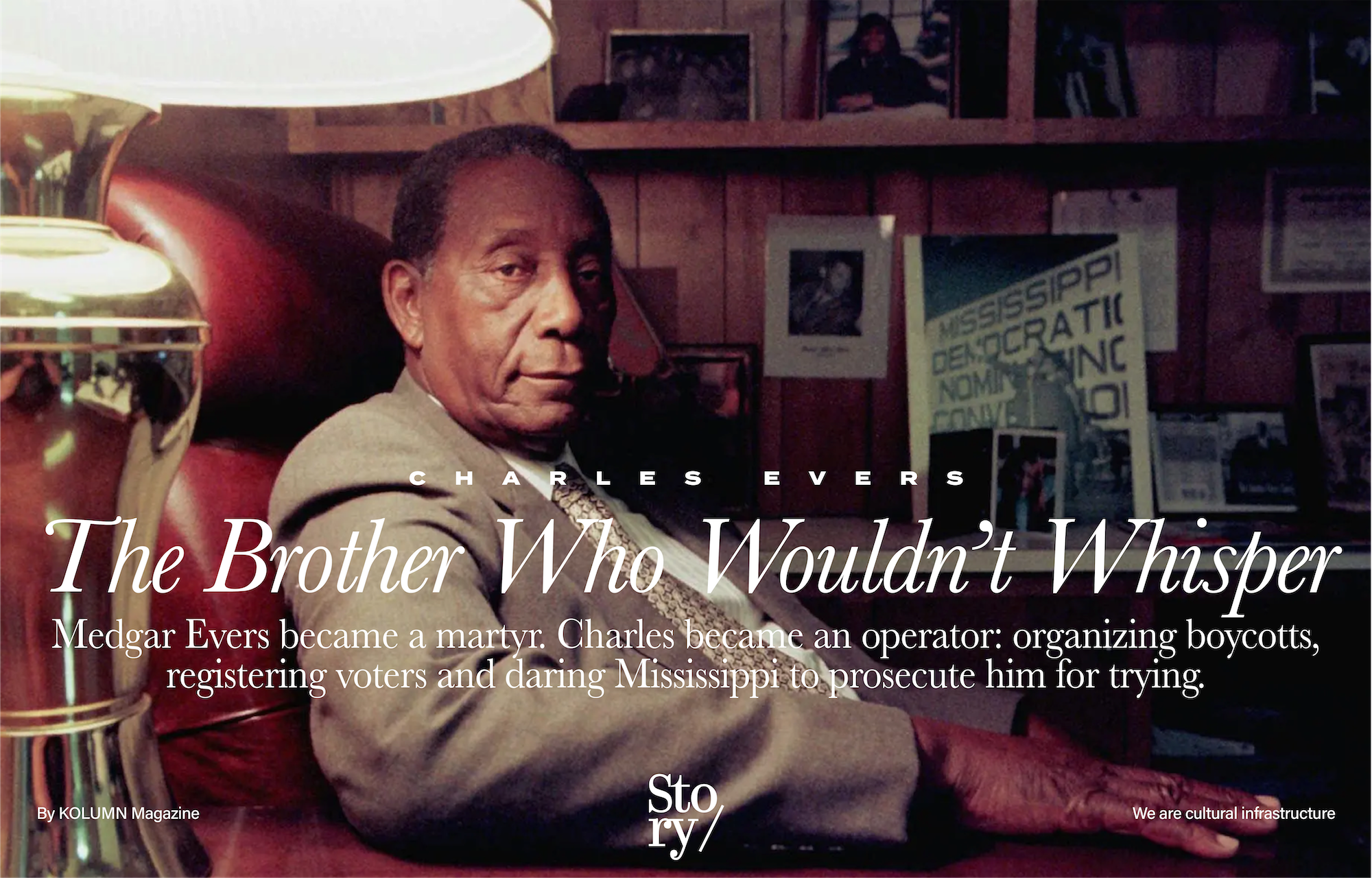
“The transition from protest to political infrastructure.”
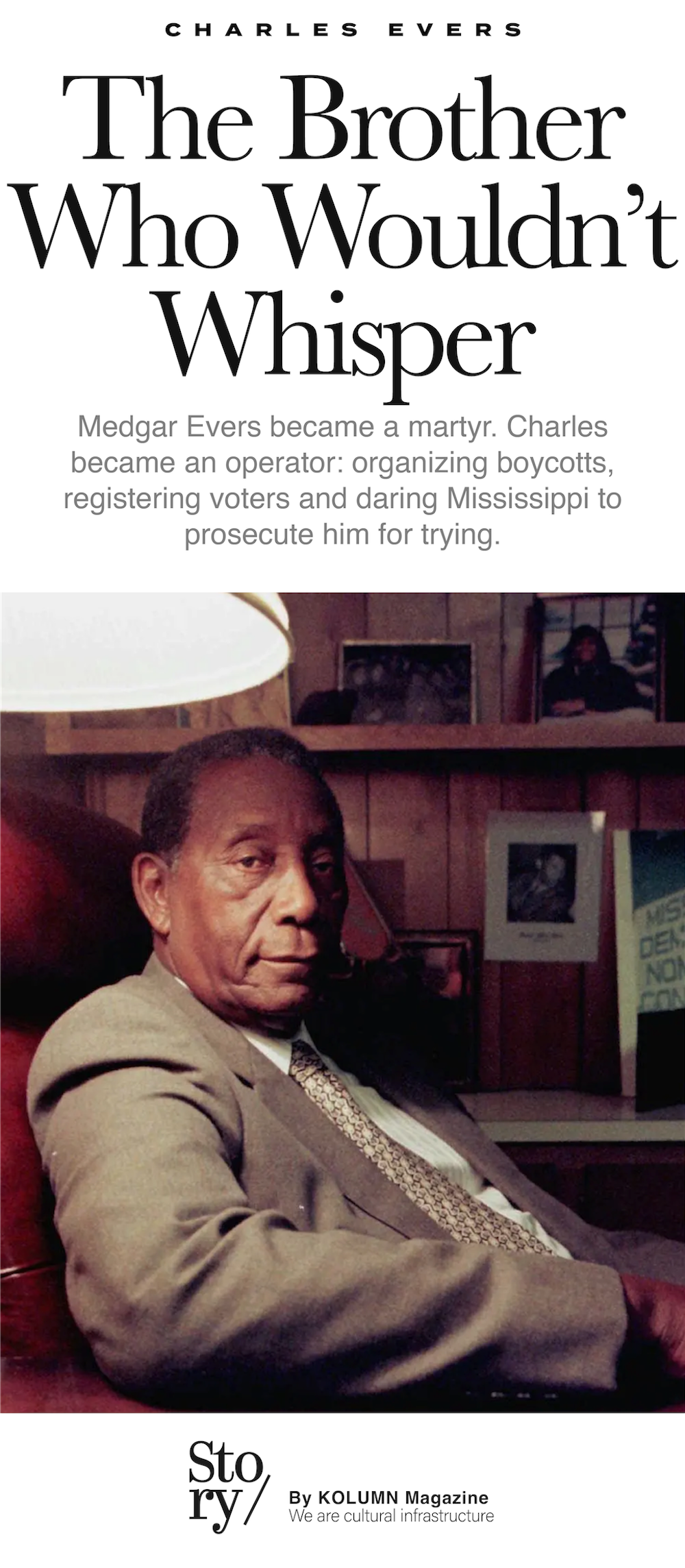
“The transition from protest to political infrastructure.”
By KOLUMN Magazine
In Mississippi, history has a way of arriving at your door in the night. Sometimes it arrives as a knock you do not answer. Sometimes it arrives as a shot fired from the dark. For Charles Evers, the sound that shaped the rest of his life was the gunfire that killed his younger brother, Medgar, in Jackson on June 12, 1963—a murder that hardened the civil-rights era into national memory and turned a family name into an emblem. The country learned to say “Evers” as shorthand for sacrifice, for the price of insisting on the vote, for the intimate violence required to keep the South’s racial order intact.
But the story of Charles Evers—born James Charles Evers in Decatur, Mississippi, in 1922, dying in 2020 at age 97—is not only a sequel to Medgar’s martyrdom. It is a parallel track: a life that forces a more complicated question than the one Americans prefer to ask about the civil-rights movement. Not simply: Who suffered? But: Who governed afterward? Not simply: Who marched? But: Who built an electorate, who negotiated with white power, who made the movement survive the morning after the cameras left?
Charles Evers was a civil-rights leader, an NAACP organizer, a businessman, a radio personality and a politician whose career ran straight through the line where moral clarity meets the messy machinery of democracy. After Medgar’s assassination, Charles took on his brother’s NAACP role in Mississippi, becoming a central figure in voter-registration drives and demonstrations in a state built to prevent Black political power. Later, he became mayor of Fayette, Mississippi—widely described as the first Black mayor of a biracial Mississippi town since Reconstruction—first elected in 1969 and serving multiple terms.
He also became, in his later decades, a symbol of the civil-rights generation’s internal debates: about party loyalty, about the relationship between liberation and capitalism, about whether political influence requires ideological purity or something closer to grit. His long public life—moving from NAACP organizing to municipal governance, from independent candidacies to Republican affiliation, from movement hero to headline-making provocateur—offers a portrait of the civil-rights era not as a closed chapter but as an ongoing struggle over how power is gained, used, defended, and sometimes squandered.
To understand Charles Evers is to understand a seldom-told phase of the movement: the transition from protest to political infrastructure. That transition did not arrive as a triumphal moment. It arrived as a fight over voter rolls, courthouse budgets, business credit, and the question of whether the Constitution’s guarantees mattered in counties where the law had always been a local dialect spoken in white.
A Mississippi childhood and the apprenticeship of survival
Charles Evers was born in Newton County, raised in the hard schooling of Jim Crow Mississippi, where the point of segregation was not separation as much as it was instruction: it taught Black children what could happen to them, and taught white children they could do it. Accounts of his early life emphasize a temperament that did not take well to that instruction—an insistence on autonomy, money, and stature as shields against humiliation. In later retellings, he framed his pursuit of business success as inseparable from his pursuit of dignity, an argument that echoes throughout his life: that economics is not merely adjacent to civil rights but often the only language power understands.
World War II widened the horizon for many Black Southerners, and Evers was among them, serving in the U.S. Army. Military service did not cure America’s racial disease, but it did deepen a particular resentment: the experience of risking your life for a democracy that refused to treat you as a full citizen at home. After the war, Charles and Medgar attended Alcorn Agricultural and Mechanical College (now Alcorn State University), part of the broader Black institutional ecosystem that trained a generation of organizers, teachers, and professionals who would become the backbone of the movement.
His early adult years included work in radio—disc jockeying is one of the professions that taught Black men how to command public attention in an era when mainstream platforms were closed or hostile. Even here, you can see the outlines of his later political style: the sense that voice is an instrument, and that charisma can be converted into leverage.
By the 1950s and early 1960s, Mississippi was the movement’s crucible: the state that perfected modern voter suppression and maintained segregation not only through law but through terror. Medgar Evers became the NAACP’s first field secretary in Mississippi, working out of Jackson, investigating racial violence, organizing boycotts, pushing voter registration, and becoming one of the most visible targets of white supremacists. When Medgar was murdered in 1963, the question for the movement was both symbolic and logistical: who would take up the work in the most dangerous terrain in America?
Charles did.
Picking up the mantle: NAACP work after 1963
The simplest way to describe Charles Evers’s post-1963 role is that he became the man who refused to let his brother’s death be the end of the story. He stepped into Medgar’s NAACP position and helped lead voter-registration efforts and demonstrations in Mississippi at the very moment when the civil-rights movement was shifting from moral appeals to federal confrontation.
That work was not a matter of paperwork and speeches. Voter registration in Mississippi in the 1960s was a contact sport. It meant confronting registrars who could deny Black applicants on a whim. It meant moving through counties where the Klan was not an underground organization but an ambient fact. It meant persuading people—sharecroppers, domestic workers, laborers—that signing their name could cost them their job, their home, or their life.
In a state designed to keep Black people politically invisible, registration itself became a form of public rebellion. Charles Evers’s significance here is not only that he organized but that he embodied a particular organizing logic: he emphasized power, numbers, turnout. He understood that symbolic victories would be reversible unless they were translated into officeholders and enforceable policy. That sensibility made him a bridge between the classic nonviolent movement narrative and the later, less romantic story of Black political incorporation.
This bridge ran through hard places. In Claiborne County, Mississippi, local Black residents and NAACP organizers launched a boycott of white merchants in 1966 to press for equality and fair treatment. The boycott became the basis for a landmark Supreme Court decision, NAACP v. Claiborne Hardware Co. (1982), which held that nonviolent boycott activity to bring about political, social, and economic change is protected by the First Amendment.
Charles Evers’s name enters this legal history through both organizing and rhetoric. Opponents pointed to a speech in which he threatened social consequences for boycott-breakers—language later recited in legal summaries—and argued that the boycott was enforced through intimidation and violence. The Supreme Court ultimately drew a critical line: even sharp, heated political speech does not automatically become incitement, and liability cannot be imposed for protected advocacy absent evidence of authorization or direct threats tied to specific violence.
The significance of that ruling has outlived the era that produced it. Claiborne Hardware is now a cornerstone case in debates over political boycotts, protest liability, and the boundaries of protected speech. Its afterlife shows how movement tactics—economic pressure, coordinated consumer action—became constitutional questions. And it shows how Charles Evers operated: not only in the streets or meeting halls, but in the long game of precedent.
From movement to municipality: Fayette and the meaning of “first”
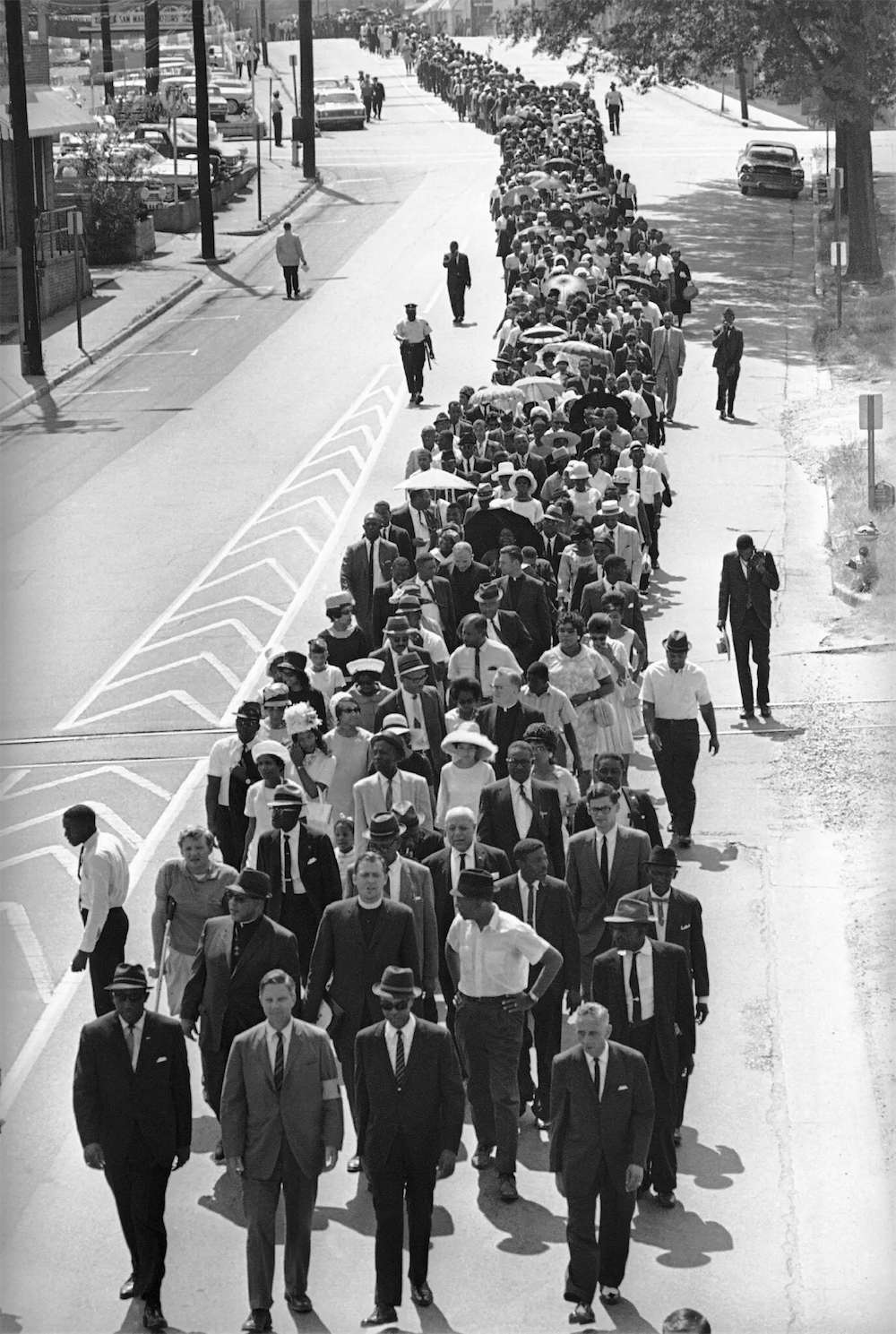
In 1969, Charles Evers did something that, in Mississippi, was both administratively ordinary and historically explosive: he won an election. He was elected mayor of Fayette, a small town in Jefferson County, defeating a white incumbent and becoming widely recognized as the first Black mayor of a biracial Mississippi municipality since Reconstruction.
The “since Reconstruction” phrase matters because it names what Mississippi had spent nearly a century undoing. Reconstruction briefly opened the door to Black political participation; Redemption slammed it shut with violence, fraud, and law. For a Black man to win a mayoral race in a biracial town was not simply a civic milestone. It was evidence that the Voting Rights Act and movement organizing were not abstractions—they were engines capable of changing who controlled a town’s budget, police department, patronage networks, and symbolic center.
The Smithsonian’s holdings include photographs of Mayor Charles Evers from this era, a reminder that his municipal role was not merely local but part of a national story about the post–Voting Rights Act South.
To many Black Mississippians, the victory signaled possibility: a break in the old spell. To many white residents, it signaled threat: a new arithmetic in which Black voters could no longer be safely ignored. Accounts of the period describe intense bitterness among some local whites, while noting Evers’s popularity among Black residents who saw him as proof that the vote could reach even the courthouse.
The larger significance of Fayette is that it illustrates a shift in the movement’s center of gravity. National narratives often place civil rights in the realm of national leaders and federal legislation. But after those laws passed, the battle moved—sometimes quietly, sometimes explosively—into town councils, school boards, mayoral offices, and county courthouses. A mayor can shape policing priorities. A mayor can influence whether Black businesses get contracts. A mayor can decide what the town signals about who belongs. The struggle over “rights” becomes a struggle over administration.
In that sense, Charles Evers’s mayoralty anticipated a broader phase of Black Southern politics: the attempt to make newly secured voting rights produce tangible changes in daily life, while navigating backlash and limited resources.
A run for governor, and the politics of the possible
If the Fayette win represented local breakthrough, Evers’s 1971 run for governor represented something else: a dare. He ran as an independent and received a significant share of the vote—reported in multiple historical summaries as about 22 percent—while losing to Democrat Bill Waller.
The campaign’s significance was not simply electoral. It was psychological and strategic. Mississippi had been built on the assumption that statewide Black power was unimaginable. Evers challenged that assumption not because he believed victory was likely in 1971, but because campaigns themselves can rewire the sense of what is possible. The logic resembles later “first” candidacies across American politics: you run to create a political memory, to build a voter file, to force issues into the conversation, to show that the state’s future can include you.
The campaign also revealed Evers’s political instincts and contradictions. His platform mixed civil-rights urgency with populist economics—tax relief for the elderly, promises of improved health care, even talk of legalizing gambling as economic development along the Gulf Coast in some accounts. The specifics are less important than the pattern: Evers understood that coalition politics in Mississippi required appealing beyond moral symbolism. It required a program that could attract not only Black voters but some share of white voters willing to break with tradition.
In this respect, Charles Evers belongs to a lineage of Black Southern politicians who navigated an unusually narrow channel: speaking to Black constituencies hungry for justice while crafting messages that could survive statewide white resistance. Sometimes that navigation produced uncomfortable compromises. Sometimes it produced charges—fair or not—that the politician was too transactional, too opportunistic, too ready to bargain.
Those charges would follow Evers for the rest of his life, not least because he did not deny that he was an operator. He often leaned into it.
The contested legacy: Law, money, and the price of influence
A long political life accumulates not only achievements but entanglements. Evers faced legal troubles, including federal charges related to tax issues in the 1970s; historical accounts note a 1974 indictment and a trial that ended in a mistrial in 1975.
It is tempting, in civil-rights storytelling, to categorize figures as saints or villains, to treat complexity as betrayal. But the more honest reading is that the movement produced human beings who entered systems that were not designed for their success. Black political power in Mississippi was not a clean ascent. It was a fight that required money, connections, and a willingness to confront both racist structures and internal community debates about strategy.
Evers’s story makes this plain. He was not only a symbol but a participant in Mississippi’s rough political economy, where patronage mattered, where alliances shifted, where a Black official could be celebrated one year and denounced the next for decisions that seemed pragmatic to some and compromising to others.
His later party affiliation and endorsements would further complicate public perception. Evers eventually identified as a Republican and, late in life, made headlines for endorsing Donald Trump in 2016, a decision that drew attention precisely because of his civil-rights lineage and his brother’s martyr status.
To treat that endorsement as the sum of his life would be intellectually lazy, but to ignore it would be dishonest. It is part of what makes Charles Evers an instructive figure: he forces the question of how civil-rights veterans interpreted a changing political landscape, and how the movement’s legacy could be claimed by people with sharply different ideologies. The endorsement also illustrates a hard truth: civil-rights history does not immunize anyone from political miscalculation, nor does it lock a person into one party’s orbit for life. The movement’s relationship to party politics has always been contingent—shaped by who offered access, who offered enforcement, who offered the possibility of policy gains.
And yet, even this controversial later chapter does not erase the foundational fact: Charles Evers helped build Black voting power in Mississippi when doing so was tantamount to inviting violence.
The rhetorical Evers: Fearlessness, provocation, and the line between threat and strategy
Charles Evers’s public persona was never gentle. He was widely described as outspoken, streetwise, and—depending on who was speaking—either courageously blunt or dangerously provocative. His style was partly temperament and partly tactic. In Mississippi, polite requests rarely worked. The system responded to pressure—economic, legal, political.
His role in the Claiborne County boycott and the subsequent Supreme Court case exemplifies how his rhetoric functioned in that pressure system. The infamous “break your damn neck” line—repeated and analyzed in modern First Amendment commentary—was presented by opponents as evidence of incitement. The Supreme Court’s rejection of liability for protected speech in that context became a shield not only for the NAACP but for protest movements across decades.
This is part of Evers’s significance: he sits at the intersection of civil rights and constitutional law, demonstrating how movement strategy can become legal doctrine. His life shows that organizing is not only moral persuasion; it is also the creation of test cases, the forcing of judicial clarity, the building of legal defenses for tactics that future movements will inherit.
It is worth emphasizing what the case underscored: boycotts were not merely consumer choices; they were political speech. In a society where formal channels were blocked, where legislatures and courts often served white interests, boycotts were a democratic workaround—an attempt to make citizenship felt in economic terms. If violence was ever part of the enforcement, that was both morally fraught and strategically risky. But the Court’s central holding—protecting the nonviolent elements—recognized something fundamental about American dissent: without protection for coordinated pressure, constitutional rights become theoretical.
The shadow of Medgar—and the work of being the surviving brother
No portrait of Charles Evers can escape the gravitational pull of Medgar Evers’s assassination. Medgar became a national martyr, remembered through images of his family, the later prosecution of his killer, and the enduring sense that his death helped galvanize civil-rights legislation. Charles’s life was shaped by living as the brother who survived and who had to do something with survival that felt worthy of the sacrifice.
That dynamic can be psychologically brutal. The dead become pure symbols; the living remain human—capable of mistakes, compromises, and contradictions. Charles Evers lived long enough for the country’s relationship to the civil-rights era to become a kind of ritual, and long enough to see how rituals often flatten people into uncomplicated icons. He resisted that flattening, sometimes to his own reputational cost. He refused to behave like a museum piece.
There is another way his brother’s death shaped his politics: it clarified the stakes of power. If your family has paid in blood, you may be less interested in rhetorical purity and more interested in results. That can look like opportunism from the outside. It can also look like realism from the inside. Charles Evers’s career can be read as a long insistence that protest without political control is too vulnerable—that the movement needed officeholders as much as it needed martyrs.
The long civil-rights era: What Evers’s life tells us now
Charles Evers died in 2020, in a year when the United States again argued about protests, boycotts, policing, and the meaning of citizenship. His death was widely reported as the passing of a civil-rights figure who had remained politically active and publicly visible for decades.
The timing matters because Evers’s significance is not only historical. It is structural. He represents the movement’s pivot into what might be called governance: the process of turning rights into everyday realities. That pivot is still incomplete. In many parts of the South—including Mississippi—Black voters remain a large share of the electorate, yet state-level power often remains out of reach, shaped by districting fights, court battles, and the kinds of “election shenanigans” contemporary commentators describe when discussing Black political influence in the region.
Evers’s mayoral win and statewide runs were early chapters in a longer story of Black political participation that has faced constant counter-mobilization. The Supreme Court’s later decisions narrowing key provisions of the Voting Rights Act changed the terrain again, reminding Americans that rights can be rolled back, and that political gains require continuous defense. While those later legal battles belong to a different set of cases and actors, Evers’s life provides the groundwork: he shows what it took, originally, to make the vote real in Mississippi, and how quickly that reality can be contested.
He also shows the cost of the “first” narrative. Being first is not the same as being secure. The first Black mayor in a place like Fayette inherits not only hope but expectation: the demand to deliver transformation under hostile conditions, to act as both symbol and administrator. That role can produce both admiration and disappointment, sometimes simultaneously. It is one reason civil-rights veterans can become polarizing figures: they are asked to carry the moral weight of a movement while making choices inside imperfect institutions.
Evers’s story is also, inevitably, a story about the American tendency to sanitize civil rights. The most comfortable version of the movement is the one that ends with a law, a speech, a holiday. Charles Evers complicates that comfort. He reminds us that civil rights did not end in 1965; it shifted into questions like: Who controls the town? Who hires the police chief? Who gets contracts? Whose speech is protected when protest becomes pressure?
And he forces a final, uncomfortable question: what happens when the movement generation ages into an America that no longer offers a clear ideological home? Some veterans remained aligned with the Democratic Party and liberal coalitions; others drifted, hardened, or pursued different alliances. Evers’s later Republican identification and Trump endorsement are extreme examples of this phenomenon, but they are part of the reality of political life: people evolve, and not always in directions history applauds.
A legacy that is bigger than a single headline
If Charles Evers had done only one thing—if he had only stepped into Medgar’s NAACP role after 1963—he would still be significant. If he had only won the mayor’s office in Fayette, he would still be significant. If he had only been associated with the Claiborne Hardware case, he would still be significant. The fact that he did all three, and lived long enough to become a contested figure, makes him more than a movement footnote. It makes him a case study in how civil rights becomes politics, and how politics becomes a long argument over means and ends.
His life suggests that courage is not always quiet, that principle is not always pure, and that progress in places like Mississippi often depended on people willing to be disliked by white power and, sometimes, criticized within Black communities for the choices required to win.
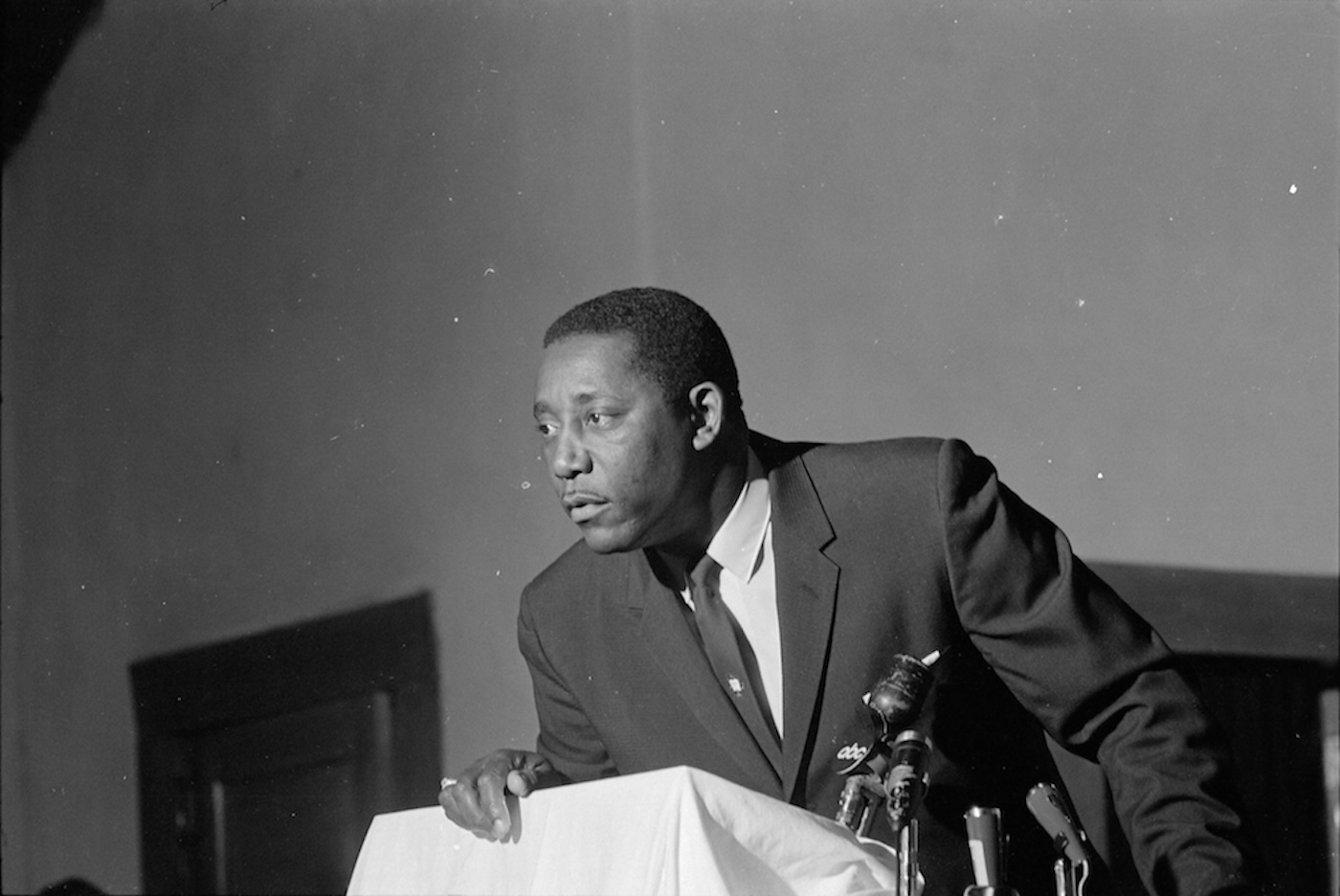
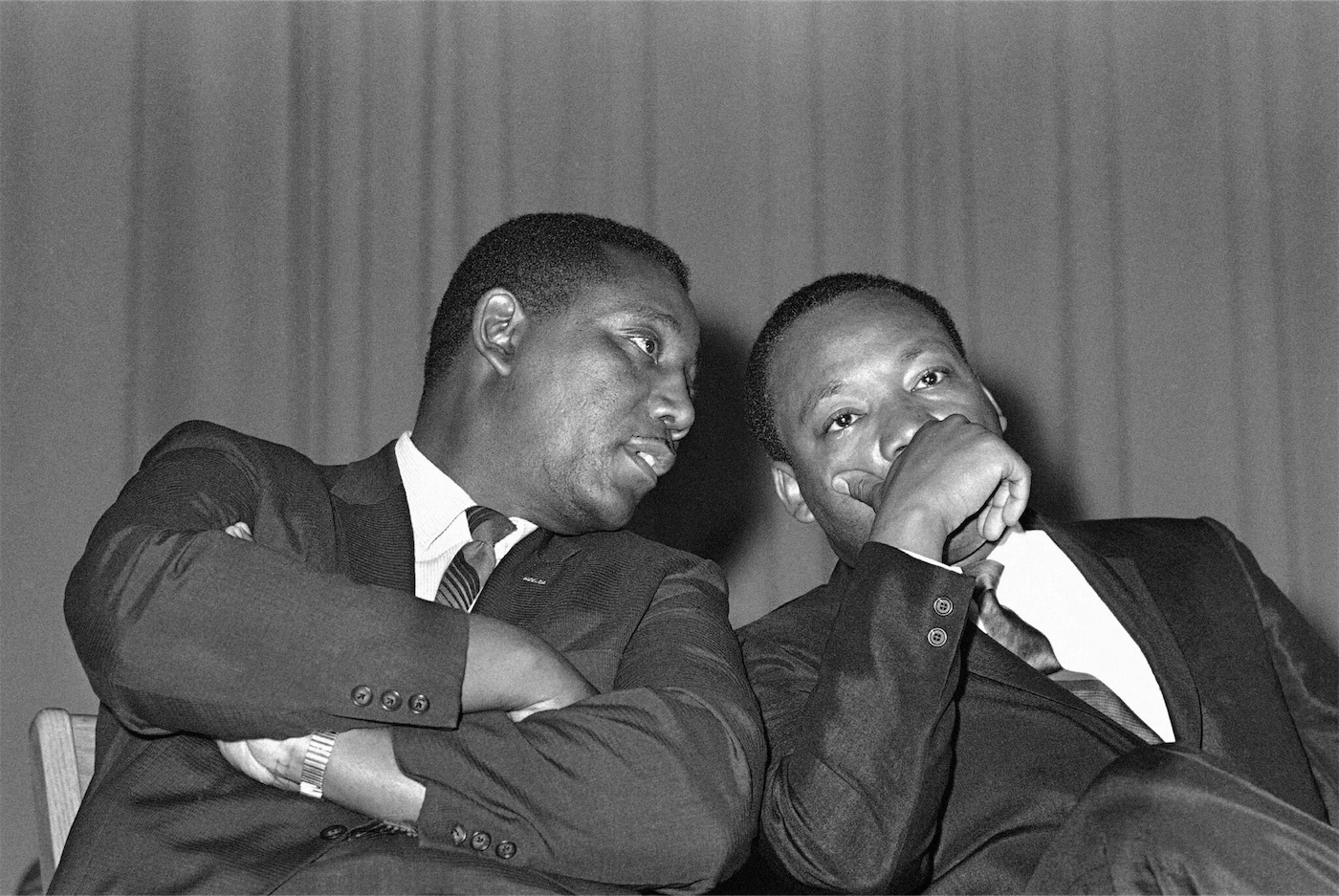
In the archive photos—Evers laughing beside Martin Luther King Jr., or standing at a podium as mayor—you can see a man who understood that history is not only what happens to you. It is what you do after it happens, what you build in the wreckage, what institutions you force into being.
The movement gave America martyrs. It also needed mayors. Charles Evers, for all the complications he brought with him, spent his life insisting that the vote had to lead somewhere real.
More great stories
Afro Sheen, Wall Street, and the Architecture of Black Possibility
July 6, 2026
No Comments
The Fire Inside the Fourth
July 5, 2026
No Comments