




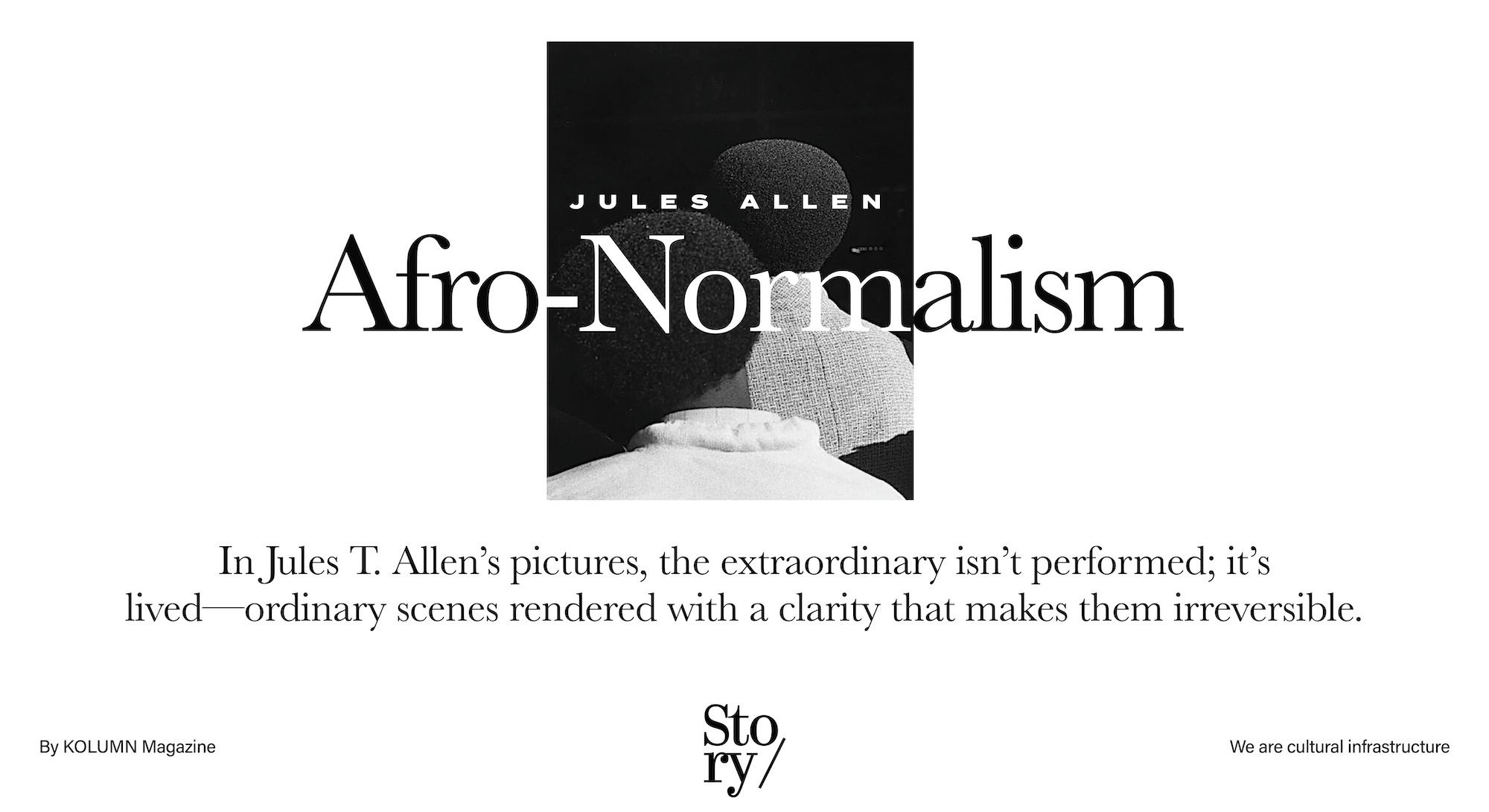
Allen’s photographs often feel less like “coverage” than recognition. He is not extracting images from a community. He is working inside it
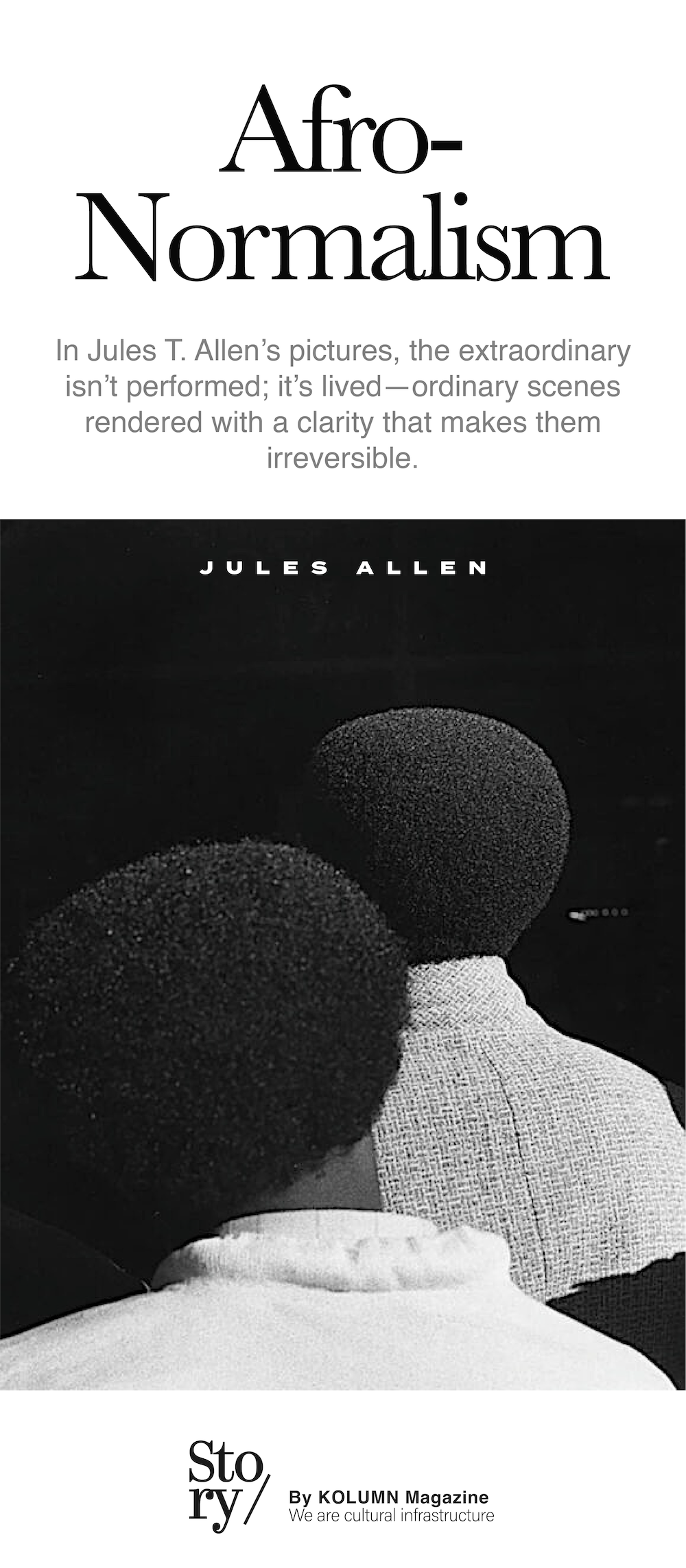
Allen’s photographs often feel less like “coverage” than recognition. He is not extracting images from a community. He is working inside it
By KOLUMN Magazine
There are photographers whose careers are built on access—doors opened by institutions, editors, and assignments. And then there are photographers whose careers are built on proximity: standing close enough, long enough, to understand how a community holds itself together when nobody is posing for permission. Jules T. Allen belongs to the second lineage. Over decades, his work has moved through a set of recurring American rooms and public stages—the boxing gym, the parade route, the city sidewalk, the barbershop-adjacent corner, the summer street, the private interior—mapping the contemporary Black experience not as a “subject,” but as a world with its own grammar.
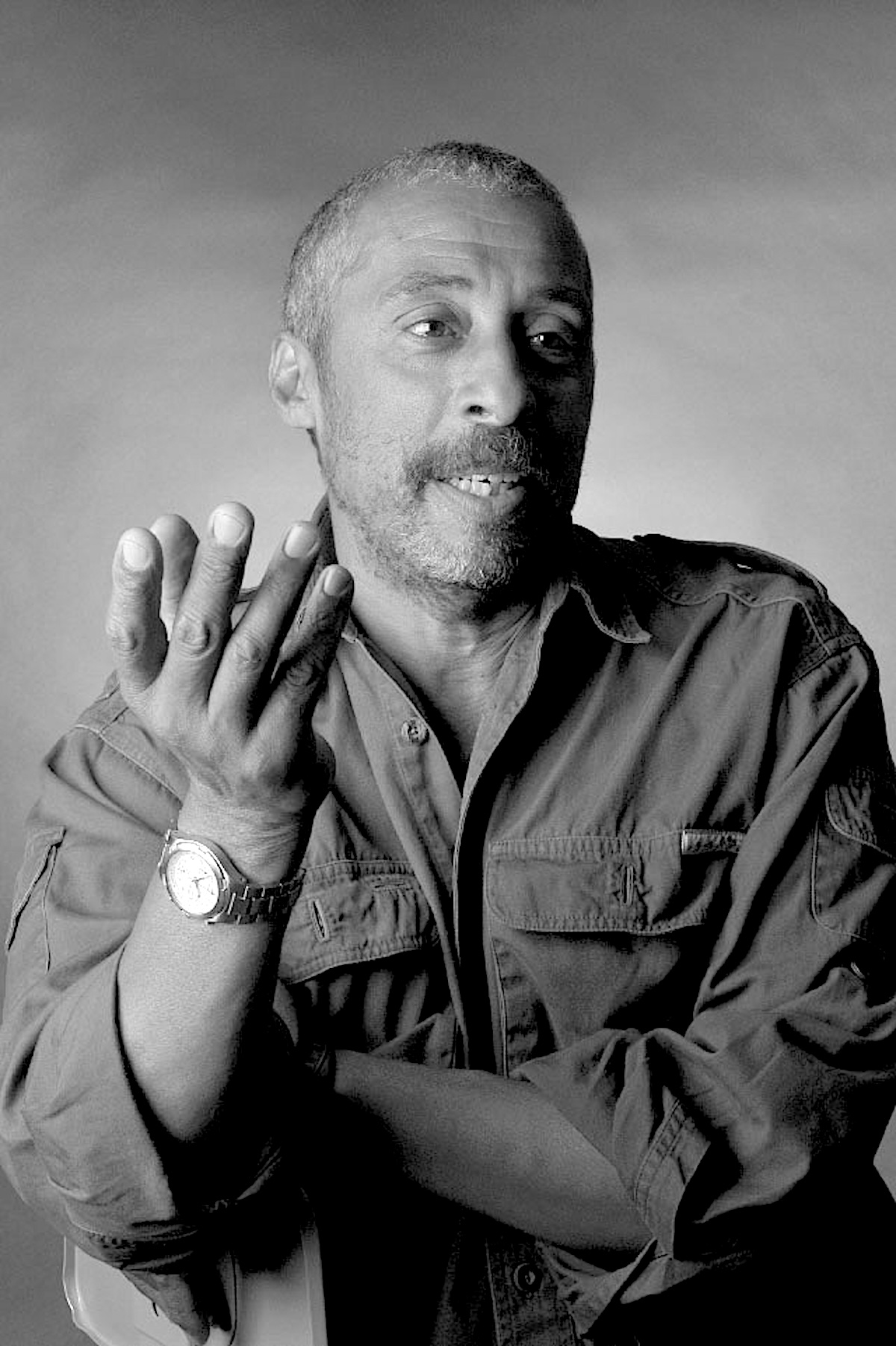
Allen is frequently described as a documentarian, and in the most literal sense he is: he has photographed what is there. Yet the deeper through-line of his career is not mere recording. It is his insistence that Black culture does not need translation to be legible. It needs only to be seen with seriousness. In a statement echoed across multiple profiles and institutional descriptions of his work, Allen has argued that “a culture’s power is clearest when presented on its own terms.” That sentence functions like a mission brief for everything that follows: the images of fighters and trainers inside New York City’s Gleason’s Gym; the photographs of Black marching bands, with their precision and theatrical swagger; the portraits and street scenes that treat everyday style as a form of authorship rather than ornament.
This is why Allen’s photographs often feel less like “coverage” than recognition. He is not extracting images from a community. He is working inside it—attentive to the fact that performance, pride, humor, and discipline are not distractions from reality but part of how reality is made survivable.
Allen’s trajectory—San Francisco beginnings, formal study, a turn through clinical counseling psychology and social work, a move to New York, years of commercial assignments alongside long personal projects, and an extended teaching career—helps explain the particular emotional temperature of his pictures. He knows how institutions look at people, and he knows how people look back.
From San Francisco: Training the eye and studying behavior
Jules T. Allen was born in 1947 in San Francisco. His earliest formation as an artist took place on the West Coast, where he studied at San Francisco State University, earning a Bachelor of Fine Arts and later a Master of Science degree; he studied with photographer Jack Welpott, a respected figure known for portraiture and landscape work. That education matters less as a pedigree than as an early signal: Allen was trained to treat a person not as a prop in a scene but as a presence with interiority, history, and agency.
But Allen’s biography has an unusual second strand for a photographer: clinical counseling psychology. He has described pursuing that degree to deepen his understanding of human behavior—an ambition that later became more than an academic supplement. In one widely circulated account of his career, Allen worked as a psychiatric social worker in San Francisco’s criminal justice system, and that experience produced a “profound shift” in his approach to photography.
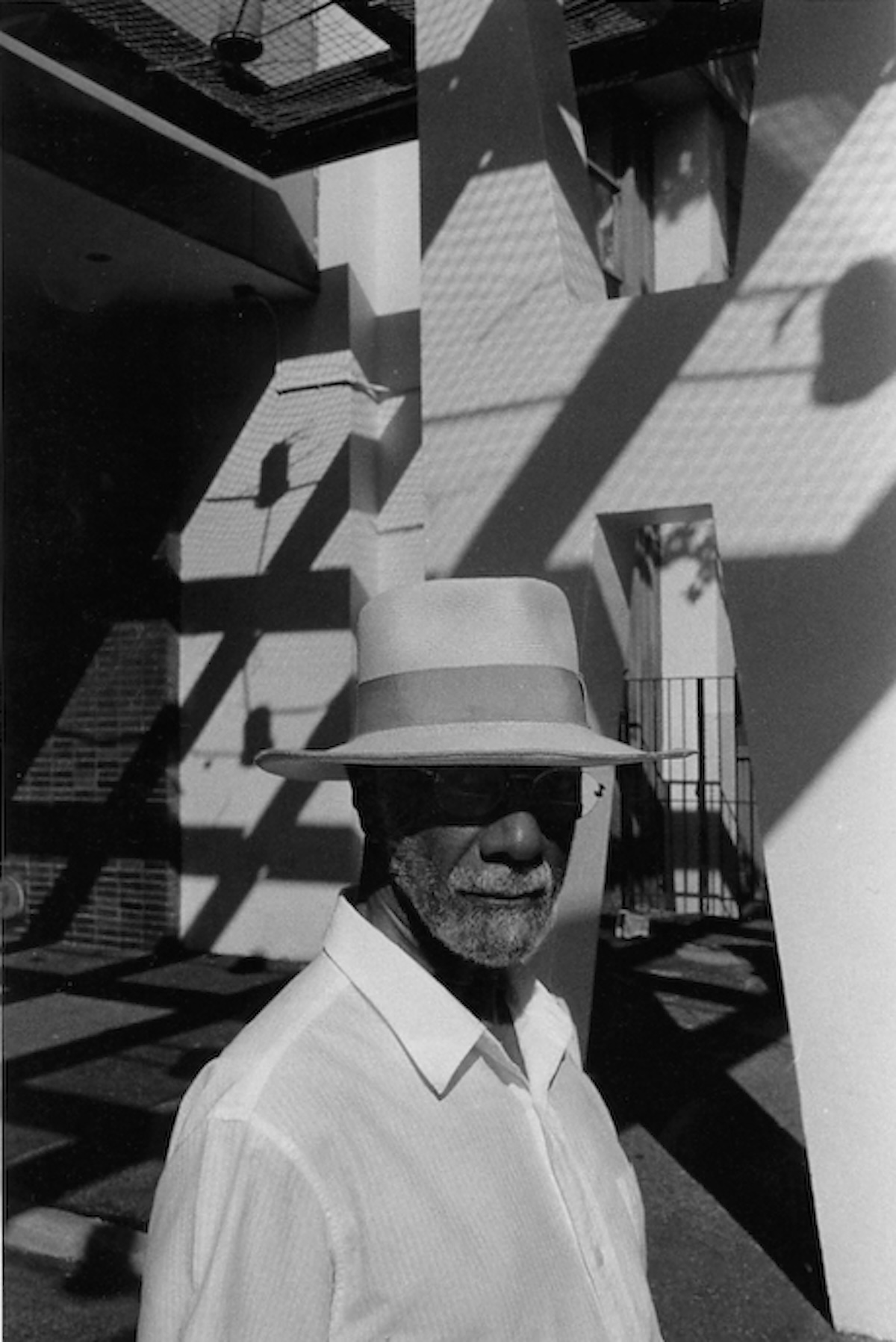
It is easy, in arts writing, to treat such an interlude as colorful background. But for Allen, the psychological and institutional context appears to have hardened into method. The criminal justice system is a machine that converts complexity into categories. Photography, too, can become a categorizing machine: a way of turning people into types. Allen’s mature work pushes against that flattening. His images repeatedly insist on specificity—the exact tilt of a hat, the tension in a boxer’s shoulders, the choreography of a drumline, the self-conscious composure of a woman meeting the camera’s gaze. These details are not decorative. They are the evidence of personhood.
In 1978, Allen moved to New York City. The timing is crucial. New York in the late 1970s and 1980s was a city of financial crisis and cultural reinvention, a place where Black life was both intensely visible and routinely misrepresented. For a photographer with Allen’s sensibilities, the city offered endless occasions to test the question that would come to define his work: what does it mean to photograph Black experience from the inside, without turning it into argument?
He continued his studies at Hunter College, where he earned an MFA. By then, Allen was building a practice in which formal training, psychological insight, and street-level attention reinforced one another. The result was not an aesthetic of spectacle, but an aesthetic of proximity: pictures that feel close enough to overhear.
New York: The commercial photographer and the long game
Like many photographers who commit themselves to long documentary projects, Allen worked in commercial contexts as well—editorial, advertising, entertainment—moving across New York’s boroughs with a camera and a working professional’s discipline. A profile connected to Queensborough Community College describes him as having worked as a commercial photographer in all five boroughs for editorial, advertising, and entertainment clients.
That kind of work can produce two opposite outcomes: it can train a photographer into formula, or it can sharpen a photographer’s craft so that personal work becomes more precise. In Allen’s case, the evidence points to the latter. Across his major bodies of work, there is a consistent sense of control—of framing, light, and timing—without the sterile perfection that commercial photography can sometimes impose.
What distinguishes Allen’s career is that he never treated his personal projects as hobbies. They were the main line, sustained across years, even decades, with the patient attention more common to ethnography than to assignment-driven shooting. His photographs have entered major institutional collections, including museums and archives that function as arbiters of cultural memory. Even popular accounts of his career emphasize the breadth of those holdings. That institutional recognition matters not because it “validates” him, but because it positions his images inside the national record—where Black life has often been archived unevenly, or filtered through someone else’s lens.
One reason Allen’s work has been so consistently exhibited and collected is that it addresses a persistent American hunger: to see Black culture as culture, rather than as sociological data. His pictures contain information—about dress, ritual, labor, joy, discipline—but they are not reducible to information. They are art, and they insist on being treated as such.
The educator: Queensborough Community College and the ethics of teaching
Allen’s public identity includes another long-term role: educator. He taught at Queensborough Community College (CUNY) for decades and is widely described in institutional materials as a celebrated photographer and professor in art and design.
Teaching, for Allen, is not separate from making. In a local event notice about a Queensborough lecture, Allen linked teaching to his own development: “Teaching has allowed me to work through my own ideas of photography,” he said, adding that he learns from his students and tries to challenge them toward progress. The quote is modest, but it reveals something important: Allen understands photography as a practice that must remain intellectually alive. The classroom becomes a place to rehearse and refine questions, not just to distribute answers.
Queensborough’s institutional biography emphasizes how Allen’s earlier work in the criminal justice system informed his photographic approach, suggesting that his engagement with behavior and systems became part of how he teaches seeing. If Allen’s photographs resist stereotyping, his pedagogy likely shares that commitment: teaching students to notice what clichés erase.
That matters because Allen’s primary subject—Black life—has been routinely flattened by both mainstream media and even well-meaning documentary practices. An educator who is also a working photographer can pass down not only technique but ethics: how to photograph without taking.
The ring: “Double Up” and the interior life of Gleason’s Gym
If Allen has a signature project, one of the most frequently cited is his work inside Gleason’s Gym, the storied New York boxing gym that has trained generations of fighters. His book Double Up is described as a personal photographic story of life inside Gleason’s in the 1980s. The project is not simply about sport. It is about labor, mentorship, masculinity, vulnerability, ritual, and the unglamorous repetition required to become excellent.
A product description for Double Up ties the book to the gym’s world and to Allen’s “keen eye for nuance, texture and rhythm.” Those words—nuance, texture, rhythm—are more than marketing language. They accurately describe what makes a gym a rich photographic environment. Boxing is a sport of tempo, of bodies reading one another, of small adjustments repeated until they become instinct. A photographer attuned to rhythm will find structure in what might otherwise appear chaotic.
The Queensborough art-and-design biography notes that Allen’s book Double Up documents “the world of the African-American boxers” at Gleason’s during the late 1970s and connects the project to coverage in The New York Times.
What Allen’s Gleason’s photographs do, at their best, is make visible the ecosystem around the fighter: trainers whose authority is earned through attention; younger boxers watching older ones; bodies in recovery; the quietness between bouts of exertion. Boxing imagery often leans on extremes—blood, glory, defeat. Allen’s approach suggests a deeper interest: the everyday life of a place where the body is both instrument and risk.
The gym becomes, in Allen’s hands, a portrait studio without the pretense of neutrality. People are not “caught” unaware; they are encountered. The pictures do not merely depict toughness. They depict the scaffolding beneath toughness: instruction, repetition, the social fabric that holds the work in place.
In this sense, Double Up is not an outlier in Allen’s career but a concentrated version of his larger project: photographing Black life as a set of institutions—formal and informal—that produce identity. The gym is one such institution. The marching band is another.
The parade route: “Marching Bands” and Black performance as discipline
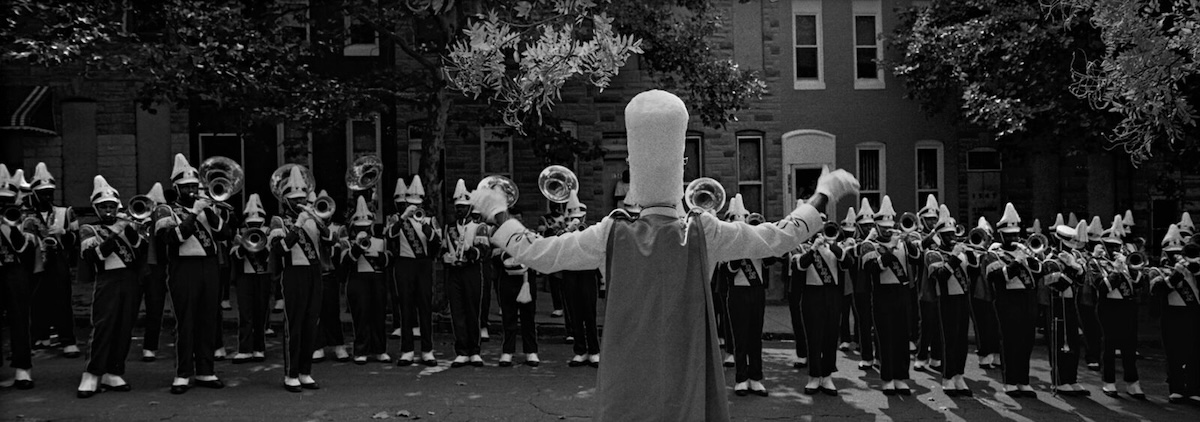
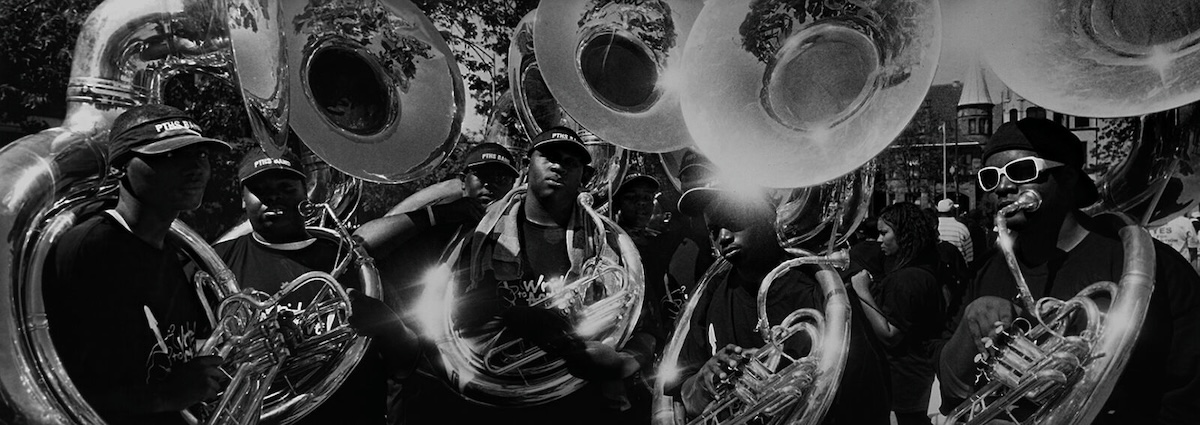
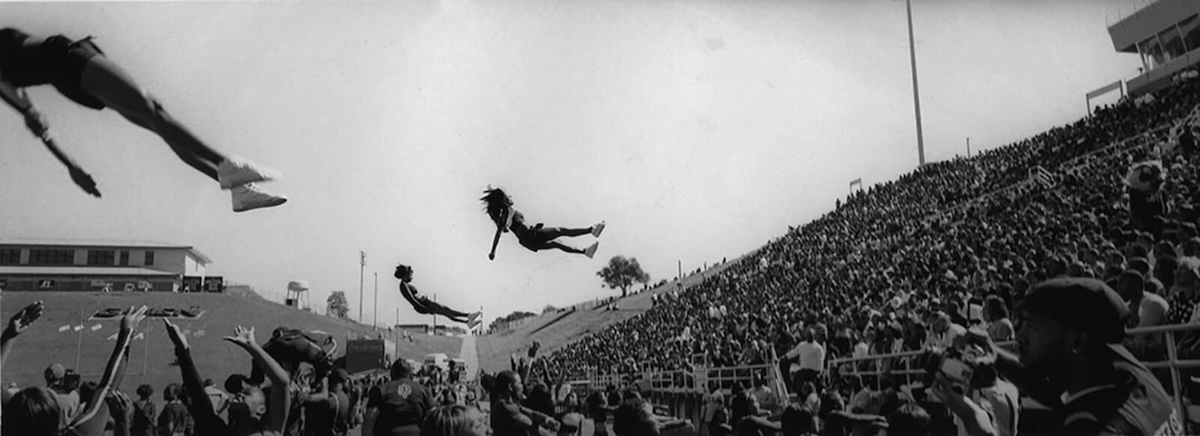
Allen’s work on Black marching bands brought him broad attention in the 2010s, but the project itself was built across far longer time. A Guardian feature—presented as a picture gallery—notes that Allen has documented Black marching bands since his first encounter with them at Harlem’s African American Day Parade “three decades ago.” The Guardian describes his images as showcasing an art form that is both precise and popular, full of spectacle and “sass and soul,” and it notes that Marching Bands was published by QCC Art Gallery Press.
There is a temptation, in writing about marching bands, to lean into the surface pleasures: the plumes, the brass, the choreography. Allen’s photographs absolutely deliver those pleasures. But the deeper accomplishment of the project is how it frames performance as discipline and cultural memory. The band, in his pictures, is not simply entertainment. It is pedagogy—young people learning timing, posture, coordination, and collective responsibility. It is also lineage: a form of public artistry that carries histories of Black institution-building, especially in historically Black colleges and universities and in community ensembles.
In a CUNY interview about Marching Bands, Allen described the origin story in personal terms: he grew up in San Francisco, where he says he hadn’t seen marching bands, and only encountered them after moving to New York in 1978 and witnessing the African American Day Parade in Harlem. The detail is revealing. Allen is not claiming childhood familiarity as a credential; he is describing a moment of discovery. The parade is not simply a subject; it is an encounter that rearranges the photographer’s sense of what is worth following.
The Marching Bands book description on Allen’s site calls the marching band a “precision art form” and emphasizes spectacle, pageantry, and a spirit described as Africa “within the modern world.” Those phrases can read, on paper, like publicity copy. But paired with the images—bands mid-step, mid-shout, mid-rehearsal—they point toward something serious: the way Black public performance can function as both celebration and assertion.
The critical reception of the project reinforces that seriousness. Steven Kasher Gallery preserves Salamishah Tillet’s essay “The Thrill of the Black Marching Band,” which situates Allen’s photographs inside a longer tradition and emphasizes the behind-the-scenes world the images reveal. Tillet’s framing matters because it pushes the reader away from treating marching bands as quirky Americana and toward recognizing them as cultural infrastructure—institutions that have trained generations in collective excellence.
Allen’s photographs, then, do not merely aestheticize. They honor the labor of rehearsal, the exactitude of formation, the intensity of pride. They show young people learning to inhabit public space with authority. In an America where Black presence has often been policed, that authority is not trivial; it is a kind of freedom practice.
“Afro-Normalism”: The radicality of the everyday
In 2021, Ebony published an article titled “Jules Allen: The Art of Afro-normalism,” written by Joicelyn Dingle. The phrase “Afro-normalism” is striking because it suggests a reversal of the documentary gaze. Black life, in Allen’s work, is not the exception to the norm; it is the norm. The term reads as both aesthetic and political: an insistence that Black experience does not require the framing devices of trauma or uplift in order to be worthy of attention.
Dingle’s Ebony piece positions photography’s influence as critical and presents Allen’s work as attuned to beauty and presence. The importance of Ebony here is not merely as a publication credit. It is a sign of how Allen’s work circulates within Black media ecosystems that understand the stakes of representation from the inside.
“Afro-normalism” also helps explain why Allen’s images can feel quietly confrontational. They do not beg the viewer to be shocked or moved. They assume the value of what they depict. That assumption—ordinary Black life as inherently important—runs against decades of mainstream editorial practice, where Black subjects have often been recruited into stories of crisis, deficit, or spectacle.
Allen’s career offers a different proposition: that a camera can be used to normalize what has been made marginal, without draining it of specificity or style. In his photographs, style itself becomes a form of knowledge—how people signal belonging, how they perform self-respect, how they turn the everyday into art.
Black women: “Power and Grace” and the politics of portraiture
Another major arena of Allen’s work has been portraiture, including images connected to exhibitions centering Black women.
The “power and grace” framing is a familiar pair—sometimes used so often it becomes vague. But in the context of Black women’s representation, it has a sharper edge. Black women have often been made visible only through stereotypes, or through narratives that demand either superhuman strength or suffering. Portraiture that allows complexity—strength alongside softness, elegance alongside assertion—pushes back against those limiting frames.
Allen’s portrait work is consistent with his larger ethic: the subject is not there to be decoded by the viewer. The subject is there to be encountered. That approach is particularly important when photographing Black women, whose images have been historically exploited, fetishized, or used to carry symbolic burdens in American culture.
What Allen seems to offer instead is a form of respect that is visual rather than rhetorical: careful attention to posture, gaze, environment—the ways people inhabit themselves. In that sense, his portraits extend the same principle visible in Double Up and Marching Bands: the camera is not an instrument of judgment. It is an instrument of witnessing.
Exhibitions, collections, and the institutional afterlife of photographs
Allen’s career has included a wide range of exhibitions and institutional recognitions, documented across galleries, college publications, and his own professional biography pages. His profile and exhibition list on his website notes group exhibitions and permanent collection contexts, including major New York institutions. A Leica Gallery solo exhibition for Double Up ran from late 2012 into early 2013, according to the same record.
A biographical page from the Contemporary Arts Center similarly notes Allen’s education (San Francisco State University and Hunter College) and lists solo exhibitions, including earlier shows such as “A Little More Towards the Light” (1989) and “In the Ring” (1993), as well as the Leica Gallery Double Up exhibition. These details matter because they show Allen’s career is not a late-life rediscovery; it is a sustained professional arc with decades of visibility.
The Steven Kasher Gallery artist page summarizes his four-decade practice and repeats the key conceptual line about culture’s power being clearest on its own terms. It also lists publications associated with Allen, including Double Up, In Your Own Sweet Way, and Marching Bands.
A separate thread of recognition comes through CUNY itself. The Salute to Scholars publication includes a “Head of the Class” feature on Allen, signaling how the university system has framed him as a faculty member whose creative work and teaching are intertwined. Even without quoting that feature at length, its presence indicates institutional respect for Allen’s dual identity: artist and educator.
All of this points to the “afterlife” of Allen’s photographs. Documentary images have two lives: the moment they are made, and the moment they are archived, published, or exhibited. That second life is where images shape cultural memory. Allen’s career demonstrates an understanding of both. He has made work with the patience of a long-term witness, and he has also ensured that work enters channels where it can outlast the moment.
The oral history: Speaking in his own voice
In late 2025, BOMB Magazine published “An Oral History with Jules Allen,” conducted by Basie Allen as part of BOMB’s Oral History Project focused on artists of the African diaspora. The format is significant. Oral histories preserve not just outcomes but process: how an artist thinks, how they narrate their own development, what they remember emphasizing, what they refuse to romanticize.
BOMB’s presentation of the interview (and its framing of the Oral History Project) situates Allen among distinguished artists whose stories are considered part of the cultural record. And the fact that the interviewer is his son adds another layer: the conversation becomes intergenerational, raising questions about inheritance—how an artist’s ethics and discipline are transmitted not only through institutions but through family.
A BOMB “look inside” piece on the magazine’s Summer 2025 issue highlights an excerpt in which Allen emphasizes disciplined practice as central to making good photographs. That line—practice, discipline—connects him again to his subjects. Fighters train. Bands rehearse. Photographers work. In Allen’s universe, excellence is not a mystic gift; it is repetition with attention.
This emphasis helps explain why Allen’s best images feel unforced. They are the product of showing up, again and again, long enough for the photographer’s presence to become part of the room. That kind of familiarity does not guarantee insight, but it makes insight possible.
What Allen’s career tells us about American photography
Photography in the United States has always been entangled with power: who gets to look, who gets to be seen, and under what terms. Black communities have often been photographed as problems to be solved, or as “culture” to be consumed, or as evidence in an argument about inequality. Allen’s career represents a different stance. It does not deny struggle—no honest photographer of Black America could. But it does not center Black life as pathology.
Instead, Allen centers Black life as world: an ecosystem of style, ritual, humor, tenderness, discipline, and display. His photographs do not ask permission to be beautiful. They assume beauty is already there, braided into the everyday.
This is where the concept of “Afro-normalism” becomes more than a catchy phrase. It becomes a critique of mainstream visual culture. If Blackness has been rendered “other” through images, then one radical act is to photograph Black life as the baseline: families, neighborhoods, parades, artists, athletes—existing without apology.
Allen’s images also complicate a simplistic idea of documentary truth. He is not merely showing “what it was like.” He is shaping how “what it was like” will be remembered. In the ring, he makes visible the quiet work beneath spectacle. On the street, he makes visible how people author themselves through clothing and gesture. In marching bands, he makes visible collective precision as a form of joy.
The strongest argument for Allen’s significance is that his work creates an archive of Black life that refuses to be subordinate. It insists that Black experience is not a footnote to America; it is one of America’s main texts.
The through-line: Seeing Black life on its own terms
If you stand back from the details—San Francisco, New York, Hunter College, Gleason’s Gym, parade routes, galleries, classrooms—Allen’s career becomes legible as a single, disciplined proposition. The proposition is that Black life is not a metaphor. It is not raw material. It is not an argument begging for the viewer’s verdict.
It is a reality with its own internal standards of beauty and meaning.
This is why Allen’s photographs endure. They offer viewers something rarer than information: they offer a way of looking that does not reduce. In a visual culture that constantly pressures Black subjects to perform legibility for outsiders, Allen’s work performs a quiet refusal. He photographs people as they are—specific, self-fashioned, embedded in community—and he trusts that specificity to carry its own universal charge.
That trust is not naïveté. It is ethics.
And it is, finally, the accomplishment of Jules T. Allen: a long career dedicated to the essential truth that a culture’s power, indeed, is clearest when it is allowed to speak in its own visual language.
More great stories
Afro Sheen, Wall Street, and the Architecture of Black Possibility
July 6, 2026
No Comments
The Fire Inside the Fourth
July 5, 2026
No Comments