


Her story is not only biography. It is a diagnostic. Burroughs forces a question that the country routinely tries to avoid: what kinds of institutions would Black women build if they were not required to ask permission?
Her story is not only biography. It is a diagnostic. Burroughs forces a question that the country routinely tries to avoid: what kinds of institutions would Black women build if they were not required to ask permission?
By KOLUMN Magazine
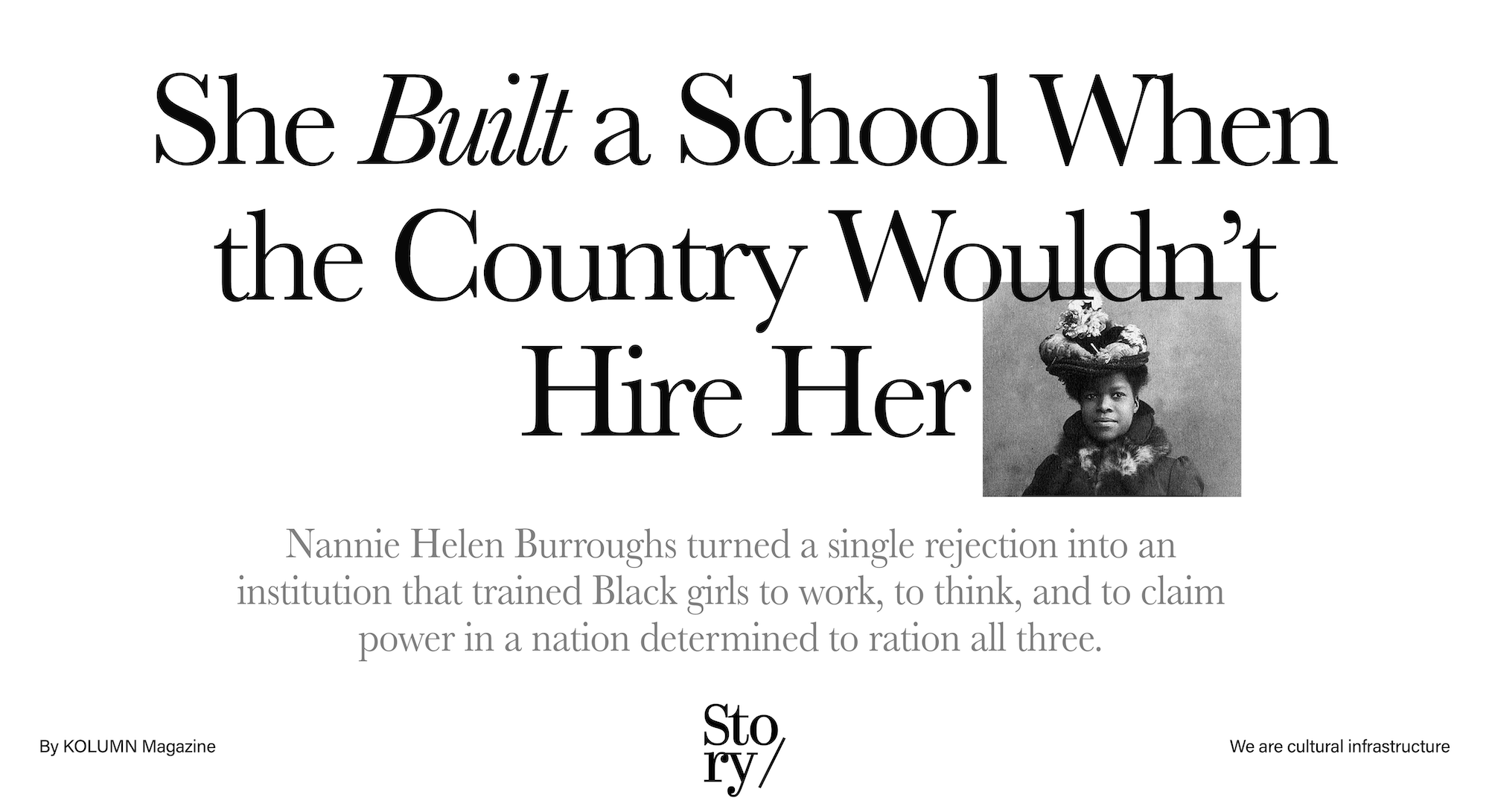
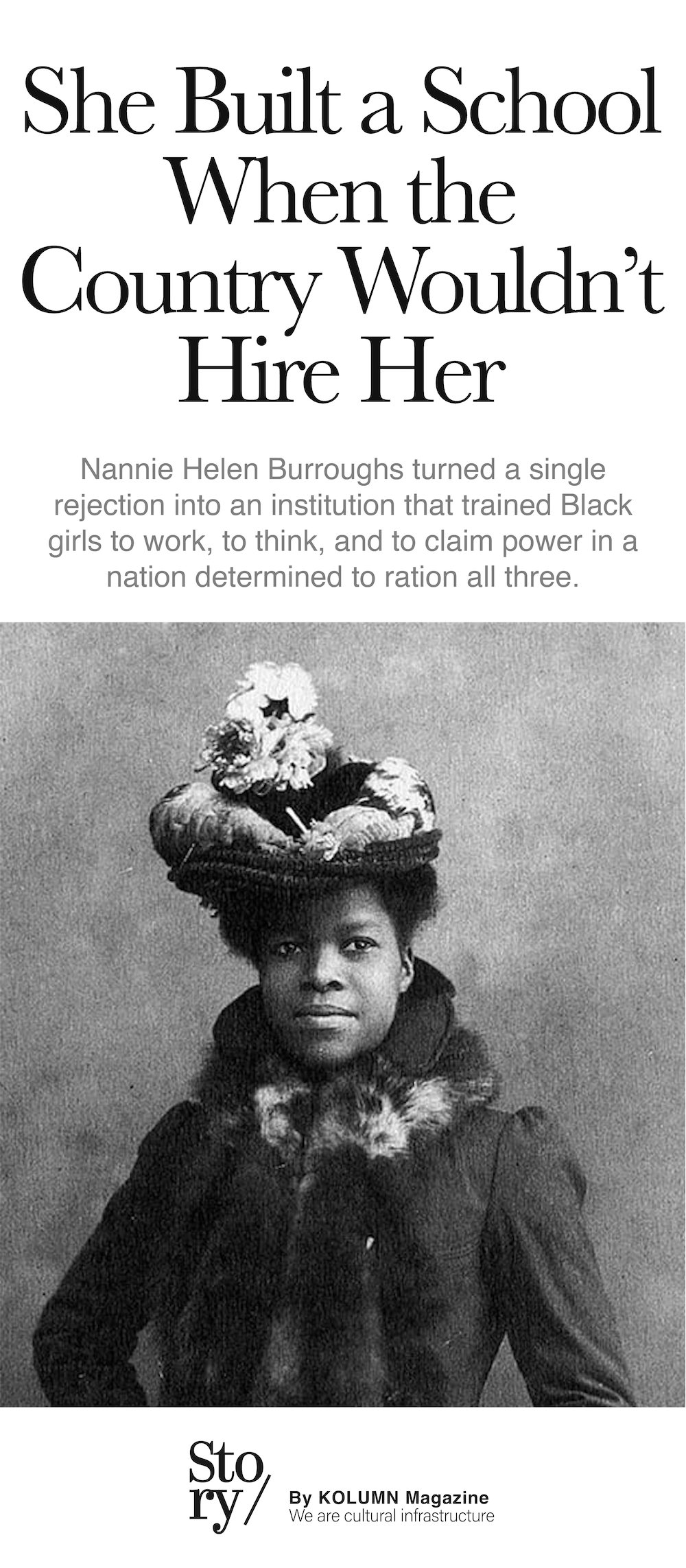
The story is often told as a parable because it has the clean moral architecture of one: a young Black woman excels in school, graduates with honors, and is denied the job she is trained to do. The door closes. She does not beg for a key. She builds a new door—then turns it into a building, a campus, a movement.
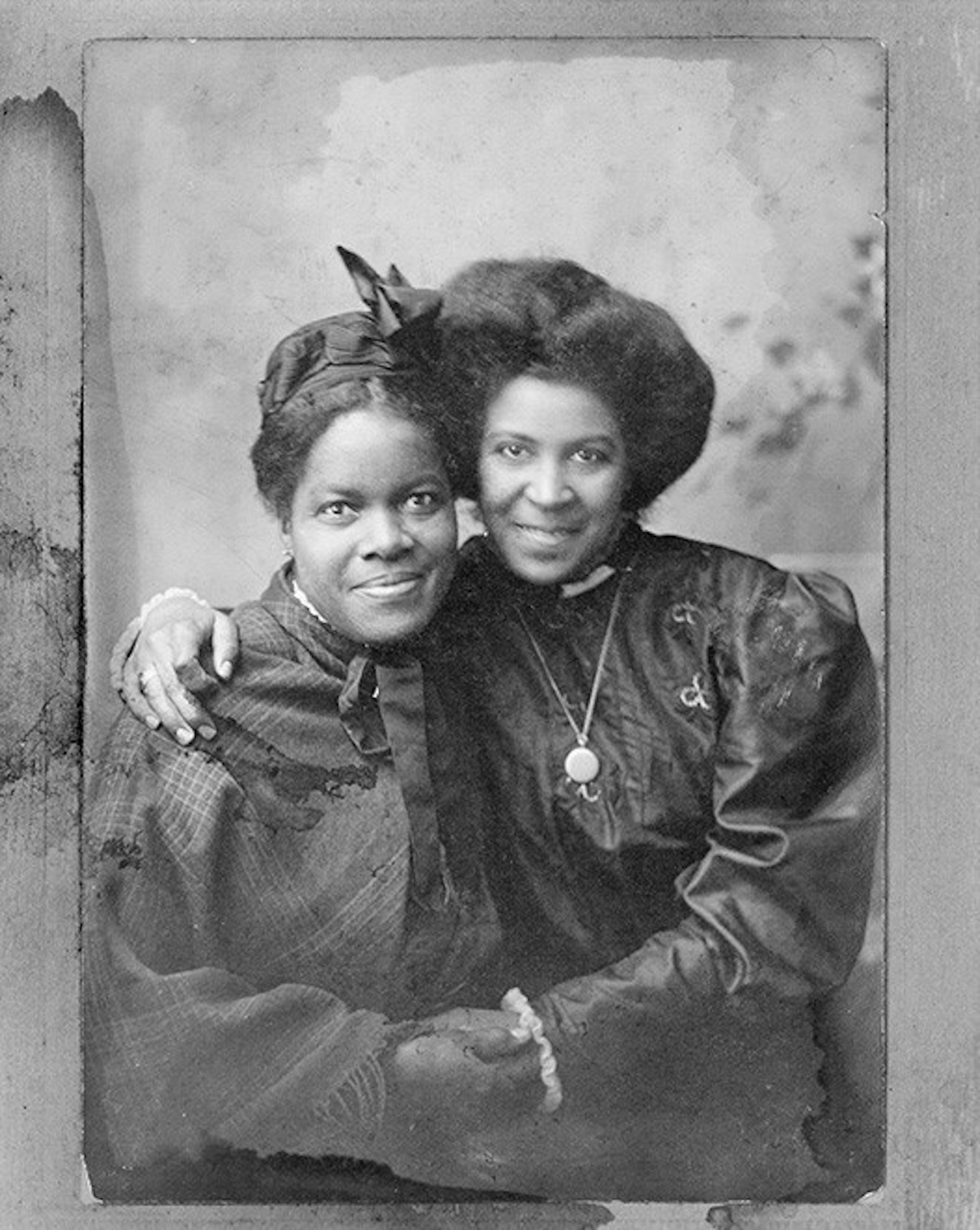
Nannie Helen Burroughs arrived at the center of Black public life in the United States at a moment when the nation was re-segregating itself with bureaucratic precision. She was born to parents who had been enslaved, grew up in the gravitational pull of Reconstruction’s broken promises, and came of age during the hardening of what scholars have described as “Jane Crow”—the interlocking racial and gendered constraints that corralled Black women into the lowest-paid, least protected labor while denying them civic leverage to change it.
Her name is less famous than some of her contemporaries—Mary McLeod Bethune, Ida B. Wells, Mary Church Terrell—and yet Burroughs’ life belongs in the same sentence, not as a footnote but as a blueprint. She founded the National Training School for Women and Girls in Washington, D.C., in 1909, a vocational-and-academic enterprise that became an engine for Black women’s professional formation and political education.
To write about Burroughs is to write about the infrastructure of Black freedom: schools, churches, women’s conventions, wage-earners’ associations, newspapers and pamphlets, and the stubborn administrative work of keeping an institution alive across decades of hostility and indifference. It is also to write about voice—about a public speaker who learned early that, for Black women, the act of speaking plainly could be treated as a provocation.
She was, by temperament and by necessity, an institution builder. And institution building, in Burroughs’ hands, was never neutral. It was strategy. It was theology. It was labor politics. It was a refusal to accept that Black women’s ambitions should be scaled down to fit the nation’s comfort.
A Washington education and an early lesson in American limits
Burroughs’ early life tracks a familiar route in African American history: from Virginia to Washington, D.C., the city that promised federal modernity while practicing local apartheid. The National Park Service notes that after her father died when she was young, she and her mother relocated to Washington, where Burroughs excelled academically and graduated with honors from M Street High School, the elite Black public high school later known as Dunbar.
If the arc of her career feels preordained in hindsight—talented student becomes revered educator—her first steps were shaped by something more abrasive: being “qualified” was not the same as being employable in a color-conscious and politics-laden system. Reporting in The Washington Post describes how Burroughs, despite her achievements, was turned down for a teaching position in D.C.’s public schools, a rejection that later writers and scholars have connected to colorism and institutional preference for lighter-skinned teachers, as well as to the broader regime of racial gatekeeping that policed who could represent “respectability” in public employment.
The specifics of that rejection matter less than what Burroughs did with it. Many people experience discrimination; fewer translate it into a durable counter-structure. Burroughs internalized the lesson that the state would not reliably provide Black women with dignified work—and she began to treat self-determination not as a slogan but as a logistical challenge: how do you create an institution that trains, places, and protects Black women workers in a hostile market?
The answer, for her, ran through the Black church—not only as a spiritual home, but as a national network with money, meetings, and a communications apparatus.
“How the Sisters Are Hindered from Helping”: The speech that announced a leader
In 1900, Burroughs delivered a speech that has survived as both artifact and warning label: “How the Sisters Are Hindered from Helping,” presented in the orbit of the National Baptist Convention. The text circulates today in archives of women’s political rhetoric, and it reads like a young organizer taking inventory of an institution’s wasted capacity.
The speech does not arrive politely. Burroughs argues that Black Baptist women are being obstructed—by custom, by governance, by the casual paternalism that assumes women’s labor is inexhaustible but their authority is negotiable. She calls for organization and system, for the disciplined use of “gems” of talent too long left “unpolished,” and for women’s missionary societies to function as engines of uplift rather than decorative auxiliaries.
It is tempting to read the speech as simply “church politics,” a young woman staking her claim inside a denomination. But the speech’s deeper significance is that Burroughs is already thinking like an administrator of a national movement. She frames women’s work as under-managed capital. She treats structure as moral necessity. And she positions the church not as a refuge from modernity but as a platform for it.
This matters because Burroughs’ later achievements—the school, the labor advocacy, the suffrage arguments—are not separate chapters. They are the same argument, iterated across different institutions: Black women’s capacity has been historically exploited and strategically underestimated; the remedy is disciplined organization plus independent infrastructure.
Founding the National Training School: A campus as counter-policy
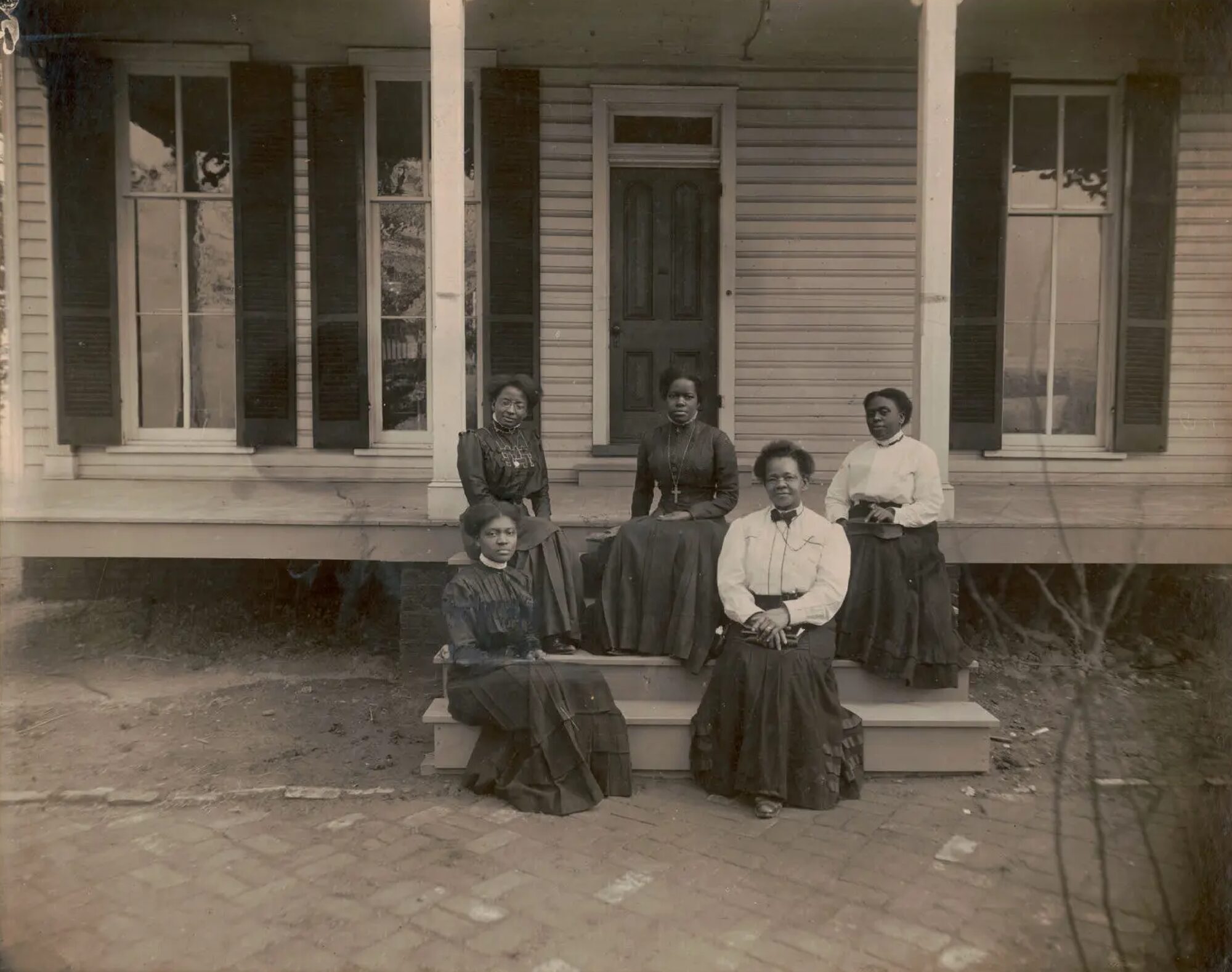
The National Training School for Women and Girls opened formally in 1909 in Washington, D.C. It was, from the beginning, an audacious proposition: a school that would provide vocational training to Black girls and women while also maintaining a stronger academic component than many comparable institutions, and doing so with an explicit moral and civic framework.
The school’s later landmark status can distract from how precarious its birth was. Burroughs did not inherit an endowed campus. She built a program inside an era when philanthropic dollars were often controlled by white donors who preferred industrial education framed as “fit” for Black people, and when the politics of Black education were frequently litigated through paternalistic funding priorities. Burroughs, according to Washington Post reporting, resisted reliance on white donors and raised money through Black communities—small donations, organizational support, and relationships with Black leaders who understood that the school’s independence was itself part of the mission.
The National Park Service describes Burroughs piloting the project and articulating a goal that was both practical and aspirational: shaping students into the “fiber” of sturdy moral and civic character. That language—fiber, sturdy, moral—is not incidental. Burroughs was building more than job readiness. She was building a theory of citizenship in which labor, hygiene, education, and political rights were braided together.
Over time, the school’s physical presence became its own statement. The Trades Hall building—constructed in 1927–28 and later designated a National Historic Landmark—signaled permanence. The dedication drew major figures, including Mary McLeod Bethune, a reminder that Burroughs was part of a national ecosystem of Black women educators who recognized institution building as a form of protest.
The curriculum as ideology: Work, dignity, and the right to a profession
To understand Burroughs’ significance, you have to take her curriculum seriously. The easy caricature is to reduce her project to a finishing school for domestic labor. That reading misses both her ambition and her argument. Burroughs did teach domestic science and vocational skills, because the labor market forced Black women into domestic work at enormous scale. But she taught those skills as a platform for wages and leverage, not as a concession to subservience.
The Washington Post describes how Burroughs’ work sat at the intersection of education and labor organizing, especially in a context where Black women and girls were among the most exploited workers in the country and had few legal protections against discrimination and violence.
A useful way to read Burroughs is to see her school as a labor strategy disguised as an educational institution. Danielle Phillips-Cunningham’s 2025 study, published by Georgetown University Press, frames the National Training School as a site of labor organizing that helped redefine household employment as a profession and connected that professionalization to broader struggles for social justice. The language here is important: profession. In a country that treated Black women’s work as unskilled, interchangeable, and undeserving of protection, “profession” was a political claim.
Burroughs’ training model also insisted on breadth. Word In Black notes that her school emphasized both vocational and professional training and paired practice skills with literature and history—an educational refusal to accept that Black women were only meant to do, not to think.
Even the slogans attached to Burroughs’ enterprise carried the sharper edge of a political program. The school associated with her name later became known for a motto that boasted, “We specialize in the wholly impossible,” a line that reads as both marketing and indictment. What is “wholly impossible” is not the education itself; it is the society that has rendered Black women’s full development implausible. Burroughs’ institution exists to make that implausibility look ridiculous.
Respectability politics, remixed: The “Three B’s” and the politics of hygiene
Burroughs is frequently remembered through one of her most quoted pedagogical frameworks: the “Three B’s”—the Bible, the bath, and the broom. Courtland Milloy, writing in The Washington Post, summarizes the phrase as part of Burroughs’ legacy as founder of a self-help school and a teacher of “valuable lessons,” including discipline and moral formation.
The phrase is often repeated with a knowing smile, as though it simply reflects old-fashioned values. It deserves a more careful reading. In the early twentieth century, hygiene and cleanliness were weaponized against Black people as racial stereotypes and as justifications for exclusion. By insisting on “the bath,” Burroughs was not capitulating to racist standards; she was reclaiming bodily care as dignity, and using cleanliness as a shield against a society eager to translate prejudice into “proof.”
But Burroughs did not stop at cleanliness. The broom points to labor, yes—but also to the reality that domestic work, done under coercive conditions, was a central site of exploitation. Burroughs’ program treated domestic labor as something that could be professionalized, structured, and leveraged—work that could be done with skill and used as a steppingstone rather than a life sentence. And the Bible, in her hands, was not merely piety. It was a moral language that justified ambition and demanded accountability from institutions that preached equality while practicing hierarchy.
The “Three B’s” were, in effect, a portable curriculum: faith as formation, hygiene as dignity, labor as leverage.
Suffrage as protection: Why the ballot mattered in Burroughs’ worldview
Burroughs’ politics cannot be contained within the walls of her school. She moved through suffrage debates with the clarity of someone who understood that Black women’s vulnerability was not abstract. The National Park Service notes that Burroughs wrote about the need for Black and white women to work together to achieve the vote, and that she believed suffrage for African American women was crucial to protect their rights.
Word In Black’s suffrage-focused account places Burroughs in a lineage of Black women shaped by teacher-activists and argues that she treated the vote as a tool for transforming labor conditions and civic status—not simply as symbolic inclusion.
This perspective helps explain why Burroughs’ educational work is inseparable from her civic work. If you believe the ballot is a protective instrument, then education becomes the training ground for using it. Students are not merely learning to keep books or run a household efficiently; they are learning to navigate a society where policy determines wages, housing, safety, and opportunity.
The Washington Post’s Labor Day analysis makes this explicit by describing Burroughs as someone who “operationalized” a philosophy that every young person deserved not only education but access to living wages, safe housing, clean water, nutritious food, and “personal enjoyments”—a full-spectrum definition of life that refuses the thin citizenship offered to Black women.
Labor organizing beyond the school: Wage earners, domestic workers, and policy
Burroughs’ name surfaces in labor history more often now, in part because contemporary scholarship has pushed labor narratives beyond the factory floor. Word In Black highlights Burroughs as founder of the National Association of Wage Earners in 1921 and situates her in a tradition of organizing for Black domestic workers and working-class women through education and policy advocacy.
This reframes what the National Training School was doing. Domestic work has often been treated as private, individualized labor—one woman in one home, isolated from collective bargaining. Burroughs’ work challenged that isolation by making domestic labor legible as a class issue and by providing training and networks that could support collective action.
Phillips-Cunningham’s work, as described by Georgetown University Press and later discussions, argues that Burroughs’ institution helped seed a clubwomen’s labor movement and connected educational infrastructure to organizing against discriminatory labor regimes. This is a critical interpretive move: it suggests Burroughs was not simply preparing individuals to survive the labor market; she was building the conditions for that market to be contested.
The resonance with the present is unavoidable. Domestic workers remain among the least protected laborers in the United States, and many of the legal exclusions that shaped twentieth-century labor policy—particularly those that left agricultural and domestic workers outside key protections—were entangled with racial politics. Burroughs’ insistence on professionalization and policy advocacy reads as early, pragmatic foresight.
The cost of being uncompromising: Conflict inside Black institutions
Any honest account of Burroughs must include the friction she generated. A woman with her level of public authority and rhetorical sharpness was unlikely to move through male-dominated institutions without conflict. The same denominations and conventions that gave her a platform could also police her independence.
The archive record underscores how much organizational labor Burroughs performed and how contested it could be. The Library of Congress finding aid for her papers describes a collection heavy with correspondence, financial records, memoranda, speeches, and organizational materials—evidence of a life spent not only inspiring crowds but managing budgets, programs, and institutional politics.
That administrative paper trail is part of her significance. Many movement narratives privilege charisma and downplay operations. Burroughs was both. She could electrify a room and then return to the unglamorous work of keeping an institution solvent.
The Washington Post’s profile notes that she spoke out against President Woodrow Wilson over lynching and that federal surveillance followed—an indication that her activism registered as a political threat, not simply a moral voice. Her willingness to confront power, including state power, complicates any sanitized rendering of her as merely a “school founder.”
The built environment as memory: Deanwood, Trades Hall, and a landmarked legacy
In Washington, D.C., Burroughs’ presence is not confined to archives. It is mapped onto streets and buildings, embedded in a neighborhood’s story. The National Park Service site for the National Training School notes its location in Northeast Washington and its designation as a National Historic Landmark, reflecting the school’s architectural and historical significance as well as its symbolic weight.
Local preservation narratives emphasize that Burroughs’ project was not simply to educate individuals but to create a durable institution that could outlast her. The campus itself becomes a kind of biography: early facilities improvised under financial constraints; later buildings signaling growth; a landmark designation acknowledging that Black women’s institution building belongs in the nation’s formal memory.
There is also the quieter, civic kind of memory: the naming of Nannie Helen Burroughs Avenue in D.C., and the way a name on a street sign can carry history into daily routine. A Washington Post “Intersections” column set at Minnesota Avenue and Nannie Helen Burroughs Avenue treats the street name as part of Deanwood’s fabric, a reminder that infrastructure and community identity are intertwined.
Even objects can become evidence. A Washington Post piece on a Smithsonian exhibit notes Burroughs’ use of a cash register emblazoned with her name, used to train students in bookkeeping and business practice—material culture pointing back to her insistence that Black women should be prepared not only for labor but for administration and economic competence.
Writing as work: Burroughs on paper, and why it matters
Burroughs was not only an orator and administrator; she was a writer whose words traveled beyond her own voice. The very survival of her speech texts and institutional documents has enabled recent scholarship to reposition her in broader histories of labor and feminism.
The Georgetown University Press Q&A about Phillips-Cunningham’s book notes that scholars and leaders documented Burroughs’ life across the twentieth century and points to earlier landmark works that introduced or reintroduced Burroughs to contemporary readers, including Evelyn Brooks Higginbotham’s “Righteous Discontent,” as well as Kelisha Graves’s edited documentary portrait compiling Burroughs’ writings. These references matter because they signal a shift: Burroughs is increasingly being treated not just as a “subject” of history, but as a theorist and philosopher of labor, citizenship, and Black women’s public power.
In Good Authority’s discussion of the 2025 book, Burroughs is framed as a source of “insights and inspiration” on labor organizing and the institutional strategies that expand democratic possibility. What emerges from these treatments is a Burroughs who anticipated contemporary debates: who counts as a worker, what labor deserves protection, how education functions as economic policy, and why racial and gender justice cannot be separated from labor rights.
Burroughs’ writing, then, is not ancillary. It is part of her “works” in the fullest sense: speech texts that organized women, institutional language that secured legitimacy, and ideological framing that made domestic labor visible as a political arena.
Why Burroughs still matters: A template for cultural infrastructure
If you want to understand Burroughs’ relevance now, do not start with commemorations. Start with her method.
She identified the bottlenecks in Black women’s lives—employment exclusion, labor exploitation, civic vulnerability, institutional disrespect—and treated them as solvable through infrastructure. Not “awareness.” Infrastructure: a school with a curriculum; a national network with a fundraising model; a moral vocabulary that could mobilize churches; and a labor politics that insisted on professional dignity.
That method speaks directly to contemporary questions that are often framed as new. What does it mean to build independent Black institutions in an era of philanthropic fashion and political backlash? How do you create educational pathways that are not merely credentialing systems but engines of economic and civic power? How do you organize workers whose labor happens in private homes, informal economies, or under legal exclusions?
Burroughs also offers a corrective to the way American history sometimes treats Black women’s leadership as episodic—visible during crises, invisible during governance. Her work was governance. It was budgets and staffing, recruitment and training, ideological clarity and tactical compromise, repeated across decades.
There is an ethical lesson here for journalists, too. The temptation is to render figures like Burroughs as inspirational icons and stop there. The more serious obligation is to render her as a strategist whose achievements were produced through conflict, constraint, and the discipline of building institutions that could survive.
The unfinished fight inside the finished story
To say Burroughs was ahead of her time is true but insufficient. The sharper truth is that she lived in her time with an unusually realistic understanding of what it would cost Black women to claim full citizenship. She did not romanticize the state. She did not sentimentalize the church. She used institutions as tools and challenged them when they obstructed women’s power.
And she left behind a provocation that still stands. If, in 1909, it was “wholly impossible” to imagine a school that trained Black women for both work and leadership, what does it say about the present that many of Burroughs’ core battles—fair wages, worker protections, equal access to education, political power free of intimidation—remain contested?
Her story is not only biography. It is a diagnostic. Burroughs forces a question that the country routinely tries to avoid: what kinds of institutions would Black women build if they were not required to ask permission?
The National Training School was her answer. It was a campus, yes. But it was also a theory: that dignity is teachable, that labor is political, that citizenship requires both moral formation and material security, and that the people most dismissed by society can build the structures that society most needs.
More great stories
Afro Sheen, Wall Street, and the Architecture of Black Possibility
July 6, 2026
No Comments
The Fire Inside the Fourth
July 5, 2026
No Comments