

The Educator Who Lifted a City: Fannie Jackson Coppin’s Story
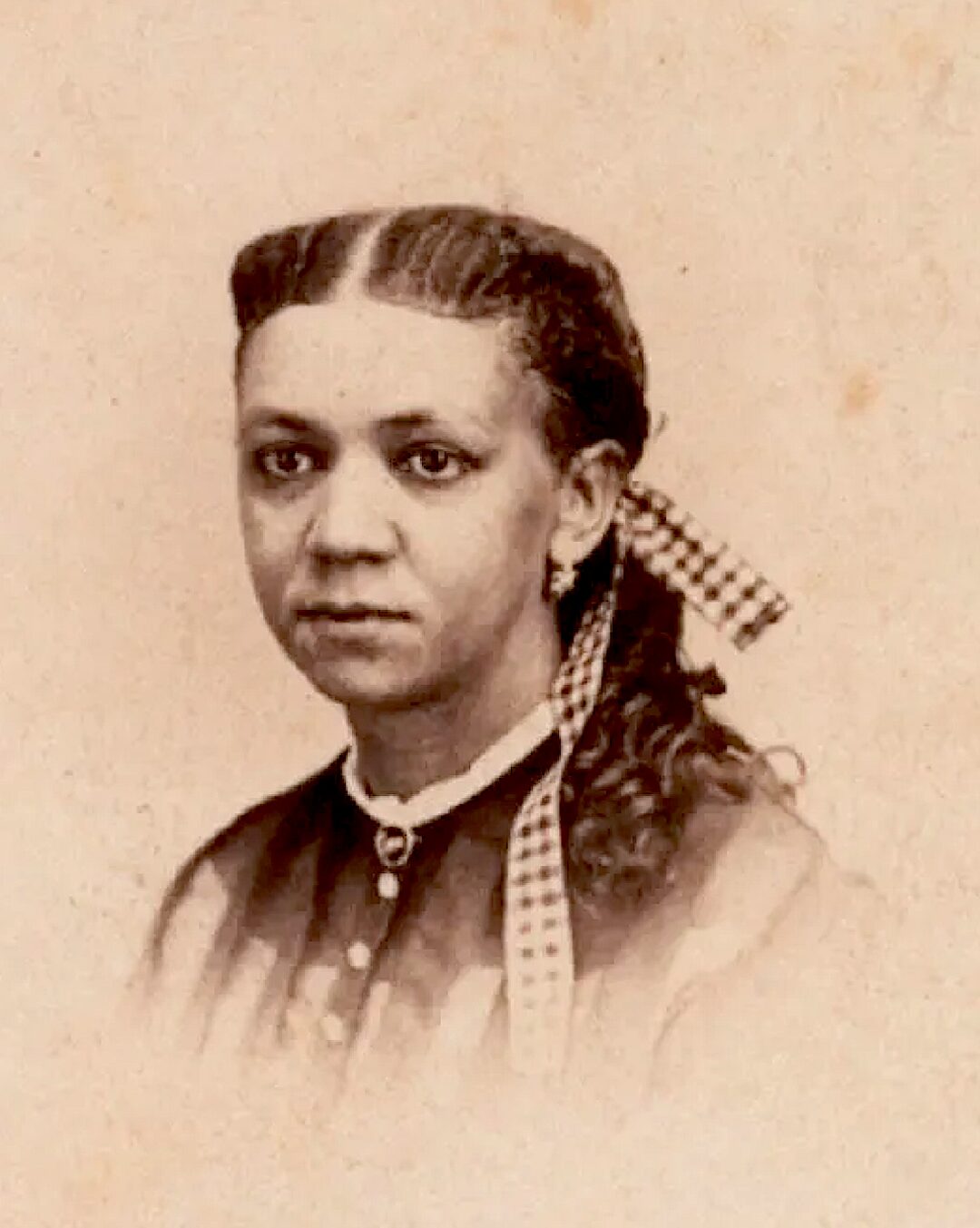
By KOLUMN Magazine
On a narrow stretch of Bainbridge Street in South Philadelphia, the old brick shell of the Institute for Colored Youth doesn’t immediately announce the scale of what happened inside. The Italianate building looks like many other 19th-century structures in the city. But for more than three decades, from Reconstruction through the dawn of Jim Crow, it was the command post of one of the most quietly radical educators in American history.
Her name was Fannie Marion Jackson Coppin.
Born enslaved in Washington, D.C., and freed only because an aunt scraped together $125 to buy her out of bondage, she rose to become principal of the Institute for Colored Youth (ICY) in 1869—the first Black woman to lead a school in the United States, and later the first Black superintendent of a school district.
Her journey to that principal’s office was not inevitable. It was stitched together from side-hour lessons after long days of domestic work, from benefactors’ small checks and church scholarships, from a college that tolerated—rather than welcomed—her ambition, and from a relentless conviction she described simply as “born in me”: the determination “to get an education and to teach my people.”
This is the story of how she got there, and what it meant for the generations who passed through her school.
From a one-room cabin to a $125 freedom
In her 1913 memoir Reminiscences of School Life, and Hints on Teaching, published the year she died, Fannie Jackson began with the image of a one-room cabin and a grandmother she called “mammy,” praying aloud for God to bless her “offspring.” Jackson was one of those descendants, born enslaved in the District of Columbia in 1837.
Her grandfather, having purchased his own freedom and that of several of his children, refused to buy Jackson’s mother and therefore did not secure Fannie’s freedom either. It fell instead to an aunt, Sarah, who labored for six dollars a month and saved $125—an astonishing sum for a Black woman at mid-century—to buy the girl outright.
Sarah sent Fannie north to Massachusetts, first to New Bedford and then to Newport, Rhode Island, where the teenager was placed as a domestic servant in the household of author George Henry Calvert, a descendant of the Lords Baltimore.
In the Calvert home, Jackson bargained for what she really wanted: time to learn. She was permitted a narrow window—an hour every other afternoon—to study with a private tutor. She supplemented those lessons with a brief spell in a segregated public school for Black children. “Here my eyes were first opened on the subject of teaching,” she recalled of the Rhode Island State Normal School, which she attended after scraping through the entrance exam.
Comfort could have kept her there. Calvert’s wife, she remembered, offered to use money as an incentive to stay. But Jackson refused. The “deep-seated purpose” to seek higher education and teach Black people, she wrote, “yielded to no inducement of comfort or temporary gain.”
Oberlin: carrying “the honor of the whole African race”
In 1860, Jackson arrived, at last, where she believed that purpose could fully unfold: Oberlin College in northern Ohio, the first American college to admit both Black students and women.
She came with a partial scholarship from the African Methodist Episcopal Church and whatever funds her aunt and supporters could spare. At first, Jackson enrolled in the less rigorous “ladies’ course,” designed around domestic expectations for women. Within a year, she defied both faculty caution and social convention by switching into the “gentlemen’s course,” heavy on Latin, Greek and advanced mathematics.
The shift placed her under a double gaze—sexist and racist—that she felt every time she stood to recite. “I never rose to recite… but I felt that I had the honor of the whole African race upon my shoulders,” she later wrote. If she faltered, she feared, professors and classmates would blame her race as much as her intellect.
Jackson didn’t falter. She became the first Black woman student-teacher at Oberlin, hired from the junior class to teach in the academy’s preparatory division. Faculty quietly warned that if white students rebelled at being taught by a Black woman, she would be removed. They didn’t. The class grew so large it had to be divided—and she was given both sections.
Even as she shouldered those duties, Jackson organized an evening class for freedpeople who had migrated to Ohio as the Civil War dragged on, teaching adults to read and write after her own long days of study.
By the time she graduated in 1865, she was one of only a handful of Black women in the United States with a bachelor’s degree.
A call from Philadelphia
The bridge between Oberlin and Philadelphia was built, in part, by a Quaker philanthropist named Alfred Cope. Late in Jackson’s senior year, as she tells it, an application arrived from a “Friends’ school in Philadelphia” seeking a Black woman qualified to teach Greek, Latin and higher mathematics. The reply from Oberlin, she was told, was blunt: “We have the woman, but you must wait a year for her.”
The Friends’ school was the Institute for Colored Youth. Founded in 1837 with a bequest from Quaker benefactor Richard Humphreys, the ICY had become one of the country’s leading institutions for the education of Black youth, offering a classical curriculum in a nation where in many states it was still a crime to teach enslaved people to read.
Cope, impressed by Jackson’s record—she was simultaneously teaching classes, tutoring music students and keeping up in the “gentlemen’s course”—sent her a check for $80 to ease her final year. The African Methodist Episcopal bishop Daniel A. Payne continued her scholarship.
In 1865, diploma in hand, Jackson headed east.
Philadelphia greeted her with a shock. She wrote of standing in the rain, barred from entering one streetcar because it was reserved for white riders, forced to wait for the car marked “for colored people.” It was her first “unpleasant experience” in the city that would become her life’s stage.
Inside the Institute, however, she stepped into a different kind of experiment: a school where Black teachers—men and women—taught Black students under the supervision of an all-white Quaker board. Jackson was appointed to head the Ladies’ Department and to teach Greek, Latin and mathematics in the high-school division.
The Institute at its zenith
When Jackson arrived, the Institute for Colored Youth was entering what historians have called its zenith. It had already outgrown its original Lombard Street quarters and, by 1866, moved into the larger Bainbridge Street building that still stands today.
Under principal Ebenezer D. Bassett—himself a graduate of the Connecticut State Normal School and later the first Black U.S. diplomat, appointed minister to Haiti—the ICY offered a demanding classical education to both boys and girls.
Jackson joined a remarkable faculty that included Octavius V. Catto, a fiery young teacher and civil-rights activist who would later draft a bill to desegregate Philadelphia’s streetcars and organize Black troops for the Union Army.
For young Philadelphians, walking up the Institute’s front steps meant stepping into a world where Latin verbs and Euclidean proofs were expected of them, where a Black woman like Jackson could demand precise recitations and polished essays, and where graduation opened doors to rare professional careers.
Her own students would later become physicians, principals, business owners, pastors, consuls and civil servants—a roster she documented in loving detail near the end of her memoir. She listed, for instance, Jackson B. Shepard, an ICY graduate who became a physician at Freedmen’s Hospital and later a practicing doctor in Pittsburgh; and John W. Harris, who parlayed his Institute training into a career as managing editor of The Philadelphia Tribune and a successful real-estate broker.
Those alumni stories, scattered through the pages of Reminiscences, read as quiet case studies in how a school led by Black educators could multiply opportunity.
Breaking the barrier: the principalship
In 1869, change came at the top. Bassett was appointed by President Ulysses S. Grant as the United States minister to Haiti, leaving the principalship vacant.
The Quaker board might logically have elevated Catto, Bassett’s dynamic deputy, who already headed the Boys’ High School. Indeed, Jackson notes that he assumed that role upon Bassett’s departure. But the board chose a different path for the Institute as a whole.
That same year, they named Fannie Jackson principal of the entire Institute for Colored Youth. She was 32 years old.
The appointment made her, by most accounts, the first African American woman to hold the official title of school principal in the United States. It was an extraordinary decision in a country where Black women could not yet vote, and where even many abolitionists doubted women’s capacity for leadership.
Jackson did not treat the role as symbolic. Over the next 33 years, she turned the Institute into a laboratory for Black education, merging her Oberlin-honed commitment to classical learning with a hard-headed grasp of the labor market her students would enter.
How Fannie Jackson led
Contemporary accounts and later scholarship by historian Linda M. Perkins describe three major innovations of Jackson’s principalship: a systematic practice-teaching program, an industrial-training department, and a disciplined strategy to place graduates in meaningful work.
Practice teaching as a profession-builder.
Recognizing that Black public schools in Philadelphia and beyond desperately needed trained teachers, Jackson created a kind of proto-student-teaching system within the ICY. Advanced students were assigned to practice in preparatory and lower-level classes under supervision, gaining classroom skills before seeking positions elsewhere.
This pipeline mattered. During Bassett’s tenure, the Institute had already seen the first examination and appointment of Black teachers in Philadelphia’s public schools. Under Jackson, that breakthrough became a sustained pattern: her graduates went on to lead schools from New Jersey to Kentucky and beyond, seeding Black communities with trained educators.
Industrial training, without surrendering the classics.
At the same time, Jackson refused to accept the false choice between “book learning” and practical skills that often shaped debates over Black education in the late 19th century. Long before industrial education became synonymous with Booker T. Washington, she built an Industrial Department at the ICY that taught bricklaying, carpentry, printing, and tailoring to boys, and dressmaking, millinery, stenography and typewriting to girls, alongside traditional academic subjects.
The goal was not to limit students to manual labor but to give them leverage. With practical skills, graduates could enter trades or clerical work that paid better than domestic service, while those with the appetite and means could continue on to college and the professions. She also established a Women’s Industrial Exchange where young women could sell their handiwork, turning learning into income.
Placing students into jobs.
Jackson understood that a credential was only as powerful as the doors it opened. From her principal’s office, she lobbied employers—white and Black—to hire her graduates in roles that matched their training. One modern summary notes that she “persuaded employers to hire her pupils in capacities that would utilize their education,” a line that echoes in today’s language about equity in hiring.
Under her leadership, the Institute’s alumni records filled with doctors, lawyers, ministers, business owners, teachers and civic leaders. In Reminiscences, she sketched their stories one by one, tracking how they carried the Institute’s ethos into schools, churches, hospitals and newspapers across the country.
Superintendent—and always a teacher
Jackson’s impact was not confined to Bainbridge Street. For a period, the Philadelphia Board of Education promoted her to superintendent, making her—scholars say—the first Black superintendent of any school district in the United States.
The promotion widened her authority but did not change her sense of mission. She continued to teach and to advocate publicly, writing newspaper columns in the Christian Recorder and speaking on topics from women’s education to Black economic independence.
In 1893, she was one of just five Black women invited to address the World’s Congress of Representative Women at the Chicago World’s Fair. Her speech, “The Intellectual Progress of the Colored Women of the United States Since the Emancipation Proclamation,” traced a line from women like her grandmother—praying in a one-room cabin—to the emerging Black female professionals of the late 19th century.
Colleagues and students remembered her as exacting but deeply invested in their growth. Even in the dry biographical notices she compiled in Reminiscences, a voice peeks through: the principal who took quiet pride in the careers her former students built, whether in a Kentucky classroom, a Trenton school office or a Philadelphia medical practice.
A wider circle of care
Education was the core of Jackson’s life, but it was not her only project.
In 1881 she married the Rev. Levi Jenkins Coppin, a rising leader in the African Methodist Episcopal Church. Together, they expanded their work beyond the classroom. With women from Mother Bethel A.M.E. in Philadelphia, she helped open a home for destitute young women who were excluded from other charities, creating a safety net for Black migrants flocking to the city.
She also helped rescue The Christian Recorder, one of the nation’s leading Black newspapers, from financial collapse, an early example of Black women mobilizing to preserve their own media institutions.
In 1902, after more than three decades as principal, she resigned when her husband was elected an AME bishop and assigned to Cape Town, South Africa. There, in her mid-sixties, she started over once more, helping found the Bethel Institute, a missionary school with an emphasis on self-help programs and training for African women.
Declining health eventually forced her return to Philadelphia, where she died in 1913.
The lives she touched
What did Fannie Jackson’s ascent to the principalship mean for the people who walked through the Institute’s doors?
Her own book offers some clues. Near its close, Reminiscences includes a long roll call: dozens of former students whose lives, in effect, stand as her footnotes. There is Julia I. Songow (later Williams), who became a principal in Maryland and then a key figure in Philadelphia’s Hill School and local charitable work; there is Chas. L. Moore, valedictorian and Latin prize-winner, who organized a state teachers’ association and edited an education paper in Maryland; there is Dr. I. Walter Sutton, who combined carpentry training with academic study at ICY before graduating from medical school and returning to serve as chief obstetrician at Mercy Hospital.
Read together, their stories sketch a social network radiating out from Bainbridge Street: Black doctors staffing new hospitals, teachers founding normal schools, business owners buying and selling property in a segregated market, editors shaping the Black press. Many of them note, explicitly or implicitly, that their path began under “the principalship of the author.”
For young women in particular, Jackson’s presence at the front of the classroom—and in the principal’s office—offered a rare image of Black female authority. A generation before the founding of most Black women’s clubs, she created a community in which girls might see Latin, trigonometry, and school governance as theirs.
Remembering Fannie Jackson Coppin
If Jackson’s name has not been as widely known as other 19th-century educational reformers, that is slowly changing.
A teacher-training school in Baltimore was renamed the Fanny Jackson Coppin Normal School in 1926; over time it evolved into Coppin State University, which today publicly traces its identity to the former principal of the Institute for Colored Youth. In 2022, the university unveiled a bronze statue of Jackson, depicting her holding papers and a book—“keys to knowledge,” as one observer put it—on a hill overlooking campus.
In Philadelphia, the Pennsylvania Historical and Museum Commission has installed a marker acknowledging that under her leadership, the Institute “set the tone for high achievement and cultural distinction” and that Jackson, born into slavery, became its principal from 1869 to 1902.
Most recently, the city’s school board voted to rename a South Philadelphia elementary school in her honor, part of a broader effort to replace building names that celebrated slaveholders or Confederate figures with those that reflect the city’s Black history.
These gestures are, in some ways, belated acknowledgments of a fact her students understood long ago: long before the language of “representation” and “equity” entered public policy, Fannie Jackson Coppin was already living those ideas, insisting that Black children deserved the best education the 19th century could offer—and that a Black woman could be the one to deliver it.
On Bainbridge Street, the old Institute building has been converted into condominiums, its classrooms carved into private units. The chalkboards are gone. But in city schools that bear her name, in the Baltimore campus that traces its lineage to her, and in the lives of thousands of students shaped by her example, Fannie Jackson’s path to the principal’s office still matters.
She proved that a girl born enslaved in a one-room cabin could, through study and stubbornness, come to run one of the most important Black educational institutions of her day—and that from that post, she could quietly remake what was possible for generations to come.