

Scholarships
Under Fire
HOW BLACK HIGH SCHOOL STUDENTS ARE FIGHTING FOR A FUTURE IN COLLEGE. The Georgia high school senior took AP classes, joined leadership clubs, worked a part-time job at a pizza place and spent nights drafting essays on his phone.

By KOLUMN Magazine
By any measure, Mantavius Presley did everything adults say teenagers should do.
The Georgia high school senior took AP classes, joined leadership clubs, worked a part-time job at a pizza place and spent nights drafting essays on his phone. By spring of his senior year, he had been accepted to more than 60 colleges and offered over $1 million in scholarships — many from schools like Morehouse, Howard and Xavier that are famous ladders into the Black middle class.
On social media, stories like Presley’s are framed as pure triumph — proof that hard work and “scholarship grinding” can still crack open the door to college, even as tuition soars. And for thousands of Black high school seniors each year, scholarships are the difference between enrolling and shelving a dream.
But behind the celebratory headlines lies a more complicated reality. Black students are most likely to receive grants and scholarships — yet still graduate with the highest debt. Race-conscious scholarships that once explicitly targeted Black students are being dismantled in courts and statehouses. FAFSA glitches and cuts to Pell Grants — the backbone of aid for low-income students — are derailing plans for many others.
In interviews and public testimony collected by education journalists, researchers and advocates, a portrait emerges: Black high school students are winning life-changing awards in record numbers, even as the legal and political ground beneath their feet is starting to shift.
The rise of the “million-dollar” senior
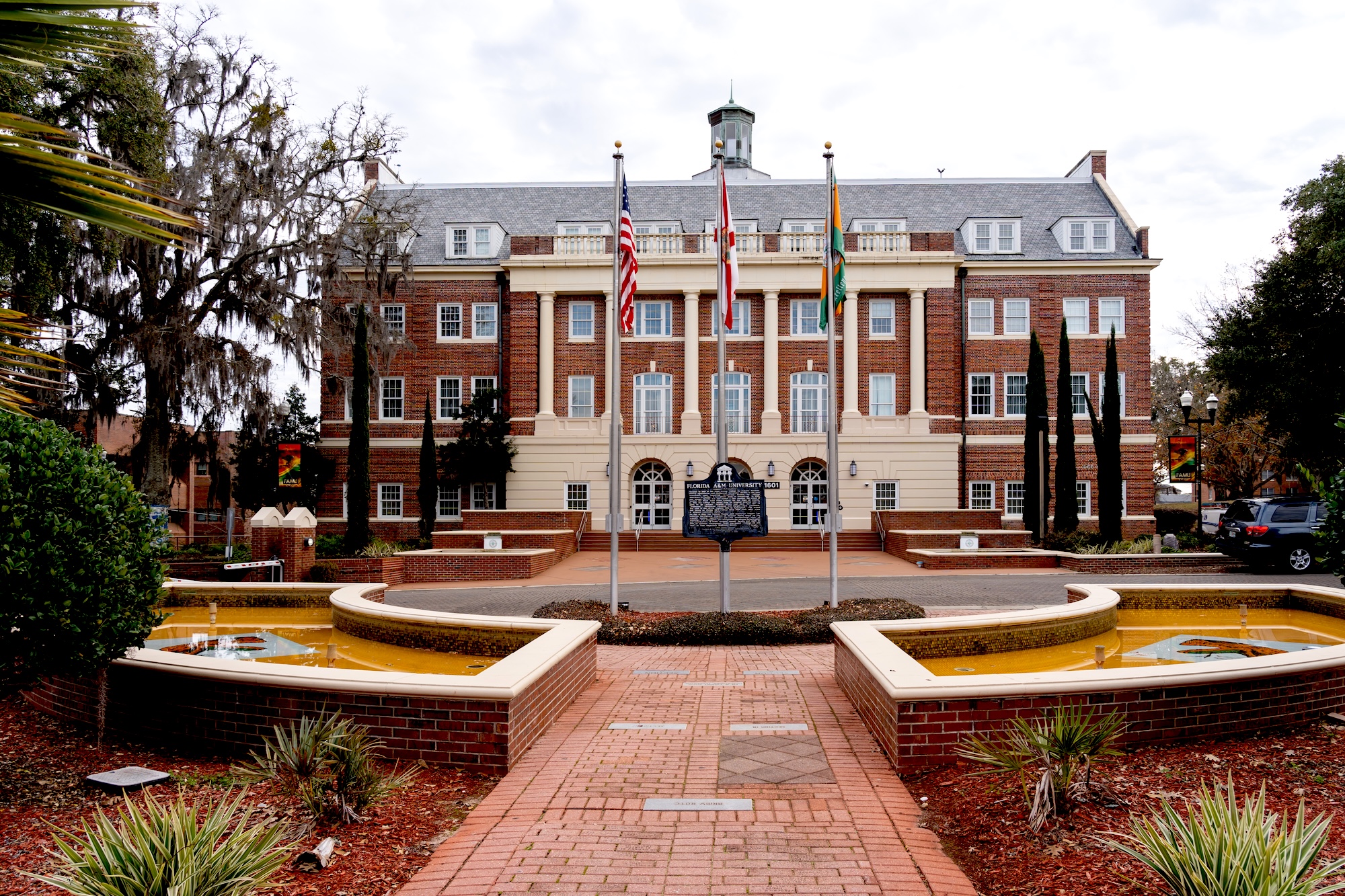
Every spring, local TV stations and national outlets spotlight Black students like Presley or Louisiana valedictorian Makenzie Williams, accepted to more than 75 colleges with over $1 million in combined scholarship offers.
These totals are cumulative — the student can only use one financial aid package — but they highlight how aggressively some colleges now compete for high-achieving Black students with institutional aid.
At Southland College Prep, a predominantly Black charter high school outside Chicago, every senior has been accepted to college for more than a decade. The Class of 2025 was reportedly offered over $50 million in scholarships and grants.
Guidance counselors there and at similar schools describe scholarship season as a second full-time job:
- Students apply to dozens of campuses and outside awards, chasing “stackable” dollars for books, housing and fees.
- Families with little inherited wealth try to decode the difference between merit aid, need-based grants, and loans buried in glossy award letters.
- Counselors triage — drafting recommendation letters at midnight, hosting FAFSA nights, and toggling between college portals and local foundation forms.
The students who pull in eye-popping totals tend to share a few traits: strong grades, test scores or special talents; heavy involvement in extracurriculars; and a savvy awareness — often learned from older siblings or TikTok — that scholarships are a numbers game.
But their success stories can obscure the structural inequities that make scholarships both essential and, for many classmates, still out of reach.
By the numbers: who gets help, and how much
On paper, Black students appear to win the scholarship game. They are more likely than their white peers to receive grants or scholarships of some kind, largely because they are more likely to qualify for need-based aid.
Federal data show:
- About 88% of Black undergraduate students receive some type of grant, a higher share than any other racial group.
- 72% of Black undergraduates receive Pell Grants — the main federal program for low-income students — compared with roughly a third of white and Asian students.
- One analysis of scholarship recipients found over 90% of Black students received some scholarship aid, compared with about 70% of white students.
On the surface, that seems to validate a persistent myth: that Black students “get college paid for” while others scrape by. But the same datasets show a harsher truth.
Even after scholarships and grants:
- Black students still face greater “unmet need” — the gap between college costs and all available aid — than white students at similar income levels.
- Black bachelor’s degree holders are the most likely to borrow, and they borrow more: they graduate with an average of about $34,000 in student debt, the highest of any racial group.
- Four years after graduation, Black borrowers owe roughly $25,000 more than white borrowers — a debt gap that grows over time instead of shrinking.
In other words, scholarships help Black students get in the door — but they rarely erase the financial risk of college. For many families, especially first-generation college-goers, the decision to sign loan paperwork still feels like a leap of faith.
Where the money comes from
For a Black high school senior, “scholarship money” can come from half a dozen directions at once.
Federal and state aid
For low-income students, Pell Grants are foundational. They are also under pressure. Over the past decade, a combination of stagnant award amounts and policy changes has meant less Pell funding flowing to colleges — particularly in the South, where Black enrollment has dropped sharply.
State need-based grants can help fill gaps. But eligibility rules — such as requiring full-time enrollment or continuous attendance — often exclude part-time and older students, who are disproportionately Black and Latino.
College and HBCU scholarships
Colleges themselves control the largest pool of scholarship money. At many campuses, institutional aid now functions as a sophisticated marketing tool: students with high GPAs and test scores receive “merit” offers that discount tuition.
For Black students, Historically Black Colleges and Universities (HBCUs) play an outsized role. HBCUs typically charge less than comparable predominantly white institutions, and HBCU students are more likely to feel financially secure on campus.
Organizations like UNCF (United Negro College Fund) and the Thurgood Marshall College Fund layer on additional support:
- UNCF alone now awards more than 14,000 scholarships a year, worth about $64 million.
- African American UNCF scholarship recipients post a 70% six-year graduation rate, compared with about 40% for Black students nationally.
Full-ride and “last-dollar” scholarships at HBCUs — often backed by philanthropists or corporate partners — have become especially powerful for high-achieving Black high school seniors. A growing ecosystem of programs now focuses on them, from specialized HBCU honors scholarships to curated lists of 100-plus full-ride awards targeted at students of color.
Private foundations, celebrities and community funds
Beyond campus walls, hundreds of private scholarships target Black students — some national, others hyperlocal:
- The Ron Brown Scholarship offers $40,000 over four years to high-achieving Black high school seniors who demonstrate leadership and need.
- In 2023, NBA legend Charles Barkley committed $5 million in his will to fund scholarships for Black students at Auburn University, explicitly linking his gift to the Supreme Court’s decision to strike down affirmative action.
- Celebrity-driven funds — from rapper Megan Thee Stallion’s scholarships for women of color to HBCU donations from musicians like Travis Scott — have poured millions into tuition for Black students on both sides of the Atlantic.
- Grassroots programs like Montreal’s Gem*Star Circle of Excellence combine $1,500 scholarships with year-long mentorship and leadership development for Black high school students.
Local churches, fraternities and sororities, and community foundations still quietly write some of the most consequential checks — the $500 or $2,000 awards that cover a laptop, a housing deposit, or a plane ticket home.
Ebony has chronicled how private funders have long stepped into the gaps left by public policy, noting that privately funded scholarships have helped hundreds of thousands of Black students stay enrolled — often with more flexible rules than institutional aid.
The scholarship coaches: “I did it, now I’m teaching everybody else”
As the process has grown more complex, Black students have increasingly turned to one another — and to a new generation of “scholarship coaches.”
In a recent feature, Word In Black profiled three young Black entrepreneurs who each won over $1 million in scholarships themselves, then built businesses teaching others how to do it. Their services range from TikTok explainers on writing essays to paid packages that include one-on-one coaching and application reviews.
Their message is blunt: scholarships are not just about brilliance, but about strategy and information.
They teach high schoolers to:
- Treat scholarship applications like a part-time job.
- Reuse and adapt essays rather than starting from scratch each time.
- Target awards that align with their interests or identities — from STEM to community service, from first-generation status to local residency.
- Understand that many smaller awards can add up faster than a single, hypercompetitive national prize.
For students whose school counselors juggle caseloads of several hundred teenagers, these peer-led networks can be critical pipelines of information — especially about scholarships specifically designed for Black students.
A shifting legal landscape
Just as Black students have built sophisticated strategies for winning scholarships, the legal context around those awards has become more volatile.
In 2023, the U.S. Supreme Court ruled that race-conscious admissions policies at Harvard and the University of North Carolina violated the Equal Protection Clause, effectively ending the use of race as an explicit factor in admissions decisions at most selective colleges.
Since then, conservative legal groups have turned their attention to scholarships and other forms of targeted aid.
- At Duke University, administrators ended the Reginaldo Howard Memorial Scholarship — a prestigious full-ride program historically reserved for Black undergraduates — amid concerns that race-exclusive eligibility would invite lawsuits in the post-affirmative-action era.
- At Ohio University, leaders have been reviewing more than 100 donor-funded scholarships that explicitly mention race, trying to decide which to keep, which to rewrite, and which to scrap entirely.
- A conservative legal foundation recently challenged a George Floyd-themed scholarship designed for Black students, arguing it discriminates against white applicants — part of a broader pattern of lawsuits targeting diversity programs.
- At the University of California, San Diego, a scholarship originally created to support Black students — using a Reconstruction-era law intended to protect them from Ku Klux Klan violence — was forced open to all races after a white student sued. The fund kept its Black founder’s name but lost its race-specific mission.
Policy analysts at Georgetown University’s Center on Education and the Workforce warn that dismantling race-conscious scholarships could have more impact on campus diversity than the admissions ruling itself, because such awards are often what makes college affordable for students of color who already meet academic requirements.
Universities, foundations and civil rights lawyers are now scrambling to redesign programs. Some are shifting to criteria like being “first-generation,” low-income, or from specific neighborhoods and high schools that are disproportionately Black. Others are exploring race-neutral language that still honors the intent of Black donors — for example, prioritizing students committed to racial justice or civic leadership in communities of color.
But for Black high school seniors weighing college options today, what they mostly see are mixed messages: websites quietly edited, program names changed, and eligibility rules rewritten mid-application.
FAFSA chaos and the fragility of access
Even when scholarships exist, students must first clear a more basic hurdle: the FAFSA, or Free Application for Federal Student Aid. Most colleges and scholarship providers require it to determine eligibility.
The federal government’s recent attempt to simplify FAFSA has instead produced a cautionary tale.
A Government Accountability Office review found that the 2024-25 FAFSA rollout was plagued by delays, technical glitches and data errors. As a result, there were about 432,000 fewer FAFSA applications overall, including a 9% decline among first-time applicants.
A separate analysis by the Century Foundation and the National Association of Student Financial Aid Administrators estimated that nearly 300,000 fewer high school seniors completed FAFSA, with the steepest drops in low-income, Black and Latino communities.
When financial aid offers arrive late — or not at all — students hesitate to commit. Some enroll at cheaper local colleges; others delay or forgo college entirely.
For Black students, who are more likely to attend under-resourced high schools and rely heavily on Pell Grants, the chaos hit especially hard. Word In Black has warned that new restrictions on Pell eligibility, layered on top of FAFSA problems, could “derail college dreams for Black high schoolers before they even apply.”
In that context, scholarships that don’t require FAFSA — particularly community-based awards and some HBCU-specific funds — become crucial backstops.
Merit, tests and the scholarship “sorting hat”
Many of the most generous state scholarship programs are framed as rewards for “merit,” often defined by GPA and standardized test scores.
Research shows those criteria are not race-neutral in practice. In Georgia, for example, the state’s top Zell Miller Scholarship requires at least a 3.7 GPA and a 1200 SAT or 26 ACT score. Yet only about 6% of Zell Miller recipients are Black, even though Black students make up nearly 30% of in-state undergraduates.
A Washington Post investigation into Florida’s Bright Futures merit scholarship described a tutor who spent three years coaching nearly 200 mostly Black students, only to watch none qualify because their test scores fell just short of the threshold.
Scholars interviewed by outlets like The Hechinger Report argue that when race can no longer be considered, overreliance on test scores in scholarship decisions will further disadvantage Black students. Because Black, Latino and Native American students on average score lower on the SAT and ACT — reflecting unequal K-12 resources, not innate ability — “merit-only” criteria can quietly replicate segregation-era funding patterns.
At the same time, some race-conscious scholarships have shown how targeted aid can change outcomes. At the University of New Mexico, for instance, a selective scholarship for high-performing Indigenous, Black and Hispanic students — worth about $15,000 a year — helps produce graduation rates between 80% and 95%, compared with 52% for all students.
The emerging fault line is clear: a tug-of-war between “color-blind” merit frameworks and programs that explicitly acknowledge how race and wealth shape opportunity.
HBCU caravans, week-long festivals and on-the-spot offers
If the legal battleground feels abstract to a 17-year-old, the new recruitment ecosystem does not.
Across the country, HBCUs and Black-led nonprofits are bringing admissions and scholarships directly to high schools and convention centers:
- The HBCU Week Foundation, profiled by Ebony, partners with cities and corporations to host week-long college fairs where students can receive on-the-spot admissions and full or partial scholarships to HBCUs. The organization’s stated goal: send students to college “without the burden of debt.”
- An “HBCU Caravan” highlighted by The Root rolled through Southern California high schools, offering instant acceptance and scholarships to hundreds of Black students — many of whom had never been on a college campus.
These initiatives function almost like mobile scholarship ecosystems: students show up with transcripts in hand and leave with acceptance letters and concrete dollar amounts.
For Black high schoolers who may not have extensive college counseling, or who live in communities where four-year degrees are rare, these events can be transformative. They also serve as a counter-narrative to elite universities narrowing or legalistically rewriting race-conscious aid.
The myth of the “free ride”
Despite the proliferation of scholarships, Black families still face a stark reality: college often requires borrowing — and the consequences last decades.
Analyses by the Education Data Initiative and others show:
- Black college graduates owe an average of $52,000 or more in student loan debt a few years after graduation, compared with around $28,000 for white graduates.
- More than 80% of Black bachelor’s recipients borrow federal loans; Black borrowers are also more likely to see their balances grow over time because interest outpaces their payments.
Debt, in turn, delays milestones — buying a home, starting a business, even having children. Community groups and civil rights organizations argue that without more robust grants and scholarships, the promise of higher education risks becoming a “lifetime sentence to debt,” particularly for Black women, who carry the heaviest loan burdens of any group.
This is the backdrop on which those viral million-dollar scholarship posts ricochet across Instagram and TikTok. For some viewers, they reinforce the myth that Black students are showered with free money. For others, they are a rare glimpse of what might be possible with the right support.
The truth is less glamorous and more grinding: most Black students stitch together Pell Grants, institutional discounts, part-time jobs, and small private awards, and still graduate owing more than their peers.
What the future looks like from a senior homeroom
In 2025, a Black high school senior applying to college in the United States is stepping into overlapping storms:
- Legal challenges that are reshaping who is allowed to be the target of a scholarship.
- Administrative failures like the FAFSA debacle that make timely aid feel like a lottery.
- Policy choices that shrink Pell Grants and other need-based aid, especially at public colleges that serve many Black students.
- Market pressures that push colleges to use “merit” aid — often tied to test scores — as discount coupons for already advantaged applicants.
And yet, the same student is also surrounded by a dense, if uneven, ecosystem of support: UNCF and HBCU scholarships, local church and civic awards, celebrity-funded funds, and a growing cadre of peers who have turned their own scholarship successes into playbooks for others.
For families, the questions that matter most are still the simplest ones:
Can we afford this school? Is the scholarship renewable? Will our child be able to graduate without being crushed by debt?
The answers depend less on any one “full ride” headline and more on the policy decisions being made in legislatures, boardrooms and courts — decisions that will determine whether scholarships remain a bridge for Black high school students or become yet another fragile promise in an unequal system.
For now, seniors like Mantavius Presley keep doing their part: taking the tests, writing the essays, refreshing portals. Whether the country will meet their effort with durable opportunity — or with shrinking aid, rising scrutiny, and lawsuits over the very programs created to correct past injustice — is a story still being written, one scholarship award letter at a time.