

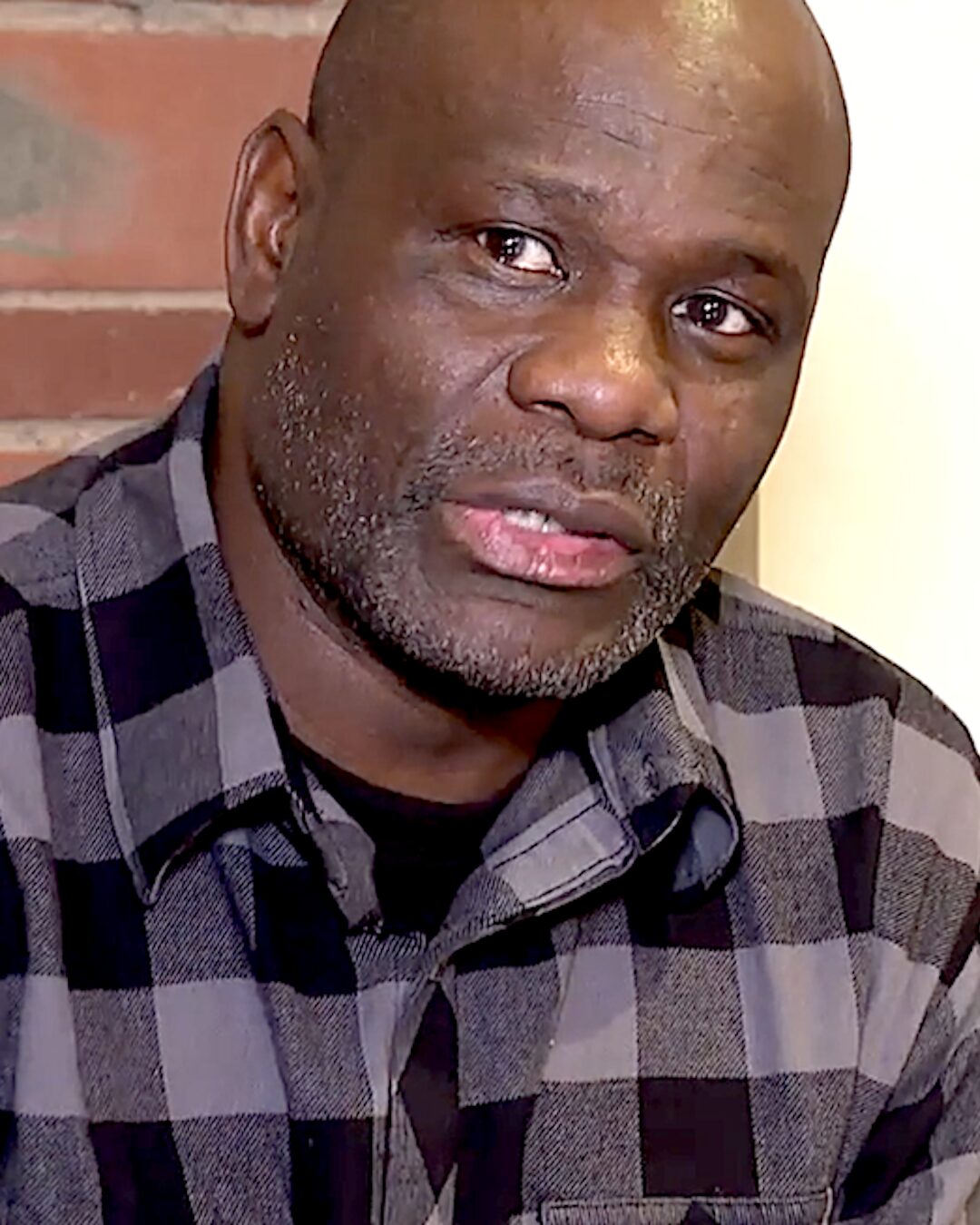
A Name Cleared, But Not Undone: The Long Fight of Former Inmate William Henry Jamerson
A Name Cleared, But Not Undone: The Long Fight of Former Inmate William Henry Jamerson
On a gray Wednesday in November 2025, the Tulsa City Council did something that would have seemed unthinkable when William Henry Jamerson first walked into a courtroom in 1991: it voted to pay him $26.25 million for a crime he has now been officially cleared of committing.
For the 56-year-old former busboy, the vote marked the latest turn in a 35-year struggle — from a rapid arrest and conviction in a teenage rape case, to nearly a quarter-century in Oklahoma prisons, to a painstaking campaign to find long-lost evidence and force the legal system to reconsider his guilt.
“I kept fighting,” Jamerson has said of his years behind bars, describing nights spent in prison law libraries and days writing letters to lawyers, innocence organizations and anyone else who might listen.
It is a story about one man and a single case, but it also raises larger questions about eyewitness identification, disclosure of evidence, and how long it can take to correct a wrongful conviction once it takes root.
A Night at Ma Bell’s
The crime that would define Jamerson’s adult life began on May 24, 1991, in the parking lot of Ma Bell’s, a Tulsa diner on East Admiral Place.
According to police reports later summarized by investigative outlet The Frontier, 16-year-old Kayleen Dubbs was sitting in her car outside the restaurant, listening to the radio and waiting for her boyfriend to finish his shift. Two men approached. One pointed a gun and forced Dubbs from the car, leading her toward a dumpster behind the diner. She told police that the man who stayed with her sexually assaulted her while the other robbed the restaurant.
The robber was never identified. Dubbs, the only eyewitness to the rape, gave police a description and worked with a sketch artist to create a composite drawing of her attacker. The initial robbery investigation “bogged down,” one detective later wrote, and the file was sent to the Tulsa Police Department’s sex crimes unit.
Investigators eventually focused on the diner’s staff. A manager who had not been present during the crime told officers that three former employees who were Black might be worth looking at: Quenton Nails, Eugene Allen and 22-year-old William Henry Jamerson, who had worked as a busboy. Police pulled mug shots of Jamerson and another man; a robbery detective later wrote that the composite sketch bore a “remarkable resemblance” to Jamerson’s photo.
Dubbs ultimately picked Jamerson out of a lineup. On the strength of that identification and other circumstantial evidence, prosecutors charged him with first-degree rape, rape by instrumentation and robbery with a firearm.
A Fast Trial and a Long Sentence
The case moved quickly. By December 4, 1991, roughly 90 days after his arrest, a Tulsa County jury convicted Jamerson on all counts and a judge sentenced him to 44 years in prison.
No direct appeal was filed. In a later federal habeas case, Jamerson told courts he had wanted to challenge the verdict but that his attorney failed to properly inform him of his appellate rights. His trial lawyer, by contrast, submitted an affidavit saying he had discussed appeal options with Jamerson and that they agreed there was no viable basis for an appeal unless a missing alibi witness resurfaced. State courts concluded that Jamerson had “made a conscious decision not to appeal,” and the Tenth Circuit Court of Appeals declined to disturb that finding in a 1996 ruling.
With his conviction intact, Jamerson entered the Oklahoma prison system. He would remain there for nearly 24 years.
Fighting from Inside
Jamerson has consistently insisted that he was innocent. According to The Frontier, he spent much of his prison time reading legal texts and drafting his own pleadings.
“During the nearly 24 years he spent in Oklahoma prisons, Jamerson waged a lonely quest to prove his innocence,” reporters Dylan Goforth and Ziva Branstetter wrote in a 2023 investigation.
The problem was evidence — or, more precisely, the lack of it. For years, Tulsa police and prosecutors told Jamerson and his advocates that biological evidence from the 1991 case no longer existed or could not be located, making modern DNA testing impossible. Social-media statements from the Illinois Innocence Project and local coverage indicate that Jamerson was repeatedly informed the evidence had been destroyed.
Jamerson completed his 44-year sentence early and was released from prison in 2015, but he remained a registered sex offender, a status he says made it extremely difficult to keep steady employment or rebuild his life.
Nonetheless, he declined to abandon his legal fight. Parole opportunities that required him to admit guilt were turned down, he has said, because accepting responsibility for something he did not do felt impossible. “I ain’t going to accept a crime that I didn’t do,” Jamerson told The Frontier.
A Case That Became a Referendum on Mercy
The break in the case did not come until more than three decades after the crime.
In 2023, The Frontier reported that semen collected from the victim back in 1991 — long thought to be missing or destroyed — had in fact been preserved at the Oklahoma State Bureau of Investigation (OSBI). The discovery followed years of inquiries by Jamerson and his legal team, who had been told repeatedly that no such evidence remained.
Testing ordered by the court showed that the DNA in the sample did not match Jamerson.
By then, the victim herself had developed doubts. In an interview with The Frontier, Dubbs said uncertainty about the conviction had “haunted” her and that she had felt pressured as a teenager navigating the legal process. In 2024, she recanted her trial testimony identifying Jamerson as her attacker and told him directly in court, “You’re innocent, you always have been,” according to local news accounts summarizing the hearing.
On July 9, 2024, Tulsa County District Judge David Guten vacated Jamerson’s 1991 conviction, writing that the newly discovered DNA evidence and the victim’s recantation “undermine confidence in the verdict.”
Jamerson hugged his lawyer, civil-rights attorney Dan Smolen, as friends and relatives cheered in the courtroom. Outside, he described the ruling as “a blessing,” while also noting the irrevocable losses of time, family and opportunity that no legal decision could restore.
Life After Exoneration
Even after the conviction was thrown out, the process of clearing Jamerson’s name was far from over.
Because he had already completed his sentence, his exoneration did not automatically remove him from Oklahoma’s sex offender registry. In November 2024, nine years after his release from prison, a Tulsa County judge finally ordered that Jamerson’s name be removed from that list, ruling that continued registration was no longer legally justified given the vacated conviction.
In the months that followed, Jamerson and his lawyers continued to clash with local authorities. He alleged that Tulsa police continued to stop and question him in ways he viewed as retaliatory or harassing, claims the department has not publicly accepted but which have been the subject of local TV reporting.
At the same time, Jamerson pursued civil remedies. In April 2025, he filed a federal civil-rights lawsuit against Tulsa and several current and former police officials, alleging that investigators had manipulated eyewitness procedures, relied on a composite drawing that overstated the certainty of the identification, and withheld or misrepresented evidence about the preservation of biological samples. The complaint also accuses city workers of providing false information for years about the status of the evidence that was ultimately recovered and tested.
Those are allegations, not findings; the city and named officers have denied wrongdoing in court filings. But the lawsuit set the table for the development that followed this week.
A Historic Settlement
On November 13, 2025, after closed-door discussions with city attorneys, the Tulsa City Council voted to approve a $26.25 million settlement with Jamerson — one of the largest wrongful-conviction payouts in Oklahoma history.
According to The Frontier and local television station KJRH, the deal resolves Jamerson’s claim that the city’s actions helped keep an innocent man in prison for 24 years and then on the sex offender registry for years after his release. City officials declined to admit liability as part of the settlement but agreed to the payment to resolve the litigation.
In a statement reported by KJRH, one of Jamerson’s attorneys called his story “a devastating portrait of injustice,” adding that he “spent most of his adult life either behind bars or otherwise trying to clear his name.”
For Jamerson, the settlement offers financial stability that was impossible during the decade since his release, when employers routinely let him go after discovering his status on the registry. It also represents a measure of public acknowledgment that the system failed him, even if no individual officer or prosecutor has been formally found liable in court.
What His Case Reveals
Jamerson’s case sits at the intersection of several recurring themes in wrongful-conviction research:
- Eyewitness identification: His 1991 conviction relied heavily on a teenage victim’s description and later identification in a photo and live lineup — procedures that critics argue were suggestive, given that detectives already believed the composite resembled Jamerson’s mug shot.
- Evidence disclosure and preservation: For decades, officials asserted that key biological evidence could not be tested; it later emerged, intact, at a state lab. That sequence has raised questions about how evidence is tracked and communicated in older cases.
- Post-release barriers: Even after serving his time, Jamerson remained on a public registry that limited housing and employment, only coming off the list in 2024 — after DNA testing and judicial findings finally caught up with his claim of innocence.
Supporters say the settlement and his exoneration are steps toward accountability, but they also note that the armed robber who entered Ma Bell’s that night in 1991 has still never been identified. Dubbs, who has spoken publicly about her own regrets and doubts, must live with the knowledge that her testimony contributed to a wrongful conviction.
Tulsa’s police department, prosecutors and city government, for their part, face renewed scrutiny about old cases and the systems meant to safeguard against error.
“I Ain’t That Type”
In interviews, Jamerson has distilled his story into a simple line that reflects both stubbornness and principle.
“You know, most people who get out of prison, leave it alone,” he told one reporter in 2024. “I ain’t that type.”
He had already served the time. He could have tried to move forward quietly. Instead, he kept pushing — for DNA testing, for the truth about the evidence, for removal from the sex offender registry, and finally for a civil reckoning with the city that prosecuted him.
The $26.25 million cannot return the years he spent incarcerated, or the birthdays, funerals and ordinary days he missed. It does not fully resolve the question of how such a conviction stood for so long. But in a system that is often slow to acknowledge its own mistakes, the settlement and exoneration together amount to a rare, formal admission that, in this case, the system got it wrong.
For William Henry Jamerson, who once answered to an inmate number and now walks free with his name legally cleared, that acknowledgment may be as important as any compensation.